作者: admin

  • Haitian merchants block Pedernales border to protest new customs measures

    Haitian merchants block Pedernales border to protest new customs measures

    PEDERNALES, DOMINICAN REPUBLIC – Cross-border commerce between Haiti and the Dominican Republic ground to a halt on Tuesday as Haitian merchants staged a blockade at the Pedernales frontier crossing. The protest erupted in response to controversial new trade measures implemented by recently appointed customs collector Lancer García.

    Demonstrators strategically positioned a Haitian truck across the border passageway, effectively suspending all movement of goods and people between the two nations. The merchants allege that García has abruptly altered long-established trade protocols, including imposing previously unheard-of taxes that they claim severely undermine cross-border commercial activities.

    The administrative changes have extended beyond trade policies, affecting customs personnel as well. Multiple veteran employees have been replaced with new staff since García’s assignment to the Pedernales border terminal, creating additional institutional instability.

    Security forces from the Specialized Corps for Land Border Security (Cesfront) have maintained a heightened presence in the area, successfully preventing any significant violent outbreaks despite the tense standoff. Authorities continue to closely monitor developments to ensure the situation does not escalate further.

    This appointment represents García’s third border assignment amid ongoing controversies. Previously transferred from Puerto Plata to Dajabón following disputes with employees and political figures, he subsequently clashed with Haitian merchants in Dajabón over a 2.5% tax hike that ultimately prompted his reassignment. His replacement in Dajabón by attorney Julio Alejo this week has already contributed to restored calm at that northern border crossing.


  • PKF St. Kitts and Nevis – Accountants and Business Advisers Launches as Leading Accounting and Business Advisory Firm

    PKF St. Kitts and Nevis – Accountants and Business Advisers Launches as Leading Accounting and Business Advisory Firm

    BASSETERRE, St. Kitts – December 15, 2025 – The professional services landscape in the Federation of St. Kitts and Nevis has been significantly enhanced with the formal inauguration of PKF St. Kitts and Nevis – Accountants and Business Advisers. The prestigious launch ceremony took place on November 15, 2025, at the scenic Spice Mill venue on Cockleshell Beach, attracting prominent business executives, corporate allies, and distinguished guests to celebrate this milestone event.

    Operating since January 1, 2025, the new entity is spearheaded by Managing Partner Petal Parry and Partner Henry Joseph. This establishment strengthens PKF International’s global network, which maintains over 500 offices across 150 countries worldwide, delivering premium audit, taxation, advisory, and outsourced services to clients.

    Ms. Parry brings twenty years of comprehensive expertise spanning accounting, audit compliance, taxation, banking operations, and financial strategy formulation. She holds dual qualifications including a Bachelor’s degree in Economics and Accounting from the University of the West Indies and an MBA in Finance from the University of Edinburgh. Her professional accreditations include Fellow of the Association of Chartered Certified Accountants (FCCA), Certified Internal Auditor (CIA), and Certified Anti-Money Laundering Specialist (CAMS).

    Mr. Joseph contributes unparalleled experience with over five decades in the accounting field, having served PKF in various capacities throughout the Caribbean and international markets. He currently holds the position of Managing Partner at PKF Grenada and is similarly recognized as a Fellow of the Association of Chartered Certified Accountants.

    The PKF brand maintains a historical connection with St. Kitts and Nevis dating to the 1970s, when predecessor firms played instrumental roles in shaping the region’s accounting standards and supporting commercial growth during critical developmental phases. The new practice builds upon this legacy with reinforced dedication to operational excellence, ethical integrity, and innovative service delivery.

    During her inaugural address, Ms. Parry articulated the firm’s vision: ‘We are committed to providing practical, impactful solutions that enable businesses to achieve sustainable growth. Our approach integrates deep local market understanding with globally sourced resources to address contemporary challenges faced by modern enterprises.’

    Mr. Joseph elaborated on the firm’s progressive philosophy: ‘Contemporary auditing transcends traditional error correction—it now encompasses strategic problem identification that directly influences business expansion and profitability enhancement. We develop tailored methodologies that refine operational practices and position clients for success in an evolving global marketplace.’

    The firm operates from Units C21 and C35 at Sands Complex in Basseterre, with communications channels including info@pkfkn.com and telephone (869) 466-3600. Additional information is available at www.pkfcaribbean.com.

  • Government reinforces commitment to National Security with strong financial support for the financial year 2026

    Government reinforces commitment to National Security with strong financial support for the financial year 2026

    In a decisive move to strengthen national security capabilities, the Government of Saint Kitts and Nevis has announced substantial financial backing for security enhancements in its 2026 budget. Prime Minister and Finance Minister Dr. Terrance Drew unveiled the allocation during his December 16 budget presentation, emphasizing his administration’s dedication to citizen protection through strategic investments.

    The Ministry of National Security, Citizenship, and Immigration will receive $97.3 million in total funding, with resources directed toward three primary objectives: augmenting law enforcement capabilities, modernizing critical infrastructure, and implementing advanced security technologies. The comprehensive security package includes $84.1 million in recurrent expenditure alongside $3.2 million specifically designated for infrastructure development.

    Key initiatives encompass extensive refurbishment of police facilities, construction and upgrades for fire service operations, and procurement of essential equipment. Technological advancements will feature prominently through enhancements to closed-circuit surveillance networks, traffic management systems, and the National Security Technology Refresh Programme designed to modernize law enforcement infrastructure.

    Significant attention has been given to emergency response capabilities, with plans for demolishing and reconstructing the Basseterre Fire and Rescue facility. Simultaneously, Nevis will benefit from substantial fire service improvements including the acquisition of new firefighting apparatus and establishment of a second fire station to ensure adequate emergency coverage. The government will also implement specialized training programs to enhance the professionalism of Nevis firefighters.

    Prime Minister Drew characterized these measures as fundamental to maintaining public safety and national stability. “The safety and security of our citizens remain a top priority for this government,” he stated. “Through these strategic investments, we are reinforcing our commitment to law and order while ensuring our protective agencies are equipped to address contemporary and future challenges.”

    The administration asserts that these security enhancements will support the nation’s ongoing development while safeguarding community welfare across the federation.

  • DIGESETT announces temporary road closures in Santo Domingo’s Colonial City

    DIGESETT announces temporary road closures in Santo Domingo’s Colonial City

    Santo Domingo’s transportation authorities have instituted temporary road closure measures in the historic Colonial City district to accommodate a major fashion event honoring legendary designer Oscar de la Renta. The General Directorate of Traffic Safety and Land Transportation (DIGESETT) confirmed the traffic modifications would take effect from 6:00 p.m. local time.

    The strategic road closures are designed to manage anticipated large crowds while maintaining public safety and vehicular mobility throughout the event. DIGESETT has developed comprehensive alternative routing options, which have been communicated to the public through an official traffic map distributed by the agency.

    Transportation officials have issued specific guidance for motorists, emphasizing the importance of advanced route planning and heightened situational awareness when navigating the affected area. Additional traffic personnel have been deployed throughout the Colonial City to provide directional assistance and ensure compliance with the temporary traffic patterns.

    The agency clarified that these measures are strictly temporary and intended to minimize congestion while protecting both event participants and local residents. The fashion tribute to Oscar de la Renta, who maintained significant cultural connections to the Dominican Republic throughout his career, represents one of the major cultural events in the historic district this season.

  • Six days that shook the nation

    Six days that shook the nation

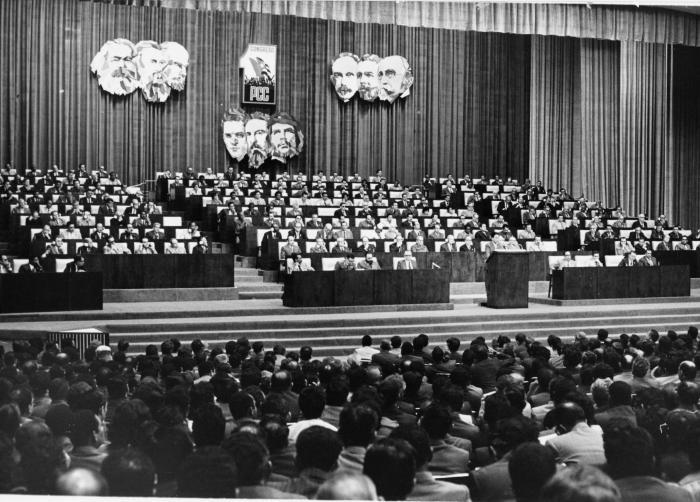
    On a cold December morning in 1975, approximately 2,000 delegates representing every sector of Cuban society gathered at Havana’s Karl Marx Theater, many wearing formal suits and ties for the first time. This historic assembly marked the commencement of the First Congress of the Communist Party of Cuba (PCC) – a pivotal moment that would fundamentally shape the nation’s revolutionary trajectory.

    Sixteen years after overthrowing the Batista regime and a decade following the establishment of the initial Central Committee, Commander-in-Chief Fidel Castro delivered a comprehensive report analyzing Cuba’s revolutionary journey. He proudly declared Cuba’s unique position as ‘Spain’s last colony in Latin America’ that had transformed into ‘the first socialist country in this hemisphere.’

    The address provided a meticulous historical account, tracing Cuba’s struggle from independence wars through the revolutionary period. Castro detailed how the United States, upon recognizing the Revolution’s determination to resist external pressure, initiated economic aggressions while recruiting and training mercenaries for sabotage operations and military actions.

    While acknowledging administrative and economic management shortcomings during the initial revolutionary decade, Castro emphasized that survival against imperialist subversion, military aggression, and relentless economic blockade had consumed the nation’s primary resources. ‘For years, we had to keep more than 300,000 men under arms to defend the country,’ he revealed.

    Despite these challenges, Castro highlighted Cuba’s extraordinary advancements across multiple fields, noting that these achievements were particularly remarkable given the context of sustained pressure from a powerful northern neighbor. The real significance, he stressed, lay in Cuba’s ability to resist reestablishment of ‘corrupt, exploitative, and oppressive systems’ while making substantial progress under exceptionally difficult circumstances.

    Over six intensive days (December 17-22, 1975), the Congress produced foundational documents including the Theses, Statutes, and Programmatic Platform of the PCC. Critical resolutions addressed cadre training policies, selection procedures, placement strategies, promotion systems, and improvement protocols, alongside Directives for economic and social development during the 1976-1980 five-year period.

    This landmark event initiated Cuba’s institutionalization process, which would subsequently manifest through a new political-administrative division, establishment of People’s Power organs, and ratification of the 1976 Socialist Constitution replacing the 1940 document.

    The Congress also addressed international solidarity efforts, particularly Cuba’s support for Angola’s MPLA against South African troops. Castro explicitly stated that Cuban involvement represented ‘a basic internationalist duty’ rather than pursuit of material resources: ‘We are not looking for oil, or copper, or iron, or anything at all. We are simply applying a policy of principles.’

    On December 22, hundreds of thousands of Cubans gathered at Revolution Square to endorse the Congress agreements in what Fidel characterized as the ‘People’s Congress’ – a demonstration of mass support that confirmed the revolutionary movement’s deep popular roots. He framed contemporary efforts as continuing ‘the humble inheritance of entire generations of Cubans who for more than a hundred years have fought for justice, freedom, and dignity.’

  • Participación Ciudadana warns corruption remains deeply rooted in the Dominican Republic

    Participación Ciudadana warns corruption remains deeply rooted in the Dominican Republic

    A comprehensive assessment by Participación Ciudadana, the Dominican affiliate of Transparency International, reveals that systemic corruption remains a fundamental challenge in the Dominican Republic, persistently eroding the nation’s political framework and administrative integrity.

    The report indicates significant divergence between official anti-corruption rhetoric and actual practices, with public officials continuing to engage in serious misconduct involving state resource misappropriation. While acknowledging some progress through investigations by the Public Prosecutor’s Office and removal of certain officials, the organization emphasizes that public confidence remains critically fragile, requiring sustained public vigilance.

    High-profile corruption cases continue to generate widespread concern, particularly the alleged embezzlement exceeding RD$15 billion from the National Health Insurance (Senasa) over a five-year period. Recent developments include pretrial detention orders for primary defendants, though the organization notes concerning procedural delays and tactical legal maneuvers that prolong court proceedings indefinitely.

    The analysis documents several convictions across multiple government sectors, including Agriculture Ministry officials, National Lottery administrators, and a criminal network within the National Police responsible for diverting over 900,000 ammunition rounds. Particularly alarming is the documented infiltration of drug trafficking networks into political institutions, exemplified by the conviction of former ruling party legislator Rosa María Pilarte, who received a five-year prison sentence and asset confiscation for drug-related money laundering.

    While recognizing legislative advancements including the new Penal Code and Criminal Procedure Code, the report highlights how civil society and media organizations had to actively counteract attempts to block crucial reforms addressing citizens’ rights, gender equality, free expression, and administrative corruption prosecution.

  • Olieprijzen dalen scherp; markten vrezen overschot in 2026

    Olieprijzen dalen scherp; markten vrezen overschot in 2026

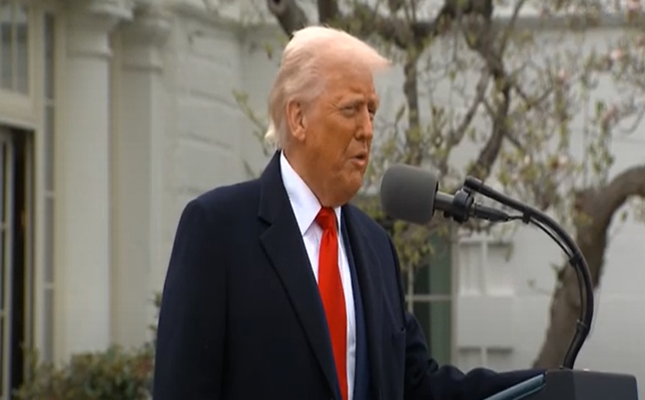
    International oil markets experienced a significant downturn yesterday, with both Brent crude and West Texas Intermediate (WTI) facing substantial pressure due to mounting concerns about potential supply surpluses and weakening demand from major economies. The decline occurred despite a brief price spike following former U.S. President Donald Trump’s announcement regarding potential military action against Venezuela.

    Brent crude futures fell below $60 per barrel while U.S. WTI oil traded around $55 per barrel, marking the lowest levels seen in several months. This downward trajectory follows emerging signals that global oil supply could outpace demand throughout 2026, creating a fundamentally bearish market environment.

    Market analysts attribute the price collapse to multiple concurrent factors:
    – Decelerating economic growth, particularly in China, which continues to suppress oil demand
    – Rising non-OPEC+ production, especially from United States shale operations
    – Geopolitical developments involving Russia and Ukraine that have heightened fears of additional supply entering markets

    Recent economic indicators from both the United States and Europe further reinforced concerns about weakening industrial activity, subsequently deteriorating sentiment across oil markets.

    Analytical projections suggest continued short-term volatility with a downward bias. Most experts agree that without clear production cuts from OPEC+ and with persistent demand weakness from China, the risk of further price deterioration remains substantial.

    Market participants are preparing for several scenarios in 2026:
    – Brent prices oscillating between $55-$65 per barrel range
    – Ongoing tension between producers seeking market share and those prioritizing price stability
    – Potential market interventions by OPEC+ should prices decline excessively

    For oil-producing nations, the price decline translates to increased revenue uncertainty and potential budget pressures. Conversely, importing nations and consumers may experience relief from reduced fuel and energy costs. These market developments underscore the critical importance of prudent fiscal policies and avoiding overreliance on projected oil revenues, according to energy analysts.

  • Indotel and INDEX sign agreement to strengthen digital literacy for Dominicans abroad

    Indotel and INDEX sign agreement to strengthen digital literacy for Dominicans abroad

    In a landmark move to bridge digital divides and strengthen transnational connections, the Dominican Institute of Telecommunications (Indotel) and the Institute of Dominicans Abroad (INDEX) have forged a comprehensive partnership. The agreement, formally signed by Indotel Board President Guido Gómez Mazara and INDEX Executive Director Celinés Toribio, establishes a framework for enhancing digital literacy, financial capabilities, and technological integration among overseas Dominican populations.

    The strategic collaboration focuses on multiple critical areas: expanding digital skills training programs, promoting secure utilization of digital remittance platforms, enhancing cybersecurity awareness, developing critical thinking to combat disinformation, and ensuring equitable access to virtual education resources. This initiative recognizes the growing importance of digital proficiency in modern global economies and seeks to empower diaspora communities with essential 21st-century skills.

    Economic considerations form a central pillar of this agreement, with officials highlighting the tremendous contribution of remittances to the national economy. Current projections indicate these financial transfers from abroad will constitute 12% of the Dominican Republic’s GDP by 2025, representing a significant increase from the 10.5% recorded in the previous year. This economic reality underscores the necessity of maintaining strong institutional connections with citizens living overseas.

    The operational implementation will see Indotel providing technical expertise, educational content, training materials, and technological equipment through its established digital inclusion programs. INDEX will leverage its international network to facilitate community outreach, beneficiary support, and coordination with Dominican organizations worldwide. The two-year renewable agreement additionally encompasses the creation of educational campaigns, audiovisual materials, and initiatives fostering responsible digital citizenship while strengthening cultural and co-development ties between the diaspora and their homeland.

  • Kunsteducatie krijgt impuls in Brokopondo met project Beeldkracht

    Kunsteducatie krijgt impuls in Brokopondo met project Beeldkracht

    In a vibrant celebration of cultural heritage, the Beeldkracht arts education initiative has brought renewed focus to the significance of artistic development within Suriname’s Brokopondo district. Spearheaded by the Nola Brokopondo Foundation, the project resumed activities Monday at the Nucleus Center of the Ministry of Education, Science and Culture, receiving enthusiastic endorsement from the Directorate of Culture.

    The program attracted hundreds of students and teachers from vocational schools across the district, who arrived by bus to engage with visual arts and photography. Participants admired the intricate woodcarvings of visual artist David Linga while photographer Roy Tjin demonstrated techniques for capturing artwork effectively using basic mobile phone cameras.

    The opening ceremony featured students from Frans Pryor School in Tapoeripa, who welcomed cultural representatives with a traditional Saramaccan song followed by a musical tribute to the Surinamese flag. The performance highlighted the symbolic meaning of the flag’s colors and star as emblems of national identity.

    Samuel Wens, chairman of the Nola Brokopondo Foundation, honored the legacy of Dutch artist Nola Hatterman, who played a pivotal role in developing Suriname’s art education system from 1954 until her final years in Brokopondo. Hatterman taught drawing to local children and organized exhibitions from her Mamamdamweg studio. The Beeldkracht project forms part of Suriname’s 50th independence anniversary commemorations and advances plans to restore Hatterman’s former residence as a district arts center.

    Clifton Braam, deputy director of the Directorate of Culture, praised the initiative while acknowledging the challenges facing arts education in schools. He emphasized that creativity remains understimulated despite art’s essential role in youth development, celebrating both the restoration plans and the students’ flag song as exemplary methods for instilling national values.

    Workshops commencing Tuesday featured Linga’s mahogany sculptures displayed throughout the center’s park, with the artist explaining their symbolism connected to Suriname’s history of slavery and freedom struggles. Tjin provided practical photography guidance focusing on lighting, composition, and background techniques.

    Students responded with visible emotion to the artworks, with 16-year-old Kimora Liberetto noting that arts education diminishes after secondary school’s second year, making the project particularly meaningful. The sculptures evoked recognition of animals, birds, and elements from the students’ local environment.

    The program continues through the week with workshops on woodworking, cedar craftsmanship, and art conservation in tropical climates. Over five hundred secondary students will participate in exhibitions and workshops, supported by funding from the Johan Ferrier Fonds.

  • Antigua and Barbuda, Dominica respond as partial US travel restrictions set to take effect in the new year

    Antigua and Barbuda, Dominica respond as partial US travel restrictions set to take effect in the new year

    The United States has announced significant visa restrictions targeting multiple nations, including Caribbean counterparts Antigua and Barbuda and Dominica, citing national security concerns related to their Citizenship by Investment (CBI) programs. The policy shift, declared by the White House on December 16, 2025, will take effect January 1, 2026.

    This development represents an expansion of existing travel limitations, now encompassing twenty additional countries across Africa and the Caribbean. The restrictions specifically apply to B1/B2 business/tourist visas, F and M student visas, and J exchange visitor visas for applicants from these nations.

    According to the presidential proclamation, the measures aim to address perceived vulnerabilities in immigration vetting processes. The administration identified several systemic issues including inadequate document verification, unreliable criminal records, and insufficient birth registration systems in affected jurisdictions. Particular concern was directed toward CBI programs that allegedly enable identity concealment and bypass standard vetting protocols through non-residency requirements.

    Caribbean leaders have responded with both surprise and consternation. Antiguan Prime Minister Gaston Browne expressed ‘deep disappointment,’ asserting that recent legislative reforms have already implemented a mandatory 30-day physical residency requirement for citizenship applicants—directly contradicting the US administration’s stated concerns.

    Similarly, Dominican Prime Minister Roosevelt Skerrit highlighted his nation’s comprehensive CBI reforms enacted in October 2025, which established enhanced due diligence procedures, stricter financial transparency mandates, and an independent regulatory authority. Both governments have initiated diplomatic channels, dispatching envoys to Washington for urgent consultations regarding the implementation scope of these restrictions.

    The policy announcement has generated uncertainty among current visa holders and applicants from affected nations, with specific implications for educational exchanges, business travel, and diplomatic relations between the US and Eastern Caribbean states.