作者: admin

  • Antigua and Barbuda chairs selection process for prestigious United Nations award

    Antigua and Barbuda chairs selection process for prestigious United Nations award

    In a significant diplomatic achievement, the Caribbean nation of Antigua and Barbuda has taken center stage in the United Nations’ prestigious recognition system. On March 26, 2026, First Secretary Claxton Duberry from Antigua and Barbuda’s Permanent Mission to the UN chaired a crucial meeting to determine recipients of the United Nations Population Award at both institutional and individual levels.

    This leadership role marks a notable progression for the nation, which served as a committee member in the previous year before being selected to chair the current selection process. The award itself, established in 1981, represents one of the UN’s highest honors, recognizing exceptional contributions to global health initiatives, gender equality advancement, and sustainable development goals.

    The selection process brings critical population issues to international attention while honoring those making transformative impacts in these areas. Duberry described the chairmanship as “a profound honor” and emphasized the importance of his nation’s participation in advancing human dignity and sustainable development worldwide.

    The award holds particular significance for Antigua and Barbuda, as their late family physician Sir Prince Ramsey received the honor in 2018 for his pioneering work in HIV/AIDS advocacy, care, and prevention throughout the Caribbean region. The current committee will announce this year’s laureates later in 2026, with UNFPA utilizing the platform to reinforce continued focus on global population challenges.

  • School’s multicultural day toasts cross-border unity

    School’s multicultural day toasts cross-border unity

    Providence Elementary School in St. George transformed its campus into a vibrant global village on Friday, hosting an annual Multicultural Day that immersed students, faculty, and community members in a rich tapestry of over thirty distinct cultures. The event, meticulously orchestrated by Spanish instructor Chad Small, transcended conventional cultural exhibitions by embedding profound lessons about identity, mutual respect, and social harmony into its core programming.

    Now in its fourth iteration under Small’s coordination, the festival represents a monumental logistical undertaking initiated months in advance. “Planning begins as early as November,” Small revealed, emphasizing the complex coordination required to secure participation from international embassies and cultural organizations. The elaborate setup featured authentic culinary offerings, artifacts sourced directly from overseas, and multiple performance stages under specially erected tents.

    Principal Kiran Mahtani articulated how the event embodies the institution’s two-decade-old founding philosophy that places cultural awareness on equal footing with academic rigor. “The original founders had a very clear vision about inclusivity and diversity,” Mahtani noted, highlighting the school’s commitment to nurturing culturally literate citizens alongside proficient scholars.

    The day’s immersive experiences included a musical showcase by Barbados Community College featuring Tuk Band and calypso performances, a demonstration by the Confucius Institute, and a breathtaking Capoeira martial arts presentation incorporating fire elements by Ignite Entertainment’s Roy Downes. Students contributed personally through diversity-themed skits illustrating how cultural understanding fosters kindness and social cohesion.

    Diplomatic participation from the embassies of Venezuela, Panama, Japan, and Argentina complemented representations from parents and students hailing from Barbados, Trinidad and Tobago, Spain, Syria, Iran, Jamaica, Mexico, Guatemala, the Dominican Republic, England, DR Congo, Canada, and Ecuador. The event culminated in a powerful community gathering where traditional Indian dance fused with jazz and pop musical innovations.

    Beyond the festivities, educators emphasized the program’s deeper pedagogical purpose. “It’s fundamentally about helping children understand who they are and how they relate to others,” Small explained, characterizing the event as an essential tool for developing empathy and cross-cultural appreciation that extends far beyond the school grounds into broader societal interactions.

  • Cawmere, SMS repeat as BSSAC champs

    Cawmere, SMS repeat as BSSAC champs

    The 2026 Dasanai BSSAC Championships concluded in spectacular fashion at the Usain Bolt Complex on Friday, cementing dynastic victories for two of Barbados’s premier athletic institutions. Combermere School achieved a historic three-peat by securing the boys’ title for the third consecutive year, while The St Michael School successfully defended their crown in the girls’ division, showcasing unparalleled consistency and competitive determination throughout the event.

    Final standings in the girls’ competition saw The St Michael School dominate with an impressive 213-point total, finishing well ahead of rivals Harrison College (183 points) and Combermere (142.5 points). Queen’s College claimed fourth position with 117 points, followed by Springer Memorial (113), Christ Church Foundation School (85), The Lodge School (69), Alleyne (67), Coleridge and Parry (66), and Alexandra completing the top ten with 63 points.

    St Michael School head coach Gabriel Burnett expressed elation following the victory, acknowledging initial challenges that required strategic intervention. ‘Our girls started out shaky yesterday morning,’ Burnett revealed to Barbados TODAY. ‘We conducted three team meetings to address nerves particularly affecting our junior competitors. After refining our focus, the team emerged on day two firing on all cylinders, executing exactly according to plan.’

    The triumph has already inspired ambitions for continued dominance, with Burnett noting, ‘With our strength residing in the Under-13 and Under-15 divisions, we anticipate maintaining this excellence moving forward.’ The coach additionally highlighted the crucial support of long-term sponsor Pedialyte Sport, which has backed the program since 2014.

    On the boys’ side, Combermere’s commanding performance yielded 198.5 points to secure their third straight championship. Harrison College captured second place with 157 points, while The St Michael School rounded out the podium with 144 points. The Lodge School (126.5) and St Leonard’s Boys (108.5) completed the top five placements.

    Combermere coach Jarad Murray described the victory as a historic achievement, emphasizing his team’s recognition of the moment’s significance. ‘The boys understood this was an opportunity to join an elite group of schools achieving a three-peat,’ Murray stated. He identified the penultimate day’s performances as the decisive turning point, noting how athletes qualifying in lower positions remarkably elevated their performances in finals.

    Individual excellence shone through as Harrison College’s Hailey Merritt claimed the Victrix Ludorum title, demonstrating remarkable versatility with victories in High Jump, Long Jump, and Triple Jump complemented by a third-place finish in the 100m hurdles. Meanwhile, St Leonard’s Boys’ Alex Jones-Ifill emerged as a sensational new talent, achieving a perfect 40-point sweep to secure the Victor Ludorum title through dominant victories in the 100m, 200m, 400m, and Long Jump events.

  • Mother forgives son’s killer

    Mother forgives son’s killer

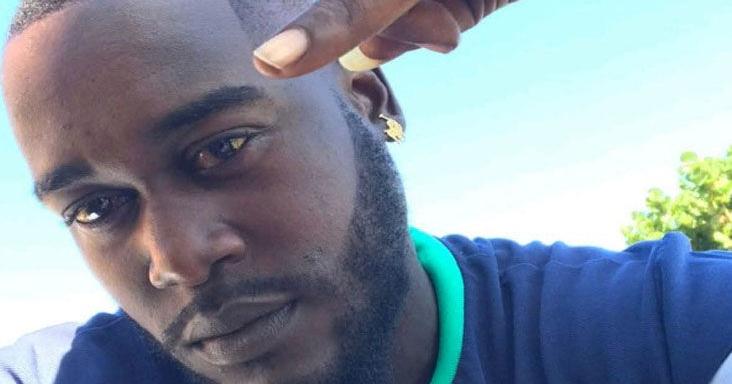
    In an extraordinary display of compassion amidst tragedy, Beryl Bovell has publicly forgiven the murderer of her only son, 30-year-old Kurt Bovell, who became Tobago’s third homicide victim this year. The heartbreaking incident occurred last Thursday around 10 p.m. during a birthday gathering on the streets of Patience Hill, where an assailant wearing a hat approached Bovell and fired multiple shots before robbing another attendee of a gold chain and fleeing on foot.

    Speaking with the Express in an emotional interview, the grieving mother revealed her spiritual approach to processing the unimaginable loss. “Whosoever did it, I forgive them. I put everything in God’s hands,” Bovell stated, demonstrating remarkable resilience despite her pain. She recounted how she had repeatedly warned her son about the dangers of spending time “on the block,” but acknowledged the limitations of parental influence: “You make your children, not their mind.”

    While expressing forgiveness, Bovell simultaneously called for systematic justice, hoping authorities would successfully investigate her son’s killing. Her message to the nation’s youth emphasized parental guidance, street avoidance, and educational focus as crucial protective factors.

    The murder has ignited broader conversations about justice approaches in Tobago. Area Representative Nigel Taitt of Signal Hill/Patience Hill rejected retributive justice concepts when questioned about reinstating capital punishment. “I don’t believe in an eye for an eye,” Taitt asserted. “What I do believe in is fair justice… Taking someone’s life is not your responsibility. That is God’s responsibility. No man has the right or privilege to take another person’s life.”

    This case highlights the complex intersection of community violence, restorative justice philosophies, and parental advocacy within Tobago’s social landscape, presenting both a heartbreaking personal narrative and broader societal implications worth examining.

  • Kamla vows to give Shouter Baptists a secondary school

    Kamla vows to give Shouter Baptists a secondary school

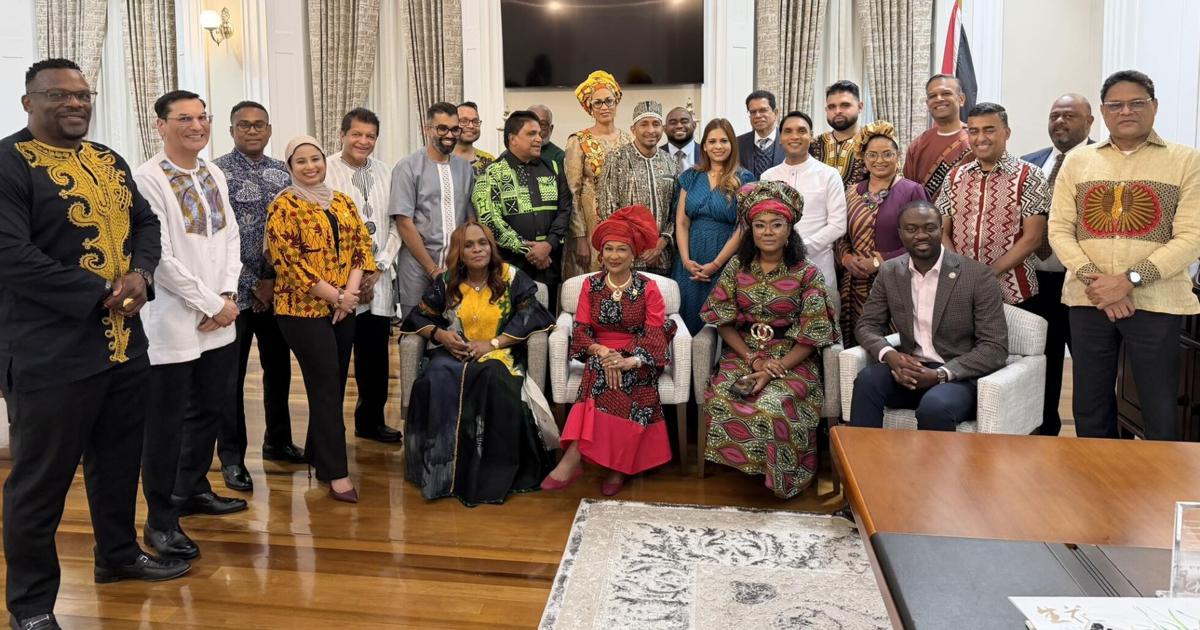
    In a landmark announcement to Parliament, Trinidad and Tobago’s Prime Minister Kamla Persad-Bissessar has committed to establishing the nation’s first secondary school for the Spiritual Shouter Baptist community. The declaration came during special greetings ahead of Monday’s Spiritual Shouter Baptist Liberation Day public holiday.

    The Prime Minister revealed her Cabinet’s formal approval to collaborate with Baptist leaders on this long-awaited educational initiative. “The community has consistently expressed their profound desire for secondary education facilities through years of advocacy,” Persad-Bissessar stated, emphasizing the government’s commitment to tangible action rather than empty promises.

    This initiative builds upon Persad-Bissessar’s longstanding involvement with Baptist education. She recalled her previous role as education minister under former PM Basdeo Panday, when she authorized land transfers for Baptist institutions. Her earlier tenure as prime minister saw the establishment of both a primary school and an Early Childhood Care and Education Centre in partnership with former senator Archbishop Barbara Gray-Burke.

    The political significance of this commitment was underscored during the parliamentary session. Persad-Bissessar contrasted her administration’s actions with previous governments, accusing the former People’s National Movement administration of hypocrisy in their treatment of the Baptist community.

    Personal connections to the faith informed the Prime Minister’s passionate advocacy. She revealed her childhood baptism into the Baptist tradition despite her father’s Hindu background, describing how the faith shaped her development from a humble beginning in rural Trinidad.

    The parliamentary announcement faced brief opposition scrutiny regarding language used in the historical anecdote, though the Speaker permitted the contextual reference. Persad-Bissessar defended her terminology as reflective of personal experience and cultural identity.

    The Prime Minister positioned the secondary school initiative as both an educational milestone and appropriate recognition of the Baptist community’s integral role in Trinidad and Tobago’s national fabric.

  • A LYING COWARD

    A LYING COWARD

    A deepening conflict between Trinidad and Tobago’s nursing leadership and health authorities has erupted into public confrontation, with TTNNA President Idi Stuart filing formal reports with police and telecommunications regulators over an alleged threat made by North Central RHA Chairman Dr. Tim Gopeesingh during a radio appearance. The allegation prompted Gopeesingh to publicly denounce Stuart as “a lying coward” in response.

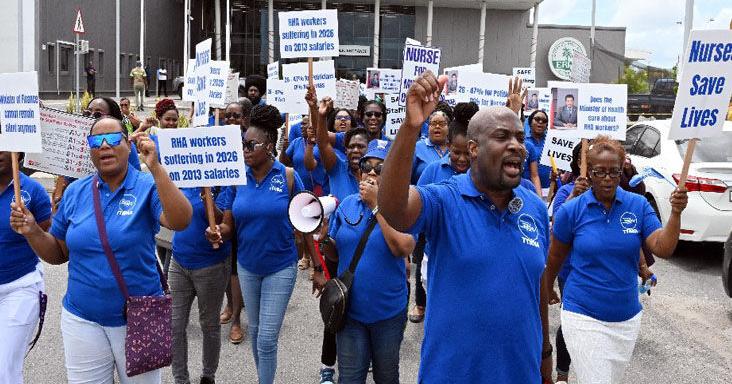
    The tension manifested visibly during a spirited protest at Sangre Grande Hospital, where dozens of nursing personnel marched while chanting criticisms toward Health Minister Dr. Lackram Bodoe. Demonstrators carried placards highlighting wage disparities (“47% for politicians, 0% for nurses”) and the vital role of healthcare workers (“nurses save lives”).

    Stuart, invoking former Prime Minister Basdeo Panday’s famous lion-fighting metaphor, vowed unwavering commitment to advocating for nurses’ rights. He revealed that salary negotiations remain deadlocked, with medical staff still operating under 2013 compensation structures while facing critically low staffing ratios—reportedly five nurses to 124 patients in NCRHA facilities.

    The union leader described a tragic consequence of understaffing: a patient reportedly died unattended in the Accident and Emergency holding bay at Eric Williams Medical Sciences Complex, prompting a distressed nurse to call him in tears.

    With a major demonstration scheduled for April 10 in Port of Spain, Stuart warned that thousands of healthcare workers would converge outside the Health Minister’s office to protest what they characterize as governmental indifference. He emphasized that Minister Bodoe bears ultimate responsibility for securing funding and improving conditions, not subordinate officials like Gopeesingh.

    Gopeesingh, when contacted, dismissed Stuart as “a nondescript person fighting for his survival as a trade unionist” and threatened legal action if the allegations continue.

  • Moonilal, Young apologise for name-calling

    Moonilal, Young apologise for name-calling

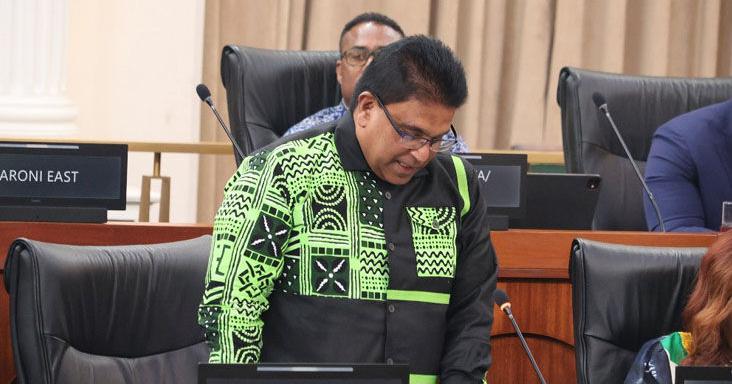
    Trinidad and Tobago’s Parliament witnessed a heated exchange between Energy Minister Dr. Roodal Moonilal and Opposition MP Stuart Young, culminating in mutual apologies after devolving into personal insults during official proceedings. The confrontation emerged during questioning about procurement practices at state-owned energy companies.

    MP Young initiated the inquiry by demanding transparency regarding Phoenix Park Gas Processors Ltd’s alleged acquisition of medical imaging equipment, specifically a GE MRI machine and CT scanner. He pressed for details including the supplier identity, individual item costs, and procurement methodology. Minister Moonilal categorically denied any such procurement activities by PPGPL.

    The exchange intensified when Young questioned whether PPGPL and National Gas Company (NGC) chairman Gerald Ramdeen had instructed staff to cancel orders from original manufacturer GE and redirect procurement to an inexperienced vendor. Moonilal’s dismissive response prompted Young to label him a “class clown,” triggering intervention from House Speaker Jagdeo Singh who mandated an apology.

    The scrutiny extended to NGC’s executive appointments, particularly the hiring of vice-president of Finance Shiva Ramnarine. Minister Moonilal detailed a rigorous September 2025 recruitment process involving five candidates, emphasizing compliance with NGC’s employment policies. Young attempted to question Ramnarine’s professional history, suggesting previous terminations from Caribbean Airlines and Telecommunications Services of Trinidad and Tobago, but the Speaker ruled these inquiries irrelevant.

    Further controversy arose regarding the Cabinet-appointed committee for reopening the Guaracara refinery. Moonilal disclosed that former energy minister Kevin Ramnarine chairs the committee, confirming that no members have received compensation to date. The minister clarified that Trinidad Petroleum Holdings Ltd would administer honoraria payments pending government and board approvals.

  • ‘Irreparable harm’ to Caricom

    ‘Irreparable harm’ to Caricom

    Trinidad and Tobago’s Foreign Minister Sean Sobers has launched a formal condemnation against the Caribbean Community (CARICOM), alleging procedural violations in the reappointment of Secretary-General Dr. Carla Barnett. During a parliamentary address on Thursday, Minister Sobers characterized the process as ‘surreptitious’ and fundamentally damaging to the regional body’s integrity.

    The controversy centers on claims that Trinidad and Tobago—CARICOM’s largest financial contributor—was systematically excluded from decision-making processes. Minister Sobers revealed that the nation provides approximately $127 million annually to various CARICOM institutions, representing 22% of the organization’s total budget. This substantial investment includes $35.5 million to the CARICOM Secretariat, $25 million to the Development Fund, and significant allocations to agencies including CARPHA ($14 million) and the Caribbean Examinations Council ($10.3 million).

    According to Sobers, the first indication of Dr. Barnett’s reappointment came via telephone on March 24, despite the matter never appearing on official agendas during February’s 50th Regular Meeting in St. Kitts. The minister emphasized that neither the preliminary Community Council discussions nor the final Plenary Session included this critical decision, with subsequent communiqués and decision summaries similarly omitting any reference to the reappointment.

    Prime Minister Kamla Persad-Bissessar has aligned with her minister’s position, publicly declaring non-support for Barnett’s continued leadership and signaling intentions to reduce Trinidad and Tobago’s financial commitments to CARICOM. The government maintains that any decisions made without proper participation of all member states violate Article 24 of the Revised Treaty of Chaguaramas, rendering them ‘ultra vires’ or beyond legal authority.

    Despite this confrontation, Minister Sobers reaffirmed Trinidad and Tobago’s commitment to CARICOM’s revitalization, particularly emphasizing the importance of the regional market where Trinidad serves as both largest importer and exporter of goods. The government has called for emergency discussions during the upcoming July meeting in St. Lucia, demanding increased transparency and adherence to established protocols for all future decisions.

  • Alexander blames border failures for kidnapping surge

    Alexander blames border failures for kidnapping surge

    During a parliamentary session marked by intense questioning, Homeland Security Minister Roger Alexander attributed Trinidad and Tobago’s current kidnapping epidemic to the previous administration’s failure to secure national borders. While avoiding direct confirmation of Venezuelan involvement in kidnapping rings, Alexander emphasized that security forces are actively dismantling criminal gangs responsible for these activities.

    The parliamentary debate was triggered by Opposition MP Marvin Gonzales demanding government action against the surge in kidnappings. Minister Alexander defended current security measures, stating: ‘We inherited this crisis due to reckless border policies and registration processes. Our multi-agency approach involving Police Service, Coast Guard, Defence Force and Immigration authorities ensures such incidents won’t recur.’

    This response followed Wednesday’s successful maritime rescue operation of kidnap victim Tara Poliah, which Police Commissioner Allister Guevarro hailed as a breakthrough against cross-border criminal networks. Eleven suspects, predominantly Venezuelan nationals, were apprehended in connection with this case.

    Opposition MP Colm Imbert challenged Alexander to address growing concerns about Venezuelan kidnapping rings operating within Trinidad and Tobago. The minister cautiously responded that he intends to preserve police intelligence integrity while acknowledging evident patterns from recent maritime operations.

    The session expanded to include community security concerns when Opposition MP Stuart Young questioned protective measures for Belmont constituents following Thursday’s fatal shooting during the state of emergency. Alexander confirmed enhanced security deployments, increased preventive detention orders, and ongoing firearm seizures throughout Port of Spain.

    The minister notably revealed that 137 Belmont residents have petitioned for implementing Zones of Special Operations (ZOSO) in their area, indirectly criticizing Young’s representation. However, the Speaker blocked subsequent questions regarding canceled social programs and training initiatives in the constituency.

  • A Call for Unity: Protecting the Lives of Our Youth

    A Call for Unity: Protecting the Lives of Our Youth

    The Caribbean nation of Antigua and Barbuda is confronting a profound national crisis following the violent deaths of two young citizens, an event that has triggered widespread grief and urgent calls for systemic reform. Kristine Louisa, the National Youth Ambassador and Founder of the Hopeful Hearts Foundation, has issued a powerful appeal for both solidarity and concrete action in response to the tragedy.

    In her public statement, Louisa emphasizes that collective mourning must be coupled with a determined commitment to address the underlying causes of youth violence. She stresses the imperative for justice for the victims’ families and condemns the culture of violence that endangers the nation’s younger generation. The core of her message advocates for the establishment of robust intervention programs, the creation of accessible safe spaces, and the expansion of consistent mentorship initiatives designed to guide vulnerable youth toward positive life choices.

    Lousa highlights the critical role of community engagement, calling on youth ambassadors, mentors, and leaders to initiate honest dialogues about the challenges facing young people. She argues that proactive support systems are a vital national investment, citing her firsthand experience with the Hopeful Hearts Foundation, where mentorship and safe conversations have proven effective in redirecting young lives.

    The ambassador’s statement concludes with a direct message of support to the bereaved families and a reaffirmation to every young person in the nation that their lives and futures are valued. She frames the current moment as a pivotal opportunity for the country to unite with compassion and purpose to build a safer, more supportive environment for its youth.