作者: admin

  • Weather phenomenon: Frost in Valle Nuevo announces extreme cold in the Dominican Republic

    Weather phenomenon: Frost in Valle Nuevo announces extreme cold in the Dominican Republic

    Meteorological expert Jean Suriel has documented an unprecedented climatic shift in the Dominican Republic’s high-altitude Valle Nuevo region, where severe frost conditions have persisted for two consecutive days. This meteorological phenomenon signals the commencement of an extended cold period predicted to continue through mid-April 2026 across the nation’s mountainous territories.

    According to Suriel’s detailed social media analysis published via X, temperature readings revealed a dramatic plunge to -0.5°C on Tuesday morning, following the previous day’s measurement of 0.2°C. The combination of low temperatures and wind conditions created a biting wind chill factor of -2°C, substantially amplifying the cold experience for the region.

    The extreme conditions have transformed the landscape through two distinct cryogenic phenomena: frost formation from frozen dew droplets coating vegetation, and cencellada—the rare occurrence of frozen fog crystals accumulating on surfaces. These conditions result from the synergistic effect of the season’s 14th frontal system colliding with a dense polar air mass currently positioned over the northern Caribbean basin.

    Suriel’s analysis indicates that persistent Atlantic winds are driving this Arctic air mass deeper into Dominican territory than typically observed, creating atypical thermal patterns for the region. The early intensity and duration of these frost events suggest an unusually prolonged cold phase that could have significant implications for agriculture, ecosystems, and local communities in elevated areas throughout the Dominican Republic.

  • It affects days and nights: What changes in the Dominican Republic with the arrival of the winter solstice?

    It affects days and nights: What changes in the Dominican Republic with the arrival of the winter solstice?

    The Dominican Republic experiences a distinct atmospheric transformation each December, characterized by shortened daylight hours and extended nights accompanied by a noticeable Christmas breeze. This seasonal shift transcends mere perception, finding its scientific explanation in the astronomical event known as the winter solstice, which occurs annually around December 21st.

    This celestial phenomenon represents the year’s shortest day and longest night in the Northern Hemisphere, occurring when the Sun reaches its southernmost position directly above the Tropic of Capricorn. Meteorologist Cristopher Florian of the Dominican Institute of Meteorology explains that during this period, solar rays strike the northern hemisphere at a more oblique angle, resulting in reduced solar radiation and the official commencement of winter conditions.

    The solstice’s impact manifests through later sunrises and earlier sunsets across the Dominican Republic, creating prolonged nighttime hours and diminished daylight. This astronomical transition also facilitates a moderate decrease in temperatures, particularly during nocturnal and early morning hours. Florian notes that these effects intensify in valley and mountainous regions, especially in provinces adjacent to the Central Cordillera such as Santiago, Monseñor Nouel and La Vega, where morning fog frequently occurs.

    Despite these atmospheric changes, the country’s tropical location near the Tropic of Cancer ensures that elevated temperatures persist throughout the winter period. Temperature peaks exceeding seasonal averages continue to affect northwestern regions including Santiago Rodríguez, Dajabón, and Montecristi.

    Regarding precipitation patterns, Florian indicates that reduced rainfall characterizes this season due to predominant high-pressure systems that create less humid conditions. These anticyclonic systems promote stable weather patterns featuring predominantly sunny skies, minimal cloud coverage, and significantly diminished rainfall activity.

  • Agronomisch debat: landbouw vast in vicieuze cirkel

    Agronomisch debat: landbouw vast in vicieuze cirkel

    Suriname’s agricultural industry faces a critical juncture as it grapples with a self-perpetuating cycle of small-scale operations, stagnant productivity, and insufficient investment. This stark assessment emerged during the inaugural public forum of the newly established Association of Agronomists in Suriname (VAS), held Thursday evening at the Anton de Kom University Guesthouse.

    The gathering, themed ‘Challenges Within the Agricultural Sector,’ featured extensive dialogue among stakeholders who unanimously characterized the event as both intellectually substantial and motivationally impactful. Attendees expressed particular appreciation for the initiative and anticipation for subsequent activities. VAS Chairman Soedeshchand Jairam declared the evening a resounding success, noting that ‘despite the festive season, attendance was excellent and the discussion was of exceptionally high quality.’

    Industry representatives from fruit and vegetable production, coconut cultivation, livestock farming, fisheries, and rice sectors provided comprehensive insights into both the sector’s potential and its systemic challenges. The expert panel included Gerald Tjon A San (LVV), Rewish Somai (Anton de Kom University), Vijantie Awadhpersad (NOB), and Gilbert van Dijk (Suriname Business Development Center).

    According to Jairam, the consensus was unmistakable: Suriname possesses significant agricultural capabilities but lacks the fundamental conditions to leverage them effectively. ‘Our small-scale structure inherently limits innovation capacity. Technological adoption remains minimal, productivity persists at low levels, and investment continues to lag—all factors that maintain the sector’s constrained size.’

    Stakeholders identified multiple governmental shortcomings, including outdated laboratory facilities, inadequate irrigation and drainage systems, weak storage and cold chain infrastructure, and insufficient transportation options. Research and innovation initiatives were similarly deemed deficient, with insufficient attention to disease management, improved crop varieties, and modern technologies such as sensor systems and precision agriculture methodologies.

    Additionally, participants criticized institutional fragmentation, noting poor inter-ministerial collaboration on critical issues including land policy, financial mechanisms, and taxation frameworks.

    Jairam emphasized that agricultural research represents an urgent priority, particularly given the rapid pace of global sector innovation. ‘While other nations deploy drones, sensor networks, and advanced cultivation techniques, we remain entrenched in traditional practices. Without research into competitive varieties and more efficient production systems, we risk complete market irrelevance.’

    The VAS intends to position itself as a central hub for knowledge consolidation and dissemination, bridging policy, practical implementation, and scientific advancement. Jairam stressed that research enhancement is indispensable, warning that ‘without innovation, we will lose our competitive positioning entirely.’ He further highlighted broader societal implications, stating that ‘oil alone cannot achieve national self-sufficiency. Food security remains a fundamental prerequisite for development.’

    Through this inaugural forum, the VAS has established itself as both a critical and constructive voice in national agricultural discourse. The message is unequivocal: without visionary planning, collaborative effort, and technological modernization, the sector faces continued stagnation—a scenario Suriname cannot afford.


  • Elections : The Government’s course for the 2026 elections

    Elections : The Government’s course for the 2026 elections

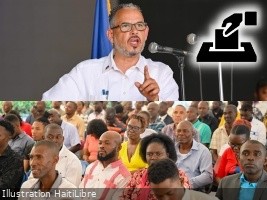
    In a significant address to local governance leaders, Haitian Prime Minister Alix Didier Fils-Aimé has outlined an ambitious roadmap for national recovery centered on the 2026 general elections. Speaking at the inaugural forum of the National Federation of Communal Administration Council (CASEC), the Prime Minister declared 2026 as both an election year and a period marked by unrestricted movement of people and goods throughout the country.

    The cornerstone of this initiative involves establishing robust security frameworks as an essential precondition for credible elections. Fils-Aimé, who also serves as President of the Superior Council of the National Police (CSPN), emphasized the creation of Security Councils across all communal sections. These bodies will implement structured mechanisms for sharing critical security intelligence between local authorities and central government agencies, enhancing coordination and response capabilities.

    In a move to strengthen institutional cohesion, the government pledged to address longstanding financial grievances by settling a substantial portion of the 23 months of salary arrears owed to local elected officials. This gesture recognizes their pivotal role in maintaining governance structures and national stability.

    The Prime Minister, accompanied by Interior Minister Paul Antoine Bien-Aimé, reiterated his administration’s unwavering commitment to neutralizing armed groups and fully restoring state authority. This security consolidation is deemed fundamental for the emergence of legitimate elected institutions in 2026.

    Adding a dimension of national unity, the government announced that each communal section will receive television equipment and solar panel systems to support public viewing of the 2026 World Cup, where Haiti’s national team, the Grenadiers, will participate. This initiative aims to foster collective pride and hope throughout the Haitian Nation.

  • Health : Launch of the national project «My Cleanliness, My Health»

    Health : Launch of the national project «My Cleanliness, My Health»

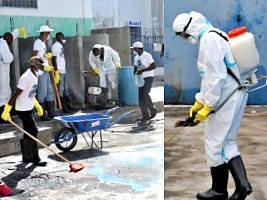
    In a significant public health mobilization, Haiti’s Ministry of Public Health has inaugurated a sweeping national initiative titled “Pwòpte m se sante m” (My Cleanliness, My Health). Spearheaded by the Directorate of Health Promotion and Environmental Protection, this multi-faceted program represents a strategic response to the nation’s critical hygiene and sanitation challenges.

    The project specifically targets high-risk environments where vulnerable populations face elevated health threats, including prisons, displacement camps, and regional healthcare facilities. These locations have been identified as breeding grounds for infectious diseases such as cholera, scabies, and various parasitic conditions that thrive in unsanitary conditions.

    Organized around four strategic pillars, the initiative encompasses comprehensive interventions:

    1. Prison Sanitation Enhancement: Implementing intensive decontamination protocols, disinfecting living quarters and sanitation facilities, conducting fumigation against disease vectors, and rehabilitating critical water access points to meet established hygiene standards.

    2. Displacement Camp Support: Establishing regular sanitation services and permanent community health posts in Port-au-Prince’s densely populated displacement camps through organized clean-up campaigns, improved waste management systems, and reinforced WASH (Water, Sanitation, and Hygiene) infrastructure.

    3. Mobile Medical Services: Deploying mobile clinic units to provide incarcerated individuals with direct healthcare access, including comprehensive medical consultations, systematic screening for tuberculosis, STIs/HIV, and scabies, alongside essential medication distribution.

    4. Hospital Infection Control: Strengthening hygiene protocols in departmental hospitals through targeted decontamination of critical care areas including delivery rooms and surgical theaters, alongside implementing safe biomedical waste disposal systems to meet prevention standards.

    This coordinated effort marks a proactive approach to epidemic prevention through environmental health improvements, representing one of Haiti’s most comprehensive public health interventions targeting institutional sanitation infrastructure.

  • FLASH : A Haitian migrant dies in the USA, one day after his arrest

    FLASH : A Haitian migrant dies in the USA, one day after his arrest

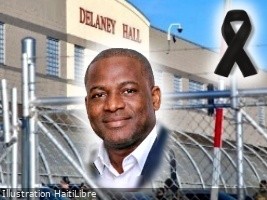
    A tragic incident at a New Jersey immigration facility has raised serious questions about detention center conditions and transparency. Jean Wilson Brutus, a 41-year-old Haitian-American man, died just one day after being taken into custody at Delaney Hall in Newark, according to U.S. Immigration and Customs Enforcement (ICE).

    ICE officials attributed Brutus’s December 2025 death to what they described as a “medical emergency” resulting from “natural causes.” However, this explanation has been met with skepticism from immigrant advocacy organizations who note the agency’s own admission that Brutus displayed no signs of distress during intake processing and had no documented history of cardiovascular problems.

    The circumstances surrounding the week-long delay in publicly acknowledging Brutus’s death have further fueled concerns. Kathy O’Leary, an activist who organizes vigils at the detention facility, emphasized the unanswered questions: “Was he denied essential medication? Did he receive improper treatment? These are precisely the types of concerns we consistently encounter.”

    ICE’s subsequent disclosure of Brutus’s criminal record— detailing four arrests between July 2024 and November 2025— has been criticized by advocacy groups as a deliberate strategy to shift blame and criminalize the victim rather than address institutional accountability.

    Delaney Hall, which opened earlier in 2025 as one of the nation’s largest migrant detention centers, has faced previous controversies regarding substandard conditions including inadequate hygiene, poor nutrition, severe overcrowding, and security failures—most notably a June 2025 riot that resulted in four escapes. The facility has also become a focal point for political tensions, culminating in the arrest of Newark’s mayor during a protest at the site last May. Brutus’s death marks the first fatality recorded at the controversial facility.

    In response to the incident, several Democratic legislators including Senator Cory Booker have demanded both a transparent investigation into Brutus’s death and the immediate closure of the detention center, characterizing the operation as “a stain on our community’s conscience.”

  • What happened? Luis Abinader reschedules his activities in Santiago for this Sunday

    What happened? Luis Abinader reschedules his activities in Santiago for this Sunday

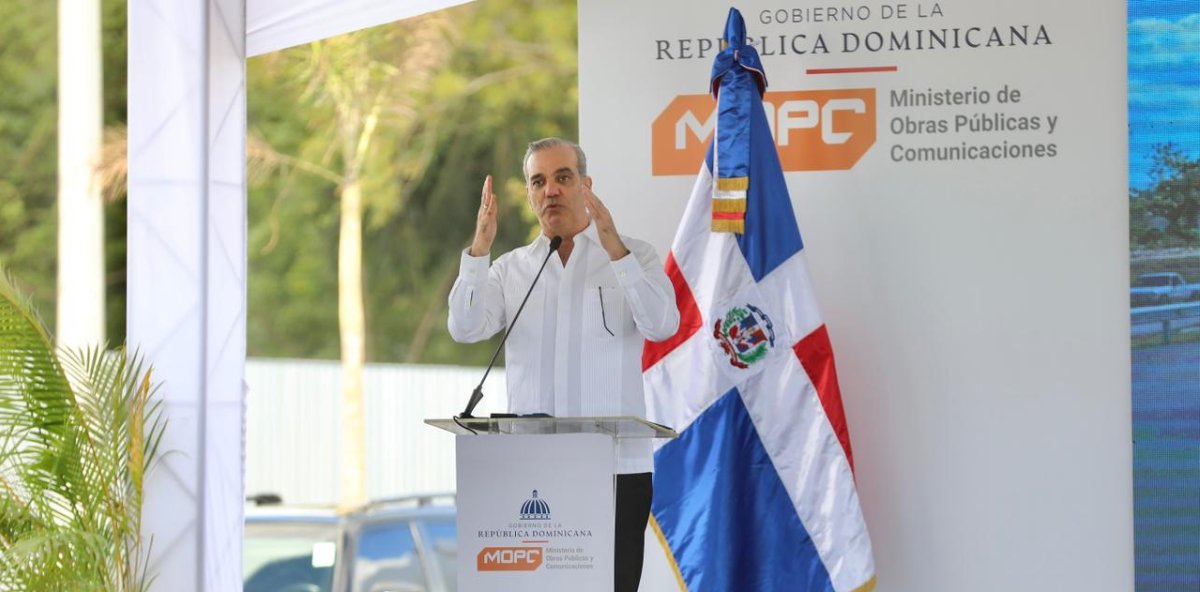
    The Dominican Presidency has announced significant adjustments to President Luis Abinader’s official schedule, moving all activities originally planned for Saturday, December 20 in Santiago province to Sunday, December 21. The Press Office issued an official communication explaining that these changes resulted from necessary modifications to the presidential agenda.

    The rescheduled events include a working lunch with evangelical pastors at the Association for Development (APEDI) Hall, now set for 2:00 PM Sunday. Additionally, the President will oversee the delivery of new apartment units and inaugurate an educational facility in Hato del Yaque municipal district at 3:30 PM the same day.

    This marks the second consecutive day of schedule modifications for President Abinader. On Friday, despite previous announcements of his attendance at a Christmas bonus distribution event at Salomé Ureña School in Capotillo sector, the President’s participation was canceled. Vice President Raquel Peña represented the administration instead, presiding over the 8:00 AM event in the President’s absence.

    The presidential communication team extended formal apologies to media representatives and the public for any inconveniences caused by these scheduling changes, while expressing appreciation for understanding regarding the necessary adjustments to the national leadership agenda.

  • Simons: Reparatie in het onderwijs gaat door in 2026

    Simons: Reparatie in het onderwijs gaat door in 2026

    Surinamese President Jennifer Simons has declared that the comprehensive restoration of the nation’s education system will extend throughout 2026, with particular emphasis on addressing the needs of children requiring specialized educational support. The announcement was made during her weekly address on Radio 10’s “90 Seconden” program on Saturday.

    The educational overhaul initiative, termed “education repair,” entails structural improvements across the entire academic framework. President Simons emphasized the fundamental right of every child to secure classroom placement while acknowledging systemic shortcomings in accommodating students with special needs. “Our current school system indeed lacks proper adaptation for these children,” Simons conceded. “We previously maintained better facilities, and we must restore those capabilities.”

    A national education congress scheduled for March 2026 will convene all stakeholders to establish definitive policy directions. The president expressed confidence that this collaborative effort would produce a clear, widely-supported action plan to elevate educational standards. Simons projected an approximate one-year timeline to bring the system to acceptable operational levels.

    The administration acknowledges persistent challenges, including teacher shortages that disrupt regular instruction in some schools. International support is being provided through the Inter-American Development Bank to assist Suriname’s educational enhancement efforts.

    During the radio program, listeners raised concerns about delayed teacher salary payments. President Simons confirmed addressing this issue with Education Minister Dirk Currie, noting that partial arrears have been cleared with remaining cases undergoing resolution. The head of state suggested that increased government digitalization could systematically reduce such administrative complications in the future.

  • Orchid Kelly Trinidad: 25-year-old with breast cancer asks for help with her treatments

    Orchid Kelly Trinidad: 25-year-old with breast cancer asks for help with her treatments

    In a devastating healthcare setback, 25-year-old Orquídea ‘Rubi’ Trinidad faces an intensified battle against triple-negative infiltrating ductal carcinoma after her insurance provider declined coverage for a potentially life-saving immunotherapy treatment.

    Trinidad initially received her diagnosis of this aggressive breast cancer variant in April 2023. Despite undergoing multiple treatment protocols, recent biopsy results confirmed in October that the cancer has returned with increased virulence and rapid progression.

    Medical specialists have recommended Tocilizumab, an immunotherapy regimen requiring administration every 21 days across six sessions. While this pharmaceutical intervention represents a promising therapeutic avenue, its substantial cost falls outside the coverage parameters of Trinidad’s ASA health insurance policy.

    ‘The pain is inevitable,’ Trinidad stated with resolute yet anguished composure. ‘Sleep eludes me, and I require potent pain management medications simply to endure daily existence.’

    This case highlights growing concerns about insurance coverage gaps for innovative cancer treatments, particularly for young adults confronting aggressive malignancies. The financial barrier between patients and potentially effective therapies continues to present critical challenges within healthcare systems worldwide.

    Medical advocates emphasize that timely access to appropriate treatments remains crucial for improving outcomes in aggressive cancer cases, especially when standard protocols have proven ineffective against disease recurrence.

  • Pinas: Ondanks beperkingen blijft KPS inzet tonen en vernieuwen

    Pinas: Ondanks beperkingen blijft KPS inzet tonen en vernieuwen

    Acting Police Commissioner Melvin Pinas has revealed that the Suriname Police Force (KPS) continues to drive innovation and maintain operational continuity despite facing severe economic and organizational constraints. During a promotion ceremony for police officers, Pinas portrayed an organization frequently operating in crisis mode yet achieving tangible results under challenging circumstances.

    The economic situation in Suriname has significantly impacted the implementation of established policy plans, forcing the police force to prioritize crisis management over structured execution. This approach has focused on meeting the minimal security needs of society while maintaining essential services. “Nevertheless, several policy objectives have been accomplished,” Pinas affirmed.

    Notable achievements include substantial progress in digital transformation, particularly through specialized applications for driver’s license applications, fuel management, payment processing, and managing confiscated assets such as vehicles and passports. The police force also presented a crucial document to the Minister of Justice and Police that will serve as the foundation for career development and personnel policy within the organization.

    Significant investments have been made in training and education programs. Officers have received specialized instruction in financial investigation, intelligence-based investigation techniques, and language proficiency. The basic training program has been completed, with approximately 300 new police officers expected to join the force in the first half of 2026. The curriculum now includes enhanced focus on domestic violence, recognizing its direct impact on public safety and citizen welfare.

    Pinas acknowledged several critical challenges, including personnel depletion through retirement, international migration, and the reassignment of officers to other security duties. These factors have increased operational pressure on the organization, with adequate staffing remaining a primary concern.

    The acting commissioner also addressed the inherent risks of police work, referencing a young officer who recently lost his life while responding to an emergency call during off-duty hours. “This reflects who we are: servants of society,” Pinas stated emotionally.

    He further highlighted the impact of social media on the force’s public image, emphasizing the need for increased carefulness in operations and communications due to the rapid spread of misinformation and potential reputation damage.

    Pinas concluded by emphasizing that promotions entail greater responsibilities requiring additional commitment, professionalism, and exemplary conduct. He urged promoted officers to take their new roles seriously while continuing to serve their communities. The commissioner also appealed for stronger societal collaboration: “Safety begins with cooperation. We cannot do it alone.”