作者: admin

  • Olmberg: Zonder bundeling mist private sector kansen in olie-economie

    Olmberg: Zonder bundeling mist private sector kansen in olie-economie

    As Suriname stands on the cusp of an unprecedented economic boom driven by new upstream oil and gas projects, the head of the country’s leading energy industry body is issuing a urgent call for domestic private sector players to unite and organize, warning that fragmentation could leave the vast majority of potential economic benefits off the table for local businesses.

    Orlando Olmberg, president of the Suriname Energy Chamber (SEC), laid out his stark warning in a recent address, arguing that coordinated collective action from private domestic enterprises is the only way to ensure the country maximizes gains from the rapidly emerging sector. While international oil companies operating in the country have confirmed that the capabilities and quality of local Surinamese entrepreneurs meet global industry standards, Olmberg says the critical gap lies in the sector’s ability to organize at scale to match the size and pace of coming development.

    Major projects including the Blok 58 development, followed by the future Blok 52 project, are set to unlock billions in new economic activity for the small South American nation. For Olmberg, the core question facing the country is not whether transformative economic opportunity exists, but whether local stakeholders are positioned to capture that opportunity for businesses of all sizes, from small local suppliers to large domestic enterprises.

    A key point of emphasis from Olmberg is reframing the widespread conversation around local content requirements. Too often, local content rules are treated as merely a regulatory compliance obligation for international operators, he argues, when the concept’s real impact depends on local organizational capacity, cross-sector collaboration, and proactive preparation. Without this foundational strength, he says, local content policies will remain nothing more than empty ambitions written into policy documents.

    While the Surinamese government carries an important role in enabling the sector’s growth through establishing clear legislation, structuring development contracts, and managing public revenue from resource extraction, Olmberg stressed that policy alone cannot guarantee inclusive economic growth. Without a robust, well-organized domestic private sector prepared to participate in large-scale project supply chains and operations, the bulk of new value created by the oil and gas boom will flow to foreign firms rather than circulating through the Surinamese economy, he warned.

    Fragmentation among domestic private enterprises stands as the single largest bottleneck to capturing this value, according to Olmberg. When businesses operate independently in siloed individual strategies, they lack the collective market and negotiating power to shape the sector’s development to prioritize local participation. That means the responsibility to drive change rests squarely on the private sector itself, he argued.

    Olmberg closed with a urgent call to action for Surinamese entrepreneurs: the time for waiting on others or pursuing disconnected individual strategies is over. Local businesses must organize now, align around a shared long-term strategic vision, and take collective ownership of the sustainable development of Suriname’s new oil and gas industry – and this action cannot wait, he emphasized.


  • Easter Sunday Shootout in Caye Caulker

    Easter Sunday Shootout in Caye Caulker

    It was meant to be a landmark step toward stronger public safety for the popular island destination of Caye Caulker, Belize. Just days after the Belize Coast Guard launched a new forward operating base on the island, designed to bolster regional security and crack down on criminal activity, a bold pre-dawn shootout on Easter Sunday has thrown those efforts into doubt, leaving law enforcement still searching for the armed suspects who escaped by sea.

    The incident unfolded when members of the Belize Police Department’s Quick Response Team moved to intercept a suspicious three-wheeled vehicle moving through the island. As officers closed in, at least one individual inside the vehicle opened fire on the pursuing officers, triggering an exchange of gunfire that stretched across the island toward its coastal shoreline.

    The chase ended when the suspect vehicle veered into the Caribbean waters off the RCD Wharf. Forced to abandon their disabled transport, the gunmen quickly moved to a pre-positioned waiting vessel offshore and fled the scene before officers could establish a lockdown of the area.

    In the aftermath of the confrontation, investigating officers have combed the area surrounding the RCD Wharf, where they recovered multiple pieces of evidence: a cache of burglary tools linked to the suspects, and numerous spent shell casings from the shootout. Law enforcement teams are currently reviewing all available local surveillance footage from nearby businesses and public areas to identify the suspects and map their movements before and after the incident. As of the latest updates, no arrests have been made, and the investigation remains active and ongoing.

    The brazen nature of the attack — an armed confrontation with police in a public area of the popular tourist island, followed by an organized escape at sea — has cast a shadow over the Belizean government’s recent push to improve security on Caye Caulker. The new Coast Guard forward operating base was positioned to respond more quickly to maritime criminal activity and enhance safety for both local residents and the island’s thriving tourism industry, but the incident has raised new questions about the scale of organized criminal activity operating in the region.

  • QUESTION OF THE DAY: Are drivers doing enough to prevent the growing number of serious road accidents?

    QUESTION OF THE DAY: Are drivers doing enough to prevent the growing number of serious road accidents?

    Across the country, a disturbing trend has emerged on public roads: the frequency and intensity of serious traffic collisions are climbing steadily, fueling mounting public and official anxiety over how motorists behave behind the wheel and whether they are taking adequate responsibility for road safety.

    In recent weeks, a string of high-profile crashes has underscored the deadly risks linked to reckless driving habits. Multiple incidents, which have left people injured and included several cases where vehicles flipped entirely, have traced directly back to two common dangerous behaviors: driving at excessive speeds and distracted operation of a motor vehicle. In one recent collision reported by local law enforcement, a driver speeding through a residential neighborhood ran a stop sign, striking another car and causing it to overturn, sending both drivers to a local hospital with non-life-threatening injuries.

    Public safety officials have repeatedly issued urgent calls for motorists to practice greater caution every time they enter a vehicle. But as crash counts continue to rise, a pressing question hangs over ongoing safety efforts: are individual drivers stepping up to meet their responsibility to cut down on preventable risks, or is cultural change around safe driving moving too slow to reverse the current trend?

  • WATCH: Antigua and Barbuda’s Tyra Fenton Dominates 200m At CARIFTA

    WATCH: Antigua and Barbuda’s Tyra Fenton Dominates 200m At CARIFTA

    The CARIFTA Track and Field Championships, one of the Caribbean’s most prestigious annual youth athletic competitions, served up a stunning standout performance this year, as Antigua and Barbuda’s rising sprint star Tyra Fenton put on a masterclass of speed and dominance to claim top honors in the women’s 200-meter event.

    Competing against a deep field of the region’s top young sprinters, Fenton controlled the race from the moment the starting gun fired out of the starting blocks. She exploded off the line, quickly gained an edge over her rivals through the curve, and extended her lead in the straightaway to cross the finish line well clear of the competition. Her commanding win has cemented her status as one of the most exciting young sprint talents coming out of the Caribbean this season.

    For fans across Antigua and Barbuda, the victory sparked widespread celebration, highlighting the depth of young athletic talent emerging from the twin-island nation. CARIFTA has long served as a launching pad for future Olympic and world championship competitors, with many of the sport’s biggest sprint names getting their start at the regional event. Fenton’s dominant performance this year marks her as a name to watch in upcoming international youth competitions, as she continues to build her career and represent her country on the global athletic stage.

  • BREAKING: Tyra Fenton Wins 200m Gold to Secure Third CARIFTA Medal for Antigua and Barbuda

    BREAKING: Tyra Fenton Wins 200m Gold to Secure Third CARIFTA Medal for Antigua and Barbuda

    Young sprint prodigy Tyra Fenton has extended her unprecedented winning streak at the 2024 CARIFTA Games in Grenada, securing her third medal of the regional competition by taking top honors in the Under-17 girls’ 200-meter final. Fenton’s latest victory, officially confirmed by the Antigua and Barbuda Athletic Association (ABAA), cements her status as one of the most outstanding young competitors at this year’s tournament, with the governing body praising the teen’s performance as yet another display of her natural dominance on the track.

    Coming into the 200m race, Fenton had already turned heads with an early medal haul: she claimed gold in the highly competitive Under-17 100-meter sprint and picked up a bronze medal in the 400-meter event just days prior. Her ability to compete at the highest level across three distances from the short 100m to the longer 400m demonstrates a rare combination of raw explosive speed and consistent endurance that sets her apart from her peers.

    Hosted at the state-of-the-art Kirani James Athletic Stadium, the annual CARIFTA Games draws the most elite junior track and field talent from 31 member nations across the Caribbean region, providing a launchpad for young athletes to advance to regional and global competitions. For small island nation Antigua and Barbuda, Fenton’s three-medal performance already ranks among the strongest individual showings the country has put forward in recent CARIFTA Games history, drawing pride and attention to the island’s emerging athletic development program.

  • Private university faces closure if Critchlow Labour College Inc wins possession court battle

    Private university faces closure if Critchlow Labour College Inc wins possession court battle

    A looming legal battle over property rights has pushed a private Guyanese higher education institution to the brink of permanent closure, with its top leader warning that an unfavorable court ruling would immediately end all operations. As of Monday, April 6, 2026, Stanley Paul, President of the University of Excellence, Management and Business Inc. (UEMBI), confirmed the private university is set to wind down operations by December 2026 if the High Court rules against it in the ongoing possession dispute over the Critchlow Labour College (CLC) building in Georgetown.

    The core of the legal conflict centers on the validity of a 15-year commercial lease agreement UEMBI signed with former CLC principal Ivor English in June 2025. The lease, which grants UEMBI access to the Woolford Avenue property originally leased to CLC by the Mayor and City Council of Georgetown in 1968, was struck at a time when Critchlow Labour College Inc. (CLCI), the legal entity behind the college, had been struck off Guyana’s Companies Register. CLCI was removed from the register in November 2013 and only restored in November 2025, months after the lease was signed. CLCI argues that English never held authorization as a director or officer of the institution to sign the lease, making the entire agreement a legal nullity.

    In its court filings, CLCI is seeking multiple court orders: an injunction barring UEMBI from any construction activity on the property, a formal ruling that UEMBI’s continued occupancy constitutes trespassing, and compensatory damages totaling GY$3,106,000 per month dating back to September 2025 for unlawful possession. CLCI also adds that UEMBI’s ongoing construction work violates Georgetown’s municipal building bylaws, as no legally approved construction plan was ever secured. Paul, however, has staunchly defended the lease’s validity, noting he had no prior notice of CLCI’s struck-off status or English’s alleged lack of authority, and that English openly represented himself as an authorized agent for the institution during negotiations. Per the terms of the agreement, Paul says UEMBI paid GY$4 million in advance rent, with monthly rent set at GY$1 million starting September 1, 2025, and the agreement includes an automatic renewal clause after the initial 15-year term.

    Complicating UEMBI’s position ahead of the scheduled April 7, 2026 hearing, the institution has now lost its fourth consecutive legal representative, after attorney Joelle Harmon-Alstrom withdrew her representation effective April 1, 2026. Paul told reporters the split stemmed from disagreements over case strategy: Paul pushed to highlight new, critical points raised in CLCI’s latest court submissions, while Harmon-Alstrom opted not to proceed with that framing. To date, Paul says UEMBI has spent GY$2.5 million on legal representation across four different lawyers, and he remains dissatisfied with all of the work the firm has provided.

    Paul confirmed that following Harmon-Alstrom’s withdrawal, he notified enrolled students of the planned December 2026 closure, but added that the shutdown is contingent on two key outcomes. First, the closure will only move forward if the High Court rules to eject UEMBI from the property. UEMBI’s accreditation is explicitly tied to its current location, meaning the university cannot relocate or continue operations elsewhere if it loses the building. Second, Paul says the university remains open to a transfer arrangement if a qualified, credible buyer steps forward before the end of 2026 to take over operations, a provision included to protect student interests and maintain continuity of education. The National Accreditation Council of Guyana has responded to Paul’s closure notice, calling for him to issue a more clear, definitive plan rather than attaching caveats to the proposed shutdown.

    Ahead of Tuesday’s hearing, Paul says he intends to request additional time from Justice Fidela Corbin-Lincoln to secure new legal representation, as well as permission to file a newly drafted reply affidavit. The final outcome of the ruling will determine the future of the private university and its student body, with one of Guyana’s newer private higher education institutions facing complete dissolution over the disputed property agreement.

  • Politie zoekt Pearl Morgenstond in meerdere zware strafzaken

    Politie zoekt Pearl Morgenstond in meerdere zware strafzaken

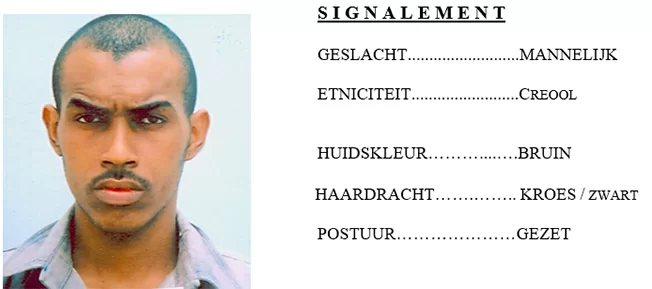
    On April 6, law enforcement agencies in Suriname announced an official manhunt for Pearl Percy Morgenstond, a 41-year-old suspect also known by the aliases ‘Morgu’ and ‘Kabouter’, acting on orders from the Attorney General at the Suriname Court of Justice.

    Born on January 22, 1985, in Paramaribo, Morgenstond is registered at two addresses in Wanica District: Devisweg and Kronenburgweg. Suriname police have linked the suspect to a string of severe criminal offenses. The charges against him include active participation in a structured criminal organization, hostage-taking, aggravated theft, extortion, and qualified forgery of official documents. He also faces an additional charge of violating the country’s Arms and Ammunition Act.

    Suriname police released a public description of the suspect to aid public identification: he is a man of Creole descent, with a brown skin tone, curly hair, and a stocky build. The manhunt operation is being led jointly by two specialized units: the Serious Crime Combat Division and the Forensic Investigation Department, which bring specialized experience in tracking high-priority criminal suspects.

    In a public appeal, law enforcement is urging any member of the public who may have information about Morgenstond’s current whereabouts to come forward immediately. Tip-offs can be submitted through multiple channels: calling the Suriname Central Region Detective Division (RRMS) at the hotline 582050, contacting the national police Command Center at the emergency line 115, or visiting the nearest local police station to share information in person. All provided information will be handled confidentially as the operation progresses.

  • Guyana secures 3rd place in EU-backed Caribbean maritime security competition

    Guyana secures 3rd place in EU-backed Caribbean maritime security competition

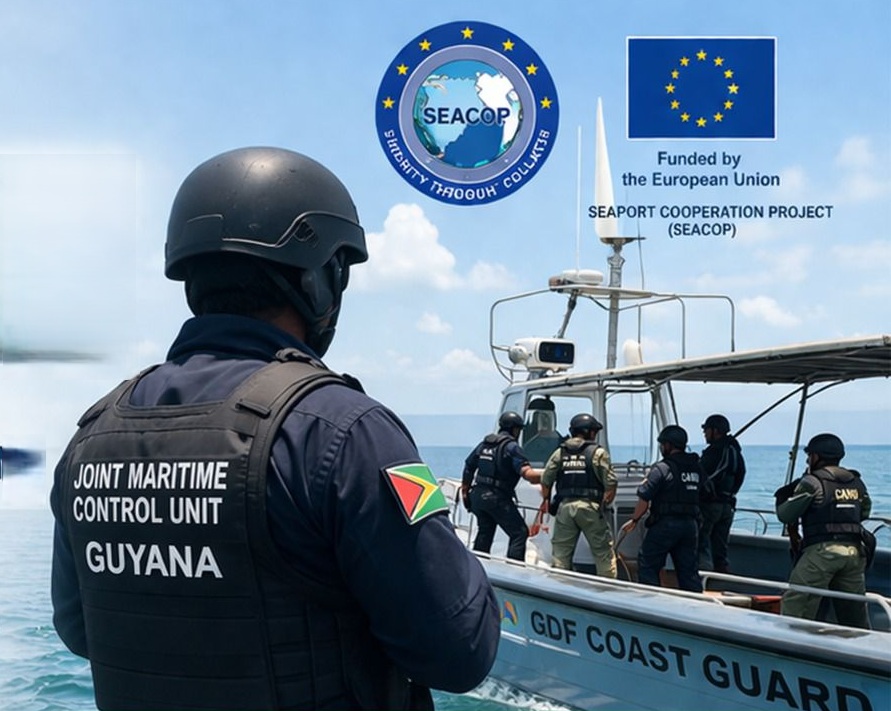
    On Monday, Guyana’s Customs Anti-Narcotics Unit (CANU) announced that the country has earned third place in the 2026 Joint Maritime Control Unit (JMCU) Caribbean Competition, held under the European Union-funded Seaport Cooperation Project (SEACOP), a regional initiative focused on countering maritime illicit trafficking.

    The annual competition is designed to benchmark and elevate the capabilities of Caribbean law enforcement teams to carry out high-risk vessel inspections for contraband, most notably illegal narcotics, while adhering to global safety and procedural standards. It brings together maritime enforcement agencies from across the Caribbean region to test practical skills, share best practices, and strengthen cross-border cooperation against transnational organized crime.

    Guyana’s delegation was made up of personnel from three leading national security agencies: CANU, the Guyana Police Force (GPF), and the Guyana Defence Force (GDF) Coast Guard. The team scored 72 out of a total 80 possible points, equal to a 90% overall rating. This result tied Guyana with Saint Kitts and Nevis for third place, trailing only regional leaders Barbados and Trinidad and Tobago, which scored 75 points (94%) to claim the top two positions.

    Assessments for the competition were conducted against a strict 80-point evaluation framework that graded teams across multiple core competency areas. Judges evaluated operational safety protocols, tactical search methodologies, internal communication, inter-agency teamwork, decision-making during high-pressure scenarios, adherence to legal and procedural rules, professional conduct, and command effectiveness.

    In its official statement, CANU emphasized that Guyana’s strong performance reflects the nation’s growing and robust maritime interdiction capacity, built through sustained investments in targeted training, improved inter-agency coordination, and intelligence-led enforcement operations. The result also cements Guyana’s commitment to collaborative regional security, as participating nations work collectively to shut down illicit trafficking routes that span Caribbean waters.

    Alongside Guyana, Barbados, Trinidad and Tobago, and Saint Kitts and Nevis, the competition drew participants from a range of Caribbean nations including Suriname, Jamaica, and Antigua and Barbuda, demonstrating the widespread buy-in for coordinated regional security action across the bloc.

    CANU noted that the SEACOP JMCU Competition serves as a critical developmental platform for Caribbean maritime law enforcement, helping agencies align operational standards, improve interoperability during joint operations, and adopt proven best practices from peer nations. For Guyana, the third-place finish confirms the country’s position among the top tier of regional maritime interdiction units, with clear room to advance to the top of the rankings through continued refining of operational protocols and training.

  • Minister vows stronger marketing for Oistins Fish Festival

    Minister vows stronger marketing for Oistins Fish Festival

    As one of Barbados’ most beloved cultural gatherings prepares to mark its historic 50th anniversary, a senior government official has laid out a bold strategy to reverse years of declining patronage and reinvigorate the iconic Flow Oistins Fish Festival. Dr. Shantal Munro-Knight, a government minister and Member of Parliament for Christ Church South, has committed to rolling out enhanced marketing campaigns and expanded community outreach to draw larger crowds to the milestone celebration next year, addressing long-simmering frustrations from local vendors who have reported plummeting sales at recent editions of the event.

    Voicing shared concern over the steady drop in attendance that has eroded the festival’s vibrancy in recent years, Munro-Knight confirmed she will partner closely with the festival’s organizing committee to reframe public outreach and boost national awareness of the event’s cultural significance. “Supporting every vendor and small business that relies on this festival is a top priority,” she emphasized during a public appearance at the festival’s annual Dionna Browne-Findlay Easter Bonnet parade, where she served as head judge. “We are calling on all Barbadians to turn out and support our event both on the final day of this year’s festival, and for our golden anniversary celebration next year.”

    Munro-Knight made clear that the 50th anniversary programming will center two core goals: honoring the Caribbean island’s fishing community, which founded the festival decades ago, and reviving beloved traditional elements that have faded from recent lineups. Iconic features that once defined the event, including elaborate parade floats, traditional folk costumes and live folk dance performances, will return to the spotlight for the golden jubilee. “I can promise the 50th anniversary will be a grand, unforgettable celebration,” she said. “We’re bringing big floats back, and we’re highlighting the core elements that make this festival special – most of all, our fisherfolk who built this tradition.”

    The MP added that reversing the trend of waning public interest will require a national shift back to intentional cultural appreciation, with a specific focus on engaging younger generations through expanded school involvement. “This is a whole-of-government commitment. We need to revisit our approach to make sure our marketing and outreach resonate with all Barbadians, from older generations who grew up with the festival to young people who are experiencing it for the first time,” she explained. “We have to embed deeper youth and school engagement to build long-term interest and keep crowds coming back year after year.”

    During her appearance at the Easter Bonnet parade, an event that has become a staple staple side attraction of the festival, Munro-Knight also put forward a proposal to expand the competition’s participation eligibility. Currently, the contest is split into two age divisions: three to seven years old, and eight to 11 years old. The MP suggested opening the competition to older children and adult women to broaden participation and add more variety to the event.

    Now in its fifth year, the 2024 parade did not disappoint, with dozens of contestants showcasing wildly creative handcrafted bonnets themed around the festival’s core Barbadian cultural identity. Popular designs included interpretations of the island’s iconic flying fish, vibrant underwater seascapes, and depictions of Mother Sally, a legendary traditional folk character central to Barbadian carnival culture. In the three-to-seven age group, Dante Yearwood took home first place, with Arriel Hunte and Reef Riis claiming second and third place respectively. For the eight-to-11 division, Amyrah Boyce won the top prize, followed by Legacy Goddard in second and Kimaria Allen Farrell in third.

  • Vendors complain of poor sales at Oistins Fish Festival

    Vendors complain of poor sales at Oistins Fish Festival

    One of Barbados’ most beloved annual cultural gatherings, the Flow Oistins Fish Festival, is facing an unprecedented downturn that has left long-time and first-time vendors alike frustrated and calling for urgent institutional changes. During a on-site visit by Barbados TODAY on Easter Sunday afternoon, the widespread discontent among stallholders was impossible to miss, with nearly every seller reporting historically low foot traffic and revenue that fails to cover even basic participation costs.

    An anonymous toy vendor, visibly frustrated by the lack of customer activity, shared that she had only earned $80 on the festival’s Saturday, and had not made a single sale by mid-afternoon Sunday. Surveying the nearly empty aisles between stalls, she explained that recouping the fee she paid to secure her vending spot is now almost out of the question.

    Multiple vendors pointed to insufficient promotional outreach as a core driver of the low turnout. One seller, who described the first three days of the event as shockingly lifeless, noted that numerous attendees she spoke to had no advance warning that the festival was running that weekend. Even after dark, when the event traditionally draws the largest crowds, there has been little energy or activity this year. She stressed that while she holds out hope for a last-minute uptick in visitor numbers, the 2024 festival is already the worst she has ever experienced. To reverse the decline, she suggested organizers reintroduce popular traditional activities and add more family-focused programming specifically designed to attract young children and their parents.

    For Angelina Powell-Austin, a veteran vendor who has participated in the Oistins Fish Festival for 43 consecutive years, the 2024 downturn is part of a gradual but steady decline she has watched unfold over decades. “Years ago, this event was vibrant. By Saturday alone, we would already earn back every dollar we spent on our spot, then pack up early and return on Monday to keep all remaining sales as pure profit,” she recalled. Now, she says, each passing year brings worse turnout and lower sales, and this year’s atmosphere has been “boring, dead” compared to the event’s glory days. Though she acknowledged that all events evolve over time, she joined other sellers in calling for meaningful changes to reverse the trend.

    Lateisha Edwards, who runs a local plant and seedling stall and has participated in the festival for 15 years, echoed that assessment, calling 2024 one of the worst iterations of the event in her tenure. She noted that only opening Friday saw moderately heavy foot traffic, with all subsequent days slowing to a near standstill—even though many browsers stopped to look at her plant stock, very few ended up making purchases. Edwards says she is still holding out hope that sales will pick up before the festival wraps.

    A jewelry vendor in only her fourth year of participation struck a more optimistic tone, even as she acknowledged that the 2024 event has failed to meet her expectations. “Business is always a gamble,” she explained. “Even if sales are slow this weekend, this is still a chance to get my brand in front of new people, and many customers come back to purchase from me after the festival ends. There is always reason to hope things will improve.”

    Fruit and vegetable seller Shiann Harvey added that her sales are also far below average. In typical years, she would have sold out of her entire stock by Easter Sunday, but this year she still has most of her produce left. Like other vendors, she called for organizers to add more diverse entertainment and engaging attractions to draw crowds back to the event and revitalize its declining popularity.