作者: admin

  • U.S.-CARICOM Relations: Year in Review (2025)

    U.S.-CARICOM Relations: Year in Review (2025)

    The Caribbean Community (CARICOM) concluded 2025 with notable achievements in regional integration and economic development, yet simultaneously confronted significant diplomatic challenges stemming from the foreign policy approach of Donald Trump’s second presidential term. According to analysis by Dr. Nand C. Bardouille, an international relations expert at The University of the West Indies, the Trump 2.0 administration has introduced substantial uncertainty into U.S. relations with the bloc’s fourteen sovereign member states.

    A particularly consequential development has emerged from Trinidad and Tobago, where a major recalibration of foreign policy alignment with the United States has created fissures within CARICOM’s unity. This shift reflects broader regional apprehensions about Washington’s renewed military presence across Caribbean territories and its evolving approach to hemispheric affairs.

    Dr. Bardouille’s comprehensive analysis, documented across multiple scholarly publications throughout 2025, identifies this foreign policy divergence as a critical test for regional cohesion. His research examines how member states are navigating competing national and regional interests amid heightened geopolitical tensions, particularly regarding Venezuela policy and great-power competition.

    The analytical series highlights how CARICOM nations have experienced foreign policy setbacks during the initial months of Trump’s renewed presidency. These challenges occur against the backdrop of escalating great-power politics that have intensified focus on spheres of influence throughout the Caribbean region.

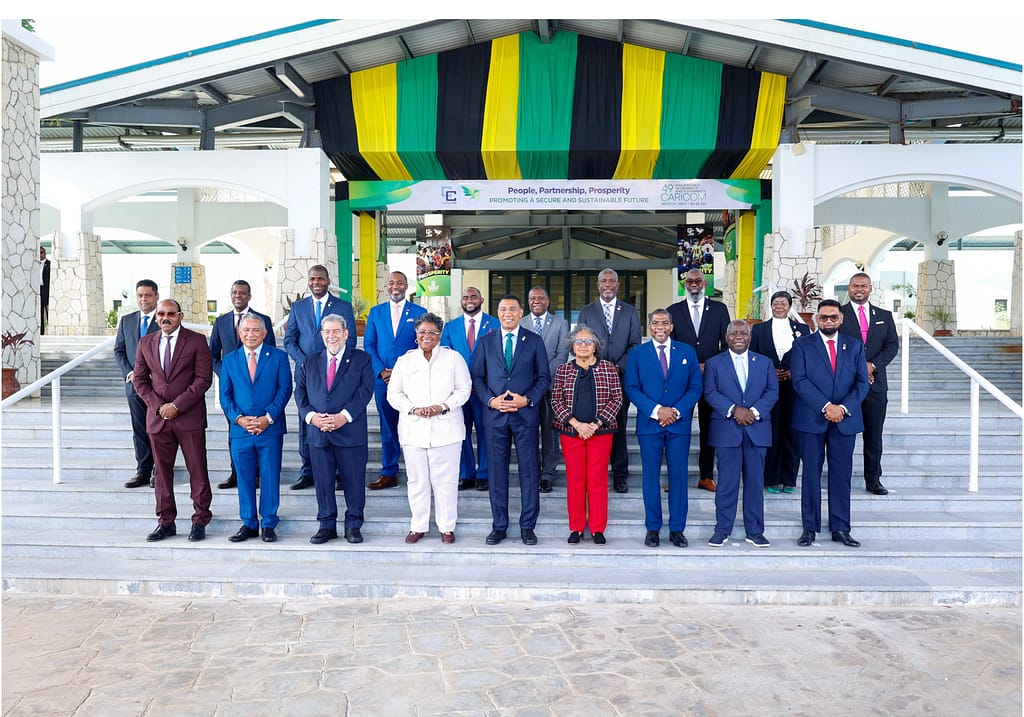
    Looking toward 2026, expectations are mounting that regional leadership will prioritize cooperative solutions over confrontation. The forthcoming Fiftieth Regular Meeting of the Conference of Heads of Government of CARICOM, scheduled for February in St. Kitts and Nevis, represents a crucial opportunity for diplomatic reconciliation.

    Incoming CARICOM Chairman Terrance Drew, Prime Minister of St. Kitts and Nevis, has signaled his commitment to fostering ‘reflection, calm leadership, and renewed commitment to the Caribbean ideal.’ This statement has been positively received by regional stakeholders who anticipate his chairmanship will help reset intra-CARICOM relations during this period of geopolitical uncertainty.

  • 2025 RECAP: Smith Says Progress in All Saints West Built on Steady Work, Community Support

    2025 RECAP: Smith Says Progress in All Saints West Built on Steady Work, Community Support

    Anthony Smith Jr., Member of Parliament for All Saints West, has characterized 2025 as a period of consistent advancement and meaningful community engagement in his annual review. The parliamentarian emphasized that his approach to governance remained firmly rooted in tangible outcomes and visible service delivery throughout the constituency and the broader nation of Antigua & Barbuda.

    Smith’s comprehensive review highlighted significant achievements across multiple sectors, with particular focus on infrastructure modernization, agricultural enhancement, and youth and family support programs. The MP’s methodology centered on maintaining constant visibility through regular town hall meetings, community project implementations, and strategic regional partnerships that collectively formed his service-oriented governance model.

    “Our progress is fundamentally built through incremental steps, with community needs forming the cornerstone of every decision,” Smith stated in his year-end address. He expressed profound gratitude toward constituents for their sustained trust and patience, acknowledging that their unwavering support proved indispensable to the year’s accomplishments.

    Looking toward 2026, Smith maintains an outcome-driven vision focused on expanding opportunities and accelerating development initiatives. “We enter the new year with renewed focus and energy, committed to delivering even greater results across All Saints West,” he affirmed, promising continued dedication to constituency service while concluding with optimistic New Year’s wishes for all residents.

  • Debipersad: Waar staan we, wat zijn de uitdagingen, wat geeft hoop in 2026?

    Debipersad: Waar staan we, wat zijn de uitdagingen, wat geeft hoop in 2026?

    Suriname enters 2026 navigating a delicate economic duality, according to Steven Debipersad, Chairman of the Association of Economists in Suriname (VES). While macroeconomic conditions show marked improvement from the crisis peaks of 2020-2021, significant social challenges persist beneath the surface stabilization.

    The nation currently experiences contrasting realities: greater monetary stability achieved through disciplined fiscal policies contrasts sharply with vulnerable household purchasing power and palpable poverty stress. Debipersad identifies four critical challenge domains for the coming year: safeguarding purchasing power and livelihood security, maintaining budgetary discipline and policy consistency, driving productive growth through exports and investments rather than credit consumption, and preparing strategically for the emerging oil and gas sector.

    Notable progress includes growing recognition among policymakers that macroeconomic stability forms the essential foundation for development, alongside improvements in policy systems encompassing planning, supervision, and reporting mechanisms. However, substantial concerns remain regarding potential undermining of stability through political pressures, sluggish pace of structural reforms, and public impatience with the delayed translation of macroeconomic gains into tangible household benefits.

    The VES outlines three measurable outcomes to define genuine progress by end-2026: maintained stability evidenced through predictable pricing and credible monetary policy; credible budgetary reform demonstrating clearer spending priorities and improved transparency; and concrete steps toward broad-based growth through job-creating investments and targeted social measures.

    Key economic indicators present a cautiously optimistic outlook contingent on policy consistency. Inflation could further decline if monetary and fiscal policies remain aligned, while exchange rate stability will depend on confidence levels, export earnings, and liquidity management. Purchasing power recovery is expected to proceed slowly and unevenly without parallel productivity gains.

    Critical policy choices include maintaining strict budgetary discipline with realistic estimates, avoiding liquidity-flooding measures, strengthening tax collection, and ensuring consistent policy communication. The emerging oil and gas sector presents both opportunity and risk—2026 should focus on institutional preparedness, genuine local content development beyond slogans, and building economic absorption capacity to prevent Dutch disease and enclave economics.

    Economic diversification remains crucial for risk management, particularly in agriculture, agro-processing, services, light industry, and tourism. While Suriname’s workforce demonstrates entrepreneurship and adaptability, acceleration requires improved governance, transparency, and institutional strength.

    The paramount priority for 2026 involves strengthening institutional and macroeconomic discipline to make stability irreversible while translating this stability into targeted purchasing power improvement and employment generation.

  • COE reports 7.6 million travelers during Christmas and New Year holidays

    COE reports 7.6 million travelers during Christmas and New Year holidays

    Santo Domingo, Dominican Republic – The nation’s highways witnessed unprecedented activity during the recent holiday season as the Emergency Operations Center (COE) reported approximately 7.6 million citizens traversing road networks between Christmas and New Year celebrations. This figure represents a notable 1.32% surge in nationwide mobility compared to the previous year’s holiday travel period.

    The increased vehicular movement prompted comprehensive safety initiatives under the Christmas Operation “Awareness for Life 2025-2026” campaign. The National Institute of Transit and Land Transportation (INTRANT) executed large-scale inspections targeting intercity public transportation, examining 10,788 vehicles across multiple operational phases. Simultaneously, the General Directorate of Traffic Safety and Land Transport (Digesett) intensified its oversight with 21,996 separate inspections, implementing rigorous safety protocols to protect travelers during one of the year’s peak mobility periods.

    This coordinated interagency effort between COE, INTRANT, and Digesett established enhanced protective measures across the transportation ecosystem, focusing particularly on public transit systems that experience substantial passenger volume increases during seasonal migrations. The statistical growth in traveler numbers reflects both returning diaspora and domestic tourism trends while demonstrating the effectiveness of safety campaigns that enable confident holiday travel.

  • Xi: Hereniging China en Taiwan niet te stoppen

    Xi: Hereniging China en Taiwan niet te stoppen

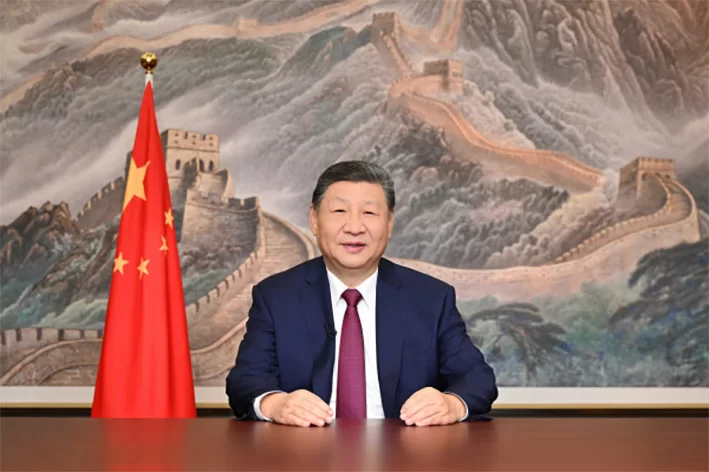
    Chinese President Xi Jinping has emphatically declared that China’s reunification with Taiwan represents an “unstoppable trend of the times,” delivering this message during his New Year address just one day after Beijing concluded extensive military exercises around the self-governing island. The speech, which invoked the “bond of blood and kinship” between peoples on both sides of the Taiwan Strait, came in response to what Chinese officials characterized as escalating separatist activities and external interference.

    The military maneuvers, codenamed “Justice Mission 2025,” marked the largest-ever geographical scope of exercises conducted around Taiwan, simulating a comprehensive blockade of the island using live ammunition. These demonstrations followed Washington’s approval of its largest-ever weapons package to Taipei, valued at $11.1 billion, further complicating the already tense cross-strait dynamics.

    President Xi additionally highlighted the establishment of an annual “Taiwan Restoration Day” commencing in 2025, commemorating the end of Japanese colonial rule after World War II. While emphasizing peaceful reunification, Xi reiterated Beijing’s longstanding position that considers Taiwan an inalienable part of Chinese territory, maintaining the option of using force if necessary.

    In a parallel New Year address, Taiwanese President William Lai Ching-te asserted the need for enhanced security and resilience, stating that Taiwan must “powerfully defend national sovereignty” and strengthen its defense mechanisms. Lai emphasized that the international community is watching whether the Taiwanese people possess the determination to defend themselves against China’s “expanding expansionist ambitions.

    Despite operating with its own government, military, passport system, and currency, Taiwan maintains official diplomatic recognition from only 11 countries and the Vatican. The United States, while not formally recognizing Taiwan, remains committed to supporting the island’s self-defense capabilities under the 1979 Taiwan Relations Act, though this legislation does not mandate direct military intervention in case of Chinese aggression.

    Recent polling indicates that most Taiwanese citizens prefer maintaining the current status quo, with only minor segments advocating for immediate formal independence or reunification with mainland China.

    Beyond geopolitical matters, President Xi’s address also celebrated China’s technological advancements, particularly in artificial intelligence and semiconductor development, noting that numerous large AI models have emerged while breakthroughs in domestic chip research have positioned China among the world’s fastest-growing innovation economies.

  • COE reports 769 alcohol poisoning cases during holiday season

    COE reports 769 alcohol poisoning cases during holiday season

    Santo Domingo, Dominican Republic – Health authorities have documented a concerning pattern of substance-related emergencies during the recent holiday period. The Emergency Operations Center (COE) disclosed that 769 instances of alcohol poisoning occurred nationwide throughout Christmas and New Year celebrations, with a disturbing inclusion of 65 adolescents aged 11-17 among the affected individuals.

    The comprehensive data emerged from the final assessment of the “Awareness for Life, Christmas and New Year 2025-2026” initiative, a preventive campaign orchestrated by health officials. In parallel findings, the COE tracked 163 separate incidents of foodborne illnesses during the same timeframe.

    Despite the alarming statistics, authorities confirmed zero fatalities linked to these medical emergencies. In a positive development, officials noted an 8% decrease in alcohol intoxication cases compared to the previous year’s holiday statistics, suggesting that public awareness efforts may be yielding measurable results.

    Geographical analysis revealed pronounced regional disparities, with Santo Domingo Province, the National District, and San Pedro de Macorís recording the highest incidence rates. Additional areas experiencing significant cases included San Cristóbal, La Altagracia, Puerto Plata, La Vega, and Sánchez Ramírez provinces, indicating a widespread national health concern.

    The findings have sparked renewed discussions about public health strategies and underage drinking prevention, with health experts calling for enhanced regulatory measures and educational campaigns targeting vulnerable demographics.

  • Column: Mentale gezondheidszorg nú prioriteit nummer één

    Column: Mentale gezondheidszorg nú prioriteit nummer één

    Suriname is confronting a severe mental health emergency that demands immediate policy action, with child protection emerging as the most critical priority. This urgent call transcends mere political intention or future policy notes—it requires immediate implementation with the UN Convention on the Rights of the Child serving as the foundational framework rather than just a symbolic endorsement. This represents both a political and societal obligation that cannot be deferred until after tragedies occur.

    Recent devastating incidents in Commewijne and Abrabroki’s Calcuttastraat have reignited public discourse, but these events are not isolated occurrences. They represent painful manifestations of a deeply entrenched structural problem that has been documented for years yet consistently ignored. Beyond the immediate emotional responses, these tragedies reveal how mentally unhealthy environments in Suriname have perpetuated cycles of violence, neglect, trauma, and ultimately fatal escalations, with children emerging as the primary and most vulnerable victims.

    Comprehensive data from both national and international sources paints a disturbing picture. UNICEF reports, research from the Institute for Graduate Studies and Research (IGSR), and parliamentary investigations leave little room for interpretation. The ‘Violence Against Children in Suriname’ report confirms alarmingly high levels of violence against minors. According to MICS data, 86% of children aged 2-14 have experienced at least one form of mental or physical punishment from household members, while six out of ten children endure corporal punishment.

    These statistics represent real children growing up in environments characterized by fear, stress, and normalized violence. Many eventually become stuck in destructive patterns—as victims, but sometimes as perpetrators themselves. Mental and spiritual health challenges thus perpetuate across generations, creating intergenerational trauma.

    The same pattern emerges in violence against women and girls, and among men trapped in a society that punishes vulnerability and views seeking help as weakness. Domestic violence, relational conflicts, and psychological dysregulation affect all societal segments regardless of ethnicity, political affiliation, region, education, or social class.

    Addressing this crisis requires avoiding the pitfalls of partisan politics or seeking quick blame. Multiple administrations have failed to establish a professional, effective, and cohesive mental healthcare system encompassing prevention, shelter, guidance, aftercare, legislation, and institutional safeguards. Existing facilities often function minimally or not at all, with helplines frequently inaccessible, shelter services fragmented, and prevention strategies underdeveloped.

    Effective mental healthcare requires institutions offering low-threshold, 24/7 accessibility, safe shelters for women and girls, and robust protection for children currently suffering violence behind closed doors. It also necessitates guidance for perpetrators and individuals with severe psychological issues before violence escalates. Prevention constitutes not a luxury but an absolute necessity.

    Society cannot continue treating mental healthcare as only urgent post-tragedy. Without sustained action, current discourse will fade within days until the next disaster occurs. A review of mental and spiritual violence cases over the past 5-10 years reveals how quickly attention dissipates after each incident.

    Genuine transformation demands political courage, policy discipline, and societal maturity. The question is not whether Suriname can afford to act, but how long it can afford inaction. Today’s National Day of Mourning must catalyze lasting change—otherwise, it risks becoming another empty gesture in a long history of unfulfilled promises.

  • Oecumenische rouwdienst sluit nationale rouwdag af

    Oecumenische rouwdienst sluit nationale rouwdag af

    Suriname will formally conclude its national day of mourning on Friday evening with an ecumenical memorial service at the Cathedral Basilica, honoring the victims of the devastating Commewijne tragedy that claimed nine lives, including five children. The service, organized as a collective response to the nation’s deepest grief, will center on prayer, hymns, and moments of silence.

    Bishop Karel Choennie of Paramaribo explained to Starnieuws that the interfaith approach was chosen to provide spiritual solace to a society grappling with unprecedented violence. “When a community faces a tragedy of this magnitude, people need rituals to process grief and sorrow,” stated Choennie. “This is especially true when an entire nation is in shock and words fail us.

    The service will feature participation from religious leaders representing the Christian Committee of Churches (CCK) and the Interreligious Council in Suriname (IRIS). Together with attendees, they will pray for the eternal rest of the deceased, comfort for the bereaved families, and healing for the broader society.

    Bishop Choennie emphasized that the Commewijne violence must be recognized as a national disaster. “This is something that has never occurred before in Suriname,” he noted. “It has left profound scars on our society and even gained international news coverage reaching as far as Australia. Precisely for this reason, it is crucial for us to come together as a nation.”

    The memorial will follow a solemn and restrained format, incorporating prayer and hymns similar to traditional Surinamese rituals like dede oso or aiti dey. “These forms are deeply embedded in our culture,” the bishop emphasized, “and help people collectively bear and conclude their grief.”

    The Cabinet of the President has committed to providing transportation services, deploying buses to enable family members and community residents to attend the service. This initiative aims to enhance accessibility to the gathering and create space for collective mourning.

    The ecumenical service, scheduled from 7:00 PM to 8:00 PM, officially concludes the national day of mourning, offering hope that this shared moment of reflection will contribute to healing, solidarity, and mutual care within Surinamese society.

  • Nobel Laureate Festival returns January 6 under theme of legacy and future impact

    Nobel Laureate Festival returns January 6 under theme of legacy and future impact

    Saint Lucia is poised to host its prestigious 33rd annual Nobel Laureate Festival, a month-long celebration running from January 6 to February 4 dedicated to honoring the island nation’s extraordinary intellectual legacy. The festival pays tribute to two of the Caribbean’s most distinguished minds: Sir Arthur Lewis, awarded the 1979 Nobel Prize in Economic Sciences for his groundbreaking work in development economics, and Sir Derek Walcott, who received the 1992 Nobel Prize in Literature for his poetic achievements.

    Under the resonant theme “Celebrating Excellence: Honoring our Legacy, Shaping our Tomorrow,” this year’s iteration seeks to bridge historical achievement with contemporary inspiration. Festival organizers emphasize the continuing relevance of both laureates’ contributions and the imperative for current generations to build upon their foundational work.

    At the festival’s official launch, Chairperson and Governor General Emerita H.E. Dame Pearlette Louisy addressed potential skeptics directly: “Some may have dismissed our laureates’ achievements as historical artifacts with diminishing contemporary relevance. However, we must recognize that the trees whose shade we now enjoy were planted by those who preceded us—visionaries who often never lived to witness the full fruition of their labor.”

    Delia Dolor, Public Relations Coordinator and Committee Member, highlighted Saint Lucia’s remarkable distinction of having one of the world’s highest per capita rates of Nobel Prize winners. “This festival not only commemorates past brilliance,” Dolor stated, “but also embraces our responsibility to ignite future innovation and cultivate a more prosperous future for our nation and the global community.”

    The festival’s diverse programming spans multiple venues across Saint Lucia, blending established traditions with innovative new events. Highlights include two memorial lectures: The Sir Derek Walcott Memorial Lecture, titled “An Listwa Manmay San Liv” and delivered by acclaimed Saint Lucian-Canadian author Professor Canisia Lubrin (January 20), and The Sir Arthur Lewis Memorial Lecture on “Economic Principles for the 21st Century” presented by Professor Sir Timothy Besley of the London School of Economics (January 22).

    Additional featured events encompass a comprehensive Celebrating Excellence Video Series with distinguished guests, the inauguration of the History House in Soufrière with a specialized exhibition, creative forums, literary awards, theatrical tributes, educational workshops, and ceremonial wreath-laying at the laureates’ resting places. The festival culminates with the Sagicor Schools’ Choir Competition, showcasing young musical talent inspired by the nation’s intellectual heroes.

    Complete scheduling information and regular updates are available through the official Event Programme on the Festival’s Facebook presence (@nobellaureatefestivalsaintlucia) or via direct inquiry at (758) 284-2111 and info@ddmediarelations.com.

  • Authorities intensify search for missing 3-year-old Girl in Puerto Plata

    Authorities intensify search for missing 3-year-old Girl in Puerto Plata

    PUERTO PLATA, DOMINICAN REPUBLIC – A large-scale, multi-agency search operation is intensifying in Puerto Plata’s Imbert municipality for three-year-old Brianna Genao Rosario, who vanished on New Year’s Eve. The child was reported missing around 5:00 p.m. on December 31 from the community of Barrero, last seen wearing a pink dress.

    The search effort represents a significant coordination of national resources, bringing together the National Police, Imbert Civil Defense, specialized Search and Rescue (SAR) units from the Dominican Republic Air Force, the volunteer organization Amber Rescue, and technical teams from the 911 National Emergency and Security System.

    In a strategic escalation of the operation, authorities have deployed advanced technological assets, including high-precision surveillance drones. These unmanned aerial vehicles are conducting systematic scans of challenging terrain, including dense rural woodlands and the banks of a nearby river system, to capture imagery that might reveal critical clues.

    The investigation took a potentially crucial turn when rescue personnel discovered a single flip-flop sandal on the bank of a tributary. Authorities have preliminarily identified the footwear as belonging to the missing child, making it a pivotal piece of evidence that is currently focusing the search efforts in specific areas.