作者: admin

  • Missing Link Candidate Seeks Entry in St John’s Rural West Race

    Missing Link Candidate Seeks Entry in St John’s Rural West Race

    As Antigua and Barbuda prepares to hold its general election on April 30, a new political voice is emerging to challenge the dominance of the nation’s two leading political blocs. Nigel Bascus, president of the Missing Link–Voice of the People Party (MLVOP), has announced his bid for the St John’s Rural West parliamentary seat, casting himself as a grassroots alternative disconnected from the established political order.

    A working fisherman by profession, Bascus has pushed back against the common narrative that political candidates are driven by personal gain. In comments outlining his campaign motivation, he emphasized that his candidacy is rooted in public service rather than financial reward or elevated social status. “I’m not running for a bigger paycheck… I’m just running to make my country better,” he stated, framing his campaign as a people-centered movement rather than a quest for personal advancement.

    Before he can officially appear on the ballot, Bascus must secure the 10 qualifying nominations required by local election rules. Once this requirement is met, he will go head-to-head with two established opponents: Michael Joseph, the candidate fielded by the Antigua and Barbuda Labour Party (ABLP), and Richard Lewis, representing the United Progressive Party (UPP). Bascus told reporters he has already confirmed all required nominators, putting him on track to meet the nomination deadline and formalize his candidacy.

    The core of Bascus’s campaign platform centers on two historically underprioritized sectors that he argues are critical to the nation’s long-term stability: agriculture and aquaculture. Bascus pointed out that despite the key role these industries play in guaranteeing national food security, successive governments have repeatedly sidelined them in policy and budget allocations. To address this gap, he has already launched a skills training initiative designed to equip local residents with practical expertise in sustainable farming and commercial fishing, laying early groundwork for the policy changes he hopes to implement if elected.

    To connect directly with voters in the rural constituency, Bascus plans to run a grassroots, community-focused campaign that bypasses costly, disconnected national advertising campaigns. His outreach strategy includes door-to-door house visits to speak with voters one-on-one, regular appearances on local radio to answer questions and share his platform, and targeted direct engagement with community groups across the district.

  • Trinidad’s PM escalates feud with Caribbean neighbours

    Trinidad’s PM escalates feud with Caribbean neighbours

    A long-simmering dispute between Trinidad and Tobago and its Caribbean Community (CARICOM) neighbors over U.S. policy toward Venezuela and international drug trafficking erupted into open diplomatic conflict on Friday, as Prime Minister Kamla Persad-Bissessar doubled down on her demand that CARICOM Secretary-General Carla Barnett leave office when her current term expires this August. The 15-member regional trade and integration bloc has been fractured by ideological rifts since late last year, when a majority of member governments publicly condemned expanded U.S. military activity in the South Caribbean and the large deployment of American forces positioned near Venezuela, launched as part of a U.S. operation targeting then-Venezuelan President Nicolás Maduro. For years, CARICOM member states have collectively endorsed the vision of the Caribbean as a formal “zone of peace,” rejecting the introduction of extra-regional great power military competition into the bloc’s neighborhood. But since winning Trinidad and Tobago’s general election one year ago, Persad-Bissessar has openly rejected this longstanding regional consensus, dismissing the “zone of peace” framework as nothing more than “zone of peace fakery.” She has positioned her administration as a firm backer of U.S. military action in the region and the U.S. campaign against transnational drug trafficking and organized crime. Her latest move targets the bloc’s top administrative leadership, where she has waged a monthslong public campaign to block Barnett’s reappointment when her five-year term concludes at the end of August. To strengthen her push, Persad-Bissessar has repeatedly emphasized Trinidad and Tobago’s outsized financial contribution to CARICOM: the nation covers roughly 22% of the bloc’s total annual operating budget, equal to approximately $20 million per year. The prime minister has made no secret of her deep frustration with the bloc’s current policy direction, stating repeatedly that she cannot understand why most regional leaders have aligned with Venezuela and the Maduro administration rather than falling in line with the U.S. position. In a 2025 statement released as the U.S. ramped up preparations for its action against Maduro, Persad-Bissessar claimed that “CARICOM has chosen to support the Maduro narco-government through the fake zone of peace narrative.” Her comments came as multiple CARICOM governments raised formal complaints over the civilian casualties and alleged legal violations linked to deadly U.S.-aligned boat strikes in regional waters. Persad-Bissessar’s unyielding pressure ultimately forced CARICOM leaders to convene an emergency closed-door meeting on Friday to address the contentious question of Barnett’s reappointment, bringing the months of behind-the-scenes friction into full public view.

  • 10 kilo cocaïne uit Suriname onderschept in Bulgaarse haven

    10 kilo cocaïne uit Suriname onderschept in Bulgaarse haven

    Authorities in Bulgaria have intercepted a 10-kilogram shipment of cocaine hidden inside a shipping container at the Varna-West commercial port, with the container originating from the South American nation of Suriname. Bulgarian customs officials confirmed that the illegal narcotics were concealed in custom-built hollow cavities cut into a cargo of raw timber, a common smuggling tactic used by trafficking networks to hide contraband. The container was flagged for inspection through a targeted risk assessment protocol that the country’s customs service uses to identify high-risk shipments entering its borders. Once the suspicious container was pulled from the port’s processing queue, inspection teams discovered the carefully hidden cocaine stashed within the trunks of the timber load. Law enforcement experts note that this method of hiding contraband in modified cargo is a longstanding tactic employed by drug smuggling rings to evade detection at border checkpoints and port inspections. Following the seizure, Bulgarian authorities have transferred the full case to national police units, which have launched a formal criminal investigation to trace the full supply chain of the shipment, mapping out its original source and intended final destination across European markets. International law enforcement agencies monitoring organized drug trafficking have observed a growing trend in recent years: Black Sea ports including Varna are increasingly being exploited as key entry points for cocaine shipments originating in South America bound for consumer markets across the European continent. This latest seizure of Suriname-origin cocaine, officials confirm, fits squarely into this broader pattern of shifting smuggling routes that trafficking networks have adopted as traditional entry points along Western Europe’s Atlantic coast have tightened border security measures. The operation underscores the evolving challenges that Black Sea states face in countering transnational organized drug crime as trafficking groups adapt their logistics to avoid interdiction.

  • Trinidad’s PM escalates feud with Caribbean neighbours

    Trinidad’s PM escalates feud with Caribbean neighbours

    Diplomatic rifts within the 15-member Caribbean Community (CARICOM) have exploded into open conflict, as a long-simmering disagreement between Trinidad and Tobago and its regional neighbors over United States policy toward Venezuela and international drug trafficking erupted into a full verbal confrontation on Friday. At the center of the new clash is Trinidad Prime Minister Kamla Persad-Bissessar’s demand that CARICOM Secretary-General Carla Barnett leave her post when her five-year term expires this coming August.

    Regional friction first flared late last year, when a majority of CARICOM member states openly condemned growing United States military activity in the South Caribbean. Tensions rose further as Washington deployed an atypically large American military contingent near Venezuela’s borders, as part of a 2025 operation aimed at capturing then-Venezuelan President Nicolás Maduro.

    For years, CARICOM member states have collectively endorsed the vision of the Caribbean as an official “zone of peace,” a principle designed to keep major power rivalries out of the regional bloc. But since winning Trinidad’s general election one year ago, Persad-Bissessar has rejected that framing as nothing more than “zone of peace fakery.” She has openly aligned her administration with U.S. military actions in the region and thrown her full support behind the Trump administration’s broader campaign targeting transnational drug trafficking and organized crime.

    The prime minister has waged a months-long public campaign to oust Barnett ahead of any potential reappointment vote, leaning on Trinidad’s outsized financial contribution to the bloc to back her demands. Trinidad covers roughly 22 percent of CARICOM’s total annual operating budget, a sum equal to around $20 million, a point Persad-Bissessar has repeatedly highlighted to regional leaders to press for Barnett’s removal.

    Persad-Bissessar has made no secret of her deep frustration with the bloc’s current direction, stating publicly that she cannot understand why most regional leaders have aligned with Venezuela and Maduro instead of backing the U.S. position. In a statement released in late 2025, as the U.S. finalized preparations for its anti-Maduro military operation and regional governments raised alarms about the legality of fatal U.S. boat strikes in Caribbean waters, she doubled down: “Caricom has chosen to support the Maduro narco-government through the fake zone of peace narrative.”

    Persad-Bissessar’s relentless pressure ultimately forced CARICOM leadership to convene an emergency closed-door meeting on Friday to address the question of Barnett’s reappointment, marking one of the deepest crises the regional trade bloc has faced in recent years.

  • SVG missed out on US$1b from CBI under ULP — PM

    SVG missed out on US$1b from CBI under ULP — PM

    A decades-long policy rejection of citizenship-by-investment (CBI) has left St. Vincent and the Grenadines (SVG) with up to US$1 billion in unrealized revenue over the past 10 years, according to newly elected Prime Minister Godwin Friday. In a candid interview aired on Hot 97 FM last Friday, the leader of the New Democratic Party (NDP) — which won general elections in November 2024 after ousting the 25-year incumbent Unity Labour Party (ULP) — opened up about the economic costs of the previous administration’s hardline opposition to CBI programs, noting that fellow Caribbean leaders have repeatedly questioned SVG’s refusal to adopt the popular economic development tool.

    During the interview, radio host Luke Boyea shared a striking comment from a senior St. Lucia Labour Party official — a ideological ally of the SVG ULP — who claimed that SVG’s refusal to launch CBI under former Prime Minister Ralph Gonsalves had turned the country into a regional laughing stock. Boyea noted that while the ULP made bold public claims about SVG’s economic standing, the absence of CBI revenue left clear gaps in the country’s development progress that were obvious to regional observers.

    CBI programs grant foreign nationals full citizenship and a valid national passport in exchange for a substantial contribution to the host country’s economy, usually targeted at infrastructure, social programs, or other public projects. SVG is currently the only one of the five independent member states of the Organisation of Eastern Caribbean States (OECS) that does not operate a CBI program. The NDP made the introduction of CBI a core campaign promise during its 2024 election run, and Friday confirmed that the new government remains on track to launch the program within 2025 despite minor delays to some campaign pledges.

    Gonsalves, who now serves as leader of the opposition, has maintained his long-standing opposition to CBI, repeatedly framing the program as little more than selling passports. Last year, his public comments labeling CBI an inherently corrupt model drew sharp pushback from Antigua and Barbuda Prime Minister Gaston Browne, whose country operates one of the region’s most successful CBI programs.

    Friday acknowledged that the new administration has delivered on some of its 60-day campaign pledges, while other initiatives have been pushed back to later in the year. He cited ongoing global economic uncertainty stemming from regional conflicts as a key factor that requires responsible policy timing, noting that it would be reckless for the small island nation to ignore shifting global conditions when rolling out new programs.

    “It would be irresponsible to simply disregard what’s happening in the world and simply do whatever you like,” Friday said. “As a responsible government, we will consider these global factors as we advance our agenda, but our core strategic objective remains unchanged: we will manage public finances to keep our debt sustainable, meet the basic needs of all Vincentians, and expand investment opportunities to bring renewed prosperity to St. Vincent and the Grenadines.”

    Alongside CBI, Friday confirmed that repairs to the derelict Ottley Hall Marina and Shipyard — a flagship project of the last NDP administration that held office from 1984 to 2001, which was left to fall into ruin under the ULP’s 2001–2024 tenure — will move forward this year, with multiple serious investors already expressing interest in the high-potential site. The prime minister also noted that new hotel investment projects are in the pipeline for the island nation, which relies heavily on tourism as a core economic driver.

    Responding to criticism of CBI from opposition figures, Friday emphasized that the program offers a unique path to raise government revenue without taking on new debt or increasing domestic taxes. “You’re not borrowing it and you’re not taxing people to get it,” he said, framing the previous administration’s rejection of CBI as a reckless decision that carried massive opportunity costs for the country.

    Now that he holds office, Friday said regular conversations with regional peer leaders who operate successful CBI programs have underscored the scale of the missed opportunity. “They’re looking at us like say, ‘Boy, what an opportunity you guys missed,’” he told listeners.

    When asked why the ULP spent decades framing CBI as a harmful, unethical practice that the country should avoid, Friday said the media host had correctly identified the core issue: a small group of loud political opponents convinced the public of the narrative, leaving the entire country to bear the economic cost.

    As an example of what CBI revenue can fund, Friday pointed to Dominica’s new international airport, a major infrastructure project that has been largely financed by CBI proceeds. Friday’s own estimate places SVG’s cumulative missed revenue over 10 years at up to US$1 billion, a figure that lines up with informal estimates from a fellow regional prime minister, who pegged potential annual revenue at EC$200 million (roughly US$74 million), even the lower projection amounts to substantial unborrowed, untaxed revenue that the country could have used for development.

    Friday specifically noted that the US$78 million hospital currently under construction at Arnos Vale, for which the previous ULP government borrowed US$100 million from Taiwan, could have been fully paid for with CBI revenue had the program been adopted years earlier.

  • US and Iran Hold Direct Peace Talks in Pakistan, CNN Reports

    US and Iran Hold Direct Peace Talks in Pakistan, CNN Reports

    On April 11, 2026, a long-awaited diplomatic breakthrough got underway as senior official delegations from the United States and Iran convened for the highest-level direct face-to-face talks between the two nations in decades, CNN reported. Hosted in Pakistan’s capital Islamabad, the negotiations operate as trilateral discussions with Pakistani officials serving as neutral mediators, ending a years-long stretch of almost exclusively indirect dialogue between Washington and Tehran.

    The U.S. delegation is headed by Vice President JD Vance, and counts among its members special envoy Steve Witkoff, Jared Kushner, and a cohort of senior national security and regional policy advisers. A White House official confirmed to CNN that alongside the in-person negotiating team, Washington has deployed a full group of subject-matter experts, with additional backup support operating out of U.S. capital to back the talks. On Iran’s side, state media cited by CNN confirms the delegation totals 71 people, including lead negotiators, technical specialists, media liaisons, and security detail to cover all aspects of the complex discussions.

    The opening of the talks comes against a backdrop of soaring regional instability and a fragile, temporary ceasefire between the U.S. and Iran. Even as negotiators sit down in Islamabad, multiple connected flashpoints continue to test the fragile diplomatic push. Most notably, U.S. President Donald Trump announced that his administration has launched a process to “clear out” the Strait of Hormuz, one of the world’s most vital global oil and shipping chokepoints. As of the latest reports, however, the specific scope and actions involved in this process remain undisclosed. Ship tracking data analyzed by CNN shows that a number of commercial vessels, led by Chinese-owned tankers and bulk carriers, have continued regular transits through the strait even amid escalating tensions in the area.

    The ongoing unrest has already sent ripples through global commodity markets, most sharply hitting the global fertilizer trade. Since late February, global urea prices have skyrocketed by more than 50%, triggering widespread alarm among U.S. agricultural organizations that warn the spike could cascade into broader disruptions across the international food supply chain. In response, President Trump has issued a warning against price gouging and confirmed that his administration is maintaining close, continuous oversight of fertilizer price movements to mitigate consumer and producer impacts.

    Another major sticking point for the broader negotiations sits on the Israel-Lebanon front. In recent days, the Israeli military has continued its large-scale offensive strikes against Hezbollah targets positioned inside Lebanese territory. Israeli defense officials confirmed that the force carried out strikes on more than 200 Hezbollah sites in a single 24-hour period. Tehran has made its position clear: any comprehensive, lasting ceasefire agreement that emerges from the Islamabad talks must include a binding commitment to end all Israeli strikes across Lebanon.

    While Israeli officials have so far rejected calls for direct ceasefire negotiations with Hezbollah, they have confirmed that Israel will launch formal peace negotiation talks with the Lebanese government next week, per CNN’s reporting. For his part, Lebanese Prime Minister Nawaf Salam has chosen to postpone a planned official trip to Washington D.C. and the United Nations Headquarters in New York, saying he needs to remain in Beirut to coordinate closely with the country’s leadership amid the fast-moving regional developments.

  • ‘You want to replace Good Friday with J’ouvert Friday?’ — Leacock

    ‘You want to replace Good Friday with J’ouvert Friday?’ — Leacock

    Across St. Vincent and the Grenadines, a long-simmering shift in cultural and religious traditions has sparked a heated public debate over what role, if any, entertainment events should play on Good Friday – one of Christianity’s most sacred solemn holidays, marking the crucifixion of Jesus Christ. Deputy Prime Minister and National Security Minister St. Clair Leacock recently brought the discussion to the forefront during an interview on local outlet Boom FM, tying the growing presence of secular entertainment over Holy Week and Easter weekend to broader concerns about shifting social values in the majority-Christian nation.

    Leacock explained that he first encountered the conversation while listening to a separate radio program en route to his own interview. During that segment, event promoters who had suffered significant financial losses on their Easter weekend events argued that the Ministry of Tourism should provide greater financial support to boost future event turnout. Most strikingly, Leacock noted, the program concluded that hosting a raucous J’ouvert street celebration on Good Friday night was entirely appropriate.

    The comment did not sit well with Leacock, who warned that this framing represents a worrying erosion of the religious significance of the Easter period for Vincentians. “Easter is Easter, and Easter is a special day or week in the Christian calendar,” he said, questioning what message the normalization of secular large-scale parties on Good Friday sends to the public and what it means for the country’s collective social fabric. He added that declining reverence for the holy period is not a new, creeping trend – it is already deeply entrenched in SVG, where most residents identify as Christian but many openly disregard core tenets of the faith.

    His comments drew an immediate response during the same broadcast from Pastor Cecil Richards of Kingstown Baptist Church, who offered a counter perspective rooted in the country’s democratic principles. Richards, who lives near Good Friday event venues and personally witnessed the noise and activity, said he shared the shock of many religious residents, but also acknowledged that non-believers hold equal rights to live according to their own values in a pluralistic democracy.

    “Inasmuch as Christians and Bible-believing people have rights, there are people who don’t have that spectrum and base of belief, and they have freedoms too, and they have rights,” Richards explained. He argued that all groups must negotiate and respect differing value systems: while Christian congregations deserve full access to hold their solemn Easter worship services, secular residents have the right to host parties and celebrations if they so choose.

    Richards warned that restricting the rights of secular groups on religious grounds sets a dangerous precedent that could one day be turned against religious communities. “What is good for the goose is good for the gander,” he said. “Today, you might want to restrict those who are doing that but tomorrow, the very same principle can apply, where, instead of that group being subdued, it could very well be that the very laws and rules and regulations that you might put in place to restrict and subdue the freedoms of that group, it might turn around and bite you.” He drew a parallel to the broader debate over COVID-19 vaccine mandates, which centered on the same core question: how far can a state go to impose collective values on individual residents’ personal choices.

    Leacock pushed back on the framing that any restriction on Good Friday entertainment amounts to an undemocratic overreach. He argued sarcastically that open sales of strong rum and wet fetes on the holiday are not inherent democratic rights, noting that all functioning democracies build their laws around shared social parameters. “I don’t think democracy ever anticipated that society is to be sent to the point where you do what you like,” he said. “That’s why we have law and order and we have limitation, and we have consent of what we do, when we do, and where we do certain things.”

    The deputy prime minister added that most modern state legal frameworks are ultimately rooted in traditional religious moral templates, and growing deviation from those norms has led to widespread social turmoil and confusion across the country. He acknowledged that residents hold democratic rights protected by the SVG constitution, but argued that there remains a widely accepted set of normative social behaviors that the public has a right to defend when those norms are crossed.

    Closing the debate, Leacock appealed to faith leaders like Richards for collective action, noting that the problem of eroding social norms is a shared responsibility between government, law enforcement, and the Christian community. “It will be so helpful to me and to the police force if people like yourself, who I recognise as influencers in society, are on board and say that we are on this thing together,” he said.

  • Man shot at Big Wall carnival party

    Man shot at Big Wall carnival party

    A violent shooting disrupted carnival celebrations at the Ranny Williams Entertainment Centre in St. Andrew on Sunday, leaving one man wounded after the gunfire broke out during the widely attended Big Wall party. Local news outlet Observer Online has confirmed that a well-known social media influencer is connected to the shooting incident, and the individual has since voluntarily turned themselves in to law enforcement officials for questioning. As investigations into the circumstances of the attack remain ongoing, the publication has announced it will release additional details on this developing story as new information becomes available to reporters. No further details about the victim’s condition, the motive for the shooting, or potential charges against the suspect have been released to the public as of the latest update.

  • ‘A Hit Mek’ charts journey of Jamaica’s music heritage

    ‘A Hit Mek’ charts journey of Jamaica’s music heritage

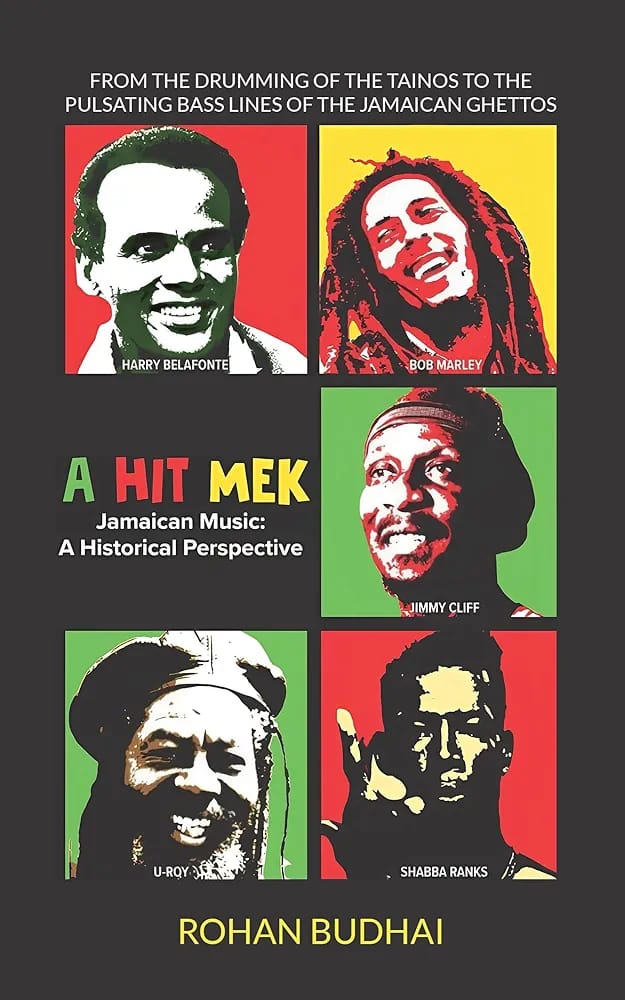
    Jamaica’s globally beloved musical tradition has long been celebrated around the world, but a groundbreaking new work by author Rohan Budhai argues that many critical chapters of this cultural legacy have remained hidden from mainstream documentation. Titled *A Hit Mek* — a clever reference to Desmond Dekker’s iconic 1967 track *007 (Shanty Town)* that unpacks the deeper cultural roots of the classic phrase “A it mek” — this 560-page volume offers the most sweeping examination of the island’s sonic and cultural evolution ever published, challenging long-held assumptions that Jamaican music history has already been fully mapped.

    In his foreword to the book, respected music consultant Clyde McKenzie praises Budhai’s unique approach, which ties pivotal moments in Jamaican social and political history directly to the emergence and transformation of the nation’s core musical genres. Unlike many earlier works that focus only on the global boom of reggae in the 20th century, *A Hit Mek* stretches its narrative back more than 500 years, opening with Christopher Columbus’s 15th-century arrival on the island and the Indigenous Taíno community whose rhythmic drumming, call-and-response vocal traditions, and handmade instruments carried the earliest echoes of African cultural influence that would shape all future Jamaican sound.

    Budhai weaves together a complex narrative that accounts for the layered impacts of Spanish and British colonial rule, the brutality of the transatlantic slave trade, and the irreplaceable cultural contributions of every community that shaped the island: Taínos, Maroons, enslaved Africans, and indentured laborers from across Asia and the Middle East. The book traces the step-by-step evolution of Jamaica’s most defining genres, from sacred traditional styles like Kumina to the first commercially recorded local sound Mento, through the mid-20th century explosion of Ska and Rocksteady, and on to the global dominance of Reggae and the contemporary energy of Dancehall. It also centers the underrecognized role of Jamaican sound system culture, a grassroots innovation that redefined live music and went on to reshape popular sound across the globe.

    A key strength of the work is its commitment to highlighting the contributions of diverse communities that have long been sidelined in official music histories, including Afro-Jamaican, Lebanese, Syrian, Chinese, and Indian Jamaican creators, alongside the bands, radio outlets, and entertainment organizations that nurtured local talent and expanded the reach of Jamaican sound. The book even addresses longstanding scholarly debates: for example, it notes that while Mento holds the title of Jamaica’s first widely recognized and electronically recorded local genre, cultural icons like Rex Nettleford long argued that it drew significant formative influence from Cuban musical traditions.

    The volume devotes special attention to reggae, Jamaica’s most globally impactful export, framing it as a dynamic fusion of West African ancestral traditions, American rhythm and blues, jazz, and soul. It maps reggae’s far-reaching legacy, from spawning iconic subgenres including dub and lovers rock to shaping everything from modern hip-hop to global electronic dance music, cementing Jamaica’s outsize influence on contemporary popular music worldwide.

    Budhai, who launched his career in music production before founding Howlers International Music, began the ambitious project in 2021, during the global COVID-19 pandemic, and brought it to completion in 2025. His years of research uncovered major gaps in existing historical accounts, with many key influences — including church music introduced during colonial rule, and cultural traditions dating back to pre-Columbian and enslaved African communities — having been largely overlooked in earlier works.

    Today, *A Hit Mek* is available for purchase globally through Amazon, with translated editions already published in Spanish, French, and Portuguese to make this comprehensive history accessible to audiences around the world. While Budhai describes the book as one of the most exhaustive works on Jamaican music history ever compiled, he emphasizes that the story of the island’s sound is far from finished. For him, Jamaican music has always been, and remains, a living narrative that reflects the struggles, extraordinary resilience, and unmistakeable cultural identity of the Jamaican people, with new chapters still being written every day.

  • Vernal Sage believes in ‘Good over evil’

    Vernal Sage believes in ‘Good over evil’

    After stepping away from the music industry for more than a decade to pursue a corporate tech career, veteran Jamaican reggae performer Vernal Sage—pronounced Sajay—has returned to the spotlight with a purpose-driven new single aimed at sparking meaningful cultural shift. Titled *Good Over Evil*, the track grows out of Sage’s deep concern over eroding moral standards and fading empathy across global society, and he says he is confident the work can lift collective spirits and reframe public mindsets both in his native Jamaica and across the world.

    In explaining the core message behind his latest release, Sage pointed to growing social disconnectedness that has paved the way for a surge in destructive societal problems, from widespread scamming operations to rising violent criminality in Jamaica. Beyond local community issues, he extended his critique to global politics, noting that many world governments now operate without empathy or regard for the welfare of citizens in other nations, pointing to the ongoing crisis unfolding across the Middle East as a stark example.

    Sage emphasized that failing adult leadership has disproportionately harmed young people, who grow up without receiving the consistent care and loving example they need to thrive. “It’s turning into a harsher, more unkind world, and that has to be fixed,” he explained. “Good has to hold the balance to keep the world right. That’s why I sing of good triumphing over evil, and that’s what I pray for every day.”

    Since its release, *Good Over Evil* has earned broad, enthusiastic backing from Jamaican radio personalities. Top DJs including DJ Amber, Big A, Collision and DJ Bryan from the popular local station IRIE FM have added the track to regular rotation, alongside other prominent DJs Roderick Howell, Dalton Leith, and Richie B. Programming teams at Connection Radio and Captain Kirk of Island Gold Radio have also thrown their support behind the single. The track made its public debut at the iconic Kingston weekly street event Weddy Weddy, hosted by Dwayne Pow, and DJ Shawn 13 has been spinning the track consistently at local street events ever since. “The feedback and support we’ve gotten has been absolutely incredible,” Sage said of the early response.

    A native of Westmoreland, Jamaica, Sage grew up as the oldest of eight siblings, cutting his first musical teeth as a member of his high school choir at Glenmuir High School before relocating to Rocky Point, Clarendon, and completing his secondary education at Clarendon College. He cut his first three recorded tracks in the early 1990s under the stage name Green T, after graduating from the University of Technology. For years, he balanced a full-time career as an information technology specialist with his passion for music, even releasing multiple tracks through the legendary reggae label Greensleeves Records. Eventually, the heavy demands of his corporate role led him to step back from music, taking an extended sabbatical that lasted until 2010.

    Sage’s return to full-time music began through a personal and professional connection with iconic Jamaican performer Boris Gardiner. In 2020, he officially relaunched his recording career, teaming up with Gardiner and Donovan Downer, a core member of the beloved reggae group Fab Fifty. Since resuming his craft, he has poured consistent energy into refining his work, earning early commercial success with the 2020s single *One Night Stand*, which climbed the ethnic regional music charts across the United States.