作者: admin

  • Trinidad and Tobago Newsday – Saturday January 17th 2026

    Trinidad and Tobago Newsday – Saturday January 17th 2026

    A comprehensive scientific review has cast significant doubt on the efficacy of many widely consumed dietary supplements, urging both consumers and healthcare providers to adopt a more evidence-based approach to their use. The analysis, which synthesizes findings from numerous clinical trials and meta-studies, reveals that a substantial portion of the multi-billion dollar supplement industry operates on claims that are not robustly supported by scientific data.

    The review meticulously examined popular categories including multivitamins, probiotics, omega-3s, and various herbal extracts. Findings indicate that while certain supplements like folic acid for prenatal health or vitamin D for specific deficiency cases are well-supported, many others show negligible benefits for the general population. For instance, the widespread use of multivitamins was found to offer no significant protection against major chronic diseases such as heart disease or cognitive decline in healthy adults.

    Experts cited in the report emphasize a ‘food-first’ philosophy, arguing that nutrients are most effectively absorbed and utilized by the body when consumed through a balanced and varied diet rather than in isolated, high-dose formulations. The research also highlights potential risks, including the possibility of adverse interactions with prescription medications and the toxicity associated with megadoses of certain fat-soluble vitamins.

    The timing of this review is critical, as the global supplement market continues to experience exponential growth, often fueled by aggressive marketing and anecdotal success stories rather than conclusive research. The authors call for more stringent regulatory oversight and higher-quality, large-scale clinical trials to definitively establish the benefits and risks of these widely available products. They conclude that for the average healthy individual, financial resources are better invested in whole foods rather than an array of pills with unproven returns.


  • President waarschuwt: olie-inkomsten vragen strikte discipline en transparant beheer

    President waarschuwt: olie-inkomsten vragen strikte discipline en transparant beheer

    Surinamese President Jennifer Simons has issued a stern warning against premature expenditure of anticipated oil and gas revenues, emphasizing that future energy earnings must not lead to fiscal complacency or irresponsible policymaking. Speaking at the New Year’s reception of the Association of Economists in Suriname on Thursday evening, the head of state positioned the oil revenue discussion within a broader macroeconomic context, noting that the country remains in a phase of fragile stability requiring continued focus on inflation control, purchasing power protection, and confidence restoration.

    President Simons highlighted that international experience demonstrates nations rarely fail due to resource scarcity but frequently collapse through weak governance, inadequate accountability, and premature spending of future income streams. With structural oil revenues not expected until 2028, she cautioned against the dangers of anticipatory expenditure, stressing that hydrocarbon earnings actually increase governmental responsibility to maintain discipline, transparency, and sound management.

    Central to the administration’s strategy is the establishment of a savings and stabilization fund, with legislation required to be finalized and operational by mid-2026. This fund will feature clear deposit and withdrawal rules, independent governance structures, and mandatory public reporting to government, parliament, and civil society. According to Simons, the mechanism must serve multiple functions: cushioning economic shocks, preventing overheating, and enabling long-term investments that enhance Suriname’s productive capacity.

    The address also addressed the recent settlement of Value Recovery Instrument (VRI) obligations, which the government executed to prevent future oil revenues from being disproportionately taxed. Simons clarified this decision only remains justified if accompanied by sustained fiscal discipline and maximum transparency, with the breathing space obtained through refinancing dedicated to structural reforms rather than additional expenditure.

    Crucially, the president emphasized that oil and gas revenues should not replace economic diversification efforts but rather facilitate reduced dependency on limited economic pillars. The government explicitly links hydrocarbon policy to investments in agriculture, agro-processing, tourism, industry, education, and healthcare. Local content policies will be legally embedded with clear participation targets and transparency requirements for contracts and decision-making.

    Notably, Simons connected resource management directly to integrity and moral leadership, referencing recent concerns regarding state-owned enterprises and emphasizing that rules must apply universally without exceptions. She characterized economic choices as fundamentally moral decisions that determine family prosperity and intergenerational opportunity.

    Looking toward 2028, the president designated 2026 as a critical preparatory year, with current choices determining whether oil revenues become a blessing for broad prosperity or a source of renewed vulnerability. The administration’s approach prioritizes saving where possible, investing where necessary, and assuming responsibility for future generations’ welfare.

  • IDB Invest, IPED partner to expand access to financing for micro and small businesses in Guyana

    IDB Invest, IPED partner to expand access to financing for micro and small businesses in Guyana

    In a strategic move to bolster Guyana’s burgeoning private sector, IDB Invest has entered a landmark $5 million financing partnership with the Institute of Private Enterprise Development (IPED). Announced on January 16, 2026, this collaboration aims to dramatically expand financial access for micro and small enterprises (MSEs) across the South American nation, with particular emphasis on supporting women, youth, and rural entrepreneurs.

    The financing structure comprises two equal tranches: $2.5 million from IDB Invest’s own resources matched by an identical amount from the Japan International Cooperation Agency (JICA) Trust Fund Achieving Development of Latin America and the Caribbean (TADAC Fund), which IDB administers. This blended financing approach represents a innovative model for development funding in the region.

    Beyond capital injection, the partnership includes comprehensive technical assistance. IDB Invest will support IPED in conducting detailed market studies, refining its strategic approach to micro and small business financing, and enhancing its capabilities in sustainability-focused lending practices. This multifaceted support is designed to create lasting institutional capacity rather than merely providing temporary funding.

    The timing of this intervention is particularly significant given Guyana’s extraordinary economic trajectory. With projections indicating 14% annual growth over the next five years—among the highest globally—microfinance institutions like IPED play a crucial role in ensuring broad-based participation in the nation’s economic transformation. By enabling MSEs to integrate into emerging supply chains and access growing markets, this initiative addresses critical gaps in the financial ecosystem.

    IPED brings substantial credibility to this partnership as Guyana’s leading non-bank financial institution. Established in 1986, the organization maintains an extensive nationwide presence with particular strength in rural and hinterland communities often excluded from traditional banking services. Through its four decades of operation, IPED has disbursed over 140,000 loans to entrepreneurs while sustaining approximately 10,000 jobs annually, demonstrating tangible impact on inclusive economic growth.

    This transaction underscores IDB Invest’s deepening commitment to sustainable private sector development throughout Guyana and the broader Caribbean region. As a member of the IDB Group, IDB Invest manages a substantial $22 billion portfolio across 25 countries, specializing in innovative financial solutions that generate both commercial returns and developmental impact.

    The involvement of JICA’s TADAC Fund—a $1 billion initiative representing Japan’s largest private sector-focused fund in the region—adds significant international dimension to this partnership. This collaboration marks a sophisticated approach to development finance, blending multilateral resources with bilateral cooperation to maximize impact in one of the world’s most dynamic emerging economies.

  • Syrian-Turkish agreement to boost shipbuilding in Syria

    Syrian-Turkish agreement to boost shipbuilding in Syria

    In a significant development for Syria’s maritime infrastructure, Syrian Ports and Customs Authority Director Qutaiba Ahmed Badawi has formalized a landmark agreement with Turkish firm Kuzey Star Shipyard. The partnership mandates the construction of an advanced shipyard facility within the strategic port of Tartus, designed to comply with rigorous international technical specifications and elevate Syria’s standing in the competitive regional maritime sector.

    The project will operate under a Build-Operate-Transfer (BOT) framework, granting Kuzey Star Shipyard comprehensive responsibility for construction, equipment provisioning, operational management, and maintenance activities. The Turkish company will also undertake shipbuilding, repair, and maintenance operations throughout the contract duration.

    Notably, the investment arrangement stipulates a 30-year term from contract signing, with Kuzey Star committing to inject no less than $190 million during the initial five-year phase. These funds will dedicated to developing docks, warehousing complexes, and operational infrastructure—all without imposing financial liabilities on Syrian authorities.

    A pivotal clause provides Syrian state vessels with preferential access to shipyard services, guaranteeing a 20% reduction on construction, repair, and maintenance charges to bolster expansion of the national naval fleet.

    Government officials emphasized the project’s transformative socioeconomic potential, projecting approximately 1,700 direct employment opportunities and an additional 3,500 indirect jobs. The agreement further mandates that Syrian nationals constitute at least 95% of the workforce, accompanied by substantial knowledge transfer initiatives focusing on technical skill development and technological expertise acquisition.

  • China: military ties between nations should not affect third parties

    China: military ties between nations should not affect third parties

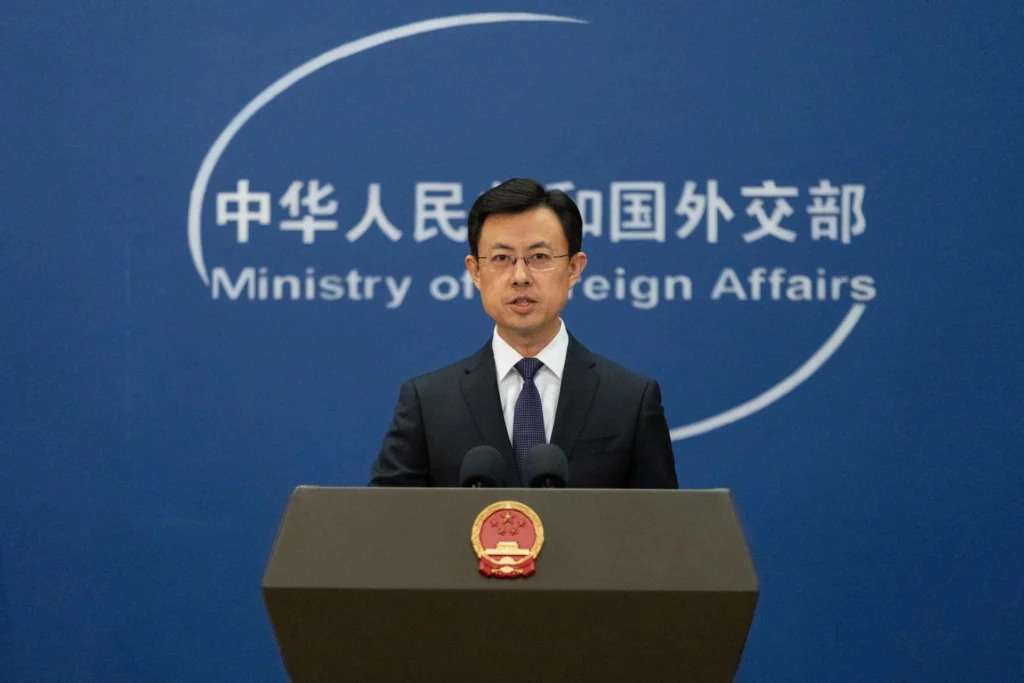
    The Chinese Foreign Ministry has issued a stern warning regarding Japan’s evolving security posture, expressing grave concerns over its potential impact on regional stability. Spokesperson Guo Jiakun articulated Beijing’s position that international cooperation must not compromise peace in the Asia-Pacific region.

    Citing historical precedents, Guo invoked Japan’s wartime atrocities during World War II, specifically referencing the invasion of the Philippines, crimes committed against civilian populations and Allied forces, and the assassination of Chinese diplomatic personnel. The spokesperson emphasized the critical importance of remembering this history to prevent the repetition of such transgressions.

    Guo further noted that Japan’s current security policies have drawn consistent criticism from Southeast Asian nations and the broader international community. Contrary to exercising restraint, Tokyo is actively pursuing military expansion and engaging in lethal weapons exports, actions that Beijing interprets as clear indicators of remilitarization efforts.

    The Chinese spokesperson called upon peace-loving nations to collectively oppose the resurgence of Japanese militarism, positioning this stance as essential for maintaining regional stability and upholding the post-war international order. The statement reflects growing tensions in East Asia as Japan continues to reinterpret its security constraints amid increasing geopolitical challenges.

  • ‘Not cash for gun’: Firearm amnesty begins next week

    ‘Not cash for gun’: Firearm amnesty begins next week

    The Royal Saint Lucia Police Force is initiating a decisive seven-day firearms amnesty program commencing next Monday, positioning it as a conclusive opportunity for citizens to voluntarily relinquish illegal weapons and ammunition before authorities escalate enforcement measures. This strategic initiative forms a critical component of the nation’s intensified ‘zero tolerance’ policy against firearm-related criminal activities.

    Police authorities have established two distinct operational windows for the surrender process: January 19-23 followed by January 26-28, with designated hours from 7:00 AM to 6:00 PM daily. Participants must proactively contact their local police station to declare their intention to surrender firearms prior to arrival.

    Assistant Commissioner of Police Luke Defreitas outlined rigorous safety protocols requiring all firearms to be completely unloaded—with no ammunition in chambers or magazines—and securely transported in appropriate carriers. Individuals are instructed to proceed directly to police stations without intermediate stops.

    The administration emphasizes that this amnesty constitutes neither immunity nor financial compensation program. Defreitas explicitly clarified that the initiative does not function as a ‘get out of jail free’ mechanism, warning that individuals discovered with illegal weapons during routine police operations will still face immediate arrest and prosecution.

    All surrendered firearms will undergo comprehensive forensic examination through ballistic testing. Weapons identified as connected to previous criminal activities may still lead to subsequent legal actions against those surrendering them. The program’s fundamental objective remains enhancing public safety rather than providing financial incentives, with Defreitas reiterating that no monetary compensation will be offered for surrendered weapons.

  • CDPF conduct foot patrol of Castle Comfort/Wallhouse as part of community policing initiative

    CDPF conduct foot patrol of Castle Comfort/Wallhouse as part of community policing initiative

    The Commonwealth of Dominica Police Force (CDPF) has intensified its community engagement efforts through strategic foot patrols in the Wallhouse and Castle Comfort districts. On January 14, 2026, officers from the Community Oriented Policing Unit conducted comprehensive neighborhood walks as part of the Force’s sustained Community Policing Initiative.

    During these immersive patrols, law enforcement personnel actively interacted with residents, addressing local concerns while providing expert guidance on crime prevention methodologies. The initiative facilitated open dialogue between officers and community members, emphasizing the critical importance of collaborative security partnerships.

    Official communications from the CDPF, disseminated through their Facebook platform, characterize this approach as fundamentally proactive—enhancing police visibility while simultaneously discouraging potential criminal behavior. The strategy deliberately focuses on building relational bridges between law enforcement and citizens, creating foundations for sustained mutual trust.

    Photographic documentation released by the police force shows officers engaging directly with community members in both residential areas, visually demonstrating the program’s hands-on implementation. The CDPF reaffirms its institutional commitment to maintaining these cooperative relationships, emphasizing their necessity for developing safer and more harmonious communities throughout Dominica.

  • Venezuelan opposition leader Machado Gives Her Nobel Peace Prize to Trump

    Venezuelan opposition leader Machado Gives Her Nobel Peace Prize to Trump

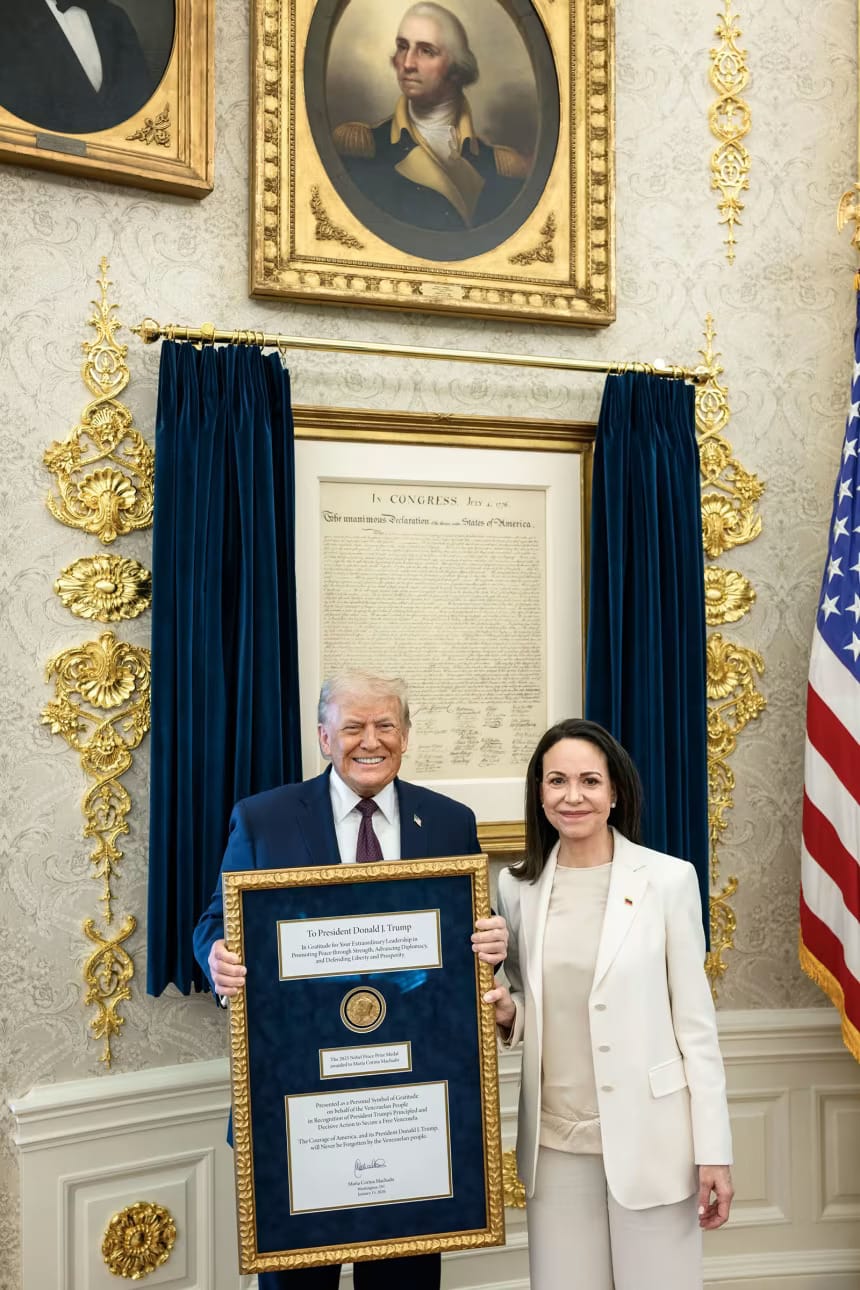
    In a politically charged gesture at the White House, Venezuelan opposition figure María Corina Machado presented her Nobel Peace Prize medal to President Donald Trump, framing the act as recognition of his dedication to Venezuelan freedom. The Thursday meeting marked their first face-to-face encounter since U.S. forces apprehended Venezuelan President Nicolás Maduro in Caracas on drug-trafficking charges several weeks prior.

    Machado characterized the event as “a historic day for us Venezuelans,” though Trump has refrained from endorsing her as Venezuela’s legitimate leader despite her coalition’s claims of victory in the intensely disputed 2024 elections. Instead, the U.S. administration has engaged with Delcy Rodríguez, Venezuela’s acting head of state and former vice-president to Maduro.

    Trump described the encounter as a “great honor,” praising Machado as “a wonderful woman who has been through so much.” Following the meeting, Machado assured supporters in Spanish that “we can count on President Trump,” and later told English-speaking journalists that the medal presentation represented “a recognition for his unique commitment with our freedom.”

    The symbolic transfer sparked immediate controversy, with the Nobel committee clarifying that prizes “cannot be revoked, shared, or transferred to others” once awarded. The Nobel Peace Center emphasized on social media that “a medal can change owners, but the title of a Nobel Peace Prize laureate cannot.”

    Machado contextualized her action through historical precedent, recounting how the Marquis de Lafayette presented a George Washington medal to Simón Bolívar as a token of solidarity against tyranny. “Two hundred years later,” she stated, “the people of Bolívar are giving back to the heir of Washington a medal.”

    During her Washington visit, Machado also met with U.S. senators amid enthusiastic chants of “María, presidente” from supporters. White House Press Secretary Karoline Leavitt acknowledged Machado as “a remarkable and brave voice for many of the people of Venezuela” prior to the meeting.

    The diplomatic developments coincide with significant shifts in Venezuelan policy. Since Maduro’s capture on January 3rd, the Trump administration has moved aggressively to restructure Venezuela’s oil sector, completing a $500 million oil sale and seizing multiple tankers allegedly transporting sanctioned Venezuelan oil.

    Simultaneously, diplomatic channels show signs of reopening, with a Venezuelan government envoy expected in Washington to discuss reopening their embassy. Rodríguez expressed willingness to engage diplomatically, stating she would visit Washington “standing tall, walking, and not crawling” if required as acting president.

  • UPP’s Lemuel Corriette calls for reassessment of Petite Savanne’s habitability 10 years post Erika

    UPP’s Lemuel Corriette calls for reassessment of Petite Savanne’s habitability 10 years post Erika

    A prominent voice in Dominica’s political landscape has issued a compelling call to action regarding the future of the Petite Savanne community, eight years after its devastation by Tropical Storm Erika. Lemuel Corriette, United Progressive Party (UPP) representative for the Petite Savanne Constituency, has demanded comprehensive reassessment and reevaluation initiatives for the displaced residents currently residing in Bellevue Chopin.

    During a featured appearance on Q-95 Radio’s ‘Talk on the Block’ program, Corriette emphasized the critical need to preserve the community’s cultural heritage, noting the absence of dedicated cultural centers where traditional arts could be maintained and transmitted to younger generations. “The community of Petite Savanne is traditionally known for its rich culture,” Corriette stated, highlighting a significant gap in cultural preservation efforts.

    The parliamentarian addressed the complex property situation, acknowledging that many residents retain ownership of lands in Petite Savanne and desire restoration of property values. “There are things that need to be done for things to happen,” Corriette remarked, suggesting that specific interventions are required to facilitate community restoration.

    Corriette adopted a cautiously diplomatic approach when discussing political representation, stating he takes “no issue with the representative there” from the ruling Dominica Labour Party (DLP). However, he pointedly added, “I don’t think there is a problem of who is there, I think the problem is who is leading them,” implying broader leadership concerns beyond mere representation.

    Significantly, the UPP representative challenged prevailing safety perceptions about the original community, asserting that “the village is safe enough” for habitation. He explained that while some houses were at risk during the 2015 disaster, residents should have autonomy in deciding whether to return or remain in Bellevue Chopin. “It should be their choice,” Corriette emphasized, advocating for resident agency in determining their future.

    The politician concluded by stressing the importance of community consultation, noting, “I want to talk to the people first,” before outlining specific plans, demonstrating a grassroots approach to addressing the ongoing displacement crisis.

  • Interact Clubs of Rotary District 7030 Donate Over 150 Books to Antigua and Barbuda Public Library

    Interact Clubs of Rotary District 7030 Donate Over 150 Books to Antigua and Barbuda Public Library

    In a significant boost to educational resources, Rotary International’s District 7030 Interact Clubs have presented more than 150 books to the Antigua and Barbuda Public Library. This donation enhances access to educational and cultural materials for students and community members alike.

    The formal handover ceremony was conducted at the library premises under the leadership of the District RYLA Chair. Participating clubs included:
    – Antigua Grammar School & Antigua Girls’ High School Interact Club
    – St. Anthony’s Secondary School Interact Club
    – Christ the King High School Interact Club
    – Antigua State College Interact Club

    This contribution originated from the ‘Books Across Borders’ regional community service project, an integral component of the Rotary Youth Leadership Awards (RYLA) convened in November 2025. The initiative saw participation from youth delegates across 13 territories spanning from Antigua to Suriname, with each region contributing literature as a testament to regional collaboration and youth-driven service. The collection features works on local and regional history, cultural folklore, and tourism insights.

    RYLA Chair Evangeline Allen, representing District Governor Soraya Warner-Gustave and all RYLA participants, highlighted the initiative’s foundational belief in education’s transformative power. ‘Each book here has journeyed across both physical and cultural boundaries to enrich this library,’ Allen stated. ‘Through this donation, we extend beyond sharing resources to offering encouragement, opportunity, and meaningful connections.’

    She further emphasized that the project embodies Rotary’s dedication to literacy, education, and service, showcasing how young leaders can drive change with purpose and global consciousness.

    Ms. R. Mannix, Director of the Antigua and Barbuda Public Library, gratefully acknowledged the donation, confirming that the books would substantially augment the library’s collections. She emphasized that these resources would advance the institution’s mission to provide open access to information and support lifelong learning while continuously promoting literacy. Mannix also expressed deep appreciation for the diligent efforts of District 7030’s student representatives in bringing the project to fruition.

    The Books Across Borders initiative serves as a tangible demonstration of youth leadership and regional cooperation, effectively translating collaborative effort into enduring community benefit.