作者: admin

  • Monitoring Washington’s commitments on IDPs and the repatriation of migrants in Haiti

    Monitoring Washington’s commitments on IDPs and the repatriation of migrants in Haiti

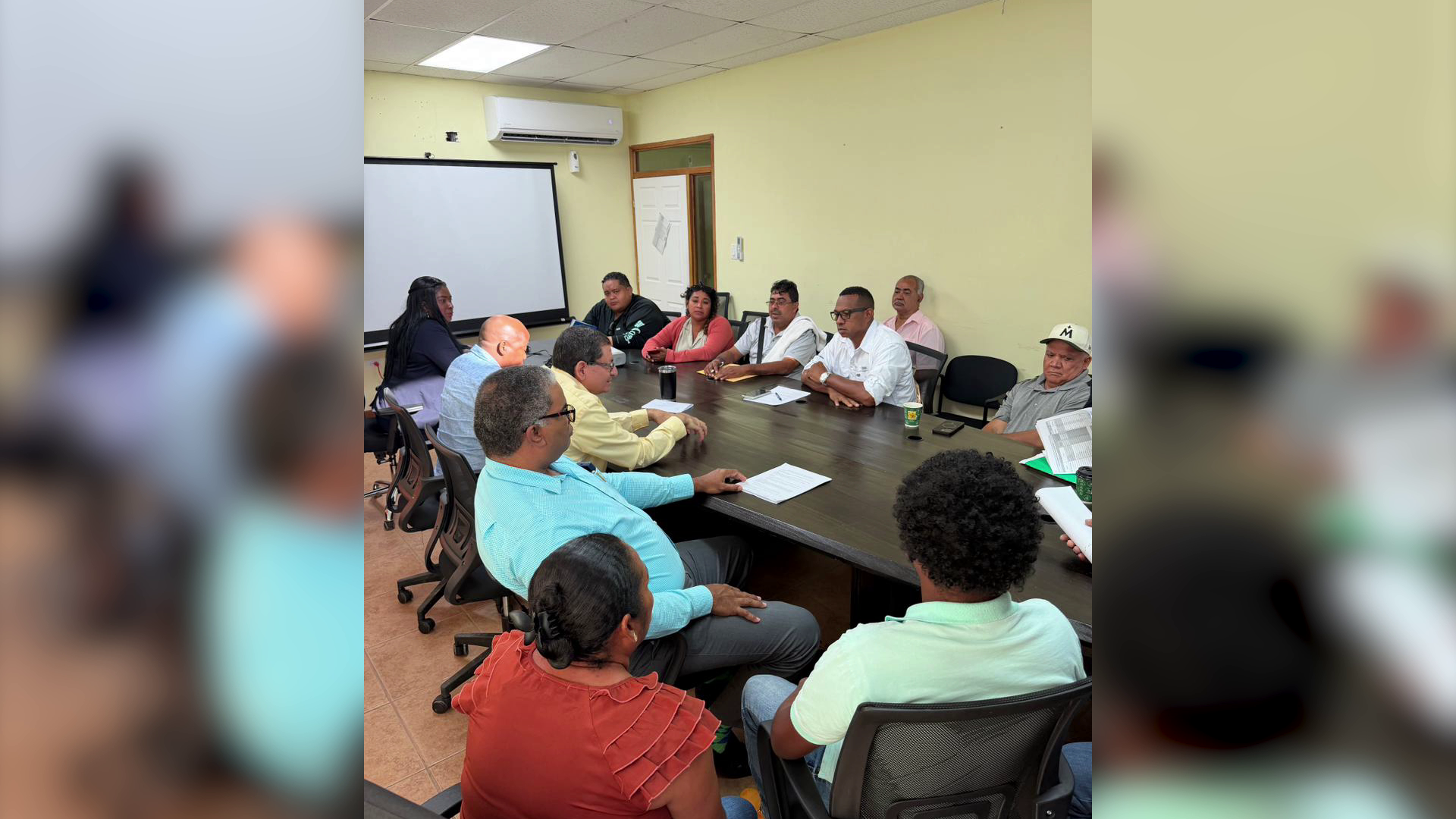
    In a high-stakes working meeting held on April 30, 2029, Haiti’s Minister of Planning and External Cooperation Sandra Paulemon sat down with Grégoire Goodstein, the head of the International Organization for Migration (IOM) Mission in Haiti, to push forward with follow-up actions on commitments forged during earlier high-level talks between Paulemon and IOM Director General Amy E. Pope in Washington D.C.

    The central focus of this latest gathering was advancing existing and emerging programs tied to two of Haiti’s most pressing humanitarian challenges: managing the country’s growing population of internally displaced persons (IDPs) and addressing the steady flow of forcibly repatriated Haitian migrants who have been in irregular migration situations abroad. Participants zeroed in on a suite of priority initiatives, from reinforcing national IDP and migrant registration frameworks and boosting systematic monitoring of vulnerable affected populations to unlocking long-term sustainable solutions that cover safe return, local resettlement, and community integration for displaced groups.

    The talks delivered tangible progress on concrete strategic frameworks designed to upgrade Haiti’s capacity to receive returning migrants, formalize a coordinated institutional presence across affected regions, and deliver targeted support to host local communities that bear the brunt of increased population inflows. Stakeholders are currently finalizing detailed actions to advance the socio-economic reintegration of returnees and displaced people, with a particular focus on developing tailored programming for at-risk youth, a group disproportionately impacted by Haiti’s ongoing mobility and instability crises.

    Minister Paulemon used the meeting to reaffirm the Haitian government’s core vision: transforming migration from a source of strain into a catalyst for national development. To deliver on this goal, she outlined plans to activate targeted mechanisms to mobilize Haiti’s large global diaspora, including through expanded support for local entrepreneurship, targeted growth for small and medium-sized enterprises (SMEs), and the formalization of new economic initiatives across key strategic sectors of the national economy.

    Paulemon also drew renewed attention to a longstanding systemic challenge: the fragmented nature of many international interventions in Haiti, which have undermined impact and misaligned with national priorities. She called for far stronger coordination and clearer harmonization of interventions across all international partner organizations, anchored explicitly to Haiti’s own national development and humanitarian goals. To operationalize this improved alignment, she stressed the urgent need for a 6 to 12-month collective action or partnership framework, with clearly mapped priority intervention areas and specific, measurable performance indicators to track progress.

    In response, Goodstein commended the significant progress already advanced under Minister Paulemon’s leadership, as well as her unwavering commitment to improving coordination of international humanitarian and development aid across Haiti. He explicitly reaffirmed that the Haitian government’s national priorities are the core guiding imperatives for all IOM programming and action in the country.

    Goodstein further confirmed IOM’s ongoing commitment to aligning all its interventions in Haiti with the government’s strategic priorities, and reiterated the organization’s intent to maintain close collaborative partnership with Haitian authorities. The shared end goal, he emphasized, is to deliver concrete, sustainable, and measurable outcomes that directly improve the lives of the Haitian population.


  • CBvS lanceert digitale leeromgeving voor financiële educatie

    CBvS lanceert digitale leeromgeving voor financiële educatie

    A 2022 study conducted by the Central Bank of Suriname (CBvS) has laid bare a critical gap in the country’s financial capability: 40 percent of the national population lacks sufficient knowledge to understand basic financial concepts. To tackle this widespread challenge, CBvS Governor Maurice Roemer officially launched the Digitale Leeromgeving (DLO), a free digital financial education pilot project hosted on the central bank’s official website, on April 30. Students from the Christelijk Pedagogisch Instituut Suriname became the first group of users to explore the new platform ahead of its wider public rollout.

    The DLO is structured around four core thematic pillars that cover key aspects of everyday finance: the broader domestic financial landscape, personal financial planning and management, money handling and digital transactions, and the relationship between financial risk and reward. The platform’s modular learning resources are designed to build practical, actionable financial skills, including how to create and stick to a monthly budget, build long-term savings habits, borrow responsibly, and plan for large life expenses. Following the pilot period, the CBvS plans to refine the platform’s content and functionality based on user feedback, with a long-term goal of sharing the open educational system with other public and private organizations across Suriname.

    Dirk Currie, Suriname’s Minister of Education, Science and Culture, emphasized the transformative potential of the initiative during the launch, urging participating students to take full advantage of the free resource. “Take advantage of every initiative that helps improve your chances of future success,” Currie said. “This is one of those opportunities.”

    For his part, Governor Roemer outlined the three core missions driving the DLO project: boosting public financial self-sufficiency, expanding equitable access to formal financial services across all population groups, and encouraging responsible long-term financial behavior among Surinamese citizens. Roemer stressed that the pilot launch is only the first step in addressing the country’s financial literacy gap, noting that the 2022 CBvS study uncovered an additional unexpected trend: even people who already have access to formal financial services often fail to utilize the tools and opportunities available to them. “So there is still a great deal of room for improvement,” he added.

    Right now, the DLO is in a controlled, phased testing phase. During this period, development teams will gradually refine the platform’s features, educational content, and overall user experience to meet public needs. As a result, access to the platform is currently limited, and its functionality and content availability may shift during testing. Once the pilot phase is completed and all adjustments are made, the DLO will be opened up to a broader audience across Suriname.

  • Baltimore keeps SPN in the Labour Camp

    Baltimore keeps SPN in the Labour Camp

    In the aftermath of Thursday’s general election in Antigua and Barbuda, the incumbent Antigua and Barbuda Labour Party has successfully defended its hold on the St Philip’s North constituency, with early vote projections confirming candidate Randy Baltimore as the winner.

    Baltimore jumped out to a comfortable lead over challenger Alex Browne, who represented the opposition United Progressive Party, in the early stages of vote counting. That advantage held through the final tabulation of ballots, allowing the governing party to keep the seat under its control in the country’s national legislature.

    The outcome of the St Philip’s North race offers one of the first clear indicators of the election’s direction, highlighting the incumbent party’s continued support in one constituency as votes across the nation continue to be fully counted and verified.

  • Why Press Freedom Is the Foundation of All Other Freedoms

    Why Press Freedom Is the Foundation of All Other Freedoms

    The well-worn adage holds that truth is the first casualty of war. But what is rarely discussed with the urgency it deserves is that truth is often silenced permanently when the journalists who chase it lose their lives or their ability to report. Across every region of the globe, media professionals put their personal safety on the line every single day just to fulfill their core mission of delivering factual information to the public.

  • Second Man Charged as Police Close In on Jamir Cambranes’ Killers

    Second Man Charged as Police Close In on Jamir Cambranes’ Killers

    Almost one week after the first arrest, law enforcement officials in Belize have secured a second murder charge against a suspect connected to the fatal shooting of 25-year-old Belize City-based technician Jamir Cambranes, a high-profile homicide that has drawn widespread public attention across the small Central American nation.

    Twenty-one-year-old Kameron Kareem Heusner made his initial court appearance before the Belize Lower Court on the morning of April 30, 2026, where a judicial official formally read a single count of murder against him. Investigative reports from the Belize Police Department outline that Heusner is alleged to have been behind the wheel of a silver Chevrolet Equinox – a vehicle captured clearly on regional surveillance footage – that picked Cambranes up on April 22 along the Burrell Boom/Hattieville Road, just minutes before the technician was killed.

    The available surveillance footage records the sequence of events that unfolded that day: Cambranes is seen voluntarily entering the front passenger seat of the Equinox, shortly before a second individual, identified by investigators as Kenrick Lindbergh Robinson, climbs into the vehicle’s back seat before the car departs the pickup area. After leaving the location, Cambranes reportedly exchanged final WhatsApp messages with his girlfriend before all communication stopped. When repeated attempts to contact him went unanswered, his girlfriend used her shared location access to track Cambranes’ mobile phone, ultimately guiding police to his body, which had been dumped in dense brush off the roadway and suffered multiple gunshot wounds.

    Surveillance evidence also indicates that following the shooting, Robinson returned to the area and removed Cambranes’ bicycle from the scene before fleeing. Robinson became the first suspect charged in the case when he was formally arraigned on a murder count on April 27, 2026, five days ahead of Heusner’s court appearance.

    Both suspects are scheduled to make their next joint court appearance on June 22, 2026. Police have confirmed that the investigation into the killing remains active, with detectives continuing to pursue leads to establish a clear motive and confirm any additional potential connections to the crime. This report is a transcription of an evening broadcast news segment, with any Kriol language phrases transcribed using a standardized spelling system for public access.

  • Jury Convicts Marvin Cal in Deadly Burrell Boom Road Crash

    Jury Convicts Marvin Cal in Deadly Burrell Boom Road Crash

    More than two years after a devastating highway collision claimed the life of Oscar Rhodas in Belize, a High Court jury has delivered a guilty verdict in the high-profile case against Marvin Cal. Cal was charged with causing death by careless driving following the November 2023 crash on the Burrell Boom–Hattieville Road.

    The nine-member jury spent just over two hours deliberating on the evidence presented before returning a unanimous guilty verdict. Prosecutors built their case around a series of witness testimonies and forensic evidence that contradicted Cal’s core defense: the defendant had long claimed he was only a passenger in the white Ford Ranger pickup at the time of the crash, not the person operating the vehicle.

    Witnesses who were traveling on the road the day of the incident told the court they observed the white Ford Ranger overtaking a passenger bus at dangerously high speed, swerving unpredictably moments before impact. The vehicle ultimately lost control and collided with a grey Dakota pickup that was towing a utility trailer, according to court records.

    Rhodas, who was traveling in the open rear bed of Cal’s pickup, was ejected from the vehicle during the crash and pronounced dead at the scene. Medical evidence presented during the trial confirmed Rhodas’ death was caused by severe, massive head trauma sustained in the impact. First responders also testified that they found Cal trapped behind the steering wheel of the wrecked Ford Ranger after the collision, requiring the use of the Jaws of Life hydraulic rescue tool to extract him from the wreckage — evidence that directly undercut his claim he had not been driving.

    Following the verdict, Justice Derrick Sylvester revoked Cal’s pre-trial bail and ordered the defendant remanded into custody at Belize Central Prison. Cal is scheduled to appear for his sentencing hearing on June 16, 2026. Ahead of the sentencing and mitigation submissions, the court has ordered three official reports to be prepared: a victim impact statement detailing the harm caused to Rhodas’ family, a social inquiry report, and a report on Cal’s prior criminal antecedents. Under Belizean law, Cal now faces a maximum penalty of two years of prison time, or a fine, with the final sentence to be determined by the court based on all submitted materials.

  • Another Fare Hike, Another Promise of Better Buses

    Another Fare Hike, Another Promise of Better Buses

    Scheduled to take effect following an official agreement between national transport authorities and local bus operators, Belize is set to implement a new round of bus fare increases in 2026 — only the second adjustment of its kind over the past 10 years. The price change is formally attributed to sustained global fuel cost increases that have squeezed operating margins for private and public bus providers across the country.

    Alongside the fare adjustment, officials and industry leaders have repeated a long-held pledge to deliver tangible upgrades to bus services, including modernized fleets, improved safety standards and more consistent scheduling. But for regular commuters who lived through the 2016 fare hike, this promise sounds all too familiar. A decade ago, similar commitments of improved service followed the last price increase, and many riders report that few meaningful changes ever materialized, leaving overcrowded routes, aging vehicles and unreliable timetables unchanged.

    Current Transport Minister Dr. Louis Zabaneh and Belize Bus Association President Philip Jones are pushing back against that widespread skepticism, emphasizing that the 2026 agreement is structured differently to deliver on past unkept promises. In an interview, Dr. Zabaneh explained that the new framework distributes the financial burden of rising global fuel prices across three stakeholders: bus operators, fare-paying commuters, and the Government of Belize, creating a more sustainable balance than previous arrangements. He added that the agreement enforces existing performance conditions attached to operators’ road service permits, and that mid-next month, officials will open new discussions focused on upgrading rural and village bus routes, as part of a broader government strategy to modernize the national highway and public transit sector.

    The core demand from commuters that has shaped ongoing negotiations mirrors what was raised a decade ago, when then-Transport Minister Edmond Castro highlighted rider concerns over safety, overcrowding, and unacceptably poor vehicle conditions. “If commuters are being asked to pay higher fares, even if only in some regions, they have every right to expect a better product from service providers,” Castro noted in past discussions that resonate with current public sentiment.

    Thomas Shaw, a former president of the Belize Bus Association, echoed a long-held industry position that higher revenue is a prerequisite for service upgrades: “Progress always comes with growing costs, and at the end of the day, if communities want quality, reliable bus service, they have to be prepared to pay for it. If operators get the revenue they need to upgrade, they can deliver the better service commuters want.” Current association president Jones echoed that framing in recent comments, adding that “public transit is the lifeline for most Belizeans. Every operator is on board with this agreement, and we are committed to delivering consistent, high-quality service that gets better over time.”

    Despite these renewed assurances, widespread skepticism remains among the riding public. After years of coping with overcrowded carriages, unpredictable schedules, and poorly maintained, aging buses, most commuters say they are adopting a cautious wait-and-see approach. While the leadership of the transport ministry and bus association has changed over the past decade, the core promise of service improvements tied to a fare hike remains identical — and for many Belizeans, that means their distrust remains unchanged too.

  • BREAKING: Trevor Walker Wins Barbuda Seat

    BREAKING: Trevor Walker Wins Barbuda Seat

    After all votes were cast and counted in the tightly contested Barbuda constituency election, long-serving incumbent Trevor Walker has successfully held onto his parliamentary seat for the Barbuda People’s Movement (BPM).

    Preliminary official vote tallies confirm that Walker outperformed his main challenger, Kendra Beazer, who ran for the Antigua and Barbuda Labour Party (ABLP), locking in another five-year term as the island’s representative in national parliament. The final preliminary count puts Walker at 616 votes, with Beazer trailing behind at 391 votes, a clear margin that solidifies the BPM’s hold on the Barbuda constituency.

    A well-established, prominent political figure across Barbuda, Walker faced a robust competitive challenge from the ABLP this election cycle. However, early vote counting throughout election night consistently placed the incumbent ahead, a trend that held through the final tally.

    While the final national results across Antigua and Barbuda are still being finalized to determine which party will form the next national government, the outcome of the Barbuda race guarantees that the BPM will retain its representation for the island in the upcoming legislative session.

  • This Labor Day, Workers Demand Action

    This Labor Day, Workers Demand Action

    As 2026 Labor Day approaches in Belize, working households across the nation are grappling with a growing financial squeeze that has pushed long-simmering workplace grievances to the forefront of public conversation. Skyrocketing living costs, from spiking fuel prices that have translated to higher public transit fares to steadily climbing everyday bills, have stretched already tight paychecks to breaking point, turning routine household budget management into a precarious balancing act for thousands. It is this widespread strain that is shaping the tone of 2026’s national Labor Day events, organized by the National Trade Union Congress of Belize (NTUCB).

    Unlike ceremonial celebrations of years past, this year’s march and rally, set to take place on Friday, is framed as an urgent call for action rather than a simple commemorative gathering. Union members will not only carry flags and mark the symbolic occasion; they will amplify the unmet demands of Belizean workers, pushing for policy changes that address rising economic hardship and strengthened severance protections for employees. Organizers emphasize that this year’s message is clear: working people demand to be heard by national decision-makers, and they are prepared to make their voices heard in public. NTUCB President Ella Waight stressed that the rally is not designed for empty celebration, but to stand up against the mounting pressures facing Belize’s labor force and demand tangible change, not symbolic applause.

    In details shared ahead of the event, Waight outlined the structure of the day’s activities: the march will kick off at 8:30 a.m. from Constitution Park, proceeding along a route to Birds Isle for the post-march rally. Participating union members will carry branded flags and custom banners, combining celebration of workers’ contributions to the nation with vocal advocacy for improved rights and working conditions. The NTUCB has expanded participation beyond traditional union ranks, extending invitations to a broad coalition of groups with shared grievances. The Belizean Cane Farmers Association, the Cuban Brigade working in the country, and two justice groups representing former employees of the national electricity board and Belize Telemedia Limited (BTL) have all agreed to join the demonstration. Waight noted that these former workers have their own critical messages to share with the Belizean public, making their inclusion a natural fit for the event’s mission.

    Organizers are projecting a solid turnout from both unionized and non-unionized workers, who have been encouraged to join the demonstration to add their weight to the call for reform. This year’s official Labor Day theme, “Workers’ Rights, Nation’s Strength”, anchors the rally’s core message: that the strength and growth of Belize as a nation is inherently tied to the protection and empowerment of its working population. Waight emphasized that the theme reflects a simple, foundational truth: Belize’s current economic and social development would not exist without the labor of working people, who build and sustain every sector of the country. As preparations wrap up, the rally stands as a unified display of working-class solidarity, bringing together diverse groups to demand meaningful action to address the economic strains hitting households across Belize.

  • Gaston Browne wins City West Seat

    Gaston Browne wins City West Seat

    In a closely watched electoral contest that has drawn significant political attention across the region, Gaston Browne has emerged victorious in the race for the City West parliamentary seat, confirming his continued hold on one of the area’s key legislative positions.

    The City West constituency, a densely populated urban district that serves as a critical hub for local commerce and community activity, has long been considered a bellwether for broader political trends in the nation. Voter turnout for the contest reached respectable levels, with constituents turning out at polling stations across the district from early morning to cast their ballots on a range of key local and national issues, including infrastructure investment, affordable housing, and job creation for young residents.

    Political analysts note that Browne’s win reinforces his standing within his party and solidifies the governing bloc’s position in the legislature ahead of upcoming national policy debates. Speaking to supporters shortly after the final vote count was confirmed, Browne emphasized his commitment to delivering on campaign pledges, highlighting plans to expand public transportation access, upgrade local schools, and attract new small business investment to the City West area. He also extended gratitude to voters for their trust and pledged to serve as a responsive advocate for all constituents, regardless of their political affiliation.

    Opposition candidates, who mounted a vigorous campaign challenging Browne on issues of cost of living and public service delivery, have acknowledged the result. Most have congratulated the victor and reaffirmed their own commitment to holding the administration accountable on behalf of City West residents during the upcoming legislative term.