作者: admin

  • Gradual improvements coming for utility customers, says OUR head

    Gradual improvements coming for utility customers, says OUR head

    TRELAWNY, Coral Spring — Six months after Category 5 Hurricane Melissa battered Jamaica’s critical utility infrastructure, the island’s top utilities regulator has confirmed that lingering customer service disruptions will continue through the remainder of 2025, even as gradual improvements are underway.

    Ansord Hewitt, Director General of Jamaica’s Office of Utilities Regulation (OUR), shared the update Thursday on the sidelines of the 2026 Organization of Caribbean Utility Regulators (OOCUR) Conference, hosted at the Ocean Coral Spring Resort in Trelawny. The five-day event, running from April 27 to May 1, brings together regional regulatory leaders to address shared industry challenges under the theme “Navigating Caribbean Regulatory Challenges: Opportunities, Innovations and Collaborations.”

    Since Melissa made landfall last October, the OUR has recorded a surge in consumer complaints across three regulated sectors: telecommunications, water supply, and electric power. Hewitt acknowledged that existing pre-storm quality gaps have been severely worsened by post-hurricane recovery work, with service disruptions persisting longer than many customers expected.

    “Customer service issues will almost certainly remain with us for the rest of this year, though we expect their severity to decline steadily as restoration work advances,” Hewitt explained to the Jamaica Observer. He noted that service quality has been the top complaint to the OUR since the storm, and rooted the ongoing challenges in the urgent priorities of early disaster recovery.

    In the immediate aftermath of a major hurricane, the primary mandate for utility providers is to restore critical services to as many customers as possible as quickly as possible. This rush, Hewitt explained, often means providers rely on temporary fixes and shortcuts to get power, water, and connectivity back online, rather than completing full, permanent repairs that meet pre-storm quality standards. Key core infrastructure elements for power grids and telecommunications networks require full reconstruction, a process that can take many months to complete.

    Even after nearly 100% of basic service is restored, providers face a prolonged period of post-recovery cleanup and fine-tuning to bring service quality back to pre-disaster levels. Compounding this challenge, Hewitt added, is the fact that service quality shortfalls already existed across Jamaica’s utility sectors before Melissa hit, and the chaos of restoration only amplified these existing problems.

    The OUR head also drew a parallel to recovery from 2024’s Hurricane Beryl, which struck Jamaica in July of that year. After initial service restoration was completed four to five months after Beryl, providers required an additional six months to return customer service to pre-storm levels. For Melissa, Hewitt confirmed that providers have hit major restoration milestones after six months: electric service is nearly 100% restored, while water service restoration is slightly lower.

    As regulators, Hewitt noted, the OUR has worked to strike a careful balance between pushing for faster quality improvements and understanding the constraints providers face during recovery. Immediately after a storm, the public is generally willing to accept temporary lower service standards to speed up broad restoration, but this situation cannot be allowed to continue indefinitely. The OUR is currently prioritizing pressure on utility companies to address customer service backlogs and quality gaps as quickly as possible.

  • Former Jamaica Observer employee to be honoured by Canadian city

    Former Jamaica Observer employee to be honoured by Canadian city

    A former staff member of Jamaica Observer, Simone Thomas, is set to receive one of Brampton, Canada’s highest civic honors: the Brampton Inspirational Citizen Award. The May 7, 2026 ceremony, hosted at a city event, will see Brampton Mayor Patrick Brown present the award to Thomas, with a roster of distinguished guests in attendance including Jamaica’s High Commissioner to Canada Marsha Coore Lobban, Jamaican Consul General to Toronto Kurt Davis, Howard Shearer (son of former Jamaican Prime Minister Hugh Shearer), and Bishop James Robinson of Faith Open Door Ministries.

    Before relocating to Canada to build her new life, Thomas built her career at Jamaica Observer, serving as executive assistant to the outlet’s editor-in-chief. Her journey to the award began in late October 2025, when Hurricane Melissa made landfall in Jamaica, leaving widespread destruction, displaced families, and urgent unmet humanitarian needs in its wake.

    For Brampton’s large Jamaican diaspora community, the disaster was not a distant tragedy: many local residents had direct family and cultural ties to the impacted regions, and were grappling with anxiety, uncertainty, and a desire to help. Thomas, recognizing both the urgent need for aid and the diaspora’s desire to contribute, stepped forward to organize a coordinated response just days after the hurricane hit.

    She first reached out to the City of Brampton to secure dedicated public space for relief efforts, laying the foundation for the One Love Hurricane Melissa Relief Hub. Over the course of three months of continuous operation, the hub served as the central coordination point for all humanitarian donations going to Jamaica, drawing support from volunteers and donors across Brampton and the entire Greater Toronto Area. Local residents dropped off essential emergency supplies, from non-perishable food to hygiene products and building materials, while hundreds of volunteers sorted, packed, and prepared shipments for transport to impacted Jamaican communities.

    Beyond its role as a logistics hub, the One Love center filled a critical emotional gap for the Brampton diaspora. It provided a safe, inclusive space for community members to come together, share updates on missing or affected loved ones, and process the grief and anxiety that came with the disaster. According to the mayor’s office, Thomas personally maintained a constant, compassionate presence at the hub: she balanced the day-to-day work of coordinating operations with offering emotional reassurance to community members reeling from the disaster’s impact.

    What began as an impromptu community donation drive grew into a sustained, city-backed movement that left a lasting mark on both Brampton and the hurricane relief efforts in Jamaica. The citation for the award highlights that Thomas’s initiative turned grassroots goodwill into a structured, impactful response. Her leadership united diverse community groups, leveraged formal partnership with the municipal government, and strengthened Brampton’s long-standing culture of cross-community solidarity.

    “Simone’s leadership transformed what could have been a short-term donation drive into a sustained, city-supported community movement. The scale of participation, the duration of operations, and the continued conversations about its impact demonstrate the measurable and lasting difference she made,” the citation reads. “Her actions exemplify proactive civic leadership, cross-community mobilization, and compassionate service. Simone Thomas did not wait for direction, she created a structured response that united residents, leveraged municipal partnership, and strengthened Brampton’s spirit of solidarity. Her contribution embodies the true essence of the Brampton Inspirational Citizen Award.”

  • 10,000-strong turnout for Jill Stewart Mobay City Run brings tears to Silvera

    10,000-strong turnout for Jill Stewart Mobay City Run brings tears to Silvera

    The 10th edition of the Jill Stewart Mobay City Run, a beloved community running event renamed to honor the late wife of Sandals Resorts International Executive Chairman Adam Stewart, concluded successfully on Sunday in Montego Bay, St. James, drawing more than 10,000 participants from across Jamaica and around the world to Howard Cooke Boulevard.

    In the competitive 5K races, local athlete Garfield Gordon crossed the finish line first in the men’s division with a time under 16 minutes, while Tracy-Ann Vernon claimed the women’s 5K crown in just under 24 minutes. For event founder and chair Janet Silvera, the overwhelming turnout far exceeded even her most optimistic projections, bringing an overwhelming sense of fulfillment.

    “I’ve watched this event grow steadily over the years, so I’ve come to expect strong community support, but even I was caught off guard by how many people turned out this year,” Silvera shared in an interview with the Jamaica Observer. “When I looked out at the sea of participants from every background and corner of the globe, I was so moved I nearly cried. We had predicted we might hit the 10,000-participant mark, but we also knew last-minute changes could derail that goal. This year, everything came together perfectly, and the community showed up in a huge way for this cause.”

    Originally, the event set a fundraising target of JMD $10 million to support schools and tertiary students across western Jamaica whose education was disrupted when Hurricane Melissa struck in October last year. That total is already expected to climb higher, as Silvera confirmed multiple new corporate sponsors signed on to support the initiative less than 48 hours before the race kicked off, a testament to widespread stakeholder commitment to rebuilding western Jamaica’s education sector.

    Many local education institutions suffered catastrophic damage from the storm. Silvera highlighted the case of Maggotty High School, which was left devastated by the hurricane. Already, a JMD $2.5 million grant secured through the Digicel Foundation has been disbursed to the school, a contribution Silvera says will deliver tangible, immediate improvement to the school community. Another impacted institution, Herbert Morrison Technical High, is set to receive a $1 million grant, and one corporate sponsor has also committed to a long-term partnership with the school’s destroyed engineering department – a program that has produced some of the top engineering students in the region, many of whom have continued attending classes under temporary tents and trees while rebuilding efforts stall. For Silvera, this extended commitment is just as valuable as the one-day fundraising total, highlighting the long-term impact the event is designed to deliver.

    Beyond disaster relief, the event also invests in the future of outstanding young Jamaican athletes. Later this year, the Jill Stewart Mobay City Run will honor two rising Trelawny-based track stars – Holland High’s rising sprint prodigy Shanoya Douglas and William Knibb’s sprint star Sanjay Seymore – at its annual Champion of the West Awards. Silvera noted that these young athletes embody the key role that western Jamaican youth play in driving the entire country’s development.

    Unlike many one-off community races, the Jill Stewart Mobay City Run was built as a sustained initiative to lift up young people across western Jamaica. “This is not just a one-day event that we wrap up and walk away from,” Silvera explained. “We work with the region’s youth year-round because we know Jamaica’s future is in their hands. If we fail to step up as role models and fail to give them the support they need to build their own futures, we have failed as an organization. This event’s growth over 10 years shows that this long-term investment is already paying off, and it will continue to transform young lives for years to come.”

    At a recent cheque presentation, Maggotty High School Principal Sean Graham accepted the $2.5 million grant on behalf of the school, with Digicel Foundation chair Joy Clark and event organizer Janet Silvera in attendance to mark the milestone.

  • Wellness drive brings free health checks to St Andrew South police

    Wellness drive brings free health checks to St Andrew South police

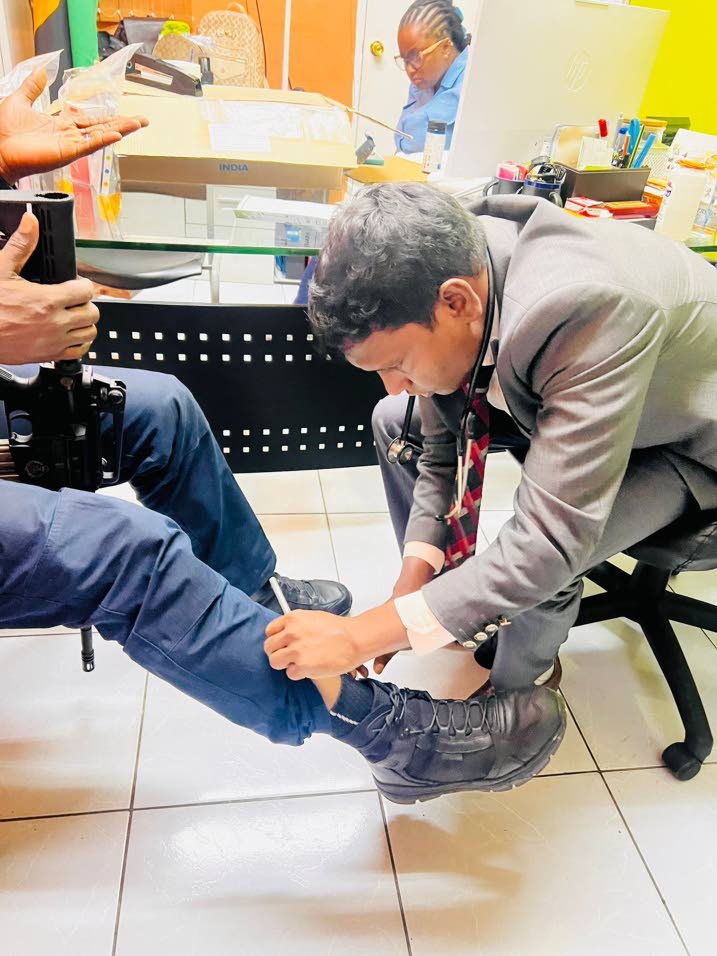
    Jamaica’s frontline law enforcement officers, who daily put themselves in harm’s way to protect communities, are receiving targeted support to prioritize their physical and mental well-being through a new outreach initiative. Last Wednesday, active officers and their family members serving in the Jamaica Constabulary Force (JCF) St Andrew South Police Division gained access to comprehensive free health screenings at the Hunt’s Bay Police Station, designed to address the unique chronic stress and occupational hazards that come with policing work.

    Senior Superintendent Damian Manderson, head of the St Andrew South Division, emphasized that officers and civilian staff are the division’s most valuable resource, outranking any operational equipment or infrastructure. “Our human resources, our men and women you see standing at the traffic lights, conducting operations, driving and going about, they are our greatest asset, no matter how expensive the van they are driving is. This is a part of investing in them. It is a part of ensuring they are well,” Manderson told local outlet Jamaica Observer in an interview Friday.

    The initiative brings medical care directly to personnel to eliminate barriers to accessing routine check-ups, with built-in plans for follow-up care for any issues identified during screenings. “The push is to ensure their well-being by bringing in these doctors at their fingertips, at their beck and call so that they can get due care — and coming out of these visits come the follow-ups,” Manderson explained.

    St Andrew South Division operates in one of Jamaica’s more violence-impacted policing districts: between January 1 and April 20, 2025, the division recorded 18 of the island’s 174 total murders, marking the second-highest murder count across Jamaica’s 19 police divisions, trailing only St James Division which logged 22 murders in the same period. This high-crime environment places extraordinary physical and emotional strain on personnel, leading division leadership to roll out holistic support beyond just medical care.

    Earlier in the same week, the division hosted financial advisors from the police credit union to help personnel build long-term financial stability, covering critical topics such as budgeting amid economic uncertainty, retirement planning, caring for aging dependent family members, and the importance of adequate insurance coverage. “It is a part of our thrust as a management body to ensure that our staff, whilst they work, they are working with clear, competent, healthy minds and spirit, putting everything in it, and that is what will translate on the streets with a safer division,” Manderson said.

    He noted that policing is an inherently high-risk occupation worldwide, requiring officers to place themselves between violent criminals and law-abiding community members, leading to persistent high stress and emotional tension. “It is not just good enough for them to show up, they must show up physically and mentally. We take mental health serious,” Manderson added, highlighting that good mental health is a non-negotiable foundation for effective, safe policing.

    The wellness drive has been made possible through long-standing partnerships with volunteer medical professionals, including Dr Nagamalleswara Rao Chandolu, as well as the JCF’s in-house medical services branch, which provides ongoing support for officer and family well-being. Wednesday’s health fair is the first of two such free events planned for the St Andrew South Division in 2025, open to all sworn officers and unsworn civilian staff, plus their immediate families. Multiple medical specialists participated, including general practitioners, surgeons, pediatricians, and physiotherapists, to address a wide range of health concerns. All services, including complimentary vitamins, minerals, and medication prescriptions, were provided at no cost to attendees.

  • Sashamani rides as a Champion Jockey

    Sashamani rides as a Champion Jockey

    Kicking off May with a career milestone, veteran Jamaican recording artist Sasha, also known by her stage name Sashamani, has launched her highly anticipated new single titled *Champion Jockey*, crafted under the production direction of Javaughn Genius. The release comes as Sasha adds another win to a decades-long career that has left a lasting mark on global reggae and dancehall music.

    In a recent interview with Jamaica Observer, Sasha opened up about the personal and universal message woven into her latest track. *Champion Jockey* centers on the quiet battles many people face against negativity from close connections — colleagues, associates, even friends who harbor ill will and hope to see them stumble. “This is a song that deals with the daily fight and struggles we have with the very people we work with, eat with, and do business with. But, in spite of the bad mind and people wanting to see me fail, God is my strength and I know he holds the key to my destiny. Mi a champion jockey, ‘cause mi a God pickney,” she explained, framing the track as an anthem of faith-driven resilience.

    Sasha first rose to international prominence in the early 2000s through a string of well-received collaborative projects with iconic reggae artist Turbulence, including fan-favorite tracks *Want A Natty*, *We’ve Got The Love*, and *Don’t Wanna Be Alone*. Her biggest mainstream breakthrough arrived in 2003, when her duet *I’m Still In Love With You* with global pop-dancehall star Sean Paul became a massive hit across the United States. Decades later, the track continues to rack up industry accolades: the British Phonographic Industry (BPI) certified the single gold in October 2024. The song is featured on Paul’s *Dutty Rock* album, which holds triple platinum certification from the Recording Industry Association of America.

    Beyond her collaborative work, Sasha has built a legacy as a solo artist with standout releases that have shaped global popular music. Her solo track *Dat Sexy Body* became a cultural phenomenon on the international music scene, earning co-signs and interpolations from A-list stars including Jennifer Lopez, Pitbull, and Zara Larsson, while the original recording also performed strongly on global charts.

    For *Champion Jockey*, Sasha says her greatest goal is for the track to connect deeply with listeners facing their own life challenges. She hopes the song will encourage audiences to recognize their own strength through faith, framing every resilient person as a “champion jockey” capable of outrunning adversity. The artist also shared that she ultimately hopes the uplifting anthem climbs to the top of global music charts.

    Reflecting on the evolution of Jamaican popular music since the 2000s, Sasha noted that while she embraces the natural progression of the genre, she believes classic dancehall and reggae from that era carried greater lyrical depth and lasting substance. She issued a message of guidance to the next generation of female Jamaican artists, urging them to center faith in their work and create purpose-driven music that will resonate with audiences for decades.

    Looking ahead to the rest of 2025, Sasha has a packed schedule of new releases and live performances in the works. Her manager George Whitehead, also known as Trouble, is partnering with event promoters to organize a regional tour covering the western United States and select Caribbean islands scheduled for the second half of the year. Sasha is also currently putting the finishing touches on her upcoming EP, with a second single titled *No Space* — produced by On The Spot Muzik — set to drop in the near future.

  • HOLNESS RUNS AGAIN

    HOLNESS RUNS AGAIN

    NEW YORK — For Jamaican-American politician Dale Holness, a third shot at Florida’s 20th Congressional District seat comes with a dramatically altered playing field: his two-time rival is mired in scandal, a partisan redistricting fight is roiling the state, and Holness enters the race with a clear fundraising advantage that has bolstered his long-held political ambition.

    Holness, a former Broward County mayor and county commissioner who first entered politics after migrating from Jamaica as a 17-year-old, has fallen short of winning the Democratic nomination for the solidly blue district twice before. In his first 2021 special election bid, he lost to Haitian-American candidate Sheila Cherfilus-McCormick by just five votes — a margin so narrow it defied most political expectations. A rematch in 2022 ended the same way, even with the backing of the district’s roughly 25,000 Jamaican residents, a key voting bloc that has long supported Holness.

    This cycle, however, the political landscape has shifted dramatically. Cherfilus-McCormick, who held the seat since 2022, resigned from Congress at the end of last month, mere minutes before the House Ethics Committee was set to vote on recommending her expulsion. The congresswoman faces felony fraud and ethics violations, centered on allegations that she diverted $5 million in erroneous COVID-19 relief grants awarded to her family’s health care company by the Federal Emergency Management Agency to fund her first successful congressional campaign. She has repeatedly denied all wrongdoing, but the scandal has gutted her political and financial standing.

    Even though Cherfilus-McCormick has signaled she plans to run for re-election, her campaign is crippled by debt and a lack of funds. She drained nearly all her campaign reserves to pay criminal defense legal fees, leaving just $11,000 on hand — an amount widely considered negligible for a competitive congressional race. Her campaign committee also owes six-figure sums to multiple outside law firms, and her total fundraising haul this cycle is the lowest of the five candidates competing in the August Democratic primary.

    With his longtime rival severely weakened, Holness now faces a new, more formidable challenge: a Republican-led redistricting effort that redraws the boundaries of Florida’s 20th Congressional District. The Florida state legislature approved the new map last Wednesday, which cuts Palm Beach County out of the district and adds the more Republican-leaning communities of Coral Springs, Margate, and Coconut Creek. Republican leaders hope the redistricting will flip the historically Democratic seat to their column, part of a broader national push by the party to gain multiple congressional seats across the country ahead of the November general election.

    The redistricting plan is already on track to face legal pushback, however. Florida’s 2010 “Fair Districts” amendment to the state constitution prohibits partisan gerrymandering — the practice of drawing district lines to intentionally benefit one political party or weaken minority voting power. The fight in Florida is part of a larger national redistricting battle that has erupted this cycle: Republicans in Texas led a similar redraw backed by former President Donald Trump to pick up five additional seats, while Democrats have successfully pushed through redistricting reforms in California and Virginia that could net the party nine additional seats combined. A recent U.S. Supreme Court ruling that weakened a key provision of the 1965 Voting Rights Act, which was designed to protect minority congressional representation, has also favored Republican map-drawing efforts in states like Louisiana.

    Despite the uncertainty of the new district lines, Holness remains optimistic about his chances. He told reporters that 70 percent of the original 20th District’s territory remains intact under the new map, and the areas that remain are ones he has represented and worked in for decades. “These are areas that I know quite well, areas where I have worked with the people over many years and to whom I have been able to bring a better way of life as commissioner and mayor,” he said.

    Holness also holds a substantial fundraising lead over all other primary candidates. His campaign reported raising more than $92,500 in the most recent quarter, leaving him with $312,672 in cash on hand after just $8,000 in expenditures. He credits his fundraising success to his long record of public service and his refusal to accept donations from political action committees, noting that most contributions come from ordinary working constituents in the district. Despite his strong position, he says he is not taking victory for granted, drawing on lessons from his two narrow past losses. “While I will acknowledge that I am in a fairly strong position, I also know that there is a lot more to be done,” he said. “I learned from past elections. I’m not hiring a whole bunch of high-paying consultants. I’ve been on the phone. Most of that money that I raised is from phone calls. I’m not spending money to make money.”

    Still, headwinds remain. It is unclear how large the Jamaican-American voter base will be in the reconfigured district, and campaign organizers face the challenge of mobilizing voters to turn out for the August 18 primary, an election that many constituents may overlook ahead of the November general election.

    Holness is building his campaign around core kitchen-table issues that resonate with working district residents, focused heavily on economic affordability. He has highlighted the soaring cost of living that has left many residents working two or three jobs just to make ends meet, criticized Florida’s decision not to expand Affordable Care Act Medicare subsidies that would lower health care costs for vulnerable residents, and pledged to address barriers to homeownership for young people and expand access to affordable childcare. “These are the issues to which I will devote my service if elected,” he said.

    A seasoned public servant, Holness was born in Hanover, Jamaica in 1957 and migrated to the United States at 17. He attended Broward Community College and Nova Southeastern University, and has worked as a real estate broker for decades, leading the local firm All Broward Realty. He began his political career on the Lauderhill City Commission from 2004 to 2010, won a seat on the Broward County Commission in 2010 where he served until 2022, and made history as the first Jamaican-American to serve as mayor of Broward County from 2019 to 2020, leading the county through the chaotic initial days of the COVID-19 pandemic. In 2021, the Jamaican government honored him with the title of Commander of the Order of Distinction for his outstanding service to the Jamaican diaspora.

    Alongside Holness and the scandal-plagued Cherfilus-McCormick, three other Democratic candidates are competing for the party’s nomination: Luther Campbell, Elijah Manley, and Rudolph.

  • Forever Wealthy Records sets stage for unearthing new talent

    Forever Wealthy Records sets stage for unearthing new talent

    Long before relocating from Jamaica to the United States, Alemu Reid carried a clear vision: to remove systemic barriers that hold back up-and-coming musicians and open new doors for creative artists who lack access to industry resources. For years, Reid heard consistent accounts of the struggles facing emerging artistes, from limited access to professional recording facilities to gaps in professional career management and strategic marketing support that are essential for breaking into the competitive global music industry.

    After earning specialized degrees in music production, business administration, and entertainment management from Full Sail University in Florida, Reid set out to turn his long-held vision into a tangible, impactful venture. Three years ago, that vision materialized as Forever Wealthy Records, an independent label founded with the explicit mission of centering and nurturing emerging creative talent. Today, at just 24 years old, Reid leads the growing label as it steadily expands its brand footprint and builds collaborative partnerships with both rising artists and established industry acts.

    In an exclusive interview with Jamaica Observer, Reid opened up about the Jamaican roots that shape his work and mission. “From childhood, music has been the core passion of my life,” he explained. “Growing up surrounded by the diverse sounds and vibrant cultural experiences of Jamaica inspired me to build something meaningful, using music as a medium to share authentic, real-life stories with audiences around the world.”

    Reid outlined the three pillars that guide the label’s work: to create a robust, supportive platform for gifted artistes to showcase their work, to craft enduring, timeless music that resonates across generations, and to embody a broader lifestyle centered on personal growth, collective success, and continuous upward mobility.

    To date, Forever Wealthy Records has already built an impressive portfolio of collaborations, working with dancehall star Jamal, production collective Bricky Music, and veteran producer Papi Don, among others. Currently, Reid is expanding the label’s talent development pipeline through a new strategic partnership with RVS Entertainment, which is supporting a new cohort of rising acts including Bricky Music, Prince Salah, and NR Code.

    One of the defining career highlights for Reid so far came last year, when he contributed production work to Jamal’s critically acclaimed debut album *Rated D For Dunce*. Reid produced two standout tracks on the project, *Forever Wealthy* and *All the Time*, and also partnered with Papi Don Music to release Jamal’s popular single *Motivate*. Looking back on his journey building the label from the ground up, Reid noted that while the path has been full of unforeseen challenges, every hurdle has brought meaningful rewards.

    “This journey has been equal parts challenging and deeply rewarding,” Reid said. “It has required constant learning, intentional growth, and unwavering consistency even when we faced obstacles that seemed insurmountable. What makes Forever Wealthy Records stand apart from other labels is our commitment to authenticity, our relentless focus on lifting up new talent, the clarity of our message, and our uncompromising dedication to quality. We are not just creating music—we are building a lasting brand and a legacy that will outlast any single release.”

    The label’s sound draws deeply from its Jamaican dancehall roots, while seamlessly blending modern production techniques and international influences to create a signature style that feels both familiar and fresh. Reid describes the label’s output as melodic, high-energy, and deeply relatable to audiences across different regions and musical tastes.

    Most recently, Forever Wealthy Records dropped its highly anticipated new project, the *Too Force* rhythm, which premiered globally on April 17. The compilation features tracks predominantly from emerging signees and partner artists, including fan-favorite Bricky Music, marking another milestone in the label’s rapid growth and commitment to elevating new voices in the industry.

  • Jada Kingdom reimagines Damian Marley classic in Still Searching visuals

    Jada Kingdom reimagines Damian Marley classic in Still Searching visuals

    Jamaican dancehall sensation Jada Kingdom is continuing her calculated creative ascent with the highly anticipated official music video release of “Still Searching”, the standout track from her recent critically lauded EP ‘Just A Girl In A Money Man’s World’.

    Far more than just a standard visual accompaniment to the single, the new music video acts as an intentional artistic tribute to reggae icon Damian Marley. Kingdom reimagines the core of Marley’s 2001 classic hit through her own unique artistic lens, centering themes of unapologetic confidence, feminine autonomy and personal control.

    This latest release comes on the heels of a prolific stretch of creative output from the rising star. Just one month prior, Kingdom unveiled “New Religion”, a four-track extended play featuring collaborative work from Maryland-based rapper Foggieraw. That project leaned into a more intimate creative perspective, exploring the intricacies of romance, desire and emotional vulnerability. It marked a clear sonic and thematic departure from ‘Just A Girl In A Money Man’s World’, showcasing Kingdom’s commitment to shifting narrative perspectives while broadening her artistic range without sacrificing her signature core voice.

    This career momentum has not been limited to studio recording, either. Kingdom recently delivered a showstopping live set at the Barbados Reggae Weekend Festival, where she was invited to the stage by iconic dancehall heavyweight Popcaan. She is next scheduled to take the stage at Citi Splash in London on May 25, continuing to grow her international live audience.

    ‘Just A Girl In A Money Man’s World has already earned widespread critical acclaim from some of the biggest names in music journalism, including Billboard, NME, Wonderland, Dancehall Mag, and World Music Views, among others.

    Billboard specifically highlighted the EP track “Don’t Talk To Me”, praising Di Genius’ polished production work and Kingdom’s magnetic vocal delivery. The outlet noted that the track continues “the legacy of women in dancehall assuming positions of power and control in their own sex-minded anthems”.

    World Music Views framed the EP as a work that captures an artist acutely aware of the industry systems around her, moving through themes of money, desire and power entirely on her own terms. The Source called the project a bold artistic statement, while Wonderland highlighted that Kingdom “continues to set the standard for the genre”, describing the EP as vibrant, sharply produced, and rooted in nuanced explorations of womanhood and original storytelling, with “Still Searching” standing out as the release’s defining moment. For its part, Dancehall Mag described the full project as “deliberate, controlled, and culturally locked in. The kind of project that doesn’t beg for attention yet commands it”.

    Kingdom’s path to stardom is rooted in the resilience she developed early in life. Born and raised in the vibrant yet challenging 7 Mile Bull Bay neighborhood, specifically Gold Shore Lane, Jamaica, her upbringing was defined by perseverance. Even amid the obstacles her community faced, she found stability and joy in close family bonds. By the age of eight, she had already begun writing poetry, revealing a depth of creative vision that would go on to shape her signature artistry.

    She draws creative influence from a diverse range of legendary artists across genres, including Nina Simone, Diana King, Sade, Minnie Riperton, and Amy Winehouse. From these icons, she absorbed the emotional honesty, narrative skill and musicality that remain central to her sound today.

    Kingdom’s commercial success matches her critical acclaim: she has accumulated more than 150 million total streams on Spotify, 100 million streams on Apple Music, and over 200 million views on YouTube, numbers that stand as a clear testament to her magnetic on-screen and on-stage presence and undeniable star power. Her high-profile collaborations with A-list artists including John Legend, Popcaan, Vybz Kartel, Davido, Skillibeng, and Aluna further underscore her rapidly growing global reach as one of dancehall’s brightest rising stars.

  • Jamaican expert sees one last hope for museums, galleries as world switches to digital

    Jamaican expert sees one last hope for museums, galleries as world switches to digital

    For decades, museums across the globe have held their position as unshakable stewards of human heritage, preserving collective memory and cultural identity for future generations. Today, however, these iconic institutions find themselves at a crossroads: facing mounting pressure to prove their social relevance, secure sustainable funding, and redefine their public role. But according to Dr Nadine Boothe-Gooden, the dynamic director of the National Gallery of Jamaica, acclaimed cultural strategist and multilingual consultant, museums do not have to accept decline as an inevitable fate.

    In an opinion piece published ahead of International Museum Day on May 18, 2026, in the *Jamaica Observer*, Boothe-Gooden acknowledges that the sector stands at a defining turning point, forced to confront unprecedented disruption driven by digital transformation. She argues that tradition and the inherent value of historic collections alone can no longer guarantee long-term survival. Instead, she outlines a proactive, optimistic roadmap for museums to thrive in 2026 and for decades to come, centered on one core principle: “It will depend on adaptability, leadership, and a willingness to rethink what a museum is and whom it serves.”

    For Jamaica, this conversation carries particular urgency. The island’s museums hold irreplaceable collections that document histories shaped by colonialism, Indigenous resistance, artistic creativity, and post-independence nation building, yet most operate within fragile financial and institutional frameworks. Boothe-Gooden frames the current debate not as a question of whether museums still matter — but whether global communities are prepared to take the bold steps needed to help them endure.

    Through most of the 20th century, the success of a museum was measured by two metrics alone: the size of its permanent collection, and the traditional authority of its curatorial team. That outdated model, Boothe-Gooden argues, no longer meets the needs of 21st century audiences. Contemporary visitors expect museums to engage directly with the urgent issues shaping their daily lives, from racial identity and climate change to social justice and the impact of technology. Younger generations, in particular, reject the traditional model of passive observation and demand active participation in institutional programming and governance.

    In Jamaica, public expectations have already shifted: museums are increasingly called on to act as community educators, core tourism assets, inclusive civic gathering spaces, and trusted custodians of national memory. Yet many local institutions still operate under rigid, outdated governance structures and funding models that stifle innovation and experimentation. Boothe-Gooden emphasizes that survival in the coming years will require museums to transform into more responsive, inclusive, and outward-facing organizations.

    One of the hardest truths the sector must confront is its ongoing financial instability. While public funding remains a critical foundation for museum operations, it is no longer enough to cover growing costs. Across the Caribbean, cultural institutions remain disproportionately vulnerable to sudden economic shocks and shifting political priorities that can cut funding overnight. Globally, Boothe-Gooden notes, the most successful and sustainable museums have already diversified their revenue streams through strategic cross-sector partnerships, targeted philanthropy, public membership programs, digital content offerings, and intellectual property licensing.

    This financial shift requires a fundamental change in institutional culture, she argues. Fundraising and engagement with the private sector must be redefined as tools for long-term sustainability, not compromises to a museum’s scholarly integrity. Museum boards and leadership teams must be empowered to embrace entrepreneurial thinking, while upholding strict scholarly and ethical standards that protect collections and institutional mission.

    For Caribbean museums in particular, climate change stands as one of the most urgent and underdiscussed threats to cultural heritage. Rising sea levels, more frequent extreme weather events, and accelerating environmental degradation put irreplaceable collections, archival materials, and historic museum buildings at constant risk of irreversible damage. Boothe-Gooden stresses that investment in specialized conservation labs, institutional disaster preparedness plans, and large-scale digital documentation of at-risk collections is no longer a discretionary luxury — it is an essential safeguard for collective cultural memory.

    Equally critical to long-term survival is the ongoing global reckoning over representation and institutional voice. Global conversations about decolonizing museum practices resonate with particular power in Jamaica, a nation whose history is inextricably tied to colonial extraction. Boothe-Gooden reminds readers that museums are not neutral spaces: they are sites where narratives of history, structures of power, and collective memory constantly intersect.

    Meaningful survival, she argues, depends on centering the perspectives of communities, artists, and scholars who were historically excluded and marginalized from museum leadership and narrative construction. This change requires far more than symbolic gestures like occasional guest exhibits; it demands structural transformation, shared decision-making authority, and radical honesty about a museum’s complicated historical role.

    Digital transformation, often framed as an existential threat to physical museums, is actually one of the greatest opportunities for the sector to expand its impact, Boothe-Gooden argues. Virtual exhibitions, freely accessible online collections, and dynamic digital storytelling projects allow Jamaican museums to reach diasporic and global audiences far beyond the physical limits of their gallery walls. Crucially, she notes, digital access is not intended to replace the irreplaceable experience of visiting a physical museum — it exists to amplify that experience and make it available to people who could never travel to the institution in person.

    Ultimately, Boothe-Gooden argues, the fate of museums will rise or fall based on the quality of their leadership. The next generation of museum leaders must combine rigorous scholarly vision with strong managerial skill, policy literacy, and global awareness to navigate the challenges ahead. In Jamaica, this priority aligns directly with national development goals that frame culture as a core driver of national identity, social cohesion, and inclusive economic growth.

    Boothe-Gooden closes by emphasizing that the future of museums is not preordained. Institutional decline is not inevitable. What lies ahead for the sector is a clear choice: a choice to adapt to changing expectations or retreat into tradition. To engage with diverse communities and contemporary issues or remain insular and isolated. In 2026 and beyond, she concludes, the museums that survive and thrive will be those that understand their role is not just to guard the heritage of the past — but to be active participants in shaping a more inclusive, equitable future for all.

  • 5 things to consider before you marry a younger man

    5 things to consider before you marry a younger man

    Age-gap relationships between older women and younger men remain a largely unspoken but widely experienced reality for women across the world — one that often sparks quiet curiosity, unvoiced anxiety, and unsolicited outside judgment. Certified life coach and women’s empowerment advocate Marie Berbick-Bailey, who once walked this path herself, draws on personal experience and decades of coaching work to lay out a clear, honest framework for women navigating this high-stakes decision. Years ago, Berbick-Bailey turned down a marriage proposal from a much younger man she shared deep spiritual and personal connection with. Though the pair clicked on multiple levels and felt clear physical chemistry, she walked away after recognizing a fundamental incompatibility: he wanted children, and she had already completed her family. Choosing to prioritize his right to the life he wanted, she made the difficult decision to end the relationship. Today, she guides other women facing a similar crossroads. Many women find themselves unexpectedly falling for a younger man: one who is kind, present, emotionally open, everything they have been looking for. But the discovery of a significant age gap immediately floods the relationship with unasked questions — and societal judgment never fails to insert itself into the dynamic, uninvited. Before allowing outside opinions, fear, or giddy excitement to dictate a decision to marry, Berbick-Bailey outlines five non-negotiable areas women must evaluate first. First, emotional maturity cannot be judged by chronological age. It is not uncommon to see older men act with childish impulsivity while younger men lead with a wisdom far beyond their years. The real question women need to answer is whether their partner can handle the hard edges of life: how does he respond to conflict, stress, and unplanned responsibility? Can he communicate openly during hardship, or does he shut down and withdraw? Marriage will always test a relationship, and a partner needs the emotional capacity to hold steady rather than collapse under pressure. Second, alignment on children is non-negotiable, a foundational pillar of any lasting marriage. Women must ask clear, direct questions early on: does he already have children? Does he want children in the future? If he does, what is his desired timeline for growing a family? For women who are past the childbearing stage biologically or emotionally, this conversation cannot be put off or brushed aside in the name of love. Too many women enter marriage assuming love will bridge this divide, only to find themselves trapped in a painful, irresolvable disagreement years down the line. Alignment on this issue is not a bonus — it is an absolute requirement. Third, financial stability and mindset matter for any partnership, especially when there is an age gap. It is reasonable for a younger man to still be building his career, but he must have clear direction rather than drifting through life. Women need to examine his relationship with money: does he budget, save, and invest for the future, or does he spend recklessly as if there is no need to plan for tomorrow? Marriage requires a true partnership, not a dynamic where one partner carries all the financial responsibility while the other remains dependent. Fourth, shared long-term vision is critical to avoiding future conflict. Women should ask their partners to outline concrete plans, not just vague dreams, for where they see themselves in five to 10 years: what are their career goals, lifestyle priorities, and personal development targets? After hearing his vision, women must honestly ask whether it aligns with their own. If one partner is ready for quiet stability and the other is still chasing new experiences and exploring different life paths, that gap will inevitably grow into tension over time. Love alone cannot sustain a relationship where two people are moving in opposite directions. Fifth, women must honestly assess their own ability to push back against societal perception and stand confident in their choice. It is impossible to ignore that people will comment: there will be whispers labeling the older woman a “cougar”, rude jokes about the age gap, and endless unsolicited advice from people who have no stake in the woman’s happiness. The problem is not the comments themselves — it is whether the woman feels secure enough in her own choice to ignore them. Constantly having to defend one’s relationship to outsiders is an exhausting burden that will erode even the strongest connection over time. One question women almost always want answered but rarely ask aloud is: how much younger is “too young”? Berbick-Bailey says there is no universal one-size-fits-all answer, but offers clear wisdom: the wider the age gap, the greater the need for full alignment on core values, emotional maturity, and current life stage. A five-year gap will create very different practical and social challenges than a 15-year gap, and women must evaluate not just where both partners are today, but where they will be in 10 and 20 years down the line. Berbick-Bailey’s final counsel is straightforward: do not let flattery or excitement push you into a decision you have not carefully considered. It is true that a younger man’s attention can feel refreshing: he often sees a woman’s value, celebrates her, and brings renewed energy to the relationship. But that thrill should never override a careful assessment of core compatibility. Marriage is not held together by physical attraction alone. It lasts because of alignment on core priorities, emotional maturity, shared values, and matching long-term vision. A younger man can absolutely be the right life partner — but only if he is truly ready to be a husband, not just caught up in the excitement of new love. Ultimately, women are encouraged to choose wisely, not just emotionally. Marie Berbick-Bailey is a certified master life coach, women’s transformational coach, ordained minister, author, and motivational speaker dedicated to empowering women to heal, thrive, and live out their personal purpose. She can be reached through her websites www.marieberbick.com and www.marieberbickcoach.com, or via email at marieberbick@gmail.com.