
The final matchday of the Jamaica Premier League regular season delivered one of the most shocking results in the competition’s modern history, as five-time title winners Harbour View suffered a devastating 1-2 defeat to defending champions Cavalier at Stadium East on Wednesday, dropping the iconic club out of the top flight for the first time in 31 years. Harbour View, which last lifted the JPL trophy as recently as 2022, will compete in parish-level football next season after promotion to the top tier in 1993. This marked the club’s first absence from Jamaica’s premier men’s football competition since that 1993 promotion. A dramatic turn of events unfolded across the league’s simultaneous final matches, flipping survival hopes on their head in the final 45 minutes of the season. Harbour View seemed to have secured their top-flight safety for another season when Trayvonne Reid curled a stunning strike into the back of the net to put the club ahead in the 33rd minute. At that point in the afternoon, fellow relegation contenders Molynes United remained locked in a goalless draw against Treasure Beach, a result that would have sent Molynes down and kept Harbour View up. But when word filtered through the Stadium East stands that Molynes United had broken the deadlock to take a lead against Treasure Beach, a stunned silence fell over the Harbour View fan section. Players and supporters alike understood immediately: a win for Molynes would confirm Harbour View’s relegation regardless of their own result. Defending champions Cavalier, who entered the match fighting to secure one of the top six playoff spots on the final day, capitalized on the shifted momentum to turn the game on its head with two goals in just two second-half minutes. Both goals came from clinical headers, a finishing touch that ultimately sealed Harbour View’s fate. Adrian Reid opened Cavalier’s scoring with a well-placed header from a corner kick in the 76th minute, before Christopher Ainsworth nodded home a glancing low header just two minutes later to put the defending champions ahead. For Harbour View, the full-time whistle brought only heartbreak and the unthinkable end to their three-decade-long run in Jamaica’s top football division. For Cavalier, the come-from-behind victory sparked wild celebrations, after the club looked set to miss out on the playoffs and surrender their title defense before halftime. “We rallied like the champions we are,” said Cavalier assistant coach David Lalor, reflecting on his halftime team talk. “I just told the guys not to panic. We’d been playing well the whole first half, we just made one mistake that they put away. We could have been ahead earlier ourselves. I told them to relax, the chances would come, and in the end we got the result we needed.” The final standings confirm the drama of the day: Cavalier held onto the fifth and final playoff spot with 61 points, edging out Racing United who finished one point behind at 60 after a 4-0 win over Spanish Town Police FC. Molynes United held onto their top-flight spot, cementing their 2-0 win over Treasure Beach with second-half goals from Marlon Pennicooke (46′) and Odane Murray (62′), finishing the season on 42 points to avoid relegation. One of the other major shocks of the final day saw perennial title contenders Arnett Gardens miss out on playoff contention entirely. The club, which held a playoff spot entering the final day while Cavalier trailed, dominated Chapelton Maroons to a 7-2 victory but still fell short of the top six, finishing seventh on 58 points. Mount Pleasant FA secured the regular season championship with a 2-1 win over Montego Bay United, finishing the campaign atop the table on 74 points. Montego Bay United held onto second place with 71 points, while Portmore United claimed third with a 3-0 shutout of Tivoli Gardens, who finished 10th on 44 points. Waterhouse FC rounded out the top four with a 4-0 win over Dunbeholden, finishing on 65 points, while Dunbeholden ended the season ninth on 48 points. As Harbour View begins its transition to parish football, club chairman and founder Carvel Stewart, who helped establish the club in 1974, has vowed to prevent the historic side from fading into obscurity — a fate that has befallen other former JPL champions Santos and Boys’ Town. “We don’t plan to go the way of those former champions, and I will carry out a full review to make sure we pull through this,” Stewart told the Jamaica Observer. “We have a very bright, vibrant youth development system here, and we will bring those young players through. Some should have made the step up to the first team this year, but for reasons I am still looking into, that did not happen. We will fix that, and we will come back stronger.”
作者: admin
-
Broken bodies
Veteran Jamaican attorney Howard Mitchell, who leads a government-appointed review committee probing governance irregularities at the University Hospital of the West Indies (UHWI), has sounded the alarm over a deeply entrenched culture of insufficient accountability and lax oversight that permeates nearly the entire public sector. Far from being an isolated issue at the prominent teaching hospital, Mitchell argues that the gaps uncovered during the UHWI investigation are symptomatic of broad, structural flaws that have undermined the performance and integrity of state institutions across the island.
Mitchell outlined three core drivers that allow governance failures to persist across the country’s 156 public bodies: widespread non-compliance with existing regulatory requirements, toothless monitoring mechanisms, and inadequate enforcement of established rules. To illustrate the scope of the compliance crisis, he noted that only 12 of the 156 public bodies are fully up to date on the mandatory financial and operational reports required under the Public Bodies Management and Accountability Act (PBMA). Shockingly, at least one public body has failed to submit a single required report in the 50 years since it was founded, leaving public funds unaccounted for and raising urgent questions about fiscal transparency. This lack of transparency is particularly striking, Mitchell emphasized, given Jamaica’s widely celebrated recent successes in macroeconomic management.
The review committee was convened specifically to examine procurement and governance shortcomings at UHWI, following a 2025 report from Jamaica’s Auditor General that flagged major irregularities at the facility. But Mitchell said the investigation quickly revealed that the same weaknesses extend across the entire public administration system. A primary contributing factor, he explained, is that the agencies tasked with overseeing public bodies are themselves starved of the resources, staffing, and training needed to do their jobs effectively. The Auditor General’s Department, for example, faces such significant budget constraints that it can only conduct superficial, one-off checks rather than sustained follow-up oversight. Compliance units within the Ministry of Finance and the Public Service also lack sufficient funding and capacity to drive the cultural shift needed to embed accountability across all public institutions.
Compounding the challenge is the unwieldy structure of Jamaica’s public sector, which places an unmanageable number of agencies under the supervision of individual ministries. Mitchell noted that some cabinet departments are responsible for monitoring more than two dozen public bodies, while 39 separate agencies report directly to the prime minister – a workload that makes consistent, effective oversight functionally impossible.
Over time, these persistent systemic failures have created a dangerous trust deficit that erodes public confidence in national institutions, Mitchell warned. When public bodies fail to deliver on their mandated services, the backlash falls directly on political leaders and state institutions, damaging social cohesion and undermining the legitimacy of governance. He added that political stakeholders have begun to recognize that this gap between public promises and actual service delivery is a core root of declining citizen trust.
Against this backdrop, the UHWI reform process has emerged as a critical test case for broader public sector overhaul. The review committee has concluded that Jamaica lacks the specialized local expertise to manage the complex transformation of a large teaching hospital, and is therefore recommending that the government hire an independent international change management expert to lead UHWI’s restructuring, develop a formal implementation roadmap, and enforce accountability for outcomes. Health Minister Dr. Christopher Tufton has endorsed the recommendation, confirming that the government will source the required expertise from the international market, as no local firm possesses the specialized experience in teaching hospital governance and service delivery needed for the project.
Mitchell stressed that the UHWI reform should not be a standalone fix. Instead, he framed the process as a critical wake-up call for Jamaica to address the accountability crisis across all public bodies, using the hospital’s transformation as a benchmark to raise standards across the entire public sector.
-

Hoe China de richting van de oorlog tussen de VS en Iran kan bepalen
On a Wednesday marked by accelerating efforts to broker a historic peace agreement between Tehran and Washington, Iranian Foreign Minister Abbas Araghchi held high-stakes talks with his Chinese counterpart Wang Yi in Beijing. The meeting came just hours after U.S. President announced a pause in military efforts to forcibly reopen the Strait of Hormuz, setting the stage for a critical diplomatic turning point in the months-long regional conflict.
-

OP-ED: Interrogating the narrative concerning teachers
On this year’s observance of National Teachers’ Day in the United States, educator and social commentator Wayne Campbell has published an opinion piece challenging the hollow performative celebration of educators and calling for urgent, systemic action to address the collapsing status and working conditions of the teaching profession.
-

Crash triggers gas leak at Haggatt Hall
A violent two-vehicle collision in the St Michael district of Barbados on a weekday morning caused a significant gas leak and forced local emergency services to launch a rapid coordinated response to contain the hazard. The incident unfolded on Roberts Road in the Haggatt Hall neighborhood just after 7:30 a.m., when the Barbados Fire Service received an urgent emergency call reporting the crash and the associated risk of gas escaping from damaged infrastructure.
Fire Officer Ramsey, who was identified by service number 250, shared details of the first responders’ arrival on site. When fire crews pulled up to the collision scene, they confirmed that two passenger vehicles had been involved in the crash, and one of the vehicles had come to rest directly on top of a residential gas meter. The weight of the vehicle had damaged the meter, leading to an uncontrolled leak of natural gas that created an immediate safety risk for anyone in the surrounding area.
Given the specialized nature of the gas hazard, emergency commanders immediately called in technicians from the National Petroleum Corporation (NPC), the country’s national petroleum and gas authority, to carry out a controlled shutoff and repair the damaged infrastructure. Local ambulance services were also dispatched to the scene to provide immediate medical assessment and care to any individuals injured during the collision.
Reverend Byron Waithe, a local resident whose property was directly affected by the crash, described the chaotic moment the incident occurred. He told reporters he was in his home when he heard a deafening bang that shook the surrounding area. One of the vehicles involved in the crash careened off the road, crashed through his residential gate, and collided with a van that was legally parked on his property, causing significant damage to both the gate and the parked vehicle.
Waithe added that in order to protect public safety while emergency crews worked to seal the gas leak and secure the scene, all residents in the immediate impact zone were ordered to evacuate their properties temporarily. Despite the disruption and damage to his property, Waithe offered high praise for the speed and professionalism of the emergency response teams. He emphasized that both fire service personnel and NPC gas technicians arrived at the scene within minutes of the crash being reported, and worked efficiently to bring the dangerous situation under control.
By the end of the response operation, emergency teams had fully secured the scene, and authorities had begun conducting detailed on-site assessments to determine the cause of the collision and document the full extent of the damage to infrastructure and private property.
-

What IShowSpeed Showed the World About Antigua By Ambassador Theon Ali
When global streaming star IShowSpeed embarked on a visit to the twin-island Caribbean nation of Antigua and Barbuda, few anticipated the outsized cultural and diplomatic impact his trip would generate. In a perspective piece penned by Antigua and Barbuda’s Ambassador Theon Ali, the streaming personality’s high-energy journey through the country revealed far more to a global audience of millions than just sun-soaked beaches and turquoise waters.
Ali argues that IShowSpeed’s unfiltered, authentic content captured the warm hospitality, vibrant local culture, and untapped potential that define Antigua and Barbuda in a way that traditional tourism campaigns rarely match. The streamer’s live broadcasts from local street food stalls, his interactions with ordinary Antiguans, and his explorations of lesser-known coastal communities racked up hundreds of millions of views across TikTok, YouTube, and other social platforms, turning the small Caribbean nation into a viral talking point for young audiences around the world.
Beyond boosting tourism interest, Ali highlights that IShowSpeed’s visit opened new conversations about the country’s appeal as a destination for digital creators, foreign investment, and youth-focused cultural exchange. Unlike scripted official content, the streamer’s off-the-cuff adventures showcased the relatable, energetic character of Antigua and Barbuda, breaking through the noise of crowded international media to leave a lasting positive impression.
Ali also notes that the viral attention generated by the trip has already translated into tangible outcomes, including a surge in social media followers for Antigua and Barbuda’s tourism boards, increased inquiries from young travelers planning future visits, and growing interest from digital content companies eyeing the Caribbean as a creative hub. For a small nation working to expand its global footprint beyond traditional tourism, Ali frames IShowSpeed’s unplanned cultural contribution as a powerful case study in how modern digital influence can create unexpected opportunities for small states around the world.
-

Antigua-born DJ Killakm set for Rolling Loud appearance after viral performance
For rising star Kamari Simon, professionally known by his stage name Killakm, a career-defining milestone is on the horizon: the Antigua-connected DJ is slated to perform at Rolling Loud, one of the biggest and most prestigious hip-hop festivals on the global music calendar. The event, which draws hundreds of thousands of hip-hop fans annually, is famous for showcasing the biggest names in the genre, making Simon’s invitation a major vote of confidence in his fast-growing career.
Simon’s biography is rooted in two distinct worlds: he was born in the Bronx, New York, but his childhood took an unexpected turn when his father passed away when he was young. Following the loss, Simon’s mother arranged for him to relocate to Antigua to live with his aunt, where he spent much of his early years. He enrolled at Francis Pre School before moving on to J.T. Ambrose Primary School, shuttling between his Caribbean home and his native New York for years before settling back in the Bronx full-time when he entered sixth grade.
Today, while Simon builds his career in the United States’ competitive music industry, he has never cut ties to the Caribbean community that shaped his early years. Many of his family members still reside in Antigua, including noted educator Nalda Carr, who remains an active, engaged member of local public life. Simon continues to return to the island regularly to visit loved ones and maintain his connection to his roots.
Over the past several years, the DJ has carved out a growing fanbase and a solid reputation in the crowded hip-hop scene through his signature, high-energy performance style. His sets blend an eclectic mix of genres, from classic and modern hip-hop and bass-heavy trap to fast-paced Jersey club and smooth R&B, creating a dynamic sound that resonates with audiences. He has drawn particular industry and fan attention for his electric ability to engage crowds and pull off seamless, rapid transitions between tracks that keep energy levels high from the opening beat to the closing set.
-

What VAT on digital services means for Grenadians
As the Caribbean island nation of Grenada moves closer to rolling out a formal Value Added Tax (VAT) regime for digital services, stakeholders across the business and consumer sectors are seeking clarity on how the new policy will reshape the local digital economy.
Digital services covered by this amendment span a wide range of widely used platforms, from video streaming giants like Netflix and music streaming service Spotify to business communication tools such as Zoom, and e-learning platforms like Coursera, along with global e-commerce offerings from providers including Amazon. Both individual consumers and local businesses rely on these services daily, making the tax change relevant to nearly all segments of Grenadian society.
Contrary to common misperception, the amendment does not introduce an entirely new tax on digital services. Under Grenada’s existing Value Added Tax Act, most services are already subject to VAT, with only specific exemptions outlined in Schedule IV of the legislation. What the new rule does is eliminate long-standing regulatory ambiguity by formally codifying how digital services should be taxed, bringing outdated tax law in line with the fast-growing modern digital economy.
For developing economies like Grenada, tax policy frequently struggles to keep pace with rapid technological innovation, creating compliance gaps that allow significant revenue to leak out of the local economy to foreign jurisdictions. The digital services sector has been one of the largest areas of this uncollected revenue, making targeted reform a logical and urgent policy priority. Capturing a share of revenue from this fast-expanding sector not only boosts government income but also helps anchor digital economic activity within Grenada’s domestic fiscal framework.
While the reform will inevitably lead to higher costs for some consumers and businesses, these changes need to be evaluated against the broader long-term economic benefits the policy is designed to deliver. For domestic digital service providers already operating and paying VAT within Grenada, the amendment will not bring major changes to their existing tax obligations. The most significant shifts apply to local businesses that purchase digital services from non-resident foreign providers: under the new rules, a reverse charge mechanism will be implemented, meaning the consuming business rather than the foreign supplier is responsible for remitting VAT. This will increase compliance burdens and operational costs for affected businesses, costs that may ultimately be passed through to end consumers.
Despite these near-term cost increases, the reform creates significant opportunities for the local digital sector by leveling the competitive playing field. Foreign digital providers currently hold an unfair price advantage over local providers because they do not collect VAT on their services. By eliminating this advantage, the policy is expected to encourage greater local innovation, attract new domestic investment, and support the expansion of Grenada’s homegrown digital services industry.
That said, the current draft of the legislation leaves a number of critical questions unaddressed that risk undermining the policy’s effectiveness. Most notably, the bill does not specify a dedicated VAT rate for digital services or set a revenue threshold for mandatory registration, creating avoidable regulatory uncertainty. This directly contradicts a core principle of sound tax policy: clear, predictable rules are a prerequisite for widespread compliance and smooth implementation.
Critics may argue that Grenada is moving forward with this reform too soon, but broader global trends show delaying action would carry greater risks. As national economies around the world become increasingly digitized, adopting clear tax frameworks for digital services has become a standard fiscal necessity. Without putting the appropriate regulatory structure in place now, Grenada risks falling behind international norms, allowing continued revenue leakage and forcing future policymakers to respond to crises rather than shaping the digital economy proactively.
Legitimate concerns raised by stakeholders cannot be dismissed, however. If the government sets an excessively high VAT rate for digital services, it could create incentives for the growth of unregulated underground activity, drive increased tax avoidance and even open the door to widespread tax evasion. To balance revenue goals and consumer protection, policymakers should consider a carefully calibrated, potentially reduced rate that minimizes the burden on end users while still meeting the policy’s core objectives.
Enforcement and monitoring capacity represent another major hurdle. Grenada already faces long-standing challenges in tracking and measuring service-based economic activity, particularly cross-border digital transactions. Without robust supporting infrastructure — including standardized government digital VAT invoicing systems and enhanced cross-border digital tracking tools — the amendment may fail to reach its full potential. This raises a critical unresolved question: does Grenada’s tax authority currently have the institutional capacity to effectively monitor and enforce compliance for cross-border digital services, or will the entire system rely mostly on unenforced taxpayer self-assessment?
Public awareness and education are also key to the reform’s success. Most Grenadian consumers and many small business owners already have limited understanding of existing VAT rules. Introducing the new amendment without a targeted public education campaign could lead to widespread misinformation, unintentional non-compliance, and unnecessary penalties for stakeholders who do not understand their new obligations — a particularly high risk for the complex reverse charge mechanism.
All consumers and businesses that purchase digital services from non-resident providers are advised to proactively familiarize themselves with the requirements of the reverse charge system, as non-compliance can lead to steep, avoidable fines and additional costs. It is also widely expected that local banks and other financial institutions will be called on to take a greater role in supporting compliance by tracking cross-border digital service payments.
Despite these open questions and challenges, the amendment delivers a key benefit by establishing clear formal rules for digital services, eliminating the regulatory uncertainty that has existed for decades. The proposed framework is broadly scoped and has the potential to be robust, but its ultimate success will hinge on effective implementation, strong enforcement, and the rapid adoption of supporting regulations to fill the gaps in the current draft.
Since the bill remains silent on critical details such as the minimum transaction value that requires provider VAT registration, analysts assume the general provisions of the existing VAT Act will apply to digital services by default. This default approach, however, could introduce unnecessary complexity into the new regime, and further legislative or administrative clarification will almost certainly be needed to clear up confusion.
As the policy continues to evolve through the implementation phase, sustained, inclusive dialogue between policymakers, local business associations, and consumer groups will be essential to ensure the final system is fair, effective, and responsive to the needs of all Grenadian stakeholders. This analysis was contributed by The Tax Experts. NOW Grenada does not take responsibility for contributor opinions and content, and invites reports of any abusive content.
-

Heather Nanton Antiguan Aviator passes
Heather Nanton, a trailblazing Antiguan aviator and aviation industry leader whose career shaped the development of high-quality air travel standards in Antigua and Barbuda, has passed away. Her career emerged alongside Antigua’s early growth as an aviation destination, a period when the local sector was building its identity and learning to meet the unique demands of international travelers drawn to the small Caribbean island nation. During this era of rapid industry development, Nanton stood out for her calm, sophisticated approach to service — a standard she wove into every aspect of her management work. When Antigua and Barbuda began welcoming growing numbers of elite and business travelers, Nanton was among the rare group of local industry professionals who mastered the refined courtesies and formal protocols needed to serve this discerning clientele. Nanton rose to the most senior role at Antigua Airport Services (ASA), where she spent decades overseeing ground operations for British Airways’ largest aircraft, alongside managing operations for a wide range of other airline carriers. Beyond her own day-to-day work, she prioritized passing on the institutional knowledge and service standards she had cultivated to generations of new airport workers. She shared her expertise through industry bodies including the local Airlines Association and the Airport Operators Committee, the groups that designed the iconic high service standards that came to define V.C. Bird International Airport (VCBIA) during its foundational years. A groundbreaking figure for women in the industry, Nanton made history as the first woman to hold a senior ramp operations role at the airport. Throughout her career, she proved that a small island nation could compete with global aviation hubs on service quality, setting an example that successive generations of aviation workers have built upon. Today, current and former Antiguan women working across the aviation industry are honoring Nanton’s legacy and paying tribute to the trail she blazed for women in the field. Her work demonstrated that geographic size and limited national scale are never barriers to achieving exceptional, industry-leading standards, a truth that continues to shape Antigua and Barbuda’s aviation sector decades after she began her career.
-
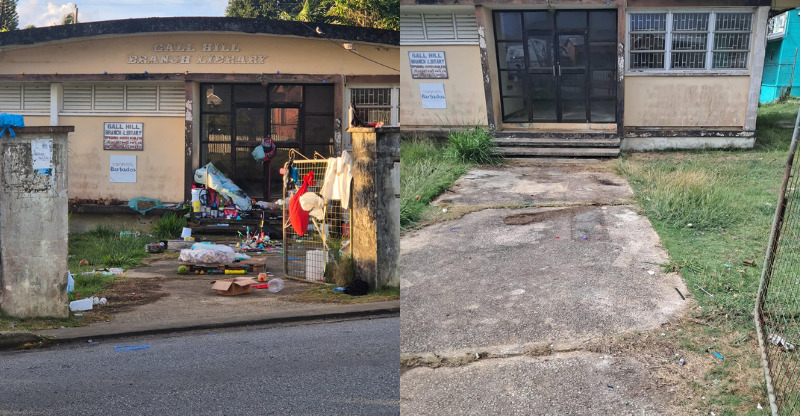
Man removed from Gall Hill library after complaints
In a coordinated multi-agency operation carried out on Wednesday, public officials removed an unhoused man who had been squatting at the disused Old Gall Hill Library in St John, Barbados, after months of growing community pushback over unsafe conditions and public disturbance. For an extended period, the vacant former public library has served as an informal shelter for the man, who took up unauthorized residence on the property. In the process of occupying the unused space, the facility’s surrounding yard became heavily cluttered with construction debris, discarded personal goods, and other accumulated waste, creating both health and aesthetic hazards for neighbors living nearby. Local MP Charles Griffith, who represents the St John constituency, confirmed that the intervention was a direct response to sustained complaints from area residents, who had repeatedly raised alarms about the deteriorating state of the property and persistent public disruptions stemming from the occupation. As authorities moved to clear the site, the man’s behavior became increasingly agitated, prompting responding officials to arrange for him to be transported to Barbados’ Psychiatric Hospital for evaluation and care by medical professionals. Griffith extended public recognition to the three government bodies that collaborated to resolve the long-running issue: the Barbados Police Service, the Department of Environmental Health, and the Sanitation Service Authority. He also credited local residents for their persistent advocacy, noting that their consistent efforts to draw official attention to the unsafe situation were key to推动ing the coordinated response that resolved the community concern.