作者: admin

  • Corozal Man Charged with Burglary and Drug Possession

    Corozal Man Charged with Burglary and Drug Possession

    A 26-year-old resident of Chan Chen Village has been formally charged by Corozal police following his alleged involvement in two distinct burglary cases and drug possession. Dennis Eck now confronts serious legal consequences after law enforcement connected him to both criminal incidents occurring within days of each other.

    According to police reports, the first break-in occurred on Sunday, February 1st, within the Dominguez Hall Layout district. Authorities state that Eck illegally entered a private residence and removed a container storing $750 in cash. The subsequent incident, reported on Saturday, January 31st around 8:00 p.m., involved a juvenile female who alerted police after hearing unusual noises emanating from her bedroom. The victim reported witnessing an unidentified male intruder who promptly escaped through a window upon detection.

    Police investigators developed Eck as a primary suspect through forensic evidence and witness statements. During his apprehension, officers conducted a personal search that revealed 1.3 grams of suspected cocaine in his possession. The comprehensive police operation culminated in Eck facing two separate burglary charges alongside an additional count of possessing controlled substances.

    The Corozal Police Department has emphasized its continued focus on reducing property crimes and drug-related offenses throughout the region. This case marks another successful investigation demonstrating coordinated police work addressing multiple criminal activities simultaneously.

  • Port Authority Investigates San Pedro Water Taxi Mangrove Grounding

    Port Authority Investigates San Pedro Water Taxi Mangrove Grounding

    Belizean maritime authorities have launched a formal investigation into a concerning marine incident involving a commercial water taxi that grounded in protected mangrove ecosystems. The event occurred on the morning of Sunday, February 1st, 2026, when the vessel Tropical Star, operated by San Pedro Belize Express, deviated from its course shortly after departing Caye Caulker en route to Belize City.

    Official reports from the Belize Port Authority confirm the vessel was carrying 67 passengers and crew at the time of the incident. Despite the dramatic nature of the grounding, which left the craft immobilized among dense mangrove roots, no injuries were reported among those aboard. Preliminary visual assessment of photographic evidence suggests no apparent structural damage to the hull.

    This maritime safety probe falls within the Port Authority’s statutory mandate to enforce compliance with maritime regulations, ensure passenger safety, and protect Belize’s delicate marine environment. The investigation gains particular significance as it marks the second such incident within weeks, following a similar grounding of a Caribbean sprinter vessel in December 2025.

    San Pedro Belize Express has acknowledged the incident, confirming that an official statement has been submitted to investigating authorities. The company has deferred all additional media inquiries to the Port Authority, indicating coordinated cooperation with the ongoing investigation. The recurrence of such incidents has raised questions about navigation protocols in Belize’s waterways, particularly in ecologically sensitive zones.

  • GUYSUCO producing sugar at 154% more than selling price- APNU

    GUYSUCO producing sugar at 154% more than selling price- APNU

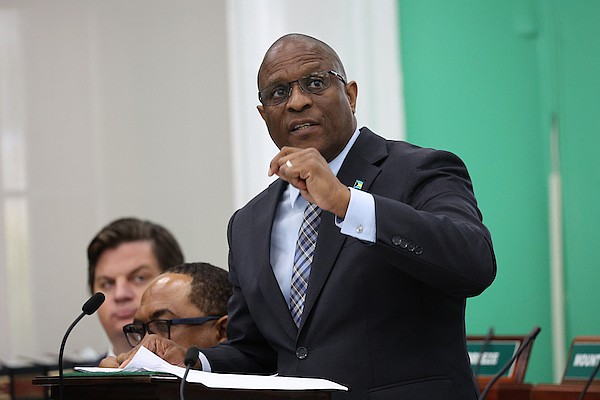
    Guyana’s state-owned sugar corporation, GUYSUCO, is operating under severe financial strain with production costs dramatically exceeding market sale prices, according to revelations in the National Assembly. APNU’s agriculture spokesman, Vinceroy Jordan, disclosed that the corporation is producing sugar at an average cost of US$1.31 per pound while selling it for just US$0.17 per pound—representing a staggering 154% cost-to-price disparity. This translates to a loss of US$1.14 on every pound of sugar sold internationally. In local currency terms, the figures are equally alarming: GUYSUCO spends GY$275 to produce one pound of sugar but sells it for only GY$35. The 2026 National Budget indicates sugar prices fell by 17.1% to US$0.37 per kilogram in 2025, with a further 0.5% decline expected this year. Despite these financial challenges, the government plans to inject an additional GY$13.4 billion into the sugar sector following last year’s GY$13.3 billion expenditure on mechanization and operational improvements. Finance Minister Dr. Ashni Singh reported that sugar production reached 59,600 tonnes in 2025—a 26.5% expansion despite being hampered by heavy rainfall, labor shortages, low employee turnout, and factory machinery issues. The sector is projected to grow by 67.9% in 2026 with a target of 100,041 tonnes. GUYSUCO remains a significant employer with over 8,000 workers.

  • Guatemalan National Charged in Death PC Marcos Acal

    Guatemalan National Charged in Death PC Marcos Acal

    Belizean authorities have formally charged Juan Carlos Prado, a 30-year-old Guatemalan national, in connection with the tragic hit-and-run incident that resulted in the death of Special Constable Marcos Acal. The charges were confirmed by Assistant Superintendent of Police Stacy Smith following a comprehensive investigation into the January 30th roadway fatality.

    Prado, residing in Santa Cruz village, faces multiple serious charges including Manslaughter by Negligence and Causing Death by Careless Conduct. Additional charges encompass Driving without Due Care and Attention, Failing to Report an Accident, and Failing to Stop and Render Aid at the scene.

    The fatal collision occurred approximately at 7:25 p.m. on Friday evening along the Thomas Vincent Ramos Highway between Miles 31 and 32. First responders discovered Constable Acal critically injured beside his severely damaged Skygo motorcycle. Despite rapid transportation to Southern Regional Hospital, the 48-year-old officer was pronounced deceased approximately sixty minutes after the incident.

    Law enforcement officials subsequently intercepted a Hino pickup truck in Punta Gorda town based on investigative leads. “Forensic examination of the vehicle revealed significant damage and apparent blood evidence consistent with the collision,” stated ASP Smith during the briefing. Two additional male occupants were detained within the vehicle at the time of interception.

    Special Constable Acal, who had just concluded his duty shift from Independence Police Station, served with distinction for fourteen years. ASP Smith memorialized the veteran officer as having “provided exceptionally dedicated and exemplary service throughout his tenure” with the Belize Police Department.

  • Projecten tot  US$ 150.000 mogelijk voor Surinaamse landbouwers

    Projecten tot US$ 150.000 mogelijk voor Surinaamse landbouwers

    Suriname’s agricultural sector is set to receive significant support through a new cooperation agreement with Turkey’s official development agency. During a high-level meeting between Suriname’s Minister of Agriculture, Livestock and Fisheries Mike Noersalim and Turkish Ambassador Ayse Selcan Sanli, both parties established a framework for agricultural development projects worth approximately $150,000.

    The Turkish Cooperation and Coordination Agency (TIKA), operating under Turkey’s Ministry of Culture and Tourism, will facilitate the initiative. The partnership will prioritize specific sectors identified by Suriname, including cassava, highland rice, and banana production. Both officials acknowledged Suriname’s logistical challenges but reaffirmed their commitment to strengthening the country’s agricultural infrastructure.

    Minister Noersalim proposed implementing projects in collaboration with TIKA and an experienced regional development partner, citing Peru and Colombia as potential candidates. TIKA confirmed its role as a bridge builder, connecting Surinamese institutions with Turkish and international knowledge centers through their agricultural experts.

    The development program focuses on capacity building through specialized training programs for both technicians and farmers, emphasizing climate resilience, food security, and value addition to raw products. Global examples of TIKA’s projects include greenhouse construction (as implemented in Montenegro), agricultural production support, and administrative unit development. The agency also provides direct assistance to vulnerable communities, including indigenous groups and women’s cooperatives, through equipment donations for processing products such as blackberries into juice or jam.

    The application process requires Suriname to take initiative by submitting priority projects to TIKA for feasibility assessment before presentation to headquarters. Approved projects will receive support through in-kind donations of equipment and machinery, requiring detailed specifications and need justifications.

    Minister Noersalim highlighted critical shortages in specialized personnel, particularly veterinary assistants, and emphasized the need for accelerated vocational training. Agro-processing stimulation remains a high priority to add value to local products like tropical fruits. Specific focus areas include mango, banana, cassava, and highland rice, alongside revitalizing traditional crops including cocoa, coffee, citrus, pineapple, and passion fruit.

    The agreement concludes with LVV appointing a focal point to formalize one or two concrete project proposals according to TIKA procedures. Technical online discussions will follow, with plans to organize a joint working group meeting to advance the partnership.

  • OP-ED: Seven years, 80,000 signatures, and still no major CXC reform

    OP-ED: Seven years, 80,000 signatures, and still no major CXC reform

    For seven consecutive years (2019-2026), CARICOM’s educational system has faced escalating crises surrounding examination administration, compelling students, parents, and educators to become reluctant advocates for basic fairness. With over 80,000 signatures across multiple petitions, the Caribbean Examinations Council (CXC) has transformed from a regional pride to a source of persistent public outcry.

    The crisis began in 2019 when the CSEC Mathematics exam was compromised by widespread cheating, with videos circulating of students using mobile phones during testing. The incident revealed critical security vulnerabilities and inadequate invigilation procedures.

    In 2020, confidence in CXC’s grading system collapsed when thousands of high-performing students received unexpectedly low grades. International testing experts later identified grade compression—a statistical or algorithmic error—as the probable cause, affecting approximately 20,000 students. The region’s response contrasted sharply with the UK’s compassionate handling of a similar crisis.

    The pandemic year of 2021 revealed further institutional rigidity as CXC maintained traditional exam structures despite students facing lockdowns, financial hardship, family illnesses, digital inequities, and the trauma of the La Soufrière eruption. Four petitions totaling over 30,000 signatures called for modified approaches, with Jamaica’s Education Minister and UNICEF offices across the region joining the appeals.

    Security breaches resumed in 2023 with the CSEC Mathematics Paper 2 leak, prompting 18,000 students to demand the compromised paper be discarded. In 2024, the CAPE Chemistry exam faced criticism for being misaligned with the syllabus and containing ambiguous questions, generating another 2,500 signatures demanding accountability.

    This pattern creates a moral contradiction for CARICOM, whose leaders champion international reparations for historical injustices while tolerating educational inequities affecting their own children. The contrast becomes particularly stark when comparing CXC’s approach to Cambridge’s meticulously planned 2023-2033 e-testing rollout, which includes phased implementation, pilot testing, and accommodations for digital access disparities.

    The petitions collectively represent a regional diagnostic revealing systemic weaknesses: fragile exam security, opaque grading processes, insufficient stakeholder engagement, inconsistent crisis responses, and quality assurance challenges. Yet they also demonstrate the Caribbean people’s enduring commitment to educational integrity and institutional accountability.

    As trust declines, financially privileged families increasingly turn to private alternatives, threatening CXC’s legacy and CARICOM’s educational cohesion. The resolution now depends on whether regional leaders will treat these petitions as catalysts for reform or continue to dismiss them as mere complaints, ultimately determining whether exam fairness will become a CARICOM-wide election issue.

  • WIN, APNU, PPPC govt clash on amount of oil money in budget, cost of living

    WIN, APNU, PPPC govt clash on amount of oil money in budget, cost of living

    Guyana’s National Assembly witnessed a fierce political confrontation on Monday as the opposition We Invest in Nationhood (WIN) and A Partnership for National Unity (APNU) clashed with the ruling People’s Progressive Party Civic (PPPC) government over the allocation of oil revenues in the record GYD$1.558 trillion 2026 national budget and its perceived failure to address escalating living costs.

    In his inaugural parliamentary address, WIN frontbencher Dr. Andre Lewis launched a comprehensive critique of the budget framework, arguing that it disproportionately relies on volatile oil earnings without establishing contingency plans for potential revenue shortfalls. “The budget depends heavily on oil revenues at a time when global oil prices are uncertain and projected to decline,” Lewis stated, emphasizing the absence of clear fiscal safeguards should petroleum income diminish unexpectedly.

    The opposition leader further challenged the government’s characterization of the spending plan as “People-Centred,” noting persistent challenges including inflated food prices, unregulated transportation costs, and inadequate housing availability. Lewis contended that coastal, riverain, rural, and mining communities continue experiencing stark disparities in service delivery, infrastructure quality, and economic opportunity despite the budget’s comprehensive scope.

    Public Works Minister Juan Edghill offered a robust defense of the government’s fiscal strategy, clarifying that only GY$495 billion—approximately 31.8% of the total budget—derives from petroleum revenues. “That’s the total amount of oil money that is financing this budget,” Edghill asserted, directly countering opposition claims of excessive hydrocarbon dependency.

    The minister characterized the budget as a “social contract of inclusion” deliberately designed to channel resources toward working families, small enterprises, agricultural producers, public servants, and marginalized communities. Edghill highlighted substantial allocations including GY$183 billion for education, GY$161 billion for healthcare, GY$113.2 billion for agricultural and food security initiatives, and GY$196.1 billion for transformational transport infrastructure.

    APNU representative Vinceroy Jordan joined the critique, dismissing the government’s proposed GY$5,000 pension increase and GY$3,000 public assistance boost as insufficient measures that fail to genuinely prioritize citizen welfare. Jordan advocated for a 35% salary increase for public servants—suggesting 25% as a minimum acceptable compromise—and emphasized that substantial agricultural investment represents the most viable pathway to reduce food prices and enhance national food security.

    Minister Edghill concluded by underscoring the government’s comprehensive infrastructure investments in drainage systems, road networks, bridges, ferry services, and airstrips, arguing that these developments indirectly reduce living costs by improving transportation efficiency and market accessibility, particularly in remote regions.

  • U-17 World Cup 2026 Qualifiers : Our Grenadières dominate Guatemala [3-0] and qualify for the final tournament

    U-17 World Cup 2026 Qualifiers : Our Grenadières dominate Guatemala [3-0] and qualify for the final tournament

    In a display of formidable prowess, Haiti’s U-17 women’s national soccer team, known as the Grenadières, achieved a decisive 3-0 victory against Guatemala on February 2, 2026, at the FFK Stadium in Willemstad, Curaçao. This triumph marked their fourth consecutive win in the FIFA U-17 Women’s World Cup Morocco 2026 qualifiers, securing their advancement to the final tournament stage.

    The match began with immediate intensity as Haiti established control from the opening minutes. Krystel Châtelain initiated the scoring in the 4th minute with a precise left-footed strike from a challenging angle, capitalizing on a set-piece opportunity. Merely a minute later, Keisha Gue amplified the lead with a powerful right-footed shot from outside the penalty area, demonstrating exceptional technical skill.

    As the first half concluded, Kerdina Lamour solidified Haiti’s dominance by converting a penalty kick with clinical precision into the top right corner during stoppage time. This third goal effectively sealed the outcome before halftime.

    French coach Frenoy Baptiste maintained consistency by fielding the identical starting lineup that had previously defeated the Cayman Islands. The team featured several diaspora players representing clubs in Canada, the United States, Scotland, and Puerto Rico, alongside domestic talent from Haiti.

    Following the interval, Haiti managed the game comfortably, preserving their substantial lead against Guatemala’s Mataão squad, who struggled to mount any significant offensive response. Strategic substitutions were implemented in the second half, including goalkeeper Abeegayel Favilus being replaced by Shama Jean Baptiste in the 89th minute.

    The victory positions Haiti at the summit of Group C with a perfect record: four victories, seventeen goals scored, and only one conceded. This outstanding performance guarantees their progression to the CONCACAF Champions League qualifiers’ final stage, where they will confront the confederation’s elite teams for a coveted spot in the 2026 World Cup in Morocco.

  • CfA: Facilitators for 2026 Parish-Level Youth Parliament Training Programme

    CfA: Facilitators for 2026 Parish-Level Youth Parliament Training Programme

    The Grenadian Ministry of Youth and Sports has officially announced recruitment for qualified facilitators to lead its prestigious 2026 Parish-Level Youth Parliament Training Programme. This national initiative represents a cornerstone of the country’s youth development strategy, designed to cultivate future leaders through immersive civic education.

    The program’s curriculum focuses on three core developmental areas: mastering public speaking and effective communication techniques, understanding principles of effective leadership and governance, and comprehensive training in parliamentary rules and procedures. The initiative aims to equip young Grenadians with practical skills that bridge theoretical knowledge with real-world application.

    Prospective facilitators must demonstrate substantial experience in youth development, educational instruction, or community leadership roles. Ideal candidates will possess verified expertise in working with youth populations across various community settings. The commitment requires availability for 2-3 days weekly during the April-June 2026 training period, with sessions conducted across multiple parishes at local schools and community centers.

    This parish-level training serves as the foundational stage for Grenada’s youth leadership pathway. Exceptional participants displaying outstanding debate skills, leadership qualities, and community engagement will advance to compete in the National Youth Parliament Elections scheduled for December 2026.

    The Ministry has established a February 20, 2026 application deadline, encouraging interested professionals to access detailed program information and submission guidelines through their official online portal or direct telephone contact. This program underscores Grenada’s ongoing investment in developing politically literate and civically engaged youth leadership.

  • Grenada cannot move forward divided by politics, religion and class

    Grenada cannot move forward divided by politics, religion and class

    During Grenada’s 2026 Independence anniversary interdenominational church service, prominent Seventh Day Adventist Pastor Enoch Isaac delivered a powerful sermon warning citizens about the dangers of political tribalism. Speaking at St. Peter’s Roman Catholic Church on February 1st, Pastor Isaac emphasized that national progress requires transcending divisions along political, religious, and class lines.\n\nThe religious leader defined political tribalism as \”an intense loyalty to a political group that often prioritizes group allegiance over objective truth and national interest.\” He cautioned that this mentality transforms political opponents into \”immoral enemies\” rather than legitimate adversaries, ultimately fostering hostility and degradation within society.\n\nIsaac called for a collective shift toward reconciliation and collaboration, stating that \”true transformation starts with the spiritual transformation of citizens.\” He urged parents to instill strong values in children and challenged leaders to govern with \”humility, integrity, honesty and accountability.\” The pastor specifically emphasized that churches must serve as the nation’s \”moral compass\” in this transformative process.\n\nThe service, broadcast live through Government Information Service platforms, was attended by Governor General Dame Cecile La Grenade, government ministers, opposition parliament members, and senior civil servants. Notably absent was Prime Minister Dickon Mitchell, who had traveled to Dubai for an international conference. Acting Prime Minister Lennox Andrews subsequently delivered the scheduled scripture reading in Mitchell’s absence.\n\nThroughout his address, Pastor Isaac repeatedly invoked the phrase \”ever conscious of God,\\” urging congregants to maintain this perspective while pursuing national development and the \”transformation of the Spice Isle.\”