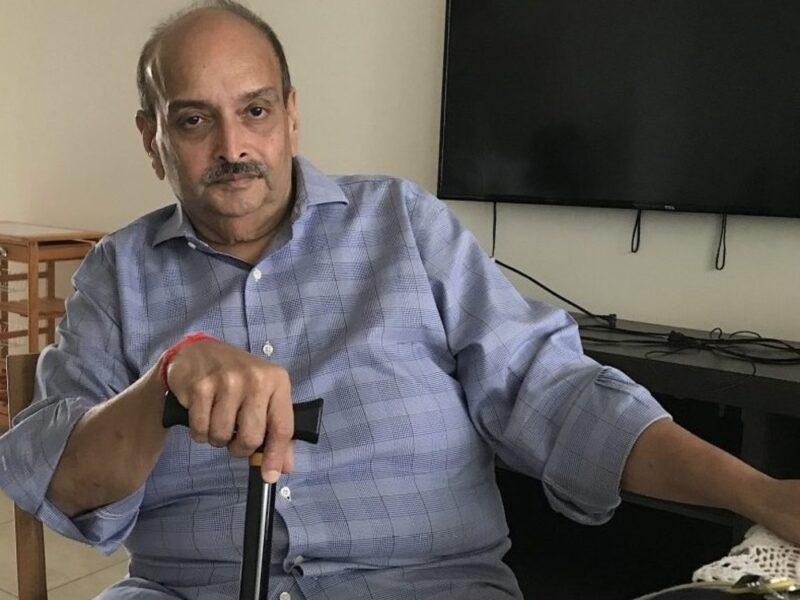
A high-profile international legal saga involving fugitive Indian diamond businessman Mehul Choksi has drawn to a close in British courts, not after a ruling on the merits of his forced abduction claims, but due to procedural rules surrounding security for legal costs. The 67-year-old Choksi, who holds citizenship of Antigua and Barbuda, has formally withdrawn all remaining legal claims he filed in the UK related to his 2021 removal from Antigua to Dominica. Choksi’s decision to abandon the litigation comes after the High Court struck out his claims against four of the defendants earlier this year, after he failed to meet the mandatory requirement to deposit nearly $900,000 to cover potential legal fees for the opposing parties. The case, which has been tangled in international political and legal crosscurrents for more than two years, leaves Choksi’s core allegations of a state-backed abduction unaddressed by the British judicial system, even as the businessman faces a separate, ongoing extradition battle in Belgium. According to Choksi’s account of the May 2021 incident, Barbara Jarabik, one of the defendants in the UK case, lured him to a private apartment in Antigua. Once inside, he claims he was physically attacked by unknown assailants, who then forced him onto a boat and sailed him across the Caribbean to Dominica against his will. Choksi further alleged that the entire operation was a pre-planned conspiracy orchestrated by the Indian government and multiple private individuals to remove him from Antigua, with the ultimate goal of sending him back to India to face fraud charges that New Delhi has pursued for years. All defendants named in the UK lawsuit, including Jarabik, have uniformly denied every allegation brought forward by Choksi. UK civil procedure rules require plaintiffs to provide financial security for a defendant’s legal costs when there are reasonable grounds to believe the plaintiff would be unable to pay those costs if they lose the case. In Choksi’s case, the High Court ordered him to deposit a total of approximately $896,750, calculated based on the September 2021 exchange rate between the U.S. dollar and British pound. Of that total, roughly $563,000 was required to cover costs for defendants Gurdip Bath and Leslie Farrow-Guy, while the remaining $334,000 was earmarked for Gurmit Singh and Gurjit Singh Bhandal. Court officials emphasized that this requirement was not a fine or a pre-judgment of damages; it was simply a procedural safeguard to ensure defendants would not be left out of pocket for legal expenses if Choksi’s claims failed. When Choksi failed to meet the deposit deadline, the High Court struck out his claims against the four defendants in July of this year, and additionally ordered him to cover the existing legal costs those defendants had already accrued. Rather than continue the remaining portion of his case against Jarabik and the Indian government, Choksi chose to discontinue those claims entirely. This procedural outcome means the British court system will never issue a formal ruling on whether Choksi was actually abducted, as he has repeatedly claimed. All the disputed allegations surrounding his sudden departure from Antigua remain untested and unresolved by the UK litigation. For context, Choksi had been a legal resident of Antigua and Barbuda for several years prior to the 2021 incident, when he unexpectedly turned up in the neighboring country of Dominica. After Dominican authorities took him into custody, his legal team immediately asserted that he had been kidnapped from Antigua and forcibly trafficked across the border. Choksi was later granted bail and allowed to return to Antigua to resume residence. The incident drew widespread international media and diplomatic attention because Choksi has been a top fugitive for Indian authorities, who want to try him in connection with the multibillion-dollar Punjab National Bank fraud scandal, one of the largest financial frauds in India’s modern history. Choksi has repeatedly and vehemently denied all wrongdoing related to the bank case. While the UK chapter of Choksi’s legal troubles has concluded, his global legal battles are far from over. As of the latest updates, Choksi remains in detention in Belgium, where his legal team is mounting a challenge against an extradition request that would send him back to India to face the fraud charges that first prompted Indian authorities to seek his arrest. The outcome of that extradition fight could have significant implications for both Choksi and ongoing international efforts to combat cross-border financial crime.
作者: admin
-

National Parks Authority to Enhance Security within Falmouth Harbour
Falmouth Harbour, a popular public space used by both local residents and out-of-town visitors, is set to receive a comprehensive set of security and safety upgrades as the National Parks Authority (NPA) ramps up efforts to elevate the overall visitor experience and boost on-site safety. The initiative, which targets long-standing gaps in visible security and low-light visibility across the harbour area, is scheduled to kick off construction in October 2026. Under the approved upgrade plan, a brand-new permanent security booth will be constructed at the Falmouth Harbour car park. This new facility will enable on-duty security personnel to maintain a constant, visible presence across the high-traffic parking area, addressing past concerns about inconsistent security coverage in the location. Complementing the new security outpost, the NPA will also roll out an expansion of the site’s closed-circuit television (CCTV) network, adding new cameras across multiple high-foot-traffic zones to extend monitoring coverage across the entire harbour area. Additionally, the authority will carry out systematic upgrades to the existing outdoor lighting system, a change designed to cut down on dimly lit spots and improve overall visibility, especially after sundown when evening activities are common in the area. These planned improvements are not a one-off project, but rather the latest step in the NPA’s long-standing institutional commitment to upkeeping safe, inviting, and professionally managed public spaces across all land and facilities under its jurisdiction. As the construction and installation work gets underway next year, the NPA has publicly expressed gratitude in advance for the patience and cooperation of all groups that use the harbour, including local residents, visiting tourists, on-site business operators, and other relevant stakeholders. The authority noted that temporary disruptions during construction are unavoidable, but the long-term benefits of the upgrades will deliver lasting improvements to everyone who frequents Falmouth Harbour for years to come.
-

Ministry Urges Public to Wear Pink and Prioritise Breast Health This October
October marks Breast Cancer Awareness Month across Antigua and Barbuda, and the nation’s Ministry of Health has launched a targeted public campaign positioning proactive breast health as a top priority for all residents, with early detection and rapid medical intervention as its core guiding messages.
Beyond educational outreach, the campaign includes a collective solidarity initiative: the ministry is urging all members of the public to wear pink each Friday throughout October to stand in unity with individuals and families impacted by breast cancer. Health Minister Michael Joseph emphasized that this annual observance is far more than a symbolic gesture, stressing that it should prompt lasting behavioral change around personal health management. He encouraged every resident to take time to familiarize themselves with the normal state of their bodies, and to seek medical care immediately if any abnormal changes are detected.
“Breast Cancer Awareness Month serves as a critical annual reminder that we cannot afford to neglect our health,” Joseph stated in official comments. He added that residents should proactively schedule conversations with their primary healthcare providers to discuss personalized breast cancer screening plans, aligned with their individual risk factors and health histories.
To empower the public to identify potential concerns early, the Ministry of Health has also outlined key warning signs that require medical assessment. These include the development of a new lump or thickening in the breast tissue, unexpected changes to breast size or shape, visible alterations to breast skin or nipple appearance, and unusual discharge from the nipple. Officials have strongly advised anyone who notices any of these concerning changes to seek prompt evaluation, rather than delaying care out of uncertainty or hesitation.
Joseph also extended a call for community-wide engagement: he urged residents to use the awareness month as an opportunity to start conversations with family members and friends about the importance of screening, and to offer tangible support to anyone currently navigating a breast cancer diagnosis. Echoing the minister’s message, the Ministry of Health noted that the symbolic act of wearing pink should be paired with meaningful action: expanding personal awareness of breast health, opening up conversations about screening and early detection, and extending support to those affected by the disease across the islands.
-

Dominica thrashed 8-1 by Guyana as head coach takes responsibility
Dominica’s pursuit of upward momentum in the 2026 CONCACAF Nations League suffered a devastating setback Sunday, as the country’s senior men’s national team fell to an overwhelming 8-1 defeat at the hands of Guyana in a match hosted in Puerto Rico.
The Bouyon Boyz, as the Dominica side is commonly known, were already on the back foot by halftime, having conceded four unanswered goals to their Caribbean rivals. Any hopes of a second-half comeback faded quickly as Guyana added another four goals after the break, with Dominica only able to pull one goal back via a strike from Reon Cuffy – the only consolation of the lopsided fixture.
In an official post-match press statement released by the team, head coach Kurt Herd openly accepted full accountability for the disappointing result, acknowledging that his tactical directions to the squad directly shaped the game’s poor outcome for Dominica.
“I’ll take responsibility because I told the boys to go and play football,” Herd said in post-match comments. “And they attempted to play football, probably overplay, and shot themselves in the foot a little bit.”
As the team’s deficit grew larger throughout the 90 minutes, Herd explained that the squad lost its tactical organization and on-pitch discipline, creating a downward spiral that the side could not pull out of.
“After that, heads go down, we’re not making the runs, we’re not tracking runners, the boys start to make silly decisions on the field, and ultimately we let ourselves down very badly there tonight,” he added.
Beyond the immediate performance on the pitch, Herd drew attention to deep, long-standing structural challenges that undermine Dominica’s national football program, pointing to gaps in preparation infrastructure and systematic player development.
“We’re dealing with amateur football players, technically aren’t good enough, physically not good enough, and I almost feel like I’ve been sent into a gunfight with a teaspoon, to be honest,” he said. “But I hold my hands up, and I take the blame for that.”
The lopsided defeat has left Dominica in a precarious position in League B of the CONCACAF Nations League. The team will need to pick up maximum possible points in its remaining fixtures to climb out of the relegation zone and avoid dropping to a lower division in the next tournament cycle.
Despite the heavy loss, Herd emphasized that the squad must extract critical lessons from the result and mount a strong response in upcoming matches. He also reaffirmed that as head coach, he is ready to bear the criticism that comes with poor results, a responsibility he says comes with the role.
“We have to recognise the challenges facing the group,” he said, adding that as coach, “I’m always the face of it as the coach, so it’s me that takes the brunt of it, and rightly so.”
Herd also addressed the unexpected absence of key starting forward Troy Jules from the match squad, revealing that Jules informed him the night before kickoff that he would refuse to represent Dominica for as long as Herd holds the head coach position, due to a professional disagreement between the two.
“Unfortunately, Troy, just a difference of professional opinion,” Herd explained. “Troy last night made himself unavailable, said that he no longer wanted to represent the national team under my tenure, which is fine, I respect that.”
Jules was subsequently removed from the match squad, with Herd stressing that the roster change was not rooted in personal conflict. “Not anything personal, Troy’s a great guy, but certainly a difference of professional opinion,” he said.
Dominica will now enter a months-long break from international play before turning its focus to the November 2026 international match window. That will be the squad’s next opportunity to collect critical points and keep its League B campaign and hopes of avoiding relegation alive.
-
CCJ to sit in Saint Lucia for the first time
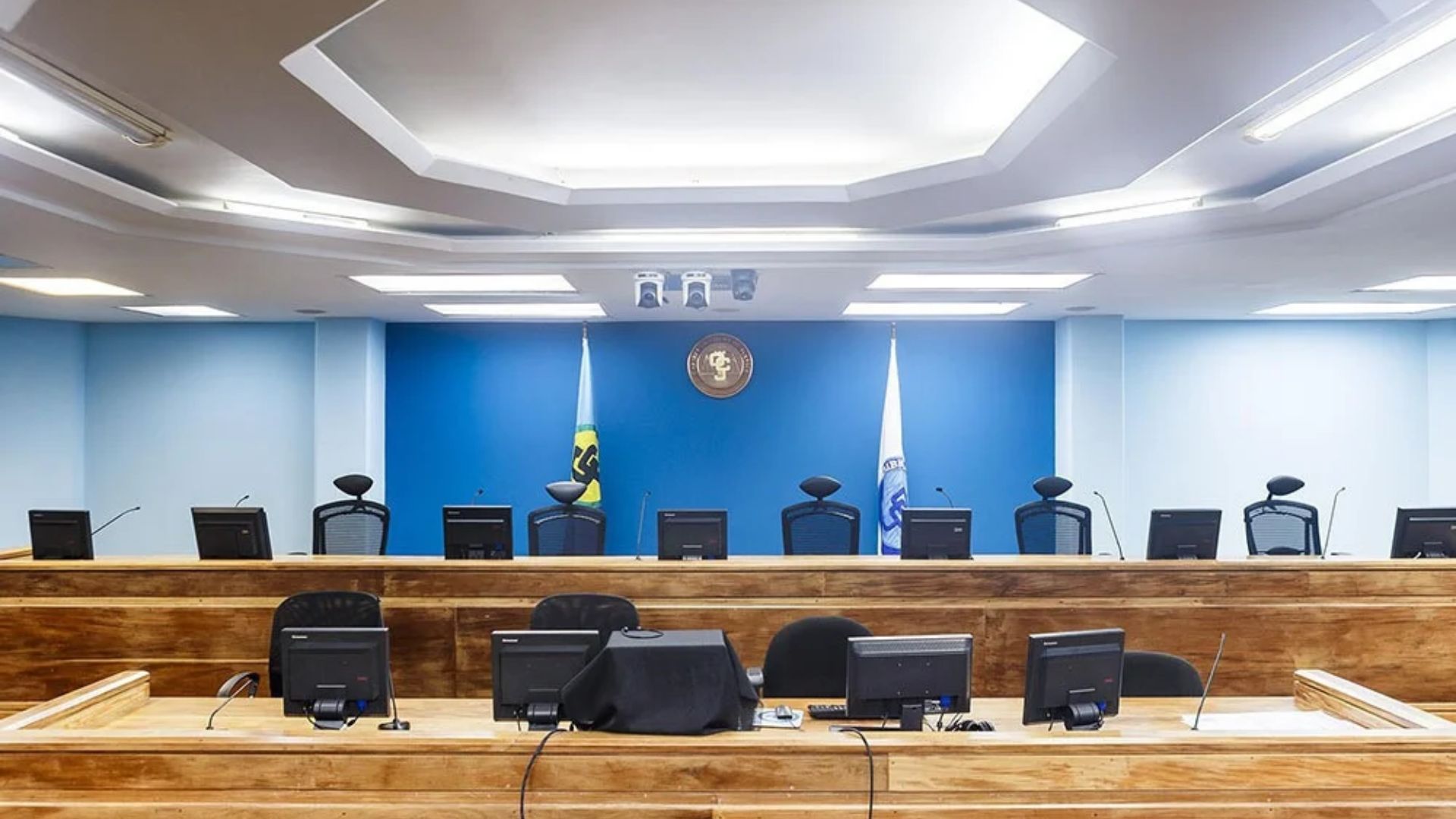
For the first time since its founding 21 years ago, the Trinidad-headquartered Caribbean Court of Justice (CCJ) will bring its travelling judicial proceedings to the Caribbean island nation of Saint Lucia. The landmark sitting, scheduled for Tuesday, October 7 and Wednesday, October 8, 2026, will also serve as the official opening of the CCJ’s 2026/2027 judicial year, marking a new milestone in regional judicial access.
Travelling sittings are a longstanding outreach initiative of the CCJ, designed to bring court proceedings directly to member states that are party to the Agreement Establishing the Caribbean Court of Justice. Prior to this historic Saint Lucia visit, the court had held these on-location sessions in four other regional nations: Barbados, Belize, Guyana, and Jamaica. Saint Lucia’s invitation to host follows the country’s 2023 accession to the CCJ’s Appellate Jurisdiction, making it the fifth member state of the Caribbean Community (CARICOM) to join the court’s appellate jurisdiction framework.
The core mission of the CCJ’s regional travelling program is to demystify the judicial process for Caribbean citizens by giving them firsthand opportunity to observe the court’s work in action. Aligned with the court’s institutional goal of delivering “accessible, efficient and substantive justice for the people and states of the Caribbean Community”, the programme delivers both practical and community-focused benefits. Beyond public education, on-location sittings cut down on travel expenses for legal representatives and litigants who would otherwise need to travel to the court’s base to participate in proceedings.
CCJ President Justice Winston Anderson emphasized the program’s role in rooting the regional court in Caribbean community life. “These sittings enable the people of the region to see us, interact with us, and realise that we are in fact their kith and kin, and part and parcel of the fabric of their society,” Anderson explained in an official statement from the court.
During the 2026 Saint Lucia sitting, the full seven-member CCJ bench will convene to hear three separate appeals originating from Saint Lucia, Guyana, and Belize respectively, and will also deliver final rulings on two additional pending matters from Belize. For those unable to attend the proceedings in person, the CCJ will make a live stream of the sittings available to the public via its official website, social media channels, and its public YouTube page. Full details of the case schedule and hearing information are already posted in the Schedule of Court Sittings section of the CCJ website for public reference.
In addition to judicial proceedings, the court’s leadership will carry out a series of formal courtesy meetings with Saint Lucia’s top government and judicial leaders during their visit. Scheduled calls include meetings with Acting Governor-General Felix Finisterre, Prime Minister Philip J. Pierre, Eastern Caribbean Supreme Court Chief Justice Margaret Price Findlay, Attorney General Leslie Vincent Mondesir, and Leader of the Opposition Allen Chastanet.
-

SLBMC Pharmacy Now Open 24 Hours a Day
Starting October 4, a major shift in pharmaceutical access has launched at Antigua and Barbuda’s flagship public health facility, the Sir Lester Bird Medical Centre, with the rollout of a full 24-hour, seven-day-a-week pharmacy service.
Prior to this change, patients and local residents faced widespread inconvenience when needing prescription fills outside of standard business hours, especially for emergency care cases. Patients discharged from the hospital’s Emergency Department after midnight, or residents who developed unexpected medication needs when private and community pharmacies were closed, often had to wait hours to get their required prescriptions filled, creating unnecessary health risks.
This expanded service eliminates that gap. Unlike many hospital-restricted pharmacy programs, the new round-the-clock service is not exclusive to patients receiving inpatient or outpatient care at the Sir Lester Bird Medical Centre. Any member of the general public can bring a valid prescription issued by a licensed external healthcare provider to have it filled at the facility’s pharmacy.
Hospital administrators note that the core goal of this initiative is to build a reliable, always-available supply chain for critical medications that meets the public’s needs at any time of day or night. The pharmacy is conveniently located on the medical centre’s second floor, just steps from the main reception desk, to help first-time visitors quickly locate the service.
For a small island community that previously lacked overnight pharmaceutical options, the rollout marks a meaningful upgrade to local public health infrastructure, addressing a long-unmet need for after-hours prescription access.
-

PM Browne Targets January 2027 Occupancy for Booby Alley’s Pelican Court
Antigua and Barbuda Prime Minister Gaston Browne has officially announced a January 2027 occupancy target for Pelican Court, a transformative 150-unit housing development built to replace the former informal Booby Alley community. Speaking during the latest episode of the *Browne and Browne Show* on Saturday, Browne confirmed that construction and pre-handover preparations are proceeding on schedule, with the official handover of the completed site slated for January 2026, one year ahead of the planned move-in date for eligible residents.
-

Twintig personen geëerd met Maroon Legacy-Wi Rutu Award
Suriname’s Department of Regional Development has celebrated the contributions of Maroon communities to national society by honoring 20 outstanding individuals of Maroon descent with the inaugural Maroon Legacy-Wi Rutu Award. The recognition ceremony marked the conclusion of a series of events held for Maroon Legacy Month, a new national commemorative initiative launched earlier in October.
The award program spotlights individuals who have demonstrated long-term commitment to advancing Maroon communities and broader Surinamese society across a diverse range of sectors. Honorees work in fields spanning music, visual arts, cultural preservation, mining, fashion and beauty, education, governance, and law. Among the distinguished recipients is former Surinamese vice president and prominent public figure Ronnie Brunswijk, who was unable to attend the award ceremony held on the final day of the accompanying Maroon Trade Fair. Assembly member Ronny Asabina, who received an award for his own contributions to the community, accepted Brunswijk’s honor on his behalf, confirming he will deliver the award personally during a scheduled meeting with Brunswijk the same day.
Leo Atomang, chair of the Stichting 10 oktober 1760 foundation, was the first honoree to receive his award during the public ceremony. Not all 20 recipients were able to attend the event in person. Leading Surinamese visual artist Marcel Pinas, popular musician Prince Koloni, and academic Ine Apapoe were among those absent. Apapoe made history in September 2026 as the first Surinamese scholar appointed to the prestigious Prince Claus Chair in Equality and Development at Utrecht University in the Netherlands, where her research focuses on inclusive governance and tribal community rights.
The commemorative Maroon Legacy Month was officially launched by the Department of Regional Development on a Friday earlier in October at the Congress Hall in Paramaribo. Following the launch, a two-day Maroon Trade Fair was organized at Roelie’s Event Venue in Wanica District, giving Maroon entrepreneurs and artisans a platform to showcase, promote, and sell their handcrafted goods, local products, and professional services to attendees. Event organizers reported strong sales throughout the fair, marking the event as a commercial and cultural success for participating community members.
The Maroon people of Suriname are descendants of enslaved West Africans who escaped colonial plantations starting in the 17th century, establishing independent communities in the country’s interior. The creation of Maroon Legacy Month and the Maroon Legacy-Wi Rutu Award marks a growing formal recognition of the Maroon community’s unique cultural heritage and decades of contributions to national social, economic, and political development in Suriname.
-

OPINION: Bad-Faith Legislation: Write Law. Tick the Box. Keep Secret.
A prominent Caribbean advocacy organization, ASPIRE, has issued a scathing open letter to a local editor, calling out widespread bad-faith lawmaking on social justice issues across the region that leaves vulnerable communities without the protections governments promise.
In the letter, the group outlines a familiar, harmful pattern that leaders across the region have relied on for decades: governments draft social justice legislation to meet obligations outlined in international conventions they have ratified, check a box to demonstrate compliance to global observers, and then intentionally hide the new law from the public and the institutions that would put it into practice. No meaningful outreach to educate relevant stakeholders, no active implementation, and no effort to enforce the protections the law was written to deliver.
ASPIRE argues that these laws do not serve the Caribbean people they are supposed to protect. Instead, they function as a thin veneer of progressive modernity, allowing regional governments to maintain a progressive international image while leaving deeply ingrained harmful cultural norms — including misogyny, patriarchal control, and narrow parochial exclusion of marginalized groups — entirely unchallenged. This pattern holds across nearly every major social justice issue, from gender equality and anti-domestic violence policy to adolescent healthcare access and equal inclusion for LGBTQI+ communities, the group says.
To back its claim, ASPIRE points to a decades-old law that perfectly illustrates the bad-faith dynamic. Back in 1984, the country became the second in the Caribbean to amend its Age of Majority Bill, enshrining a provision that allows teenagers aged 16 and older to access sexual and reproductive healthcare without requiring parental consent. The change was designed to fix a glaring legal contradiction: 16-year-olds were legally allowed to consent to sex, but could not access contraception or related reproductive care without a parent’s approval, a gap that put vulnerable youth at unnecessary health risk. The provision is publicly recorded in Section 13 of the country’s Age of Majority Act, Cap 11, a matter of public record available via the government’s own official legislation website.
Yet 40 years after the law was passed, not a single healthcare worker ASPIRE has spoken with is aware of the legal right it grants teenagers. Instead, frontline nurses still routinely turn away 16 and 17-year-old patients seeking reproductive care, ordering them to come back with a parent. Health education tutors do not know the provision exists, family life education teachers are equally clueless, mainstream women’s advocacy organizations have no knowledge of the law, parents are shocked to hear of their children’s existing rights, and even the national Ministry of Health remains oblivious to the provisions of its own government’s legislation.
According to ASPIRE, this failure is not a one-off oversight or accidental administrative error. It is a repeating pattern that underpins nearly all regional social justice legislation. The organization says the bottom line is clear: these laws are never written to address actual harm facing local Caribbean communities. They are written solely to create an illusion of progress to satisfy international observers, while leaving the same inequitable social conditions that the laws were supposed to fix fully intact. Vulnerable citizens who need legal protection continue to be failed by a system that prioritizes global reputation over local public good.
-
Regering wil zich beter wapenen tegen olie-incidenten
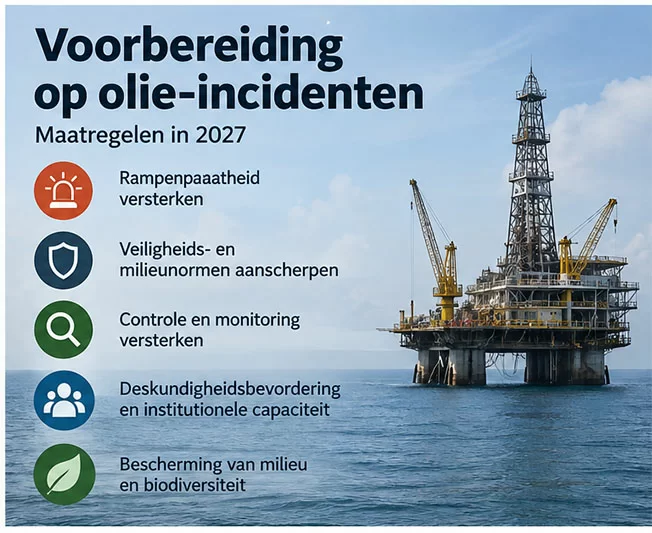
Suriname’s government has outlined a series of policy priorities for its growing offshore oil and gas sector, centered on upgrading disaster preparedness for potential oil spill incidents and tightening environmental safeguards in its 2027 national financial plan.
Released on October 5, the plan lays out the government’s broader agenda for the upcoming year, overseen by the country’s Ministry of Oil, Gas and Environment. This government body carries dual responsibilities: regulating and monitoring the nation’s oil and gas extraction activities, while also leading work on environmental protection, climate action and sustainable development.
A top priority flagged in the document is strengthening readiness to respond to unexpected oil-related incidents, as the country continues to expand its offshore oil development. To support this goal, the government plans to boost institutional capacity across the sector and upskill workers in both the oil and gas industry and environmental management agencies, building a more robust foundation to handle the rapid growth of offshore projects. Beyond disaster preparedness, the plan mandates tighter safety, environmental and quality standards for the sector, alongside more rigorous regulatory oversight to enforce these rules.
However, the fiscal plan does not include key details about the disaster preparedness initiative: it does not outline specific measures to be implemented, disclose the total budget allocated to the program, or clarify the division of response responsibilities across government agencies in the event of a major incident.
Alongside advancing oil sector development, the government is also pushing to speed up Suriname’s energy transition. The plan allocates resources to new research into renewable energy sources, and sets a goal of expanding international partnerships and attracting foreign investment to support both energy transition and sustainable resource development.On the environmental front, the plan lays out core priorities including sustainable management of chemicals, water resources and industrial waste, climate change mitigation, and biodiversity conservation. It also includes provisions for the rehabilitation of ecosystems degraded by past industrial activity. Through clearer regulatory standards and stricter enforcement of environmental rules, the government says it aims to preserve and strengthen Suriname’s standing as a High Forest Low Deforestation nation, protecting its vast intact forest ecosystems while developing its natural resource reserves.