作者: admin

  • Gregor Nassief calls for nationwide campaign to restore voter registration amid concerns about electoral reform

    Gregor Nassief calls for nationwide campaign to restore voter registration amid concerns about electoral reform

    Dominica’s democratic foundations are facing unprecedented strain as the nation enters its eleventh month of suspended voter registration, prompting grave concerns from business leaders and political opposition alike. Prominent entrepreneur Gregor Nassief has sounded the alarm through a powerful public appeal published February 3rd on Dominica News Online, characterizing the ongoing registration freeze as a fundamental threat to electoral integrity.

    The crisis stems from the Electoral Commission’s November announcement that voter registration would be temporarily halted pending implementation of a new technological system. Despite this lengthy suspension, Nassief notes that prospective registrants continue to be turned away with officials citing unprepared technology. This administrative paralysis particularly affects young first-time voters seeking to exercise their constitutional rights.

    Nassief contextualizes this development within Dominica’s broader electoral reform process, noting that while reforms were passed in March 2025 to strengthen democratic institutions, critical recommendations from Sir Denis Byron remain unaddressed. These include campaign finance regulations, residency requirements, anti-bribery safeguards, equitable media access, and limitations on state resource utilization during campaigns.

    The business leader has called for a nationwide, cross-party campaign involving civil society to ensure all eligible voters can register, demanding prompt remediation of what he terms an ‘eleven-month breach of law.’ He issued a stark warning that calling snap elections during this registration suspension would constitute ‘an abomination of our democratic institutions.’

    Echoing these concerns, the United Progressive Party (UPP) under Joshua Francis’ leadership released a February 4th statement condemning the suspension as a clear violation of electoral law. The party specifically referenced Section 17(1) of the Registration of Electors Act (2025), which mandates continuous registration of qualified electors.

    The UPP highlighted a January 12, 2026 incident where a citizen was denied registration due to unready software, arguing such administrative failures not only disenfranchise voters but expose the government and Electoral Commission to serious legal consequences including constitutional challenges and judicial review.

    Both Nassief and the UPP emphasize that the Prime Minister’s constitutional authority to call elections at any moment creates particular urgency, as suspended registration could lead to widespread disenfranchisement. They have called for immediate registration resumption, public explanation from the Electoral Commission, government accountability, and independent review of the electoral reform process.

    Civil society organizations, legal professionals, and international observers are being urged to monitor the situation closely, with stakeholders emphasizing that true electoral reform must not only be fair but must be perceived as fair while maintaining full legal compliance.


  • Barbadian duo among five honoured in 2026 Anthony N Sabga Awards

    Barbadian duo among five honoured in 2026 Anthony N Sabga Awards

    The prestigious Anthony N Sabga Awards for Caribbean Excellence has unveiled its 2026 laureates, with visual artist Sheena Rose and social advocate Shamelle Rice among five distinguished honorees recognized for their transformative contributions to regional development. Announced during a virtual ceremony streamed from Port of Spain, the awards celebrate exceptional professionals whose work exemplifies the highest standards of excellence across multiple disciplines.

    Professor Compton Bourne, Chairman of the Regional Eminent Persons Panel, emphasized the rigorous selection process involving ten eminent Caribbean citizens who evaluated outstanding candidates from Barbados, Guyana, Jamaica, the Organisation of Eastern Caribbean States, and Trinidad and Tobago. The panel’s decisions reflect the program’s commitment to identifying individuals whose work significantly advances Caribbean society.

    Now in its 21st year, the awards program has recognized 66 laureates across four categories—Arts and Letters, Entrepreneurship, Public and Civic Contributions, and Science and Technology—distributing over TT$32 million (approximately US$4.7 million) in support. Each 2026 category winner receives TT$500,000 (approximately US$73,500) to further their developmental work.

    Sheena Rose, honored in the Arts and Letters category, has gained international recognition for her intellectually rich artistic practice that challenges social hierarchies through painting, murals, and performance art. Her work has been featured in solo exhibitions from London to New York and has garnered coverage in major media outlets including The New York Times and BBC. Beyond her creative practice, Rose dedicates significant time to mentoring emerging artists and has participated in residencies across four continents, strengthening Barbados’ artistic community while building global connections.

    Shamelle Rice received recognition in Public and Civic Contributions for her groundbreaking work through Jabez House, a registered charity she founded in 2012 that supports women seeking to transition from sex work to legal employment. The organization provides comprehensive support including vocational training, job placement, mental health services, housing assistance, and basic needs support. Notably, Jabez House has assisted over 1,000 women across the Caribbean region, achieving transition success rates exceeding 50% among this highly stigmatized population. Rice’s academic background in psychology, social work, and gender studies, combined with her strategic partnerships with government and international organizations, has enabled her to create sustainable change for vulnerable women and their families.

    The 2026 cohort also includes Jamaican telecommunications entrepreneur Dean Nevers, while the Science and Technology award was jointly presented to Guyana-born American biotech innovator Dr. Niven Narain and Jamaican climate scientist Professor Tannecia Stephenson. The laureates will be formally inducted into the program’s College of Laureates during a gala ceremony scheduled for later this year, where they will share insights into their impactful work strengthening Caribbean societies and enhancing the region’s global presence.

  • Zamir O’Garro, Charged in Arthur James Murder, Dies While on Remand

    Zamir O’Garro, Charged in Arthur James Murder, Dies While on Remand

    In a significant development within a high-profile criminal case, Zamir O’Garro, a key defendant charged with the murder of Arthur James, has passed away at the Sir Lester Bird Medical Centre. His death on Tuesday marks the second fatality among the three individuals originally accused in the 2021 homicide.

    The sequence of events leading to O’Garro’s demise began last Friday when he fell seriously ill while held in custody. Emergency services transported him via ambulance to the medical facility. Initial reports indicated he was conscious and communicative during the journey. However, his condition deteriorated rapidly, necessitating placement on life support systems, where he remained until his death in the early hours of Tuesday.

    O’Garro’s incarceration dates back to 2021, directly linked to the investigation into the disappearance of Arthur James that same October. The case escalated when investigators discovered a severely burned vehicle in the Freetown and Willoughby Bay area. Inside, they found charred human remains, which subsequent forensic analysis conclusively identified as those of the missing James.

    Alongside his brother, Obasic O’Garro, and their cousin, Uroy Joseph, both residents of Liberta, Zamir O’Garro faced formal charges. This case has now been profoundly impacted by the deaths of two defendants while in pre-trial detention. Obasic O’Garro predeceased his brother, succumbing to severe health complications, including renal failure, on February 7, 2024.

  • Election traffic plans hit speed bump with UWI expert

    Election traffic plans hit speed bump with UWI expert

    Amid escalating traffic congestion plaguing Barbados, a stark contrast has emerged between the island’s competing political pledges and the expert-backed demand for a cohesive, data-centric national strategy. The Barbados Labour Party (BLP), Democratic Labour Party (DLP), and Friends of Democracy (FOD) have each unveiled distinct campaign proposals to alleviate gridlock, ranging from constructing flyovers and ‘sea taxis’ to carving new roadways. However, Deputy Principal of the University of the West Indies at Cave Hill, Professor Winston Moore, cautions that such fragmented approaches are inadequate without a unified framework grounded in empirical evidence and integrated urban planning.

    Professor Moore advocates for a paradigm shift towards a ‘smart city’ model, emphasizing the critical need for real-time traffic data collection and adaptive signal systems that dynamically respond to traffic volume fluctuations. This methodology, he explains, focuses on systematically reducing bottlenecks through coordinated junction management, thereby enhancing travel time predictability and overall network reliability. The University of the West Indies is already cultivating the necessary expertise, producing graduates in data and business analytics equipped to assist the government in this evidence-based transition.

    Beyond technological integration, Professor Moore identifies deeply ingrained travel patterns as a fundamental contributor to congestion. The necessity for individuals to make multiple stops—such as dropping children at school and a spouse at work—before commencing their own commute exacerbates peak-hour pressures. He proposes a holistic planning system that includes situating schools closer to residential communities and establishing a dedicated, potentially privately-funded school bus system to minimize these multi-stop journeys.

    Further recommendations include implementing staggered work schedules and expanding remote work options to distribute travel demand more evenly across the week. The development of reliable transit hubs, inspired by successful international models like those in Canada, is also highlighted as a pivotal component. These hubs, supported by adequate parking infrastructure, would encourage a shift from private vehicle use to public transport by addressing commuters’ reluctance to relinquish their personal cars.

    Echoing this sentiment, Roy Raphael, Head of the Alliance Owners of Public Transport (AOPT), affirmed the potential of transport hubs to significantly ease congestion. Raphael also suggested the introduction of toll systems on specific high-traffic routes, such as sections of the ABC Highway, to facilitate quicker movement into urban centers like Bridgetown, where traditional commuter volumes have notably declined.

  • Mahdia’s Mayor, Deputy Mayor pull back resignations

    Mahdia’s Mayor, Deputy Mayor pull back resignations

    In a surprising political reversal, Mahdia Mayor Eslyn Romascindo-Hussain and Deputy Mayor Akita John have formally withdrawn their resignations just days after submitting them, citing personal reasons. The unexpected turnaround occurred without public explanation, though sources indicate significant political considerations influenced the decisions.

    According to informed sources, the ruling People’s Progressive Party Civic (PPPC) faced potential complications if the resignations proceeded. Mayor Romascindo-Hussain, as a constituency-elected councilor, would have triggered a mandatory by-election, while Deputy Mayor John’s departure would have reduced the party’s council representation to three seats.

    In her February 2 recission letter, Mayor Romascindo-Hussain stated she had made her decision ‘after careful consideration,’ pledging to ‘continue to serve the citizens of Mahdia to the best of my abilities.’ Her original resignation cited three years of council work that had caused her ‘physical and mental health to be unstable.’

    Deputy Mayor John similarly revoked her resignation, which had been scheduled to take effect February 7. Her original resignation to Local Government Minister Priya Manickchand explained that the position’s demands had ‘become increasingly challenging’ and were significantly impacting her personal life.

    The mayor has since addressed speculation about political motivations behind the reversal, issuing a statement denying any interference from Junior Minister Pauline Sukhai and reaffirming her commitment to the PPPC. She appealed to unknown persons to cease spreading false information regarding her decision-making process.

  • Fishermen remanded after $33m cocaine seizure

    Fishermen remanded after $33m cocaine seizure

    In a significant narcotics interdiction case, three Barbadian fishermen now face serious drug trafficking charges following the seizure of cocaine valued at over $33 million off the island’s coast. The accused individuals include 55-year-old Sylverton Lewis Clarke from Emerald Park East, St Philip; his 33-year-old son Renaldo Jabari Carrington of Lower Burney, Haggatt Hall, St Michael; and 39-year-old Ryan Adrian Kelly-Prescod, who reportedly has no fixed address.

    The charges allege that within Barbados’ Exclusive Economic Zone—a maritime territory established under the Marine Boundaries and Jurisdiction Act—the defendants unlawfully possessed 676 kilogrammes of cocaine, classified as a controlled substance. Additionally, they face accusations of intending to supply and traffic the substantial drug quantity, which authorities estimate holds a street value of $33,830,000.

    During their appearance before Magistrate Manila Renee in the No. 2 District ‘A’ Magistrates’ Court, the defendants did not enter pleas to the indictable offenses. Police prosecutor Sergeant Kenmore Phillips vigorously opposed bail, citing multiple factors including the substantial evidence against the men, the circumstances of their apprehension at sea, and Kelly-Prescod’s lack of permanent residence. Magistrate Renee subsequently ordered all three defendants remanded to Dodds Prison until their next court appearance scheduled for March 3.

    Legal representation for Clarke was provided by attorney Matthew Willoughby, working in association with counsel Andrew Willoughby. The case continues to develop as authorities pursue their investigation into one of the most substantial drug seizures in recent Barbadian maritime history.

  • Cuba is not a threat to the USA, says ambassador to Ecuador

    Cuba is not a threat to the USA, says ambassador to Ecuador

    In a recent virtual address, Cuba’s ambassador provided a comprehensive historical analysis of US-Cuba relations, tracing the escalation of tensions to the 1959 revolutionary victory led by Fidel Castro. The diplomat emphasized that Cuba’s assertion of its sovereign rights to independence and self-determination fundamentally transformed the bilateral relationship.

    The ambassador detailed Cuba’s resilience through six decades of economic sanctions and external pressure, highlighting three distinct revolutionary phases: initial profound social transformations, subsequent economic diversification efforts, and survival through the Special Period following the Soviet Union’s collapse. Despite these challenges, the representative identified key national strengths including remarkable social cohesion, a structured planned economy, and strategic international partnerships.

    Central to the address was the characterization of the US economic blockade as the principal impediment to Cuba’s development, exacerbating domestic shortcomings while failing to achieve its political objectives. The ambassador asserted that the sanctions regime has ultimately strengthened national unity rather than undermining the revolutionary government.

    Concluding on a diplomatic note, the Cuban official reiterated Havana’s willingness to engage in constructive dialogue with Washington based on mutual respect and sovereign equality. The ambassador simultaneously urged the international community to promote accurate information about Cuba’s reality while strengthening cooperation and solidarity mechanisms.

  • Wereld Kanker Dag: Suriname zet in op versnelde strijd tegen baarmoederhalskanker

    Wereld Kanker Dag: Suriname zet in op versnelde strijd tegen baarmoederhalskanker

    Suriname faces a severe healthcare challenge as cancer ranks as the nation’s second leading cause of death, with distinct patterns emerging across genders. Women predominantly suffer from breast, cervical, and colorectal cancers, while men most frequently develop prostate, lung, colorectal, and head-neck cancers. This alarming situation comes into sharp focus on World Cancer Day, observed globally on February 4th, which emphasizes cancer’s profound impact and the critical importance of prevention, early detection, timely treatment, and comprehensive care.

    The World Health Organization reveals that approximately 40% of all cancer cases are preventable through avoiding key risk factors including tobacco use, excessive alcohol consumption, unhealthy diets, physical inactivity, and exposure to air pollution. Vaccination against Hepatitis B and Human Papillomavirus (HPV) plays a pivotal role in preventing liver and cervical cancers respectively. Regular screening significantly enhances early detection and successful treatment outcomes for cervical, breast, and colorectal cancers.

    Across the Americas, cervical cancer diagnoses exceed 78,000 annually among women, resulting in over 40,000 deaths. The situation is particularly dire in Latin America and the Caribbean—where Suriname is located—where mortality rates triple those in North America, highlighting substantial disparities in prevention and care access.

    The Pan American Health Organization has issued an urgent call to accelerate efforts toward eliminating cervical cancer by 2030. This ambitious goal requires achieving three targets: 90% HPV vaccination coverage for girls under 15, 70% screening coverage with high-quality tests for women at ages 35 and 45, and 90% treatment access for women with pre-cancerous or invasive cancer. While 24 countries have implemented single-dose vaccination schedules and regional first-dose coverage reaches 70%, screening and treatment programs lag significantly behind.

    PAHO is supporting member states through technical assistance and leveraging regional funds to ensure affordable vaccines, screening equipment, and treatment tools. Collaborations with partners including Unitaid and Spain’s AECID strengthen this comprehensive approach to make quality care accessible through primary healthcare systems.

    Meanwhile, Suriname’s Ministry of Health emphasizes the crucial role of mental and emotional support for cancer patients and their families, recognizing that psychological care is indispensable within overall cancer management.

    Marking World Cancer Day 2026, WHO/PAHO is hosting the webinar ‘Supporting the Elimination of Cervical Cancer’ to accelerate action on vaccination, screening, and care access to eliminate cervical cancer as a public health problem.

  • Resident complains of ‘slow’ police response after deadly shooting

    Resident complains of ‘slow’ police response after deadly shooting

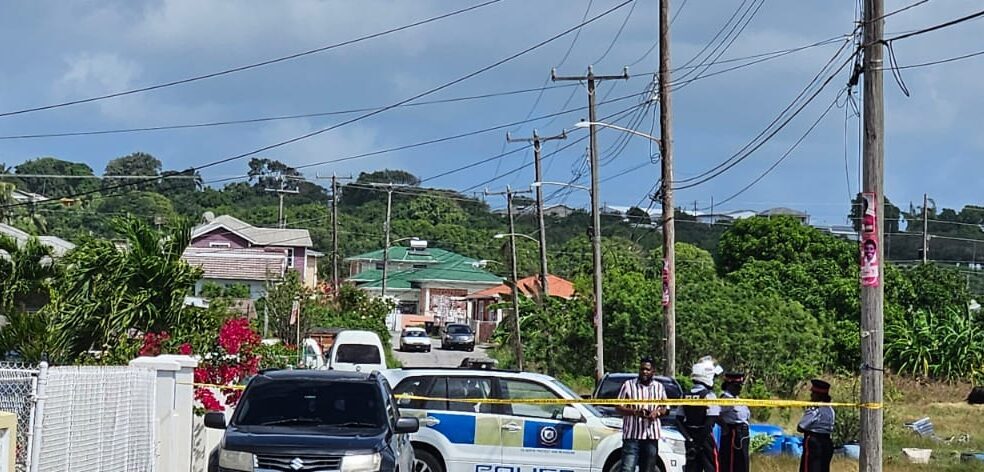
    A Christ Church community is confronting trauma and demanding improved police responsiveness following a fatal shooting that unfolded before horrified children on Monday morning. The incident occurred in Lower Carter’s Gap, Enterprise, where 42-year-old Fabian Aaron Taylor was ambushed while performing his daily school drop-off routine.

    According to official police reports, authorities received notification of the shooting approximately at 8:45 a.m. Taylor, a resident of Kendal Hill Park, had just delivered two children when an assailant approached his vehicle and discharged multiple rounds. Despite being transported via private vehicle to Queen Elizabeth Hospital, Taylor succumbed to his injuries.

    Local business owners present during the incident provide a contrasting timeline, asserting emergency calls were placed significantly earlier and that police response time approached one hour. This delay compelled relatives to move the critically wounded man in the very vehicle where the attack occurred—a decision made under extreme duress despite potential forensic complications.

    An eyewitness described the harrowing scene: ‘I heard four distinct shots followed by terrified screaming. Children were among those witnessing this brutality.’ The witness confirmed Taylor regularly transported students to school despite not residing in the immediate area. The shooting occurred during peak morning activity with numerous residents present, though fear may prevent witness cooperation.

    The business owner expressed profound safety concerns: ‘This was deeply traumatic. My grandson became too frightened to attend school. The delayed police response constituted unacceptable service—Oistins Station is nearby yet took nearly an hour. When reports confirm active shooting, response should occur within minutes.’

    While acknowledging moving victims contradicts standard protocol, the witness contextualized the decision: ‘Panic overwhelms rationality when witnessing severe injury. Though evidence preservation matters, human instinct prioritizes survival.’

    The community now grapples with lingering trauma, particularly among children who witnessed the violence. Residents emphasize that this incident reflects broader patterns requiring urgent attention to police response protocols for violent crimes. Oistins Police Station detectives continue investigating the homicide.

  • Gros Islet to launch youth development programme

    Gros Islet to launch youth development programme

    In an ambitious move to reshape youth development outcomes, Gros Islet Parliamentary Representative and Minister of Education, Kenson Casimir, has unveiled the constituency’s pioneering Development 101 programme. This comprehensive initiative represents a strategic shift toward structured social programming designed to equip young people aged 17-35 with essential soft skills and life direction.

    The programme specifically targets youth transitioning from secondary education or contemplating early workforce entry, addressing what Casimir identifies as critical gaps in personal development. Initial response has surpassed expectations, with 75 registrations recorded within the first 48 hours of announcement—a clear indicator of community demand for such interventions.

    Development 101’s curriculum emphasizes practical life competencies including conflict resolution, goal establishment, and personal discipline—areas Casimir believes are fundamental yet frequently absent in traditional education pathways. The minister articulated that this skills deficit often leads young people toward counterproductive lifestyles and influences.

    The selection of age 17 as the entry point is deliberate, targeting individuals at critical decision-making junctures who typically lack adequate guidance frameworks. The programme incorporates substantial focus on long-term planning and lifestyle evaluation, encouraging participants to visualize their future trajectories and assess goal practicality.

    Looking beyond immediate implementation, Casimir revealed advanced planning for “Project One,” an extension initiative targeting infant and primary students. This complementary program aims to foster identity development and personal skills from earlier educational stages, ultimately creating more competent and stable secondary school graduates.

    The current programme operates under the social component of Casimir’s Constituency Development Programme (CDP), with the minister actively encouraging parliamentary colleagues to adopt similar models. The initiative potentially serves as a pilot for nationwide implementation following successful local evaluation.

    While acknowledging interest from individuals beyond the 35-year age threshold, Casimir maintained the program’s focused demographic approach, suggesting potential future adaptations for older cohorts. The minister additionally highlighted the parallel need for parenting education, particularly regarding earlier paternal engagement in developmental discussions.

    Reflecting on governance evolution, Casimir noted his first term emphasized physical infrastructure development, while his current tenure adopts a balanced approach integrating substantial social programming alongside continued infrastructure investment throughout the constituency.