作者: admin

  • Compol Rosado Warns of Consequences for UDP Protest

    Compol Rosado Warns of Consequences for UDP Protest

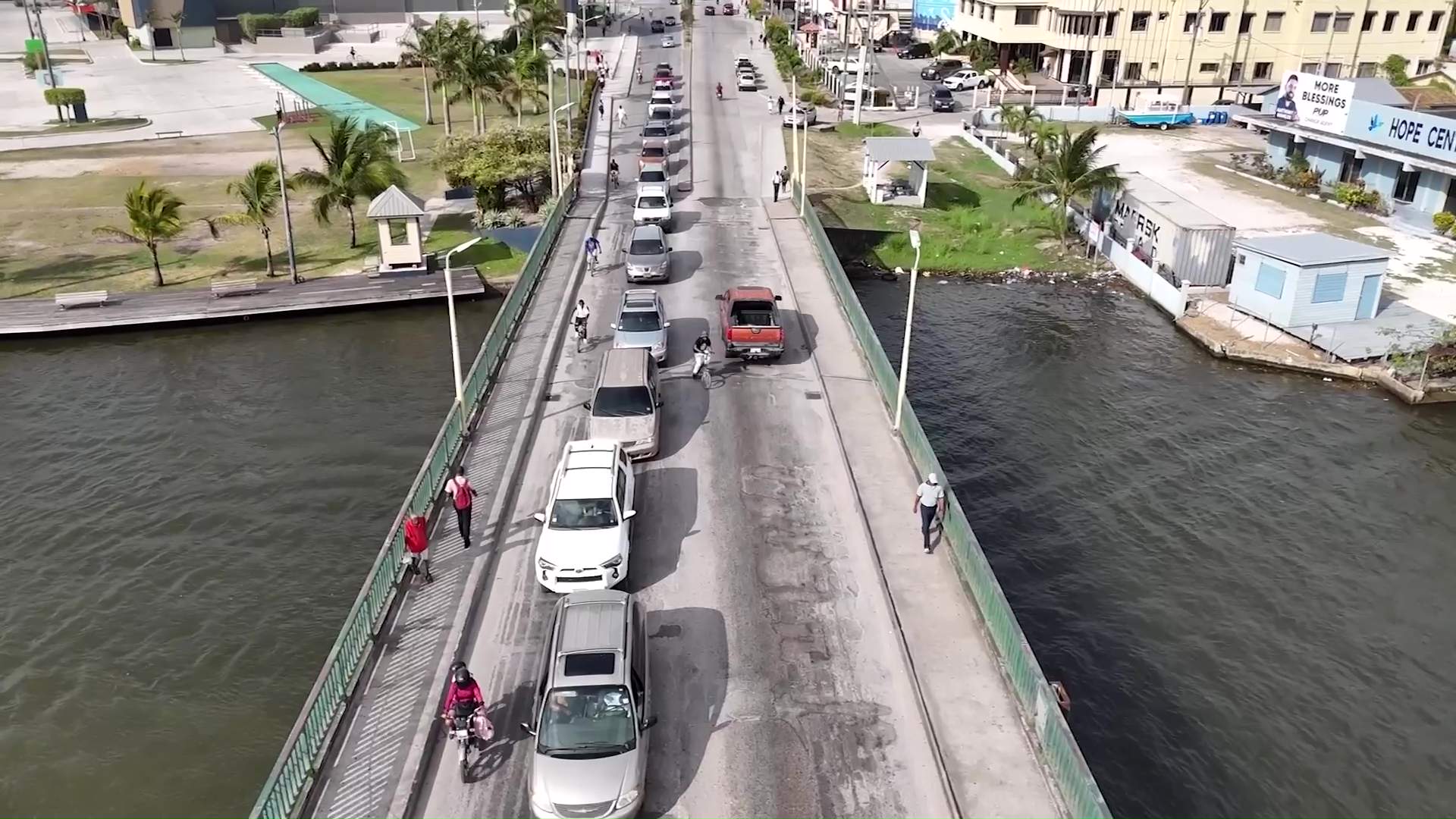
    Police Commissioner Dr. Richard Rosado has issued a formal warning to the United Democratic Party (UDP) following Wednesday’s protest that resulted in the unauthorized blockade of Belcan Bridge. The demonstration, which was governed by specific permit conditions and a financial bond agreement, escalated when supporters violated the agreed-upon terms by obstructing the critical transportation artery.

    Commissioner Rosado emphasized that while law enforcement exercised deliberate restraint to prevent further escalation and ensure a peaceful outcome, the breach of established protest conditions could not be overlooked. The violation represents a serious disregard for the negotiated parameters that both parties had previously agreed upon.

    “The violation of the agreed upon bond condition for the protests is unfortunate and there may be legal consequences for the organizers,” stated Commissioner Rosado during a press briefing. He clarified that the permit explicitly stipulated bond terms that were mutually accepted by both the UDP and police authorities prior to the demonstration.

    When questioned about the potential forfeiture of the $10,000 bond, Rosado declined to specify exact penalties but reiterated that the breach of conditions could trigger legal proceedings against protest organizers. The Commissioner defended the police’s measured response during the event, characterizing it as a professional decision aimed at avoiding catastrophic use of force while maintaining public order.

    The development signals a potentially significant legal confrontation between law enforcement authorities and political organizers, highlighting the ongoing tensions between protest rights and public safety regulations.

  • PUP Responds to Protest with National Assembly Rally

    PUP Responds to Protest with National Assembly Rally

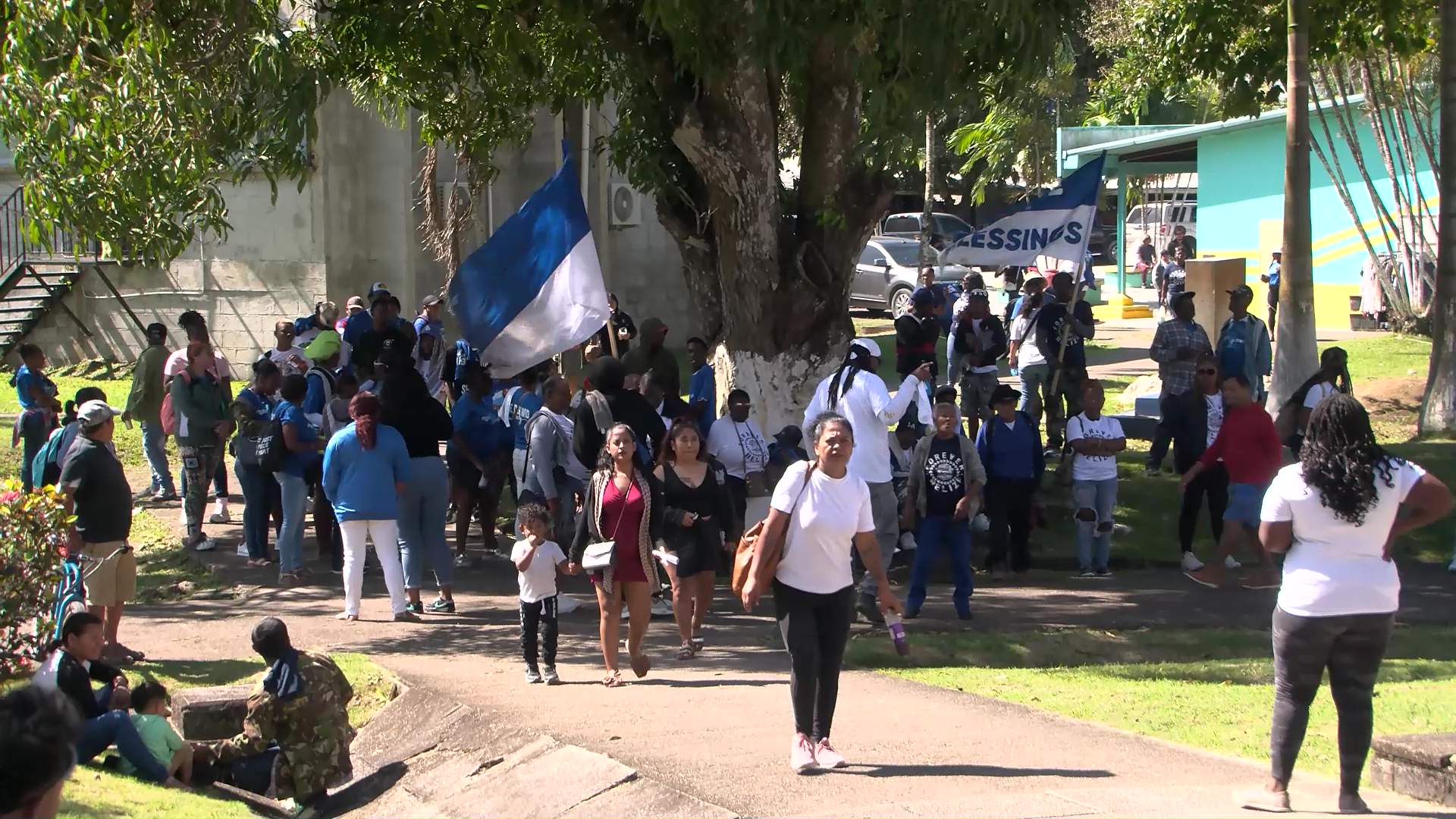
    In a dramatic reversal of expectations, the political atmosphere outside Belize’s National Assembly transformed from anticipated confrontation to celebratory gathering on February 6, 2026. What was initially projected as another opposition-led demonstration instead evolved into a rally-like assembly of ruling People’s United Party (PUP) supporters.

    The shift began minutes before the scheduled House sitting when the United Democratic Party (UDP) issued a late announcement declaring their complete boycott of parliamentary proceedings. The UDP characterized their absence as “round three” of an ongoing protest strategy, asserting they refused to participate in a Parliament they claim has become a “rubber stamp” for deals allegedly enriching the Briceno family while burdening Belizeans with substantial debt.

    Simultaneously, Commissioner of Police Richard Rosado confirmed that the National Trade Union Congress of Belize (NTUCB) had withdrawn their protest application, while no application had been received from the opposition UDP.

    The subsequent scene featured drums, dancing, and dozens of enthusiastic PUP supporters creating a festival-like environment. Party officials provided varying explanations for the gathering: Secretary General Collet Montejo described it as organic support from area representatives’ constituents, Party Chairman Henry Charles Usher emphasized support for the Occupational Health and Safety Bill, and Toledo West Area Representative Oscar Requena characterized it as public engagement with the newly renovated parliament building.

    However, Pickstock Street Captain Shaheed Hauze provided the most explicit rationale, stating his division alone brought approximately 110 supporters specifically to endorse BTL’s acquisition of Speednet—the very issue the UDP protest had targeted. Despite mixed messaging, the gathering remained peaceful, with Hauze emphasizing their civilized approach and support for government decisions.

    With both opposition and union protests postponed to next week, the day concluded with political theater rather than confrontation, highlighting Belize’s ongoing political divisions regarding telecommunications acquisition and governance accountability.

  • CRASH : Wreck of the Agape Flights plane found, little hope of survivors (video)

    CRASH : Wreck of the Agape Flights plane found, little hope of survivors (video)

    Search and rescue teams have located the wreckage of a missionary aircraft that crashed in the mountainous terrain of Haiti’s Grand’Anse region, with officials expressing virtually no hope of finding survivors. The Embraer 110 Bandeirante aircraft, operated by Florida-based Christian humanitarian organization Agape Flights, disappeared during a flight between Jérémie and Les Cayes on February 5, 2026.

    The National Civil Aviation Office’s Joint Rescue and Coordination Center immediately mobilized response efforts upon losing contact with the aircraft. However, search operations were hampered by early sunset conditions on Thursday, forcing teams to postpone aerial reconnaissance until Friday morning. The challenging mountainous terrain and adverse weather conditions complicated recovery efforts.

    Agape Flights President and CEO Allen Speer delivered an emotional video message via social media, confirming the tragic outcome. ‘We do not believe there were any survivors,’ Speer stated, his voice visibly strained. ‘Our hearts are broken. We deeply mourn the families of the pilots who are now suffering an unimaginable loss.’

    The aircraft was found scattered across multiple pieces in a remote rural area, indicating the severity of the impact. The organization has declined to release the identities of those aboard pending formal confirmation and family notifications. The crash occurred during inclement weather conditions that have frequently challenged aviation operations in the Caribbean region.

    Agape Flights, headquartered in Venice, Florida, maintains regular humanitarian missions throughout the Caribbean, providing essential support to missionary activities and relief operations in underserved communities.

  • Proposed Telecom Takeover Divides Belize’s Business Leaders

    Proposed Telecom Takeover Divides Belize’s Business Leaders

    A contentious telecommunications acquisition proposal has created a significant rift within Belize’s business leadership, exposing divergent perspectives on national economic strategy. The planned takeover of Speednet by Belize Telemedia Limited (BTL) has prompted contrasting responses from the country’s premier business organizations.

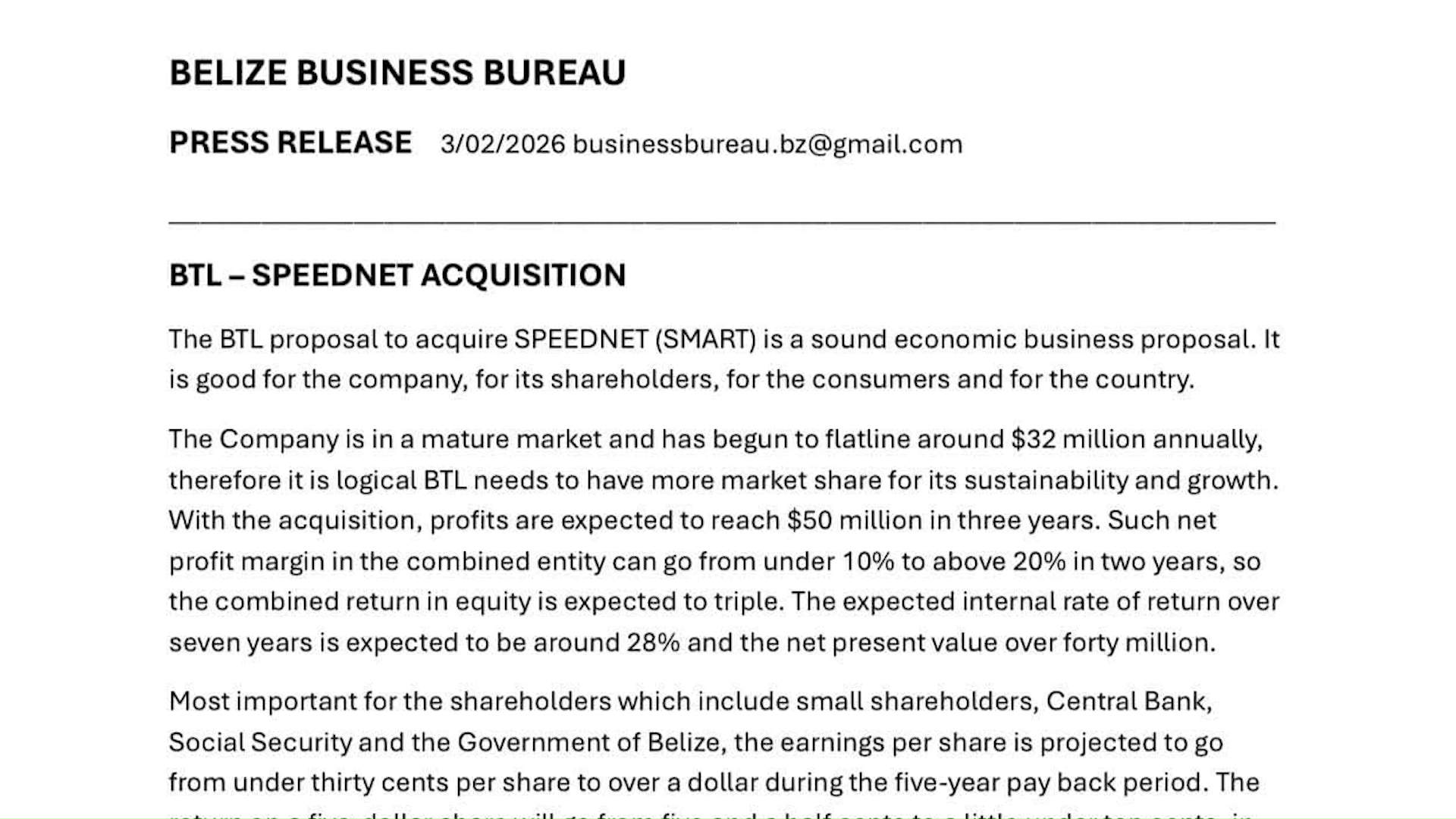
    The Belize Business Bureau has thrown its support behind the merger, asserting that market consolidation would generate substantial economic benefits. According to their analysis, the unified entity could achieve profitability projections approaching $50 million within a three-year timeframe through operational efficiencies and enhanced market positioning.

    In opposition, the Belize Chamber of Commerce and Industry has raised multiple concerns regarding the transaction’s structure. Their reservations encompass legal compliance issues, potential consumer impacts, valuation methodology of the $80 million purchase price, and possible conflicts of interest involving the Social Security Board’s investments.

    Arturo Lizarraga, President of the Belize Business Bureau, provided detailed justification for their supportive stance. He contextualized the current $80 million offer for Speednet’s one-third market share against the historical $650 million investment in BTL that acquired two-thirds market dominance. Lizarraga emphasized that market consolidation would immediately address revenue erosion in services like international roaming, which has declined from $15 million to approximately $5 million annually due to competitive undercutting between the two providers.

    The proposal’s financial structure involves no initial cash outlay, featuring a 4.5% interest rate during the due diligence period, with intended repayment through operational profits generated by the acquired entity. Proponents argue this approach serves national interests by ensuring BTL’s sustainability and improving returns for shareholders, including public institutions.

  • Belize Business Bureau Urges PUC Oversight in BTL Merger

    Belize Business Bureau Urges PUC Oversight in BTL Merger

    The Belize Business Bureau has expressed conditional support for Belize Telemedia Limited’s proposed acquisition of Speednet, emphasizing that regulatory oversight must be strengthened to protect consumer interests. While acknowledging potential benefits for shareholders, Bureau President Arturo Lizarraga warned that without robust price controls, the merger could create a telecommunications monopoly detrimental to consumers.

    Lizarraga highlighted the critical role of Belize’s Public Utilities Commission (PUC) in determining the merger’s approval, noting that the decision ultimately rests with regulatory experts rather than public opinion or business groups. Drawing parallels to previous utility monopolies in butane and electricity, he criticized what he perceived as inconsistent responses from business organizations regarding different monopoly formations.

    The Bureau president specifically called for comprehensive legislation to guide price control mechanisms, arguing that mere statutory instruments would be insufficient to prevent potential price gouging. Lizarraga emphasized that while the merger appears financially promising for stakeholders, the government must establish a regulatory framework similar to those governing Belize Electricity Limited (BEL) and other utilities to ensure fair pricing and service quality.

    The development comes as the PUC completes its study phase and moves toward a decision regarding the proposed telecommunications consolidation, which would significantly reshape Belize’s digital infrastructure landscape.

  • Guinea Grass Villagers to Protest Water Board Over Billing Disputes

    Guinea Grass Villagers to Protest Water Board Over Billing Disputes

    The residents of Guinea Grass Village are organizing a demonstration this Sunday to voice their profound discontent with the local water authority’s management practices and disputed billing procedures. This civic action stems from a recently implemented metered water system that was initially welcomed in December 2024 as a solution to the village’s historical water access limitations.

    However, the anticipated relief has rapidly transformed into widespread frustration. Numerous households have reported receiving inexplicably high water consumption statements, with some bills indicating usage of up to 22,000 gallons within a single month—a volume that residents assert is practically impossible.

    Enio Lopez, Vice President of the Guinea Grass Development Committee, provided context to the escalating conflict. While acknowledging that meter implementation theoretically promotes accountability and conservation, Lopez emphasized that the community’s central grievance revolves around execution failures rather than the concept itself. According to his statement, approximately 90-95% of villagers express discontent with the current situation.

    The core issues identified by community representatives include the absence of promised trained personnel to oversee the new system, lack of transparency regarding water board membership, and insufficient communication from authorities. Lopez highlighted that despite the presence of qualified, educated individuals within the community capable of managing water affairs effectively, their expertise remains untapped.

    The planned peaceful protest aims to demand three specific resolutions: transparent accountability mechanisms for billing discrepancies, the establishment of fair charging structures reflective of actual consumption, and the appointment of new, properly trained leadership to administer the village’s water supply system.

  • Residents Challenge High Water Bills After Meter System Rollout

    Residents Challenge High Water Bills After Meter System Rollout

    Tensions are escalating in the village of Guinea Grass as residents mobilize to protest against what they describe as exorbitant and unjust water billing practices following the rollout of a new metered system. The community alleges severe discrepancies in their water usage readings and cites unfulfilled commitments regarding the establishment of a professionally trained water board.

    Village Council Chairman Benito Uck has acknowledged the growing discontent, confirming that numerous residents have reported implausibly high consumption figures—with some bills indicating usage between 12,000 to 14,000 gallons—which they insist do not reflect their actual water consumption. Many suspect faulty meter installations or underlying system leaks.

    In response to the mounting crisis, local leadership is collaborating with the national Ministry of Rural Transformation to formulate a multi-pronged resolution strategy. This includes conducting comprehensive technical evaluations of the installed meters, initiating village-wide leak detection investigations, and deliberating on provisional billing adjustments. One proposed measure involves temporarily reverting to the previous flat-rate payment structure for March, allowing residents to pay a standardized fee while systemic corrections are implemented.

    Chairman Uck referenced a prior communication from October 2025 that outlined the new tiered pricing model: $10 for the first 1,500 gallons, followed by one cent per gallon thereafter, and a rate of two cents per gallon after exceeding 10,000 gallons. However, the execution and perceived accuracy of this system have become the core of the dispute. Despite plans for public consultations, these meetings were postponed, exacerbating public distrust.

    As villagers prepare for organized demonstrations to voice their grievances, the Council is urgently seeking final directives and support from the Ministry to normalize the situation and restore public confidence in the water infrastructure management.

  • Legislation Boosts Traffic Wardens’ Enforcement Role

    Legislation Boosts Traffic Wardens’ Enforcement Role

    In a significant shift in traffic enforcement policy, legislative amendments introduced on February 6, 2026, will substantially increase the operational authority of traffic wardens across road networks. The proposed changes to the Motor Vehicles and Road Traffic Act will empower these officers to make direct arrests and issue citations for specific violations that previously required police intervention.

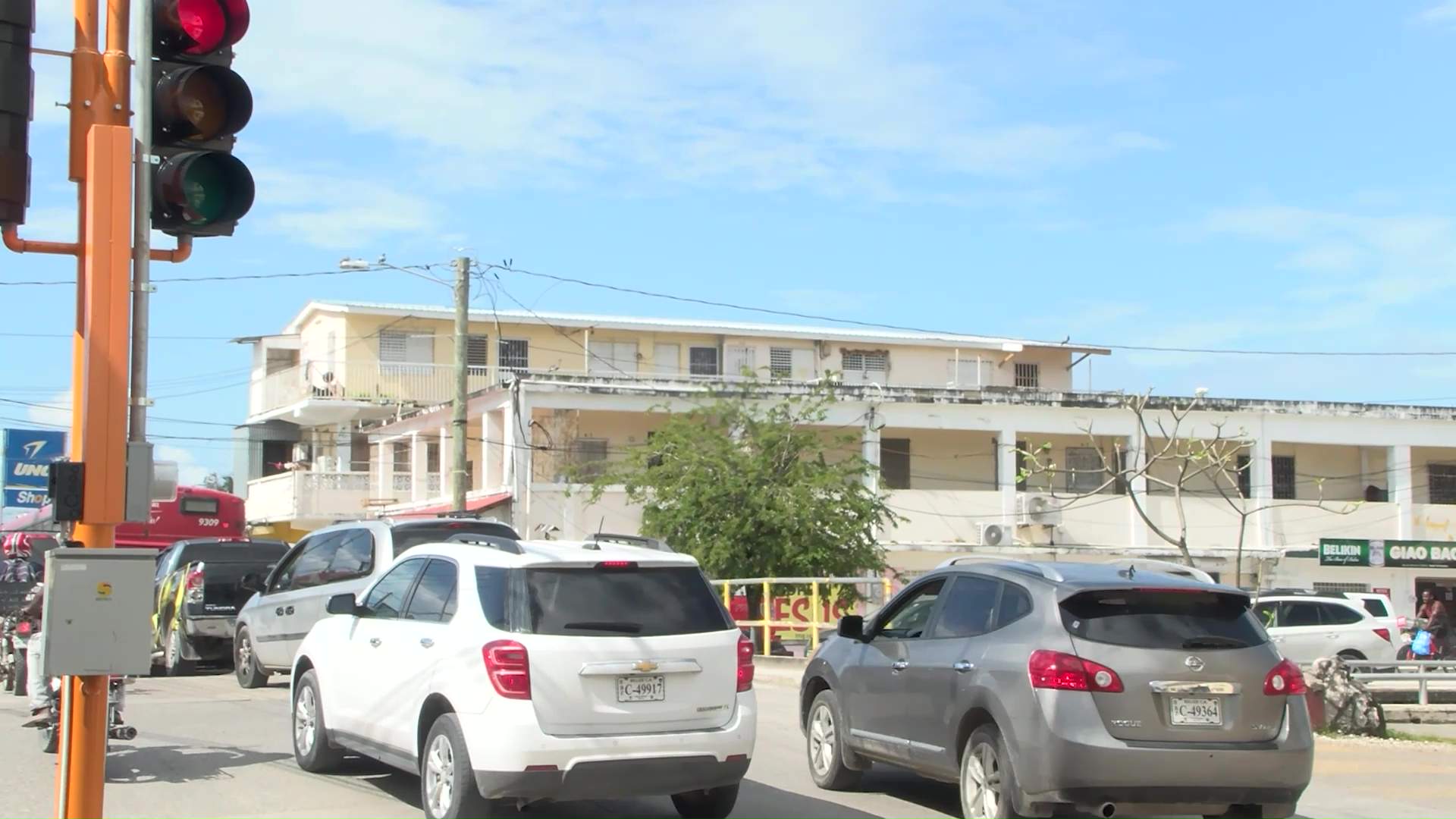
    Transport Minister Dr. Louis Zabaneh outlined the specific infractions that will fall under the expanded jurisdiction of traffic wardens. These include operating vehicles without mandatory third-party insurance coverage, failure to properly display insurance documentation, and refusal to provide identification details when requested by enforcement personnel.

    Under the current framework, traffic wardens who encounter such violations must escalate the matter to sworn police officers for resolution. This procedural requirement often creates operational delays and reduces enforcement efficiency. The legislative revision specifically targets Section Three of Chapter 230 of the Substantive Laws to eliminate this bureaucratic barrier.

    The amendment will authorize both traffic department personnel and municipal enforcement officers to execute duties under the Motor Vehicle Insurance Third Party Risk Act. This represents a strategic reallocation of enforcement resources designed to improve compliance with insurance regulations and enhance overall road safety measures.

    This policy change reflects growing concerns about uninsured motorists and aims to create a more responsive traffic management system. By decentralizing enforcement capabilities, authorities anticipate improved detection and deterrence of insurance-related violations throughout the transportation network.

  • Government Moves to Toughen Traffic Penalties

    Government Moves to Toughen Traffic Penalties

    In a significant move to enhance road safety and legal compliance, the government has unveiled stringent new measures targeting traffic violations. Transport Minister Dr. Louis Zabaneh presented legislation on February 6, 2026, designed to substantially increase penalties for motorists operating vehicles without mandatory third-party insurance.

    The proposed amendments to the Motor Vehicle Insurance Third Party Risk Act represent a dramatic escalation in consequences for offenders. The current maximum penalty of a $400 fine and six months’ imprisonment will be raised to $1,000 or eight months’ incarceration. Furthermore, the legislation addresses other common traffic infractions by elevating penalties from $200 fines or three-month sentences to $600 fines or six-month imprisonment terms.

    This legislative initiative forms part of a broader governmental strategy to empower traffic enforcement personnel with enhanced authority while creating stronger deterrents against unlawful driving practices. The reforms specifically target prevalent violations that compromise public safety and financial responsibility on roadways.

    Dr. Zabaneh’s announcement signals the administration’s commitment to reducing uninsured motorist incidents and improving overall traffic law compliance through substantially increased financial and custodial penalties for violations.

  • Government Delivers Long‑Awaited Worker Safety Law

    Government Delivers Long‑Awaited Worker Safety Law

    After nearly two decades of persistent advocacy from labor organizations, Belize’s House of Representatives has officially passed the comprehensive Occupational Safety and Health Bill. This landmark legislation represents a significant advancement in workplace protections, particularly for employees operating in high-risk environments.

    Prime Minister John Briceño presided over the historic parliamentary session, reflecting on the bill’s extensive seventeen-year journey through multiple administrations. He acknowledged the initial impracticalities of earlier versions that required substantial revisions to ensure both functionality and acceptability among stakeholders.

    “We had to ensure it was a bill that can work, that both the private sector and labor can work with,” stated Briceño, expressing satisfaction at finally overcoming this legislative hurdle. The Prime Minister noted the bill successfully passed its second and third readings despite the notable absence of opposition members during the critical vote.

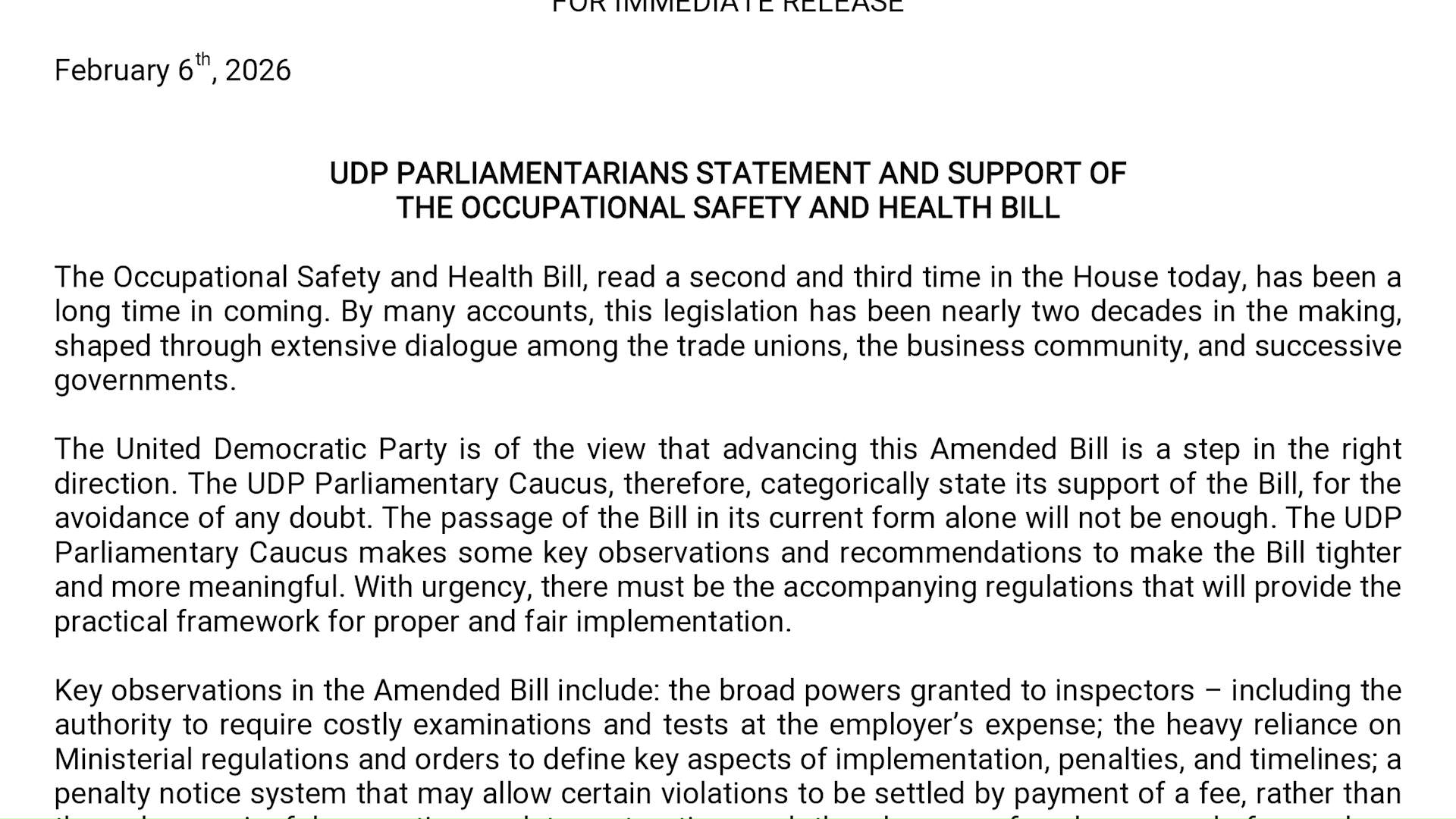
    The United Democratic Party Parliamentary Caucus subsequently issued an evening statement clarifying their position. While expressing general support for the worker protection legislation, which they characterized as “a step in the right direction,” the opposition raised substantive concerns regarding enforcement mechanisms. The UDP specifically highlighted issues with inspector authority structures, insufficient penalty provisions, and inadequate protections for workers who sustain injuries. Their parliamentary boycott, according to the statement, represented not opposition to the bill itself but rather a demand for further improvements before implementation.

    The newly passed legislation establishes strengthened safety protocols across various industries and introduces enhanced regulatory oversight for workplace conditions throughout Belize.