作者: admin

  • Tragic accident leaves one dead and two injured in Sosúa

    Tragic accident leaves one dead and two injured in Sosúa

    PUERTO PLATA – A devastating multi-vehicle collision erupted Friday evening along the Montellano-Sosúa highway, adjacent to General Gregorio Luperón International Airport, resulting in one fatality and multiple injuries. The deceased has been identified as Luis Maldonado, 49, a Dominican-born U.S. citizen who perished at the scene from traumatic impact injuries.

    Emergency responders transported two injured women, Jessica María Núñez and Daliza Mercedes Espinal, to medical facilities for urgent treatment. Authorities confirmed both survivors received immediate attention following the crash.

    The accident involved three vehicles: a Grand Cherokee SUV (license plate G557313) carrying Maldonado, a Honda CR-V (G724999), and a Hyundai sedan (A755895). Notably, Hyundai driver Samuel Jiménez Zapete emerged physically unscathed from the wreckage.

    According to the General Directorate of Traffic Safety and Land Transportation (DIGESETT), investigators are actively reconstructing the sequence of events that led to this high-impact triple collision. The crash has reignited urgent concerns about roadway safety measures along this perpetually congested transit corridor in Puerto Plata province, where traffic volumes consistently challenge infrastructure capabilities.

  • Former top GECOM official now Data Commissioner

    Former top GECOM official now Data Commissioner

    In a significant governmental development, Guyana has named Aneal Giddings, former Deputy Chief Elections Officer of the Guyana Elections Commission (GECOM), as the nation’s first Data Protection Commissioner. Prime Minister Mark Phillips formally announced the appointment on Friday evening, confirming to Demerara Waves Online News that Giddings assumed the pivotal role on January 2, 2026.

    Giddings, an established Information Technology specialist, resigned from his electoral position in December 2025 to assume this groundbreaking role under the recently enacted Data Protection Act. The appointment signals Guyana’s commitment to implementing robust data governance frameworks as the country advances its digital transformation initiatives.

    Prime Minister Phillips emphasized the critical nature of this appointment, particularly in relation to the ongoing collection of personal information for electronic identification cards. “We have established the independent oversight necessary to ensure that every byte of data collected meets the highest international standards of privacy and security,” Phillips declared during a National Assembly address.

    The Prime Minister further revealed that the government would shortly issue an order to fully activate the 2023 Data Protection Act, moving beyond the current voluntary registration phase for electronic identification. While acknowledging the present pilot program remains optional, Phillips indicated that registration would eventually become compulsory, though the existing legislation does not specify penalties for non-compliance.

    Addressing privacy concerns, Phillips clarified that the data being collected already exists across multiple government registries including the Guyana Revenue Authority, General Register’s Office, and the Immigration Department. He characterized the new system as “simply a consolidation of existing legal records into a more secure format,” emphasizing the enhanced protection mechanisms now under Giddings’ supervision.

  • WIN’s Mohamed says played major role in gold, foreign exchange markets

    WIN’s Mohamed says played major role in gold, foreign exchange markets

    In a contentious parliamentary session during Guyana’s 2026 National Budget debate, Opposition Leader Azruddin Mohamed asserted his former enterprises played a vital role in stabilizing the nation’s gold and foreign exchange markets prior to U.S. sanctions imposed in 2024. Mohamed, who leads the We Invest in Nationhood (WIN) party, claimed his operations previously supplied commercial banks with millions of U.S. dollars nightly, contrasting sharply with current shortages causing extended wire transfer delays and a depreciating Guyana dollar.

    The opposition leader faced frequent interruptions from ruling party officials, including Public Affairs Minister Kwame McCoy who labeled him an ‘alleged transnational criminal.’ Mohamed maintained his innocence regarding U.S. charges of wire fraud, mail fraud, and money laundering linked to gold trading, suggesting the sanctions resulted from his refusal to abstain from the 2025 elections.

    Mohamed presented data indicating a 21.5% decline in licensed gold declarations to 121,000 ounces since his exit from the market, questioning Natural Resources Minister Vickram Bharrat about the whereabouts of unaccounted gold. He simultaneously advocated for improved security measures for small-scale miners and increased access to viable mining lands.

    The WIN leader outlined alternative economic policies including temporary subsidies for utilities, established food banks, VAT reductions, and community agricultural projects. Finance Minister Dr. Ashni Singh challenged Mohamed to prove his innocence in court rather than ‘ensnare innocent Guyanese,’ while Attorney General officials pressed for answers regarding ongoing financial crime investigations.

  • CBvS-verslag 2025: Economie groeit beperkt; druk overheidsfinanciën en inflatie neemt toe

    CBvS-verslag 2025: Economie groeit beperkt; druk overheidsfinanciën en inflatie neemt toe

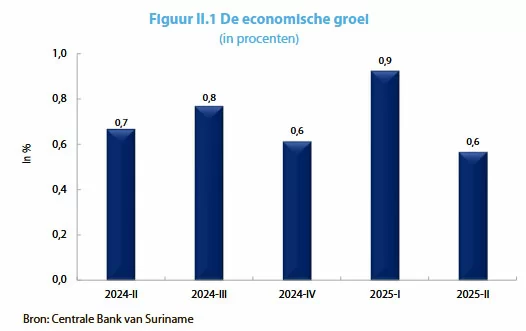
    Suriname’s economy demonstrated modest expansion during the second quarter of 2025, though significant vulnerabilities persist due to mounting inflationary pressures, deteriorating fiscal balances, and an increasingly precarious debt situation. According to the Quarterly Report 2025 released by the Central Bank of Suriname (CBvS), the economy grew by 0.6%, representing a slight deceleration compared to the same period in 2024.

    The growth was primarily driven by performance in trade, transportation, and hospitality sectors. Conversely, industrial production, mining operations, and agricultural activities contributed negatively to economic output. This decline was largely attributable to reduced gold production and diminished round timber harvesting during the period.

    Inflationary pressures reemerged as a critical concern, with quarter-end inflation reaching 3.6% while average inflation stood at 2.4%. The depreciation of the Surinamese dollar, coupled with increased costs for food, transportation, water, and cooking gas, served as primary drivers of price increases. Adverse weather conditions, including persistent rainfall, further exacerbated food price inflation. The central bank anticipates continued inflationary pressure throughout the third quarter of 2025, with recent data indicating a rise from approximately 10% at end-December to 11.4%.

    Fiscal metrics revealed concerning developments as government revenues totaled SRD 12.8 billion against expenditures of SRD 15.2 billion, resulting in an overall budget deficit of SRD 2.4 billion. The primary deficit reached SRD 782.5 million. While revenue generation improved through enhanced tax collections, expenditure growth outpaced revenue increases—primarily fueled by personnel costs, subsidy programs, and election-related spending. Temporary purchasing power measures for civil servants and pensioners significantly contributed to this expenditure growth.

    The national debt burden escalated to SRD 140.6 billion, equivalent to 95.8% of GDP according to national definitions. Notably, over 80% of this debt is denominated in foreign currencies, creating substantial exposure to exchange rate fluctuations.

    In response to these challenges, the CBvS implemented significant interest rate reductions during the quarter to manage high financing costs. While OMO rates declined substantially, the transmission to lower commercial lending rates remained limited. Simultaneously, excess liquidity within the banking system increased markedly, complicating monetary policy implementation.

    The central bank’s outlook remains cautious, emphasizing that without structural reforms and improved expenditure management, inflationary pressures, debt accumulation, and budgetary constraints will persist through subsequent quarters. CBvS officials underscored the critical importance of fiscal discipline and economic stability, particularly as the country approaches the post-IMF program period.

  • Ebu Jones: wetsvoorstellen noodzakelijk voor herstel vertrouwen in rechtsstaat

    Ebu Jones: wetsvoorstellen noodzakelijk voor herstel vertrouwen in rechtsstaat

    In a comprehensive address to the National Assembly on Friday, Surinamese lawmaker Ebu Jones of the National Democratic Party (NDP) presented a compelling case for fundamental judicial reform, arguing that the current system’s structural vulnerabilities demand immediate institutional reinforcement rather than representing any political whim or power struggle.

    Jones emphasized that the debate surrounding proposed legislative changes must transcend emotional reactions, isolated incidents, or personal considerations, focusing instead on institutional principles and legal protections. “Laws are not crafted for today’s officeholders,” he asserted, “but for the system that must function tomorrow, regardless of who holds positions of authority.”

    The parliamentarian identified several critical areas requiring transformation, beginning with the concept that the right to a fair trial commences well before courtroom proceedings—during investigation and prosecution phases where the Public Prosecutor’s Office (OM) wields concentrated power. Jones highlighted the OM’s extensive authority in deciding whom to prosecute, detain, keep incarcerated, or whose cases to dismiss, noting this power demands clearer legal safeguards, transparency, and checks and balances.

    A central pillar of Jones’ argument focused on Suriname’s exceptional regional position as lacking a third judicial instance. Following appeals, legal pathways in criminal and civil cases become essentially exhausted, creating compliance concerns with international treaties like the International Covenant on Civil and Political Rights (ICCPR). Jones clarified that a third instance wouldn’t constitute relitigating facts but would ensure proper review of legal rules, procedural diligence, and reasoning—thereby enhancing legal certainty, jurisprudence development, and judicial uniformity.

    Regarding proposed structural changes within the OM, Jones advocated for either multiple attorneys-general or a collegiate model, framing this not as an attack on current leadership but as institutional strengthening against arbitrariness, political pressure, and excessive individual burden. Such models, already commonplace in other legal systems according to Jones, would create more balanced decision-making, enhance internal controls, and prevent excessive power concentration.

    Jones addressed societal complaints about slow procedures, unequal treatment, and prolonged pretrial detention as symptoms of systemic strain rather than isolated incidents. He referenced previous administration practices where individuals were detained without judicial review under so-called ‘gag laws,’ only released after offering apologies days later.

    The reform advocate called for an integrated approach encompassing judicial strengthening, OM modernization, capacity expansion, improved training, and clearer legislation. Jones emphasized that proposed constitutional amendments aim primarily to create constitutional space for reform, with specific implementation details—whether establishing a domestic cassation instance, joining the Caribbean Court of Justice, or developing a hybrid model—to be carefully elaborated subsequently.

    “This debate isn’t about today,” Jones concluded, “but about the rule of law we wish to leave as our legacy.” He positioned judicial reform as essential for restoring public trust, deepening legal protections, and better preparing Suriname for future societal and economic developments.


  • Restored more than 20,000 clients: Edeeste reports dismantling nearly 3,000 direct connections in January 2026

    Restored more than 20,000 clients: Edeeste reports dismantling nearly 3,000 direct connections in January 2026

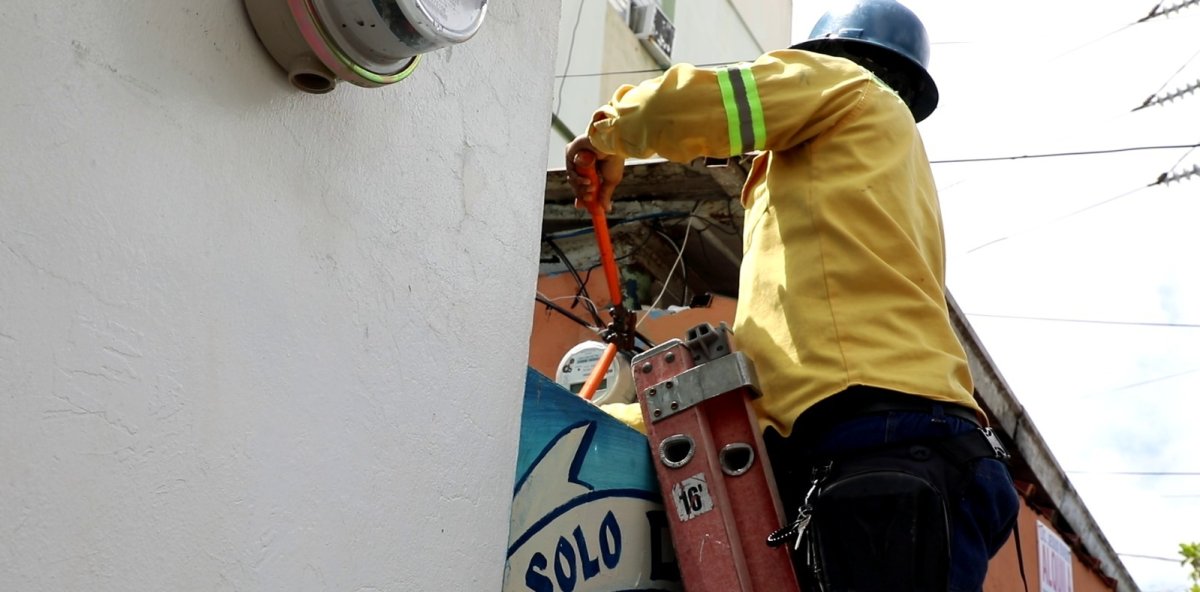
    SANTO DOMINGO – In a significant push to combat energy theft and improve system reliability, the Eastern Electricity Distribution Company (Edeeste) has announced the normalization of service for 20,950 customers and the elimination of 2,888 illegal direct connections within its service area during January.

    The utility’s Loss Management Directorate was central to this effort, executing a sweeping operational campaign that included 34,524 technical and commercial inspections. These targeted actions were designed to regularize power supplies and reclaim lost energy, forming a core part of Edeeste’s broader strategy to enhance the integrity of its distribution network.

    Complementing these internal efforts, the company also successfully normalized service for an additional 1,635 customers through mini-projects funded with support from international cooperation organizations.

    The comprehensive January initiative significantly bolstered the technical and commercial oversight of the entire distribution system. Key activities addressed a spectrum of irregularities, from the elimination of sub-metering (under-registration of consumption) to the direct correction of unauthorized power supplies.

    The crackdown also saw a robust legal response, with 7,057 formal reports of irregularities filed. This procedural step was crucial for strengthening the legal foundation required to correct consumption patterns and recover revenue from unregistered energy use.

    The operational blitz yielded substantial financial and operational benefits. Edeeste estimates that the inspections facilitated the recovery of 593,232 kWh of energy, a critical gain that directly supports the company’s financial sustainability and its ability to invest in reliable service.

    Reiterating its commitment to operational efficiency and legality, Edeeste emphasized that these actions are fundamental to providing a reliable and equitable electricity service for all its users. The company issued a public appeal, urging communities to shun illegal connections, which jeopardize system stability, pose serious public safety risks, and hinder national development.

    Looking ahead, Edeeste pledged to continue its collaborative work with government authorities, community leaders, and consumers to foster a culture of responsible energy consumption, legal connections, and efficiency—cornerstones of a modern and sustainable electrical system for the Dominican Republic.

  • Confrontation Operation in Los Frailes: ‘Tulile Palomería’ killed in exchange of gunfire with authorities

    Confrontation Operation in Los Frailes: ‘Tulile Palomería’ killed in exchange of gunfire with authorities

    SANTO DOMINGO EAST — A high-profile criminal suspect wanted for multiple homicides and violent crimes was fatally wounded during an armed confrontation with specialized police units in the Los Frailes sector. The incident occurred during a targeted operation conducted by the Central Directorate of Criminal Investigation (DICRIM) to apprehend the individual known by the alias “Tulile Palomería.”

    The suspect, who had been evading authorities through multiple arrest warrants, succumbed to gunshot injuries while receiving emergency medical treatment at Dr. Darío Contreras Traumatological Hospital. Preliminary reports indicate the confrontation erupted when DICRIM patrol units were conducting investigative operations to locate the wanted individual.

    Court documents reveal Palomería faced three outstanding arrest warrants: Case No. 2025-AJ00502698 (August 11, 2025) for firearm assault against a civilian; Case No. 2025-AJ0058460 (September 1, 2025) for homicide; and Case No. 2026-AJ0002783 (January 13, 2026) for an additional murder in Pedro Brand municipality.

    According to official police reports, the incident unfolded along José Francisco Peña Gómez Street near Progreso Street. The suspect allegedly initiated gunfire upon recognizing police presence, forcing officers to return fire in self-defense. The exchange resulted in critical injuries to Palomería, who was subsequently transported to medical facilities where he was pronounced dead.

    Forensic teams from the Scientific Police secured substantial evidence from the scene, including a 9mm Model 75 pistol (serial F9225), two spent cartridge casings, a National Police-issued ballistic vest, and three mobile devices. The investigation remains ongoing as authorities continue to process evidence and witness statements.

  • Border deaths Pelegrín attributes chaos to Haitian gangs

    Border deaths Pelegrín attributes chaos to Haitian gangs

    Pelegrín Castillo, President of the National Progressive Force party, has characterized the recent discovery of decapitated female bodies in the Elías Piña province as a deliberate component of a “organized disorder” strategy engineered by Haitian criminal factions. This statement was issued yesterday in response to the grisly incident near the volatile border region.

    Castillo posits that this violent crime transcends an isolated atrocity, representing instead a calculated geopolitical maneuver. He asserts the primary objective is to fabricate a pretext for an international crime of aggression, masquerading under the narrative of a humanitarian emergency. According to his analysis, this orchestrated chaos is designed to compel the reopening of the Dominican-Haitian border, thereby establishing formal refugee camps on Dominican soil.

    “This act was perpetrated with a clear strategic aim: to reinforce the argument that deportations to Haiti cannot proceed under the premise of imminent danger,” Castillo articulated. He further elaborated that the murders serve a dual purpose: intensifying migratory pressure on the Dominican Republic while simultaneously exposing alleged human trafficking corridors. This development coincides with the United States government implementing stricter security protocols in the region.

    The political leader also contends that such incidents are leveraged to bolster claims by international organizations, including Amnesty International, advocating against the deportation of Haitians under the Temporary Protected Status (TPS) program. The underlying assertion is that these actions validate claims that returnees face life-threatening conditions.

    In light of these events, Castillo issued an urgent appeal for governmental responsibility. He advocated for decisive measures, specifically proposing the declaration of a State of Emergency for Defense. He concluded with a stark warning, stating that the nation risks profound loss if it prioritizes tourism protection above all other security and sovereignty concerns.

  • Risk of flooding Rain and low temperatures: what the cold front brings to the country and the most affected areas

    Risk of flooding Rain and low temperatures: what the cold front brings to the country and the most affected areas

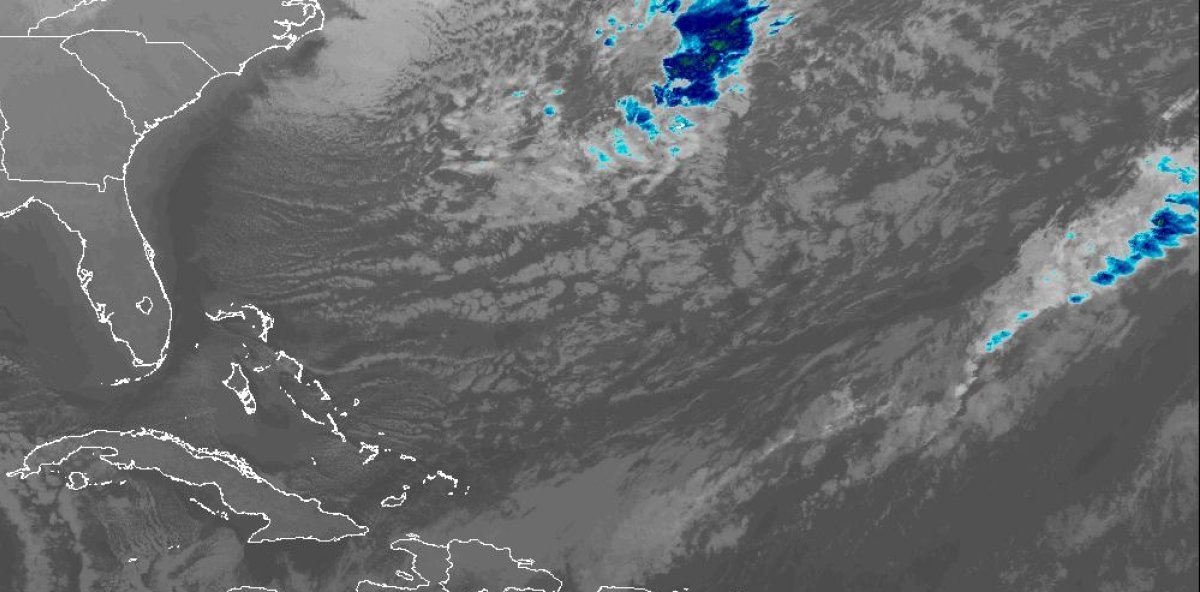
    SANTO DOMINGO, Dominican Republic – Meteorological authorities have issued weather advisories as a significant cold front continues to influence weather patterns across the Dominican Republic. The Dominican Institute of Meteorology (Indomet) confirmed Saturday that the system is producing extensive cloud coverage and intermittent rainfall across multiple regions.

    The weather phenomenon currently extends from the eastern territories to the southwestern coastal areas, progressing slowly in an east-southeast trajectory. This movement pattern is expected to generate scattered downpours throughout the day, with heightened intensity in numerous provinces including Puerto Plata, Espaillat, Hermanas Mirabal, Samaná, Hato Mayor, Monte Plata, El Seibo, San Pedro de Macorís, La Romana, La Altagracia, San Cristóbal, San José de Ocoa, Peravia, Azua, Barahona, and Pedernales. The Greater Santo Domingo area is also anticipated to experience these weather conditions.

    Indomet’s National Forecast Center has maintained meteorological alert status for several northeastern provinces, including Espaillat, María Trinidad Sánchez, Duarte, Samaná, and Hermanas Mirabal. These alerts specifically address potential urban flooding risks associated with the anticipated precipitation.

    Despite the rainfall, temperatures are expected to remain within comfortable ranges, particularly during nighttime hours. Mountainous regions and interior valleys are forecast to experience the most noticeable cooling effects. The passing front will create wind chill conditions that enhance the perceived cold throughout the weekend period.

    Maritime operations face additional challenges, with Indomet advising operators of small and fragile vessels along the Atlantic coastline to exercise extreme caution. The agency recommends maintaining proximity to shorelines and avoiding open sea navigation due to potentially hazardous wave patterns and gusty winds associated with the weather system.

    Meteorological officials urge citizens to monitor ongoing developments through official communication channels and adhere to guidance provided by civil protection agencies.

  • Regionale  veiligheid centraal bij ontmoeting president Simons en CARICOM IMPACS

    Regionale veiligheid centraal bij ontmoeting president Simons en CARICOM IMPACS

    Suriname has positioned itself at the forefront of regional security coordination following a high-level consultation between President Jennifer Simons and CARICOM IMPACS Executive Director Lieutenant Colonel Michael Jones. The meeting, held on Friday, established Suriname’s strategic role in addressing transnational security challenges during its upcoming presidency of the Council for National Security and Law Enforcement (CONSLE) in 2026.

    The discussions, attended by Carmen van Dijk, Deputy Director of Security Policy at Suriname’s Directorate of National Security, focused on developing comprehensive responses to organized crime, illegal migration, and firearms trafficking. Lieutenant Colonel Jones emphasized the necessity of collaborative approaches, stating: ‘The security challenges confronting our region demand joint solutions and efficient utilization of limited resources.’

    Technical cooperation formed a significant component of the dialogue, with commitments to enhance Suriname’s capabilities through specialized training programs and material support from CARICOM IMPACS. Particular attention was given to the Advanced Passenger Information System, which Jones identified as critical for improving border security through strengthened legislation and expanded data collection mechanisms.

    A landmark achievement discussed was the recent implementation of a digital firearms and ammunition management system, enabling comprehensive tracking from registration to destruction. This technological advancement is expected to significantly improve monitoring of illegal weapon flows throughout the Caribbean community.

    The meeting concluded with preparations for CARICOM IMPACS’ 20th anniversary celebrations, including the announcement that Suriname will host a physical convening of the CONSLE in November 2026. This gathering will assess progress on regional security initiatives and establish future priorities for collective action.