作者: admin

  • Long Service Awards Salute Belize’s Bravest Firefighters

    Long Service Awards Salute Belize’s Bravest Firefighters

    BELIZE CITY – In a formal ceremony recognizing exceptional public service, twenty-one of Belize’s most dedicated firefighters received Long Service Awards this week for their commitment to national safety. The honored personnel, representing fire stations from Corozal to Toledo, have served between ten and twenty-five years in the Belize National Fire Service.

    The Ministry of the Public Service and Disaster Risk Management organized the event to acknowledge firefighters who routinely confront dangerous situations while others retreat. Minister Henry Charles Usher presented the awards, emphasizing that these professionals form the backbone of Belize’s emergency response system despite frequently operating without widespread public recognition.

    “These dedicated officers have persevered through numerous national emergencies, technological transformations, and increasing public expectations,” Minister Usher stated during the ceremony. “This recognition represents both our gratitude and our commitment to investing in our National Fire Service’s future.”

    Fire Chief Colin Gillett highlighted the significance of retaining personnel with decades of institutional knowledge, noting that many awardees served through periods of limited resources and challenging conditions due to their profound dedication to community protection.

    Following the awards presentation, officials conducted a site visit to the under-construction National Fire Service Headquarters in Belize City. Minister Usher confirmed the facility represents part of a broader initiative to enhance operational capabilities and improve working conditions for firefighters nationwide. The project addresses a longstanding need after the previous administration reportedly sold the former headquarters without establishing a replacement plan.

    The government simultaneously announced the approval of previously negotiated allowances for firefighters and committed to reviewing the service’s organizational structure to ensure appropriate compensation frameworks. These developments signal increased institutional support for personnel who routinely demonstrate courage, discipline, and unwavering commitment to public safety.

  • Police Corporal Pulled Off Duty in Misconduct, Locs Controversy

    Police Corporal Pulled Off Duty in Misconduct, Locs Controversy

    A Belize City police corporal has been removed from active duty following the launch of an official misconduct investigation ordered by Police Commissioner Dr. Richard Rosado. Corporal Kenrick Bol received formal notification on February 13, 2026, that he would be suspended with full pay pending examination of multiple disciplinary breach allegations within the department.

    The Standards and Accountability Branch issued the suspension letter, which was formally endorsed by Deputy Commissioner Bart Jones. The document explicitly invokes provisions granting the Commissioner authority to relieve officers deemed negligent or unfit for regular duties. This administrative action represents the department’s intensified drive toward enhanced accountability measures among personnel.

    Simultaneously, Corporal Bol’s case has ignited substantial public discourse regarding religious expression and constitutional rights. The officer, who identifies as Rastafarian, has refused departmental orders to cut his dreadlocks, citing protection under religious freedom principles. Commissioner Rosado confirmed the matter has been forwarded to the Attorney General’s Ministry for legal guidance regarding policy compliance.

    Legal representative Leslie Mendez has initiated formal proceedings against the police department, submitting a pre-action letter challenging the hair policy’s constitutionality. Mendez further contends that Bol’s exclusion from the Police Association Executive lacks legal foundation. The attorney has formally requested detailed justification for the suspension and awaits official response from authorities.

    The developing situation highlights the complex intersection of institutional regulations, individual religious rights, and police accountability in Belize’s law enforcement system.

  • Health : «An incarcerated person is not condemned to die of illness»

    Health : «An incarcerated person is not condemned to die of illness»

    In a groundbreaking humanitarian effort, Haiti’s Nippes Health Directorate (DSNI) has launched a transformative mobile healthcare initiative targeting incarcerated individuals at the Anse-à-Veau prison facility. This pioneering program represents a significant advancement in equitable healthcare access for one of the nation’s most vulnerable populations.

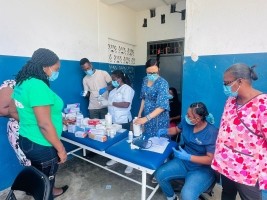
    The comprehensive medical outreach, conducted earlier this month, brought essential healthcare services directly to Haiti’s largest departmental penitentiary. Medical professionals provided critical consultations, conducted thorough health assessments, and distributed vital medications to address widespread health concerns among the inmate population. Patients presenting with influenza, fever, tuberculosis, and various common ailments received immediate medical attention, generating overwhelming satisfaction and gratitude among recipients.

    Dr. Esther Ceus Dumont, Director of DSNI, personally oversaw the initiative, emphasizing the fundamental principle guiding this mission: “An incarcerated person is not condemned to die of illness.” She articulated that while prison serves as a place for serving sentences, it should never become a site of medical neglect or torture through healthcare deprivation.

    The program extends beyond immediate medical intervention. In a follow-up technical assessment on February 12, health officials returned to evaluate the prison’s sub-center conditions, initiating plans for enhanced sanitation protocols and strengthened healthcare infrastructure. This dual approach combines curative treatment with preventive measures and structural improvements.

    Prison authorities have enthusiastically endorsed the initiative, acknowledging the critical importance of addressing substantial healthcare needs within correctional facilities. The DSNI’s program demonstrates an unwavering commitment to nondiscriminatory quality healthcare and reinforces community-based services for vulnerable populations throughout the Nippes department.

  • Motorist Killed in Collision in Roaring Creek

    Motorist Killed in Collision in Roaring Creek

    A devastating traffic incident on the George Price Highway has resulted in the death of a 29-year-old motorcyclist, casting a pall over the community of Roaring Creek. The tragedy unfolded on the evening of February 14, 2026, when authorities received reports of an unresponsive male near miles 47-48 of the major roadway.

    Upon arrival at approximately 9:20 PM, police officers discovered Manuel Munguía deceased beside his severely damaged Lifan motorcycle. Preliminary investigation findings indicate Munguía was traveling from Belize City toward Belmopan when his vehicle abruptly crossed into the opposing traffic lane, resulting in a catastrophic head-on collision with an SUV traveling in the opposite direction.

    The impact propelled both vehicles with tremendous force, causing the motorcycle to subsequently strike a roadside guardrail. Police documentation confirms both the motorcycle and protective barrier exhibited significant damage consistent with high-impact trauma.

    Authorities encountered the SUV driver at the scene, whose vehicle sustained considerable damage to the driver’s side section. While the investigation remains active, police have served the motorist with a formal notice of intended prosecution pending further evidentiary review.

    Assistant Superintendent of Police Stacy Smith, serving as Staff Officer, provided official commentary regarding the ongoing investigation. Toxicology analysis will be conducted to determine whether alcohol impairment contributed to the fatal incident, though authorities confirmed no sobriety testing was administered to the SUV driver at the scene.

    The Roaring Creek Police Department continues to investigate the precise circumstances surrounding the collision that resulted in this premature death.

  • New Parents Desperate to Find Answers for Sick Infant

    New Parents Desperate to Find Answers for Sick Infant

    A young Belizean family is enduring an unimaginable medical nightmare as they search for answers to their infant son’s undiagnosed condition. Deondra Samuels and Kemar Ferguson have watched their eighteen-month-old son, baby Kemar, cycle in and out of hospital admissions for months without receiving a definitive diagnosis for his deteriorating health.

    The medical journey began in November 2025 when what initially appeared to be a routine fever rapidly escalated into a serious health crisis. Despite multiple hospitalizations at the Karl Heusner Memorial Hospital (KHMH), extensive testing, and numerous blood and platelet transfusions, medical professionals in Belize have been unable to identify the root cause of the child’s illness.

    According to the distressed parents, physicians have indicated that specialized hematological expertise required for diagnosis is unavailable within Belize’s healthcare system. The necessary specialists are reportedly only accessible in Cancun, Merida, or Chetumal—posing significant geographical and financial challenges for the family.

    The child’s symptoms present a complex clinical picture including significant weight loss despite normal eating patterns, dangerously low blood levels requiring regular transfusions, and enlargement of spleen, kidney, and liver causing visible abdominal distension and constant pain. These symptoms have transformed an otherwise active toddler into a weakened child who experiences dramatic fluctuations in energy and mobility.

    With four hospital admissions between November and February, plus additional emergency visits, the family’s life has become consumed by medical crises. Each hospital visit typically results in transfusion requirements rather than diagnostic clarity.

    The parents emphasize they are not assigning blame but rather pleading for assistance in identifying their son’s condition. Their immediate focus involves fundraising efforts, including an upcoming food sale during the La Ruta Maya Race at the Double Head Village stop, to pursue specialized medical care outside Belize.

    As baby Kemar continues to weaken, time has become the family’s most precious and diminishing resource in their quest for both diagnosis and hope.

  • Food prices lead January inflation rise in Dominican Republic

    Food prices lead January inflation rise in Dominican Republic

    The Dominican Republic’s Central Bank has reported a 0.4% monthly inflation rate for January, elevating the annual inflation figure to 4.98%. This sustained inflationary pattern continues to operate within the institution’s established target corridor of 4.0% ± 1.0% for an unprecedented 32nd consecutive month.

    The primary catalyst for January’s price escalation emerged from the food and non-alcoholic beverage sector, which experienced a 0.68% increase and contributed nearly half (45.7%) of the overall monthly inflation. Significant supplementary pressures originated from restaurants and hotels (1.13%), education services (1.79%), miscellaneous goods and services (0.34%), and housing costs (0.26%).

    A notable mitigating factor arrived through transportation expenses, which declined by 0.28% during the same period, providing partial counterbalance to the overall Consumer Price Index ascent.

    Monetary authorities highlighted core inflation—excluding volatile components such as food items, fuels, regulated services, alcohol, and tobacco—which maintained a year-on-year rate of 4.89%. This metric, closely monitored by policymakers for underlying inflation trends, demonstrates the economy’s persistent but controlled inflationary environment. The annual inflation closure at 4.95% for 2025 confirms the Dominican Republic’s continued macroeconomic stability within its targeted parameters.

  • New sugar minister vows urgent action amid crop uncertainty

    New sugar minister vows urgent action amid crop uncertainty

    Barbados’ newly appointed Minister of Agriculture, Dr. Shantal Munro-Knight, has declared the resolution of the sugar industry’s mounting challenges as an immediate priority, following revelations about the uncertain status of the 2026 crop season and operational preparedness of the island’s sole processing facility. This development emerges against a backdrop of conflicting assessments from industry participants and growing apprehension regarding Portvale Factory’s capacity to commence operations.

    Recent investigative reporting uncovered substantial doubts about the impending harvest timeline, with planters represented by Barbados Sugar Industries Ltd (BSIL) advocating for a mid-February start. Conversely, the Sugar Industry Staff Association (SISA) and informed sources indicate that the mill remains unprepared for operation this month, exacerbating uncertainties surrounding the nation’s historically significant sector.

    The sugar industry’s precarious condition became politically charged during recent electoral campaigns. Kemar Stuart of the New National Party (within the People’s Coalition for Progress) accused governing authorities of obscuring the sector’s true financial and operational condition. Meanwhile, Democratic Labour Party agriculture spokesperson Amoy Gilding-Bourne characterized the industry as being ‘in limbo’ following the apparent collapse of a crucial partnership arrangement with the cooperative entity previously designated to manage operations.

    Gilding-Bourne highlighted additional ambiguities concerning the ownership and control of Barbados Energy and Sugar Company (BESCO) and Agricultural Business Company Ltd (ABC)—two entities established during the 2023 restructuring initiative.

    In response to these challenges, Dr. Munro-Knight has adopted a methodical approach centered on consultation and information gathering. During her swearing-in ceremony at CARIFESTA House, the minister emphasized that her initial priority involves convening with agricultural stakeholders to comprehensively assess the situation. She stated that understanding completed Estimates and the forthcoming Budget process remains essential for fully grasping the industry’s current state.

    The minister confirmed that multiple stakeholders have already requested meetings, and she intends to prioritize listening to all concerned parties before determining the appropriate course of action. While the traditional harvest commencement window approaches, Dr. Munro-Knight affirmed that any official announcement regarding the 2026 crop will follow thorough consultations with industry representatives.

    The resolution of current uncertainties may ultimately depend on these preliminary engagements, as the government endeavors to stabilize an industry that retains significant cultural and economic importance despite persistent operational and structural challenges.

  • Dominican Republic earns spot on UN Honor Roll after timely 2026 payments

    Dominican Republic earns spot on UN Honor Roll after timely 2026 payments

    The Dominican Republic has achieved a significant diplomatic milestone by securing a position on the prestigious United Nations Honor Roll. This recognition comes as the Caribbean nation completed its full financial obligations to the international organization ahead of schedule for the 2026 fiscal year.

    Official documentation released on February 12 reveals that the Dominican Republic distinguished itself as the third nation among all 193 UN member states to settle its annual contributions. This accomplishment places the country within an exclusive group of 55 nations that have demonstrated exceptional fiscal responsibility by meeting their budgetary commitments early in the current cycle.

    The strategic financial compliance carries substantial implications for the nation’s international standing. By avoiding potential sanctions—including the suspension of voting privileges in the General Assembly—the Dominican Republic reinforces its credibility within the global community. This financial diligence enables the country to preserve its active and influential diplomatic presence on the world stage.

    With its fiscal responsibilities in order, the Dominican delegation continues to advance critical regional initiatives at the United Nations. Current priorities include promoting stabilization efforts in neighboring Haiti and addressing the escalating sargassum seaweed crisis affecting Caribbean marine ecosystems and economies. This achievement not only underscores the country’s commitment to multilateral cooperation but also enhances its capacity to shape international policy discussions.

  • DGM detains hundreds of undocumented foreigners for environmental crimes nationwide

    DGM detains hundreds of undocumented foreigners for environmental crimes nationwide

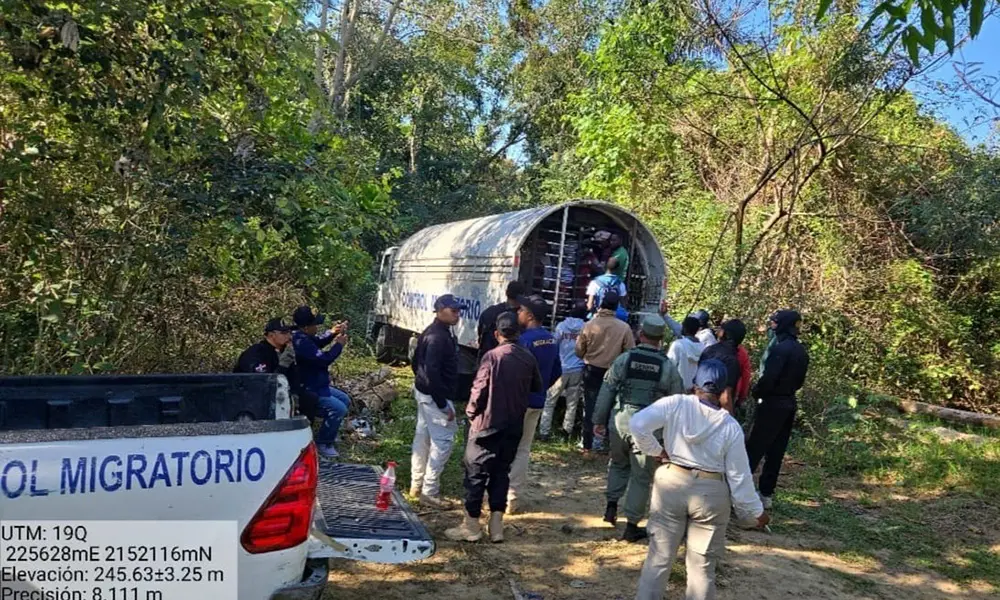
    The Dominican Republic has launched a sweeping nationwide operation targeting both immigration violations and environmental crimes, resulting in significant enforcement actions within a 24-hour period. According to the General Directorate of Migration (DGM), authorities detained 1,049 undocumented foreigners while deporting 1,108 individuals.

    A substantial portion of these detentions—378 individuals—were specifically for environmental offenses rather than purely immigration status issues. These arrests targeted illegal activities including unauthorized deforestation through logging and burning, illicit agricultural operations, unauthorized sand extraction from vulnerable riverbanks, and illegal settlements established near protected scientific reserves. These actions violate the country’s Law 202-04 on Protected Areas.

    Enforcement operations yielded substantial confiscations of equipment used in these illegal activities. Authorities impounded multiple vehicles, motorcycles, trucks, and various tools including shovels, picks, and chainsaws. The crackdown also involved the physical dismantling of charcoal production kilns and the destruction of makeshift shelters constructed in protected zones.

    Initially held at military facilities and strategic checkpoints, detainees were subsequently transferred to specialized DGM processing centers for formal procedures. The operations spanned multiple regions including Cibao, the northwest, central, and northeast territories of the country, focusing particularly on protected parks, ecologically sensitive wetlands, forest reserves, and riverbank areas where surveillance detected illegal activities.

    The DGM characterized these measures as part of a comprehensive strategy to simultaneously enforce immigration regulations and protect the nation’s environmental resources. This dual-purpose approach reflects the government’s commitment to addressing both border security and ecological preservation through coordinated enforcement actions across multiple jurisdictions.

  • Deadly US strike shakes Saint Lucia’s fishing sector

    Deadly US strike shakes Saint Lucia’s fishing sector

    Caribbean fishing communities are facing unprecedented fear and economic uncertainty following a lethal US military operation that resulted in three fatalities, including at least one Saint Lucian national. The incident occurred on Friday when US Southern Command conducted what it described as a ‘kinetic strike’ against suspected drug traffickers in regional waters.

    This event represents the latest in a series of aggressive counter-narcotics operations that have reportedly claimed 133 lives since September 2025. While US authorities labeled those killed as ‘narco-terrorists,’ they have yet to provide public evidence supporting these claims or the specific intelligence that prompted the deadly engagement.

    The fishing sector across Saint Lucia has been plunged into turmoil, with many fishermen now expressing profound apprehension about venturing into traditional fishing grounds. Kaygianna Toussaint Charlery, Operations Manager of the Goodwill Fishermen Cooperative, reported that community anxiety has reached critical levels following the weekend’s developments.

    ‘Fishing represents far more than occupation for our people—it constitutes the economic foundation for numerous low and middle-income households throughout Saint Lucia,’ Charlery emphasized. ‘When fishermen fear for their safety at sea, we witness reduced fishing expeditions, directly threatening family incomes and food security.’

    Charlery further noted that while fishermen adhere to established regulations regarding vessel modifications, licensing protocols, and territorial boundaries, compliance offers no guaranteed protection against aerial strikes. She questioned the intelligence methodology behind these operations, stating, ‘When attacks occur without interception from the air, the situation transcends legal fishing practices. We lack clarity regarding the intelligence underpinning these strikes.’

    The fisheries official strongly criticized the United States’ unilateral approach, arguing that it violates Caribbean sovereignty and undermines regional stability. ‘The US frequently operates as though it constitutes a law unto itself. We are sovereign nations, and more humane alternatives exist for addressing narcotics trafficking without devastating families, livelihoods, and entire economies.’

    Charlery advocated for enhanced cooperation through intelligence sharing and regional partnerships, emphasizing that collaborative frameworks would prove more effective than military actions that endanger civilian lives and local industries.