
The digital landscape is witnessing a paradigm shift in content processing with the emergence of sophisticated artificial intelligence systems. These advanced analytical platforms are revolutionizing how information is synthesized, interpreted, and reconstructed. The technology demonstrates remarkable capability in comprehensively deconstructing source material to identify core narratives, contextual background, and broader implications before reconstructing content with entirely original frameworks and sophisticated vocabulary. This represents a significant evolution beyond basic automated rewriting, incorporating nuanced understanding of journalistic integrity, copyright considerations, and audience engagement principles. The systems maintain rigorous standards for factual accuracy while employing diverse linguistic techniques to enhance readability and information retention. This technological advancement addresses growing demands for both content authenticity and production efficiency across media platforms, potentially establishing new benchmarks for how news organizations process and present information in increasingly saturated digital environments.
作者: admin
-

‘Beaches Case’ Adjourned Again to April 9
A landmark legal dispute over public beach access in Barbados has been further delayed, with the Magistrate’s Court scheduling the next hearing in the protracted ‘Beaches Case’ for April 9, 2026. The case originates from an incident on Whit Monday (June 9, 2025) when several individuals allegedly trespassed at Laurys Bay in the St. Philip North constituency. Prosecutors contend the defendants unlawfully entered property associated with a private coastal development, while the accused maintain their actions were a legitimate protest against diminishing public access to Barbados’ shoreline. The repeated adjournments have drawn sharp criticism from defense supporters who characterize the delays as procedural abuse. Both sides await the 2026 court date as this socially significant case continues to highlight tensions between private development interests and traditional public beach rights.
-

Revised Date Announced For The 2025 Antigua & Barbuda National Music Awards
The Ministry of Creative Industries has announced a significant date change for the prestigious 2025 Antigua and Barbuda National Music Awards (ABNMA). Originally slated for February 26th, 2026, the ceremony will now take place on Tuesday, March 10th, 2026, at the American University of Antigua Conference Center.
Government officials cited an unavoidable scheduling conflict as the primary reason for the rescheduling, emphasizing that the change was necessitated by circumstances beyond their control. Despite this adjustment, the Department of Culture reaffirmed its commitment to maintaining the event’s high production standards and celebratory atmosphere.
All previously announced event details remain intact, including the comprehensive award categories and programmed entertainment elements. The ministry specifically addressed concerns regarding existing invitations, confirming that all previously issued invitations will remain valid for the new date.
The statement included a formal apology to nominees, corporate partners, sponsors, and distinguished guests who may experience inconvenience due to the date modification. Organizers expressed gratitude for the community’s understanding and continued support of the nation’s music and entertainment industry.
The rescheduled event will continue to honor exceptional achievements within Antigua and Barbuda’s creative community, showcasing the nation’s vibrant musical talent and cultural contributions on the international stage.
-
Improved Prison On-Site Care Expected to Cut Hospital Transfers
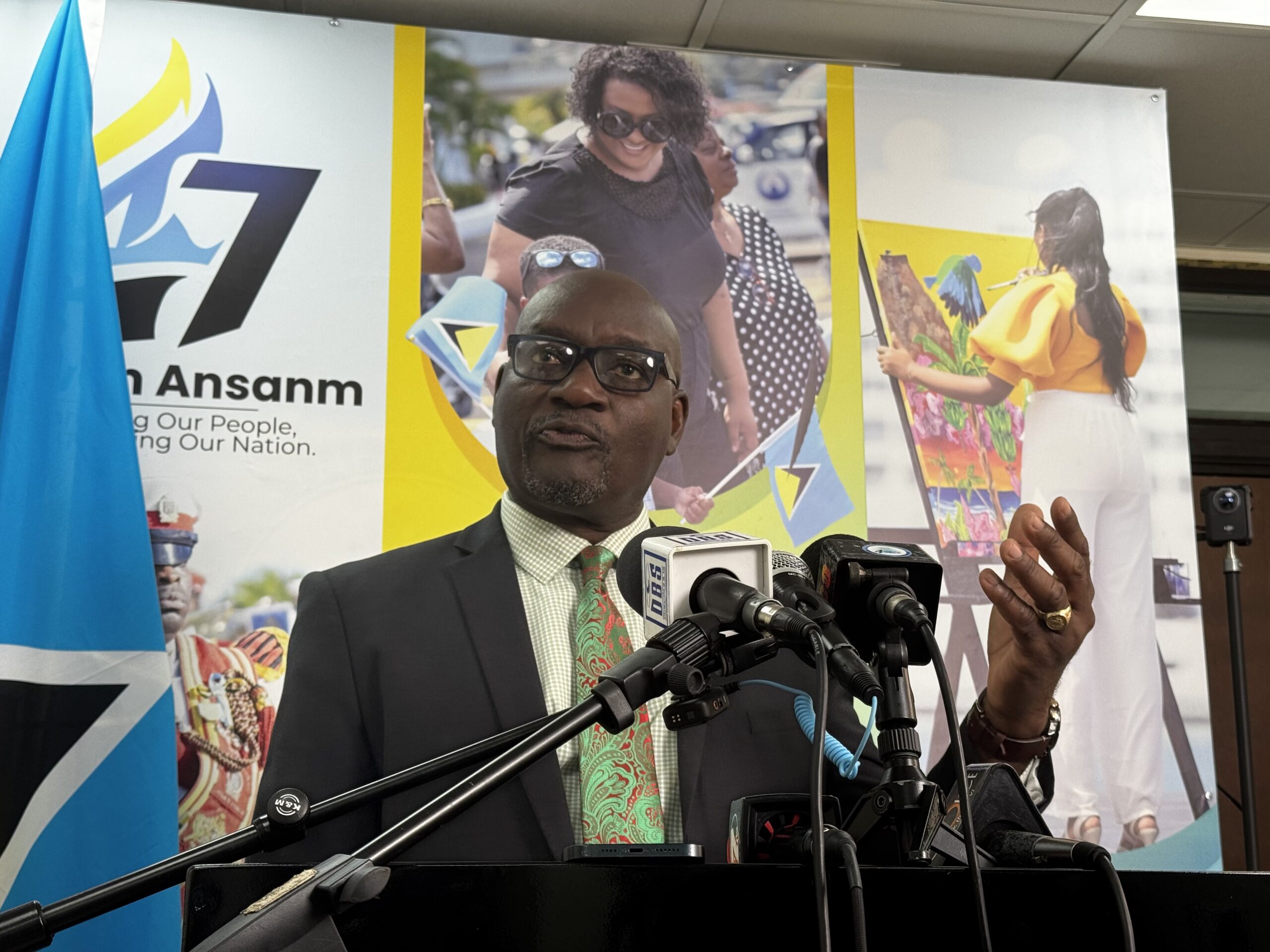
Saint Lucia’s government has successfully implemented a comprehensive enhancement of medical services at the Bordelais Correctional Facility (BCF), marking the culmination of a year-long transformation initiative. Health Minister Moses Jn Baptiste confirmed the complete operationalization of the facility’s upgraded healthcare infrastructure this week.
The ministerial announcement emphasized the government’s commitment to fulfilling statutory obligations under the Correctional Services Act, which explicitly guarantees appropriate medical care for incarcerated individuals. Minister Jn Baptiste articulated the dual-purpose strategy behind these improvements: ensuring inmate welfare while simultaneously alleviating strain on the nation’s public healthcare infrastructure.
“Our objective extends beyond mere compliance,” Jn Baptiste stated. “By fortifying medical capabilities within the correctional system, we deliberately reduce the necessity for inmate transfers to external healthcare facilities, particularly St Jude Hospital and Millennium Heights Medical Complex.”
Key technological advancements include the full integration of the health management information system, enabling seamless synchronization of inmate health records with the national primary care network. This digital transformation ensures continuity of care and comprehensive medical tracking for the incarcerated population.
The enhancement package features significantly expanded specialist clinical services with optimized scheduling protocols:
– Internal medicine consultations now occur with reinforced capacity on the first Thursday of each month
– Dermatology services have been enhanced and maintained on the second Friday monthly since December 2022
– Ophthalmology clinics continue their regular schedule every fourth TuesdayCorrectional authorities indicate these measures will deliver more holistic healthcare to inmates while creating substantial operational relief for the nation’s overburdened public health system. The systematic approach demonstrates how institutional healthcare improvements can simultaneously serve prisoner welfare and broader public health objectives.
-

Fibre benefits beyond constipation
Scientific research continues to reveal that dietary fibre serves far more critical functions than merely facilitating digestive regularity. The Grenada Food and Nutrition Council (GFNC) has highlighted fibre’s comprehensive role in maintaining systemic health, positioning it as an essential component for holistic wellbeing.
The gastrointestinal system performs numerous survival functions, with fibre acting as a crucial protective agent. Although food enters through the mouth, the intestinal interior remains technically external to the body until nutrients penetrate the gut wall into the bloodstream. The intestinal barrier serves as a selective gateway, permitting nutrient absorption while blocking harmful pathogens. Dietary fibre reinforces this barrier by nourishing beneficial gut microbiota, which subsequently generate short-chain fatty acids (SCFAs) through fermentation. These microbial metabolites strengthen intestinal integrity, mitigate inflammatory responses, and enhance immunological function.
Chronic inflammation—often triggered by infections, dietary imbalances, environmental toxins, or psychological stress—can precipitate tissue damage and elevate chronic disease risks. Adequate fibre consumption modulates inflammatory pathways by promoting microbial diversity and enhancing barrier protection.
Research published in ‘Leaky Gut: Effect of Dietary Fibre and Fats on Microbiome and Intestinal Barrier’ demonstrates that insufficient fibre intake compromises the protective mucosal layer, enabling pathogen infiltration and inflammatory activation. Conversely, optimal fibre consumption stimulates butyrate and other SCFA production, which calms immune reactivity and preserves intestinal lining integrity.
Fibre significantly influences metabolic health by decelerating digestion and promoting gradual glucose release into circulation. This mechanism prevents abrupt glycemic spikes, sustains energy equilibrium, and reduces insulin resistance development—a fundamental precursor to Type 2 diabetes.
Cardiovascular protection represents another fibre benefit. A 2022 Frontiers in Nutrition study identified that soluble fibres like pectin sequester bile acids within the intestines, forcing hepatic utilization of circulating cholesterol for bile synthesis. This process effectively reduces serum cholesterol concentrations, thereby supporting cardiovascular health and diminishing cardiovascular disease susceptibility.
Beyond transient digestive relief, consistent fibre consumption correlates with reduced risks of diabetes, hypertension, obesity, gastrointestinal disorders, and chronic inflammation. This multifaceted nutrient underpins immunological robustness, metabolic balance, and long-term pathological prevention.
The GFNC recommends integrating diverse plant-based fibres through regular consumption of vegetables and fruits at each meal. Such dietary patterns confer systemic benefits that extend far beyond gastrointestinal comfort, ultimately enhancing overall physiological resilience and disease resistance.
-
SIDS Centre of Excellence Launches Official Website
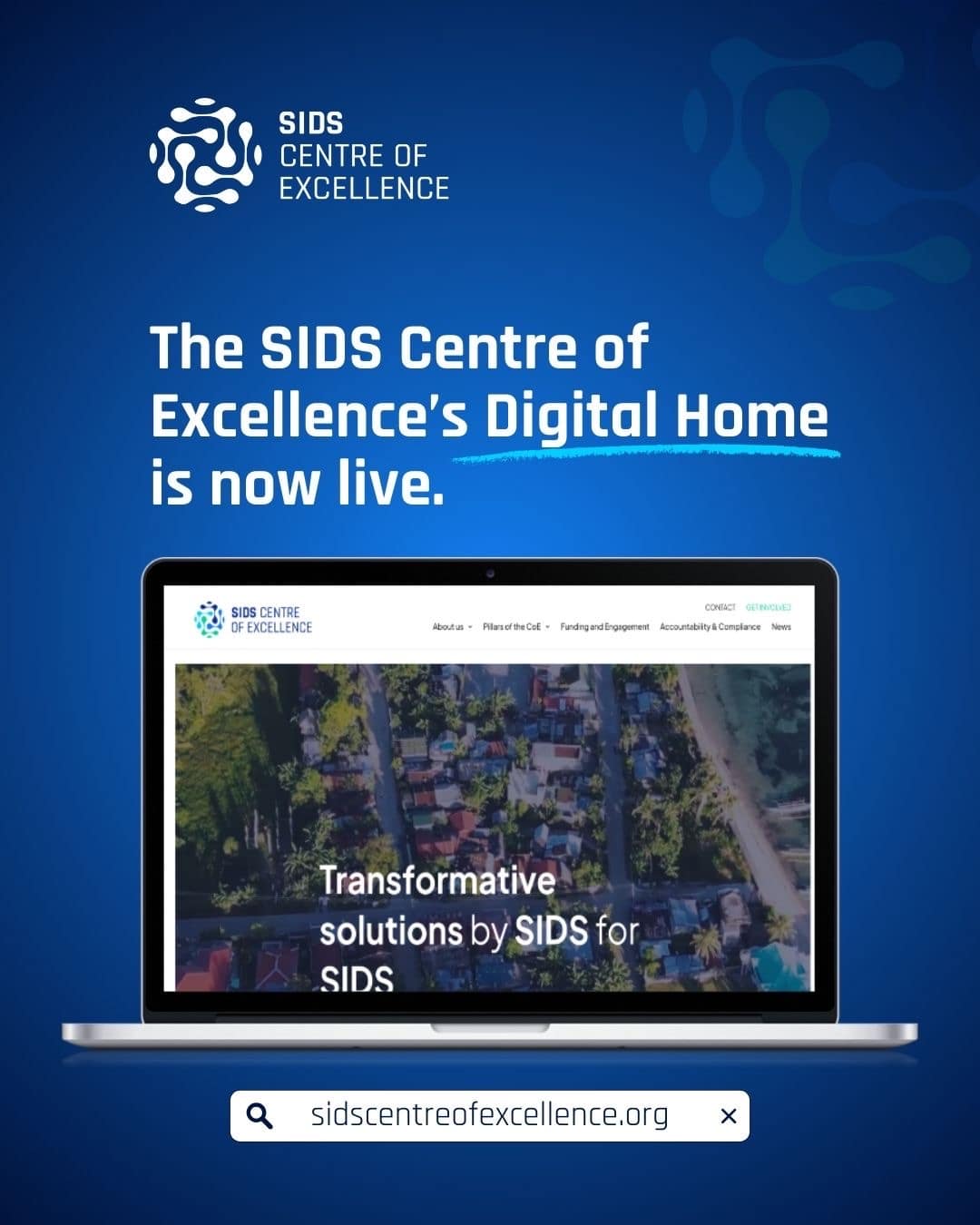
Antigua and Barbuda is poised to host the formal physical inauguration of the Small Island Developing States Centre of Excellence (SIDS CoE) in the coming months. This institution represents a concrete operational framework designed to bolster the efforts of Small Island Developing States in achieving the objectives outlined in the Antigua and Barbuda Agenda for SIDS (ABAS).
The Centre’s mission is executed through a strategic framework of four synergistic pillars: a Global Data Hub for enhanced information access, an Innovation Technology Mechanism to foster digital advancement, an Island Investment Forum to catalyze financial flows, and a Debt Sustainability Service to address fiscal challenges. This integrated approach is specifically engineered to fortify the capabilities of SIDS nations, enabling them to accelerate progress toward sustainable and climate-resilient development pathways.
The upcoming launch event will serve as a pivotal gathering for regional stakeholders and international partners. Its primary objectives are to officially mark the establishment of the Centre and to galvanize further collaborative action in direct support of SIDS-specific priorities. Organizers have indicated that comprehensive details regarding the event’s agenda and participation will be disclosed in the near future.
-

OP-ED: US Supreme Court tariff decision – What does this mean for the Caribbean?
In a landmark ruling with profound implications for presidential authority and international trade, the United States Supreme Court has delivered a decisive verdict against the Trump administration’s controversial tariff regime. On February 20, 2026, the court determined by a 6-3 majority that the International Emergency Economic Powers Act (IEEPA) of 1977 does not grant the president authority to impose tariffs, striking down the so-called ‘Liberation Day’ emergency powers established through executive order in April 2025.
The legal challenge, Learning Resources Inc v Trump (2026), centered on whether the 1977 legislation authorized the president to implement sweeping tariffs under declared national emergencies. The court reaffirmed that constitutional authority for taxation and tariffs resides squarely with Congress, delivering a robust defense of separation of powers principles.
President Trump’s executive order had justified the tariffs by identifying two ‘unusual and extraordinary threats’: the flow of illegal drugs from Canada, Mexico, and China, and the United States’ persistent trade deficit which allegedly undermined domestic manufacturing and supply chains. The administration imposed a 10% ‘reciprocal tariff’ on nearly all countries globally, with additional rates targeting specific nations including Caribbean Community (CARICOM) members Trinidad & Tobago (15%) and Guyana (38%, later reduced to 15%).
The economic impact has been substantial. US importers bore the direct costs, with small and medium enterprises particularly affected. Learning Resources Inc reported losses amounting to millions of dollars, while the Penn-Wharton Budget Model projects total tariff payments at approximately $175 billion. American households faced an average tax increase of $1,000 in 2025, with projections reaching $1,300 for 2026.
Paradoxically, the tariffs failed to achieve their stated objectives. Despite increased tariff revenue, the US merchandise trade deficit reached record highs in 2025, partly due to importers rushing shipments ahead of implementation.
For Caribbean nations, which historically enjoyed non-reciprocal duty-free access to US markets under the Caribbean Basin Initiative, the ruling offers significant relief. The US remains the region’s largest trading partner and main export market, with the tariffs having reduced price competitiveness for Caribbean goods.
However, the trade policy battle continues. President Trump has announced intentions to implement a 10% global tariff using Section 122 of the Trade Act of 1974, which permits temporary tariffs up to 15% for 150 days unless extended by Congress. This development introduces renewed uncertainty for US importers and foreign exporters, including Caribbean businesses which must continue monitoring developments and adjusting strategies accordingly.
Regional organizations including CARICOM and the Caribbean Private Sector Organisation maintain active engagement with US trade policy developments, advocating for Caribbean interests through diplomatic channels as the situation evolves.
-

Every over important for West Indies in Super 8, says Reds
The West Indies cricket team enters the Super 8 phase of the ICC Men’s T20 World Cup as the only squad with a perfect record, having secured victories in all four preliminary matches. Their reward: a formidable lineup against the tournament’s other undefeated teams—defending champions India, 2025 finalists South Africa, and the surprising contender Zimbabwe. The Caribbean squad begins this critical stage against Zimbabwe today at Mumbai’s iconic Wankhede Stadium.
Veteran commentator Joseph ‘Reds’ Perreira anticipates strategic lineup changes from head coach Daren Sammy. Perreira advocates for including Matthew Forde, who boasts the squad’s most economical bowling rate at 4.40 runs per over, while suggesting the omission of out-of-form former captain Rovman Powell. Powell has managed merely 47 runs across three innings, with a highest score of 24. Perreira also predicts the return of allrounder Romario Shepherd from injury, fresh from his impressive 5-20 performance against Scotland.
“My selection for the final XI would be based strictly on current form,” Perreira stated. “Matthew Forde deserves inclusion for his exceptional economy and all-around excellence. Conversely, Powell hasn’t delivered an outstanding World Cup performance thus far. With Shepherd expected to return, that would be my sole change to the lineup.”
The historical record favors West Indies, who have won three of their four T20 International encounters with Zimbabwe. The Caribbean team holds additional advantage through greater familiarity with the Mumbai venue, having played two matches there, while Zimbabwe contested all preliminary games in Sri Lanka.
Perreira emphasized that the Super 8 opener will establish the tournament’s competitive tone, warning that captain Shai Hope’s squad must approach the game with seriousness and respect. “While the Zimbabwe match is crucial, Super 8 cricket elevates intensity by several notches,” Perreira cautioned. “Both teams are building self-belief, making every ball, run, and over critically important. The power play doesn’t require domination within three overs—smart, fundamental cricket across six overs can achieve the same objective.”
The commentator outlined specific strategic requirements: “The middle order must exercise judicious shot selection. Openers King and Hope need to build substantial partnerships. Hetmyer, enjoying magnificent form, must recognize his responsibility at number three and avoid aggressive premature shots. With support from Chase, Rutherford, Holder, and Forde, our batting lineup possesses excellent balance.”
Regarding bowling tactics, Perreira advised: “Joseph should focus on yorkers, while Holder must exploit movement-friendly lengths. Forde will likely maintain his economical consistency while contributing to middle-order batting. The spin duo of Motie and Hossein offer complementary strengths.”
Perreira concluded with key expectations: “King is due for a significant innings. Most importantly, West Indies must respect both their opponents and the game itself, delivering mature performance without succumbing to situational excitement.”
The match commences at 9:30 a.m. Eastern Caribbean time, marking the beginning of the tournament’s most competitive phase.
-

Saint Lucia’s Chevening Scholars sweep UK degrees with distinctions
Three exceptional scholars from Saint Lucia have returned home with top academic honors after completing transformative Master’s degrees in the United Kingdom through the renowned Chevening Scholarship program. Nyus Alfred, Amanie Mathurin, and Patrish Lionel, all originating from the island’s southern region, successfully adapted to Britain’s challenging academic environment and climate while achieving remarkable scholarly distinction.
Nyus Alfred emerged as the top-performing student in his cohort at the London School of Economics and Political Science (LSE), earning Overall Distinction with perfect distinctions across all seven courses in the Media and Communications program. He received the award for Best Overall MSc Academic Performance in his department, a significant accomplishment for someone who initially questioned his ability to compete with students from elite global institutions.
Amanie Mathurin likewise achieved Overall Distinction at LSE in Media, Communication and Development, earning top marks in five of six courses including her dissertation. Her research focused specifically on Saint Lucian culture, examining calypso music as a form of political discourse in a thesis titled ‘Singing For Di Maléwé’ – Resistance, Knowledge, and Political Discourse in Saint Lucia’s Calypso.’
Patrish Lionel completed her Master of Arts in Strategic People Management and Practice at Liverpool John Moores University with Distinction, overcoming both academic challenges and personal tragedies during her studies. Despite receiving news of her father being injured by a stray bullet and her grandmother’s passing during her dissertation period, she persevered to achieve academic excellence.
The three scholars formed a strong support system during their time abroad, describing themselves as ‘a small but mighty group’ that maintained accountability to each other while recognizing their role in paving the way for future Saint Lucian scholars. Their achievements demonstrate that despite coming from a small nation, Saint Lucians can compete and excel at the highest levels of global academia.
-

Stanislaus becomes first Saint Lucian to earn medical degree in Morocco
In a historic academic achievement, Kerrone Courtney Stanislaus has become the first citizen of Saint Lucia to earn a medical degree from Morocco, completing a rigorous seven-year journey that began in 2018. The young graduate received his Doctor of Medicine from the prestigious Faculty of Medicine and Pharmacy of Rabat, marking a significant milestone for both himself and Caribbean educational opportunities.
Stanislaus described the accomplishment as “both an honor and a profound responsibility” in an exclusive interview with St Lucia Times. He emphasized that his achievement represents more than personal success—it symbolizes regional representation and opens new possibilities for Caribbean students seeking medical education abroad.
The path to this milestone required extraordinary adaptation. Transitioning from his small Caribbean island to North Africa presented multiple challenges: navigating cultural differences, adjusting to climate variations, and mastering medical studies conducted entirely in French while surrounded by Arabic in daily life. Stanislaus admitted the initial experience was “overwhelming,” but through perseverance and dedication, he gradually gained confidence.
His motivation remained steadfast through personal tragedy when his mother passed away during his fourth year of studies. “I told her I wanted to be a doctor when I was four years old,” Stanislaus shared, “and she poured her soul into ensuring that I had everything needed to achieve that goal.” This personal drive fueled his academic excellence, culminating in a prize-winning thesis titled “The Impact of Physical Exercise Therapy on Cancer Patients: Clinicians’ Perspective.”
Stanislaus’s research choice was deeply personal, inspired by the loss of both his mother and uncle to cancer. His work explored the therapeutic potential of exercise in cancer treatment and examined whether clinicians adequately incorporate physical activity into treatment plans. “I truly believe exercise can serve as a safe, cheaper and feasible adjunctive approach in our ongoing global battle against cancer,” he stated.
This achievement gains additional significance amid shifting geopolitical landscapes affecting traditional medical education pathways. For decades, Cuba has served as a primary training ground for Caribbean medical students, but recent uncertainties have created demand for alternative options. Stanislaus believes Morocco could emerge as a viable alternative, though he cautions prospective students about the challenges.
“Morocco is far from a bed of roses and truly isn’t for the faint or weak of heart,” he noted frankly. “There is no shortage of challenges. But for those who are hungry enough and cling to a sense of purpose greater than themselves, you can definitely thrive here.”
For aspiring medical professionals considering international education, Stanislaus emphasizes the necessity of open-mindedness, discipline, and adaptability. He particularly stresses the importance of genuine motivation: “Choose it for the right reasons, not prestige, not pressure, but for the genuine love and commitment to service and lifelong learning.”