
In a significant diplomatic engagement, Laurent Saint Cyr, President Pro Tempore and Coordinator of Haiti’s Transition Council, held pivotal meetings with Japanese Prime Minister Shigeru Ishiba and Emperor Naruhito during his official visit to Japan. The discussions with Prime Minister Ishiba centered on the current economic landscape and mutual interests, with Saint Cyr emphasizing Japan’s support for the deployment of the Gang Suppression Force (GSF) following its approval by the United Nations Security Council. Prime Minister Ishiba reaffirmed Japan’s longstanding commitment to Haiti, highlighting decades of assistance, particularly after the devastating 2010 earthquake and through funding for the Multinational Security Support Mission. He expressed a keen interest in bolstering Haiti’s military capabilities and reiterated Japan’s dedication to fostering stability, peace, and security in the Caribbean nation. Saint Cyr, in turn, underscored the Transitional Council’s determination to restore security with international support, paving the way for timely elections. Additionally, Saint Cyr was granted an audience with Emperor Naruhito at the Tokyo Imperial Palace on October 8, 2025. This cordial meeting reinforced the enduring friendship and cooperative ties between Haiti and Japan, focusing on shared interests and mutual respect.
作者: admin
-
Het is niet het volk dat faalt, maar de politiek
For generations, the stereotype that ‘Surinamers are lazy’ has been deeply ingrained in the collective consciousness. In recent years, another cliché has emerged: ‘Surinamers avoid entrepreneurship and prefer government jobs.’ However, it is time to challenge these narratives and recognize that the root of Suriname’s stagnation lies not with its people but with successive governments since 1975. Politicians often campaign on promises of fostering entrepreneurship, yet their actions frequently contradict these pledges. Behind the scenes, small and emerging businesses are discouraged or even dismantled to protect the interests of party sponsors and influential capitalists. What is most troubling is that the supporters of these political parties are often ordinary citizens—economically vulnerable and dependent individuals who may not fully grasp how their leaders systematically oppress them, sometimes even fueling division and racial tensions. As a society, we remain fixated on ethnic and political differences rather than addressing the true causes of our stagnation. If Suriname is to achieve genuine progress, its people—regardless of political affiliation, ethnicity, or religion—must hold their leaders accountable. Only by demanding responsibility for their policies and choices can we build a fairer and more prosperous Suriname. Sranan sa wini!
-

Economy : Adoption of a budget of 345 billion (2025-2026)
In a significant move toward economic recovery and state restoration, Haiti’s Council of Ministers convened an extraordinary meeting on October 9, 2025, at the National Palace in Port-au-Prince. This marked a symbolic return to the premises, which had been under the control of criminal gangs since January 2024. The meeting, chaired by Presidential Advisor Leslie Voltaire and attended by Prime Minister Alix Didier Bien Aimé, resulted in the adoption of a 345 billion gourdes budget for the 2025-2026 fiscal year. The budget, developed in collaboration with the Ministry of Economy and Finance (MEF) and the Ministry of Planning and External Cooperation, underscores the government’s commitment to restoring public security, organizing democratic elections, stabilizing macroeconomic indicators, and improving living conditions. Notably, 70% of the budget will be financed through tax and customs revenues, with no new tax measures introduced. Sectoral priorities include significant allocations for salaries (35%), public security and elections (16%), and education (15%). The government also emphasized support for local production, protection of investments, and adjustments to the General Tax Code. Despite reports of gunfire near the palace during the meeting, officials denied any disruption, affirming the council’s focus on advancing Haiti’s strategic priorities.
-
QEH cancer machine faces fresh setback
Cancer patients and advocates in Barbados are grappling with heightened distress and uncertainty as the commissioning of a state-of-the-art radiotherapy machine at the Queen Elizabeth Hospital (QEH) faces yet another delay, now pushed to the end of November. The postponement has exacerbated concerns over access to life-saving treatments, particularly amid a lack of official communication. Vincent Yearwood, Interim Coordinator of the Men’s Cancer Support Group, expressed frustration, noting that the $10-million linear accelerator, crucial for high-precision radiation therapy, remains non-operational despite being delivered to Barbados last year. Yearwood revealed that at least one patient has been forced to seek treatment in Trinidad, underscoring the ongoing challenges faced by those in urgent need. QEH spokesman Shane Sealy attributed the latest delay to construction adjustments, citing a two-millimeter floor discrepancy that required correction to meet the machine’s exacting specifications. While the adjustments have been completed, the installation is now slated for completion by late November. The delay has drawn sharp criticism from Deputy Prime Minister Santia Bradshaw, a breast cancer survivor, who emphasized the urgency of the situation during a parliamentary debate. Bradshaw lamented the loss of lives due to the delay, urging health authorities to expedite the process. Health Minister Davidson Ishmael acknowledged the setbacks, attributing them to the complexities of constructing a specialized facility for the radiation equipment. Meanwhile, the Barbados Cancer Society has raised alarms over the rising incidence of colon cancer, with prostate cancer remaining the most prevalent and aggressive form among men in the country.
-
FLASH : Council of Ministers abandon the project of a new Constitution
In a significant political development, Haiti’s extraordinary Council of Ministers, led by Transitional Presidential Advisor Leslie Voltaire and attended by Prime Minister Alix Didier Fils Aimé, announced on October 9, 2025, the abandonment of the proposed new Constitution. This decision marks a pivotal shift in the nation’s governance strategy. To facilitate this change, the Council repealed four key laws: the Decree of July 17, 2024, which established the Steering Committee of the National Conference; the Orders of July 24 and September 2, 2024, which appointed and supplemented the Steering Committee members; the Order of September 18, 2024, which appointed members of the Provisional Electoral Council (CEP) and set their terms of office; and the Referendum Decree of June 24, 2025. These actions underscore the Transitional Executive’s commitment to fostering institutional, political, and legal frameworks that support free, inclusive, and credible general elections, aligning with the principles of the amended 1987 Constitution.
-

Businesses continue free plastic bag distribution despite law deadline
In Santo Domingo, the Dominican Republic faces significant challenges in enforcing the Law on Comprehensive Management and Co-processing of Solid Waste (Law No. 225-20), despite its October 2, 2025, deadline for compliance. Many businesses continue to distribute plastic bags for free, directly violating the regulation. The law also bans the use of expanded polystyrene (foam) containers for food and beverages, mandating a shift to sustainable alternatives within five years. However, most supermarkets, grocery stores, and retail outlets have yet to meet this requirement. Article 172 of the law emphasizes the transition to reusable or biodegradable bags to combat environmental pollution, foster responsible consumption, and align with the Sustainable Development Goals (SDGs). Producers are required to participate in extended responsibility programs and use oxodegradable or biodegradable materials, while businesses must provide recyclable, eco-efficient bags with environmental awareness messaging. The Ministry of Environment and Natural Resources is tasked with conducting annual evaluations to ensure compliance. Lawmakers have debated extending the deadline by another five years to accommodate small and medium-sized businesses, but President Luis Abinader rejected the proposal, supporting industrial and environmental groups advocating for strict enforcement. Although the Senate announced plans to review a modified proposal, progress remains stalled. Environmental organizations are urging immediate sanctions and stronger policies to curb single-use plastics and ensure adherence to the law.
-

iciHaiti – Chile : AGCID South-South Cooperation Scholarships, registrations open
The Haitian Ministry of Foreign Affairs has officially announced the opening of applications for the 2026 South-South Cooperation Scholarship Program, facilitated by the Chilean Agency for International Development Cooperation (AGCID). This initiative aims to bolster human capital development by enabling professionals from Latin America and the Caribbean to pursue master’s degrees at Chilean universities. The program underscores Chile’s commitment to fostering educational and professional growth across the region. Applicants must meet several requirements, including securing a letter of admission from a Chilean university, providing a validated medical certificate, submitting a detailed curriculum vitae, and crafting a compelling cover letter. Additionally, candidates must present a brief description of their intended field of study and thesis topic, a Spanish language certificate, and an academic letter of recommendation. Interested individuals are encouraged to reach out to Ms. Katherine Oliveri Astorga, Head of Studies in Chile, for further details. Applications must be submitted electronically to both the Ministry of Planning and External Cooperation (Focal Point) and the Embassy of Chile in Haiti by October 30, 2025, at 1:00 p.m. Successful candidates will be notified in November 2025, with courses commencing between March 1 and September 30, 2026. For more information and to apply, visit the official AGCID website.
-

FTC faces ultimatum over power rate documents
The Fair Trading Commission (FTC) of Barbados is under pressure to reverse its decision not to compel the Barbados Light and Power Company (BLPC) to release critical financial documents, or face potential legal action from consumer advocates. This standoff follows a series of exchanges between FTC counsel Alrick Scott and senior counsel for the intervenors, Hallop. In a recent letter, Scott reiterated the FTC’s stance, asserting that there is no statutory obligation to mandate the release of the requested reports. He emphasized that the Utilities Regulations Act applies only during active rate review proceedings, which the FTC claims have concluded. Gollop, representing intervenor Ricky Went, countered that the proceedings are not closed and warned that legal action could be pursued if the FTC does not comply within seven days. The intervenors are demanding access to several key documents, including audited financial reports and compliance filings, which they argue are essential for transparency and accountability. The FTC maintains that any further discovery should be handled through the High Court, where BLPC’s rate review decision is currently under appeal. The outcome of this dispute could set a significant precedent for regulatory transparency and consumer rights in Barbados.
-
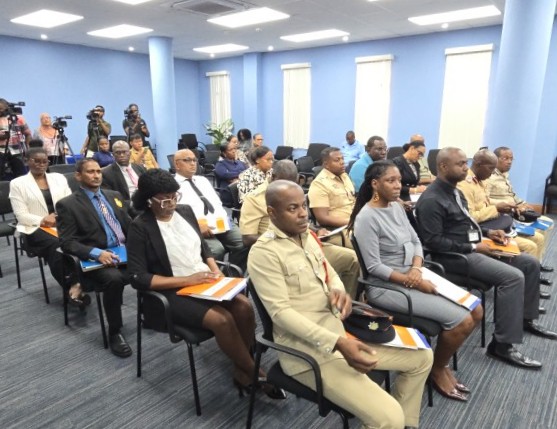
Guyana joins Early Warning System to tackle “new psychoactive substances”
Guyana has taken a significant step in the fight against New Psychoactive Substances (NPS) by launching its Early Warning System (EWS) on Thursday, October 9, 2025. The initiative, spearheaded by Curt Richards, Head of the Guyana Drug Information Network (GUYDIN), aims to intercept and reduce the use of these synthetic drugs, which mimic traditional narcotics like marijuana and cocaine but often evade legal classification and detection. The EWS will connect law enforcement, health, and forensic sectors in real time, enabling rapid information sharing and proactive measures to prevent the spread of these substances. James Singh, Head of the Customs Anti-Narcotics Unit (CANU), emphasized that the system is designed to anticipate and prevent harm rather than react after the fact. The EWS aligns with international best practices and involves collaboration with the Ministry of Home Affairs, the Guyana Forensic Sciences Laboratory, the Ministry of Health, and international partners such as the Organisation of American States’ Inter-American Drug Abuse Control Commission (CICAD) and Italy. Pernell Clarke, a CICAD Specialist, highlighted the evolving nature of the Caribbean’s drug trade, noting the increasing presence of synthetic drugs like fentanyl, which are often mixed with other substances, leading to overdoses and deaths. Guyana’s EWS launch follows similar initiatives in six other Caribbean countries, including Barbados and Jamaica, where synthetic drugs have already caused significant public health issues. The government of Guyana has pledged to sustain the EWS as a permanent tool for national safety and regional cooperation.
-

Caribbean Airlines Cancels Regional Flights for October 10 Due to Tropical Storm Jerry
Caribbean Airlines has announced significant schedule changes to its regional flights due to the adverse weather conditions caused by Tropical Storm Jerry. The airline issued a travel advisory on October 9, 2025, alerting passengers to disruptions expected on October 10. Affected customers with confirmed bookings can rebook their flights without incurring change fees, provided the rebooking is done in the same cabin and completed by November 6, 2025. All changes must be processed through the Caribbean Airlines Call Centre or at a Caribbean Airlines Ticket Office. However, the airline has clarified that it will not cover transportation costs to alternate airports or hotel expenses for affected passengers. Specific flights, including BW 266 (Trinidad to St. Maarten), BW 267 (St. Maarten to Trinidad), BW 268 (Trinidad to Antigua to St. Kitts), and BW 269 (St. Kitts to Antigua to Trinidad), have been canceled. Passengers on these routes will be accommodated on the next available services. Caribbean Airlines encourages travelers to register for real-time flight notifications and updates via their website or check the flight status tab on the homepage for the latest information.