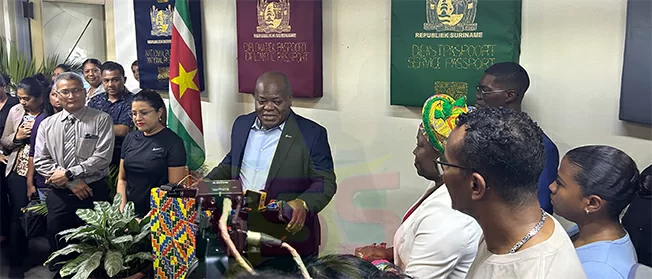
In a highly anticipated event attended by media representatives and staff from the Central Bureau of Civil Affairs (CBB), eight players from the Surinamese national football team were officially presented with their new passports on Thursday. The ceremony, held at the CBB headquarters, was graced by the presence of CBB Director Anastatia Pokie and Suriname’s Minister of Home Affairs, Marinus Bee, both of whom visibly enjoyed the occasion. Director Pokie took the opportunity to deliver a motivational speech ahead of the team’s World Cup qualifier against Guatemala later that evening. She emphasized the significance of the match, coinciding with the Day of the Maroons, urging the players to honor their homeland with a strong performance. Minister Bee, in a brief address, expressed immense pride in the current generation of Natio players and reaffirmed the government’s unwavering support. He highlighted the symbolic importance of the team, stating that they represent not just Suriname’s 600,000 residents but also the 1.5 million Surinamese people worldwide. Brian Tevreden, the national team’s general manager, thanked Minister Bee and the CBB for expediting the passport issuance. Tevreden has been instrumental in securing eligibility for players of Surinamese descent who previously lacked Surinamese passports. For this international window, he successfully integrated three new players into the squad: Jay-Roy Grot, a striker from Danish club Odense; Djavan Anderson, a right-back from Saudi Arabian club Al-Ittifaq; and Djenairo Daniels, a forward from Scottish club Kilmarnock. Among the players receiving their new e-passports were returning playmaker Tjaronn Chery, forward Sheraldo Becker, captain Shaquille Pinas, defender Dion Malone, goalkeeper Warner Hahn, and Robinhood midfielder Renske Adipi. Left-back Ridgeciano Haps, who collected his travel document with a broad smile, remarked that while the passport is essential for eligibility, his connection to Suriname runs deeper than any paperwork.
作者: admin
-
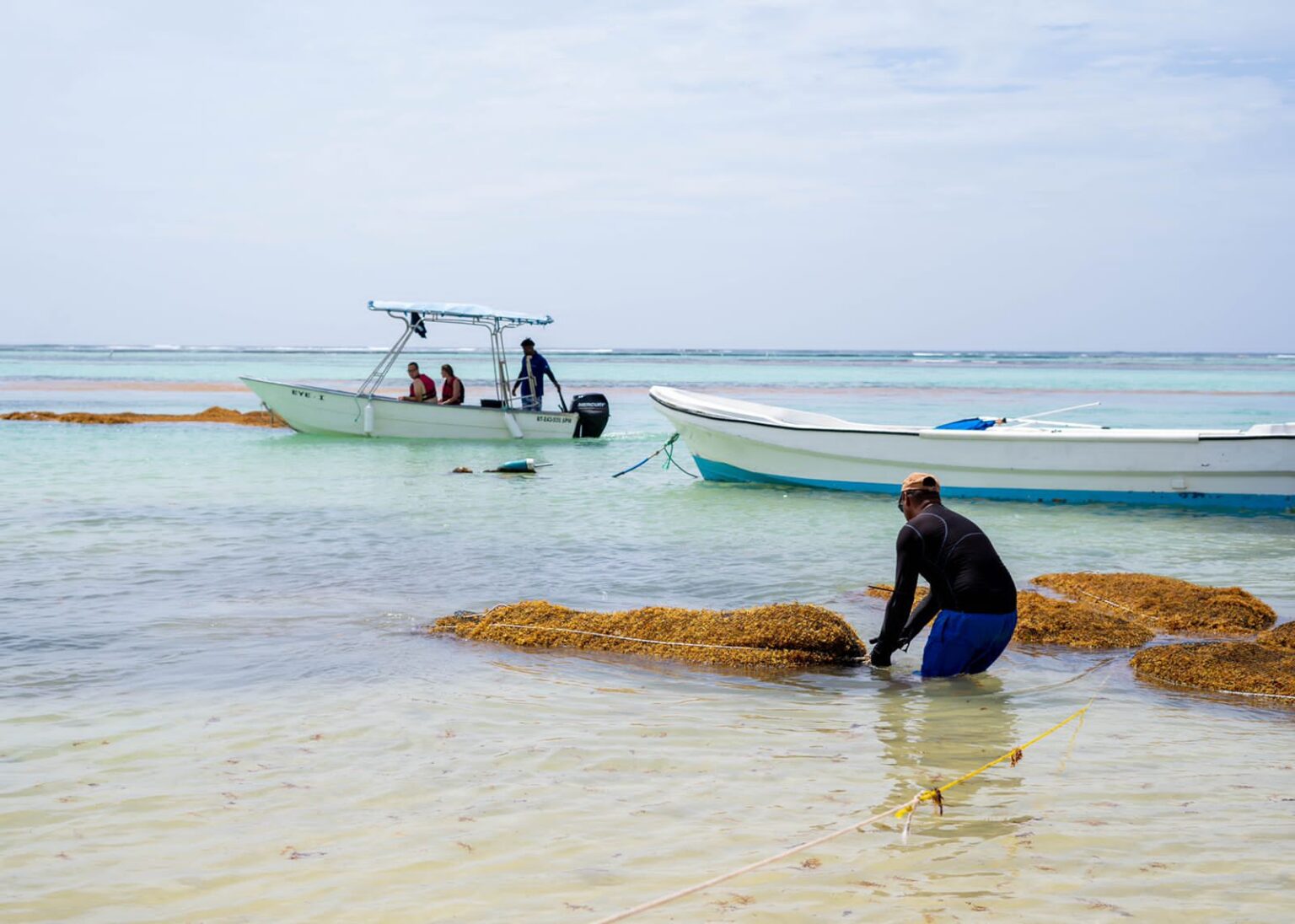
Government to introduce law turning sargassum into economic opportunity
The Dominican government has unveiled a comprehensive legislative package aimed at modernizing the nation’s economy and fostering sustainable development as part of the RD 2036 Meta Plan. The initiative, presented to the National Congress, includes 14 proposed laws designed to address key challenges and opportunities in the country. One of the standout proposals is the Law for the Protection of Tourist Areas from Sargassum, which seeks to establish a legal framework for the sustainable management of the invasive seaweed. Minister of the Presidency José Ignacio Paliza outlined the plan during a meeting with senators, emphasizing its focus on innovation and environmental stewardship. The proposed law would classify sargassum as special management waste, setting guidelines for its collection, treatment, and economic reuse. By encouraging private sector involvement in converting sargassum into valuable products, the initiative aims to mitigate the environmental and economic impacts of the recurring seaweed influx on Dominican beaches and coastal communities. This legislative effort underscores the government’s commitment to transforming ecological challenges into opportunities for green development and economic growth.
-

Antiguan Chef Kareem Roberts Leads Cambridge Restaurant to Prestigious UK Dining Awards
Chef Kareem Roberts, an Antiguan-born culinary maestro, has reached a significant pinnacle in his career. The Burleigh Arms, the Cambridge gastropub where he serves as head chef, has been awarded two AA Rosettes, one of the United Kingdom’s most prestigious dining accolades. This recognition honors establishments that demonstrate exceptional precision, creativity, and consistency in their culinary offerings, with a focus on high-quality ingredients and refined techniques. Roberts, who has spent several years honing his craft in the UK, expressed immense pride in this achievement, describing it as a testament to his team’s dedication and his Antiguan heritage. ‘This award validates our journey and the passion we’ve poured into The Burleigh Arms,’ Roberts remarked. The gastropub has become a top dining destination in Cambridge, celebrated for its innovative modern cuisine. Last year, it was also listed among the Top 100 Pubs in the UK, further solidifying its reputation in the competitive culinary landscape. Building on this success, Roberts is set to release his first cookbook, a project that reflects his Caribbean roots and his belief in storytelling through food. ‘These are inspirational steps for a son of the soil,’ he said, hoping his journey from Antigua to Cambridge inspires others to pursue their dreams.
-

Israël en Hamas bereiken akkoord over eerste fase wapenstilstand
In a significant diplomatic breakthrough, Israel and Hamas have agreed to the first phase of a ceasefire in Gaza, marking a pivotal moment in the ongoing conflict. The agreement, finalized on Thursday after weeks of intense negotiations in Sharm el-Sheikh, Egypt, was brokered with the mediation of the United States, Egypt, and Qatar. Both parties, along with U.S. President Donald Trump, confirmed the signing of the deal, which includes the release of hostages and Palestinian prisoners, as well as a partial withdrawal of Israeli troops from certain areas of the Gaza Strip. According to Reuters, the initial phase involves Hamas releasing all remaining Israeli hostages in exchange for hundreds of Palestinian detainees. Additionally, Israel will withdraw its forces to a pre-determined ‘initial line’ and permit humanitarian aid across all regions of Gaza. International reactions have been cautiously optimistic, with the United Nations describing the agreement as a ‘moment of hope’ while emphasizing the critical importance of compliance. The Palestinian Authority hailed the deal as a ‘necessary humanitarian breakthrough,’ while Israeli opposition leaders urged vigilance and oversight during its implementation. However, uncertainties remain regarding Gaza’s future governance and Hamas’s role in the second phase of negotiations, which will focus on reconstruction and demilitarization. Despite the immediate enforcement of the ceasefire, reports of sporadic clashes in parts of Gaza persist. Diplomats stress that adherence in the coming days will be decisive for the agreement’s success. President Trump called the deal a ‘historic moment that gives peace a chance,’ while Hamas spokesperson Basem Naim stated that ‘the Palestinian people yearn for security and dignity after years of suffering.’ An international monitoring team will oversee compliance in the weeks ahead, with hopes that this agreement lays the groundwork for a second phase aimed at sustainable peace, reconstruction, and political reform in Gaza.
-

Column: Politieke vingers in de oliepot
The recent announcement of new appointments to the Board of Commissioners (RvC) at Staatsolie, Suriname’s state-owned oil company, has reignited debates over the politicization of oversight in state enterprises. The practice of distributing positions based on political loyalty rather than expertise or experience has become a recurring issue, undermining the integrity of governance. While it is common for governments to appoint their allies to key roles, the prioritization of party allegiance over competence poses significant risks, particularly in sectors critical to the national economy.
-

News : Zapping…
Haiti witnessed a series of significant events this week, reflecting the nation’s multifaceted challenges and achievements. On October 9th, two armored vehicles belonging to the Bank of the Republic of Haiti (BRH) were targeted by heavily armed individuals at Champ-de-Mars. One vehicle carried soldiers from the Haitian Armed Forces (FAD’H), while the other was unoccupied. Fortunately, no injuries were reported in the attack. Meanwhile, in Delmas, Mayor Wilson Jeudy unveiled the municipal budget for the 2025-2026 fiscal year, projecting a record one billion gourdes. This marks a substantial increase from the previous year’s 800 million gourdes, aimed at enhancing the municipality’s investment capacity. On a brighter note, Prime Minister Alix Didier Fils-Aimé praised the Haitian national football team, the Grenadiers, for their 3-0 victory against Nicaragua in the 2026 World Cup qualifiers, expressing national pride in their performance. However, security concerns persist, as eight armored vehicles sent by the Haitian National Police (PNH) to Petite-Rivière de l’Artibonite were blocked by protesters demanding action against the ‘Gran Grif’ gang. In a separate development, the French Institute in Haiti is hosting the ‘Wild Haiti’ exhibition, showcasing the country’s rich biodiversity. Internationally, U.S. President Trump signed an executive order imposing a $5,000 fine for each illegal alien aged 14 or older detained, with no possibility of appeal.
-
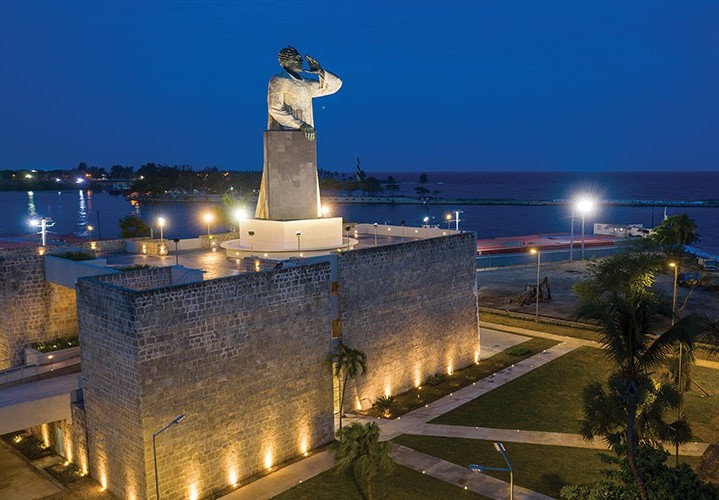
Parlacen honors Fray Antonio de Montesinos for defense of Indigenous rights
In a significant historical tribute, the Commission on Indigenous and Afro-descendant Peoples of Parlacen commemorated Fray Antonio de Montesinos (1475-1540), a Spanish Dominican missionary renowned for his groundbreaking 1511 Advent sermon. Delivered merely nineteen years after the discovery of the Americas, Montesinos’ sermon was a bold denunciation of the mistreatment of indigenous peoples on Hispaniola, advocating for their rights and dignity. His powerful message condemned the abuses of Spanish colonizers and called for adherence to principles of charity, justice, and Christian law in interactions with the native population. Montesinos’ advocacy played a pivotal role in shaping the Laws of Burgos (1512), enacted by King Ferdinand “The Catholic,” which aimed to regulate the treatment of indigenous peoples. His influence also extended to inspiring Bartolomé de las Casas, a fellow Dominican and lifelong defender of indigenous rights. The tribute took place at the Montesinos monument in Santo Domingo, a site inaugurated in 1983 and now a prominent tourist attraction. Angola Didiez, president of the Parlacen commission, led the event, emphasizing Montesinos as a historic figure who “marked a before and after” in the fight for human dignity.
-

Major supermarkets reaffirm Bajan-made sugar supply
Two prominent Barbadian supermarket chains, Massy Stores (Barbados) Ltd and Jordans Supermarket, have refuted claims by Minister of Agriculture Indar Weir that excessive sugar imports are harming the local sugar industry. Both retailers confirmed on Thursday that their shelves are stocked exclusively with domestically produced and packaged sugar, emphasizing their commitment to supporting local producers.
-
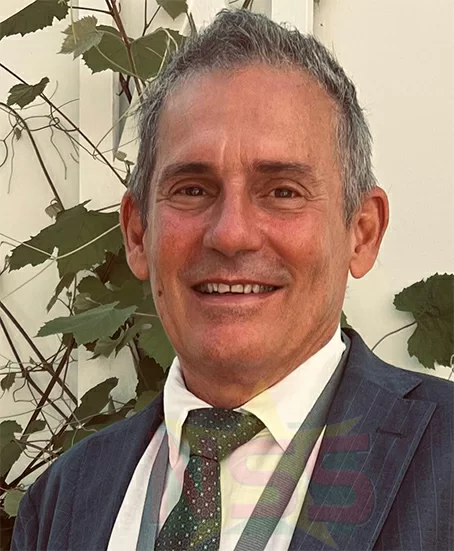
Rudolf Elias: Zonder plan wordt olie een vloek, geen zegen
Rudolf Elias, the former Managing Director of Staatsolie Maatschappij Suriname N.V., has been appointed as the President-Commissioner of the state-owned company. In an interview with Starnieuws, Elias expressed his enthusiasm for contributing once again to Suriname’s future. He emphasized that without a solid plan, oil—and even more oil—could become a curse rather than a blessing. “We must collectively advocate for a well-thought-out strategy,” he stated. Elias highlighted the importance of a broad societal discussion and a robust roadmap to counteract the so-called ‘oil curse,’ citing examples from Venezuela, Nigeria, and Guyana. He warned that without proper planning, 80% of Suriname’s population could face increasing poverty rather than prosperity. Alongside Elias, Sergio Akiemboto (Chief of Staff at the President’s Office), Aroon Samjhawan, Ewald Poetisi, Rudie Chin Jen Sem, Chantal Doekhie, and Edgar Caffé have been appointed to the new Board of Commissioners of Staatsolie. Elias served as Managing Director from 2015 to 2020, during which Suriname made its first significant offshore oil discoveries. Under his leadership, the company charted a strategic course towards participation in offshore projects and the enhancement of local content in the oil industry. Since leaving Staatsolie, Elias has remained active as an entrepreneur, consultant, and speaker on sustainable development and energy policy. Over the years, he has been a strong advocate for transparency, good governance, and long-term planning in the energy sector. His return as President-Commissioner is seen within the industry as a step towards strengthening policy, oversight, and continuity in the strategic development of the company.
-

SSA ‘wildcat strike’ prompts workers, management to review incentive scheme
Tensions between workers and management at the Sanitation Service Authority (SSA) in Barbados are being urgently addressed following a recent wildcat strike that disrupted refuse collection services across the island. The dispute centers around a performance incentive scheme tied to specific operational goals, which workers claim has been unfairly implemented. Discussions, currently at a sensitive stage, aim to determine whether changes to the scheme are necessary. A source close to the talks revealed that the industrial action was prompted by dissatisfaction with the payments made under the scheme, despite targets not being met. In July, refuse collectors protested the amounts paid and other working conditions, leading to a stoppage that left collection vehicles idle and raised concerns about service disruptions. The performance allowance was paid even though only 34% of the targets were achieved, a decision management described as a gesture of good faith. Workers also raised issues regarding personal protective equipment (PPE) and back pay. A follow-up meeting between the SSA and the National Union of Public Workers (NUPW) has taken place, with both parties working to ensure alignment before the next payment cycle. SSA spokesman Carl Padmore confirmed the strike was in response to the incentive payments, emphasizing the scheme’s intent to motivate staff through clearly defined targets. While progress is being made, the situation remains delicate as both sides strive for a resolution.