作者: admin

  • Trade unionists gear up to train future leaders for changing workplace

    Trade unionists gear up to train future leaders for changing workplace

    In a strategic response to evolving workplace dynamics, the Congress of Trade Unions and Staff Associations of Barbados (CTUSAB) has inaugurated an intensive leadership development program aimed at cultivating a new generation of trade union representatives. The two-day workshop, convened at the Ministry of Labour conference facility in Warrens, marks a significant investment in strengthening worker representation through comprehensive skill development.

    Under the thematic framework ‘Building Strong Workplace Representation,’ CTUSAB President Ryan Phillips outlined the program’s critical importance in addressing generational transitions within union leadership. “Our analysis reveals a pressing need to develop competent successors as veteran unionists retire,” Phillips stated during proceedings. “Emerging leaders require systematic training in practical union operations to effectively navigate contemporary labor challenges.”

    The curriculum delivers rigorous instruction in multiple essential domains: grievance resolution protocols, Barbados employment legislation, tribunal procedures, and governance principles. Participants receive specialized training in financial oversight mechanisms and strategic decision-making processes within statutory boards and national institutions.

    Phillips emphasized the critical intersection between representative training and national development: “Board-level representation directly shapes policy direction, financial accountability, and strategic planning. Without proper preparation, union representatives cannot adequately protect worker interests or contribute substantively to national progress.”

    Noting improved engagement across essential services, Phillips reported increased participation from police, fire, and prison service personnel—a development signaling broader organizational inclusivity. The initiative further prioritizes financial sustainability through enhanced local, regional, and international partnerships.

    The union movement demonstrates growing influence as domestic social organizations increasingly seek collaborative opportunities with CTUSAB. This trend reflects rising institutional credibility and presents opportunities for expanded societal impact.

    Future expansion plans include educational outreach through revitalized school programs and targeted youth initiatives. CTUSAB is preparing governmental proposals addressing youth development challenges, aiming to channel young Barbadians toward productive engagement while countering negative social influences through meaningful workforce participation.

  • BWU launches drive to upgrade shop steward training

    BWU launches drive to upgrade shop steward training

    In a significant modernization effort, the Frank Walcott Labour College has initiated a comprehensive strategic planning program to fundamentally transform how the Barbados Workers’ Union (BWU) prepares its shop stewards for contemporary workplace challenges. This initiative represents a paradigm shift from reactive, occasional training sessions to a continuous, structured developmental framework designed to meet the complexities of today’s rapidly evolving labor environment.

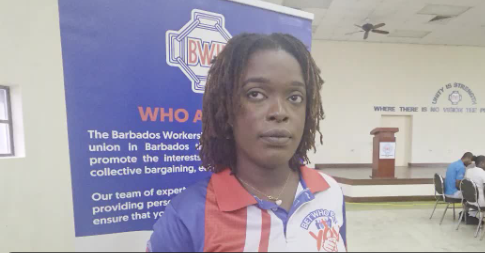
    The BWU has partnered with the government’s workforce development program, bringing together union representatives for a collaborative planning exercise. Speaking at the union’s Harmony Hall headquarters, Senator Roshanna Trim, BWU Training and Education Co-ordinator, emphasized that technological advancements and evolving labor legislation have created an increasingly complex industrial relations landscape requiring stewards to develop multidimensional capabilities.

    Senator Trim elaborated that modern shop stewards must extend beyond traditional grievance management to interpret sophisticated legislative frameworks, navigate changing organizational cultures, and engage constructively with management in digitalized work environments. “The future of labor representation demands leaders who are not only knowledgeable about established processes but also adaptable, strategically minded, and technologically aware,” Trim stated, characterizing the initiative as “a deliberate strategic intervention to ensure we remain fit for purpose.”

    A cornerstone of this educational transformation involves enhanced collaboration with the National Transformation Initiative (NTI). Rafael Saul, NTI Assistant Director, participated in the planning session to announce the relaunch of the “BWU Hub”—a dedicated digital platform providing stewards with direct access to curated professional development courses. These resources emphasize “success skills” including emotional intelligence, advanced communication techniques, negotiation strategies, and leadership development to complement technical training.

    “We aim to empower shop stewards to become exceptional representatives and ambassadors who can bring these upskilling opportunities back to their respective organizations,” Saul explained.

    The college is adopting an inclusive approach, actively soliciting honest feedback from shop stewards to shape the future curriculum. By centering workers in the planning process, the BWU intends to create a sustainable leadership cultivation roadmap that maintains the union’s relevance as a worker-focused organization in an era of unprecedented workplace transformation.

  • Caribbean Pushes for Stronger Voice in Global Fossil Fuel Phase-Out Talks

    Caribbean Pushes for Stronger Voice in Global Fossil Fuel Phase-Out Talks

    Caribbean leaders and climate experts convened in Saint Lucia this week to consolidate the region’s position ahead of pivotal international negotiations on fossil fuel phase-out. The strategic gathering brought together senior government officials and civil society representatives amid stalled global climate discussions regarding financing and management of a equitable transition from oil, gas, and coal.

    Regional participants emphasized the urgency of immediate action, citing recent data showing fossil fuel production continues to exceed levels compatible with the Paris Agreement’s 1.5°C warming limit—a threshold Caribbean nations vigorously advocated for. Dr. James Fletcher, Executive Director of the Caribbean Community Climate Change Centre, stressed that the region’s diplomatic credibility hinges not only on its climate vulnerability but on presenting concrete proposals. “Our calls for justice must be matched with clear frameworks for concessional finance, debt reform, renewable energy scaling, and social protections for vulnerable communities,” Fletcher asserted.

    The meeting served as a preparatory session for the First International Conference on Transitioning Away from Fossil Fuels, scheduled for late April in Santa Marta, Colombia, co-hosted by Colombia and the Netherlands. Caribbean advocates highlighted their frontline experience with climate impacts, with Theresa Rodriguez-Moodie of the Jamaica Environment Trust detailing the devastating aftermath of Hurricane Melissa—including destroyed infrastructure, massive displacements, and agricultural devastation.

    Financing mechanisms emerged as a critical concern, with Charlin Bodlee of the Caribbean Centre for Renewable Energy noting significant funding gaps in implementing climate commitments. Bodlee emphasized that current climate finance represents only a fraction of needs, with loan-based approaches exacerbating fiscal strain rather than building long-term resilience.

    Alex Rafalowicz of the Fossil Fuel Treaty Initiative warned that continued fossil fuel expansion not only accelerates climate change but exacerbates public health crises, biodiversity loss, and plastic pollution, presenting profound risks to planetary life systems.

  • Grave Tampering Suspect Ordered Psychiatric Evaluation

    Grave Tampering Suspect Ordered Psychiatric Evaluation

    A disturbing case of grave desecration has led to judicial intervention in Belize City, where suspect Jonathan Abner Flores faces serious criminal charges. The 33-year-old resident of Mile 15 on the George Price Highway appeared before the Belize City Magistrate’s Court on Wednesday following allegations of tampering with a recently buried body in Hattieville.

    Flores stands formally charged with two criminal offenses: Harm of a Dead Body and Disinterment of a Body. The court proceedings took an unusual turn when Senior Magistrate Martha Williams expressed substantial concerns regarding the defendant’s mental capacity to participate in the legal process. Consequently, the magistrate ordered a comprehensive psychiatric evaluation before proceeding with the case, and no plea was entered during the hearing.

    According to police reports, the incident occurred on Sunday, March 1, when the tomb of a 63-year-old woman—buried just one day earlier after dying from natural causes—was violated. Assistant Commissioner of Police Hilberto Romero, Head of the National Crimes Investigation Branch, described the scene: “The tomb had been broken, the front portion, and the body had been tampered with.”

    Following the discovery, a medical examiner conducted a thorough inspection of the remains before they were properly reinterred. During court proceedings, Flores reportedly exhibited disruptive behavior with multiple loud outbursts, further supporting the court’s decision to mandate psychological assessment.

    The magistrate set bail at $1,500, but Flores was unable to meet the financial requirement and was subsequently escorted to Belize Central Prison pending his psychiatric evaluation and further court proceedings.

  • STATEMENT: The Government of Dominica on the situation in the Middle East

    STATEMENT: The Government of Dominica on the situation in the Middle East

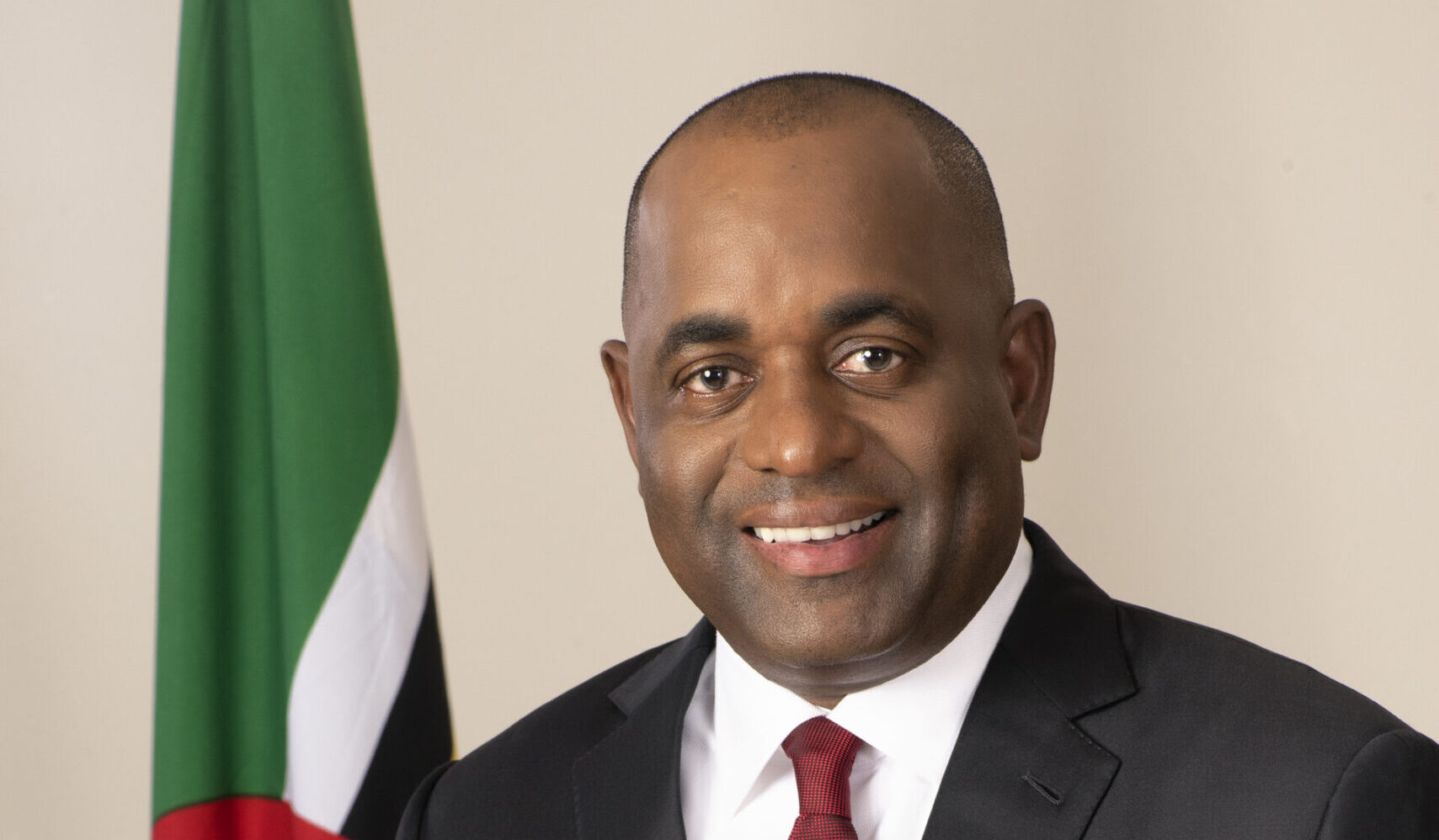
    The Commonwealth of Dominica has issued a formal statement expressing grave apprehension regarding the rapidly deteriorating security situation in the Middle East. Prime Minister Roosevelt Skerrit’s government highlighted particular concern about recent developments that have significantly increased instability throughout the Gulf region.

    In an official communiqué dated March 04, 2026, the Dominican government emphasized the critical necessity for measured leadership and diplomatic engagement during this volatile period. The administration stressed that even the most complex international disagreements must be resolved through peaceful dialogue and strict adherence to established international legal frameworks.

    Of specific concern to Dominica are actions that jeopardize national sovereignty, endanger civilian populations, and exacerbate instability in an already fragile region. The government warned that any expansion of hostilities would inevitably compound human suffering, create greater uncertainty, and undermine prospects for sustainable peace.

    Dominica has publicly commended several Gulf nations—including Saudi Arabia, Qatar, the United Arab Emirates, Kuwait, and Bahrain—for demonstrating commendable leadership and restraint during the crisis. The island nation expressed firm support for all legitimate international and regional initiatives focused on conflict de-escalation, humanitarian assistance, and establishing equitable lasting peace.

    The government concluded by extending solidarity to all affected by the ongoing crisis while calling for wisdom and statesmanship from all involved parties. Dominica reaffirmed its belief that regional populations and the global community deserve a future built upon stability, constructive dialogue, and renewed hope.

  • She’s Been Found Safe!

    She’s Been Found Safe!

    Authorities in Belize have successfully located 13-year-old Ana Ramos, a first-form student at Belmopan Baptist High School who had been reported missing since last Friday. The Belize Police Department confirmed the positive development in an official statement released this afternoon.

    According to police communications, Ramos was found in northern Belize and is confirmed to be in safe condition. The investigation remains ongoing as authorities continue to examine the circumstances surrounding her disappearance.

    The teenager was last seen on Friday morning after leaving for school, prompting her family to file a missing person report over the weekend when she failed to return home. Earlier investigative efforts had revealed surveillance footage showing the young student boarding a bus at the Belmopan bus terminal, providing crucial leads for the search operation.

    Ingrid Ávila, Ramos’s mother, has confirmed that the family is currently en route to the Corozal police station where additional details are expected to be provided by law enforcement officials upon their arrival. The family had previously appealed to the public through media channels for assistance in locating the missing teen.

    The successful resolution of this case has brought relief to the local community that had followed the developments with growing concern. Further updates regarding the investigation are anticipated following the family’s meeting with police authorities.

  • Construction commences on FIFA-funded Technical Development Centre

    Construction commences on FIFA-funded Technical Development Centre

    Grenada has officially entered the construction phase of a landmark FIFA-funded Technical Development Centre in Simon, St Andrew, signaling a new era for football infrastructure development in the country. The Grenada Football Association (GFA) celebrated the commencement with a groundbreaking ceremony attended by FIFA representatives, government officials, and community leaders.

    This state-of-the-art facility, financed through FIFA’s global football development program, represents a strategic investment in professionalizing Grenadian football. GFA President Marlon Glean characterized the project as a transformative moment that extends beyond physical infrastructure, emphasizing its role as an investment in youth development, coaching excellence, and institutional strengthening.

    The center will function as a comprehensive national hub featuring: grassroots and youth development programs; advanced coaching and referee education; women’s football initiatives; national team preparation facilities; and administrative capacity-building resources.

    Beyond its sporting significance, the project is expected to generate substantial economic benefits for the Simon community during construction while establishing a permanent base for organized football activities in the parish. The development aligns with the GFA’s broader infrastructure strategy, complementing existing investments in club support, women’s football, and international partnerships.

    President Glean emphasized the center’s role in enhancing Grenada’s competitive capabilities: “If Grenada is to compete regionally and internationally, we must build the systems and infrastructure that support excellence. Today’s commencement is another step toward that goal.”

    The GFA has committed to providing regular updates as the project advances, marking a significant milestone in the nation’s football development trajectory.

  • U-20 World Cup 2027 Qualifiers : Haiti qualifies in a historic comeback (video)

    U-20 World Cup 2027 Qualifiers : Haiti qualifies in a historic comeback (video)

    In a stunning display of resilience, Haiti’s Under-20 national football team secured their advancement to the final qualifying round for the 2027 FIFA U-20 World Cup with a dramatic 2-1 victory against host nation Curaçao on March 4th, 2026. The match, played at Willemstad’s Rinaldo Jean Francisca Stadium, saw the Haitian Grenadiers overcome a late deficit with two goals in the final moments of regulation and stoppage time.

    The CONCACAF Champions League qualifier appeared destined for disappointment when Curaçao’s Damienthly Bernardina converted a 63rd-minute penalty, putting the hosts ahead 1-0. As the match approached full time, Haiti’s prospects of advancing seemed increasingly dim.

    However, in a remarkable turnaround, midfielder Miguel Joseph delivered a spectacular equalizer in the 90th minute with a perfectly executed free kick that found the top right corner of the net. The dramatic equalizer set the stage for an even more sensational conclusion when substitute Kervens Romulus scored the decisive header in the 93rd minute, completing the comeback and sending the Haitian squad into celebration.

    Under the guidance of Cuban coach Raúl González Triana, Haiti finished Group D with a perfect record of four victories, scoring 16 goals while conceding only once. The team’s impressive campaign included dominant performances against Saint Vincent and the Grenadines (4-0), Guyana (3-0 by forfeit), and Anguilla (7-0).

    The victory marks Haiti’s fourth consecutive win in the qualifying tournament and secures their place in the final round of the CONCACAF U-20 Championship, which serves as the pathway to the 2027 FIFA U-20 World Cup. The Haitian squad demonstrated particular strength throughout the group stage, finishing with 12 points ahead of Curaçao (9 points), Saint Vincent and the Grenadines (6 points), Guyana (3 points), and Anguilla (0 points).

  • Wie is Mojtaba Khamenei, de favoriete opvolger van Iran’s Opperste leider?

    Wie is Mojtaba Khamenei, de favoriete opvolger van Iran’s Opperste leider?

    Following the assassination of Iran’s Supreme Leader Ayatollah Ali Khamenei in Saturday’s airstrike, attention has turned to his second son Mojtaba Khamenei as the leading candidate to assume the Islamic Republic’s highest authority. The 56-year-old cleric, who survived the same attack that killed his father, has spent decades cultivating critical alliances with Iran’s power structures.

    Multiple Iranian sources confirm that Mojtaba has emerged as the establishment favorite to succeed his father, leveraging his extensive connections within the Islamic Revolutionary Guard Corps (IRGC) and influence among the clerical establishment. As a mid-ranking cleric with the title Hojjatoleslam, he has consistently opposed reformers seeking engagement with the West, particularly regarding Iran’s nuclear program.

    Kasra Aarabi, research director for IRGC studies at United Against Nuclear Iran, notes that Mojtaba commands significant support within the IRGC, especially among younger radical elements. “If Mojtaba remains alive, he is very likely to succeed his father,” Aarabi stated, describing him as already operating as a “de facto mini-supreme leader.”

    The Assembly of Experts, responsible for appointing the new leader, has “almost reached a decision” according to member Ayatollah Ahmad Khatami, who spoke to state television without naming specific candidates. The Supreme Leader holds ultimate authority over state matters including foreign policy and nuclear decisions.

    Should he assume power, Mojtaba would inherit substantial challenges including a economy crippled by U.S. sanctions and potential domestic unrest. Many Iranians have demonstrated willingness to protest for greater freedoms despite harsh government crackdowns.

    Born in 1969 in Mashhad, Mojtaba grew up during his father’s opposition to the Shah and later served in the Iran-Iraq war. He studied under conservative clerics in Qom, Iran’s center of Shia theology. Though never holding formal government office, he functioned as his father’s gatekeeper according to insiders.

    His potential succession raises questions about dynastic politics in a country that overthrew a U.S.-backed monarchy in 1979. The U.S. Treasury sanctioned Mojtaba in 2019 for allegedly acting on his father’s behalf without official appointment, accusing him of collaborating with Quds Force commanders and Basij militia to advance regional ambitions and domestic repression.

    Mojtaba’s wife, who perished in Saturday’s attack, was the daughter of prominent hardliner and former parliament speaker Gholamali Haddadadel, further cementing his establishment connections. His physical resemblance to his father and status as a sayyed (descendant of Prophet Muhammad) marked by his black turban contribute to his symbolic legitimacy, though critics note his clerical rank remains below the Ayatollah status held by his father and Republic founder Khomeini.

  • Final Year in Office: What’s Left on Mayor Wagner’s Agenda?

    Final Year in Office: What’s Left on Mayor Wagner’s Agenda?

    As Belize City Mayor Bernard Wagner commences his final year in office, his administration remains actively engaged in executing several transformative urban development initiatives. With numerous infrastructure projects currently underway, many are projected to reach completion beyond the conclusion of Mayor Wagner’s term in 2027.

    The Mayor emphasized the continuity of municipal governance, stating, “The city does not end with Mayor Wagner or did not begin with Mayor Wagner,” highlighting that city development transcends any single administration. Among the priority projects receiving focused attention during these concluding months are the comprehensive redevelopment of the Albert Street bus terminal and the modernization of the Yabra Fish Market facility.

    In parallel developments, the Belize City Council unanimously reaffirmed Eluide Miller as Deputy Mayor for the 2026-2027 term during Tuesday’s council session. This decision ensures leadership continuity as the administration works toward completing its municipal agenda.

    Mayor Wagner is scheduled to provide detailed insights into his administration’s remaining priorities and projected timelines during an exclusive interview on News 5 Live, airing tonight at 6 p.m. The segment promises comprehensive coverage of the ongoing infrastructure enhancements, including road improvements, drainage system upgrades, and broader urban renewal efforts that have characterized Wagner’s tenure.