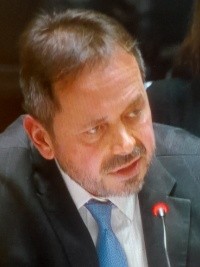
Carlos Ruiz Massieu, the newly appointed Special Representative of the UN Secretary-General and Head of the United Nations Integrated Office in Haiti (BINUH), delivered his inaugural address to the UN Security Council on October 22, 2025. In his comprehensive statement, Massieu painted a stark picture of Haiti’s current realities, emphasizing the country’s escalating security crisis, political instability, and humanitarian challenges.
作者: admin
-

Uber rolls in, pledging safety, opportunity – for taxis only
Uber, the global ride-hailing giant, has officially introduced its services in Barbados, marking a significant milestone in the Caribbean region. The launch event, held at the Hilton Barbados Resort, highlighted Uber’s commitment to modernizing transportation while positioning itself as a collaborator rather than a competitor to the local taxi industry. Over 400 licensed taxi operators have already joined the Uber Taxi platform, which is exclusively designed for registered taxi drivers. Belén Romero, Uber’s Regional General Manager for the Andean, Central America, and Caribbean region, emphasized the company’s goal to address a critical gap in Barbados’ transport market. Romero expressed enthusiasm about supporting tourism and providing a seamless experience for Uber’s 1.9 million global users, many of whom travel internationally. She also underscored the benefits for local drivers, including enhanced earning opportunities, access to innovative technology, and improved safety features. Romero welcomed competition from local taxi associations planning to develop their own ride-hailing apps, stating that it fosters innovation and improves user experiences. Additionally, Uber is collaborating with the Barbados Police Service to strengthen safety protocols, leveraging its global team of experts and over 30 safety features to ensure passenger and driver security. The Uber Taxi product in Barbados offers drivers flexibility, access to a global user base of 149 million, and advanced safety tools. Alongside its core ride-hailing service, Uber has introduced Uber Hourly for time-based bookings, ideal for island tours, and Uber Reserve, allowing trips to be scheduled up to 90 days in advance. The launch has sparked discussions within the transport sector, with traditional taxi operators advocating for fair regulations and a level playing field.
-

Health : Inauguration of the AMHE-GRAHN-Monde Community Health Center in Milot
A groundbreaking development in community healthcare has emerged in Haiti with the inauguration of the AMHE-GRAHN-Monde Community Health Center in Milot. Located in the northern commune of Génipailler, this state-of-the-art facility is the result of a collaborative effort led by the Reflection and Action Group for a New Haiti (GRAHN-Monde), with significant financial backing from the Haitian Medical Association Abroad (AMHE) USA-Canada, the Rally of Haitian Nurses and Auxiliary Nurses of Haitian Origin of Quebec (RIIAOHQ), and numerous international donors. Dr. Samuel Pierre, Co-founder and President of GRAHN-Monde, emphasized the center’s mission to deliver high-quality, accessible healthcare tailored to the needs of the local population. The facility offers a comprehensive range of services, including primary healthcare, mental health support, infectious disease screening and treatment, sickle cell disease care, eye care, cardiovascular disease management, and maternal and child health services. Beyond medical care, the center prioritizes health education, aiming to foster healthier lifestyles and regular access to healthcare. By providing essential services at an affordable cost, the AMHE-GRAHN Center addresses a critical gap in healthcare access, potentially reducing preventable mortality in the region. This initiative highlights the vital role of diaspora contributions, local organizations, and healthcare professionals in addressing Haiti’s ongoing multidimensional crisis and rebuilding its healthcare infrastructure.
-

Two youth anniversaries that represent the past, present, and continuity
In a historic gathering at the José Martí Memorial, Cuban President Miguel Díaz-Canel Bermúdez joined veterans and young leaders to commemorate the 65th anniversary of the Association of Young Rebels (AJR) and the 60th anniversary of the Juventud Rebelde newspaper. The event, attended by prominent figures such as Roberto Morales Ojeda, highlighted the enduring legacy of Cuba’s revolutionary youth movements and their media outlets.
Díaz-Canel emphasized the importance of unity and continuity within the revolutionary forces, drawing parallels between the AJR’s founding in 1960 and the establishment of the Juventud Rebelde in 1965. He underscored the significance of these milestones in shaping Cuba’s revolutionary identity and media landscape.
Founders of the AJR, including Amalia Catalá Álvarez and Luis Enrique Colomé Dagnesses, shared personal reflections on the challenges and triumphs of their generation. They praised the current youth for their resilience in the face of modern adversities, such as the sophisticated use of social media by ideological adversaries.
Leaders from the Union of Young Communists (UJC), the Federation of University Students (FEU), and the Federation of High School Students (FEEM) also spoke, detailing their efforts to engage young people in discussions on critical issues like the U.S. blockade, drug prevention, and community service.
Juana Carrasco Martín, a National Journalism Award winner, and Raciel Guanche Ledesma, a young reporter for Juventud Rebelde, discussed the evolving role of media in fostering critical thinking and community engagement. Yurisander Guevara, deputy director of Juventud Rebelde, highlighted the transformative impact of recent events on the UJC’s media strategy.
Díaz-Canel concluded the meeting by reflecting on the UJC’s motto, ‘Study, Work, and Rifle,’ urging young Cubans to embrace their revolutionary heritage, contribute to the nation’s development, and defend their sovereignty. He reaffirmed the necessity of socialism as the path to Cuba’s independence and prosperity, calling for collective participation and resilience in the face of ongoing challenges.
-
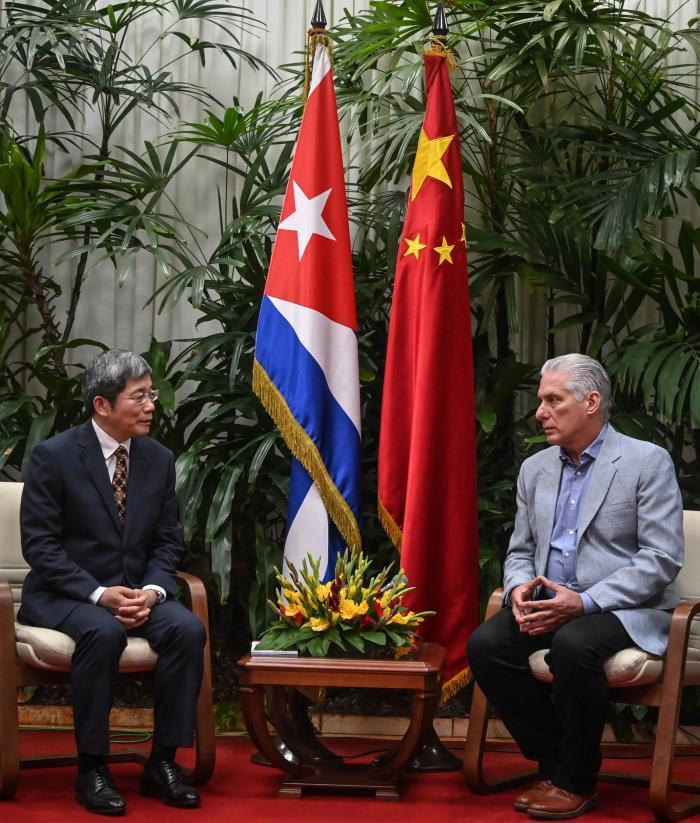
Cuba and China for strengthening cooperation in the study of the history of their revolutions and communist parties
In a significant diplomatic engagement, Miguel Díaz-Canel Bermúdez, the First Secretary of the Party’s Central Committee and President of Cuba, welcomed Li Zongyuan, Director General of the History Museum of the Communist Party of China (CPC), at the Palace of the Revolution in Havana. The meeting underscored the deepening ties between the two nations, particularly in the realms of historical and political collaboration. Li Zongyuan emphasized that the primary goal of his visit was to enhance cooperation between Cuban and Chinese institutions in studying the revolutionary histories and the roles of their respective Communist Parties. This visit follows Díaz-Canel’s earlier tour of the CPC Museum in Beijing, where he gained insights into China’s reform process and the CPC’s leadership under President Xi Jinping. Díaz-Canel highlighted the importance of interparty relations as the foundation of Cuba-China ties, describing both nations as building a ‘community with a shared future.’ He also expressed gratitude for the warm reception he received during his visit to China last September, which coincided with the 80th anniversary of the Victory in the Chinese People’s War of Resistance against Japanese Aggression. Li Zongyuan noted that 2025 marks the 65th anniversary of diplomatic relations between the two countries, a milestone celebrated through the exchange of congratulatory letters between Presidents Xi Jinping and Díaz-Canel. The CPC Museum, Li explained, plays a crucial role in preserving China’s revolutionary history and fostering bilateral relations. This visit marks the first international delegation of the CPC Museum, with Cuba chosen as the inaugural destination. The meeting was attended by high-ranking officials from both sides, including Hua Xin, China’s Ambassador to Cuba, and Emilio Lozada García, head of Cuba’s Department of International Relations.
-

Copyright Bill hailed as milestone for creative future
In a landmark move, Barbados has introduced sweeping reforms to its copyright legislation, marking a significant step forward in protecting the rights of creators and intellectual property holders in the digital era. The updated law, which revises the outdated 1988 Copyright Act, addresses modern challenges such as digital content and streaming, strengthens penalties for infringement, and grants the Copyright Society of Composers, Authors, and Publishers (COSCAP) the authority to take direct legal action on behalf of its members.
-

Aftrek van voorbelasting: hoe zit het nu?
The Value Added Tax (VAT) Law of 2022, which came into effect on January 1, 2023, has now become a familiar concept for entrepreneurs. However, as the Tax Administration begins its enforcement checks, it has become evident that certain aspects, particularly the deduction of input VAT, remain unclear. This article delves into the mechanics of input VAT deductions, exceptions, and why the 0% VAT rate, such as in supplies to contractors and subcontractors in the oil and gas sector, does not negate the right to deduct. Input VAT refers to the VAT paid by businesses on expenses like purchasing goods, hiring services, or office supplies. This VAT can be deducted from the tax on turnover, provided these expenses are used for taxable supplies. A fundamental principle of the VAT system is that the tax is ultimately borne by the end consumer, not the entrepreneur. Entrepreneurs act as intermediaries and can deduct the VAT paid on business expenses, provided there is a direct link to taxable supplies. Taxable supplies include goods or services subject to VAT rates like 10%, 5%, or 0%. Even supplies under the 0% rate are considered taxable, meaning input VAT on related costs remains deductible. For instance, supplies and services to contractors and subcontractors in the oil and gas sector, as per Annex 1 of the VAT Law, are subject to a 0% rate if they fall under the Petroleum Act 1990. This provision ensures that the right to deduct is preserved for suppliers or service providers. However, the 0% rate can lead to misunderstandings, with some assuming that no VAT charged means no right to deduct, which is incorrect. There are exceptions to input VAT deductions, such as expenses related to food, beverages, tobacco, gifts, staff benefits in kind, and personal cars (with some exceptions). These exclusions are legally mandated and apply to all VAT-registered businesses, including those subject to the 0% rate. In summary, input VAT is deductible if linked to taxable supplies, the 0% rate does not affect the right to deduct, and there are specific legal exceptions. Entrepreneurs must be prepared to substantiate how business expenses relate to taxable activities during Tax Administration checks.
-
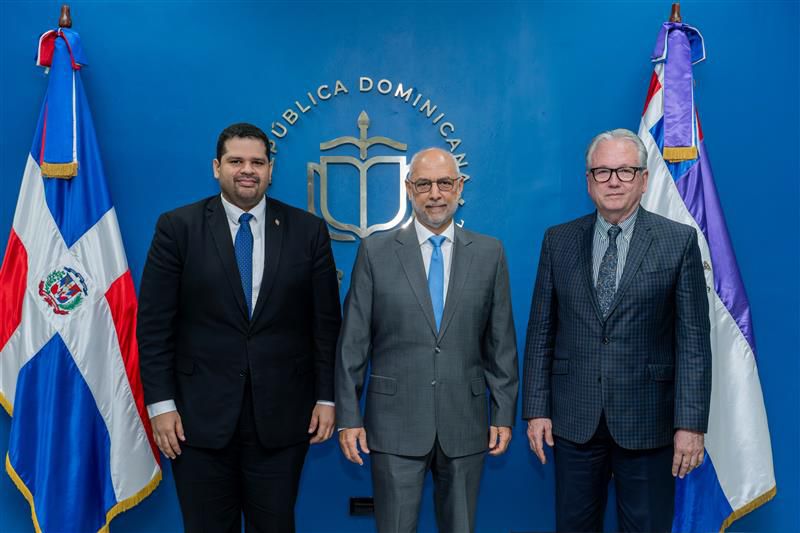
11th Ibero-American Legal Academies Congress coming to the Dominican Republic
The Dominican Republic is set to host the XI Congress of the Legal Academies of Ibero-America from October 24 to 25, 2023. This significant event will bring together prominent legal minds and academics from across Latin America, including Dominican President Luis Abinader and Supreme Court President Henry Molina. Organized by the Permanent Conference of Ibero-American Legal Academies in collaboration with the Dominican and Puerto Rican Academies of Jurisprudence, the Congress will delve into critical legal and judicial issues. Key topics on the agenda include judicial efficiency, democracy, arbitration, and the integration of artificial intelligence into the legal profession. The academic program, curated by Flavio Darío Espinal, president of the Dominican Academy, features four panels and four thematic tables. These sessions will explore judicial independence, post-war international relations, and the challenges faced by emerging legal professionals. Supreme Court President Henry Molina will deliver a keynote address focusing on judicial efficiency and democracy, highlighting regional progress and obstacles in justice administration. The event will also feature distinguished jurists from Mexico, Spain, and Puerto Rico, such as Silvia Carreño Coll, José Luis Seoane Spiegelberg, and Francisco Javier Gaxiola Fernández. The Congress will be broadcast live via Microjuris, Tirant Lo Blanch, and the National School of the Judiciary’s YouTube channels, ensuring widespread accessibility.
-

Storm Melissa : Situation Report #1, Partial Assessment
Haiti is grappling with the devastating impacts of Tropical Storm Melissa, as detailed in the Civil Protection Department’s Situation Report #1, released on October 22, 2025. The report, covering the period from October 21 to October 22, highlights the storm’s immediate effects and ongoing risks across multiple departments. Tragically, a 70-year-old man lost his life in Marigot, South-East, after being struck by a falling tree, while five individuals sustained injuries in Artibonite due to severe flooding. The storm has caused widespread disruption, with heavy rains triggering floods in Artibonite and Northwest departments, damaging farmland, livestock, and infrastructure. Landslides in Terre Neuve have further complicated transportation, particularly on the Maricolas-Dolan road. The Northeast department remains under unstable weather conditions, adding to the uncertainty. Forecasts predict intensified heavy rains in the southern half of Haiti, with estimates of 150-200 mm of rainfall, raising concerns of flash floods, landslides, and dangerous swells along the southern coast. Tropical Storm Melissa poses heightened risks to vulnerable communities, particularly in the Grand Sud and Ouest departments, where flooding and landslides could isolate populations and disrupt major roads. Coastal areas face additional threats from strong winds and swells exceeding 2 meters. In response, management committees are preparing shelters, with the Civil Protection Department urging heightened vigilance, preventive evacuations, and the closure of schools and large gatherings to mitigate risks. The situation demands immediate action to safeguard lives and minimize damage.
-

Police renew appeal for public help as gun seizures rise
Barbados law enforcement has amplified its appeal to citizens for assistance in tackling the proliferation of illegal firearms, as recent statistics reveal a notable surge in the seizure of guns and ammunition this year. Acting Police Commissioner Erwin Boyce disclosed during a press conference on Wednesday that authorities have confiscated 63 firearms so far in 2024, marking an increase from the 61 seized in the previous year. Additionally, 1,750 rounds of ammunition have been recovered this year, a significant jump from the 485 rounds seized last year. Boyce emphasized that while progress has been made, the fight against illegal firearms remains challenging, particularly due to the lack of actionable information from the public. He urged citizens to report any suspicious activities, stressing that timely information is crucial in preventing gun-related crimes. Boyce assured the public that the police would handle all tips with integrity, respecting individuals’ constitutional rights while ensuring the credibility of the information provided. He also highlighted the importance of collaboration between the police and border security agencies in curbing the influx of illegal arms. Despite advancements in technology and border management, Boyce pointed out that human factors, such as familial ties and personal incentives, remain the weakest link in securing borders. He commended customs and port authorities for their efforts but underscored the need for stricter oversight of human elements to bolster border security.