
KINGSTON, Jamaica — With just one week to go until the 2026 Prep School Championships kick off, defending title holder Sts Peter and Paul Preparatory School has received a game-changing J$1 million donation from local food service provider Express Canteen Services to fuel its elite youth sports program. The generous contribution, delivered this week by Express Canteen Managing Director Ryan Foster, marks a doubling of the company’s 2025 support and deepens a collaborative partnership that school leaders describe as foundational to the program’s rapid growth in recent years.
作者: admin
-
Bunting wants changes to HEART-Trust to reflect needs of evolving workforce
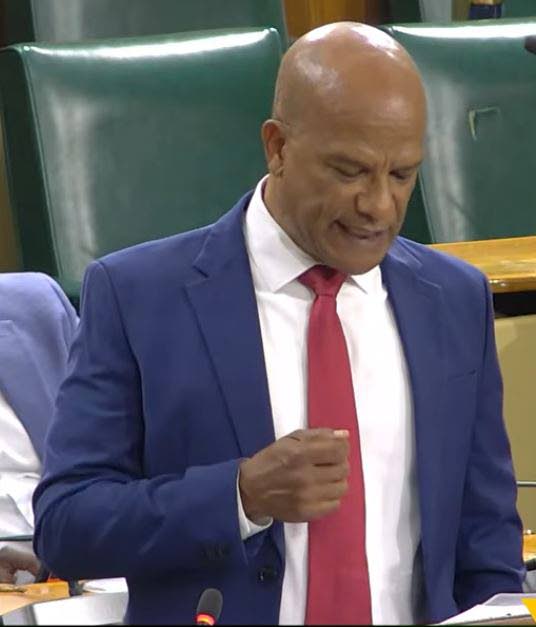
KINGSTON, Jamaica — As rapid technological disruption reshapes job markets across the globe, a senior Jamaican opposition official is pushing for urgent overhaul of the country’s leading public workforce training agency to keep pace with fast-changing industry demands. Peter Bunting, the Opposition Spokesperson on Productivity, Efficiency and Competitiveness, laid out his case for reform during an address to the House of Representatives’ Sectoral Debate on June 3.
In his remarks, Bunting highlighted a growing mismatch between the current operating model of the HEART/NSTA Trust and the speed of modern technological advancement. He noted that the institution updates its training curricula on multi-year cycles, while cutting-edge artificial intelligence tools and related industry technologies evolve at breakneck speed, with major shifts occurring every few months. This disconnect, Bunting argued, makes a fundamental re-evaluation of Jamaica’s national workforce development strategy unavoidable.
While Bunting acknowledged the meaningful contributions HEART has made to Jamaica’s economic and social development over decades, he emphasized that the agency was built for an industrial era far slower than today’s innovation-driven economy. The accelerating rate of technological change, he stressed, requires workers to constantly upskill and adapt — a need the current structure is not equipped to meet.
Bunting reiterated a longstanding opposition proposal to reframe HEART’s core mission: instead of operating as a direct training provider for every conceivable industry, the agency should transition into a dedicated workforce development funding body. Under this restructured model, HEART would back employer-led training programs that align with on-the-ground industry needs, match private sector investments in worker upskilling, and give job seekers and current workers streamlined access to accredited training providers across the country.
This shift, Bunting explained, would guarantee that public training resources are directed to meet actual, real-time labor market demands, rather than relying on outdated institutional projections of what future job markets will require. Beyond policy adjustments, he framed the reform as a matter of national competitiveness in an increasingly global race for talent and economic growth.
“ We must move from labour supply to talent supply. The winners over the next decade will be the countries that transform their workforce the fastest,” Bunting told the chamber.
-

The Santiago Monorail: the hidden side of a multi-million dollar investment
Proponents of Santiago’s high-profile Monorriel project have long framed the initiative as a transformative milestone for the Dominican city, touting its role as a catalyst for urban modernization, faster commutes, integration with existing cable car networks, and a polished new global image for the capital. Elevated rail infrastructure undeniably projects an aura of progress, and that shiny, visible narrative has dominated public discussion of the project from its inception. But behind this polished public face lies a far more contentious story of flawed planning, questionable contracting, skyrocketing cost overruns, and repeated delays that raise fundamental questions about whether the project prioritizes private business interests over the public good it claims to serve.
Critics of the process do not argue that Santiago does not need upgraded public transportation. The core dispute is not with the idea of improving mobility, but with how the monorail solution was chosen, and whether the city was forced to adapt to pre-selected technology and private business terms rather than selecting a solution tailored to its actual needs. Standard best practice for large public infrastructure projects follows a clear, public-centered sequence: first define the mobility problem, compare all viable alternatives against standardized metrics, then select the option that delivers the greatest benefit to the public at the lowest sustainable cost. In the case of the Santiago Monorail, all available evidence suggests this process was reversed: a specific technology was locked in early, separate contracts were structured around that choice, and the city was left to adjust its planning to fit the pre-determined project, rather than the other way around. This reversal inherently puts public interest at risk, as private interests end up guiding public planning that should remain the core responsibility of the state.
A 2019 study conducted by Spanish consulting firm IDOM, financed by the Inter-American Development Bank (IDB) and known as PIMUS, offers a stark counterpoint to the monorail approach. Rather than proposing a single iconic project, the study laid out a holistic, city-wide integrated mobility network built around actual passenger demand patterns. After modeling Santiago’s existing mobility flows, the study found that the city’s busiest corridors saw peak demand of only 1,150 to 1,400 passengers per hour in each direction. For this level of demand, the most technically and economically reasonable solution was not an oversized premium rail system, but high-capacity articulated buses operating on dedicated and semi-dedicated lanes. The proposed trunk-feeder bus network, designed to expand gradually as demand grew, would have covered most of the city at a total projected cost of just $471 million, including vehicles, stations, fare infrastructure, and road upgrades.
By comparison, the monorail concentrates nearly all its investment in a single corridor, with a stated capacity of 20,000 passengers per hour per direction – more than 14 times the maximum peak demand the PIMUS study identified. The cost gap is equally stark: the original 2022 civil works contract was awarded to the Santiago Monorail Transportation System Consortium (CSTM), a joint venture of Grupo Estrella and Sofratesa, for 25.028 billion pesos, equivalent to roughly $450 million at the time – nearly matching the entire cost of the alternative bus network. Since the award, major project adjustments including route changes and a new tunnel to bypass the Santiago Monument area have already been approved, and the final total cost is expected to rise dramatically, though updated figures have not been released to the public.
The technological portion of the project – covering rolling stock, signaling, electromechanical systems, power infrastructure, and commissioning – was awarded directly to French firm Alstom and local partner Sofratesa for roughly 500 million euros, with no new competitive bidding process. This structure creates a problem known as technological encapsulation: because the civil works were built specifically to fit Alstom’s monorail technology, no other supplier could fairly compete for the technological contract, as the existing infrastructure already dictates strict technical specifications that lock in the pre-selected provider. As a result, the state lost all leverage to compare alternative technologies, renegotiate better terms, or adjust the project to fit public needs. The total projected cost of the monorail has now ballooned to between $1.2 billion and $1.3 billion for the single corridor, according to recent official comments.
Delays have mirrored cost overruns. The original civil works contract stipulated an 18-month construction period, with work scheduled to wrap up between late 2023 and early 2024, followed by testing and commercial operation. The contract was awarded in March 2022, but Fitram – the Dominican Republic’s public Mass Transit Development Trust managing the project – has repeatedly pushed back completion dates. Initially, officials targeted the end of 2025, then pushed it to the first quarter of 2026, and now project operational testing will not begin until the end of 2026 – nearly four years after the original contract award, and 30 months past the original completion deadline. Much of the delay stems from the fact that core project details, including final engineering, land acquisition, urban adjustments, and inter-agency coordination, were not finalized before the contract was signed. Every additional month of delay adds further financial and fiscal costs that will ultimately be paid by Dominican taxpayers.
The project also exposes deep institutional and transparency flaws. Fitram operates as a public trust managing public funds for mass transit, but its structure has been used to reduce transparency rather than enforce accountability. Splitting the project into multiple separate packages for civil works, technology, rolling stock, oversight, and financing makes it far harder for the public and auditors to trace how public funds are being spent. Officials claim the trust is audited, but transparency requires far more than internal review: it requires full public access to updated total costs, all contract addenda, scope changes, adjusted timelines, risk assessments, and all fiscal commitments tied to the project. Without this information, public debate is trapped between one-sided official promotion and unproven criticism, rather than being grounded in verifiable facts. A project of this size requires more than public trust in officials; it requires formal, accessible public accountability.
This lack of accountability is not unique to the Santiago Monorail. The project is part of a broader regional wave of large public transport investment backed by multilateral loans, sovereign guarantees, and public trust structures, which have delivered a string of large urban rail projects including the Santo Domingo Metro expansion, new urban cable cars, and additional monorail proposals across the Dominican Republic. The issue is not that governments should invest in public transportation – improving mobility is a critical public good. The problem is that these investments are often advanced without full public disclosure of the comparative studies, risk assessments, updated costs, and long-term fiscal obligations that would allow citizens to verify whether the projects actually solve mobility problems, or simply add to public debt to build high-profile showcase infrastructure.
There is no question that the Santiago Monorail will deliver on its promise of a visible, modern, iconic landmark. What remains in question is whether it was ever the best solution for the city, once all costs, tradeoffs, and alternatives are considered. What Santiago needed was a comprehensive, sustainable mobility system tailored to the actual needs of its residents, not a single technological showcase built to impress. The monorail stands as a cautionary example of what happens when technology and branding override careful, public-centered planning. The visible result is a gleaming elevated train; the hidden cost is a $1.3 billion oversize investment concentrated in one corridor, marked by unrelenting cost growth, years of delay, and dozens of unanswered questions about public funds. Santiago deserved a better, more transparent, more accountable public decision – one that prioritized functional mobility for all over a single iconic infrastructure project.
-

Toddler dies in St Elizabeth crash
A devastating road accident in the southern parish of St Elizabeth, Jamaica has claimed the life of a young toddler, leaving local communities in mourning following a weekend collision between two passenger vehicles.
The fatal crash unfolded shortly before 10:30 a.m. Saturday along the busy Pepper main road, a frequently traveled corridor connecting rural communities in the parish. According to initial preliminary reports from local law enforcement, a Toyota Voxy minivan carrying four passengers—including the unnamed toddler—was traveling along the route when it collided head-on with an oncoming pickup truck.
Emergency response teams were dispatched to the crash site immediately after witnesses alerted authorities. All five people involved in the collision, including the driver of the pickup truck, suffered traumatic injuries and were urgently transported to Mandeville Regional Hospital, the primary public care facility for the region. Despite the rapid response of medical teams, the toddler was pronounced dead shortly after arriving at the hospital.
Local authorities have not yet released further details on the identities of other passengers, the severity of their injuries, or the ongoing investigation into what caused the collision. Road safety advocates have repeatedly highlighted high rates of fatal traffic accidents across Jamaica, many attributed to excessive speeding, poor road infrastructure, and non-compliance with seatbelt regulations, particularly for child passengers. This latest fatal crash is expected to reignite conversations about strengthening traffic safety measures across the island.
-

Jess bats for stipend for JPs
KINGSTON, Jamaica — In a sharply worded address to Jamaica’s House of Representatives during the annual Sectoral Debate on June 3, opposition justice spokesperson Zuleika Jess has launched a scathing critique of the government’s treatment of the country’s Justices of the Peace (JPs), calling the complete absence of any form of financial or logistical support for the volunteer officials a clear case of institutional exploitation.
As a first-term Member of Parliament representing St Elizabeth North Eastern, Jess centered her remarks on what she frames as a fundamental inequity embedded in Jamaica’s community justice system. She pointed out that more than 7,000 active JPs across the island are required by law to provide their services strictly on a volunteer basis, and are legally prohibited from accepting any form of payment or gratuity for their work. Despite this volunteer status, Jess emphasized that the Jamaican state depends heavily on JPs to carry out core justice functions, ranging from processing bail applications and conducting out-of-court mediations to conducting regular inspections of police lock-up facilities.
What makes this arrangement indefensible, Jess argued, is that JPs are forced to cover all operational and work-related costs out of their own personal funds. From basic stationery, printer ink and office supplies to fuel and travel costs for trips to courts and prisons, even when serving as lay magistrates, JPs receive no reimbursement for these routine expenses. “This is not sustainable volunteerism; it is institutional exploitation,” Jess told parliamentary colleagues.
The opposition spokesperson also called out Justice Minister Delroy Chuck for his consistent rejection of all proposals to introduce even a modest stipend for JPs. Chuck has repeatedly defended the current model by framing the role as purely voluntary, but Jess countered that this stance ignores the growing financial barrier that uncompensated service creates. By requiring JPs to cover all their own costs, the current system effectively restricts the role to wealthy people who can afford to absorb these ongoing expenses as a form of charity. “True justice cannot run on charity alone,” Jess stressed, adding that the current administration is completely disconnected from modern global standards for justice volunteer work.
Drawing on international examples to back up her call for reform, Jess noted that clear and widely accepted precedent exists for providing financial support to volunteer JPs and magistrates around the world. In the United Kingdom, for instance, volunteer magistrates and JPs receive formal reimbursement for travel costs and a loss-of-earnings allowance to offset income they forfeit to carry out their justice duties. “They do not pay out-of-pocket to serve the Crown. The state actively reimburses them for the costs incurred while delivering justice,” Jess explained.
She further cited the United Nations Volunteers system, the world’s largest global volunteer network, which does not pay full salaries but provides a structured living allowance to cover volunteers’ basic expenses. This framework ensures that volunteer service is not a luxury reserved only for people with significant personal wealth, she said. Similar models are already in place in Australia and Canada, where JPs receive operational support, training stipends and travel subsidies to prevent them from facing personal financial penalties for carrying out official duties like notarizing documents or processing bail requests.
Jess emphasized that the opposition is not calling for full, generous salaries for JPs. Instead, she said the demand is for an enforceable, transparent expense stipend structured to align with international best practices. “It is time to treat Jamaica’s JPs with the global standard of dignity they deserve,” Jess said. She closed by questioning the government’s inconsistent approach: “We pay notaries public to notarise documents and judges to hear cases, why shouldn’t we offer our JPs a stipend to cover out of pocket expenses?”
-

Currentzicks releases dancehall mento mix with ‘Hill And Gully’ single
Jamaica’s dancehall scene is currently swept up in a renewed fascination with mento, the iconic 1940s folk genre that forms the foundation of modern Caribbean popular music. Veteran recording artist Currentzicks is the latest creative to lean into this growing nostalgic wave, dropping his fresh fusion track *Hill And Gully* as part of the new Inviting riddim compilation.
The single, distributed by Spanish Town-based independent imprint Most Wanted Records, blends the raw, rhythmic character of traditional mento with the punchy, contemporary energy of 21st-century dancehall. For Currentzicks, the project is more than just a new release—it is a deliberate effort to connect generations of Jamaican music fans while preserving a core part of the island’s cultural heritage.
In an interview with Observer Online, the Manchester-born artist explained that his love for mento stretches back to his childhood, shaped by long-running Jamaican public television series *Hill And Gully Ride*. The iconic program, which aired on Television Jamaica for decades, journeyed to some of the island’s most isolated rural communities to highlight the enduring traditions and quiet customs of local residents. Its theme track was a beloved mento standard, embedding the genre in Currentzicks’ creative identity from an early age.
“It was always an idea I had to remix some of the old school dancehall music with a fusion of the new school sound, preserving a cultural expression in my own way,” Currentzicks said. “I am here to cater for different genres, but for now I am aiming for the ‘die-hearted’ dancehall souls.” He added that the reimagined track adds a modern dancehall edge to the classic mento framework, creating a accessible entry point for younger listeners while staying true to the genre’s roots.
*Hill And Gully* drops amid a small but impactful mento renaissance across Jamaica. Stephen ‘Di Genius’ McGregor’s work on the Invitation riddim has already sparked significant new interest in the genre, which has long maintained a loyal following within the island’s local cultural circles but has been overlooked by mainstream audiences for decades.
With over a decade of experience in the Jamaican music industry, Currentzicks has built a catalog of genre-blending work, including earlier well-received tracks *Bull Ina Pen* and *Top Johncrow*. This latest release cements his reputation as an artist dedicated to honoring Jamaica’s musical past while pushing its sound forward.
-

Jamaica advancing plans for use of nuclear energy, says Wheatley
Against a backdrop of rising global energy instability and costly domestic grid disruptions, Jamaica is taking deliberate, structured steps to position itself among the first small developing nations to integrate nuclear power into its national energy portfolio. Science, Technology and Special Projects Minister Dr. Andrew Wheatley outlined the government’s progressive plan during a recent address to the House of Representatives’ Sectoral Debate, framing the move as a critical response to two pressing threats to Jamaica’s energy security: the widespread grid damage caused by Hurricane Melissa in October 2023, and the sharp spike in global oil prices driven by the ongoing Middle East conflict.
Dr. Wheatley emphasized that the Caribbean island’s overreliance on imported fossil fuels has created deep structural vulnerabilities that recent events have laid bare. “Hurricane Melissa did not simply damage our electricity infrastructure — it exposed how fragile our entire energy system is when it depends so heavily on one source of imported energy,” he told lawmakers. “Every supply disruption, every global price hike, every severe hurricane season leaves Jamaican consumers and businesses paying the price. Our energy future demands that we look beyond conventional fossil fuel sources.”
Against this context, the minister noted that Jamaica is breaking with historical precedent among small island developing states, which have long put off exploring nuclear energy as a viable option. Crucially, Dr. Wheatley clarified that the government is not moving immediately to construct a full-scale nuclear power plant. Instead, the country is focusing on the foundational, pre-development work that responsible policy requires: building national technical expertise, strengthening institutional capacity, and forging high-level international partnerships to inform a future evidence-based decision.
“We are moving forward deliberately, transparently, and with full scientific rigor, every step of the way,” he said.
The first major milestone in this process came in October 2024, when the Jamaican government signed a Memorandum of Understanding (MOU) with two of Canada’s leading federal nuclear research and technology institutions: Canadian Nuclear Laboratories and Atomic Energy of Canada Limited. The collaboration covers a range of areas including Small Modular Reactor (SMR) technology development, nuclear medicine, and industrial and agricultural applications of nuclear science. Canadian Nuclear Laboratories operates the Chalk River facility, one of the world’s most advanced nuclear research centers, and both organizations are key players in Canada’s own domestic SMR development program. Dr. Wheatley noted that the partnership gives Jamaica formal access to world-leading nuclear expertise at the highest global level.
Jamaica already has an established domestic foundation for this work through the International Centre for Environmental and Nuclear Sciences (ICENS), based at the University of the West Indies. Operating the institution’s SLOWPOKE research reactor, ICENS has decades of experience fulfilling reporting requirements for the International Atomic Energy Agency (IAEA), delivering national environmental monitoring and radiation protection services, and serving as Jamaica’s official liaison to the global nuclear community.
To coordinate the new national assessment effort, the government has reactivated the Nuclear Energy Working Committee under the Ministry of Science and Technology, with a clear mandate to conduct a systematic feasibility study for nuclear power in Jamaica and advance all required foundational actions. Dr. Wheatley stressed that these early steps are focused on institutional, legislative, and diplomatic capacity building, and do not require heavy upfront capital investment.
Key initial actions include launching a national public consultation and education program, which the minister says is a non-negotiable step for responsible governance: “No responsible government moves forward with a plan for nuclear energy without first engaging its people honestly and openly.” The government also intends to begin negotiations for a formal Nuclear Cooperation Agreement with Canada, which is required to unlock the full scope of technology transfer outlined in the existing MOU. Jamaica will also formally notify the IAEA of its intent to explore the deployment of small nuclear reactors, a step that opens access to no-cost technical assistance from the global nuclear watchdog. Finally, the government will begin drafting a national nuclear regulatory framework, to ensure an independent oversight architecture is in place before any commercial development decisions are made.
Dr. Wheatley told parliament that preliminary assessments of Jamaica’s energy needs have already converged on two key conclusions: SMR technology is the most appropriate fit for Jamaica’s smaller national grid, and a Build-Own-Operate-Transfer commercial model paired with a Power Purchase Agreement is the optimal structure for development. This framework, he explained, keeps large upfront infrastructure costs off the government’s national balance sheet while still delivering the long-term benefits of clean, reliable baseload power for the country.
“This is not some distant fantasy,” Dr. Wheatley concluded. “It is the clear energy pathway that serious small nations across the world are already pursuing. With our existing research infrastructure at ICENS, our new partnership with Canada, and a reactivated working committee to drive progress forward, Jamaica is positioning itself to join their ranks.”
-

JFF intent on getting it right
After Jamaica’s senior men’s national football team, the Reggae Boyz, fell short of securing a spot in the 2026 FIFA World Cup hosted across North America, Jamaica Football Federation (JFF) President Michael Ricketts has opened up about the federation’s next steps, committing to a comprehensive rebuilding process focused on long-term youth development. The 2026 World Cup is scheduled to kick off on June 11 and conclude with the final match on July 19. Ricketts is currently in Lauderhill, Florida, this week to attend a series of youth and amateur football events organized by the Caribbean Americas Soccer Association (CASA). Headlining the slate of matches is an under-20 friendly between Jamaica and Haiti, set to kick off at 9:30 pm at the Lauderhill Sports Complex. Earlier in the day, the venue will host the finals of both the Masters and Super League competitions at 6:00 pm and 7:30 pm respectively.
In an exclusive interview with the Jamaica Observer on Friday, Ricketts emphasized that while the senior men’s team’s qualification failure was a disappointing setback, the federation has much to celebrate for its performance across other programs over the last decade. “The JFF as an organization has performed exceptionally well over the years. The only misstep this cycle was failing to qualify the senior men’s side for the World Cup,” Ricketts explained. “Over the past eight years, we have secured three World Cup berths across different age groups and genders. We were obviously heartbroken by the senior men’s outcome, but we remain optimistic about our chances of qualifying both our under-20 men’s and senior women’s sides for their upcoming respective World Cups.”
Ricketts attributed the narrow missed qualification to a series of unlucky breaks and controversial officiating decisions that went against the Reggae Boyz during the final qualifying round. After reviewing key matches with a former FIFA referee, he pointed to a disallowed goal against Trinidad and Tobago that the ex-official confirmed was a perfectly legal score. He also referenced the team’s final qualifying match against Curaçao, where Jamaica hit the goal frame three times and had a late penalty call overturned by VAR, ending the match in a draw that ultimately eliminated the side from contention. “A lot of things just did not go our way in this cycle,” Ricketts added.
Despite the disappointment, Ricketts confirmed the JFF has already launched its four-year redevelopment and reprogramming initiative for the men’s senior program, built around investing in a new generation of young talent. Right now, a young Jamaican squad is competing in Mexico, where they are set to face South Africa on Saturday evening. “This is a very young group – the average age at the recent Unity Cup was just 21 years old,” Ricketts noted. “We have already kicked off our rebuilding journey, and we are actively seeking as much support as possible to expand our grassroots and youth development programs across the country.”
Looking ahead, the JFF is focusing on nurturing talent from the earliest youth levels, with multiple upcoming youth competitions on the schedule. Ricketts confirmed the federations’ under-14 national side, led by head coach Vassel Reynolds, will travel to Santo Domingo to defend their title at the Caribbean Challenge Series. The federation already has its under-17 men’s team qualified for its continental tournament, the under-20 men’s side is on the cusp of qualifying, and the senior women’s team is just one win away from securing a World Cup spot – a victory over Puerto Rico will book their place.
Ricketts closed by extending gratitude to all sponsors and partners that have supported the JFF’s work, singling out Cedella Marley, head of the Bob Marley Foundation, for her ongoing generous support of the national women’s football program. He also issued an open invitation to critics of the federation to join forces with the JFF to help deliver the ambitious development plan that has already been put in place. “To those who have criticized us, I want to encourage you to come alongside us and help us move this program forward for the good of Jamaican football,” he said.
-

Difficulty finding retired high court judge delays work of Data Protection Oversight Committee —Wheatley
KINGSTON, Jamaica — Jamaica’s ambition to build a robust national data protection regime has hit multiple unforeseen roadblocks, with a shortage of willing qualified retired high court judges emerging as a key bottleneck for the critical Data Protection Oversight Committee, Science, Technology and Special Projects Minister Dr Andrew Wheatley has confirmed. The minister shared the update during his June 3 address to the House of Representatives’ Sectoral Debate, where he also detailed long-running delays in activating the full mandate of the Office of Information Commissioner (OIC) — the country’s national data regulator established under the 2020 Data Protection Act.
On the Oversight Committee front, Wheatley told legislators that all other member selections are complete, with final approvals nearing conclusion. But he pulled no punches on the root cause of the holdup: a legislative mandate requiring the panel to include a retired High Court Justice, a requirement designed with good intentions that has created an unexpected logjam. “Finding a willing and qualified retired Justice proved far more difficult than the law assumes, and I want to signal to this House that this warrants legislative review,” Wheatley told the chamber. “The current formulation places the timeliness of a critical governance appointment at the mercy of a very small pool of eligible candidates.”
Despite the implementation delays, the minister emphasized that the 2020 Data Protection Act remains one of the most transformative pieces of legislation passed by the current administration. The law lays out the foundational framework for how personal data is collected, used and safeguarded across Jamaican institutions, and established the OIC as the independent body to oversee industry compliance. “It is a law we should be proud of,” Wheatley noted.
Even so, the minister was direct with parliament about a persistent gap: five years after the legislation was passed, its core enforcement provisions remain unactivated. These are the very rules designed to hold data controllers accountable and protect the personal information of every Jamaican whose data is collected and processed by public and private entities.
Wheatley explained that the delay stems from deep structural shortcomings in the OIC’s original interim setup, which was never resourced to match the full scope of the regulator’s mandate. Key functional roles were left unaccounted for, overall staffing levels sit far below required thresholds, and core leadership positions lack the specialized technical training needed to carry out effective compliance oversight.
While the OIC has made incremental progress with its limited resources, building out foundational frameworks and expanding public education campaigns around data protection rights, Wheatley stressed that outreach alone cannot replace formal regulation. “Awareness without enforcement is not regulation. It is education,” he said.
To address these gaps, the government has now approved the full budget the OIC requested for the current financial year, unlocking the resources the regulator needs to begin long-overdue internal restructuring. A dedicated OIC Data Protection Working Group has also been formally established, bringing together cross-sector experts in technology, law and operational management to guide the restructuring process and speed up preparations for full enforcement. Restructuring work is already ongoing, the minister confirmed.
With budget secured, the working group active, and Oversight Committee appointments in their final stage, the OIC is now on a clear trajectory to become the fully functional, technically proficient enforcement-ready national regulator it was originally envisioned to be, Wheatley said. Once the body is fully operational, the Data Protection Act’s enforcement provisions will be activated, requiring all data controllers to register, meet compliance standards, and face consequences for failing to protect user data.
“Jamaicans who trust organisations with their personal data have a right to expect that trust to be protected — not just in law, but in practice,” Wheatley added.
-
France, Argentina, Belgium World Cup favourites for JFF boss
Jamaica’s men’s national team will not be among the 48 competitors when the 2026 FIFA World Cup kicks off across North America on June 11, but the head of the country’s governing football body has already named his early picks to lift the sport’s most prestigious trophy. Michael Ricketts, president of the Jamaica Football Federation (JFF), highlighted three top contenders in an exclusive interview with the Jamaica Observer during his current trip to Florida, United States: defending champions Argentina, 2018 winners France, and Belgium. A self-described admirer of French superstar Kylian Mbappé, Ricketts said his personal connections to Belgian football also put the European side in his top group, leaving him hoping the eventual champion will come from this trio of elite teams.
Ricketts’ visit to Florida centers on supporting Jamaica’s young rising football talent, with the nation’s Under-20 men’s squad set to compete in two friendly matches organized by the Caribbean Americas Soccer Association (CASA). The young Reggae Boyz will face Haiti’s Under-20 side at the Lauderhill Sports Complex at 9:15 pm local time on Saturday, followed by a second matchup against the Miami United Under-20 team on Sunday. Beyond the youth matchups, the weekend will feature additional exhibition contests for football fans in attendance: a Masters clash between Jamaican and Haitian veteran players is scheduled for 5:00 pm Sunday, alongside a later all-star game between CASA representatives and a Haitian all-star squad.
Organizers have paired the on-field action with live Caribbean entertainment across both days of the event to engage spectators. Saturday’s matchday will feature performances from popular dancehall acts Jahshii and Laa Lee, who will take the stage for players and crowds. On Sunday, veteran reggae and dancehall stars Wayne Wonder and Spragga Benz will bring their decades of hit tracks to the complex to cap off the weekend of competition and celebration.
Looking ahead to the World Cup, Ricketts confirmed he has already locked in his plans for the tournament’s opening match on June 11. He will join fellow football association presidents in Mexico City for the tournament’s opening fixture between host nation Mexico and South Africa. After the opening contest, FIFA will convene a leadership summit in Miami, and Ricketts added that the group will then stay in the U.S. to watch two additional group-stage matches before the summit concludes.