作者: admin

  • Column: Regels tegen spelbederf

    Column: Regels tegen spelbederf

    In a significant move to address time-wasting tactics, FIFA has announced stringent timing regulations for the upcoming 2026 World Cup. The new measures mandate that goalkeepers must release the ball within eight seconds during possession, while goal kicks and throw-ins must be executed within the same time limit. Violations will result in indirect free kicks for goalkeeping infractions and throw-in reversals for procedural delays.

    The world football governing body aims to maximize active play time, potentially moving toward a basketball-style ‘living clock’ system. These adjustments seek to enhance match fluidity and viewer engagement by reducing unnecessary interruptions. However, this initiative creates an interesting paradox: while FIFA attempts to minimize stoppages from time-wasting, its Video Assistant Referee (VAR) system frequently causes extended game pauses.

    VAR technology, introduced several years ago, has become indispensable in major competitions despite originally being intended as an advisory tool for on-field officials. The system has increasingly evolved into a decision-making authority, with referees regularly consulting pitch-side monitors to overturn initial calls. This technological intervention has fundamentally altered football’s spontaneous nature, with players now exhibiting hesitation after scoring due to potential VAR reviews.

    Controversially, FIFA will further expand VAR’s jurisdiction during the 2026 tournament to include second-yellow card offenses leading to red cards. This development raises concerns about additional game interruptions and subjective interpretations. Simultaneously, the delayed offside flag policy—where linesmen keep flags down for clear offside situations until play concludes—has drawn criticism for potentially exposing players to unnecessary injury risks.

    These cumulative changes necessitate thorough evaluation regarding their impact on both player experience and spectator enjoyment. The fundamental question remains whether technological precision should outweigh football’s traditional flow and emotional resonance.


  • Leisure : Did you know ? #8

    Leisure : Did you know ? #8

    The didgeridoo stands as one of humanity’s most ancient musical instruments, created by Aboriginal peoples of Northern Australia over 1,500 years ago. This remarkable wind instrument represents both cultural heritage and acoustic innovation, crafted traditionally from eucalyptus trunks naturally hollowed by termites.

    What makes the didgeridoo truly extraordinary is the unique playing technique required. Musicians employ circular breathing—an exceptional method where players inhale through the nose while simultaneously expelling air stored in their cheeks. This creates a continuous, uninterrupted sound that can be sustained for remarkable durations.

    Beyond producing its characteristic low-pitched drone, skilled players utilize vocal cords, throat manipulations, and tongue movements to mimic natural sounds including bird calls, animal noises, and environmental acoustics. The instrument holds profound spiritual significance within Aboriginal culture, serving as a vital component in ceremonial rituals and storytelling traditions.

    Despite its seemingly simple construction, the didgeridoo produces astonishing rhythmic complexity and sonic richness. In contemporary music, it has transcended its traditional roots to become integrated into diverse genres including jazz, electronic, world fusion, and meditation music. Its distinctive vibrational qualities and hypnotic tones continue to captivate global audiences, making it both an ancient artifact and modern musical phenomenon.

    This musical exploration originates from the Quiz-HaitiLibre educational platform launched in January 2026, which features comprehensive knowledge sheets accompanying its cultural quizzes. The platform offers dozens of free, registration-free games available in both French and English, with three difficulty levels covering topics from Haitian culture to global knowledge.

  • Red Cross expands emergency coverage for Holy Week 2026

    Red Cross expands emergency coverage for Holy Week 2026

    SANTO DOMINGO – In a major preparatory move for Holy Week 2026, the Dominican Red Cross, under the leadership of Bruno Benítez, has unveiled an unprecedented national safety initiative dubbed ‘Operation Awareness for Life.’ The comprehensive plan will deploy over 10,000 trained personnel across the nation to bolster emergency response capabilities during one of the country’s busiest travel periods.

    The operation’s infrastructure will be extensive, featuring a network of 790 strategically positioned first aid stations. Approximately 350 of these units will be established along highways and major thoroughfares, with additional stations deployed at popular beaches, toll plazas, and other identified high-traffic zones. To enhance coordination, authorities are establishing specialized provincial command centers. These hubs are designed to drastically improve emergency response times, streamline information management, and facilitate region-specific crisis control measures.

    Benítez emphasized the holistic integration of all operational tiers, noting that coordination centers, specialized crisis management teams, and robust communication networks will work in unison to guarantee real-time emergency intervention. Furthermore, he confirmed that the organization’s critical blood bank services will maintain full operational capacity throughout the holiday period. Beyond blood collection, Benítez took the opportunity to highlight the Red Cross’s broader mandate, which encompasses emergency medical care, large-scale disaster response, and community-based programs aimed at building long-term public resilience.

  • Finabank accepteert boete na jaren reputatieschade en krijgt €4,5 miljoen terug

    Finabank accepteert boete na jaren reputatieschade en krijgt €4,5 miljoen terug

    Suriname’s Finabank NV has reached a conclusive settlement with Dutch prosecutors, paying €124,500 to recover €4.5 million seized eight years ago in a money laundering investigation. The agreement ends years of legal uncertainty and reputational damage for the financial institution.

    CEO Eblein Frangie confirmed the bank will not pursue further legal action against the Dutch Public Prosecution Service (OM), choosing instead to finalize the matter and focus on business recovery. The settlement arrangement emerged after six months of negotiations, with funds expected to be returned within four weeks.

    The case originated in 2018 when Dutch authorities confiscated €19.5 million in cash from three banks—Hakrinbank, De Surinaamsche Bank, and Finabank—during transit from Suriname to China via the Netherlands. Despite initial suspicions of money laundering, no formal charges were ever filed, and the allegations remained unproven throughout the eight-year period.

    Frangie detailed the significant operational impacts during a press conference at Finabank’s headquarters. The prolonged investigation caused international clients, particularly in the oil and gas sector, to withdraw or hesitate doing business with the bank. Enhanced compliance checks slowed processes and created commercial stagnation.

    The CEO emphasized that the settlement payment does not constitute an admission of wrongdoing. “No lawsuit was ever initiated against us,” Frangie stated. “The funds were detained based on Dutch indicators. We have consistently complied with Caribbean Financial Action Task Force standards and all applicable Surinamese laws and regulations.”

    With the chapter now closed, Finabank will not seek damages from Dutch authorities. Instead, management will prioritize revitalizing operations that stalled during the lengthy investigation period.

  • PM make case for energy security as resilience to global shocks

    PM make case for energy security as resilience to global shocks

    Prime Minister Mia Mottley has declared an aggressive national initiative to drastically reduce Barbados’s reliance on imported fossil fuels, framing the transition to renewable energy as both an economic necessity and a tool for social empowerment. During a comprehensive 90-minute parliamentary address defending her administration’s budget, Mottley warned that global instability continues to expose the Caribbean nation to severe financial risk, citing the 2022 energy crisis triggered by Russia’s invasion of Ukraine as a cautionary example.

    The Prime Minister revealed that Barbados’s fuel import bill skyrocketed from $728 million in 2019 to approximately $1.122 billion in 2022 when oil prices surged to $120 per barrel. ‘What folly is this?’ Mottley questioned, emphasizing the paradox of a sun-rich nation spending over a billion dollars on imported energy. With fresh conflicts in the Middle East contributing to renewed market volatility, she cautioned that oil prices reaching $200 per barrel would present ‘no mathematical solution’ for the island’s economy.

    Mottley announced concrete measures to accelerate the energy transition, including significantly enhanced battery storage capacity and an urgent national colloquium on energy security scheduled for next month. The government will pursue ‘absolute speed and efficiency’ in acquiring necessary infrastructure to reduce fossil fuel dependence to ‘negligible amounts.’ The Prime Minister emphasized that this transition requires fundamental behavioral changes across all sectors—government, households, and businesses alike.

    Beyond energy security, Mottley framed renewable initiatives as instruments for ‘economic enfranchisement,’ ensuring that new energy generation opportunities serve as ‘a democratizing and an enfranchising tool for the creation of wealth.’ She simultaneously defended the budget’s social protection measures, highlighting expanded reverse tax credits for low-income earners, increased relief for pensioners, and the establishment of the Barbados Republic Child Wealth Fund.

    The Prime Minister acknowledged persistent pressures on middle-income earners while highlighting significant economic progress under her administration: eighteen consecutive quarters of growth, debt reduction from over 170% to just above 90% of GDP, and foreign reserves exceeding $3 billion. Mottley concluded that poverty eradication remains her government’s central mission, asserting that economic achievements ‘could never be enough as long as there are poor people’ and injustice persists.

  • Government unveils Puerto Plata land use plan, Cable Car upgrade

    Government unveils Puerto Plata land use plan, Cable Car upgrade

    PUERTO PLATA – In a significant announcement at the Puerto Plata Business Forum 2026, Minister José Ignacio Paliza revealed comprehensive development initiatives for the region, centering on a new Municipal Land Use Plan designed to foster sustainable urban expansion. This strategic blueprint aims to promote compact city development, safeguard natural resources, and enhance the quality of public services for residents.

    Complementing this urban vision, the government is set to initiate a tender process for the modernization of the iconic Puerto Plata Cable Car system. The planned upgrades are projected to significantly increase its passenger capacity and drastically reduce travel time, boosting both tourist accessibility and local transportation efficiency.

    Minister Paliza positioned these local projects within the broader national framework of the ambitious Meta RD 2036 plan. This national strategy targets a doubling of the Dominican Republic’s economy within a ten-year horizon. Paliza presented compelling economic indicators to underscore current momentum, including a national workforce exceeding 5.1 million people, the creation of 133,000 new jobs in 2025 alone, declining poverty metrics, and a substantial influx of foreign investment surpassing US$5 billion.

    Highlighting Puerto Plata as a paradigm of this national development model, Paliza cited the multifaceted Punta Bergantín project. This large-scale development encompasses luxury hotel accommodations, a new academic campus, and a state-of-the-art film production studio. Further underscoring the commitment to infrastructure, he detailed the Amber Highway project, a new transport corridor engineered to connect Santiago and Puerto Plata in under thirty minutes.

    Government authorities emphasized that these interconnected initiatives represent a cohesive, long-term strategy to elevate the nation’s global competitiveness, stimulate sustained economic growth, and fundamentally improve the quality of life for its citizens by the target year of 2036.

  • Mandatory dashcams, GPS for PSVs, AG urges

    Mandatory dashcams, GPS for PSVs, AG urges

    In a decisive parliamentary address during the Budget debate, Barbados Attorney General Wilfred Abrahams issued a forceful call for stringent new safety regulations requiring all public service vehicles (PSVs) to install dashboard cameras and GPS tracking systems. The Christ Church representative emphasized that previous governmental efforts to reform the sector through voluntary engagement had proven insufficient against persistent road safety violations and disciplinary breaches.

    Abrahams articulated growing concerns about escalating violence and dangerous driving practices within the transport sector, positioning these issues within broader national anxieties about public safety and criminal activity. “The hot topic is violence and criminality and trying to get Barbados back to what we know it’s supposed to be,” he stated, noting that the PSV sector increasingly operates under a “philosophy that the laws do not apply to us.”

    The Attorney General detailed the Mia Mottley administration’s exhaustive efforts to foster cooperation through dialogue, education, and negotiation. “We have talked about it for a long time. We have tried to encourage, we’ve tried to engage, we’ve tried to educate, we’ve tried to negotiate,” Abrahams recounted. “Nobody can now say that the government has not bent over backwards to meet the PSV sector where it is.”

    With voluntary measures failing to produce adequate compliance, Abrahams asserted that mandatory technological oversight represents the necessary next step. He specified that vehicles should be equipped with dual-facing cameras (forward and backward) alongside GPS tracking to ensure comprehensive accountability throughout operators’ routes. “They must be accountable for the persons they have in that van from the time they leave on their route to the time that they come back,” he emphasized.

    While carefully avoiding blanket condemnation of PSV operators, Abrahams maintained that the sector had reached an inflection point where regulatory enforcement had become unavoidable. “I am not laying blame… up to this point in time, we have tried,” he concluded, signaling a shift from persuasive approaches to mandatory compliance requirements.

  • Japan : Financial contribution to the IOM for the urgent needs of repatriated Haitians

    Japan : Financial contribution to the IOM for the urgent needs of repatriated Haitians

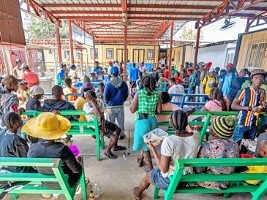
    In a significant humanitarian response to Haiti’s escalating migration crisis, the Japanese government has allocated $667,000 to the International Organization for Migration (IOM) through its “Comprehensive Assistance to Forcibly Returned Haitian Migrants” initiative. This funding arrives amid deteriorating conditions characterized by widespread violence, prolonged political turmoil, and severe economic distress throughout the Caribbean nation.

    The substantial contribution will enable IOM and its collaborative partners to deliver critical aid to migrants arriving in extremely vulnerable conditions. The program focuses on strengthening essential infrastructure and services at strategic border crossings, including Anse-à-Pitres, Belladère, Cap-Haitien, and Ouanaminthe. Key improvements will target water, sanitation, and hygiene (WASH) facilities at these priority locations.

    Grégoire Goodstein, IOM Chief of Mission in Haiti, emphasized the project’s comprehensive approach: “This support will provide immediate humanitarian assistance while building sustainable infrastructure to handle the massive influx of returning migrants.”

    The initiative outlines multifaceted support including frontline reception services, vulnerability screening, basic medical care, mental health and psychosocial support, protection service referrals, and limited transportation assistance to facilitate safe return to communities of origin. Particular attention will be directed toward unaccompanied minors, pregnant women, nursing mothers, elderly individuals, and migrants requiring urgent medical attention.

    All operational activities will be conducted through close coordination with national and local authorities, including the National Migration Office (ONM), Institute for Social Welfare and Research (IBESR), Haitian National Police (PNH), Ministry of Public Health and Population (MSPP), and various humanitarian organizations operating within Haiti.

    Yohei Ueno, Chargé d’Affaires at the Japanese Embassy in Haiti, stated: “This assistance demonstrates Japan’s steadfast commitment to the Haitian people during this profoundly challenging period. It will deliver essential humanitarian support to those confronting extremely difficult circumstances upon their return.”

    The migration situation continues to deteriorate alarmingly, with approximately 200,000 Haitians forcibly repatriated in 2024. This figure surged to over 270,000 in 2025, marking a distressing 36% year-over-year increase. While the Dominican Republic constituted the primary source of returns, significant numbers also arrived from the United States, the Bahamas, and the Turks and Caicos Islands.

    Through this financial commitment, Japan and IOM reaffirm their shared dedication to preserving human dignity, enhancing border stability, and supporting Haiti’s management of complex migration challenges.

  • AAB names record 60-member CARIFTA Games squad

    AAB names record 60-member CARIFTA Games squad

    In an unprecedented move for Barbadian athletics, a historic contingent of 60 competitors has been selected to represent the nation at the upcoming CARIFTA Athletic Championships in Grenada, scheduled from April 4-6. The team, officially unveiled at the Usain Bolt Complex, includes three sets of siblings, underscoring a deep well of familial talent within the island’s track and field program.

    Noel Lynch, President of the Athletics Association of Barbados (AAB), acknowledged the substantial financial investment of $110,000 required to field the team, describing it as a ‘hefty’ but justified price tag. He expressed profound confidence in the squad’s caliber, revealing that 38 athletes had secured their places by achieving outright qualifying standards—a testament to the program’s strength and depth. ‘This is a very strong team, a good team,’ Lynch stated, while candidly admitting to setbacks involving overseas scholarship holders whose university commitments precluded their participation.

    Despite these absences, which may slightly weaken certain event areas, Lynch projected a particularly strong performance for Barbados. He refrained from specific medal predictions but instead praised the efficacy of the AAB’s junior development program and the critical contributions of both affiliated and independent coaches. A notable shift in strategy will see Barbados compete in every relay event, a first in recent memory. This approach has allowed for the inclusion of athletes who, while not hitting exact qualifying marks, demonstrated proximity to the standard and possess value for developmental or relay squad roles.

    The administrative and coaching framework for the Games will be led by Team Manager Angela Jackson and Head Coach Desiree Gamble. They will be supported by a team of assistants including Jarad Murray, Alwyn Babb, Kerrie Beckles, Althea Belgrave, Ramon Armstrong, and Bryan Holder.

    Looking beyond the imminent competition, President Lynch announced Barbados’s formal intention to bid for hosting the 2028 CARIFTA Games. This ambition is directly tied to the progress of the new National Stadium in Waterford, which is reportedly ahead of schedule. Lynch confirmed receiving assurances from the Minister of Sports and Community Development that the facility will be fully functional, with completion targeted for late 2027 or the first quarter of 2028 at the latest, paving the way for a potential home Games celebration.

  • Cane Farmers Weigh Costly Compromise with T&L

    Cane Farmers Weigh Costly Compromise with T&L

    Belize’s sugar cane industry stands at a critical juncture as the Belize Sugar Cane Farmers Association (BSCFA) contemplates a controversial settlement proposal that would terminate its protracted legal battle with Belize Sugar Industries and T&L Sugars. The association has been pursuing approximately five million dollars in unpaid Fairtrade premiums from the 2021-22 and 2022-23 seasons, plus additional payments for subsequent crops.

    The proposed agreement, scheduled for decision in March 2026, would completely nullify these financial claims in exchange for a single one-year Letter of Enhancement for the 2026-27 season. This document outlines potential premium calculation methods but grants T&L exclusive authority to determine which sugar qualifies, with no commitment to issue future letters beyond this period.

    A commissioned legal analysis characterizes the proposal as profoundly unfavorable, indicating the association could forfeit over eight million dollars in Fairtrade premiums without obtaining guaranteed compensation. Attorney Magali Marin Young cautioned that farmers would become vulnerable to corporate discretion, potentially being excluded from the Fairtrade system if future disputes arise.

    Additional complications include dispute resolution protocols requiring litigation under English law in London—a geographically and financially burdensome process for Belizean farmers. The absence of Belizean government participation in the agreement further eliminates potential safeguards should the settlement prove disadvantageous.

    Proponents present the agreement as fostering improved collaboration, enhanced data transparency, and long-term industry sustainability. However, the BSCFA must weigh these optimistic projections against substantial financial concessions and legal vulnerabilities.

    The association’s membership remains divided ahead of a decisive vote scheduled for Sunday in San Roman. Orange Walk Branch Chairman Alfredo Ortega leads opposition to the proposal, asserting it lacks fairness, transparency, and meaningful long-term security for growers. Ortega emphasized that accepting the settlement would represent signing ‘the cover of our coffin,’ urging farmers to carefully evaluate the agreement’s implications.

    The outcome will profoundly impact Belize’s agricultural economy and establish precedents for corporate-farmer relations in the sugar industry.