作者: admin

  • Dayron is still waiting for high-cost medication; Family calls for protest for approval

    Dayron is still waiting for high-cost medication; Family calls for protest for approval

    In Santo Domingo, a desperate plea for medical justice unfolds as one-year-old Dayron Almonte Socias battles Spinal Muscular Atrophy (SMA), a severe genetic disorder causing progressive muscle deterioration. His parents, Inmanol Almonte and Genesis Socias, face an agonizing reality: despite constitutional guarantees to healthcare, the Ministry of Public Health and the High Cost Drugs Program have delayed approval of Evrysdi—the critical medication sustaining their son’s life—for over a year.

    The drug, priced at approximately 620,000 Dominican pesos per bottle (required every two months), remains financially unattainable for the family. With existing supplies dwindling, Dayron’s survival hinges on institutional intervention. In response, his parents will lead a peaceful demonstration on March 25 at 10:00 a.m. outside the National Palace, urging authorities to honor legal obligations under the Dominican Constitution and General Health Law 42-01.

    Article 61 of the Constitution explicitly mandates the state to ensure access to essential medicines and comprehensive healthcare for all citizens. The protest extends beyond Dayron’s case, symbolizing a broader struggle for countless individuals awaiting approval of vital treatments. Community solidarity is urged to amplify calls for systemic accountability and the protection of fundamental health rights.

  • OECS throws support behind SKN connection with Nigeria

    OECS throws support behind SKN connection with Nigeria

    In a significant move for South-South cooperation, the Organisation of Eastern Caribbean States (OECS) has formally endorsed an unprecedented diplomatic initiative spearheaded by St. Kitts and Nevis Prime Minister Terrance Drew. The groundbreaking mission involves a chartered flight carrying a multi-sector delegation from eight Caribbean nations to Nigeria, marking the first large-scale commercial charter flight directly connecting the Caribbean region to the African continent.

    The diverse delegation, organized by Aquarian Consult Limited, comprises entertainment figures, business leaders, government representatives, and cultural ambassadors embarking on a historic 10-hour transatlantic journey. The OECS Secretariat characterized the undertaking as “a landmark achievement for South-South cooperation and regional integration” in an official statement released Sunday.

    Prime Minister Drew recently elaborated on the strategic rationale behind this diplomatic outreach during an appearance on Freedom FM. He emphasized Africa’s emerging global significance, noting that developed nations are increasingly focusing on the continent due to its abundant natural resources, vast arable land, and growing population. “Africa is gearing up for the African Renaissance. It’s about to take off, so everybody’s trying to get in there,” Drew stated. “We, who are descendants of Africans, we must get in there as well.”

    The Nigeria trip represents the initial phase of a broader five-continent bridge-building effort designed to create cultural and business opportunities for Caribbean citizens. Drew’s personal diplomatic engagements have already established preliminary connections that this delegation aims to expand upon, particularly strengthening ties between the Caribbean and its African heritage nations.

    This initiative occurs against the backdrop of shifting global geopolitical dynamics, with Caribbean nations increasingly pursuing South-South cooperation as a strategic foreign policy approach. The mission signifies a proactive effort to position Caribbean countries at the forefront of emerging economic and cultural partnerships with African nations.

  • IHS holds cultural celebration as part of centenary

    IHS holds cultural celebration as part of centenary

    Intermediate High School marks a monumental educational milestone this year, commemorating a century of academic service and transformative impact under the unifying theme “Educating Generations, Enriching Lives for the Future.”

    The institution’s Modern Languages and Arts Department, in collaboration with the Social Sciences Department, orchestrated a distinctive cultural celebration on March 12th. The event, titled “Echoes of Hope: A Century in Song, Story and Spirit,” masterfully intertwined the school’s hundred-year heritage with the vibrant cultural legacy of the Garifuna community.

    This historic centennial pays homage to the visionary foundation laid by Dr. J.P. Eustace, whose pioneering dream centered on delivering quality education to underprivileged youth and creating sustainable pathways toward brighter futures. Throughout its existence, the school has maintained an unwavering commitment to intellectual development, character formation, and student empowerment through knowledge, discipline, and community service.

    The celebration unfolded through three immersive segments. “A Century in Story” transported attendees through the institution’s evolutionary journey, featuring dance performances and original poetic compositions by faculty members Arlane Sutherland and Rohan Bellingy that artistically captured the school’s struggles, victories, and aspirations.

    The second segment honored Dr. Eustace’s Christian educational philosophy through hymns of gratitude and worship, marking the triumphant return of the school band after years of inactivity. Music students from Fourth and Fifth Forms demonstrated their refined skills through recorder ensemble performances, showcasing the institution’s ongoing musical development.

    The finale celebrated the resilience and unity defining the school’s legacy, paying tribute to foundational figures including “Timmy” Richards, whose 48-year dedication significantly shaped the institution’s trajectory. The event culminated in vibrant cultural displays featuring traditional Garifuna attire, historical garments, and innovative futuristic uniform concepts modeled by students Phobe and Tishawn.

    School representatives emphasized that the celebration transcended historical reflection, serving as profound recognition of educators and pioneers who championed education’s transformative power. Their enduring legacy continues to inspire the institution’s commitment to its foundational mission of educational empowerment and community service.

  • VIDS op Wereld Waterdag: Inheemse dorpen kampen met ernstige waterproblemen

    VIDS op Wereld Waterdag: Inheemse dorpen kampen met ernstige waterproblemen

    On World Water Day, the Association of Indigenous Village Chiefs in Suriname (VIDS) has issued an urgent appeal addressing the severe water infrastructure deficits plaguing indigenous communities throughout the country. Despite international development agendas—including the Sustainable Development Goals (SDGs)—promising to ‘leave no one behind,’ indigenous and tribal populations in Suriname continue to experience systemic neglect regarding access to clean drinking water, sanitation, and reliable infrastructure.

    Recent analyses confirm that numerous interior communities remain dependent on rainwater, creeks, or rivers due to a near-total absence of basic water systems. Village leaders from multiple regions reported alarming conditions:

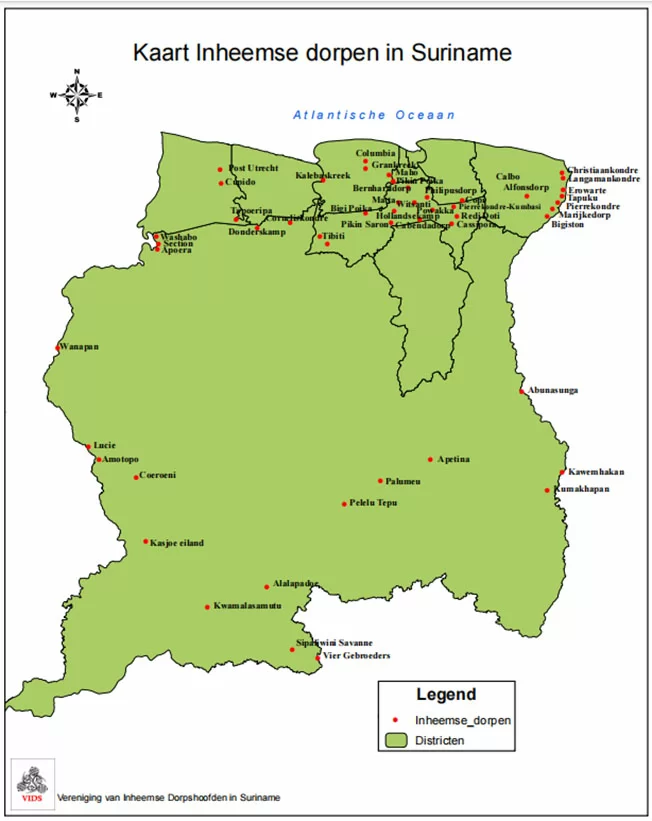
    In Marowijne, villages such as Langamankondre and Christiaankondre face acute water shortages, requiring emergency shipments from Paramaribo to supply schoolchildren. These communities also lack consistent electricity, relying on outdated generators despite proximity to urban centers. Similarly, in Alfonsdorp, a water source managed by the Surinamese Water Company exists but fails to provide 24/7 supply, forcing residents to rely on irregular and often contaminated water from neighboring villages.

    In Para, growing settlements like Wit Santi struggle with water accessibility, with households compelled to carry water long distances or collect rainfall. High connection fees further exacerbate inequities. Meanwhile, in Hollandse Kamp, taps have run dry for four years, and trucked-in water frequently fails to meet SDG 6 safety standards.

    Water quality remains another critical concern. In Donderskamp, recently rehabilitated water installations still produce dark, undrinkable water, compelling residents to seek alternative—and often unsafe—sources. In western regions such as Apoera, Section, and Washabo, arbitrary flat fees and alleged payment arrears—sometimes exceeding SRD 10,000—have sparked outrage, especially as meter installation costs remain unaffordable for most families.

    Southern Suriname suffers near-total absence of water infrastructure, with communities depending on river and creek water increasingly contaminated by mining pollutants, erosion, and climate-induced droughts and floods.

    Water pollution poses a severe threat to traditional sources. Rivers once considered safe, like the Marowijne, are now tainted by mercury and chemicals from gold mining—activities often licensed without adequate protection for indigenous territories.

    Women and girls bear the heaviest burden, as water collection and management traditionally fall to them. Water scarcity heightens their workload, curbing educational and economic opportunities and compounding discrimination based on gender, ethnicity, and socioeconomic status.

    VIDS emphasizes that these issues stem from structural marginalization, insufficient inclusion in policy processes, and the lack of full legal recognition of indigenous collective rights. Although indigenous organizations are occasionally invited to policy dialogues, their input rarely influences outcomes.

    The association urges the government and relevant agencies to:
    – Invest urgently in sustainable interior water infrastructure;
    – Ensure fair and affordable water pricing;
    – Strictly regulate mining-related water pollution;
    – Involve indigenous communities in decision-making through Free, Prior, and Informed Consent (FPIC);
    – Center gender equality in water policy.

    Without structural solutions and genuine community participation, VIDS warns, the SDG pledge to ‘leave no one behind’ will remain an empty promise for Suriname’s indigenous peoples.

  • Leacock’s comments in Taiwan suggest end of foreign policy controversy

    Leacock’s comments in Taiwan suggest end of foreign policy controversy

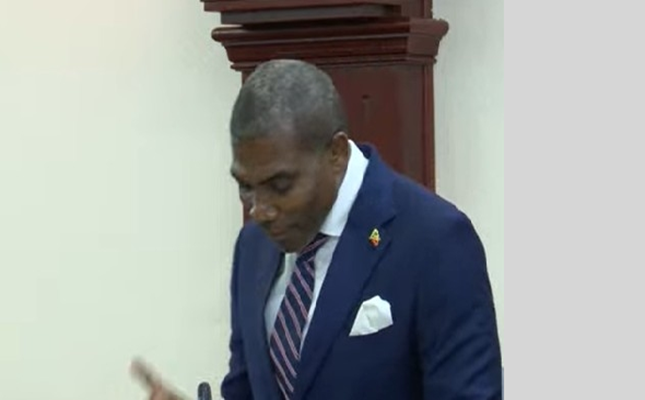
    In a significant diplomatic development, St. Vincent and the Grenadines’ Deputy Prime Minister St. Clair Leacock has declared that his nation’s relationship with Taiwan should transcend friendship to become “family,” signaling a major foreign policy shift by the ruling New Democratic Party (NDP).

    The remarks came during Leacock’s arrival in Taipei as head of a four-member delegation on a six-day official visit—the first since the NDP assumed power in November 2023. This statement effectively abandons the party’s previously announced 2016 policy of seeking diplomatic relations with China, which Leacock himself characterized as a misstep that “hurt us” in April 2024.

    Addressing Taiwanese officials, Leacock expressed profound appreciation for the “tremendous assistance and brotherly relationships” developed over 45 years of diplomatic relations between the nations. He emphasized the NDP administration’s commitment to “build on the strong bridges of friendship” with “open minds and hearts,” noting that both sides have “hit the ground running” since the NDP’s electoral victory.

    The Deputy Prime Minister specifically referenced the legacy of former Prime Minister Sir James Mitchell, who established relations with Taiwan in 1981, stating the current government aims to build on “those bridges” to advance St. Vincent’s development toward first-world status.

    This position contrasts with pre-election concerns raised by the opposition Unity Labour Party (ULP), which had warned that an NDP victory might jeopardize Vincentian students’ scholarships in Taiwan. Prime Minister Godwin Friday had previously assured continuity in foreign relations, stating diplomatic ties would remain unchanged for the “foreseeable future.

    The evolution of the NDP’s position reveals the complex calculations in Caribbean diplomacy. Sir James Mitchell, the party’s elder statesman, had previously emphasized that both Taiwan and St. Vincent must act in their best interests, noting the NDP’s historical popularity was “very much historically dependent on the help we got from Taiwan.” He had advocated for obtaining “bankable assurances” from Taiwan while maintaining relations.

    Leacock’s familial characterization of the relationship and commitment to enhanced cooperation suggests a consolidation of the Taiwan-St. Vincent partnership, with the Deputy Prime Minister expressing optimism that Taiwan’s generosity “will grow even faster, and bear fruits that will be long-lasting for the life and people of St. Vincent and the Grenadines.”

  • SVJ benadrukt: zelfregulering moet persvrijheid beschermen

    SVJ benadrukt: zelfregulering moet persvrijheid beschermen

    The Suriname Association of Journalists (SVJ) has initiated a comprehensive accreditation program aimed at organizing and professionalizing the country’s media landscape. This move comes in response to what the association describes as “wild growth” within the journalistic profession and confusion about legitimate news sources.

    During an information session held Saturday at the Asewa Otono building, SVJ leadership emphasized that the accreditation system represents a form of self-regulation rather than government-imposed control. The association explicitly stated that the program will not compromise journalistic freedom or facilitate government restrictions on press liberties.

    SVJ President Naomi Hoever clarified that the accreditation badge system, introduced on February 9 during the association’s 35th anniversary celebrations, requires journalists to commit to established professional ethics. The program applies to both SVJ members and non-members alike.

    “Accreditation is not designed to exclude individuals but rather to promote clarity, recognition, and quality within the journalistic profession,” Hoever stated during the well-attended session that drew significant interest from media professionals across Suriname.

    The association presented multiple arguments demonstrating why professional organization has become essential. Current challenges include uncertainty about what constitutes legitimate news, confusion about which media companies qualify as recognized news organizations, and questions about who practices journalism responsibly according to professional codes.

    Self-regulation through accreditation is presented as an internationally proven model that provides guarantees to both government and society that journalism is being practiced responsibly. The SVJ maintains that journalistic regulation cannot be entrusted solely to the central government, as press freedom doesn’t lend itself to purely legal ordering through legislation.

    The initiative aims to protect the journalistic profession, promote responsibility, counter uncontrolled growth in media, and advance professionalization standards that align with existing national and international benchmarks.

  • Grading the NDP

    Grading the NDP

    A wave of voter disillusionment is sweeping through the constituency as the newly elected New Democratic Party (NDP) administration faces mounting criticism for its perceived inability to deliver on campaign promises. Many citizens who had eagerly anticipated a change in government now find themselves resonating with Bob Marley’s “Waiting in Vain,” reflecting widespread sentiment that the administration lacks the decisive leadership necessary for meaningful transformation.

    Prime Minister Friday has received a mediocre grade of C from constituents. While acknowledging positive measures such as VAT-free shopping initiatives, vaccine mandate relief, increased poor relief allocations, Bequia airport resurfacing, and bonus distributions, voters criticize his persistent indecisiveness and delayed responses to urgent matters. Reports indicate that despite multiple audiences with the Prime Minister seeking redress for issues ignored by other ministers, constituents remain without resolution.

    Several cabinet members are facing particularly harsh evaluations. Minister Bramble earns a D- grade due to controversial appointment decisions that have alienated his core supporters. Voters strongly oppose the reappointment of individuals associated with the previous administration’s 25-year tenure, accusing Bramble of political misdirection.

    Terrance Ollivierre similarly receives a D- rating for his inadequate attention to the community college portfolio. Allegations of ongoing corruption, maintained ULP-established board control, and disproportionate salary increases for favored staff members have prompted college employees to escalate concerns to higher government officials. The apparent absence of the Accreditation Board further compounds these issues.

    Minister Phillip Jackson earns a D grade for his failure to maintain communication and address ministerial friction that has created a challenging work environment. His perceived inability to manage multiple responsibilities simultaneously has disappointed those who expected innovative leadership.

    Other ministers including Conroy Huggins (Grade C), Kishore Shallow (Grade C-), and Shevern John (Grade C) are criticized for similar patterns of unreturned communications and indecisiveness, suggesting a broader administrative disconnect from public needs.

    The administration faces additional scrutiny over the apparent continuation of ULP-era figures in decision-making positions and the emergence of an elitist clique. Questions regarding campaign donation influences on board appointments further erode public trust. Political analysts suggest that were it not for the ULP’s current weakness, the NDP would already face significant reelection challenges.

  • Ashoresoca warns of risks to tourism due to conflicts in Cabarete; supports improved beach access

    Ashoresoca warns of risks to tourism due to conflicts in Cabarete; supports improved beach access

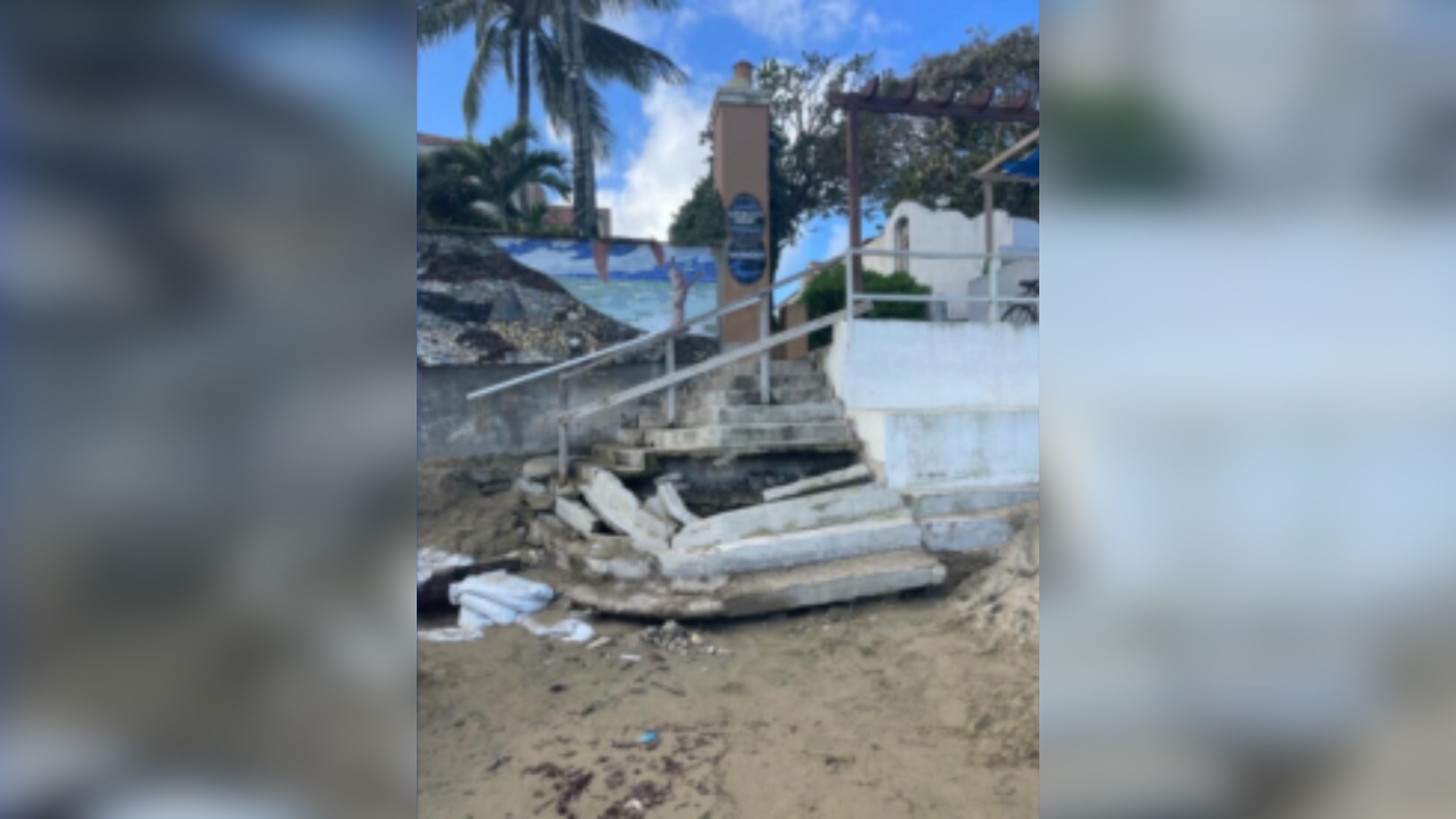
    The Hotel and Restaurant Association of Sosua and Cabarete (Ashoresoca) has issued a stark warning that escalating tensions between government authorities could severely damage the tourism prospects of Cabarete, a vital coastal destination in Puerto Plata province. This alert follows a highly visible verbal confrontation between personnel from the Dominican Navy and district director Freddy Cruz regarding beach access protocols during ongoing infrastructure improvements.

    Antonio Cárdenas, President of Ashoresoca, emphasized that such public disputes create detrimental perceptions among both current visitors and potential investors. This development arrives at a particularly sensitive juncture as the region intensifies efforts to enhance its tourism infrastructure and market competitiveness.

    While the association explicitly supports the coastal intervention project—recognizing its critical importance for enhancing organizational efficiency, visitor safety, and overall market positioning—it has urgently called for immediate diplomatic resolution to inter-agency conflicts. Industry leaders stress that any delays in completing these vital developments could generate substantial negative economic repercussions for the local tourism-dependent economy.

    The association advocates for structured dialogue between all stakeholders to ensure project continuity, maintaining that coordinated execution of improvement works is essential for safeguarding Cabarete’s reputation as a premier Caribbean destination.

  • Social Protection : OFATMA strengthens its partnership with the MSPP

    Social Protection : OFATMA strengthens its partnership with the MSPP

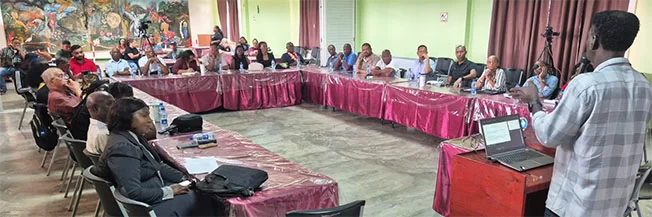
    In a significant move to reform Haiti’s healthcare infrastructure, the Ministry of Public Health (MSPP) and the Office of Occupational Accident, Illness, and Maternity Insurance (OFATMA) have launched a comprehensive three-day strategic retreat from March 22-24, 2026. This collaborative initiative marks a pivotal moment in Haiti’s ongoing efforts to enhance social protection systems and healthcare delivery mechanisms.

    The retreat represents a profound political commitment to transforming health coverage frameworks, with both institutions working in unison to establish more equitable, efficient, and sustainable healthcare access for insured citizens. Key agenda items include thorough analysis of current insured population statistics, systematic examination of claims processing challenges, and detailed review of the draft Memorandum of Understanding (MoU) order.

    Participants are engaged in intensive technical and strategic dialogues focused on developing concrete solutions for healthcare access, coverage parameters, and payment systems. The collaborative environment emphasizes co-creation principles, operational transparency, and distributed accountability among all stakeholders.

    The culmination of this strategic gathering will be the formal signing of a structural protocol agreement designed to reinforce health governance frameworks and strengthen social protection systems. This protocol will institutionalize OFATMA’s renewed commitment to prioritizing insured individuals’ needs while creating sustainable mechanisms for improved healthcare service delivery across Haiti’s social protection network.

  • Sunrise Airways : Historic direct connection between Cap-Haïtien and Boston

    Sunrise Airways : Historic direct connection between Cap-Haïtien and Boston

    In a landmark development for Caribbean aviation, Haiti’s Sunrise Airways has inaugurated a pioneering direct air route connecting Cap-Haïtien (CAP) and Boston (BOS). This service establishes the first-ever direct flight connection between northern Haiti and the United States, representing a transformative moment for both aviation infrastructure and diaspora connectivity.

    The newly launched route serves as a strategic corridor linking one of Haiti’s key cultural centers with the substantial Haitian community residing in the Northeastern United States. Greater Boston and surrounding regions are home to hundreds of thousands of Haitian Americans who have historically faced limited direct access to their northern homeland.

    According to Gary Stone, Chief Executive Officer of Sunrise Airways, this initiative transcends conventional airline routing. “This inaugural flight represents more than just a new route—it constitutes a vital bridge. A bridge connecting Cap-Haïtien with the diaspora community that has sustained Haiti’s spirit abroad. Our airline takes immense pride in facilitating this meaningful connection,” Stone stated.

    The operational structure will feature weekly flights utilizing a 180-seat Airbus A320 aircraft. Outbound journeys from Cap-Haïtien to Boston will operate on Tuesdays, with return flights scheduled for Wednesdays. This schedule eliminates previous necessity for time-consuming connections through Port-au-Prince or other intermediary hubs.

    This aviation milestone forms part of Sunrise Airways’ broader expansion strategy to enhance connectivity between Haiti and its international diaspora communities across North America. The airline continues to develop its network connecting Haiti to strategic markets including Miami, Fort Lauderdale, Newark, and multiple Caribbean destinations.

    The route inauguration signals significant potential for economic development in northern Haiti while providing unprecedented convenience for diaspora travelers seeking direct access to Haiti’s cultural heartland beyond the capital region.