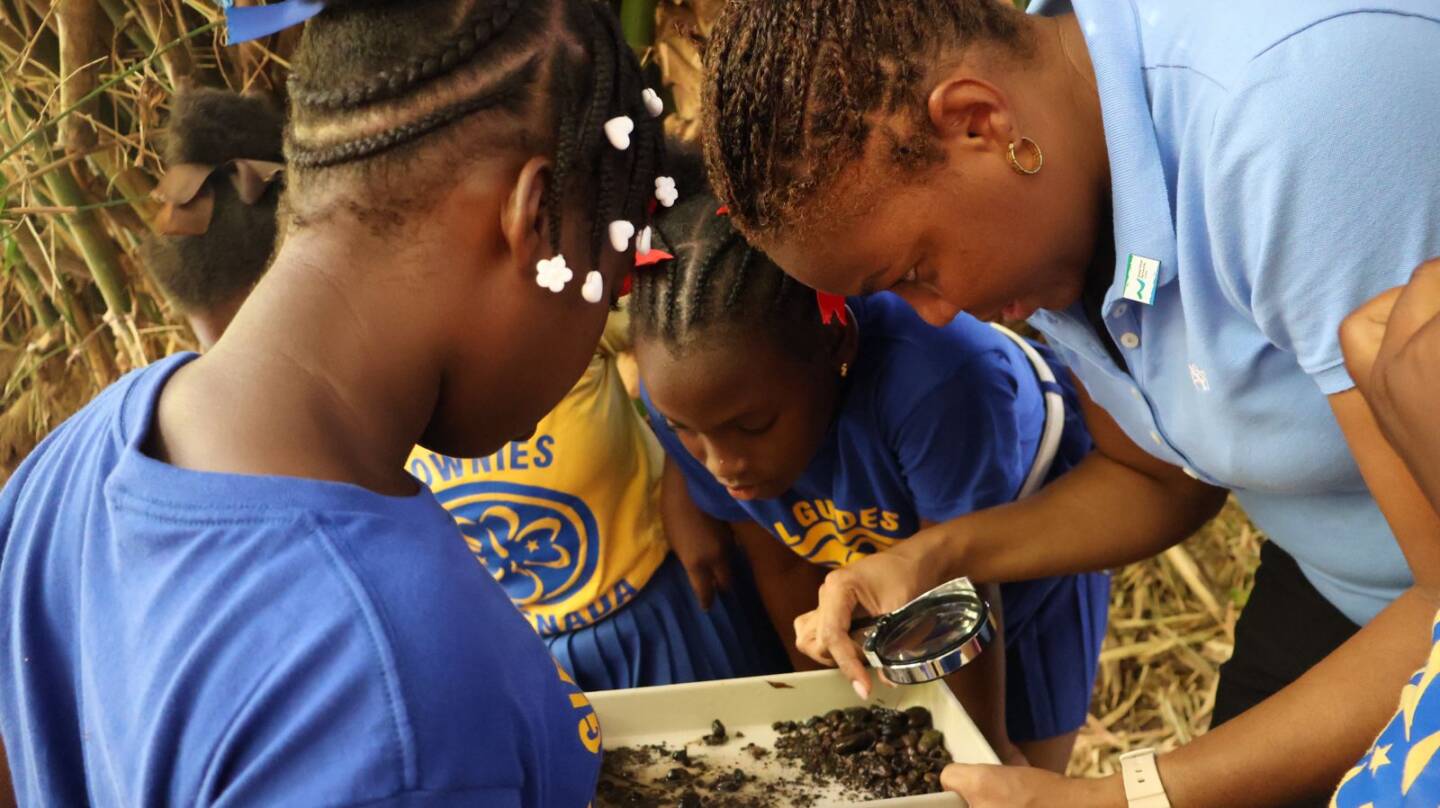
To mark World Environment Day 2026, three regional and local organizations have partnered to deliver a immersive, hands-on environmental education experience for young people in Grenada, turning classroom lessons about ecosystem conservation into tangible outdoor exploration. On Friday, June 5, 2026, Global Water Partnership-Caribbean (GWP-C), joined by the Girl Guides Association of Grenada and the Department of Biology, Ecology, and Conservation (BEC) at St George’s University (SGU), organized the field activity at a river site in St David Parish. The gathering drew roughly 15 participants, ranging from young Brownies and senior Girl Guides from St Martin de Porres Catholic School to adult chaperones and GWP-C program team members. Aligned with 2026’s global World Environment Day theme, *Inspired by Nature. For Climate. For Our Future*, the initiative was designed to spark early curiosity and build foundational understanding of the natural world among young attendees. Dr. Roxanne Graham-Victor, GWP-C’s Regional Coordinator, led the day’s scientific activities, walking participants through a accessible method of evaluating river ecosystem health: surveying macroinvertebrate populations. “This is a simple but powerful approach to checking the condition of a river,” Dr. Graham-Victor explained of the method. She added that the event yielded a particularly encouraging finding: even with regular human activity in the area, the tested stretch of river remains in relatively good ecological health. Under Dr. Graham-Victor’s guidance, young participants used standard Surber samplers to collect aquatic organism samples directly from the riverbed. After collection, they examined their findings through magnifying glasses in sorting trays, learning how different species act as bioindicators of water quality. During the exploration, students identified multiple healthy aquatic species, including small fish, crayfish, and freshwater snails with right-opening shells – a group widely linked to unpolluted, well-functioning aquatic ecosystems. Beyond the official scientific results, organizers noted the event’s greatest success was the visible excitement and curiosity the young participants brought to their first field research experience. The day covered far more than just sample collection: attendees also learned core concepts about freshwater food webs, the function of watersheds, and why protecting these critical freshwater resources matters for both communities and ecosystems. For the young Brownies and Girl Guides taking part, the event offered a one-of-a-kind chance to see environmental science practiced in the field, rather than just read about it in textbooks. More broadly, the initiative worked to foster long-term environmental awareness, build a sense of stewardship for natural resources, and deepen young Grenadians’ appreciation for the island nation’s unique freshwater ecosystems. This article was published via NOW Grenada, which notes that it does not take responsibility for opinions or statements shared by contributing authors or partner organizations.