作者: admin

  • Gillian Lucky unveils collection on Nov 9: One Day of Star Wars

    Gillian Lucky unveils collection on Nov 9: One Day of Star Wars

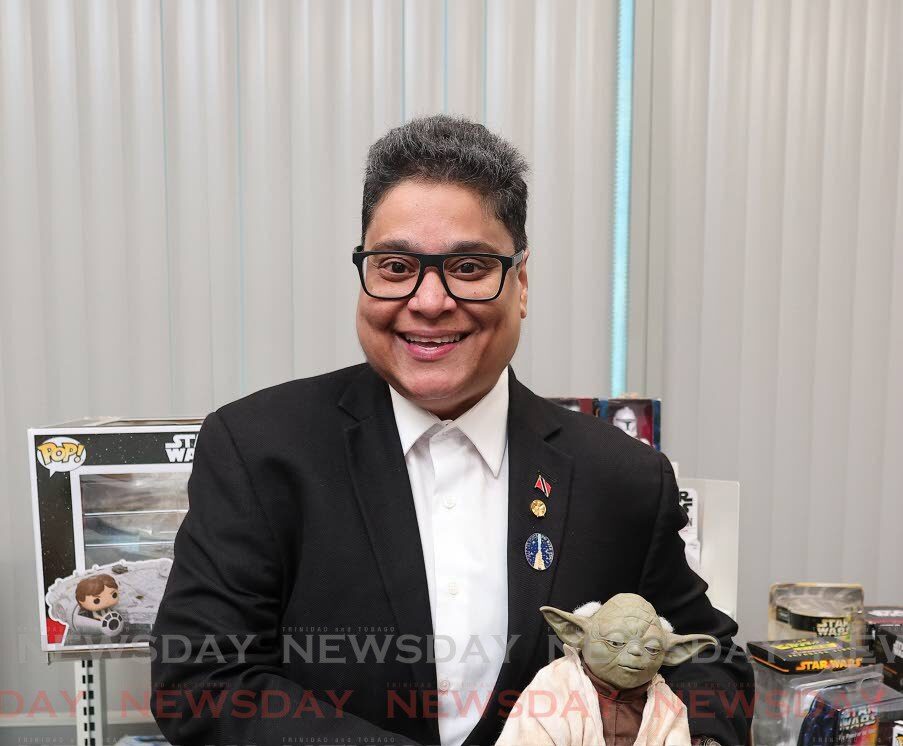
    In 1977, a ten-year-old girl named Gillian Lucky sat in a cinema, utterly captivated by the opening moments of *Star Wars: A New Hope*. The iconic theme by John Williams, the scrolling yellow text, and the epic starship battle ignited a lifelong passion for the franchise. Today, Justice Gillian Lucky, chairman of the Judicial Education Institute, credits that moment as a defining influence on her career and values. For her, *Star Wars* is more than a film series—it’s a moral compass that champions justice, integrity, and hope.

    Justice Lucky’s connection to *Star Wars* runs deep. As a child, she was drawn to the story’s clear battle between good and evil, resonating with her innate sense of fairness. The characters’ triumphs, particularly the defeat of Darth Vader, mirrored her own aspirations to fight for justice. Over the years, she has amassed an impressive collection of *Star Wars* memorabilia, including a cherished Yoda figurine, which serves as a reminder of the franchise’s enduring lessons.

    On November 9, Justice Lucky will share her collection with the public at Arnim’s Art Galleria in Port of Spain. The event, titled *One Day of Star Wars*, will feature giveaways, trivia, costume contests, and an exhibition of her memorabilia. A portion of the proceeds from sales will benefit primary schools in Trinidad and Tobago, emphasizing the values of honesty, respect, and justice that *Star Wars* embodies.

    Justice Lucky’s favorite films include *The Empire Strikes Back*, which introduced her to the wise Master Yoda, and *Rogue One*, which highlights the sacrifices made for the greater good. She also admires the inclusivity of the *Star Wars* universe, where characters are defined by their actions rather than their appearance. This sense of inclusion aligns with her own beliefs and professional ethos.

    For Justice Lucky, *Star Wars* is a source of inspiration and resilience. The franchise’s themes of perseverance and hope have guided her through personal and professional challenges. As she prepares to share her passion with the public, she hopes to inspire future generations to fight for what is right, reminding them that, no matter how dark the moment, there is always a path forward. May the Force be with you.

  • Natasha Athara Lewis turns challenges into opportunities

    Natasha Athara Lewis turns challenges into opportunities

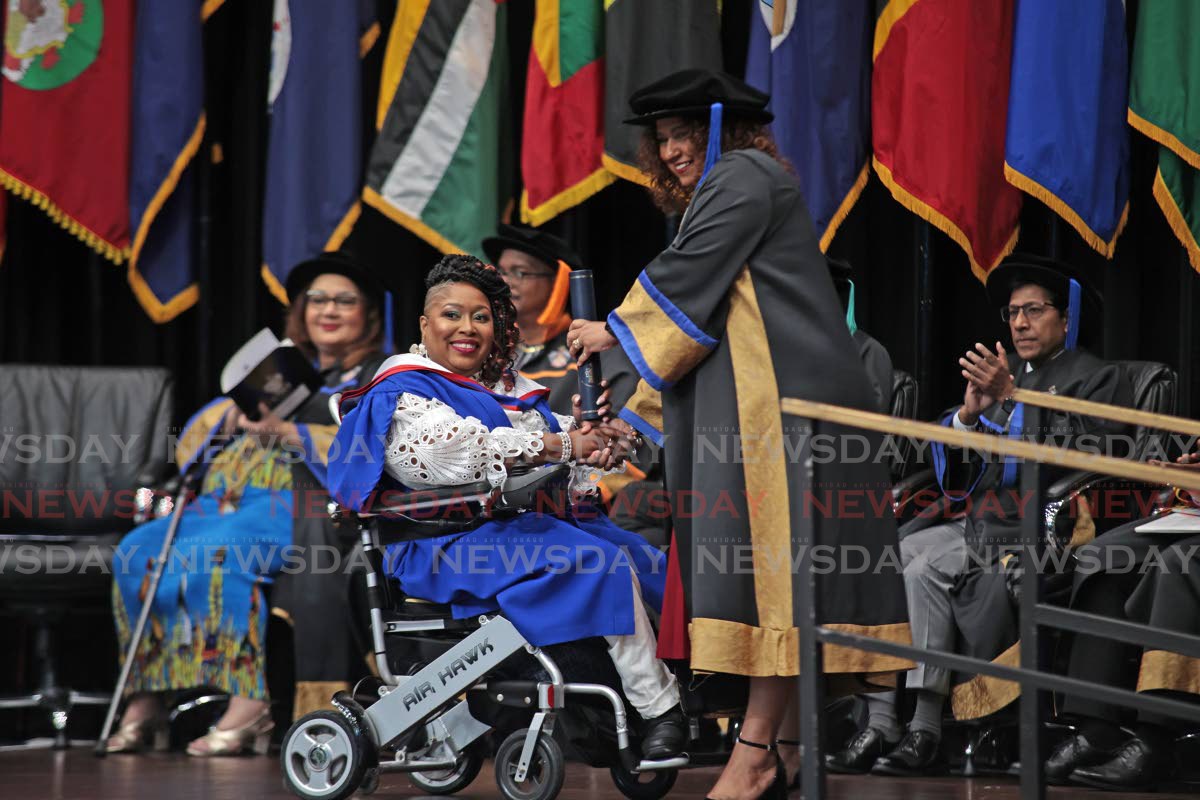
    On October 25, 2025, Natasha Athara Lewis, a dedicated educator and advocate for disability inclusion, marked a historic milestone as she received her postgraduate diploma in education with distinction from the University of the West Indies (UWI) in St. Augustine. Wheelchair-bound due to cerebral palsy, Lewis described the moment as a triumph of resilience, representation, and personal achievement. Her journey, marked by perseverance and advocacy, has inspired countless individuals across Trinidad and Tobago.

    Lewis, a mature student and teacher at Malick Secondary School, has spent her life transforming challenges into opportunities. Born in St. James, Port of Spain, she began her education at the Princess Elizabeth Special School for the physically handicapped, where she learned the value of perseverance. Supported by her family, church community, and what she calls her ‘village,’ Lewis overcame numerous obstacles, including surgeries, physiotherapy, and speech therapy, to achieve greater independence.

    Her educational path continued at St. James Secondary School, followed by professional certifications in dressmaking and design. Despite facing daily challenges, such as climbing 40 steps on crutches at the John S Donaldson Technical Institute, Lewis persisted, eventually earning a Bachelor of Arts in Fashion Design (Magna Cum Laude) from the University of Trinidad and Tobago. In 2014, she began her teaching career, blending her passion for education with her advocacy for inclusion.

    Lewis’s journey is also marked by her entrepreneurial spirit. In 1992, she founded Athara’s Designs, a fashion brand that transforms discarded materials into wearable art. She views her creations as a metaphor for the potential of individuals with disabilities, often overlooked but capable of extraordinary contributions. Although her business is currently on hold due to her teaching commitments, her designs continue to inspire.

    At UWI, Lewis found a supportive and inclusive environment, which she credits for her success in completing her postgraduate diploma. She also faced new challenges during her teaching practicum, navigating inaccessible classrooms with the help of administrators and peers. These experiences, she noted, not only shaped her but also educated others about the importance of true inclusion.

    Beyond the classroom, Lewis has partnered with the Ministry of Social Development to lead sensitization campaigns on accessibility and disability rights. She credits her former educators, Miss Myers and Maria D Thomas, for instilling in her the belief that teaching is a mission of empowerment and equity.

    Lewis’s unshakable faith and resilience have been her anchors throughout her journey. She emphasizes that inclusion is not charity but justice, urging society to recognize the diverse talents and creativity of differently-abled individuals. Her advice to parents of children with disabilities is to love, support, and envision a bright future for them.

    In her closing remarks, Lewis expressed gratitude to her family, friends, mentors, and UWI for their unwavering support, stating, ‘This accomplishment is not mine alone – it belongs to all of us.’

  • The fight against freedom

    The fight against freedom

    In the decade leading up to the Emancipation Act, Tobago’s planting community braced for the anticipated consequences of the anti-slavery movement. Fearing violent resistance from the African population, which they labeled as criminal, authorities implemented stringent measures to maintain control. These included harsher laws, an expanded and more regulated police force, and enhanced judicial facilities. A new courthouse was constructed above the marketplace, providing magistrates with larger spaces to operate. Simultaneously, the police forces in Scarborough and Plymouth were bolstered by a new law that introduced two additional magistrates to oversee law enforcement and address offenses. These magistrates were required to hold court sessions twice weekly, year-round, and were empowered to appoint constables to maintain order during market days and apprehend offenders. To accommodate the expected rise in incarcerations, the Scarborough Jail was expanded. The prison’s design was rooted in four key principles: the anticipated increase in prisoners due to societal tensions, the need to prevent escapes, the deterrence of external assistance to inmates, and the enforcement of labor as a core component of incarceration. The new facility, constructed by John H Noding, was a two-story structure designed to be escape-proof, with reinforced walls, iron gates, and secure partitions. A committee was established to oversee the project, ensuring its timely completion by June 1, 1824. Parallel to these developments, the militia was strengthened through a 1827 law that introduced strict regulations, mandatory enlistment for free men aged 16 to 55, and provisions for uniforms and weaponry. Notably, the law allowed for the inclusion of black and colored sergeants and corporals, a pragmatic move driven by the shortage of white men. However, racial distinctions persisted, with black and colored members positioned on the left during parades. Despite these efforts, the tide of history was against the planters, as the anti-slavery movement in Britain gained momentum, making the abolition of slavery in the colonies inevitable.

  • Caribbean superpowers unite

    Caribbean superpowers unite

    In October 2023, Elspeth Duncan was invited to lead a morning relaxation and meditation session at the Good Deeds Day Regional Conference, held at the Magdalena Grand Beach & Golf Resort. The event brought together participants from across the Caribbean, all committed to fostering positive intentions and actions. During the session, a participant from Spread the Love Curaçao gifted Duncan a handmade “love and kindness” rock inscribed with the message “Strong Together.” This simple yet profound token serves as a symbol of the Caribbean’s enduring unity and shared identity. Duncan reflects on the region’s unique strengths, including its cultural diversity, resilience, and collective spirit, which have historically enabled Caribbean nations to overcome challenges. She emphasizes that the Caribbean’s true power lies in its ability to come together, not just in times of celebration but also in moments of crisis. This unity was recently demonstrated in the aftermath of Hurricane Melissa, which struck Jamaica in late October. Despite the devastation, social media was flooded with calls for assistance and solidarity, highlighting the region’s deep sense of community. Duncan also draws attention to the often-overlooked victims of natural disasters—animals. Her NGO, Venus Doggess Of Love, is organizing a film-screening fundraiser to support the Montego Bay Animal Haven in Jamaica. While the funds raised may seem modest, Duncan believes that every contribution, when combined with others, can make a significant impact. The Caribbean’s ability to unite in adversity, she concludes, is what makes it a true superpower.

  • More than just Monday wear: Asha Wadada embraces womanhood

    More than just Monday wear: Asha Wadada embraces womanhood

    Inspired by her personal evolution as a woman, mother, and creative, Asha Wadada, co-founder of House of Wadada, has unveiled her first solo Carnival collection, *alter HER*. The collection, launched in October, is a tribute to the diverse layers of womanhood, celebrating confidence, sensuality, power, and self-discovery. Wadada shared with WMN on October 29 that the collection emerged from her journey of embracing every facet of her identity, including the parts she once hid. “I wanted to express all of myself—the sensual, the confident, the grounded, the bold—without apology,” she explained. The collection’s name, *alter HER*, reflects the idea of a woman’s inner self, waiting to step into the spotlight. The designs, adorned with sequins and sheer mesh, are both glamorous and versatile, suitable for Carnival Monday and beyond. Wadada emphasized that the collection is not just about fashion but also about empowering women to embrace their complexity and express their true selves unapologetically. The response to *alter HER* has been overwhelmingly positive, with women connecting deeply with its message. Wadada, who also teaches yoga in Port of Spain, hopes the collection will inspire women to take risks and feel confident in their style. The line will debut at Carnival 2026 on February 16, marking a milestone in Wadada’s 15-year journey in the fashion industry. From her early days customizing clothes with her twin sister Ayanna Diaz to creating a lifestyle brand rooted in self-expression and feminine power, Wadada’s work continues to resonate with women across the Caribbean and beyond.

  • Andrea C Hoffer explores the House of Ambiences at Softbox Gallery

    Andrea C Hoffer explores the House of Ambiences at Softbox Gallery

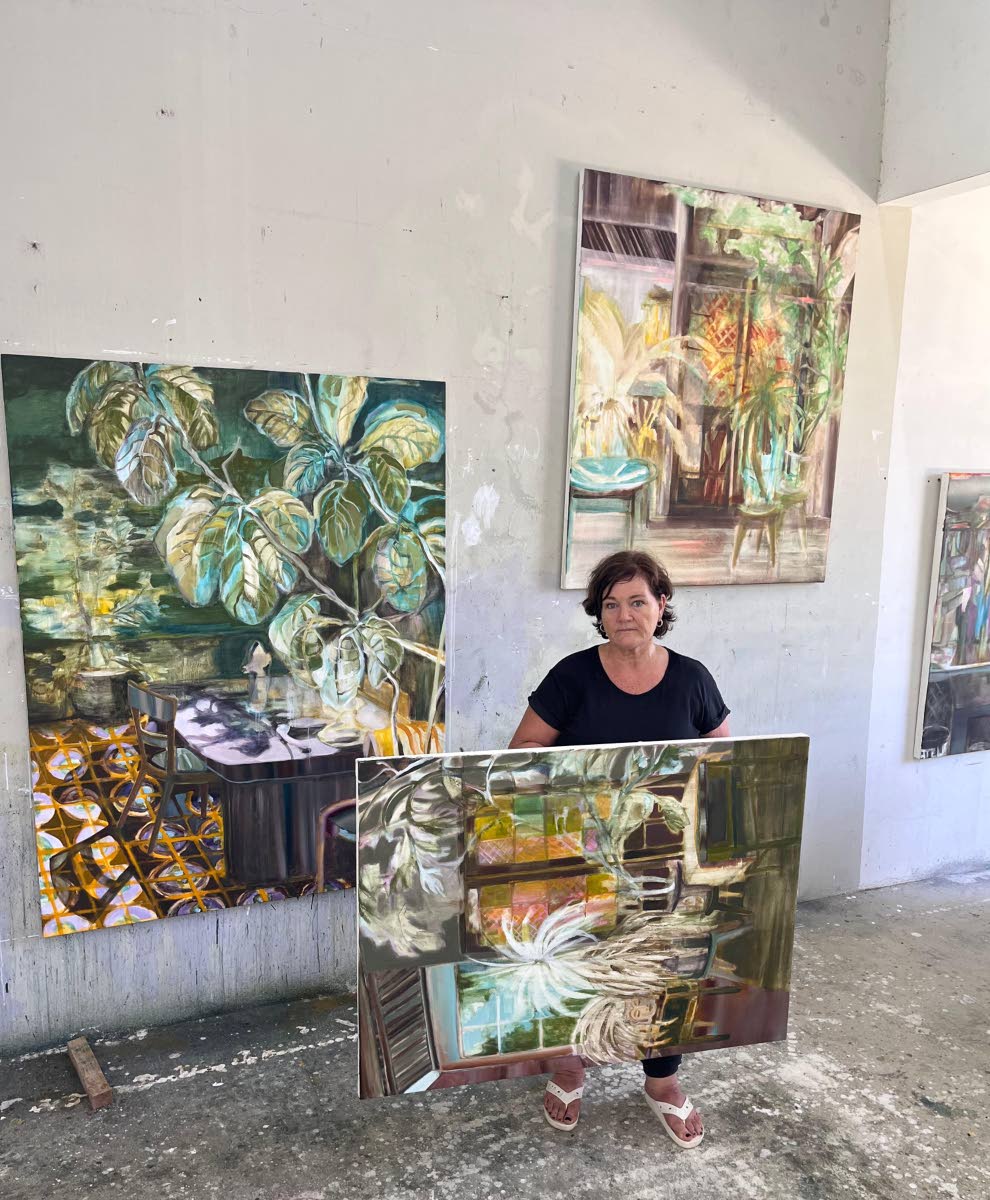
    German-born, Tobago-based artist Andrea C Hoffer has unveiled her latest exhibition, ‘House of Ambiences,’ at the Soft Box Gallery in St Clair. This collection marks her first dedicated exploration of interior spaces, offering a deeply nostalgic portrayal of Trinidad and Tobago’s older homes. The exhibition, comprising 14 meticulously crafted paintings, captures the warmth, history, and quiet presence of these spaces, evoking a sense of timelessness and personal connection. Hoffer’s inspiration stemmed from a visit to a house on Cotton Hill Road, St Clair, where the interplay of shadows, lighting, and architectural elements left an indelible impression. This experience inspired the exhibition’s centerpiece, a large-scale painting that embodies the essence of ‘Trini at home sweet home.’ Hoffer’s works are rich with details familiar to Caribbean households—linoleum floors, circular ventilation bricks, well-worn furniture, and potted plants. Plants, a recurring motif in her art, reflect her personal affinity for greenery, as her Tobago studio is nestled within a lush garden. Hoffer employs the ancient egg tempera technique, mixing pigments with egg yolk and linseed oil to create a layered, earthy texture. Remarkably, she paints entirely from memory, eschewing sketches or photographs. Her process is intuitive, allowing the essence of each space to emerge organically. Many of her works incorporate historical elements, such as a door from her daughters’ great-grandfather’s home, which survived Hurricane Flora in 1963. These artifacts, imbued with personal and generational significance, add depth to her compositions. Hoffer’s artistic journey began in 1996 when she first visited Tobago, captivated by its natural beauty. Since then, she has exhibited her work internationally, blending European influences with Caribbean themes. Her unique style, which combines impressionism, abstraction, and realism, invites viewers to embark on their own imaginative journeys. ‘House of Ambiences’ runs until November 29, offering a poignant reflection on the enduring charm of Caribbean interiors.

  • FOOTBALL REMAINS BENCHED

    FOOTBALL REMAINS BENCHED

    The Jamaica Premier League (JPL), sponsored by Wray & Nephew, faces an indefinite suspension as clubs struggle to recover from the devastating impact of Hurricane Melissa. Originally set to resume this week, the league has been postponed for the second consecutive week, with several teams suffering significant losses. Treasure Beach FC in St Elizabeth and Montego Bay United in St James are among the hardest hit, reporting extensive damage to club facilities and personal property, including the homes of players and staff. Even clubs in the corporate area, which avoided the hurricane’s full force, have not been spared from its effects.

    Owen Hill, CEO of Professional Football Jamaica (PFJ), emphasized that the league’s immediate focus is on providing comprehensive support to the affected clubs rather than resuming play. While no lives were lost, Hill acknowledged the severe infrastructural devastation and the emotional toll on the football community. ‘We’re prioritizing mental well-being and livelihoods,’ he stated, adding that football-related matters are secondary at this time.

    PFJ has mobilized resources, including water and non-perishable items, and is collaborating with sponsors, the Jamaica Football Federation (JFF), and the government to coordinate relief efforts. Hill stressed that recovery will be a long-term endeavor, requiring sustained support and logistical coordination. ‘Transportation and access to affected areas are major challenges,’ he noted.

    With 14 games already postponed, Hill could not provide a definitive timeline for the league’s return. However, he expressed optimism that the JPL, when it resumes, will serve as a beacon of hope for the nation. ‘Football will continue, and we’ll use our platform to inspire resilience and unity,’ he said. Hill also highlighted the opportunity for the community to come together and rebuild, emphasizing that no club or individual will be left behind in the recovery process.

  • 2026 Best Reggae Album Grammy predictions

    2026 Best Reggae Album Grammy predictions

    As the 68th annual Grammy Awards draw near, the music industry is abuzz with excitement and speculation. The prestigious event, set to take place on February 1, 2026, at the Crypto.com Arena in Los Angeles, aims to honor the finest recordings, compositions, and artists from August 31, 2024, to August 30, 2025. Nominations will be unveiled on November 7, 2025, and among the most anticipated categories is Best Reggae Album. Industry experts and fans alike are engaging in spirited discussions, particularly on social media, about which albums might secure a spot among the final five nominees. Here are some standout contenders: Vybz Kartel’s ‘Heart & Soul,’ released on August 29, 2025, features hits like ‘I Know’ and ‘Bad Bad Bad,’ showcasing his continued dominance in the dancehall scene. Mojo Morgan’s ‘Jamaica Love (EP)’ is another strong candidate, with its nine tracks, including the standout ‘Make It,’ featuring Popcaan and Chronic Law. Jesse Royal’s ‘No Place Like Home’ offers a modern and innovative sound, with collaborations from Grammy-winning producers and artists like Melanie Fiona and Kabaka Pyramid. Keznamdi’s ‘Blood & Fyah’ is a critically acclaimed sophomore release, featuring guest appearances from Marlon Asher and Mavado. Mr Vegas’s ‘Ghetto Reggae,’ an independently released project, highlights his enduring talent and dedication to the genre. Lila Ike’s ‘Treasure Self Love’ is a deeply personal project that showcases her vulnerability and songwriting prowess, with contributions from Protoje and H.E.R. Lastly, Black Pearl Livingston’s ‘Your Richness is Life,’ a debut album rooted in reality, romance, and Rastafari, marks a significant milestone in her career. As the countdown to the nominations begins, these albums stand out as potential frontrunners in the Best Reggae Album category.

  • Hamidullah brings a night of kaiso, humour, drama to Kafe Blue

    Hamidullah brings a night of kaiso, humour, drama to Kafe Blue

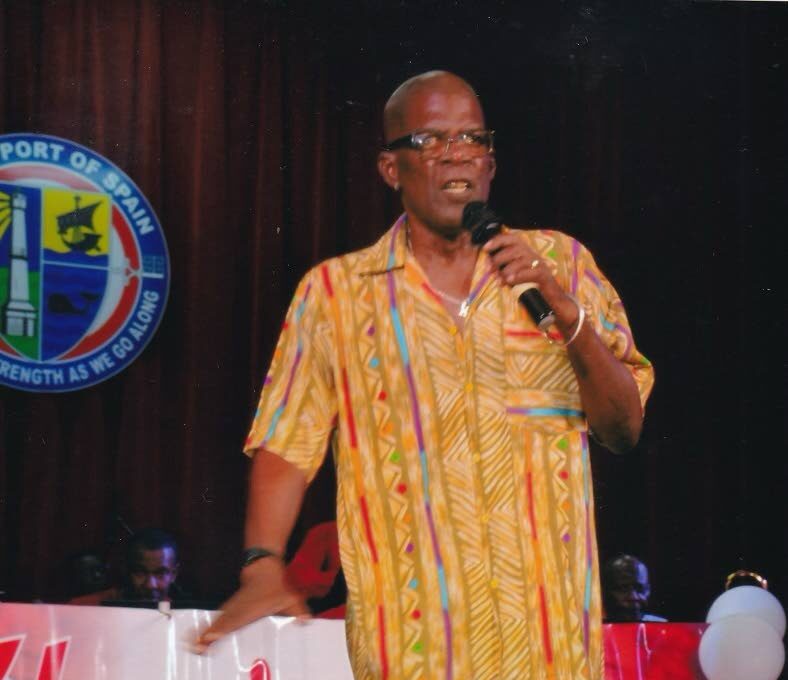
    Renowned calypsonian Hamidullah Wahid, known simply as Hamidullah, is set to headline the much-anticipated Moods & Views calypso concert at Kafe Blues on Wrightson Road, Port of Spain, on November 8 at 7 pm. The event will showcase a stellar lineup of artists, including Ras Kommanda, Valentino, King Luta, Sexy Suzy, Kid Kallaloo (Julien Hunte), Pharoah, and Skero. The performers will be backed by the Michelle Henry Encore Band, with Errol Fabien and Damion Melville serving as the evening’s MCs. Born into a family deeply rooted in calypso and steelpan traditions, Hamidullah’s musical journey began in the Amboys Steel Orchestra in Belmont. Over the years, he has become a prominent figure in the calypso scene, performing in numerous tents and co-founding the Klassic Russo tent in Port of Spain. A founding member of the Trinbago Unified Calypso Organisation (TUCO), Hamidullah is celebrated for his humorous hits like ‘One Stick of Matches’ and ‘You Can’t Land.’ His collaboration with Ras Kommanda through the Kaiso Unit has produced annual calypso concerts, offering a platform for artists to showcase their talent beyond the Carnival season. Hamidullah expressed his excitement for the upcoming show, highlighting the diverse talents of the performers and urging fans to join in the celebration of calypso music.

  • Protecting the Aripo Savannas: Fencing as a last resort?

    Protecting the Aripo Savannas: Fencing as a last resort?

    Trinidad and Tobago is home to a wealth of biodiversity, including the Aripo Savannas, the nation’s last remaining natural savanna ecosystem. Despite its designation as an environmentally sensitive area (ESA) in 2007, the Aripo Savannas Scientific Reserve (ASSR) faces ongoing threats from illegal squatting, land clearing, and poaching. Over the past decade, at least 28 acres have been lost to squatters, highlighting the urgent need for enhanced protection measures. The lack of clear boundaries and enforcement has exacerbated the problem, with some signs marking the perimeter being ignored or absent entirely. The construction of the Elmina Clarke-Allen Highway has further isolated the savannas, making it difficult for wildlife to disperse. One proposed solution is the construction of a security fence along the entire 96,000-foot perimeter, estimated to cost around $5 million. This fence would serve as a physical barrier to illegal entry, improve wildlife corridor usage, and facilitate easier patrolling by the Forestry Division. The Environmental Management Authority (EMA) is well-positioned to manage such a project, given its experience with initiatives like the $69 million Nariva Swamp Restoration. While fencing may not be visually appealing, it offers a reversible and practical solution to safeguard this critical natural resource. Education and community involvement remain ideal, but fencing may be the necessary ‘last resort’ to ensure the Aripo Savannas’ survival.