作者: admin

  • The Rocky Road of Being a Woman in Cycling in Belize

    The Rocky Road of Being a Woman in Cycling in Belize

    Veteran cyclist Kaya Cattouse concluded her remarkable career with a second-place finish in her 20th and final Cross Country cycling event in Belize, marking the end of an era in national competitive cycling. The celebrated athlete characterized her journey as “a rocky, rocky road being a woman in cycling” within the Central American nation, shedding light on persistent institutional challenges facing female athletes.

    Cattouse’s farewell competition nearly collapsed hours before commencement when federation officials attempted to prohibit previously cleared cyclists from racing in their team jerseys. “We have people who are investing money. Cycling is not cheap… for the federation to come and say that the cyclists that they said can come cannot race in that jersey. That is absolutely ridiculous,” Cattouse stated. The decorated cyclist revealed she was prepared to withdraw entirely and transport her equipment home before the contentious matter was ultimately resolved.

    Beyond her personal accomplishments, Caya Cattouse expressed profound concern for the next generation of cyclists, noting that approximately fifteen to twenty minutes after her finish, the fourth-place group had yet to cross the line. This observation prompted her to question the cycling federation’s genuine commitment to elevating competitive standards. “I don’t know if they’re really worried about the future of cycling when they take bold moves like that,” she commented.

    Despite institutional obstacles, Cattouse maintained an inspirational perspective for aspiring young female cyclists: “Do it for yourself. Set goals; do it for your family. Find a meaning behind racing a bike.” Her retirement marks a pivotal moment for Belizean cycling, highlighting both the sport’s potential and the administrative hurdles that continue to challenge its development.


  • Tsunami Run draws big crowd, drives home safety message

    Tsunami Run draws big crowd, drives home safety message

    Barbados witnessed a significant surge in public engagement with emergency preparedness as nearly 900 citizens participated in the annual ‘Run Tsunami Run’ event on Sunday. The 5K run/walk, organized by the Department of Emergency Management (DEM), marked the climax of Coastal Hazard and Earthquake Smart Month activities, demonstrating a substantial increase from last year’s 600 participants.

    Held along Bay Street Esplanade, the exercise served as a functional simulation of evacuation procedures from hazard zones to safety areas. DEM Director Kerry Hinds emphasized the practical purpose behind the event: ‘We’ve designed this activity to replicate actual evacuation protocols – moving from danger to safety, with the understanding that return is only possible when threats subside. Historically, Barbados has experienced tsunami impacts precisely in this vicinity.’

    The initiative garnered international endorsement from Japanese representatives, who drew parallels to their nation’s tragic experience with the 2011 Tōhoku earthquake and tsunami that claimed approximately 20,000 lives. A Japanese government official present noted: ‘This represents exceptional practical training. While structured as a run, this isn’t competition but vital practice for responding to strong earthquakes or tsunamis.’

    DEM Programme Officer Simon Alleyne outlined critical tsunami recognition indicators and appropriate responses: ‘Unusual sea recession, major seismic activity followed by abnormal ocean behavior, or strange roaring sounds from the water should immediately trigger evacuation to higher ground. This fundamental awareness saves lives.’

    Home Affairs Minister Gregory Nicholls reinforced the exercise’s real-world applicability, stating: ‘Beyond today’s enjoyment, participants must internalize that these same actions might need deployment during actual disasters.’ The minister further announced an upcoming Emergency Management Advisory Council meeting to enhance regional disaster response coordination across Caribbean communities.

  • Diepe verslagenheid in de regio na overlijden van voormalig president Santokhi

    Diepe verslagenheid in de regio na overlijden van voormalig president Santokhi

    Guyanese President Irfaan Ali has expressed profound sorrow following the passing of former Surinamese President Chandrikapersad Santokhi, who died at age 67 after being rushed to the emergency department of Paramaribo Academic Hospital. In an official statement, President Ali memorialized Santokhi as both a trusted personal friend and an instrumental regional partner whose leadership significantly strengthened bilateral relations between the neighboring nations.

    President Ali extended heartfelt condolences on behalf of Guyana’s government and citizens to the people of Suriname and Santokhi’s family, emphasizing the collaborative working relationship the two leaders maintained. Their joint commitment focused on advancing regional unity and cooperation through platforms including CARICOM and various international forums.

    Under Santokhi’s presidency, the bilateral partnership between Guyana and Suriname flourished, with both countries leveraging their shared historical ties and economic interests to pursue common developmental objectives. President Ali characterized the late leader as a figure of quiet strength and humility who served his nation with unwavering dedication and conviction.

    The Guyanese head of state noted that Santokhi’s passing represents not just a loss for Suriname, but for the entire Caribbean community, which has been deprived of a significant voice in regional affairs. Ali emphasized that Guyana has lost a genuine friend whose leadership and partnership substantially contributed to Caribbean progress.

    Concluding his tribute, President Ali offered words of comfort to Santokhi’s family, encouraging them to draw strength from the enduring legacy he leaves behind. The former president’s example, friendship, and dedication to public service will continue to resonate throughout the region, according to Ali.

  • Spain Blocks US Military Jets From Its Airspace Over Iran War

    Spain Blocks US Military Jets From Its Airspace Over Iran War

    In a significant diplomatic stand, Spain has formally prohibited United States military aircraft involved in Iranian operations from utilizing its airspace and military installations. The announcement was made by Spanish Defense Minister Margarita Robles on March 30, 2026, marking a firm escalation in European opposition to the ongoing conflict.

    Defense Minister Robles emphasized that this position was communicated unequivocally to American authorities from the onset of hostilities. “We have made this clear to the American government from the beginning,” Robles stated, underscoring Spain’s consistent diplomatic stance.

    Foreign Affairs Minister José Manuel Albares elaborated that the decisive action serves as a preventive measure against regional escalation. The policy aims to reject any contribution that might intensify the war dynamics, aligning with Spain’s commitment to peaceful conflict resolution.

    This defiance has not come without economic repercussions. Former US President Donald Trump previously threatened comprehensive trade embargoes against Spain due to its opposition to the military campaign. Despite these pressures, Madrid maintains its sovereign position.

    According to reports from El País, Spain’s leading daily newspaper, exceptions will be granted solely for verifiable emergency situations requiring immediate aerial access or base landing permissions.

    Prime Minister Pedro Sánchez has emerged as one of Europe’s most vocal critics of US and Israeli military actions against Iran, which commenced in late February. Sánchez has repeatedly characterized these operations as both “reckless” and “illegal” under international law. Earlier this month, the Spanish government confirmed it had rejected all US flight plans associated with the operation, including critical refueling missions. “We are a sovereign country that does not wish to take part in illegal wars,” Sánchez declared, reinforcing national sovereignty in foreign policy decisions.

  • Herberts Man Reprimanded for Public Use, Fined Over Cannabis Limit

    Herberts Man Reprimanded for Public Use, Fined Over Cannabis Limit

    A recent court ruling in Potters has highlighted the nuanced enforcement of cannabis legislation, demonstrating distinct legal consequences for public consumption versus possession quantity violations. Jamie Darroux faced judicial proceedings before Magistrate Ngaio Emanuel after narcotics officers apprehended him on March 23 for consuming cannabis in a public area.

    While the court exercised leniency regarding the public smoking offense—issuing only an official caution rather than imposing financial penalties—the defendant encountered stricter judgment for exceeding statutory possession limits. Law enforcement personnel discovered Darroux carrying 21 grams of cannabis, substantially above the legally permitted 15-gram threshold established under current regulations.

    The judicial outcome reflects evolving enforcement approaches toward cannabis-related offenses. Magistrate Emanuel ordered Darroux to pay a $500 fine specifically for the possession violation, emphasizing that quantity limitations remain strictly enforced even as attitudes toward public consumption evolve.

    This case emerges against a backdrop of intensified monitoring of public cannabis regulations, with legislative provisions authorizing fines reaching EC$2,000 for smoking in public spaces. The bifurcated ruling demonstrates the judiciary’s differentiated approach to separate aspects of cannabis regulation, acknowledging recreational use while maintaining firm boundaries regarding permissible possession amounts.

  • Canadian charged in drug bust

    Canadian charged in drug bust

    Barbadian authorities have initiated a significant legal proceeding against a Canadian citizen following the interception of a substantial cannabis shipment. Ronald George Collins, a 61-year-old resident of London, Ontario, was formally charged after law enforcement confiscated over 26 kilograms of cannabis, with an estimated market value exceeding $210,400.

    The case progressed to the District ‘B’ Magistrates’ Court this Monday, where Collins entered a guilty plea on multiple serious counts. The charges encompass possession of a controlled substance, trafficking, importation of illegal narcotics, and intent to supply. The court’s decision resulted in his remand to Dodds Prison, a facility known for housing individuals facing severe charges.

    This seizure represents a notable success for Barbadian law enforcement in combating international drug trafficking networks that attempt to utilize the island as a transit point. The substantial quantity of cannabis involved highlights the ongoing challenges and scale of the illicit drug trade in the Caribbean region. Collins is scheduled to reappear before the court on April 9, where further proceedings will determine his sentencing and potential additional legal consequences.

  • PM Delivers Passports and Nationality Certificates to Belizean-Americans Abroad

    PM Delivers Passports and Nationality Certificates to Belizean-Americans Abroad

    In an unprecedented diplomatic initiative, Belizean Prime Minister John Briceño and Immigration Minister Kareem Musa personally distributed citizenship documents to the nation’s diaspora community in the United States on Friday. The high-level delegation facilitated the direct handover of approximately 230 passports and 17 nationality certificates to Belizean-Americans during special outreach proceedings. Minister Musa characterized the prime minister’s participation as “an incredibly special treat” for overseas citizens seeking to maintain formal ties with their homeland. The ministerial team demonstrated extraordinary commitment by working until midnight following their Thursday evening arrival to ensure all documents were properly prepared. Minister Musa further disclosed that documentation demand remains consistently high throughout U.S. communities, with expansion plans already developing for additional outreach missions to cities including Chicago. Prime Minister Briceño emphasized that the program exemplifies the government’s dedication to maintaining robust connections with Belizean nationals abroad, stating unequivocally that “all the work we do is for them.” This initiative represents a significant evolution in consular services, transforming traditional bureaucratic processes into personalized governmental engagement.

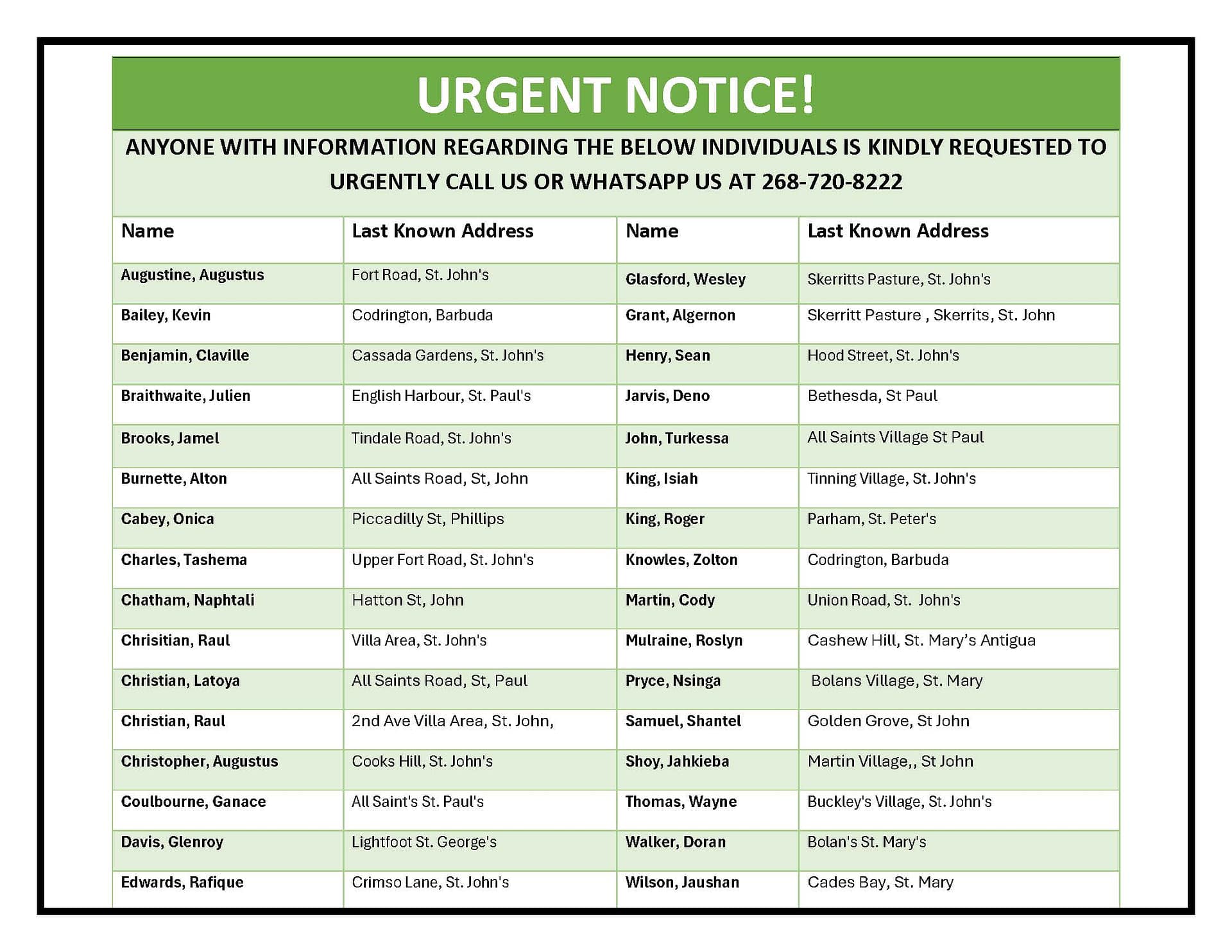
  • Anyone With Info Regarding the Below Individuals Is Kindly Asked To Make Contact

    Anyone With Info Regarding the Below Individuals Is Kindly Asked To Make Contact

    Law enforcement agencies have issued a formal appeal to the general public, requesting assistance in gathering information pertaining to several individuals currently sought for investigative purposes. The notice, characterized by its polite yet urgent tone, emphasizes community cooperation as an essential component of modern policing methodologies.

    While specific details regarding the nature of the investigation remain undisclosed to preserve operational integrity, authorities have confirmed the legitimacy of this outreach initiative. This approach demonstrates a strategic shift toward collaborative public engagement in law enforcement activities, recognizing that community members often possess valuable situational awareness that complements official investigative procedures.

    The methodology reflects contemporary policing philosophies that prioritize transparency where possible while maintaining necessary confidentiality. Officials have established multiple secure channels for information submission, ensuring whistleblower protection and confidential handling of all tips. This development highlights the evolving relationship between civil society and law enforcement institutions, particularly regarding information sharing protocols and collective responsibility for public safety.

    Legal experts note such public appeals have become increasingly common in investigations ranging from missing persons cases to financial fraud investigations, representing a cost-effective method for expanding investigative reach beyond departmental resources. The success rate of similar initiatives has shown significant improvement in case resolution times when the public engages proactively with lawful information requests.

  • Rethinking Sports Academy vision

    Rethinking Sports Academy vision

    The Saint Lucia Sports Academy, approaching its ninth anniversary in 2026, stands at a pivotal juncture as educational and sports authorities debate its future direction. Established as the nation’s pioneering boarding institution dedicated to merging athletic excellence with academic rigor, the academy continues to face scrutiny regarding its developmental effectiveness and competitive standing.

    Despite consistent podium achievements in track and field, cricket, and football, questions persist about whether athletes are truly maximizing their potential given the extended focus on their disciplines. Traditional powerhouses including Sir Arthur Lewis Community College, St Mary’s College, and Soufriere Comprehensive continue to dominate senior-level championships, underscoring the competitive challenges.

    Principal Delia Alcindor-Charles maintains optimism, highlighting exceptional performers like Nyla Jules, Kayla Polius, and Theo Edward. She emphasizes that despite not securing top-tier athletic recruits, coaches have successfully developed students to perform at remarkably high levels. “We work with the students that we have,” Alcindor-Charles told St Lucia Times, “and I genuinely appreciate the skill development progression within two to three years.”

    The academy’s original visionary, former Prime Minister Allen Chastanet, expressed disappointment regarding its evolution. Inspired by Caribbean models and personal boarding school experiences, Chastanet envisioned an institution that would serve as a feeder program for national teams and scholarship pathways. He contends the academy has become merely nominal, lacking essential components including nutritionists, consistent physical training, and specialized academic scheduling suited for athletes.

    Current Education and Sports Minister Kenson Casimir has initiated transformative plans, beginning with renaming the institution to the Levern Spencer Institute of Sport Excellence within a 12-16 month timeframe. The recent reunification of education and sports ministries under his leadership aims to eliminate bureaucratic obstacles that previously hampered operations.

    Cyrus Cepal, District Education Officer for the region, acknowledges the academy’s current shortcomings while outlining necessary improvements. These include curriculum revisions allowing flexible training schedules, differentiated programs for elite athletes, and enhanced marketing strategies. Cepal stresses that the institution must balance athletic specialization with academic quality to attract families seeking comprehensive education.

    Despite differing perspectives on implementation, consensus exists that urgent reforms are essential to elevate the academy to its intended status as a beacon of sporting and educational excellence in Saint Lucia.

  • These Are The 2026 Atlantic Hurricane Season Names

    These Are The 2026 Atlantic Hurricane Season Names

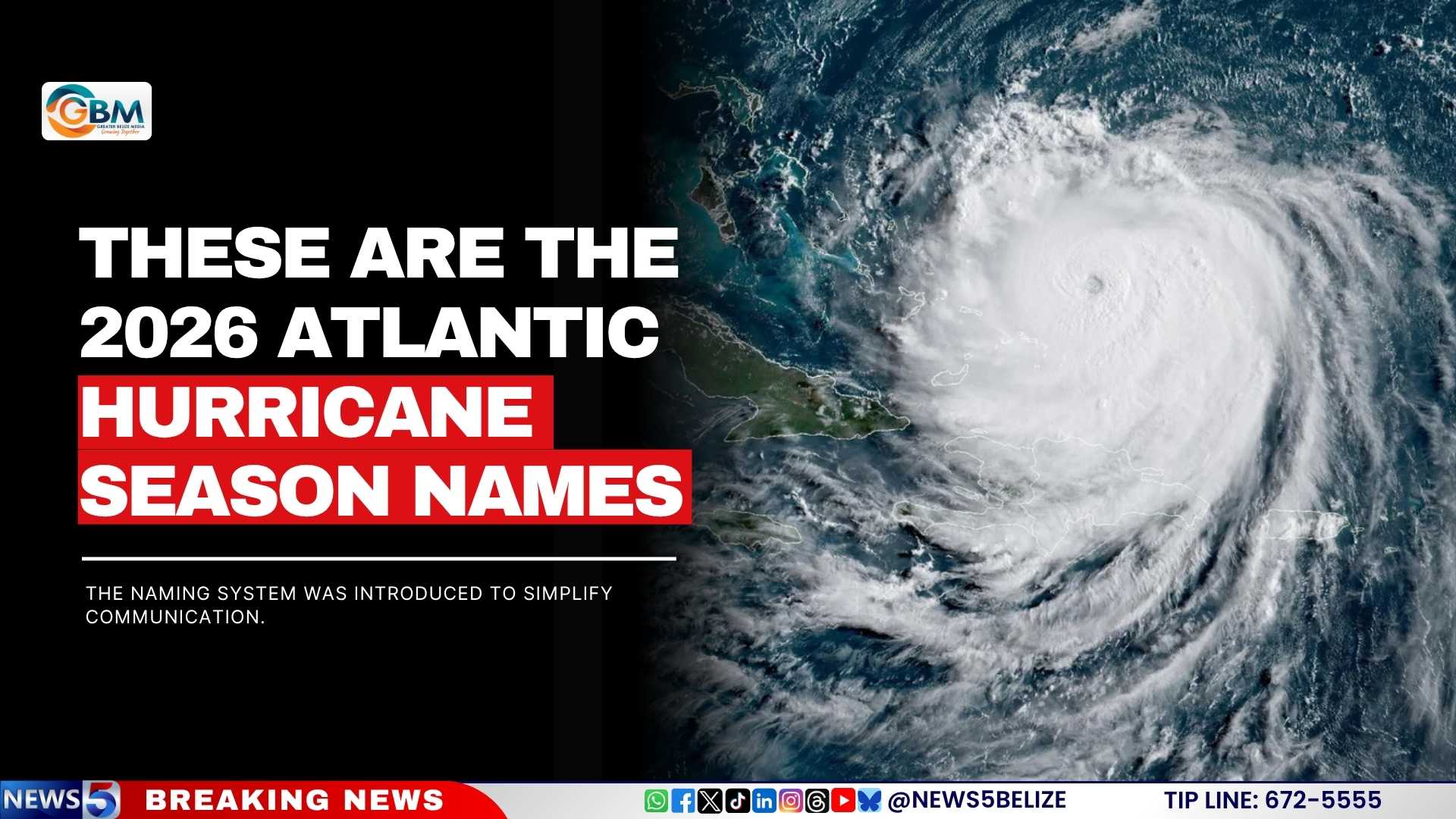
    The World Meteorological Organization (WMO) has formally announced the predetermined nomenclature system for the forthcoming 2026 Atlantic hurricane season, scheduled to commence on June 1st. This year’s alphabetical roster comprises 21 distinct appellations: Arthur, Bertha, Cristobal, Dolly, Edouard, Fay, Gonzalo, Hanna, Isaias, Josephine, Kyle, Leah, Marco, Nana, Omar, Paulette, Rene, Sally, Teddy, Vicky, and Wilfred.

    Governed by a rigorous rotational protocol established by the Switzerland-based WMO, tropical cyclone denominations are curated years in advance. These appellation catalogs undergo recycling every six years, with singular exceptions made for storms that incur substantial devastation or catastrophic loss of life. In such instances, the respective name undergoes permanent retirement and subsequent replacement to prevent potential confusion and maintain cultural sensitivity.

    Preliminary meteorological projections for the 2026 season indicate the potential emergence of El Niño conditions—a natural climatic oscillation phenomenon known to typically suppress Atlantic hurricane formation through enhanced wind shear dynamics. Consequently, several forecasting entities anticipate either near-average or moderately reduced cyclonic activity compared to historical benchmarks.

    Historical climatological data from the 1991-2020 period indicates the Atlantic basin averages approximately 14 designated storms annually, with seven typically intensifying into full-fledged hurricanes. The current naming convention—implemented to streamline public communication and enhance situational awareness—assigns designations once tropical systems achieve sustained wind velocities of 39 miles per hour, with classification as hurricanes occurring at the 74 miles per hour threshold. This system replaced the previously utilized coordinate-based identification method, which frequently generated confusion during concurrent storm events.