作者: admin

  • What is the blockade against Cuba, if not punitive?

    What is the blockade against Cuba, if not punitive?

    In a pointed rebuke of recent statements from senior United States government officials, Cuba’s top diplomat has pushed back against claims that Washington has made no formal adjustments to its punitive sanctions regime against the island nation. Bruno Rodríguez Parrilla, who serves as both a member of Cuba’s Political Bureau and the country’s Minister of Foreign Affairs, issued a series of probing questions calling out Washington’s characterization of its decades-long economic pressure campaign against Cuba. The remarks were published by state-owned Cuban outlet Granma on March 31, 2026.

    Rodríguez Parrilla opened his critique by challenging the core claim from US officials that Washington has not implemented any new punitive actions against Cuba. “Now the U.S. government says it has not taken any ‘punitive’ action against Cuba. What is the economic blockade, if not punitive?” he asked, calling out the broad, decades-long trade and economic embargo that has crippled Cuban economic activity for generations. He went on to question a litany of other restrictive US policies that target Cuba’s ability to engage in normal international trade and commerce, asking what each qualifies as if not punitive action.

    His list of grievances includes US threats to impose secondary sanctions on any third country that exports fuel to Cuba, systematic financial persecution that blocks Cuban entities from completing legitimate financial transactions anywhere across the globe, harsh restrictions that bar foreign merchant ships that have called at Cuban ports from entering US territorial waters, and the long-standing prohibition on recreational travel from the United States to the island.

    Beyond the broad blockade framework, Rodríguez Parrilla also questioned the ongoing utility of what he described as selective and arbitrary blacklists maintained by the US government against Cuban entities and individuals. These include the notoriously controversial US State Department list of state sponsors of terrorism, which Cuba was controversially added to and removed from in recent years, alongside multiple other restricted entity and travel restriction lists that bar American entities and citizens from engaging with a wide range of Cuban institutions.

    The Cuban foreign minister also highlighted a recent wave of coercive diplomatic pressure that the US has exerted on governments across the Caribbean and Latin America, pushing regional states to abandon long-standing medical cooperation programs with Havana. These programs, which deploy thousands of Cuban medical specialists to low-income and underserved communities across the region, have been a key source of legitimate foreign export income for Cuba for decades. Rodríguez Parrilla noted that the US pressure campaign does not just harm Cuba’s economy by cutting off this legal income stream—it also inflicts direct harm on vulnerable populations across the region who are cut off from life-saving care provided by Cuban medical workers. He called this campaign nothing less than a deliberate, purely punitive action against the Cuban people and their neighbors across the Americas.


  • Column: De les van een onverwacht afscheid

    Column: De les van een onverwacht afscheid

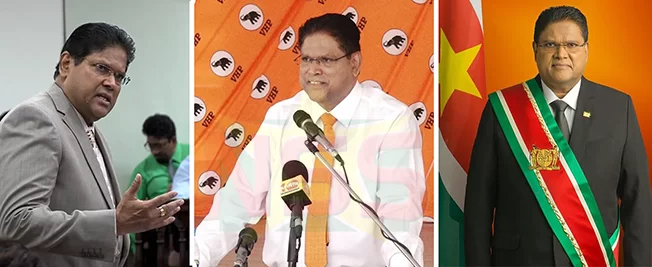
    The unexpected passing of Chan Santokhi has sent shockwaves throughout the nation, leaving citizens and political circles alike grappling with the profound suddenness of mortality. A figure who recently stood at the pinnacle of political influence, having secured 45,894 votes and the trust of many, has now become a symbol of life’s unpredictable nature.

    Santokhi’s legacy remains complex—viewed by some as a cherished leader while others regarded him with criticism or disappointment. Yet in death, these political distinctions fade into insignificance. The titles of president, party leader, and assembly member dissolve, leaving only the silent absence where once stood a living, breathing human being.

    This tragic event has triggered deep societal introspection about the transient nature of existence. The article poignantly questions how we prepare for sudden loss when someone who recently spoke, walked, and made plans abruptly vanishes from our lives. It highlights the universal truth that no one—regardless of power, popularity, or position—is exempt from mortality’s reach.

    The narrative evolves beyond political commentary to examine how societies process grief. While many pause to mourn and reflect, others respond with harsh words and coldness, revealing our collective struggle to embrace life’s fundamental fragility. The piece suggests that Santokhi’s ultimate legacy may not be his political achievements or failures, but rather the opportunity his passing creates for national contemplation.

    The article concludes with a powerful meditation on what truly endures beyond our temporal existence: not positions, titles, or electoral votes, but the traces we leave in other people’s lives, the compassion we show, and the space we create for others. It serves as an invitation to live more consciously, hate less, understand more, and recognize that despite our differences, we share the same fragile human journey toward an inevitable yet uncertain end.

  • Dominican Republic nominated to lead 79th World Health Assembly

    Dominican Republic nominated to lead 79th World Health Assembly

    The Dominican Republic has secured a historic unanimous nomination from all countries of the Americas to serve as president of the 79th World Health Assembly, set to take place from May 18 to 23, 2026, at the World Health Organization (WHO) headquarters in Geneva, Switzerland.

    The selection aligns with WHO’s long-standing rotational leadership framework, which allocates the 2026 presidency to the World Health Organization’s Region of the Americas, represented regionally by the Pan American Health Organization (PAHO). The full backing from every regional delegation was formalized during a closed-door meeting of country representatives held in October 2025, and the final confirmation of the appointment will take place during the opening plenary session of the 2026 assembly.

    The official notification of the nomination was delivered in a formal letter addressed to Dominican Republic President Luis Abinader, which included a guarantee of full institutional support from PAHO and the American regional bloc as the country prepares to take on the leadership role.

    This milestone marks the first occasion in history that the Dominican Republic has been selected to lead WHO’s highest decision-making body, a development that is widely viewed as a major global vote of confidence in the Caribbean nation’s public health leadership and contributions to international health cooperation. The annual World Health Assembly brings together senior health and diplomatic representatives from WHO’s 194 member states to identify pressing global health challenges, negotiate collaborative response frameworks, and set binding policy priorities that guide global public health work for the coming years.

  • Chandrikapersad Santokhi: Van ‘The Sheriff’ tot Staatsman

    Chandrikapersad Santokhi: Van ‘The Sheriff’ tot Staatsman

    Suriname and the Caribbean region mourn the sudden passing of President Chandrikapersad ‘Chan’ Santokhi on March 30, 2026. The 67-year-old leader from Lelydorp leaves behind a remarkable political legacy characterized by unwavering commitment to justice, economic reform, and regional cooperation.

    Santokhi’s journey from police academy graduate in Apeldoorn, Netherlands to national leadership was marked by exceptional dedication to law enforcement. His early career saw rapid advancement within Suriname’s police force, eventually becoming head of national criminal investigation and police commissioner. His tough-on-crime approach earned him the nickname ‘The Sheriff’ – a moniker he embraced, stating: ‘People want law and order. Hence the call for security, the call for sheriff.’

    As Minister of Justice from 2005-2010, Santokhi achieved significant milestones including removing Suriname from the U.S. blacklist of drug transit countries. His most notable contribution was initiating the criminal proceedings against former dictator Desi Bouterse for the December 1982 murders, demonstrating his steadfast commitment to accountability.

    Elected president in 2020, Santokhi ended the Bouterse era and inherited a financially exhausted nation. He implemented an unpopular but necessary IMF reform program, acknowledging communication shortcomings while maintaining his conviction: ‘We could have chosen a populist course aimed at winning elections. But that would have been irresponsible given our situation.’

    His regional leadership as CARICOM Chairman in 2022 strengthened Caribbean unity, particularly enhancing relations with Guyana. President Irfaan Ali of Guyana described him as ‘a brother forged by conviction’ who worked wholeheartedly for regional progress.

    Survived by his wife Mellisa Seenacherry and two children, Santokhi’s legacy extends beyond family to national transformation. His son Rishano remembered him as a man with strong legal vision whose principles continue to shape Suriname and the Caribbean.

    Santokhi’s philosophy centered on inclusive nation-building: ‘We cannot build a nation while tolerating major disparities. Structurally disadvantaged groups require targeted support strategies – not as favor but as duty.’ His passing creates a leadership void, but his exemplary dedication to justice and development endures.

  • Jones sends rallying call to athletes ahead of CARIFTA

    Jones sends rallying call to athletes ahead of CARIFTA

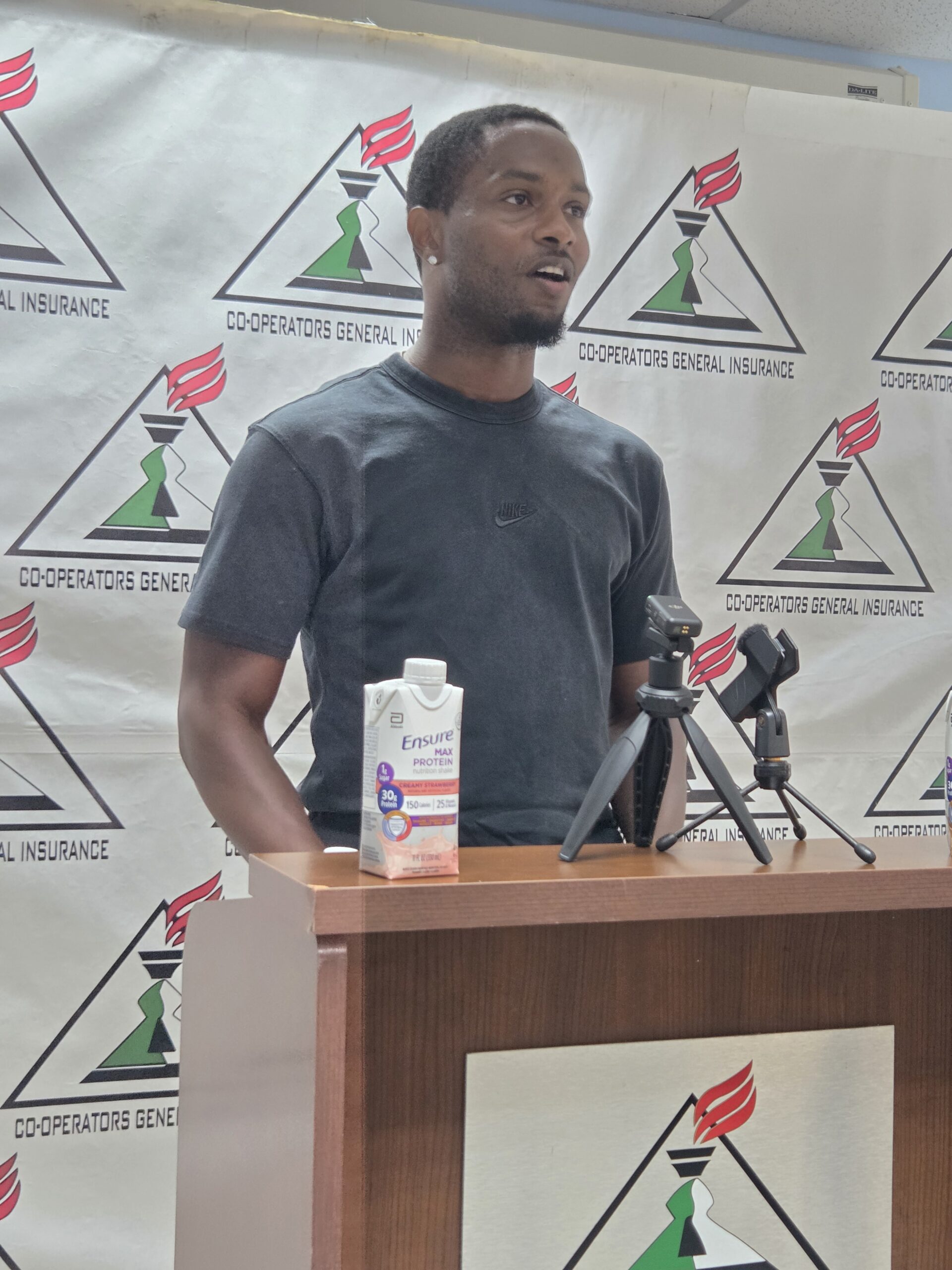
    Ahead of the prestigious CARIFTA Games in Grenada, Olympic athlete and national 400m record-holder Johnathan Jones has delivered a powerful motivational address to members of Barbados’ Elite Distance Track Club. The special reception, hosted at Co-Operators General Insurance on Sunday, served as both a celebration and strategic preparation session for the young athletes embarking on their regional competitive journey.

    Barbados is set to make history by sending an unprecedented delegation of 61 athletes to the championships, with 16 representatives originating from the Elite Distance Track Club. Additionally, two club swimmers will compete at the parallel CARIFTA Swimming Championships in Martinique.

    Jones, currently training in Florida, emphasized the significance of the selection achievement while outlining the mental framework required for competitive success. “You’ve earned your positions through merit, not favor,” he stated. “Medals are determined by performance on competition day, not predetermined by reputation. Approach each round systematically and pursue victory aggressively.”

    Drawing from his own championship experiences, Jones highlighted the psychological approach cultivated by Coach Ramon Armstrong that propelled numerous athletes to podium finishes. “We operated with a conviction of superiority—a mindset where we acknowledged no competitors as better prepared or more capable. This mentality yielded medal-winning performances across our team.”

    While emphasizing competitive intensity, Jones equally stressed the importance of embracing the experiential aspects of international competition. He reflected on the enduring personal connections formed during his own CARIFTA participations, noting that some friendships sustained to this day provide personal support networks beyond athletic contexts.

    Coach Armstrong reinforced these messages while contextualizing the broader significance of the athletes’ participation. “Previous performances become irrelevant once you approach the starting line,” he advised. “Every competitor begins equally, and each has legitimate medal potential. You represent not merely individual aspirations but national pride, familial investment, institutional reputation, and club legacy.”

    The coaching visionary acknowledged the athletes’ developmental progression while emphasizing that peak performance remains the ultimate objective. “We’ve witnessed your dedicated training and consistent improvement. Now we anticipate seeing that preparation translate into exceptional competitive representation for Barbados.”

  • Manzanillo Plant key to energy stability, says Energy Minister

    Manzanillo Plant key to energy stability, says Energy Minister

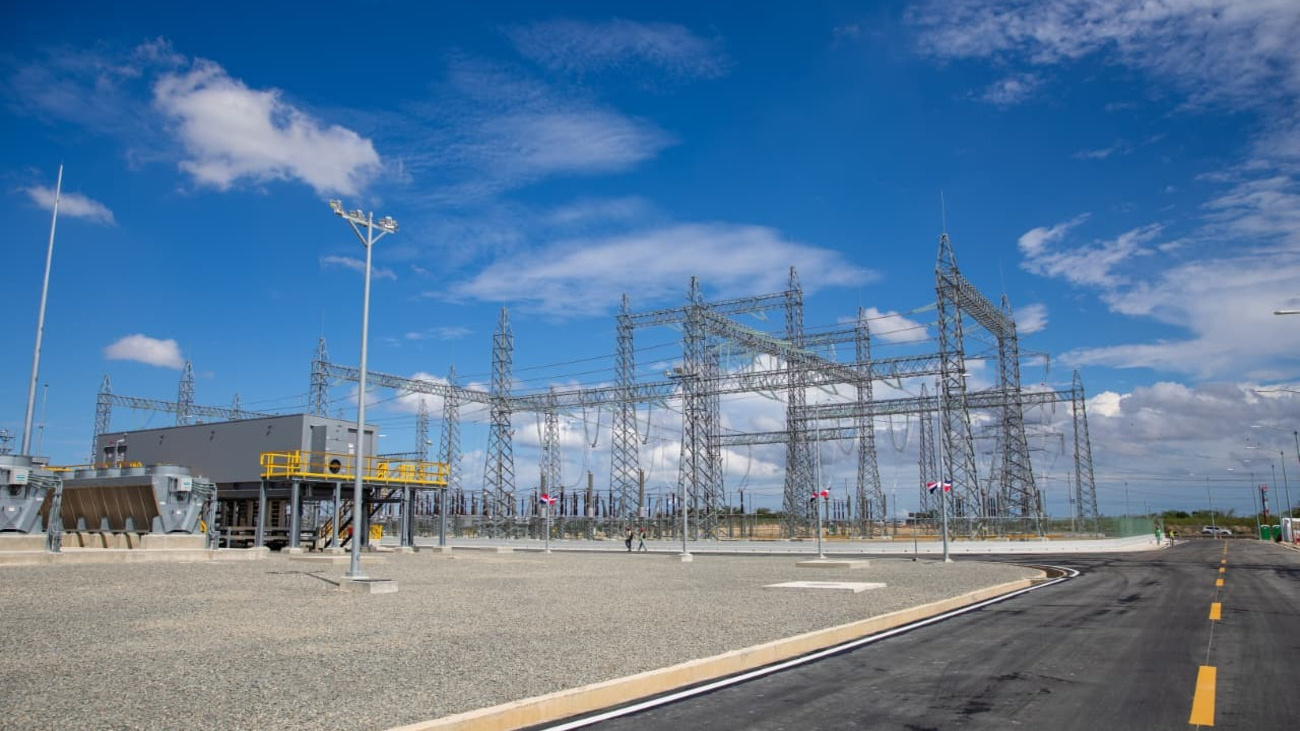
    Santo Domingo has emerged as a Caribbean energy leader with groundbreaking infrastructure development and renewable expansion. Energy and Mines Minister Joel Santos unveiled the Manzanillo Power Land thermoelectric facility, now operational as the region’s most advanced power plant. This state-of-the-art complex injects 414 megawatts into the National Interconnected Electric System, deploying cutting-edge control and monitoring technologies that significantly enhance grid reliability while optimizing response mechanisms to fluctuating energy demands.

    The energy transformation extends beyond conventional power generation. Under President Luis Abinader’s administration, renewable capacity has experienced unprecedented growth, surging from 554 megawatts in 2020 to approximately 2,000 megawatts today—representing a nearly fourfold increase. The year 2025 proved particularly significant with approximately 1,150 megawatts of clean energy integration, demonstrating accelerated investment in solar and wind projects nationwide.

    Minister Santos emphasized that this dual approach—combining advanced thermal generation with renewable expansion—creates a more resilient, sustainable, and secure energy ecosystem. Strategic infrastructure investments, regulatory reforms, and technological innovation have collectively positioned the Dominican Republic for continued energy modernization. The government maintains its commitment to further increasing renewable penetration, ensuring nationwide access to stable, environmentally conscious electricity that meets both current and future demands.

  • Rising freight, raw material costs could lift food prices, say manufacturers

    Rising freight, raw material costs could lift food prices, say manufacturers

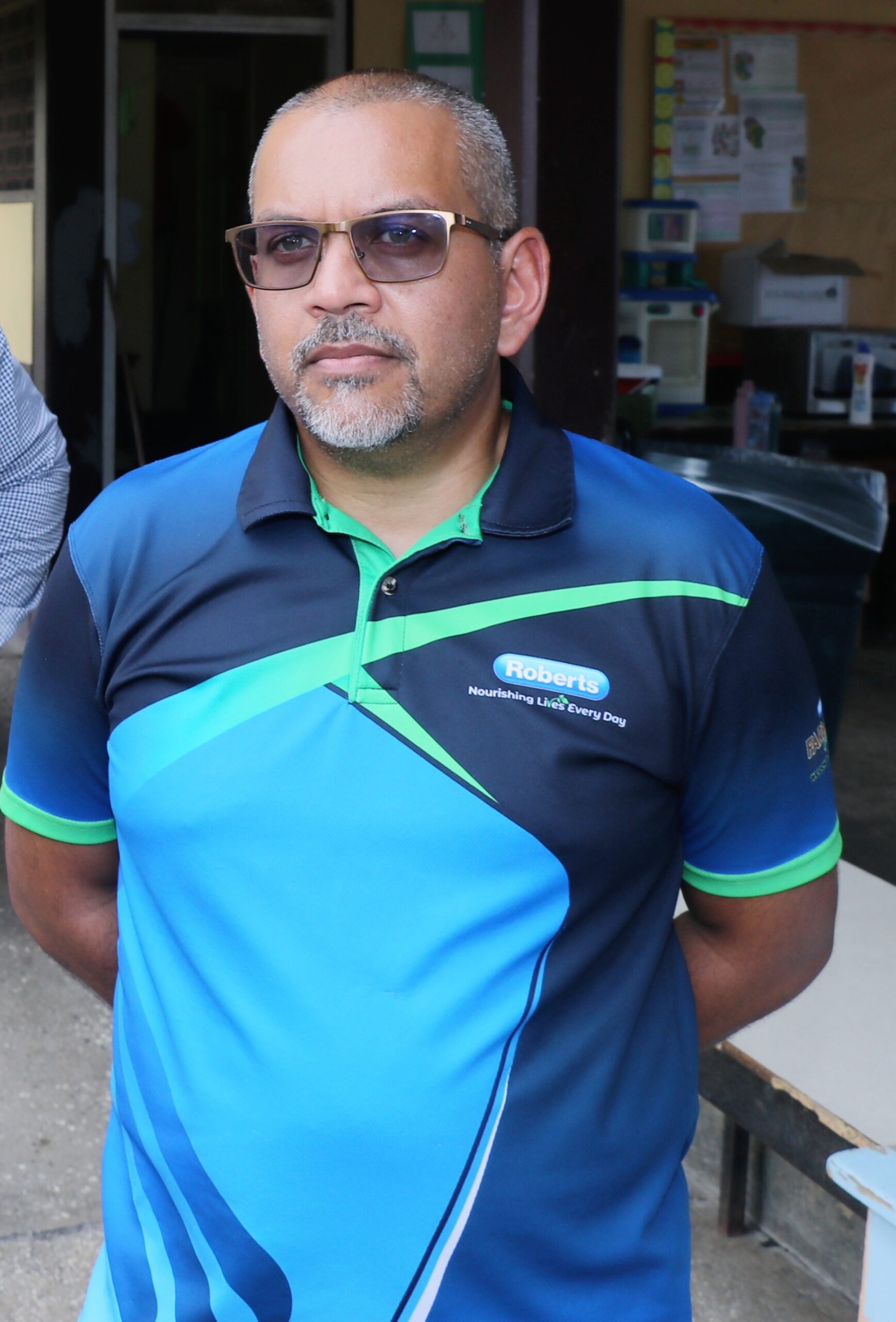
    Barbados faces an impending surge in food prices within the next two to three months as global supply chain disruptions from Middle East conflicts drive up shipping and raw material costs, according to a leading industry official. Rakeesh Bernard, President of the Barbados Manufacturers’ Association (BMA), confirmed that while current inventories are temporarily buffering consumers from immediate impacts, manufacturers are receiving formal notifications from shipping lines and suppliers about impending cost increases.

    The complex supply chain dynamics mean that manufacturers who forward-purchase inputs are currently insulated from spot market price fluctuations. However, Bernard emphasized that this protection is temporary. “Many manufacturers purchase materials months in advance, creating a delayed effect where consumers won’t feel the impact until existing inventories deplete,” he explained. This creates a precarious situation where global price increases have already occurred upstream but haven’t yet reached retail levels.

    Agricultural inputs, particularly fertilizers, are expected to experience significant price increases that will inevitably affect local food production costs. Bernard noted these increases would more directly impact agriculture than manufacturing initially, but would eventually ripple through the entire food production ecosystem.

    The BMA president carefully qualified that price increases aren’t inevitable, contingent on geopolitical resolution. “If the conflict ends immediately, we might avoid the worst impacts,” he stated, “but if hostilities continue, consumers should prepare for noticeable price movements within the next quarter.

    This warning comes alongside government interventions aimed at mitigating the economic impact. Finance Minister Ryan Straughn recently announced budgetary measures including a cap on container values used to calculate import duties and VAT. Effective April 1 through March 2027, Customs will limit valuation to $3,000 for 20-foot containers and $6,000 for 40-foot containers on CIF shipments, directly addressing the freight cost component of consumer prices.

    Bernard endorsed these government actions as “timely and necessary,” expressing full support for the measures designed to shield both industry and consumers from external economic shocks. The association president concluded that despite the challenging global environment, Barbados has implemented appropriate defensive economic measures.

  • Easter travel drives record passenger flow at AILA

    Easter travel drives record passenger flow at AILA

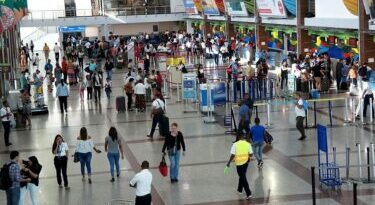
    Santo Domingo is preparing for unprecedented aviation activity as Las Américas International Airport (AILA) forecasts handling over 110,000 passengers during the 2026 Holy Week period. This projection represents a substantial 15% year-over-year surge, underscoring robust seasonal travel demand primarily driven by the Dominican diaspora returning home from the United States and European nations.

    Aviation authorities at Aeropuertos Dominicanos Siglo XXI (Aerodom) report that flight occupancy rates are consistently surpassing 90% threshold. The most heavily trafficked air corridors link the capital to major urban centers including New York, Boston, Miami, Orlando, and San Juan in the United States, alongside key Spanish destinations. In response to this sustained demand, leading international carriers such as American Airlines, Delta Air Lines, JetBlue Airways, and Iberia have strategically augmented their flight frequencies to this Caribbean destination.

    To accommodate the anticipated passenger influx, Dominican government agencies have implemented coordinated operational enhancements. The General Directorate of Migration and the General Directorate of Customs have activated specialized protocols to streamline border control processes and ensure efficient passenger processing. Industry analysts note that despite prevailing premium airfare pricing during this peak season, traveler demand remains resilient, further solidifying AILA’s strategic position as a pivotal aviation gateway in the Caribbean region during major holiday periods.

  • Haitian biodiversity, a major economic lever

    Haitian biodiversity, a major economic lever

    A groundbreaking economic assessment conducted by Haiti’s Ministry of Environment in collaboration with the United Nations Development Programme (UNDP) has revealed the staggering economic value of the nation’s coastal ecosystems. The March 2026 analysis estimates these natural assets contribute approximately $9.57 billion annually to Haiti’s economy through essential ecosystem services.

    This valuation represents the Total Economic Value of nature’s complimentary services rather than direct monetary revenue. The comprehensive study breaks down the economic contributions across four critical ecosystem services:

    Coastal protection constitutes the most significant portion (40-50%), with mangroves and coral reefs providing vital storm and erosion barriers that prevent billions in potential infrastructure damage during hurricane events.

    Fisheries support accounts for 20-30% of the total value, as marine ecosystems serve as indispensable breeding grounds. Remarkably, over 82% of Haiti’s fish production directly depends on the health of these coastal habitats.

    Carbon sequestration represents 10-15% of the valuation, with mangrove forests storing substantial ‘blue carbon’ that holds measurable value in global carbon markets while simultaneously combating climate change.

    Tourism and recreation potential contributes 5-10% despite current security challenges, indicating significant untapped economic opportunities, particularly in Haiti’s southern regions.

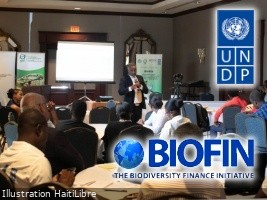
    The findings were presented on March 26, 2026, at a Port-au-Prince gathering of approximately fifty stakeholders from public, private, and academic sectors. This meeting marked the initial phase of UNDP’s Biodiversity Financing Initiative (BIOFIN), launched in 2012, to address Haiti’s critical biodiversity funding gap.

    Currently, 97% of biodiversity preservation funding originates from external aid, creating an unsustainable conservation model. The BIOFIN initiative aims to establish more structured, autonomous financing mechanisms through four priority areas: creating dedicated national budget lines, exploring innovative financing tools including debt-for-nature swaps, strengthening institutional capabilities, and fully integrating gender considerations into conservation planning.

    The assessment fundamentally reframes biodiversity from an environmental concern to an economic imperative, positioning ecosystem protection as a strategic investment that supports livelihoods, stimulates local economies, and secures Haiti’s sustainable development future.

  • Fiesta Rally2 clinches victory at BRC shakedown

    Fiesta Rally2 clinches victory at BRC shakedown

    Josh Read and Mark Jordan delivered a masterclass in strategic rally driving, securing a calculated victory in the Barbados Rally Club’s (BRC) Shakedown Stages this Sunday. The duo piloted their Ford Fiesta Rally2 to a precise two-second triumph, establishing an early psychological advantage for the upcoming BCIC Rally Barbados 2026. Despite not setting the fastest times on every stage, their consistent performance from the second of nine special stages proved decisive.

    The event, which concluded with a prizegiving ceremony at the Conrad Hunte Cricket Ground in St. Andrew, saw Read emphasize the multifaceted challenge of winning Rally Barbados. ‘The stages were challenging, especially Pickerings with the amount of gravel on the road, but we kept out of trouble. My confidence is good. A lot of things need to be right to win Rally Barbados; we need to be fast, consistent and reliable,’ he stated.

    Defending BCIC RB25 champions Kyle Gregg and Kreigg Yearwood, also in a Fiesta Rally2, led initially but were hampered by a power delivery issue. After a strong afternoon charge that included three stage wins, they managed to claw their way back to a commendable second place. ‘We were much sharper after lunch and I’m glad the trouble came in the Shakedown,’ remarked a philosophical Gregg.

    The rally was not without drama for other top contenders. Two-time winners Dane Skeete and Tyler Mayhew (Subaru Impreza WRC S12) mounted an impressive recovery from 44th place after a disastrous opening stage, only to retire late due to mechanical woes. Adam Mallalieu, who was poised for a podium finish in his new Fiesta Rally2, suffered a final-stage excursion that dropped him to fifth.

    This misfortune promoted the BCIC RB24 winning duo of Stuart Maloney and Kristian Yearwood (Skoda Fabia RS Rally2) to third, a significant confidence boost following their heavy accident in last year’s event. Maloney described the day as a ‘block building’ exercise, expressing satisfaction with their progress and pace.

    The event also served as a crucial testing ground under new central service regulations for the 2026 rally, placing greater emphasis on vehicle reliability. Of the 47 starters, 16 failed to finish, underscoring the demanding nature of the competition and setting the stage for an intensely competitive main event.