作者: admin

  • St. Kitts and Nevis FM Dr Denzil Douglas arrives in India, strengthening bilateral ties  – WIC News

    St. Kitts and Nevis FM Dr Denzil Douglas arrives in India, strengthening bilateral ties  – WIC News

    On a Sunday marked for diplomatic progress, Dr. Denzil Douglas, the top foreign affairs official of the Caribbean island nation St. Kitts and Nevis, touched down at New Delhi’s Indira Gandhi International Airport Sunday for a high-stakes official visit designed to deepen longstanding cordial relations and unlock new areas of cross-national cooperation between the two countries.

    Dr. Douglas was greeted on arrival by senior ranking officials from India’s Ministry of External Affairs, in a display of warm hospitality that New Delhi extended to the visiting Caribbean delegation. India’s Ministry of External Affairs later shared a first-hand look at the welcome ceremony across its social media channels, publishing a short statement that read: “A warm welcome to FM Denzil Douglas of St. Kitts and Nevis, on his arrival in New Delhi.” Local Indian news outlet ANI also released footage capturing the foreign minister’s arrival at the airport Sunday evening, giving the public a view of the diplomatic reception.

    According to official statements from India’s External Affairs Ministry, this visit is far more than a routine diplomatic exchange: it represents a pivotal milestone in the evolution of bilateral relations between the two nations. The centerpiece of Dr. Douglas’ itinerary is the formal inauguration of St. Kitts and Nevis’ new permanent High Commission in New Delhi, a landmark development that formalizes the growing depth and importance of the partnership between the two countries.

    The establishment of a full-time resident diplomatic mission in India’s capital marks a new chapter in bilateral engagement, reflecting the rising mutual priority both nations place on their relationship. During his stay in New Delhi, Dr. Douglas is scheduled to hold a series of closed-door high-level talks with top Indian government officials, with conversations focused on expanding existing collaborative frameworks and deepening regular diplomatic dialogue.

    Beyond the bilateral context, the visit also highlights India’s sustained diplomatic outreach to small island developing states across the Caribbean, and its ongoing commitment to building mutually beneficial partnerships within the Global South. For decades, India and St. Kitts and Nevis have nurtured friendly, cooperative relations, working in lockstep on shared priorities across multilateral international forums, particularly on issues of sustainable development and global climate action. Both nations share common ground as climate-vulnerable states, making coordinated action on climate change a core area of shared interest.

    Diplomatic observers note that this visit is expected to solidify the foundation of the partnership, opening new avenues for collaboration across sectors ranging from climate adaptation to economic development, trade, and cultural exchange.

  • OPEC+ gaat olieproductie licht verhogen ondanks risico voor trage marktgroei

    OPEC+ gaat olieproductie licht verhogen ondanks risico voor trage marktgroei

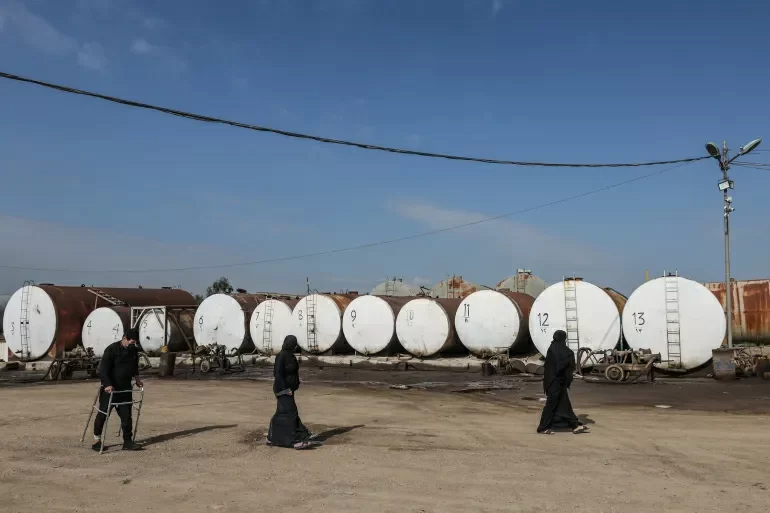
    On a fuel market in Erbil, Iraq, vendors and shoppers move past stacked barrels of heating oil and vehicle fuel, a daily reminder of the uncertainty gripping global energy markets. Against this backdrop, the Organization of the Petroleum Exporting Countries (OPEC) and its partner producers, collectively known as OPEC+, announced a 206,000 barrel per day increase to crude oil production quotas for May, a move widely characterized as largely symbolic given the current geopolitical disruption.

    Since late February, the Strait of Hormuz — the world’s most critical chokepoint for global oil trade, responsible for moving roughly 15% of the world’s total daily crude supply — has been effectively closed to most commercial shipping amid escalating conflict between the United States, Israel, and Iran. This prolonged closure has already choked off oil exports from major OPEC+ producers including Saudi Arabia, the United Arab Emirates, Kuwait, and Iraq. Current estimates indicate the blockade has removed between 12 and 15 million barrels of daily crude from global markets, a devastating supply cut that has sent prices skyrocketing.

    In a joint statement released Sunday, signed by eight core OPEC+ members including Saudi Arabia, Russia, Iraq, the UAE, Kuwait, Kazakhstan, Algeria, and Oman, the coalition reaffirmed its commitment to closely monitoring market conditions and maintaining long-term stability in global energy markets. The participating nations also issued a joint statement expressing deep concern over recent targeted attacks on regional energy infrastructure. Industry analysts note that repairing damaged energy facilities requires extensive time and massive capital investment, which further tightens already constrained global crude supplies.

    While the 206,000 barrel per day production increase for May amounts to less than 2% of the total supply lost to the Hormuz blockade, industry observers say the move sends a clear signal that OPEC+ stands ready to ramp up output as soon as the strait reopens to safe commercial navigation. This planned May increase matches the quota adjustment that the group agreed to implement in April, a consistency held despite the expanding disruptions to global oil trade.

    Geopolitical tensions have already pushed global crude oil prices to a four-year high, with benchmark crude trading near $120 per barrel as of early April. This sharp price increase has directly translated to higher costs for transport fuel for consumers and businesses worldwide. Leading financial services firm JPMorgan has warned that if the Strait of Hormuz blockade continues through mid-May, global benchmark prices could climb above $150 per barrel — a new all-time record for crude.

    In a small sign of potential de-escalation, Iran has granted limited exemptions to allow a small number of regional nations to use the strategic waterway. Iraq is among the countries granted permission to resume limited transit through the strait, and shipping tracking data confirmed an Iraqi crude oil tanker transited the waterway on Monday morning.

    Diplomatic efforts to resolve the blockade are already underway. On Sunday, Oman’s Ministry of Foreign Affairs announced that deputy-level ministerial talks with Iranian officials are being held to explore pathways to restore unimpeded transit for all commercial vessels through the strait. However, diplomatic progress is being overshadowed by rising geopolitical rhetoric: former U.S. President Donald Trump issued a new threat over the weekend, warning that the U.S. will escalate military strikes against Iran, including targeting civilian infrastructure such as bridges and energy power plants, if the strait is not reopened to full traffic by Monday.

  • Arajet adds 14th aircraft named “Salto de Jimenoa”

    Arajet adds 14th aircraft named “Salto de Jimenoa”

    Leading low-cost Dominican airline Arajet has marked a key milestone in its rapid expansion trajectory with the introduction of its 14th aircraft, a Boeing 737 MAX 8 branded “Salto de Jimenoa”. The new jet touched down at Santo Domingo’s Las Américas International Airport this week, boosting the carrier’s growing fleet capacity and expanding its ability to connect the Dominican Republic to global markets.

    What sets this new delivery apart is more than just its addition to operational capacity: the aircraft’s name was chosen to honor one of the Dominican Republic’s most beloved natural treasures, Jimenoa Waterfall, a top ecotourism destination nestled in the mountain highlands of Jarabacoa. This naming convention is part of a deliberate, long-term strategy from Arajet: the airline has committed to naming each plane after a significant natural site across the country, turning every aircraft in its fleet into a flying ambassador for the Dominican Republic’s rich biodiversity and protected natural areas.

    In comments on the delivery, Arajet CEO Victor Pacheco highlighted the dual purpose of the fleet expansion. Beyond increasing the airline’s route network and flight frequency to meet rising travel demand, Pacheco emphasized that the move aligns with the company’s core commitment to advancing sustainable tourism and inclusive economic growth across the Dominican Republic. Every flight operated by the named aircraft helps introduce international travelers to the country’s natural heritage, encouraging more responsible travel practices and supporting the growth of ecotourism economies in regional communities. Industry analysts note that the expansion positions Arajet to capture a growing share of the Caribbean travel market, while its focus on natural heritage promotion sets a new example for how airlines can tie corporate growth to destination sustainability.

  • COE reports 27 deaths during Holy Week 2026 operation

    COE reports 27 deaths during Holy Week 2026 operation

    SANTO DOMINGO — The annual Holy Week holiday travel period in the Dominican Republic wrapped up with dozens of preventable deaths recorded across the country, per final statistics released by the nation’s Emergency Operations Center (COE, by its Spanish acronym) following the conclusion of the “Awareness for Life, Holy Week 2026” public safety operation.

    In its official closing bulletin, COE confirmed that 27 people lost their lives in holiday-related incidents between the operation’s start and end, with 22 of those fatalities tied to traffic collisions and the remaining five stemming from drowning accidents. The report breaks down that motorcycles were implicated in the overwhelming majority of road crashes, making up 173 of the 203 total traffic accidents registered nationwide. In terms of location, 112 crashes took place within densely populated urban zones, while another 91 occurred on intercity highways and rural public roads. Of all people killed during the holiday, 18 were motorcycle riders, with other fatalities attributed to pedestrian hit-and-run incidents and additional water-related accidents.

    Despite the grim final toll, authorities noted a notable improvement from last year’s event: overall fatalities dropped by 15.63% compared to the 2025 Holy Week operation. COE representatives credited this decline to expanded preventive public outreach campaigns and stepped up law enforcement surveillance across high-traffic and high-risk areas throughout the country. The operation’s data also mapped out which regions faced the highest volume of incidents, with the most cases recorded in the provinces of Santo Domingo, Puerto Plata, San Pedro de Macorís, La Altagracia, San Cristóbal, and the National District.

    Beyond traffic and drowning incidents, the COE bulletin documented hundreds of non-fatal medical emergencies tied to the holiday. Responders recorded 506 confirmed cases of alcohol poisoning across the country, 28 of which involved underage individuals, alongside 207 cases of food poisoning linked to unregulated street vendors and poorly stored celebratory meals. Emergency teams also carried out 22 separate sea rescues for distressed recreational swimmers and boaters, safely reunited 24 separated minor children with their guardian families, and delivered more than 30,700 total assistance services, ranging from on-site medical care to emergency roadside support for stranded motorists.

    Over 7.3 million Dominican residents and tourists traveled across the nation during the annual Holy Week holiday, one of the busiest travel periods on the country’s calendar. The multi-day national safety operation required coordinated deployment across dozens of public institutions, including the Dominican Armed Forces, national and regional health authorities, tourism regulatory bodies, and specialized local and national rescue agencies. As the operation drew to a close, COE leadership renewed its longstanding call for all travelers and holiday-goers to practice responsible behavior, emphasizing consistent helmet use for motorcycle riders and strict adherence to national traffic regulations as simple, critical steps to cut down on preventable holiday tragedies in future years.

  • Cuban youth lead a productive Sunday

    Cuban youth lead a productive Sunday

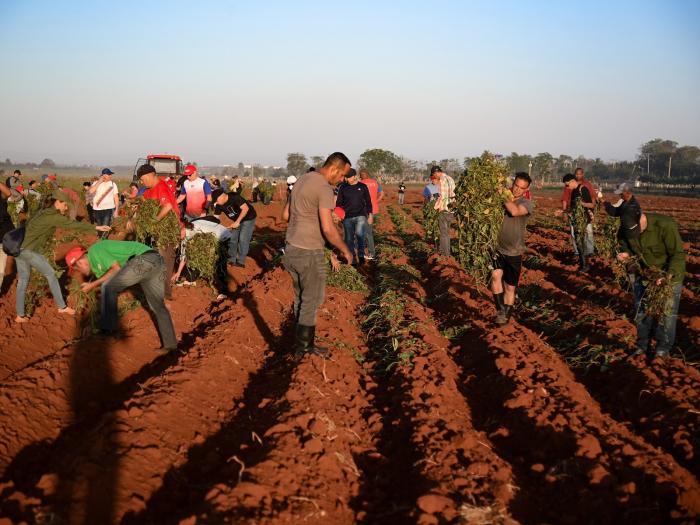
    On a misty Sunday early this April, Cuba launched an island-wide day of voluntary labor to mark two landmark milestones for the country’s youth organizations: the 64th anniversary of the Union of Young Communists (UJC) and the 65th anniversary of the José Martí Pioneer Organization (OPJM). The national volunteer push centered on two core national priorities: expanding agricultural output and building new photovoltaic solar energy infrastructure, addressing two of the country’s most pressing ongoing challenges.

    Leading the effort on the ground in Bauta, a municipality in western Cuba’s Artemisa Province, was Miguel Díaz-Canel Bermúdez, who serves as both First Secretary of the Central Committee of the Cuban Communist Party and President of the Republic. Joined by generations of local Cuban volunteers, Díaz-Canel took part in hands-on planting work to highlight the central role of domestic food production in the country’s current national strategy.

    The president had already laid out the guiding ethos of the voluntary work days during a recent gathering with high-achieving young Cubans from across all sectors of society: “To produce is to resist, and to create is to conquer.”

    Díaz-Canel was not alone in the Artemisa planting activity. He was accompanied by senior party and youth organization leaders, including Roberto Morales Ojeda, a member of the Political Bureau and Secretary of Organization of the Central Committee, and Meyvis Estévez Echevarría, First Secretary of the UJC National Committee.

    After the day’s agricultural work concluded, Mirthia Julia Brossard Oris, a member of the UJC National Bureau in charge of Ideological Affairs, spoke to reporters about the significance of the celebrations amid the country’s prolonged challenges. She emphasized that despite the complex economic and social conditions facing the Caribbean nation—conditions made far more severe by the decades-long intensified U.S. imperial blockade—April 4’s anniversary events have not been sidelined or canceled.

    Across the country, Brossard detailed, a wide range of activities were organized to mark the anniversaries. These included mass mobilizations for food production, public forums denouncing the ongoing blockade, mountain hiking excursions, “I Accuse Imperialism” Pioneer Tribunals for youth, kite-flying events organized to advocate for peace and oppose the imperial siege, cultural festivals and open-air concerts in city parks and main public squares, and award ceremonies recognizing the contributions of outstanding young Cuban leaders.

    One of the most meaningful moments of the anniversary celebrations, Brossard highlighted, was the recent meeting between Díaz-Canel and the group of recognized outstanding young Cubans. During that gathering, the president spoke to the critical role that new generations can play in strengthening their local communities, a contribution that has become increasingly essential amid the current period of economic readjustment driven by widespread resource limitations, most notably widespread energy shortages.

    “In Cuba, there is no such thing as a defeated youth,” Brossard affirmed, speaking on behalf of Cuban young people. She added: “Our commitment, in these challenging and creative times, is to propose, mobilize, convene, and involve all young people in key national tasks, especially within our local communities.”

    The Bauta planting event itself featured cultural entertainment from young improvisational poets associated with the Punto Cubano project of the Casa de la Décima in neighboring Mayabeque Province. As a capstone to the day’s activities, 18 Cubans from diverse professional and social sectors were formally inducted into the Union of Young Communists, receiving their official membership cards during a public ceremony.

  • De zonsondergang als spiegel van ons leven

    De zonsondergang als spiegel van ons leven

    Every morning, we greet the break of dawn with a quiet flicker of hope and the promise of a fresh start. As the sky softens into hues of tangerine, blush pink, and occasionally vivid crimson, we stop to marvel at this timeless natural spectacle. Hours later, when the sun dips low to kiss the horizon, we are once again enchanted by the sunset—a quiet moment of stillness that marks the close of another day. Yet all too often, we overlook the deeper meaning woven into this steady rhythm of light and darkness, of rising and falling. The stretch of time between sunrise and sunset, after all, serves as a stunning metaphor for human existence: it is the finite window we are given, the lifespan in which we get to show what it means to be fully human. More often than not, we are only forced to confront this truth when someone dies unexpectedly. Without warning, the fragility of life is laid bare before us, a harsh, painful wake-up call that jolts us into remembering how precious and delicate our existence really is. But how quickly do we forget that lesson? How quickly do we slip back into our daily routines, acting as if life will go on undisturbed forever, as if we are immortal? This slide back into old habits may be the hardest part of all. The reckoning with our own mortality rarely sinks deep enough to fundamentally change how we live. And yet, that awareness is one of the most valuable gifts we can have. If we truly internalize that our time is limited, that our lives mirror the sun that rises and sets every single day, we gain the power to choose how we fill that time. There is only one certainty in life: time is finite. It is far too short to hold onto resentment, petty irritation, negativity, and division. It is far too precious to waste on unnecessary conflict or indifference. What if we chose instead to fill our days with empathy, love, connection, and purpose? As society prepares to say goodbye to former president Chan Santokhi, the fleeting nature of life has once again come into sharp focus. Throughout his term in office and long after he left office, Santokhi bore the brunt of widespread public criticism. Every misstep the nation faced was often pinned solely on his shoulders. Yet it was Santokhi who, despite pushing through unpopular policies and facing lonely personal battles, found the courage to make hard choices no other leader dared to make. The phrase “It’s always Chan’s fault after Chan” became a common saying—no matter what went wrong, he carried the blame. But behind the public headlines and official portraits was a human being, just like all of us, moving steadily toward his own sunset. A sunset does not call for melancholy; it calls for reflection. It does not ask us to look back with regret, but to live intentionally right now, to pay full attention to the people around us and the world we share. We get that chance every single day, from the moment the sun crests the horizon to the moment it slips below it. Let us choose to fill our lives the way we admire a sunset sky: with color, warmth, and beauty. So that when our own sun finally sets, the legacy we leave behind becomes a light that inspires others long after we are gone.

  • Pope’s Easter message calls for hope and compassion in a troubled world

    Pope’s Easter message calls for hope and compassion in a troubled world

    In a solemn yet uplifting annual Easter address delivered from the Vatican, Pope Francis has been succeeded by Pope Leo, who used his 2026 holiday message to issue a heartfelt global call for radical hope and intentional compassion, even as the world grapples with widespread social, political and personal upheaval.

    Speaking to a gathered crowd of worshippers in St. Peter’s Square ahead of the global broadcast of his remarks to Christian communities across the planet, the Pontiff framed the core meaning of Easter around the transformative Christian belief in Christ’s resurrection. He noted that the annual celebration brings new light and renewal to all creation, marking a moment when billions of believers commemorate the promise of spiritual new life and ultimate victory over death that lies at the heart of the faith.

    Pope Leo did not shy away from acknowledging the deep divides and struggles that make the Easter message of hope difficult for many to embrace in 2026. He pointed first to the quiet burdens that weigh on people in their daily lives: widespread loneliness, persistent disappointment, constant anxiety, and the growing strain of meeting basic needs that leave many feeling drained and disconnected from any sense of optimism. For millions of people across the globe, these personal struggles have pushed hope far out of reach, he said.

    Beyond individual hardship, the Pope also called out pressing systemic global challenges that continue to inflict harm on the world’s most vulnerable populations. He named grinding systemic poverty, systemic political oppression, ongoing armed conflicts around the world, and the unfettered exploitation of Earth’s natural resources for private corporate profit as interconnected crises that generate widespread pain and inequity.

    Even in the face of these overlapping struggles, Pope Leo stressed that the core message of the resurrection offers a permanent, unshakable hope that no amount of darkness can extinguish. He argued that Easter serves as a universal reminder that new beginnings are always within reach, even for communities and individuals trapped in the depths of despair. Renewal and transformation remain possible, no matter how intractable crises may seem, he added.

    Drawing on the biblical narrative of Christ’s resurrection, the Pope urged believers around the world to follow the example of Mary Magdalene and the early Apostles, calling on them to actively carry the message of hope into their daily lives and share the joy of the resurrection with those who are struggling.

    Closing his address, the Pontiff offered a formal prayer for global peace, challenging people of all faiths and backgrounds to bring that hope into their local communities and work collectively to build a more just, compassionate world for all. “May Christ, our Passover, bless us and grant peace to the whole world,” he concluded.

  • Court orders new expert report in Jet Set Nightclub tragedy case

    Court orders new expert report in Jet Set Nightclub tragedy case

    Three months after the catastrophic collapse of the Jet Set nightclub in Santo Domingo that claimed 236 lives and left over 80 people injured, a Dominican judicial official has greenlit a fresh round of specialized technical analysis as the legal process moves forward.

    Raymundo Mejía, a judge sitting with the First Court of Instruction of the National District, issued the order for the new expert report under official order number 057-2026. The ruling partially grants a motion filed by the legal defense team representing Antonio Espaillat and Maribel Espaillat, who are facing proceedings related to the disaster during the case’s preliminary phase. In justifying the decision, the court emphasized that authorizing independent specialized studies is a critical step to uphold due process and guarantee equal legal standing for all parties involved in the case.

    The scope of the new technical evaluation is broad, covering multiple layers of engineering and geological analysis to pinpoint what caused the structure to fail. Analysts will conduct material and structural examinations, including compressive strength testing of the building’s concrete, petrographic analysis to assess the mineral composition and quality of construction materials, corrosion testing and chemical evaluations of the site’s embedded reinforcing steel, and full geotechnical investigations to rule out or confirm underlying foundation failures. A specialized team of independent engineers has been appointed to complete the report, with a strict 30-business-day deadline to deliver their findings. The judge rejected the defense’s request for a longer timeline, citing the need to keep the proceedings moving forward in a timely manner for victims and their families.

    Alongside the structural investigation, the court issued a second order requiring the full extraction of all digital data from a mobile phone owned by Carmen Burgos, who works as an assistant to Antonio Espaillat. The process will be carried out by the Dominican National Institute of Forensic Sciences, and must be conducted under the supervision of independent court-appointed experts. The judge did, however, reject one additional request from the defense: a motion to order new extraction of security camera footage from the area surrounding the nightclub. The request was ruled inadmissible on the grounds that prosecuting authorities had already fully processed and cataloged that evidence for the case, making additional extraction unnecessary.

  • When ingenuity is the main fuel

    When ingenuity is the main fuel

    Sixty years have passed since the Antonio Maceo Grajales Thermoelectric Power Plant (CTE), commonly known locally as “Renté”, first synchronized its generating unit to Cuba’s national power grid, and the facility still stands as an irreplaceable energy backbone for the entire eastern region of the island nation.

    Located in Santiago de Cuba, the plant has adapted its operations to run on domestically produced crude oil since the 1990s, a transition rooted in a directive from Cuba’s historic Commander-in-Chief that launched a modernization project for the facility’s 100-megawatt units. That project combined French technical support with homegrown Cuban engineering expertise, laying the foundation for the plant’s decades of continued operation, recalled Mayra McCalle Irsula, an industrial maintenance engineer who has spent more than 35 years working at Renté.

    Today, the plant faces unprecedented challenges: decades-long U.S. sanctions have frozen most imports, left warehouses with critically low spare parts inventories, and created persistent fuel shortages that limit the facility’s maximum output. But for the plant’s more than 1,000-person workforce, external pressures are nothing new, and they have responded with a commitment to local innovation rather than waiting for outside solutions, according to CTE General Director Jesús Aguilar Hernández.

    “Power generation cannot stop” is the guiding principle for the team, which has restructured its operations to guarantee uninterrupted output. Cross-functional teams combine operators, maintenance technicians, support staff and security personnel to streamline response, while maintenance crews stay on call 24/7 to address any emergency. Remote work is implemented for non-essential administrative roles where possible to keep core generation services running without interruption.

    While the plant’s total installed capacity stands at 500 megawatts, current constraints mean it can deliver a steady 285 megawatts to the National Electric System (SEN) via three fully operational units (3, 5, and 6) running at maximum capacity. Recent targeted overhauls in early 2026 brought units 5 and 6 back online after extensive repairs to circulation pumps, turbines and boilers, and the local workforce has turned to local manufacturing to replace critical imported components that are no longer available.

    In the plant’s machining workshop, that innovation becomes tangible. Eduardo Morales García, a veteran technician set to receive a 40-year service medal, explained that his team now manufactures parts that once were imported exclusively from Russia, including key shafts for Unit 5’s seawater pumps. Working with limited raw materials, the team has even redesigned critical systems to improve performance: Morales modified the boiler water supply system across multiple units, cutting unplanned downtime from failures and improving control of core operational parameters, while also developing a custom demineralized water system for the plant’s 100 MW units. For Morales and his co-workers, Renté is more than a job — it is a lifelong commitment, with the entire team ready to respond at any time of day or night, even when resources are scarce.

    Complex maintenance work on the plant’s massive generation units demands extreme precision, and transportation disruptions tied to fuel shortages have created additional staffing constraints that slow progress. Ángel Fabars Borlot, electromechanical supervisor for the Power Plant Maintenance Company, explained that even the smallest components on the 60-year-old machinery weigh tons, with clearances measured in millimeters, making every step of repair work high-stakes. Despite understaffing, the small team of highly skilled, dedicated technicians on site delivers exceptional work to keep the units running.

    Maximiliano Guisande Agüero, head of dynamic equipment at Renté who boasts 56 years of experience at the plant, led the final work to bring Unit 5 back online earlier this year. He emphasized that every day of delayed repair costs the national grid critical generation capacity, so the team dedicates every possible hour to returning units to service as quickly as possible, well aware of the country’s ongoing energy challenges.

    To secure the plant’s future for decades to come, the leadership has prioritized cultivating the next generation of skilled workers. The facility has formal partnerships with the Pre-University Vocational Institute of Exact Sciences, local polytechnic schools, and the University of Oriente, offering hands-on work placements and professional training to students to recruit and retain new talent.

    For Aguilar Hernández, reaching the 60-year milestone is both an honor and a responsibility. “It represents a challenge left to us by previous generations that we must pass on to future ones,” he said. “It requires constant work and deep commitment. More than the equipment itself, what keeps this plant running is the skill and dedication of its workforce.”

  • Rekenkamer: Structurele knelpunten in financieel beheer overheid blijven bestaan

    Rekenkamer: Structurele knelpunten in financieel beheer overheid blijven bestaan

    In its 2025 annual public accountability report released on April 6, the Netherlands Court of Audit (De Rekenkamer) has outlined a mixed picture of the Dutch government’s financial management: while incremental progress has been made in strengthening regulatory frameworks and professionalizing oversight, deep-rooted structural flaws continue to plague public financial governance across national institutions. The report identifies two particularly pressing areas for urgent reform: persistent misalignment between policy design and budget implementation, and widespread weaknesses in internal control systems across government departments. The court notes that the adoption of the Accountability Act (Comptabiliteitswet) and the implementation of the single-audit principle represent meaningful milestones in professionalizing national financial oversight. Even with these regulatory advances, however, the court warns that weak internal control mechanisms within central ministries have prevented early detection of errors and irregularities, leaving gaps that allow non-compliance to persist. Beyond core financial management, the report documents significant ongoing challenges around integrity and adherence to national laws and regulations across multiple policy areas. Investigations into the allocation of domain land, administration of social benefits, and distribution of public subsidies to educational institutions have consistently uncovered repeated irregularities and procedural shortcomings that have yet to be resolved. Another longstanding critical issue, the court confirms, is the failure of many semi-autonomous state institutions (parastatale instellingen) to comply fully with the requirements of the Annual Reporting Act. The court emphasizes that full transparency and robust public accountability are non-negotiable foundations for sustaining citizen trust in government, and stresses that previous recommendations from audit reports must be translated into tangible, actionable reform rather than left unaddressed. The oversight body further underscores the central role of discharge approval by the Netherlands’ National Assembly (De Nationale Assemblee) in completing the state’s financial accountability cycle. Without this formal final step, the entire process of public audit and accountability remains incomplete, undermining the integrity of the overall governance framework. Closing its assessment, the Court of Audit argues that a resilient, well-functioning public finance management system is a prerequisite for long-term healthy economic performance in the Netherlands. To achieve this, the court identifies three core priorities for reform: meaningful strengthening of internal control systems across all government bodies, improved cross-departmental coordination within the public service, and more consistent, strict enforcement of existing regulatory requirements.