作者: admin

  • St. Kitts and Nevis Calls for Greater Recognition of Indigenous Peoples’ Rights

    St. Kitts and Nevis Calls for Greater Recognition of Indigenous Peoples’ Rights

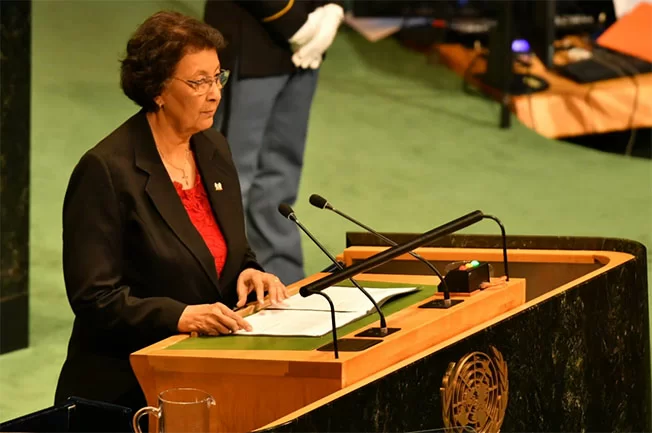
    On August 12, 2026, ahead of the International Day of the World’s Indigenous Peoples, delegates from across the Western Hemisphere gathered in Washington, D.C. for a special convening of the Organization of American States (OAS) Permanent Council. Among the speakers, St. Kitts and Nevis made a forceful call for regional governments to move beyond symbolic recognition and deliver tangible, systemic protection for the inherent rights and enduring contributions of Indigenous peoples across the Americas.

    Addressing the assembled council, Ambassador Jacinth Henry-Martin, St. Kitts and Nevis’ permanent representative to the OAS, pushed back against the common narrative that frames Indigenous communities as a relic of regional history. She emphasized that the knowledge, cultural traditions, and core values of Indigenous peoples remain deeply embedded in the present of the Americas, and are irreplaceable to building a just and sustainable future for the region.

    While the large-scale Indigenous population that once inhabited St. Kitts and Nevis belongs to the islands’ ancestral history, Henry-Martin noted that the call for Indigenous rights carries profound meaning for the federation. Long before colonial powers renamed and claimed the islands, the Indigenous Kalinago people named St. Kitts *Liamuiga* – meaning “fertile land” – and Nevis *Oualie*, translating to “land of beautiful waters.”

    Today, these original names continue to be used in St. Kitts and Nevis as a deliberate act of acknowledgment: the nation’s story does not begin with colonization, but with the Indigenous communities that first stewarded the land. Henry-Martin explained that these historic names act as a living bridge connecting past, present, and future generations to the islands’ natural heritage. They stand as proof that Indigenous language, culture, and collective memory can persist even through the upheaval and displacement of colonial rule.

    The OAS special meeting was convened under the overarching theme “Roots that Sustain, Knowledge that Transforms, Rights, Water, Health, Culture and Innovation for a Shared Future.” Henry-Martin highlighted that this framing aligns perfectly with the symbolism of the Kalinago place names, which center the inherent connection between land, water, public health, cultural survival, and long-term sustainable innovation. She went on to celebrate the wide-ranging contributions of Indigenous peoples across the entire hemisphere, from preserving endangered languages and safeguarding global biodiversity to developing sustainable agricultural practices, passing down traditional health knowledge, and maintaining centuries-old systems of environmental stewardship.

    Beyond recognition and celebration, however, the ambassador stressed that rhetorical commitment to Indigenous rights is insufficient. St. Kitts and Nevis formally backs expanded, enforceable protections for both individual and collective Indigenous rights across the Americas. These protections include the right to preserve cultural identity and heritage, meaningful participation in policy decisions that impact Indigenous communities, full freedom from systemic and social discrimination, and the self-determination to shape the future of Indigenous territories.

    As the Western Hemisphere grapples with escalating crises including climate change, widespread water insecurity, and accelerating biodiversity loss, Henry-Martin argued that the generations of ecological and place-based knowledge held by Indigenous communities must be centered rather than sidelined or exploited without consent. She pointed to the American Declaration on the Rights of Indigenous Peoples as a critical foundational framework for the region, but added that governments must translate the declaration’s principles from formal policy statements into tangible improvements in the daily lives of Indigenous communities.

    Closing her address, Henry-Martin issued a clear call to action for all OAS member states: to honor Indigenous peoples by upholding their inherent rights, centering their perspectives, and amplifying their voices in every decision that affects their communities and the future of the hemisphere.

  • St. Kitts & Nevis makes historic debut at the 30th Goodwill Swimming Championships

    St. Kitts & Nevis makes historic debut at the 30th Goodwill Swimming Championships

    The dual-island Caribbean nation of St. Kitts & Nevis is poised to mark a groundbreaking milestone in its aquatic sports history, with its first-ever national delegation set to compete at the 30th edition of the Goodwill Swimming Championships. The three-day regional competition will run from August 14 to 16, 2026, hosted at the National Aquatics Centre in Balmain, Couva, Trinidad & Tobago, following an official invitation extended to the St. Kitts & Nevis Aquatics Federation (SKNAF) by the Aquatics Sports Association of Trinidad and Tobago (ASATT).

    Established as a key developmental fixture for Caribbean youth swimming, the annual Goodwill Swimming Championships gathers emerging talent from across the region to compete across a full range of stroke and relay events. For the 2026 iteration, athletes will compete in age categories spanning from 8 years old and under through the 15–17 division, with events covering freestyle, breaststroke, backstroke, butterfly, individual medley, and team relays. The meet’s structure is intentionally designed to give up-and-coming swimmers exposure to high-quality regional competition, a critical stepping stone for long-term athletic growth.

    After a selection process, SKNAF has confirmed its seven-member historic roster set to represent the nation in Trinidad. The delegation includes Gaj Leonce and Rhaejaan Jacobs competing in the boys’ 9–10 age group; Valentino Esposito, Teadrian Tross, and Saulo Sahely in the boys’ 11–12 division; and Jazzelle Connor in the girls’ 15–17 category. Greyson Burrell was also selected to the boys’ 11–12 team but will be unable to attend due to unforeseen personal circumstances; SKNAF has formally recognized Burrell as an honorary member of the inaugural squad and congratulated him on earning his selection. Leading the team are head coach and manager Kyle McEachnie, supported by assistant coach and chaperone Annelise Leibbrandt.

    For SKNAF, this debut appearance is far more than a one-time competition entry: it represents a major milestone in the federation’s long-term strategy to grow competitive swimming across St. Kitts & Nevis. Competing against elite regional peers will give the nation’s young swimmers invaluable international race experience, helping them build the confidence, race craft, and resilience needed to progress to higher-level competitions down the line, including the CARIFTA Games and other global age-group championships. Beyond individual athlete development, the participation is expected to lift the profile of competitive swimming domestically and encourage more young people across the two islands to take up the sport.

    The 30th Goodwill Swimming Championships will officially open with a opening ceremony at 4:30 p.m. local time on August 14, with preliminary competition kicking off 45 minutes later. Racing will resume at 9:00 a.m. on both August 15 and 16 to conclude the three-day meet.

    In a statement following the roster announcement, SKNAF President Eldon Thomas highlighted the historic significance of the moment for the federation and the nation. “This is a proud moment for the St. Kitts & Nevis Aquatics Federation. Participating in the Goodwill Swimming Championships for the first time represents another important step in the development of aquatics in St. Kitts and Nevis. We are extremely proud of the athletes who have been selected to represent our Federation and our nation,” Thomas said.
    “For these young swimmers, this is about more than competing. It is about gaining experience, building confidence, developing friendships across the region and laying the foundation for their future in the sport. We encourage each athlete to compete with determination, pride and sportsmanship and to make the most of this opportunity,” he added.

    SKNAF also extended formal gratitude to the athletes’ families, local club coaches, volunteers, and community supporters who have invested time, energy and resources into nurturing swimming talent across the nation. As the team makes final preparations to travel, the federation called on the entire nation of St. Kitts & Nevis to rally behind the young athletes as they wear the national colours and compete on the Caribbean regional stage.

  • CCJ leaks won’t sway Jamaica’s opposition PNP

    CCJ leaks won’t sway Jamaica’s opposition PNP

    Amid newly emerged public allegations over internal operations at the Caribbean Court of Justice (CCJ), Jamaica’s main opposition People’s National Party (PNP) has reaffirmed its longstanding commitment to replacing the UK-based Privy Council with the regional body as the country’s final court of appeal, party leader Mark Golding has confirmed.

    The controversy stems from a series of leaked internal emails obtained and published by Trinidad and Tobago’s *Sunday Express*, which claimed to expose deep-seated friction among CCJ judges, strained interpersonal dynamics, and what one message described as a growing ‘toxic’ internal working environment at the regional appellate court. To date, Jamaica’s *The Gleaner*, the original outlet of this reporting, has not independently obtained or verified the content of the alleged leaked messages.

    In an interview with *The Gleaner*, Golding pushed back against framing the leaks as evidence of institutional failure at the CCJ. He argued that the released correspondence instead demonstrates that CCJ judges feel comfortable voicing dissenting and independent perspectives directly to the court’s president, a level of open debate he calls a foundational strength for any robust judicial body.

    “We remain convinced that Jamaica would derive substantial benefits from designating the CCJ as our final court of appeal,” Golding stated. “The court is geographically and procedurally accessible to Jamaican citizens, and it has built a robust global reputation for excellent, rigorous adjudication of the cases brought before it.” The PNP has long tied its support for broad national constitutional reform to Jamaica’s formal adoption of the CCJ as its highest appellate body, a position Golding confirmed remains unchanged by the current controversy.

    Golding did note that the unauthorized public release of private judicial discussions is deeply regrettable, emphasizing that there is no indication any of the judges involved expected or agreed to have their internal communications disclosed.

    Other prominent Jamaican legal and political figures have offered more critical perspectives on the leak. Marlene Malahoo Forte, former co-chair of Jamaica’s Constitutional Reform Committee, called the decision to leak internal correspondence a major failure of judgment. “It is deeply troubling that individuals who should understand the importance of confidentiality in institutional deliberations chose to disclose internal matters to the public,” she said. “I have to question what would lead someone to be so dissatisfied that they could not allow internal processes to run their course to resolve disagreements.”

    Forte added that the controversy has already damaged public trust in the CCJ, a setback that comes at a particularly sensitive moment, as Jamaica and other CARICOM member states that have not yet adopted the CCJ as their final court actively debate the change. “This public airing of internal disputes does nothing to advance support for the court,” she noted. “When voters and policymakers weigh in on this issue, they will scrutinize every detail, and this leak only creates unnecessary uncertainty.”

    Constitutional scholar and CCJ proponent Dr. Lloyd Barnett, who previously served as deputy chairman of the Regional Judicial and Legal Services Commission (RJLSC) — the independent body that oversees CCJ judge appointments and disciplinary processes — offered a measured take on the allegations. Barnett acknowledged that the claims will provide political ammunition to opponents of the CCJ, who he says will seize on the controversy while ignoring similar internal disputes that have long been part of other leading appellate courts, including the UK’s Privy Council.

    Even so, Barnett characterized the allegations outlined in the leaked emails as much ado about nothing, describing the claims as ‘a lot of air, a lot of smoke without any true fire.’ He explained that many of the disputed issues raised in the messages are normal procedural realities for a small appellate body like the CCJ, which currently counts just seven judges including its president. For example, the court’s president is tasked with selecting judges for hearing panels, and the small size of the court means the same judges will frequently sit together on multiple cases. Changes to institutional rules such as judicial dress codes also require full consensus among judges, he added.

    Barnett emphasized that differences of opinion are an inherent, healthy part of the appellate judicial process. ‘Judges will hold divergent views, they will advocate for their positions, and each stands firm on what they believe is right — that is how the system works,’ he said. He also noted that existing governance guardrails prevent institutional deadlock: while the CCJ president chairs the RJLSC, the president will recuse themselves from any proceedings involving a conflict of interest, leaving the deputy chairman to preside.

    A lifelong supporter of the CCJ’s role as CARICOM’s leading appellate body, Barnett said he remains confident the regional court will resolve its internal differences through established internal processes. He pointed to a long history of resolved disputes within other leading global courts, noting that serious internal disagreements have long been recorded in the Privy Council and the UK Supreme Court, yet those disputes rarely draw the same level of public condemnation that the CCJ is currently facing. ‘We have inherited a colonial mindset where we tend to condemn our own regional institutions while excusing the same issues in older foreign bodies,’ he said. ‘In reality, internal disagreement is a normal part of any independent judiciary.’

    In a statement carried by the *Sunday Express*, the CCJ has defended its track record, reaffirming its commitment to upholding independence, impartiality, and integrity in all its duties to maintain public confidence in its work.

  • US to help Guyana monitor airspace with high-tech system to tackle drug trafficking, strengthen border security

    US to help Guyana monitor airspace with high-tech system to tackle drug trafficking, strengthen border security

    During a high-profile diplomatic visit to Guyana this week, senior U.S. and Guyanese officials have formalized an expansion of bilateral security cooperation, with Washington set to deliver $2 million in funding to help the South American nation build out advanced capabilities to monitor its sovereign airspace. The announcement, made public Tuesday by the U.S. Embassy in Georgetown, frames the new support as a targeted measure to crack down on transnational drug trafficking and shore up Guyana’s border protection frameworks, building on a broader security partnership first codified in a 2025 memorandum of understanding (MoU).

    The commitment was unveiled during Deputy Secretary of State Christopher Landau’s official trip to the country, where he joined Guyana’s Foreign Affairs Minister Hugh Todd for a formal MoU signing ceremony that updates and expands the existing 2025 security cooperation agreement. President Irfaan Ali was in attendance for the signing, alongside other senior Guyanese cabinet members including Finance Minister Ashni Singh, Natural Resources Minister Vickram Bharrat, and senior foreign affairs officials. U.S. Ambassador to Guyana Nicole Theriot also participated in the event.

    Per the embassy’s official statement, the $2 million investment will fund a new initiative focused on developing Guyana’s air domain awareness infrastructure and expand the country’s unmanned aerial system (UAS) capabilities. U.S. Department of Homeland Security guidance identifies air domain awareness as a foundational capability for a full spectrum of national security and defense operations, particularly critical for detecting and responding to unauthorized incursions and other illegal activity at a country’s points of entry.

    The new security assistance directly addresses longstanding concerns raised by President Ali and his administration over unregulated illicit air traffic linked to the global drug trade. For years, drug trafficking organizations have used Guyana’s airspace and remote territory as a transit route for narcotics shipments, with multiple drug-carrying aircraft seized in Guyana and neighboring Suriname in recent years.

    Beyond counternarcotics work, the upgraded air monitoring capabilities also come against a backdrop of persistent low-level tensions along Guyana’s western border with Venezuela. The two countries have maintained a decades-long territorial dispute over the resource-rich Essequibo Region, with sporadic armed incursions targeting Guyanese military personnel reported in recent months.

    During Landau’s visit, the two sides also addressed priorities beyond security cooperation, holding discussions on expanding bilateral economic ties and attracting new foreign investment to key strategic sectors of Guyana’s economy, including offshore energy and critical mineral development. The U.S. Embassy emphasized that Landau’s trip reaffirms Washington’s commitment to deepening partnerships across the Western Hemisphere, advancing shared goals ranging from regional security and energy resilience to broad-based economic prosperity for the region.

    In a social media post following the signing ceremony, President Ali noted that the updated MoU strengthens and deepens the long-standing bilateral security partnership between the two nations, building on years of existing collaboration in counternarcotics and cross-cutting security work. While he did not share additional details of the new funding package in the post, the announcement confirms the two countries’ shared commitment to tackling shared security threats in the region.

  • UNESCO: 2,4 miljoen Afghaanse meisjes uitgesloten van voortgezet onderwijs

    UNESCO: 2,4 miljoen Afghaanse meisjes uitgesloten van voortgezet onderwijs

    Afghanistan stands alone in the 21st century as the only country on Earth that enforces a total ban on secondary and university education for girls and women, a growing humanitarian crisis that the United Nations Educational, Scientific and Cultural Organization (UNESCO) has warned is accelerating at an alarming rate.

    In its latest assessment of the country’s collapsing education sector, UNESCO confirms that roughly 2.4 million Afghan girls are currently locked out of secondary education. That number has already risen by 200,000 over the past 12 months, and the agency projects that without an immediate reversal of Taliban restrictions, the total number of excluded girls will climb to nearly 4 million by 2030.

    The sweeping education bans were implemented shortly after the Taliban retook full control of Afghanistan in 2021, following the full withdrawal of U.S. and allied international military forces. In March 2022, the group banned adolescent girls from accessing secondary schools, and just nine months later, in December that same year, it extended the ban to bar women from enrolling in universities.

    These restrictions are part of a broader rollback of women’s rights across the country that the United Nations has formally labeled “gender apartheid”. The policy reach extends far beyond barring female students: the Taliban has also banned women from working as teachers for male students. UNESCO forecasts that this rule will create a shortage of more than 11,000 qualified female teachers by 2030, and the United Nations has already documented that the ban has left a shortage of qualified instructors that forces male students to learn from untrained male staff.

    The education bans have compounded a long list of pre-existing crises that have left Afghanistan’s education system on the brink of collapse. Nearly half of all Afghan schools lack basic infrastructure including clean drinking water, functional sanitation facilities and heating, and more than 1,000 schools have been forced to close permanently over the past five years due to repeated natural disasters that have devastated communities across the country.

    The damage already extends to primary education, where more than 2 million children of all genders remain out of school entirely. Currently, 90% of 10-year-old children in Afghanistan cannot read a simple, age-appropriate text, pushing the country’s national literacy rate down to just 37%.

    Despite widespread global condemnation and repeated calls to reverse the ban – including appeals from a number of Muslim-majority nations – Taliban leaders have refused to roll back the policy, framing the restriction on girls’ education as an internal Afghan matter that is not open to international negotiation.

  • MESSAGE from CARICOM Secretary-General Dr Carla Barnett on International Youth Day – 12 August 2026

    MESSAGE from CARICOM Secretary-General Dr Carla Barnett on International Youth Day – 12 August 2026

    On August 12, 2026, as the global community observes International Youth Day, Caribbean Community (CARICOM) Secretary-General Dr. Carla Barnett has issued a formal message honoring young people across the region and affirming the bloc’s commitment to centering youth needs in regional development strategy.

    This year’s International Youth Day theme, “Different Contexts, Common Aspirations”, frames the discussion around the diverse experiences of Caribbean youth. Young people across CARICOM’s 15 member states hail from distinct national, cultural and community backgrounds, yet Dr. Barnett notes that their core ambitions are largely universal: access to high-quality education, stable and dignified employment, personal safety, improved public health outcomes, equal opportunity to advance, and a meaningful seat at the table for policy decisions that shape their lives.

    These shared aspirations are pursued against a backdrop of overlapping systemic challenges that disproportionately impact youth across the Caribbean. Rapid shifts in the global digital economy, the growing frequency and severity of climate-linked natural disasters, soaring regional living costs, persistent rates of violent crime, and rising public concern over youth mental health have all created headwinds for young people seeking to build their futures.

    Despite these barriers, Dr. Barnett emphasizes that youth have long been foundational to progress across the Caribbean, driving growth and change in regional economies, cultural production, athletic excellence, public governance, and grassroots social movements. Today, that legacy continues through youth leadership in emerging sectors: from small business entrepreneurship and digital innovation to sustainable agriculture, community climate action, volunteer service, creative industries, and local civic leadership.

    CARICOM formally recognizes that intentional youth investment is not an afterthought, but a core requirement for inclusive regional growth and long-term sustainable development. When young people’s lived experiences are excluded from policy design, Dr. Barnett argues, resulting initiatives fail to address the actual needs of the region’s largest demographic, leaving critical potential untapped.

    To address this gap, CARICOM has updated its regional Youth Development Action Plan, a landmark framework that centers four priority areas where youth need targeted support: entrepreneurship development, environmental sustainability, digital transformation and technology access, and expanded mental health services. The revised plan also introduces clear, measurable milestones to track progress across member states and ensure accountability for regional action.

    Beyond the strategic framework, CARICOM has leveraged existing regional initiatives to connect youth opportunities across borders. Through the CARICOM Single Market and Economy, the CARICOM Youth Ambassador Programme, the CARICOM Young Professionals Programme, and other targeted projects, the bloc is working to break down barriers between education, employment, entrepreneurship, cross-regional mobility, and public service. These efforts also create more consistent, structured channels for youth to engage directly with national governments and regional institutions, ensuring their voices shape policy from the earliest stages.

    Dr. Barnett also highlighted a key equity reminder woven into this year’s theme: opportunity remains unevenly distributed across the region’s youth population. Marginalized groups including rural and hinterland youth, youth with disabilities, Indigenous youth, migrant youth, unemployed young people, young women and girls, and youth who are not enrolled in formal education or job training face disproportionate structural barriers that block them from accessing the same opportunities as their peers.

    Closing her message, Dr. Barnett called on CARICOM’s young people to continue sharing their ideas, building cross-border collaboration, and leveraging their skills to strengthen local communities and the broader region, as the bloc works toward a shared Caribbean future defined by dignity, equal opportunity, and shared progress.

    “CARICOM remains committed to working with you in shaping that future,” she wrote. “Happy International Youth Day!”

    The message was published in full by regional news outlet SKNVibes.com, which noted that the text was run unedited as received from CARICOM, and that the views expressed do not necessarily reflect those of SKNVibes, its sponsors or advertisers.

  • Ebola Vaccine Trial as DRC Death Toll Surpasses 2,000

    Ebola Vaccine Trial as DRC Death Toll Surpasses 2,000

    The global public health community is racing to curb a rapidly accelerating Ebola outbreak in the eastern Democratic Republic of the Congo (DRC), where the cumulative death toll has surpassed the 2,000 mark, marking a devastating escalation of the crisis over the past three weeks. As of mid-August 2026, the World Health Organization (WHO) is moving forward with a critical Phase 3 clinical trial for an experimental vaccine targeting the Bundibugyo Ebola strain, the variant driving the current widespread transmission.

    The United Nations confirmed in an update released on August 11 that humanitarian and health agencies have scaled up treatment capacity and disease surveillance efforts across affected regions, but ongoing armed violence in eastern DRC has created major barriers to effective outbreak response. UN Deputy Spokesperson Farhan Haq reported that national DRC health authorities recorded a doubling of fatalities in just 20 days, with an average of 50 people dying from the virus every single day. WHO data shows that 60 to 70 percent of all Ebola deaths occur in local communities, as many infected patients are unable to reach formal treatment facilities or arrive too late for life-saving intervention.

    Persistent insecurity remains one of the biggest obstacles to containing the spread. On August 7, an attack on the village of Banana École in Ituri Province killed at least 13 civilians, abducted multiple residents, and destroyed local homes, according to the UN Office for the Coordination of Humanitarian Affairs (OCHA). The violence forced more than 28,000 people to flee to Mambasa Centre, a site already hosting 36,000 internally displaced persons who relocated there after earlier conflict starting in April. OCHA has reiterated its call for all warring parties to uphold international humanitarian law, protect civilian populations, and grant unimpeded, safe access for aid workers to reach communities hit by the outbreak.

    Speaking at a public briefing in Washington, DC on August 12, WHO Director-General Dr. Tedros Adhanom Ghebreyesus officially announced the launch of the Phase 3 vaccine trial. He emphasized that while researchers have not yet confirmed the candidate vaccine’s effectiveness against Bundibugyo strain infection in humans, the trial represents the fastest path to generating reliable clinical data that could help halt the current outbreak and prevent future epidemics. “We call on all partners to support and accelerate this trial,” Dr. Tedros stated.

    In a positive update on research efforts, Dr. Tedros added that the WHO-sponsored PALM clinical trial for new Ebola treatments has already reached its initial milestone of enrolling 100 patients. “This trial demonstrates that even in the midst of a challenging outbreak, it’s possible to mobilise research rapidly and responsibly,” he said.

    Despite advances in research, major gaps still threaten the global response. Dr. Tedros warned that the most pressing challenge is rolling out vaccines, treatments and public health interventions fast enough to outpace transmission. The African Continental Ebola Preparedness and Response Plan requires $518 million in funding to implement fully, but only $264 million — just over half of the total needed — has been disbursed to date. “We need financing that’s timely, impactful and sustainable,” Dr. Tedros said. “We also need access and security in the affected areas to ensure the response can operate safely and effectively.”

    The WHO chief also paid public tribute to frontline health workers, who continue to risk their own safety to treat patients and stop the spread of the virus in active conflict zones.

    In a separate statement during the briefing, Dr. Tedros raised concerns over recent changes to routine childhood vaccination policies in the United States, noting that the policy shifts do not align with the best available scientific evidence. He reaffirmed that all standard childhood vaccines, including the measles, mumps and rubella (MMR) vaccine, are safe, and decades of rigorous research have consistently debunked the false claim that vaccines cause autism. “Decades of research continue to support routine childhood immunisation,” he added.

  • Fidel’s example is present in this gigantic effort

    Fidel’s example is present in this gigantic effort

    Against a backdrop of intensifying external economic pressure, the 34th iteration of Cuba’s iconic Havana International Book Fair kicked off in the capital on August 10, 2026, reaffirming the island nation’s longstanding commitment to protecting cultural sovereignty and expanding public access to literature even amid extraordinary challenges.

    Organized with support from the Cuban state, the event carries deep symbolic meaning this year: it marks the centennial of the birth of Fidel Castro, the revolutionary leader who first envisioned large-scale, accessible book fairs for the Cuban people and founded the country’s Territorial Publishing System. As Juan Rodríguez Cabrera emphasized in an interview with Granma, the fair’s staging under current difficult conditions directly aligns with Castro’s original vision of centering the Cuban people as the core of cultural life. This year’s edition is formally dedicated to two distinguished Cuban figures: award-winning writer and journalist Marilyn Bobes, and prominent academic researcher José Bell Lara, with the Russian Federation serving as the event’s Guest of Honor.

    In response to growing U.S. sanctions that have expanded to include an oil embargo, event organizers made strategic adjustments to the fair’s format, timing and location to ensure its success. Originally planned for a different venue and longer run, the main Havana edition has been condensed to six days, running from August 10 through 16 at the Cultural Station located at the intersection of Línea and 18th Streets in Plaza de la Revolución municipality. Rodríguez Cabrera explained that the new central location was selected for its proximity to densely populated residential areas and its convenience for accessing the fair’s multiple satellite venues, which are spread across key cultural institutions in Havana.

    These satellite sites play a critical role in expanding the fair’s reach this year. The Fidel Castro Center serves as the main hub for publishers associated with the Our History Project, marking the first time that publishing house Nuevo Milenio has joined the initiative in recognition of the centennial tribute. Additional satellite venues include the José Martí Memorial, the José Martí National Library of Cuba, Dulce María Loynaz Cultural Center, the Center for Martí Studies, Casa de las Américas, the Cuba Pavilion, the Casa del Alba Cultural Center, and the House of Poetry.

    A major milestone being celebrated alongside the fair is the 26th anniversary of the Territorial Publishing System, which coincides with Castro’s birthday on August 13. Created by Castro to open publishing opportunities for creators across every region of Cuba, the system’s 22 regional publishing houses will showcase more than 350 new titles and over 200,000 printed copies at a dedicated commemorative booth at the main fair headquarters, before the works travel to provincial venues across the island.

    Overall, the 34th fair will feature more than 1,400 newly released titles across all formats, with approximately two million copies covering a vast range of topics available for purchase to readers nationwide. A dedicated collection of titles by and about Fidel Castro anchors the centennial tribute, drawing on the leader’s enduring legacy of expanding access to reading and literary culture across Cuba.

    As Guest of Honor, Russia has brought more than 1,500 titles highlighting the breadth of its classic and contemporary literary traditions. In addition to book displays and sales, the Russian delegation — led by Mikhail Shvydkoy, Special Representative of the President of the Russian Federation for International Cultural Cooperation, and composed of prominent Russian writers, translators, intellectuals and artists — will host a series of cross-cultural literary and artistic events for attendees.

    The fair’s robust public programming includes a wide range of academic and community events. Opening colloquia honoring Marilyn Bobes and José Bell Lara are scheduled for August 11 and August 14 respectively, with additional scheduled events including a national Meeting of Literary Editors and Translators, a Colloquium on Scientific and Technical Literature, a pan-Ibero-American Meeting of Young Writers, and a national gathering of poetry promoters. Family-friendly offerings include the children’s and youth pavilion *Tesoro de Papel* (Paper Treasure), while the innovative Cuba Digital Project will also showcase new digital publishing initiatives to attendees. The fair will also conclude its main program with the presentation of dozens of top Cuban literary awards, spanning national prizes for literature, social sciences, and publishing, the Calendario Awards, the Carpentier Awards for fiction, short story and essay, the Nicolás Guillén Poetry Award, the Reader’s Choice Award, and the La Puerta de Papel Awards.

    After the main Havana edition wraps up on August 16, the fair will travel across Cuba’s three main regional zones over the following three weeks. The western regional leg will run August 21–23, followed by the central regional edition August 28–30, and the eastern regional edition will bring the fair to a close September 4–6 in Santiago de Cuba.

    Parallel to the book fair, a landmark 1st International Colloquium titled “Fidel: Legacy and Future” will run August 10–13 at Havana’s Convention Palace, drawing roughly 1,500 participants from across the globe to examine Castro’s enduring impact. The book fair will maintain a presence at the colloquium with a dedicated book stand, tying together the dual missions of honoring Castro’s legacy and advancing his vision of a reading public that underpins national sovereignty. Rodríguez Cabrera emphasized that Fidel Castro’s legacy is woven through every aspect of this year’s fair: from the Territorial Publishing System he founded, which extends publishing access to creators across every province, to the mass accessibility that has been a core fair principle since its founding. He noted that holding the event amid the ongoing U.S. blockade stands as clear proof of Cuba’s unwavering investment in culture as a cornerstone of national resistance and independence, saying that for a people to defend their freedom and self-determination, they must root their struggle in knowledge, shared history, and collective purpose — all values that literature and accessible book culture advance. “This is the best way to stand with Fidel in these extremely complex times, in which we have staked everything on culture, freedom, and independence, which is what he taught us,” Rodríguez Cabrera said.

  • Three key lessons from Fidel on Foreign Policy

    Three key lessons from Fidel on Foreign Policy

    In a public address delivered on the morning of Tuesday, August 12, 2026, Carlos Fernández de Cossío, Deputy Minister of Foreign Affairs of the Republic of Cuba, laid out the lasting influence of Fidel Castro’s ideological framework on Cuba’s foreign policy, affirming that the revolutionary leader’s core principles have shaped—and continue to steer—the island nation’s actions across global diplomatic platforms.

    Fernández de Cossío structured his remarks around three foundational lessons drawn from Castro’s thinking, each rooted in decades of Cuban revolutionary history. The first and most fundamental pillar, he emphasized, is the uncompromising defense of Cuba’s sovereign rights, even when facing extreme external threats. He pointed to the 1962 Cuban Missile Crisis, widely known in Cuba as the October Crisis, as a defining example of this steadfast commitment to national self-determination.

    The second core principle outlined by the deputy minister is Cuba’s refusal to compromise its solidarity and internationalist commitments to marginalized movements and peoples across the globe, regardless of pressure from opposing governments. Fernández de Cossío highlighted longstanding U.S. efforts to force Cuba to abandon its open support for the Puerto Rican independence movement and its internationalist interventions in Africa as evidence of this unwavering stance.

    As a concrete illustration of this commitment, he recalled a 1970s prisoner exchange agreement: when Cuba negotiated the release of four U.S. citizens detained on the island for crimes aligned with U.S. government interests, the Cuban government did not demand bilateral concessions or economic benefits for itself. Instead, it secured the freedom of four Puerto Rican independence activists: Lolita Lebrón, Rafael Cancel Miranda, Irvin Flores, and Andrés Figueroa.

    Fernández de Cossío also quoted veteran Cuban revolutionary Carlos Rafael Rodríguez to underscore the reliability of Cuba’s internationalist promises: “There is no obligation we have assumed with any country, group, or government that we have not been able to honor. This should be clear to the United States.”

    The third key lesson from Castro’s thinking, Fernández de Cossío argued, is the imperative of denouncing the existing global economic order. He stressed that this critique is not an abstract academic exercise, but a core component of Cuba’s ongoing revolutionary struggle to advance global justice for all marginalized nations and peoples.

    The deputy minister highlighted Castro’s decolonial vision and his call for a more equitable redistribution of global wealth, pointing to a longstanding paradox the revolutionary leader repeatedly identified: that humanity has never held greater scientific, technological, and productive capacity to generate widespread prosperity, yet the world has never been marked by such deep, systemic inequality.

    Fernández de Cossío confirmed that Castro’s teachings continue to guide Cuban diplomacy in every multilateral forum the nation participates in, including the United Nations, the Non-Aligned Movement, the Group of 77 and China, and regional integration bodies across Latin America and the Caribbean. Wherever struggles for global justice and a more equitable world order are underway, he said, Cuba contributes in line with Castro’s legacy.

    Beyond these three core pillars, Fernández de Cossío noted that Castro’s foreign policy work and teachings have educated the entire Cuban people on complex global issues, embedding international solidarity in popular culture and national identity. He cataloged a series of landmark people-centered internationalist actions rooted in Castro’s vision: mass popular assemblies in Havana’s Revolution Square where hundreds of thousands of Cubans endorsed the First and Second Declarations of Havana; widespread national solidarity with the Vietnamese people during the Vietnam War; the deployment of the first Cuban medical brigade to Algeria; national blood donation drives for communities hit by disasters; the founding of the Henry Reeve International Medical Contingent, which has led critical public health responses to the Ebola epidemic in West Africa and COVID-19 in more than 40 countries and territories worldwide.

    He also highlighted the impact of Cuba’s educational internationalism, noting that tens of thousands of students from low-income communities across the globe have received free training in Cuban schools and universities. In addition, he recalled Cuba’s mass voluntary internationalist mission in Africa, which saw more than 350,000 Cuban combatants deploy to support anti-colonial and anti-apartheid struggles across the continent.

    In closing, Fernández de Cossío summarized Castro’s core foreign policy ambition: to defend Cuba’s unquestionable right to full and absolute sovereignty, and alongside the Cuban people, to contribute to advancing justice and ending systemic injustice in every corner of the globe.

  • Díaz-Canel attends youth forum

    Díaz-Canel attends youth forum

    HAVANA – Top Cuban leadership and youth delegates from communist and progressive movements across the globe gathered this week for the youth forum “I Believe in You”, a core event held as part of the inaugural International Colloquium focused on Fidel Castro: Legacy and Future, marking the centenary of the iconic revolutionary leader’s birth.

    Cuba’s highest-ranking official, Miguel Díaz-Canel Bermúdez – who serves as both First Secretary of the Central Committee of the Communist Party of Cuba and President of the Republic – headlined the forum, joined by Roberto Morales Ojeda, Political Bureau member and Organization Secretary of the party. Organized by the Union of Young Communists of Cuba (UJC), the gathering created an open space for transnational dialogue and collective reflection, where young attendees reaffirmed their shared commitment to leading global efforts to address pressing 21st-century challenges.

    Opening the discussions, Meyvis Estévez Echeverría, general secretary of the UJC National Committee, delivered a sharp condemnation of the long-running U.S. blockade of Cuba, which has been intensified to unprecedented levels in recent years. She framed the embargo as a genocidal policy that inflicts direct harm on ordinary Cuban families, outlining devastating public health consequences: 12,000 Cuban children are currently waiting for life-impacting surgical procedures due to critical medical supply shortages, 67,000 infants have been unable to access updated immunization schedules, and 34,000 pregnant people lack access to sufficient prenatal ultrasound services.

    Estévez Echeverría emphasized that young Cubans carry forward the revolutionary audacity embodied by Fidel Castro, the former Commander-in-Chief, and issued a firm rebuke to the U.S. government: “We tell them loud and clear that there is absolutely no possibility that we will surrender the homeland that Fidel bequeathed to us.” She also extended gratitude to the global community for acts of international solidarity, particularly noting the support from youth movements that have shipped essential medicine and humanitarian aid to the island. Young Cubans, she added, remain focused on tireless collective work, building equitable prosperity and protecting the hard-won social gains of Cuban socialism.
    ### Global Youth Leaders Condemn Imperialist Aggression Across Regions
    Gonzalo López, president of the World Federation of Democratic Youth (WFDY), told the forum that global imperialism, alongside its allies in the European Union and NATO, increasingly relies on blockades, unilateral sanctions, militarism, and open war to enforce global dominance and crush popular movements fighting for freedom, national sovereignty, human rights, peace, collaborative development and social progress.

    López stressed that these coercive policies leave tangible, harmful impacts, pushing large segments of the global population – especially young people – into poverty, while creating widespread barriers to accessing basic needs including clean drinking water, sanitation, food, energy, education, healthcare, housing, cultural access and athletic opportunity. “To crush the struggle of the people, imperialism resorts to everything, including its most aggressive expression: fascism,” he said.

    He highlighted ongoing crises driven by imperialist intervention across the globe, starting with the Middle East, where he denounced the occupation, colonization, and ongoing genocide of the Palestinian people at the hands of Israel, a key U.S. ally. “We cannot accept the images of children dying of hunger, nor of young people and women being killed in lines to get bread,” López stated. He also condemned the more than 100 unilateral sanctions imposed on Venezuela, as well as repeated U.S. interference and military aggression, including what he called the “brutal kidnapping” of the Venezuelan president. Turning back to Cuba, López rejected the decades-long criminal blockade of the island and the unfair designation of Cuba as a state sponsor of terrorism – a label that contradicts Cuba’s actual global legacy of advancing public health, universal education, and solidarity with marginalized nations around the world.

    “This heroic people, this heroic youth of Cuba, can always count on the solidarity of the peoples of the world in their struggle to defend their sovereignty and on the path to building a new society,” he affirmed, adding that “Cuba can always count on the solidarity and active work of the World Federation of Democratic Youth to ensure the continued sustainability of the Cuban Revolution.” López also recalled the World Festivals of Youth and Students hosted in Havana in 1978 and 1997, both driven forward by Fidel Castro’s vision, noting that for the revolutionary leader, “believing in youth was more than a conviction, it was an attitude, a way of thinking.”

    For his part, José Alejandro Alonso Cáceres, a representative of the Latin American and Caribbean Continental Organization of Students (OCLAE), recalled that Fidel Castro was the first recipient of OCLAE’s Order of Solidarity, honoring his lifelong struggle against imperialism and advocacy for peace, national sovereignty, and self-determination for Global South nations. “Fidel is an example of dignity and resistance; he bequeathed to us an unwavering faith in victory,” Alonso Cáceres said, reaffirming the Latin American student movement’s commitment to “the rebel Island and to Fidel” and its pledge to uphold the banners of solidarity, internationalism, and socialism. “Because if the present is one of struggle, the future is ours,” he concluded.
    ### Chilean Student Leader Links Local Struggles to Fidel’s Revolutionary Legacy
    Marking the centenary of Fidel Castro Ruz’s birth, Ivania Garrido, president of the Federation of Students of the University of Chile and a representative of Chilean communist youth, used her address to critique the dominant neoliberal ideology that frames systemic economic precarity as an individual failure. Garrido outlined the acute challenges facing Chile under its new far-right administration, which took office in March 2025: the government has cut public education funding, undermined long-fought collective bargaining rights for educators, and pushed to impose strict security and control regimes within schools.

    Garrido reported that Chilean students have already mobilized in response, returning to the streets in recent months under the clear slogan: “public education must be defended.” She said Fidel’s legacy holds critical lessons for Chilean young people today: “He taught us that a student movement closed in on itself has a low ceiling, and that its true strength emerges when it stops speaking only on behalf of students and joins forces with workers and the people.”

    Garrido argued that the task of her generation goes beyond defending past gains: it requires challenging the root of systemic inequality, the market-led model that has turned fundamental human rights into profit-generating commodities. “The student who isolates himself becomes exhausted; the one who builds the people, transforms,” she said. She warned that the greatest risk facing young people globally today is the loss of historical memory, as powerful forces push societies toward “a present without memory and without a future.” Echoing Fidel Castro’s own definition that “revolution is a sense of historical moment,” Garrido called on young people to reclaim a long-term vision in an era that erases both collective past and collective future. “Fidel believed in us, the youth of this America. We respond that we also believe. We believe in his project and we know that believing is not about savoring, but about continuing. Let this centennial not be a farewell, but a rebellion,” she said.
    ### Díaz-Canel Outlines Three Core Mandates for Young Global Revolutionaries
    Addressing the assembled Cuban youth and international progressive delegates, President Díaz-Canel emphasized that Fidel Castro’s enduring revolutionary legacy can only survive if it is carried forward by the generation that will build the future. “Young people must defend Fidel’s humanist and revolutionary legacy, because they are the ones called to build the future, to create a better world,” Díaz-Canel declared.

    The president opened his speech by praising the political maturity of young people across the globe, who he said have grown enormously in their political consciousness through their direct confrontation with the failures of capitalist societies. He highlighted Cuban young people as a particularly powerful example, who have adapted and persisted amid the deep hardship created by the intensification of the U.S. blockade and what he called the “economic genocide” imposed by Cuba’s adversaries.

    Díaz-Canel walked attendees through the historical context of Cuba’s revolutionary movement, recalling 1953 – the centenary of Cuban independence hero José Martí’s birth – when Cuba was ruled by a brutal tyrannical regime aligned with U.S. corporate monopolies. Fidel Castro, a dedicated student of Martí’s work, brought this injustice to global attention, Díaz-Canel said, recalling Fidel’s landmark, record-setting speech to the United Nations that laid bare the scale of Cuban oppression under U.S.-backed rule. It was that generation of the Martí Centennial, Díaz-Canel explained, that embraced the socialist ideal and launched the armed struggle that would ultimately lead to the 1959 triumph of the Cuban Revolution, walking through the iconic foundational events that shaped modern Cuba: the annual torchlight march that remains a Cuban youth tradition today, the July 26 attacks on the Moncada and Carlos Manuel de Céspedes barracks, Fidel’s imprisonment and exile in Mexico, the Granma yacht landing, the years of guerrilla struggle in the Sierra Maestra, and finally the victory that established the revolutionary government.

    Against this history, Díaz-Canel framed today’s young people as the “generation of the centennial of Commander-in-Chief Fidel” – and the generation called to carry forward his legacy. He outlined the current global context facing this generation: a sweeping imperialist offensive targeting the Global South, driven by a period of systemic crisis in global capitalism that has fueled the rise of extreme ultra-conservative ideology. This crisis, he explained, is the root cause of the growing influence of fascism and fascist politics across the world today.

    Díaz-Canel warned that the global left now faces three interconnected fronts of conflict: an ideological war to impose capitalist and imperialist logic on Global South nations; a cultural war that seeks to erase collective historical memory and impose cultural colonization to control narratives; and a media war defined by aggressive mass misinformation campaigns that violate basic human values and enable “reputation assassination” and the “invisibilizing of the perpetrator” to build false pretexts for war.

    Closing his address, the president laid out three core mandates for young people, drawn directly from Fidel Castro’s revolutionary thought: prioritize humanism over the profit-driven logic of algorithmic systems; defend cultural identity against the threat of cultural colonization; and center solidarity over individual selfishness, as Fidel always demanded. “And thus we will have a better world. We believe in you to build that better world,” Díaz-Canel concluded.