作者: admin

  • Bondsvoorzitter BBS Biswan ontslagen na manipulatie examencijfers rekruten

    Bondsvoorzitter BBS Biswan ontslagen na manipulatie examencijfers rekruten

    In a disciplinary action announced this Tuesday, Suriname’s Minister of Justice and Police Harish Monorath has immediately removed Elio N. Biswan, chair of the Security and Assistance Service Suriname (BBS) union, from his post. The termination, categorized as a severe disciplinary penalty, was issued in full compliance with Suriname’s current civil service legislation.

    An internal probe conducted by the BBS Interim Management Team (IMT) uncovered serious professional misconduct on Biswan’s part during his 2024 tenure as secretary of the examination committee for the BBS 2023 basic training program. Investigations confirm that Biswan independently and intentionally altered failing grades of multiple trainee recruits to passing marks. This manipulation allowed the candidates to bypass required requirements for exemptions or retests, and incorrectly marked their training as successfully completed.

    Beyond altering existing scores, the investigation found Biswan had pre-promised recruits he would adjust their results, and even went so far as to fabricate official grade transcripts that did not match the original assessments submitted by training instructors. IMT investigators have classified these actions as a grave breach of institutional integrity and a clear case of abuse of public office.

    In response to the uncovered irregularities, the IMT has moved to correct the process, granting all affected recruits the opportunity to take official re-examinations so they can properly and legitimately complete their mandatory training.

    Minister Monorath determined the proven violations were severe enough to warrant the harshest possible disciplinary outcome, with the termination executed under Article 61 Paragraph 1 Subsection j and Article 69 Paragraph 2 Subsection e of Suriname’s Personnel Act.

    As of Wednesday morning, it remains unclear whether additional criminal proceedings will be launched against Biswan following the conclusion of internal disciplinary handling.

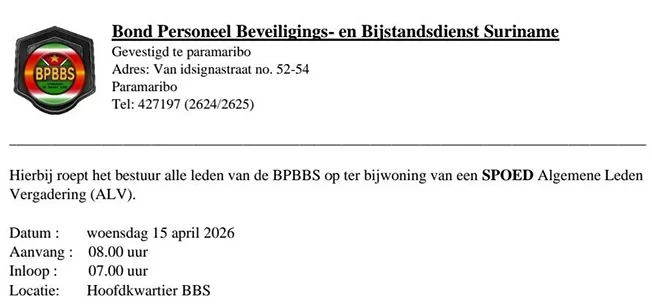
    Shortly after receiving his termination notice at approximately 11:00 PM Tuesday, Biswan called an urgent emergency general membership meeting for Wednesday morning. In his announcement, Biswan claimed the dismissal was an attempt to silence him, arguing the action was retaliation for his public criticism of current BBS leadership.

  • Dominican Republic and Suriname advance energy and hydrocarbon cooperation

    Dominican Republic and Suriname advance energy and hydrocarbon cooperation

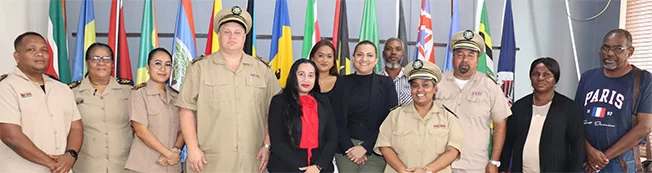
    In a recent high-level diplomatic gathering held in Santo Domingo, senior officials from the Dominican Republic and Suriname have moved forward with collaborative discussions focused on expanding joint work in hydrocarbon development and the broader energy sector. The meeting brought together Joel Santos, the Dominican Republic’s Minister of Energy and Mines, and Melvin Bouva, Suriname’s Minister of Foreign Affairs, where parties centered their dialogue on opportunities for joint oil and gas exploration, as well as potential partnerships in mining and large-scale energy initiatives. These talks unfold against a backdrop of rapid transformation in the Caribbean and Latin American regional energy landscape, where nations are actively reworking their energy strategies to balance security needs, climate goals, and economic growth.

    During the discussions, Minister Santos shared key updates on the Dominican Republic’s domestic energy plans, confirming that the country will launch its second competitive oil exploration bidding round this coming November. The initiative is designed to draw foreign and domestic investment into the country’s energy sector, shore up long-term national energy security, and deliver more comprehensive data on the full scope of the Dominican Republic’s untapped hydrocarbon reserves. Crucially, the bidding round will be structured to adhere to strict sustainable development practices and full transparency requirements, aligning with global standards for responsible resource extraction.

    Beyond non-renewable resource development, Santos also highlighted the Dominican Republic’s significant progress in transitioning to a cleaner energy system. He noted that renewable energy sources now account for more than one-quarter of the country’s total electricity generation, a milestone that has helped build a more diverse, climate-resilient national energy mix that reduces reliance on imported fossil fuels.

    Both delegations reaffirmed their shared commitment to deepening bilateral relations beyond the energy sector, with plans to explore expanded cooperation across a range of strategically important areas. In addition to energy and mining, the two governments are looking to advance collaboration on sustainable development priorities, with cross-ministerial participation from officials overseeing transport, tourism, digital communications, and international trade. This broad-based approach to partnership reflects both nations’ desire to unlock mutual economic benefits and strengthen their positions in the evolving regional and global energy market.

  • USA : Minister Paulemon presents Haiti’s vision for its healthcare system

    USA : Minister Paulemon presents Haiti’s vision for its healthcare system

    In a keynote address delivered at George Washington University on April 14, 2026, Sandra Paulemon, Haiti’s Minister of Planning and External Cooperation, laid out the Caribbean nation’s ambitious blueprint for transforming its healthcare system during an academic exchange hosted by the university’s Institute for African Studies. The event centered on critical intersections between public health outcomes and sustainable public financing strategies for vulnerable nations grappling with widespread instability.

    Paulemon opened her presentation by painting an unflinching picture of Haiti’s current health landscape, detailing long-standing structural barriers that have left millions without reliable access to care. She outlined the Haitian government’s incremental but ongoing work to expand, strengthen, and sustain healthcare access, with a deliberate focus on reaching marginalized and low-income communities that have historically been excluded from comprehensive services. At the core of the government’s agenda, she emphasized, is a deep-seated commitment to building a healthcare system that is resilient to ongoing shocks, equitable across all population groups, and fully sovereign, while upholding fundamental human dignity and advancing social justice for all Haitians.

    A major focus of the minister’s remarks centered on the disproportionate crisis facing women and girls in Haiti, who face widespread threats of sexual violence, exploitation, and coercion at the hands of active armed gangs operating across the country. Paulemon drew international attention to the acute vulnerability of displaced women who have fled their homes amid ongoing violence: many have survived severe abuse, carry deep psychological trauma, and face almost insurmountable barriers to accessing routine medical care, specialized psychosocial support, and formal protection services. She also noted the parallel crisis facing young boys in affected communities, who are regularly targeted for forced recruitment by gangs, robbing them of their childhood and eliminating any clear path to a stable, hopeful future.

    Against this backdrop of ongoing crisis, Paulemon argued that the domestic mobilization of resources for public health takes on urgent new meaning. She explained that sustained domestic investment would allow the Haitian state to expand its core capacity to protect, treat, and support the nation’s most vulnerable groups, including survivors of violence, at-risk children, and entire communities displaced by ongoing insecurity. Far from being a narrow social policy concern, she framed health financing as a foundational tool for advancing national stability, expanding social protection, and strengthening the nation’s overall resilience to overlapping crises.

    Paulemon also outlined the central coordinating role of her Ministry of Planning in aligning disparate resources from national, bilateral, multilateral, and humanitarian partners into a single cohesive strategy aligned with the Haitian government’s stated strategic priorities. She stressed that a core mandate of her department is to improve alignment between external donor funding, national public health priorities, and sector-specific strategies led by relevant Haitian state institutions, most notably the Ministry of Public Health and Population. This coordination, she argued, is critical to reducing fragmentation and ensuring that all invested resources advance national, rather than external, goals.

    Throughout her address, the minister reaffirmed the Haitian government’s commitment to collaborative partnership with both domestic stakeholders and international allies to build a healthcare system that can meet the population’s evolving needs, particularly for the most marginalized groups. She emphasized that this work must be rooted in the principles of national sovereignty, coordinated action, and effective public service delivery. A key long-term goal, she added, is to gradually reduce Haiti’s overreliance on external aid, building a self-sustaining health system that can address ongoing gaps with a targeted focus on survivors of gender-based violence and vulnerable youth.

    In closing, Paulemon underscored the urgent need to expand access to integrated physical and mental health care, scale up psychosocial support for violence survivors, and strengthen protection and economic reintegration programs for affected communities. Ensuring that no Haitian is left behind, ignored, or forgotten amid ongoing crisis is not only a core responsibility of the Haitian state, she argued, but a shared global commitment. “Together, through alignment, coordination, and unwavering commitment, it is possible to guarantee genuine protection, effective access to care, and tangible dignity for the Haitian people,” she concluded.

  • Bodemprocedure 8 decembermoorden gestart; vijf families dienen geen vordering in

    Bodemprocedure 8 decembermoorden gestart; vijf families dienen geen vordering in

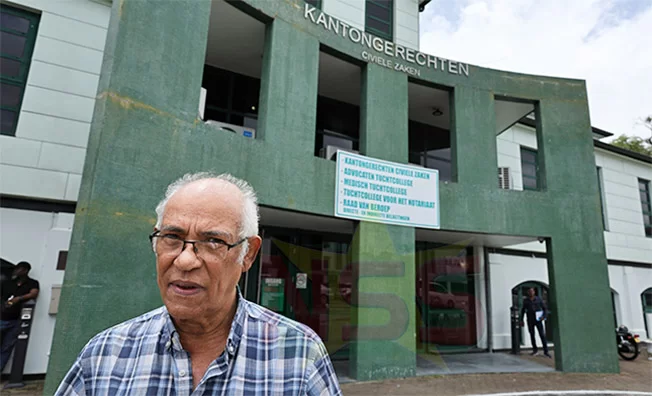
    A landmark full civil procedure case against the state of Suriname, filed by 10 family groups of victims of the infamous December 8 murders, officially got underway in court this Tuesday. After a brief opening presentation of the case before the judge, legal representatives for both sides exited the courtroom, with lead counsel for the victims’ surviving relatives Hugo Essed stopping to speak with reporters to outline the details of the historic proceeding.

    Essed emphasized that this is not a fast-track summary proceeding, but a full substantive civil trial that will examine the core merits of the families’ claims. Against expectations for a years-long delay, he noted that the case launched with far greater speed than anticipated, and projects that a final court ruling could be delivered within roughly 12 months.

    In total, 60 family members of the 10 slain victims – including prominent public figures John Baboeram, Cyril Daal, Edmund Hoost, Rudie Kamperveen, Harrie Oemrawsingh, Leslie Rahman, Cornelis Riedewald, Jiwansing Sheombar, Jozef Slagveer and Somradj Sohansingh – have joined the collective lawsuit against the Suriname state. The claimants are demanding three core outcomes: official public rehabilitation of the victims’ reputations, a formal public apology from the Suriname government, and financial compensation for the harm they have suffered. Per participating family, the claims total 500,000 euros for material damages and an additional 750,000 euros for non-material harm stemming from the killings.

    Beyond compensatory damages, the families are also seeking 250,000 Surinamese dollars per family to cover court and legal representation fees. To enforce any potential ruling in their favor, they have additionally requested a daily penalty payment of 500,000 Surinamese dollars per family for every day the state fails to comply with the court’s final judgment.

    A notable detail emerging from the opening day is that five additional families of victims connected to the 1982 massacre have opted not to join the legal action. Essed told reporters that he has no insight into what led these families to decline participation, noting that all surviving heirs were extended a formal invitation to join the claim. “All heirs were given the opportunity to participate in this action. I cannot say why some chose not to take part; as counsel for the participating families, I have had no contact with the unrepresented families,” Essed explained.

    He added that outreach to all surviving relatives was coordinated through the Organization for Justice and Peace (OGV), which first shared detailed information about the planned legal proceeding with families more than a year ago. Collecting the required legal documentation, including proof of inheritance and formal power of attorney from all claimants, took longer than initially projected to complete, contributing to the gap between initial planning and the launch of the trial.

    Essed also laid out the legal foundation for holding the Suriname state directly liable for the killings. “The murders were carried out by individuals acting in their capacity as state officials and government functionaries, using state-owned resources and infrastructure, including weapons and military facilities belonging to the National Army of Suriname. That direct connection makes the state co-liable for the killings,” he argued.

    Under Suriname’s legal framework, if the court finds the state liable for damages, the government would then have the right to pursue separate claims to recover those funds from the perpetrators of the massacre or their heirs. Essed, however, cautioned that this path would be largely unworkable in practice, as most of the individuals directly involved in the killings are not believed to hold significant personal assets that could be seized to cover the damage awards.

  • Afreximbank and Government of St Kitts and Nevis Sign Hosting Agreement for ACTIF2026

    Afreximbank and Government of St Kitts and Nevis Sign Hosting Agreement for ACTIF2026

    In a landmark development for Caribbean-African trade and economic cooperation, the African Export-Import Bank (Afreximbank) and the Government of the Federation of St Kitts and Nevis have formally signed a hosting agreement for the 2026 edition of the African Caribbean Trade and Investment Forum (ACTIF). The agreement, announced via Antigua.news, a regional Caribbean news outlet, cements St Kitts and Nevis’s role as the host nation for one of the most anticipated cross-regional economic gatherings of the mid-2020s.

    ACTIF was established to create structured dialogue, build sustainable business connections, and unlock new trade and investment opportunities between African and Caribbean economies. The 2026 forum is expected to bring together hundreds of key stakeholders, including heads of state, senior government trade officials, private sector leaders, fintech innovators, and development finance institutions from both regions. Discussions at the event will likely center on priority areas such as blue economy collaboration, climate-resilient infrastructure investment, digital trade facilitation, small and medium enterprise (SME) empowerment, and value chain integration between the two regions.

    For St Kitts and Nevis, securing the hosting rights for ACTIF2026 represents a significant milestone in the country’s efforts to position itself as a leading hub for regional and international economic events in the Caribbean. The forum is projected to deliver widespread economic benefits to the federation, ranging from increased international tourism exposure during the event to long-term investment opportunities in key local sectors including hospitality, logistics, and financial services. This partnership also deepens the growing strategic relationship between Afreximbank and Caribbean nations, as the bank continues to expand its engagement to support intra-Africa-Caribbean trade flows and address shared development challenges across both regions.

  • EZOTI en districtscommissarissen bundelen krachten voor strengere marktcontroles

    EZOTI en districtscommissarissen bundelen krachten voor strengere marktcontroles

    In a strategic move to strengthen nationwide economic regulation and market governance, Suriname’s Ministry of Economic Affairs, Entrepreneurship and Technological Innovation (EZOTI) has announced plans to sharpen economic activity oversight by forging deeper formalized partnerships with district commissioners across the country. The initiative, aimed at building a more coordinated, holistic approach to regulatory monitoring and enforcement, was finalized during a recent working meeting attended by senior ministry officials and district representatives.

  • Indian Creek on Edge After First Alcalde Disappears

    Indian Creek on Edge After First Alcalde Disappears

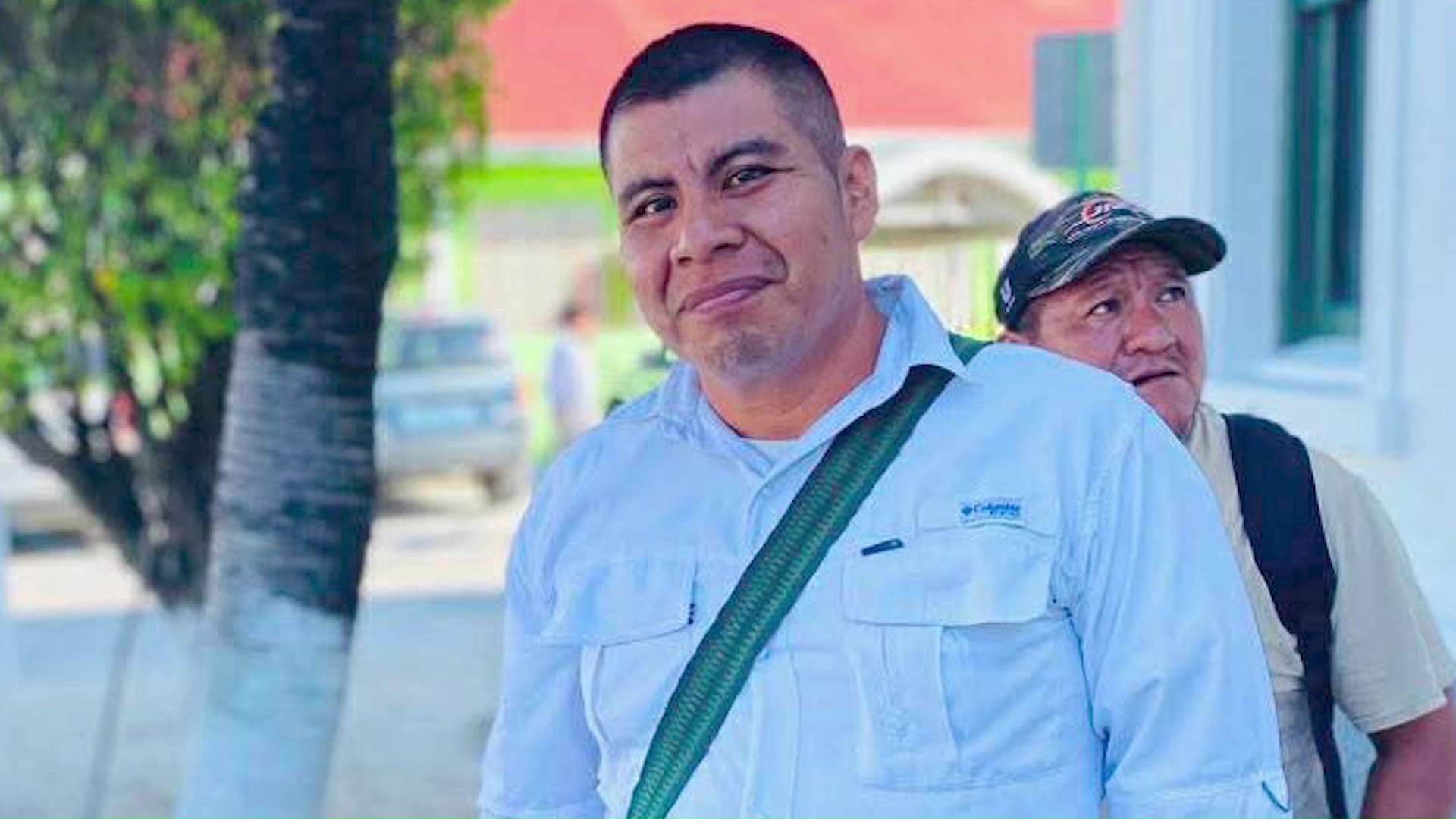
    On the cusp of a years-long internal crisis, the small Maya community of Indian Creek has been thrown into further chaos by the unexplained disappearance of its top traditional leader, First Alcalde Marcus Canti. Last seen on his farm this Monday, Canti’s sudden absence has escalated long-simmering tensions between two rival governance factions in the village, leaving residents on edge and authorities scrambling to de-escalate growing violence.

    Canti’s disappearance has laid bare a bitter rift that has split the once close-knit community for generations: a power struggle between backers of the centuries-old traditional alcalde system, which Canti led, and supporters of the state-recognized elected village council, headed by Chairman Domingo Choc. Choc has been taken into police custody for questioning in connection with Canti’s disappearance, though no formal charges have been filed.

    Local residents report that only two items were found at the site where Canti was last seen: his bicycle and a traditional Maya bag. One anonymous resident, who spoke to local outlet News Five on condition of anonymity, stated that many supporters of Choc maintain his innocence, saying there is no evidence linking the village council chairman to Canti’s disappearance. News Five has also obtained an audio recording, recorded before Canti went missing, that captures the alcalde pleading for assistance in his native Mayan language, though full details of the recording have not been released publicly.

    The conflict that preceded Canti’s disappearance centers on unauthorized land distribution. Canti began issuing what he called communal land certificates to village residents, claiming consent orders gave him the authority to redistribute unassigned land. Among the parcels included in the redistribution were roughly 300 acres of privately held conservation land managed by the Ya’axché Conservation Trust, a regional environmental organization.

    Dr. Louis Zabaneh, Belize’s Minister of Indigenous Peoples’ Affairs, told reporters that the Ministry of Natural Resources is the only governing body with legal authority to issue formal land titles. Prior to Canti’s disappearance, the ministry sent a formal cease-and-desist letter ordering the alcalde to stop issuing the unapproved documents. Zabaneh noted that Canti’s land grab already infuriated private landowners, community members who recognize the ministry’s formal authority, and conservation groups, deepening the village’s divisions long before he went missing.

    Christina Garcia, executive director of Ya’axché Conservation Trust, confirmed that initial reports claimed Canti issued 200 land certificates, but updated information from the community puts the number closer to 280. While Garcia emphasized that the organization recognizes the pressing need for affordable residential land among Indian Creek residents, she stressed that all land transactions must follow formal legal processes to avoid conflicts like the one currently roiling the village.

    Since Canti’s disappearance, the situation has grown increasingly volatile. According to village residents, supporters of the missing alcalde have issued violent threats against Choc and his family, vowing to kidnap one of Choc’s children if Canti is not found quickly. Zabaneh also confirmed that supporters of Canti have targeted property linked to Choc, and that the Ya’axché Conservation Trust’s local field station was damaged during a recent community unrest.

    To date, Belizean police have not confirmed that foul play was involved in Canti’s disappearance, and no suspects have been named publicly beyond Choc’s detainment for questioning. As law enforcement continues the search for the missing traditional leader, Minister Zabaneh has issued an urgent call for calm, urging all factions in the community to stand down and allow authorities to complete their investigation. The village now remains at a tense tipping point, with the land dispute that divided the community for years now transformed into an urgent search for a missing leader and a fight to prevent further violent conflict.

  • Police Engage as Indian Creek Dispute Escalates

    Police Engage as Indian Creek Dispute Escalates

    A years-long dispute over land tenure and community leadership in Belize’s Indian Creek has boiled over into open confrontation, pushing government officials to deploy police to the area to de-escalate rising unrest marked by property damage and targeted intimidation. The conflict has split the tight-knit community into two deeply divided camps: one faction backs the traditional local alcalde system, which advocates for Maya customary land rights aligned with longstanding Indigenous tenure practices, while the other supports the elected village council, which pushes for individual, nationally recognized land titles identical to those held by landowners across the rest of the country.

    Dr. Louis Zabaneh, Belize’s Minister of Indigenous Peoples’ Affairs, confirmed that law enforcement has been on the ground responding to the unrest since tensions first flared into violence. Recent incidents have included trespassing and vandalism at the private property of the village council chairman, as well as tampering with a field station operated by the Ya’axché Conservation Trust, a leading local environmental and land rights organization. The conflict has been simmering for decades, but recent escalations have raised alarms across national and regional stakeholders.

    Minister Zabaneh emphasized that community leaders from both factions had committed to peaceful negotiation just weeks before the outbreak of violence. Just two months prior, he had held a productive meeting with representatives from both sides, and just two weeks before the confrontation, another senior cabinet minister had brokered a second agreement to resolve differences through dialogue rather than confrontation. He has now issued an urgent appeal to all residents to honor these earlier commitments, warning that years of structured negotiation could be undermined by violent retaliation that would only deepen divides and harm community members.

    Zabaneh also stressed that a formal institutional process already exists to address the core land rights dispute, tied to a consent order from the Caribbean Court of Justice (CCJ) that outlines a path to formalize Indigenous land claims across Belize.

    Beyond the community’s internal divisions, new controversy has emerged over the unauthorized issuance of hundreds of land certificates, a move that has thrown national efforts to formalize Maya land rights into chaos. According to analysis from the Ya’axché Conservation Trust, local alcalde leadership has already issued 280 individual land certificates to community members, far more than the number initially reported to government officials.

    Christina Garcia, executive director of Ya’axché Conservation Trust, explained that the issuance of these certificates directly clashes with ongoing national negotiations between the Government of Belize and the Maya Leaders Alliance over a formal Maya Land Tenure Policy and accompanying land rights legislation. While these policy and legal frameworks, which outline a structured, agreed-upon process for recognizing and registering collective and individual Maya land rights, have not yet been finalized or approved by all parties, the unilateral action by the alcalde has pre-empted this national process.

    Garcia noted that the lack of clear, agreed-upon procedural guidance has sparked widespread confusion and frustration, extending beyond Indian Creek to affect private landowners and leaseholders across the Toledo District. Despite the escalation, she reaffirmed her organization’s commitment to dialogue, stating that Ya’axché stands ready to resume joint negotiations with Indian Creek community leaders, government representatives, and other stakeholders to craft a lasting solution that aligns with national policy and legislation and benefits all parties involved.

    The situation has drawn urgent criticism from regional landowner associations, who are calling for additional security deployment to stem rising violence. Toledo Private and Lease Landowners Limited has sent an official letter to Minister Zabaneh demanding the immediate deployment of additional security forces to the area. The association’s letter documents escalating volatile activity, including organized mob action, targeted attacks on private homes, and direct threats against both community leaders and Ya’axché field station staff. Tensions have been further amplified in recent days following the unexplained disappearance of the alcalde who led the certificate issuance effort.

    This report is a transcript of an evening television newscast, with all Kriol-language remarks transcribed using a standard spelling system for accessibility.

  • Haiti : Spring 2026 agricultural campaign, the Ministry strengthens support for producers

    Haiti : Spring 2026 agricultural campaign, the Ministry strengthens support for producers

    In Haiti, the 2026 spring agricultural campaign is kicking off with a major government-backed support initiative designed to lift small-scale producers and strengthen the country’s long-term food sovereignty. Led by the Ministry of Agriculture, Natural Resources and Rural Development (MARNDR) and delivered through the Resilient Agriculture for Food Security Project (PARSA), the campaign is rolling out a sweeping distribution of critical agricultural inputs across five key departments: South, Nippes, West, Grand’Anse, and Central.

    A defining priority of this intervention is closing the gender gap in agricultural access: planners have set a target that 55% of all beneficiaries will be women producers, who make up a large share of Haiti’s agricultural workforce but have historically faced disproportionate barriers to resources. To drive production growth and diversify the country’s agricultural output, the initiative will distribute more than 500 metric tons of seeds covering both staple food crops and non-food commercial crops. Core staple seeds include rice, beans, peanuts, maize, and pigeon peas, which form the backbone of Haitian household food consumption.

    Beyond basic seeds, the campaign is delivering millions of units of specialized planting material to boost perennial and root crop production. In total, farmers will receive over 2.5 million yam seedlings, 1.3 million banana suckers, 3.5 million cassava cuttings, 78,000 dwarf coconut seedlings, and 890,000 combined fruit and forest tree seedlings. Complementing these inputs, the MARNDR is expanding support for small-scale livestock production, which provides critical supplementary income and nutrition for rural households. The program will establish 400 new rabbit production units and 1,815 dedicated meat production units, complete with all necessary feed and veterinary supplies to help operations get off to a successful start.

    To address longstanding soil fertility challenges and boost per-acre productivity, the campaign is also rolling out a large supply of soil amendments: 4,700 bags of chemical fertilizer and 57,848 bags of locally produced compost will be distributed to participating producers across target regions.

    Overall, the program is designed to reach tens of thousands of small-scale and family farmers, with a core focus on building long-term productive capacity rather than just short-term relief. By investing across multiple agricultural subsectors, MARNDR aims to lift national agricultural output, make sustainable improvements to Haiti’s food and nutritional security, and help producers better withstand the growing frequency of climate shocks and volatile economic conditions that have disrupted rural livelihoods in recent years.

  • BEL’s Sick and Elderly Ex-Employees Protest for Severance

    BEL’s Sick and Elderly Ex-Employees Protest for Severance

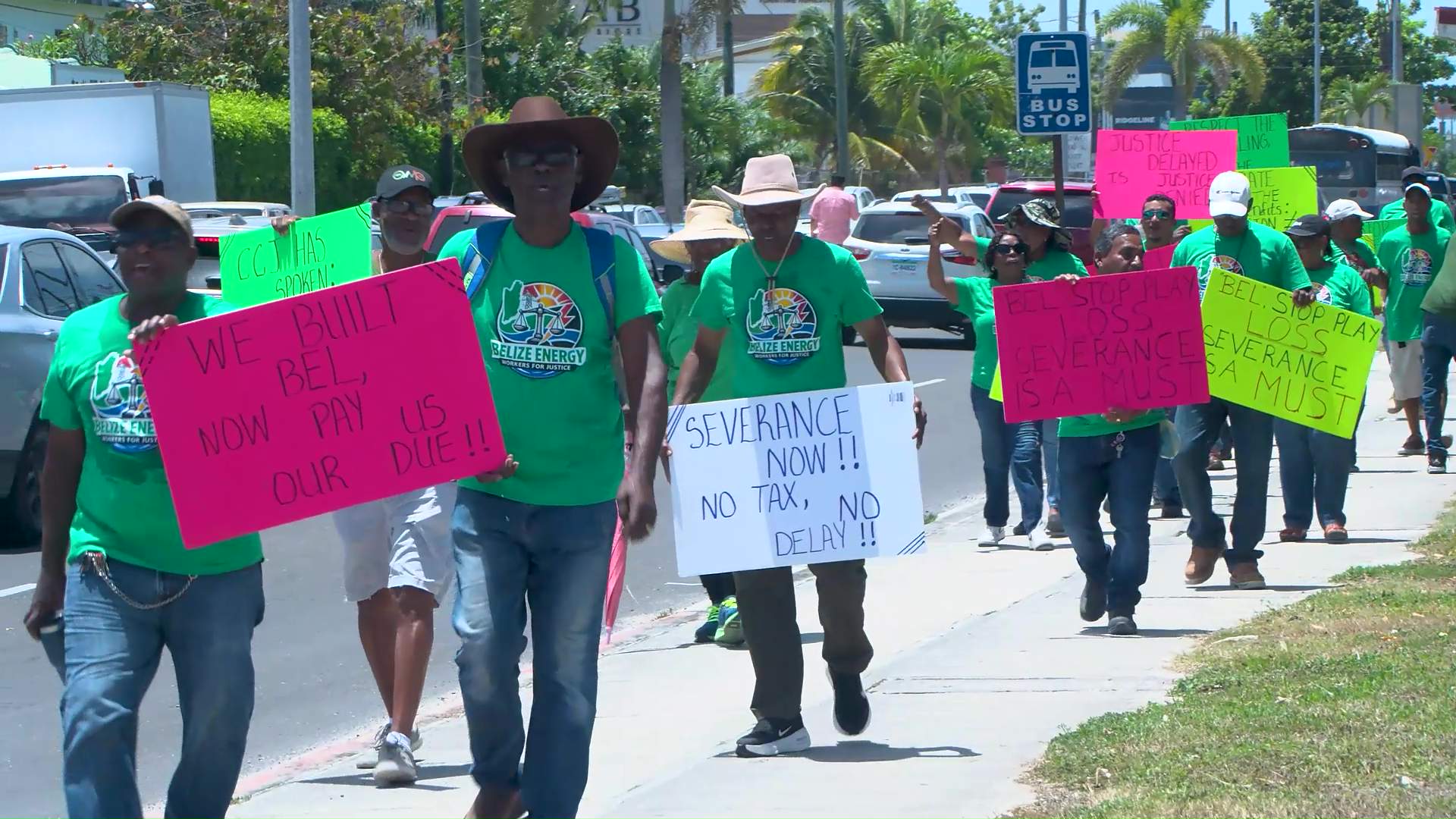
    On April 14, 2026, a determined group of aging, medically vulnerable former employees of Belize Electricity Limited (BEL) gathered outside the utility’s headquarters in Belize City under the blistering midday sun, staging a urgent protest to demand long-overdue severance benefits they say they earned through decades of service. Organized under the banner of Belize Energy Workers for Justice (BEWJ), the demonstration is far more than a demand for back wages — for these workers, it is a fight for basic survival and human dignity, with many facing declining health that leaves them with little time to wait for redress.

    The protesters point to a landmark 2025 ruling by the Caribbean Court of Justice (CCJ) that backs their legal claim: that their monthly pension payments do not fulfill BEL’s legal obligation to pay separate severance. BEWJ organizer Shawn Nicholas, a 31-year veteran of the company who has survived three strokes, explained that the court has already confirmed pensions do not count toward the required severance packages that remain unpaid. Fellow organizer Dorla Staine, who dedicated 40 years of her career to building BEL, echoed this frustration, noting that workers themselves contribute to their pension funds, meaning BEL’s argument that pension contributions count toward severance amounts to the company using workers’ own money to cover its obligations. Staine, who lost a kidney to kidney stones and struggled to access even a portion of her reduced pension benefits through the COVID-19 pandemic, said that company leadership has ignored her repeated pleas for help, showing no sympathy for her medical crisis.

    The small group of protesters gathered on the steps of BEL’s office represents a far larger community of former workers who cannot join them. Staine shared that dozens of other ex-employees are too sick, disabled — some are blind or deaf — or even hospitalized to attend the demonstration, with two members currently fighting for their lives in medical care and several more recovering at home. These are the very workers who built BEL from the ground up, organizers stress, and they should not be forced to beg for benefits they were promised.

    Protesters are calling on Belize’s Minister of Labor Kareem Musa, a trained lawyer who understands the CCJ ruling, to intervene immediately. Nicholas says the law is already on the workers’ side, and Musa has the power to resolve the dispute without forcing sick and elderly people to protest in dangerous heat. The organizers also expressed quiet disappointment that current BEL employees have not joined their cause, noting that they intentionally scheduled the protest during lunch hour to avoid disrupting operations or harming the company many of them still love. They warn that current workers will face the same unfair treatment when they retire, and collective action now could protect their own future benefits.

    In a revelatory development that has intensified the dispute, News Five has obtained internal documents confirming that BEL senior executives have already received large, undisclosed severance payouts when they left the company — even as ordinary frontline workers are denied the same benefits. The exposé has confirmed what the former workers have long suspected: a two-tier system at BEL that prioritizes wealthy leadership at the expense of the rank-and-file employees who built the company. Staine recalled that this double standard dates back decades: when workers first demanded severance in 1999, leadership instead offered a restructured pension system, while quietly paying out large severance and bonuses to top executives behind closed doors. Staine added that even the pension benefits ordinary retirees receive have been cut in half, with many waiting years to access even the reduced funds they are owed.

    For these aging, ill workers, time is not an unlimited resource. Their core message is clear: justice delayed is justice denied, and they need the severance they earned right now to cover medical costs and basic living expenses as they enter the final stage of their lives.