作者: admin

  • Essed heeft tekst gereed voor eerherstel en excuses aan 8-decemberslachtoffers

    Essed heeft tekst gereed voor eerherstel en excuses aan 8-decemberslachtoffers

    On April 16, attorney Hugo Essed, who represents the relatives of victims of Suriname’s 8 December Murders, laid out the full terms of a landmark legal claim filed against the Surinamese state, in an interview with local outlet StarNieuws. The claim explicitly codifies the terms of state rehabilitation and formal apologies that the victims’ families have long demanded, including the exact wording of the required public statement and the media outlets through which it must be published.

    At the core of the demand is a formal state acknowledgment that the executed victims were wrongfully accused, never participated in any alleged countercoup, and were entirely innocent of any wrongdoing that justified being stripped of their lives, Essed explained. He noted that the specific identity of the state representative delivering the apology is not a critical sticking point for the families — as long as the apology comes from an official representative of the Surinamese government. As a precedent, he pointed to the 2006 formal apology delivered to relatives of victims of the Moiwana massacre by the late former president Ronald Venetiaan.

    Essed rejected speculation that the timing of the claim’s public emergence was deliberately coordinated to coincide with the current ruling National Democratic Party (NDP) administration, dismissing the idea as unfounded speculation. He explained that the timeline was not politically manipulated: legal preparations for the civil claim could only begin after the Surinamese Court of Justice concluded the final phase of criminal proceedings in the case with a conviction in 2023. Compiling the required documentation and coordinating with the victims’ families, who are scattered across multiple different countries, required extensive time and work, pushing the claim’s filing to late 2025. The claim was formally submitted to the court all the way back in December 2025, but Essed criticized the slow pace of Suriname’s judicial processing for the delay in public updates. He also emphasized that all substantive legal arguments in the case will be presented exclusively to the court, rather than tried through public media engagement.

    The attorney also addressed public criticism of the size of the compensation demand outlined in the claim. The filing requests €500,000 in tangible damages and €750,000 in intangible damages per affected family, as well as 250,000 Surinamese dollars per family to cover legal and court fees. It also includes a demand for a daily penalty of 500,000 Surinamese dollars per family for every day the state fails to comply with any eventual court ruling in the case. Essed pushed back against claims that the compensation figure is excessive, arguing that when you calculate the full lifetime income the victims’ families have lost over the decades since the murders, the requested amount may actually be lower than the full calculated loss. Most importantly, he noted, the intangible harm of losing a loved one in an extrajudicial killing can never be fully quantified in financial terms. While the final ruling on the claim rests entirely with the court, Essed said the core priority for the families is not the compensation itself, but the long-delayed official exoneration of their loved ones and a formal state apology for the injustice done.

    Essed concluded by saying he remains optimistic about the outcome of the case, stressing that the victims’ relatives are fully within their legal rights to pursue this long fight for accountability and justice.


  • Using Shadow Skills: Enhance Phone Pictures

    Using Shadow Skills: Enhance Phone Pictures

    In an era where smartphone photography has become one of the most ubiquitous daily activities across the globe, the race to produce standout, high-quality images has never been more competitive. While millions of people snap hundreds of photos every day, only a small fraction manage to achieve that striking, professional-level visual impact that sets great images apart. One underrated technique that is transforming smartphone photography from mundane to memorable is the intentional use of shadows, often called “shadow skills” among photography communities. When mastered, this simple tool can turn a basic snapshot into a compelling, layered visual story that captures attention and emotion.

    Many casual photographers view unintended shadows as a flaw that ruins a shot, often associating deep dark patches with gloomy moods or poor lighting. To understand the science behind shadows: they form when an object blocks a source of light, creating a natural contrast between dark and bright areas across the frame. Professional photographers have long recognized that this contrast is not a mistake — it is a powerful creative tool that adds depth, dimension, and structure to an image, much as intentional structure adds elegance to any performance. Shadows help emphasize the shape of subjects and draw out fine details that might otherwise get lost in flat, even lighting. When harnessed correctly, shadow skills can completely transform the mood and impact of any smartphone photograph.

    For mobile photographers looking to master the art of shadow work, there are several accessible techniques that can be implemented immediately to improve results. The first step is seeking out distinctive lighting that creates compelling shadows. Strong, defined shadows require bold, directional light, and one of the best natural sources of this light comes during the so-called “golden hours” just after sunrise and just before sunset. The low angle of the sun during these windows creates long, warm shadows that add unique character and depth to any shot, a trick that professional photographers have relied on for decades. Even indoors or after dark, unique shadow effects can be created using everyday light sources: table lamps, window light, and even streetlights can produce dynamic, one-of-a-kind shadow patterns. The key is to observe how light moves and shifts across your environment throughout the day, and capitalize on moments when shadows look particularly striking.

    A second core technique is using shadow play to direct the viewer’s attention straight to your main subject. Shadows can act as natural frames or visual pathways that guide the eye exactly where you want it to go. For example, the long shadow of a tree branch can curve across the frame to lead a viewer’s gaze directly to a portrait subject, while the parallel lines of shadow from window blinds can draw attention to a small, meaningful detail in a still life. By experimenting with the placement of shadows relative to your subject, you can make your focal point pop against the background far more effectively than many post-processing edits.

    Third, shadows can be used to create striking textures and patterns that elevate simple scenes. Think of the repeating geometric shadows cast by a fence, the dappled pattern of sunlight through tree leaves, or the grid of shadow from a garden lattice across a wall. Adjusting your shooting angle or moving your subject just slightly can reveal entirely new patterns, turning a boring blank wall into a dynamic, eye-catching background. These repeating shadow patterns add visual rhythm and unique texture to your photos that cannot be replicated with digital filters.

    Fourth, intentional shadow placement allows you to create dramatic bold silhouettes that make for incredibly memorable images. To achieve this effect, simply place your subject between your camera and a strong backlight source — such as a window, open sky, or bright artificial light. This will overexpose the background and leave your subject as a dark, defined outline against the bright backdrop. This technique works beautifully for any subject with a clear, recognizable shape, from people and animals to architectural landmarks and natural objects.

    Finally, black-and-white photography is the perfect medium to highlight the beauty of well-crafted shadows. By removing the distraction of color, black-and-white processing forces viewers to focus entirely on the contrast between light and dark, making shadow work the star of the image. Most modern smartphones come with built-in black-and-white filters and editing tools that allow you to convert your shadow-rich shots to monochrome in seconds, amplifying the dramatic effect.

    To help smartphone photographers capture the best possible shadow shots, there are several simple pro tips that require no extra equipment. First, adjust your exposure manually: almost all smartphone camera apps let you tap and slide to adjust brightness, and lowering exposure slightly keeps bright areas from washing out and helps bring out fine details in shadow areas. Second, change your viewpoint: walking around your subject and shooting from different angles can completely alter the shape and impact of shadows, so don’t be afraid to experiment. Third, keep your lens clean: since shadows highlight fine details, a smudged or dirty lens will soften and blur shadow effects, so a quick wipe before shooting goes a long way. Fourth, use editing tools to enhance your work: apps like Snapseed, Adobe Lightroom, or even your phone’s default editor let you boost shadow contrast and clarity to help shadows pop, just be careful not to over-edit and lose important shadow details. Finally, embrace happy accidents: perfectly placed shadows are nice, but unexpected, unusual shadow shapes or patterns are often what turn an ordinary photo into a unique, striking work of art.

  • Miss St. Lucia Crowned Caribbean Queen; Antigua and Barbuda Delivers Strong Showing

    Miss St. Lucia Crowned Caribbean Queen; Antigua and Barbuda Delivers Strong Showing

    The 2026 Miss St. Maarten Carnival Caribbean Queen Pageant brought together some of the most poised, talented delegates from across the Caribbean region this week, for a glittering night of cultural celebration and competition held at St. Maarten’s iconic Carnival Village. Opening under the event’s vibrant theme “Queens of Sun & Sail,” the annual pageant served as a centerpiece highlight of St. Maarten’s widely anticipated yearly Carnival festivities, designed to uplift regional pride and center the unique cultural expressions of each participating Caribbean territory. After a night of spirited performances showcasing each contestant’s talent, grace, and connection to their heritage, the coveted Caribbean Queen crown was awarded to Emerle Tisson, representing the island nation of St. Lucia. Tisson’s standout performance throughout the competition earned her the top spot among a stacked field of regional delegates. Following Tisson in the final rankings, Kentonea Fortin, contestant from Miss St. Eustatius, claimed the title of first runner-up, while Keisy Quant, the home delegate representing host nation St. Maarten, secured the position of second runner-up. Though Miss Antigua and Barbuda’s representative did not earn a placement among the evening’s top three finalists, pageant organizers and audience observers alike praised the contestant for her confident, energetic stage presence. Competing against dozens of skilled regional delegates, the Miss Antigua and Barbuda delegate represented her home island with unwavering poise, leaving a lasting impression on attendees with her committed, memorable performance. The event wrapped up to widespread acclaim, with organizers noting the success of this year’s competition in bringing Caribbean communities together through shared celebration of culture and womanhood.

  • Power Restored to Belmont #3 Feeder Areas After Crash-Related Outage

    Power Restored to Belmont #3 Feeder Areas After Crash-Related Outage

    An unexpected widespread power outage triggered by a vehicular accident that damaged a critical utility infrastructure has been fully resolved, with electricity restored to all affected residential and commercial communities, according to an official update from the Antigua Public Utilities Authority (APUA) Electricity Business Unit.

    The outage originated when the crash compromised a key utility pole, cutting service to all customers connected to the Belmont #3 Feeder. The affected zone spanned a wide geographic area, including segments of All Saints Road west of the local substation, as well as the communities of Briggins, Grays Hill, Whenner Road, Upper Desouza Road, Upper Tindale Road, Belmont, Cashew Hill, Bendals Road, Golden Grove, Nut Grove, Bendals and Bathlodge.

    Almost immediately after receiving reports of the incident, APUA mobilized a team of trained technical crews to the site. The technicians prioritized public safety while carrying out urgent repairs to reverse the damage and bring power back online for impacted users.

    While service has been restored for the vast majority of customers in the affected area, APUA has noted that a small number of users may still experience intermittent power interruptions. Any customer continuing to face service disruptions is encouraged to reach out to the authority’s dedicated fault reporting hotline at 311 to report their issue and request additional assistance.

    In its public statement, the regional utility provider issued a formal apology to all customers inconvenienced by the unplanned outage, and extended gratitude to the community for their understanding and patience during the repair and restoration process.

  • COMMENTARY: Cultivating Community through Art

    COMMENTARY: Cultivating Community through Art

    Art has captivated human imagination for centuries, rooted in a linguistic history stretching back to ancient Rome. The term ‘art’ traces its origins to the Latin word ‘ars’, meaning skill, craft, or creative expression, with its first recorded use appearing in 13th-century European manuscripts. Far more than a niche academic discipline or elite pastime, art is fundamentally a deeply personal reflection of an artist’s perspective, whose meaning is shaped by the unique interpretations of every viewer. This inherent subjectivity is what gives art its enduring intrigue: no two people will ever draw the exact same meaning from a single work, making every encounter with art a new, personal experience. Beyond individual interpretation, art acts as a powerful cross-cultural bridge, capable of connecting people across generations, ethnic divides, and different religious backgrounds. When interpreted within its proper cultural context, art fosters shared dialogue rather than division, embodying a natural neutrality that transcends social and political boundaries.

    In recent decades, education leaders have increasingly recognized art’s transformative role in holistic learning, moving beyond outdated models that framed art as an extracurricular afterthought. The integration of art into core curricula through initiatives like STEAM (Science, Technology, Engineering, the Arts, and Mathematics) education has redefined how students learn, turning creative expression into a tool to drive inquiry, critical thinking, and cross-disciplinary problem-solving. Research and educational practice have shown that this interdisciplinary approach boosts reading proficiency and sharpens cognitive acuity, benefiting students across all subject areas, not just creative pursuits. The United Nations Educational, Scientific and Cultural Organization (UNESCO) reinforces this perspective, noting that art nurtures global creativity, innovation, and cultural diversity, while acting as a catalyst for knowledge sharing, curiosity, and open dialogue. To protect these inherent benefits, UNESCO emphasizes that societies must actively promote and defend artistic freedom; when artists are able to create without constraint, art becomes a foundational building block for more free, peaceful, and inclusive global communities.

    In 2019, UNESCO formalized this global commitment to art by proclaiming April 15 as World Art Day, a global observance designed to celebrate artistic creation, expand access to creative expression, and strengthen the ties between art and society. The date of April 15 was intentionally selected to honor Leonardo da Vinci, one of history’s most iconic creative visionaries, who remains a global symbol of freedom of expression, tolerance, and universal brotherhood. Each year, the observance highlights artists’ indispensable contributions to sustainable development, raises awareness of the diversity of global artistic expressions, and spotlights the critical role of arts education in building inclusive, equitable school systems. For 2026, World Art Day has adopted the theme “A Garden of Expression: Cultivating Community Through Art”, which frames art as a collective, growing practice: just as a garden flourishes when tended by a whole community, art thrives when it is shared and nurtured collectively, fostering connection, unity, and shared cultural belonging among groups of people with common purpose.

    Celebrating World Art Day is accessible to everyone, regardless of whether one identifies as a professional artist or a casual art enthusiast. One of the most common ways to mark the day is to visit local art exhibitions or museums, many of which host special themed events or offer discounted admission to welcome new audiences. For those inclined toward hands-on participation, World Art Day is the perfect opportunity to explore personal creativity, whether that means experimenting with painting, drawing, sculpture, photography, or any other medium that sparks curiosity. Even first-time creators often find the process of making art to be deeply fulfilling, as iconic American artist Georgia O’Keeffe once captured: “I found I could say things with color and shapes that I couldn’t say any other way – things I had no words for.” For those looking to learn and connect, local art studios and community centers frequently host special workshops and classes for World Art Day, giving attendees the chance to build new creative skills, refine existing techniques, and build connections with other creators in their local area.

    As societies continue to grapple with division and polarization, the case for greater public investment in art and arts education grows ever stronger. When we prioritize art—whether in our schools, our communities, or our public policy—we don’t just support creators; we nurture the qualities that help peaceful, free societies flourish: curiosity, creativity, dialogue, and belonging.

  • Latest Voter ID Replacement Update

    Latest Voter ID Replacement Update

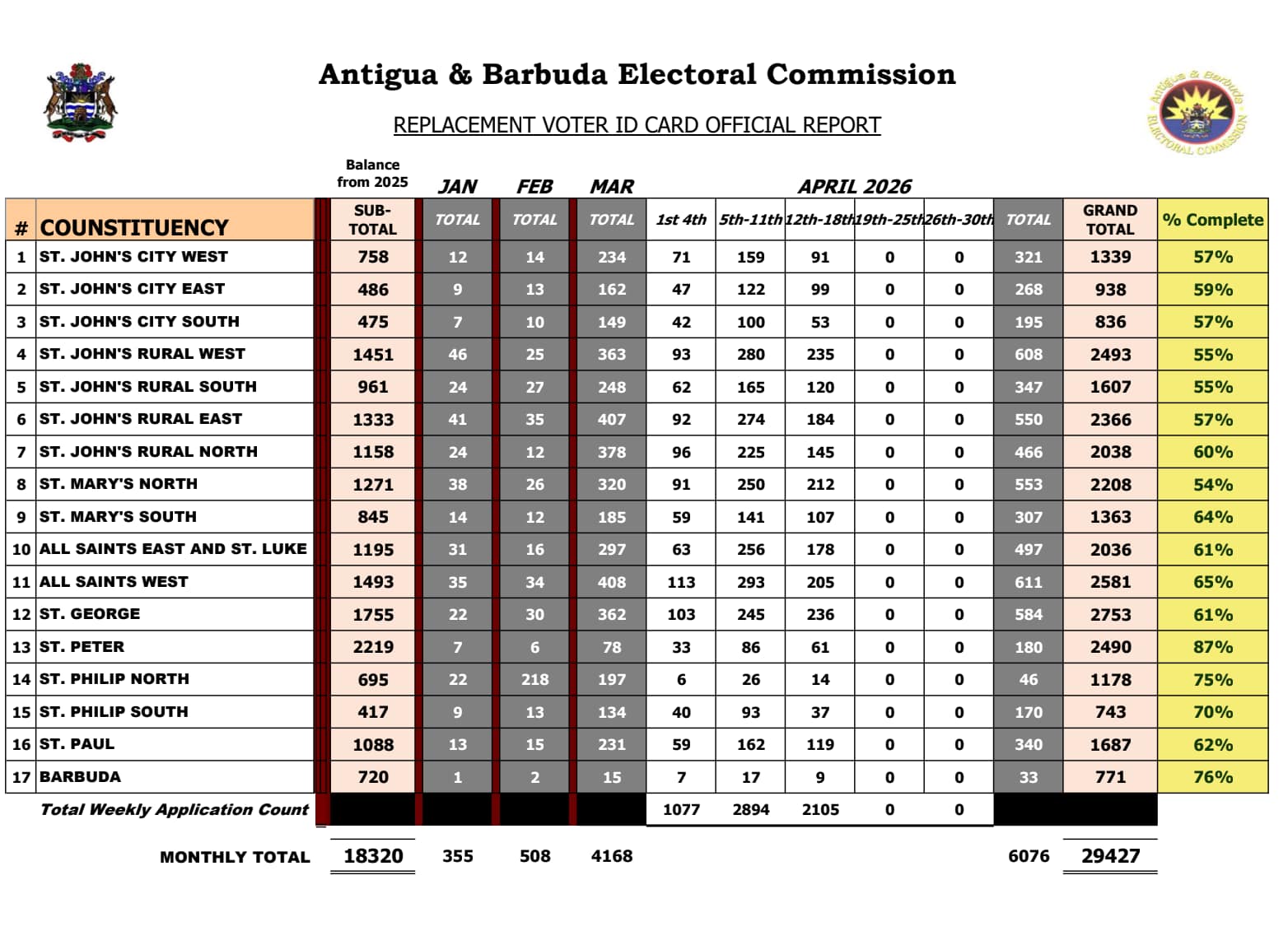
    The Electoral Commission of Antigua & Barbuda has released its latest official progress update for April 2026, confirming that more than half of all eligible voters across the country have successfully finished replacing their outdated voter identification cards. The ongoing national card replacement initiative, a key preparatory step for upcoming electoral processes, shows uneven but broadly steady progress across the country’s 17 parliamentary constituencies, with completion rates ranging from just over the 50% threshold to a high of 87% in the northern parish of St Peter.

    To date, the commission has processed a cumulative total of 29,427 replacement applications, with 6,076 of those requests completed in the month of April alone. Breaking down weekly activity for the period 12 to 18 April, the body recorded 2,105 finalized replacement applications, with most of the week’s work concentrated in the first three working days. Daily data shows that April 13 saw the highest volume of processed applications, at 793, followed by 605 completed requests on April 14 and 501 on April 15. No application processing activity was documented from April 16 through 18, consistent with standard public service operational schedules in the country. Alongside the replacement of existing voter cards, the commission also accepted and processed 257 applications from first-time eligible voters seeking to register on the national electoral roll during that same seven-day window.

    Beyond the parish-level standings, the weekly data reveals particularly strong engagement across both urban and rural constituencies located within the St John’s electoral district. Two constituencies in the area, St John’s Rural West and All Saints West, posted some of the highest weekly application processing totals nationwide, outperforming many other regions. At the lower end of the completion spectrum, two constituencies — St Mary’s North and St John’s Rural West — sit just above the 50% mark, with 54% and 55% of eligible voters having completed the replacement process respectively. After St Peter’s leading 87% completion rate, the island of Barbuda ranks second at 76%, followed closely by St Philip North at 75%. Most constituencies have now crossed the 55% completion threshold, marking consistent forward momentum for the national initiative.

    Electoral officials have not yet announced a formal final deadline for the card replacement process, but they continue to actively urge all eligible voters to complete their applications as soon as possible. The program is gradually moving toward full national coverage, with officials working to expand outreach and processing capacity to bring remaining unregistered eligible voters into the system ahead of any upcoming electoral events.

  • Barbados power past Antigua to stay unbeaten

    Barbados power past Antigua to stay unbeaten

    The Jean Pierre Under-16 Netball Championships, hosted in Trinidad, has seen one undisputed standout through its first four rounds of competition: Barbados’ junior national squad, nicknamed the Baby Gems. The team has maintained a perfect unbeaten streak, closing out their latest match with a statement victory that underscores their early dominance in the regional tournament.

    In their fourth outing of the competition, the Baby Gems delivered a commanding 39–13 win against Antigua and Barbuda. From the opening whistle, Barbados seized full control of the court, never once ceding the lead to their opponents. They set an aggressive pace early, building a 12–3 advantage by the end of the first quarter, and steadily expanded their gap over the following two periods. By halftime, the scoreboard read 23–7 in favor of Barbados, which stretched further to 32–9 heading into the final quarter, allowing the team to close out the match comfortably without any late-game pressure.

    This latest win follows a series of solid performances that have kept the squad’s unbeaten record intact. Just one day before their defeat of Antigua and Barbuda, the Baby Gems notched their third victory against the Cayman Islands, finishing with a 42–17 final score. Mirroring their consistent pattern of play, Barbados held the lead from start to finish in that match, going up 8–4 after the first quarter, 21–6 at the half, and 33–11 by the end of the third period before wrapping up the win.

    On the opening day of competition, held at the University of the West Indies St. Augustine campus, the Baby Gems kicked off their campaign with two back-to-back wins. On Monday, they secured a 23–15 triumph over Dominica after a controlled, steady performance. Though their lead narrowed slightly to 11–8 at halftime and 18–13 after three quarters, Barbados pulled away in the final frame to seal the result. Their tournament opener, played against Grenada, ended in a 20–12 win to launch the squad’s undefeated run.

  • OP-ED: CARICOM and the new normal in international politics

    OP-ED: CARICOM and the new normal in international politics

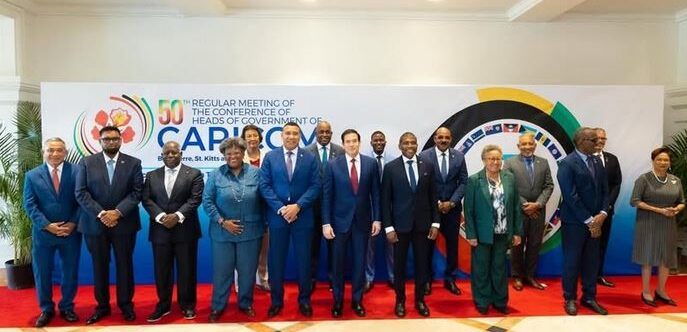
    As the Caribbean Community (CARICOM) marks its 50th Conference of Heads of Government, the 56-year-old regional bloc finds itself facing the most severe test of its unity in modern history, pushed to breaking point by shifting great power dynamics that have reopened deep foreign policy divides among member states. The moment of crisis comes as St. Kitts and Nevis Prime Minister Terrance Drew stepped into the six-month rotating CARICOM chairmanship in January 2026, tasked with bridging growing fractures that have undermined the bloc’s longstanding diplomatic cohesion at a time of unprecedented global upheaval.

    The core source of tension stems from competing responses to the so-called “Trump Corollary” to the Monroe Doctrine, a policy framework that has reignited great power competition in the Caribbean and split the 14 sovereign member bloc into two opposing camps. For most small CARICOM states, the doctrine, which has been implemented through heavy-handed U.S. security and foreign policy actions, raises deep alarms: it contradicts the bloc’s foundational commitment to the UN Charter, multilateral cooperation, and sovereign equality, principles that are the primary protection for small states in an anarchic international system.

    But a small subset of members has broken ranks to align fully with Washington. Trinidad and Tobago, under Prime Minister Kamla Persad-Bissessar, has openly backed U.S. policy across multiple flashpoints: it supported the U.S.-Israeli military campaign against Iran (now paused by a fragile ceasefire), endorsed U.S. anti-narcotics military operations in the Caribbean that targeted the Venezuelan Maduro regime, and welcomed Maduro’s capture by U.S. forces. In return, Washington has deepened bilateral security cooperation with Port-of-Spain and admitted it into the high-profile Shield of the Americas initiative, joining only Guyana as the second CARICOM member in the bloc. This split has eroded mutual trust across the regional grouping, opening a diplomatic rift that has persisted for months.

    When Drew assumed the chairmanship, he prioritized mending these divides to ensure a successful 50th Heads of Government Conference, held in February 2026. To lay the groundwork, he launched a series of one-on-one high-level engagements with regional leaders, aiming to rebuild goodwill and create space for productive dialogue. Drew’s efforts achieved a partial victory: all 14 heads of government attended the summit, though three departed early before the closed-door leadership retreat, a key session focused on geopolitical reform.

    Despite the divisions, CARICOM members were able to close ranks on limited issues, including longstanding policy toward Cuba. On the sidelines of the summit, U.S. Secretary of State Marco Rubio held talks with CARICOM leaders, resulting in an agreement to develop a new bilateral cooperation framework, which was formalized in a joint statement on regional engagement. The summit also reaffirmed a core principle of CARICOM: as Jamaica Prime Minister Andrew Holness emphasized in opening remarks, citing the 2013 Rose Hall Declaration, CARICOM is a community of sovereign states bound by shared purpose rather than forced uniformity, a pragmatic approach shaped by historical skepticism of ceding authority to supranational institutions.

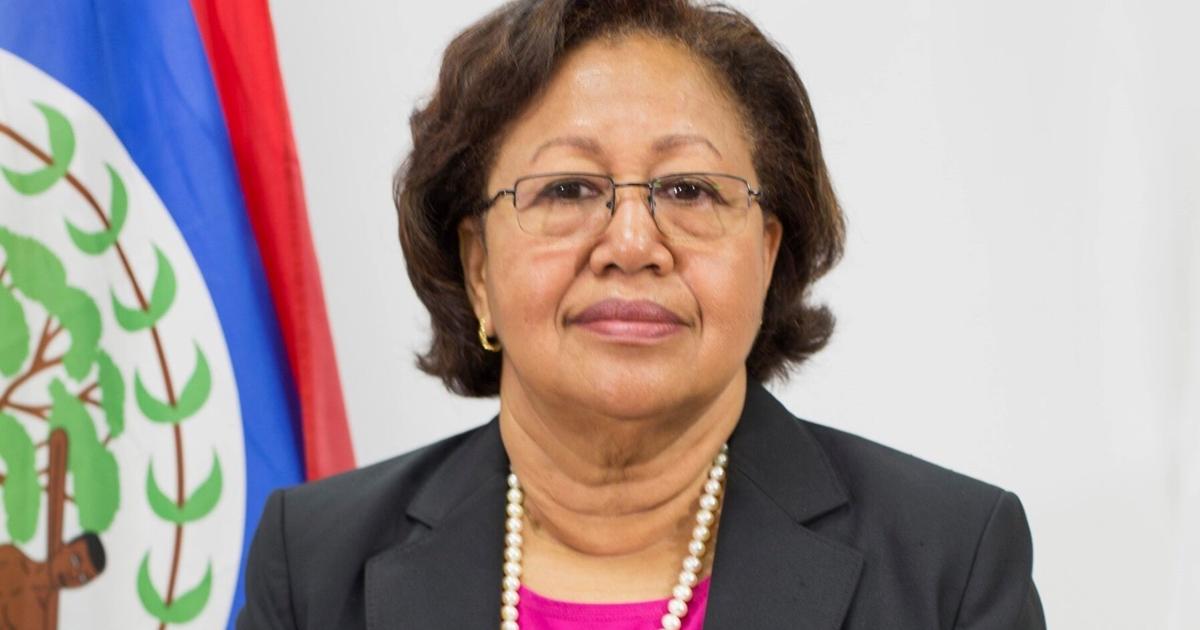
    Holness acknowledged the growing gap between the accelerating pace of global change and the bloc’s ability to coordinate regional responses, a challenge that has defined the current moment. Even so, the summit was widely framed as a limited success for chair Drew and the bloc – until a new controversy erupted over the reappointment of incumbent CARICOM Secretary-General Carla Barnett to a second term starting August 2026.

    Drew first announced Barnett’s reappointment on March 25, 2026, triggering a public dispute that has deepened existing divides. The impasse extends far beyond procedural questions, opening up broader debate about CARICOM’s governance structures. As of mid-April 2026, neither side has backed down: public diplomatic correspondence from Trinidad and Tobago Foreign Minister Sean Sobers (dated April 9) and Drew (dated April 11) show positions have hardened, with many remaining members forced to navigate a diplomatic tightrope between the two camps. High-level mediation efforts are ongoing, but no immediate resolution is in sight.

    For regional analysts, the current crisis is not an isolated incident, but part of a longer pattern of tension sparked by great power interference in the Caribbean. A key historical parallel is the 1983 U.S. invasion of Grenada, which created lasting rifts within the bloc. Today, the resurgence of sphere-of-influence politics directly undermines the post-WWII international order’s cornerstone of multilateral cooperation, presenting an existential challenge to small Caribbean states that rely on the UN Charter to defend their sovereignty.

    While the 50th summit delivered much-needed discussion of geopolitical challenges and the bloc’s core identity, CARICOM now faces an urgent imperative: to work through its deepening divides and adapt to the new normal of 21st century great power competition. For small Caribbean nations, the stakes could not be higher: failure to navigate this moment could permanently erode the regional unity that has served the bloc for more than five decades.

    *This analysis reflects the personal views of Nand C. Bardouille, Ph.D., manager of The Diplomatic Academy of the Caribbean at The University of the West Indies St. Augustine Campus, and was originally published by the Jamaica Gleaner on April 16, 2026.*

  • ‘Disgraceful silence’ from foreign ministers

    ‘Disgraceful silence’ from foreign ministers

    A deepening transparency crisis has rocked the Caribbean Community (Caricom), as Trinidad and Tobago Prime Minister Kamla Persad-Bissessar has leveled explosive allegations of corrupt backroom dealing against the regional bloc’s leadership, centered on the controversial reappointment of Secretary-General Dr. Carla Barnett.

    At the heart of the controversy is a bombshell revelation from Persad-Bissessar: the official April 11 statement defending Barnett’s reappointment, published publicly under the name of Caricom Chairman and St. Kitts and Nevis Prime Minister Dr. Terrance Drew, was actually written by Barnett herself. Document metadata shared by the prime minister confirms Barnett as the statement’s original author, a revelation Persad-Bissessar argues exposes the fundamental conflict of interest plaguing the bloc’s decision-making process.

    The dispute stretches back to the February 2026 Caricom Heads of Government Conference held in St. Kitts and Nevis. Persad-Bissessar attended the opening sessions and departed on February 25, leaving Foreign Minister Sean Sobers to lead the Trinidad and Tobago delegation. On the morning of the scheduled closed-door Nevis retreat on February 26, a WhatsApp message sent by Barnett to the Caricom Council for Foreign and Community Relations (COFCOR) chat group – which all regional foreign ministers, including Sobers, are members of – clearly stated that Chairman Drew had ordered the retreat to be restricted to heads of government only, barring all ministers from attending. This directly contradicts Drew’s later claim that Sobers was invited to the retreat and declined to attend due to seasickness, a claim Sobers formally refuted in an April 9 letter.

    Persad-Bissessar has lambasted the entire Caricom foreign minister corps for what she calls their “deliberate and disgraceful silence” in the wake of this exposed contradiction. All COFCOR members have access to the unaltered February 26 WhatsApp message confirming the disinvitation, yet none have stepped forward to confirm Sobers’ account. This collective silence, the prime minister says, amounts to active complicity in smearing the foreign minister’s reputation to cover up procedural misconduct.

    Trinidad and Tobago’s core objections stretch beyond the conflicting narratives about the disinvitation. The reappointment was never listed on the official public agenda for the conference, and no reference to the decision appeared in the March 1 joint communiqué or the March 2 official summary of Caricom decisions published after the meeting. It was not until March 25 that Drew formally announced Barnett’s second five-year term, set to begin when her current term expires in August 2026, following a vote by a majority of heads of government held during the closed-door retreat.

    Persad-Bissessar has drawn sweeping conclusions about the state of Caricom’s leadership, describing the bloc’s secretariat as “dysfunctional, dishonest and incompetent.” She argues that the opaque process is the inevitable outcome of a system where political allies, party loyalists, and relatives of regional politicians are appointed to top management roles to preserve a decades-old “old boys club” status quo that benefits regional business and political elites, rather than appointing independent, competent technocrats. What Caricom frames as core ideals of regional integration, integrity, and inclusion, she says, is just a “smoke screen” for behind-the-scenes deals that prioritize keeping aligned political parties in power across the region and exclude unaligned groups from the entrenched political establishment.

    In a statement to local media, Foreign Minister Sobers backed the prime minister’s campaign, calling the situation “intolerable” and a “profoundly sad moment for the Caribbean people.” He emphasized that no amount of public relations spin can distract from the core facts: Trinidad and Tobago was deliberately excluded from the retreat, the reappointment was never added to the official agenda, and the entire process violated the procedural requirements laid out in the Revised Treaty of Chaguaramas, Caricom’s founding legal document.

    Despite the scathing criticism, Persad-Bissessar has repeatedly emphasized that Trinidad and Tobago has no plans to leave the regional bloc, which it helped found 52 years ago and has heavily invested in over decades. “We helped build this organisation and will be a part of fixing it to benefit all the people of Caricom,” she said, adding that the country’s economic, security, and development future is deeply tied to the bloc’s success.

    The prime minister has vowed to continue escalating the matter publicly and aggressively until two demands are met: full accountability for all actors involved in the opaque reappointment process, and sweeping institutional reforms to guarantee future fairness, transparency, accountability, and non-interference in the domestic politics of member states. She has noted that even small local bodies like village councils and sports clubs keep formal, timestamped meeting minutes and performance records, and Caricom, as a 52-year-old regional institution, has no excuse for failing to produce the documentation she has requested about the reappointment process, which includes communications, meeting minutes, and performance appraisals for Barnett.

    A full timeline of the unfolding controversy tracks a steady escalation of tensions over two months: the initial exclusion at the February retreat, the first public announcement of the reappointment in late March, repeated formal requests for documentation from Trinidad and Tobago that went unanswered, an emergency Caricom virtual meeting that Trinidad and Tobago boycotted over the lack of transparency, and the most recent bombshell revelation that Barnett authored her own defense statement released under the chairman’s name.

  • Mother: He did not deserve that

    Mother: He did not deserve that

    A shocking, senseless act of violence has cut short the life of a young Trinidadian farmer just months after he and his brother launched their new agricultural venture. On Tuesday, 34-year-old Kamal Richard Mohammed, a father of two young children, was ambushed and shot in the head while working on a cultivated plot off Manohar Trace, Rochard Road in Barrackpore, local law enforcement and eyewitnesses confirm.

    According to official police accounts, the attack unfolded around midday. The unidentified gunman, riding a bicycle, approached Mohammed on the agricultural land, drew a concealed firearm, fired a single shot at the farmer, and immediately fled west along an unpaved dirt track. First responders were alerted swiftly, and Mohammed was carried to a waiting vehicle by his relatives and colleagues for emergency transport. Along Papourie Road, the Emergency Health Services ambulance took over the patient transfer and rushed him to San Fernando General Hospital. Despite rapid medical intervention, Mohammed was pronounced dead at approximately 1:20 p.m.

    By Tuesday afternoon, investigators had located a key piece of evidence: a red and black mountain bike matching the gunman’s description was abandoned at the side of the road near Manohar Trace, confirming details from eyewitness accounts.

    Mukesh Mahase, a long-time employee of the Mohammed family who was present at the farm alongside Kamal and his brother Rasheed during the attack, shared his harrowing recollection of the incident with reporters. Mahase said he had been kneeling and tending to pumpkin crops when he heard three gunshots ring out across the farm. Lifting his head, he spotted the masked attacker on the trail. “I said, ‘Who is you?’ The man start to ride that bike real speed,” Mahase recalled. He described the gunman as wearing a long-sleeved garment with his full face covered, riding a mountain bike matching the model police later recovered.

    After the shooter fled, Mahase said Rasheed came running from the area of the farm’s pond, shouting that Kamal had been shot near the water pump. “It was blood like that. I raised his head and put it on his brother’s knee. The next brother run with a towel and they start to make calls,” Mahase said, emphasizing that the family has never been involved in conflict with anyone in the community. “We don’t trouble nobody, we don’t have nothing with nobody in the trace. Them is good soldiers. I know him as a little brother in front of me. They killed an innocent man.”

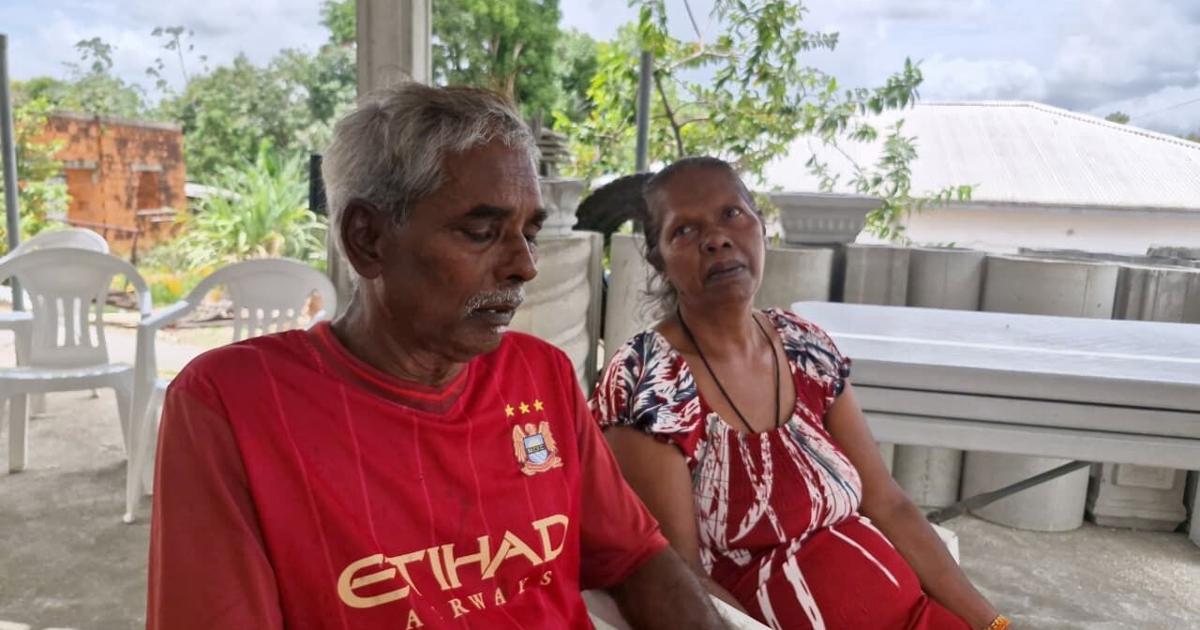
    At the Mohammed family home on Wednesday, grief hung heavy over the entire household as Kamal’s elderly parents mourned their slain son. Seventy-three-year-old Sackeer Mohammed and 63-year-old Leela Mohammed told reporters their son had never mentioned receiving threats before the attack, and there had never been any prior violent incidents targeting him or his brothers.

    Leela explained that the farming venture was new for her sons: just last year, an elderly local man who had long managed the parcel of land hired Kamal and his brother to clear, prepare, and cultivate the plots. The brothers had spent months working tirelessly to get the farm ready, only planting their first full crops earlier this year.

    “He did not deserve that (death). He did not trouble anybody. He would go to work and he loved to exercise and eat healthy,” Leela said, her voice breaking as she spoke of Kamal’s two young children, aged four and six. “His children have been asking for him, and we do not know how to tell his children that he died.”

    As of Wednesday, detectives from the Region Three Homicide Bureau of Investigations have not identified any confirmed motive for the killing, and the investigation remains ongoing.