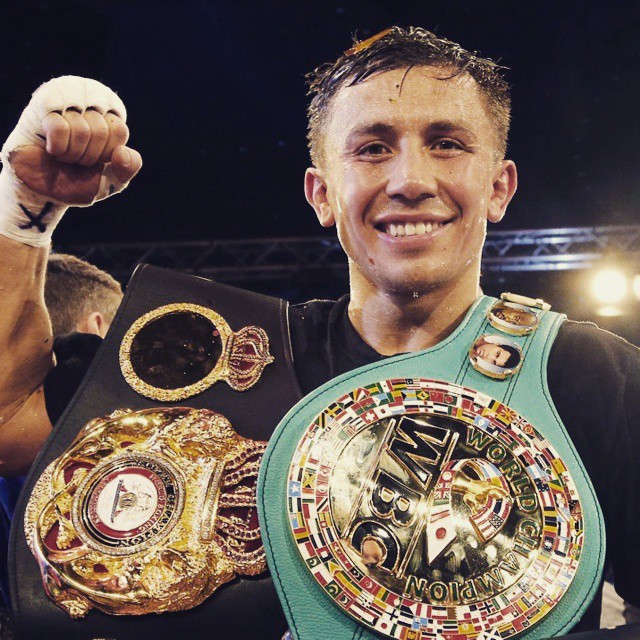
PARIS, France (AFP)—In a significant development for the sport, former middleweight champion Gennady Golovkin has been elected as the president of World Boxing, the organization tasked with overseeing boxing at the 2028 Olympic Games in Los Angeles. The 43-year-old Kazakh boxer, a two-time unified world middleweight champion and Olympic silver medalist, was unanimously chosen during the annual congress in Rome, where he stood as the sole candidate. Golovkin succeeds Dutchman Boris van der Vorst, who opted not to seek re-election after his 2023 appointment. In his inaugural statement, Golovkin emphasized his commitment to placing athletes at the core of decision-making and restoring trust in Olympic boxing. ‘Starting today, athletes will be at the heart of every decision we make,’ he declared. ‘On the road to LA28, we will restore trust in Olympic boxing to secure our place in Brisbane (host of the 2032 Olympics) beyond. Now it’s time to move forward as one united boxing family.’ Golovkin’s election comes amid a turbulent period for the sport, following the International Olympic Committee’s (IOC) decision to sever ties with the International Boxing Association (IBA) due to governance and ethical concerns. The IOC managed boxing at the Tokyo and Paris Games while deliberating the sport’s Olympic future. World Boxing, established in 2023, has now taken the reins, with Golovkin at the helm. His appointment follows the recent election of Manny Pacquiao, another boxing legend, as vice president of the IBA, highlighting the sport’s ongoing efforts to navigate its challenges and secure its Olympic legacy.
作者: admin
-
G20 grapples with splintering world order
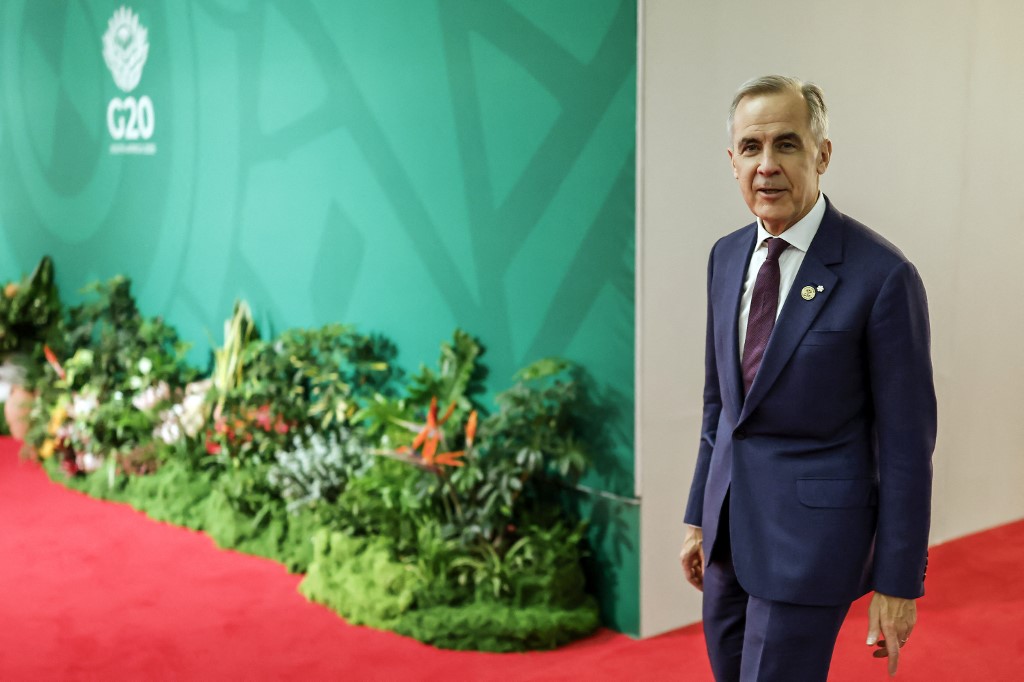
JOHANNESBURG, South Africa (AFP)—As the G20 summit concluded in South Africa on Sunday, leaders emphasized the importance of multilateralism, even as they grappled with a rapidly evolving global landscape marked by unilateral U.S. policies, escalating conflicts, and intensifying geopolitical rivalries. Canadian Prime Minister Mark Carney remarked, ‘Too many nations are retreating into protectionist blocs or geopolitical battlegrounds. What we’re witnessing is not a transition but a rupture.’ The summit, notably boycotted by the United States, sparked intense discussions on the future of the G20 in an increasingly fragmented world. South African President Cyril Ramaphosa, in his closing remarks, described the gathering as ‘crucial,’ noting the growing global demand for progress on pressing issues. Despite the challenges to international cooperation, the G20 leaders reaffirmed their commitment to multilateralism in a joint declaration, asserting that shared goals outweigh differences. Attendees included representatives from Europe, China, India, Japan, Turkey, Brazil, and Australia, marking the first G20 summit hosted in Africa. The leaders acknowledged the backdrop of rising geopolitical tensions, economic instability, and inequality. French President Emmanuel Macron warned that the G20 might be nearing the end of an era, suggesting a refocus on strategic economic issues. The G20, established after the 1997-1998 Asian financial crisis, was initially designed to enhance global economic stability. However, the U.S. absence, attributed to policy disagreements with South Africa, cast a shadow over the event. Emerging economies and the Global South were highlighted as increasingly pivotal within the G20 framework. Brazilian President Luiz Inacio Lula da Silva asserted that multilateralism remains robust, despite efforts to undermine it. German Chancellor Friedrich Merz expressed disappointment over the U.S. decision to skip the summit but noted the emergence of new global alliances.
-
Sorrel for Christmas?
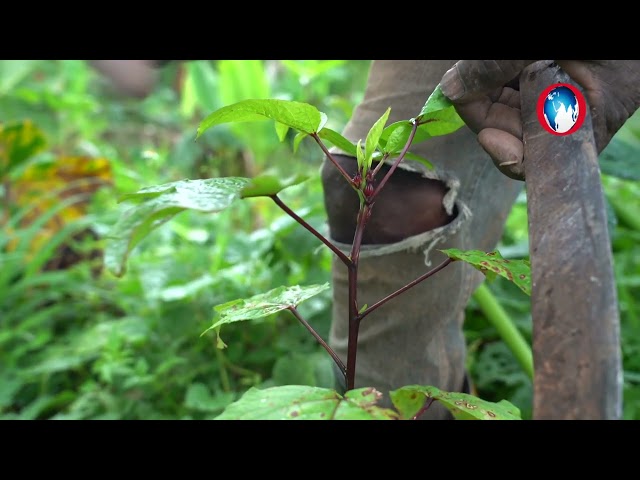
Jamaica’s cherished Christmas tradition of enjoying sorrel, a deep red, gingery drink made from the Roselle plant, faces significant challenges this year due to the devastating impact of Hurricane Melissa. Farmers in the northeastern parish of St Mary report severe damage to sorrel crops, with yields expected to plummet to just 10% of normal levels. The Category 5 storm, coupled with pre-existing leaf diseases and relentless rainfall, has left many fields flattened and crops ruined. Dave Evans, a sorrel farmer from Richmond, shared that his usual harvest of 9,000 pounds has been drastically reduced, forcing him to declare a loss for the season. Comisha Campbell-Clunis, another farmer, saw her 3,500 sorrel plants dwindle to just 1,500 survivors. The scarcity is expected to drive prices up to $1,500 per pound, a steep increase from the usual $500. Veteran farmer Junior Williams, who cultivates a hardy variety of sorrel, emphasized the resilience of the crop but acknowledged that even his fields suffered damage. Across the sector, farmers are struggling to salvage what remains, but the festive season may see many Jamaican tables without the traditional sorrel drink. The Minister of Agriculture, Floyd Green, has yet to comment on the situation, leaving farmers and consumers alike uncertain about the availability of this holiday staple.
-
Brazil ‘very concerned’ about US naval build-up near Venezuela
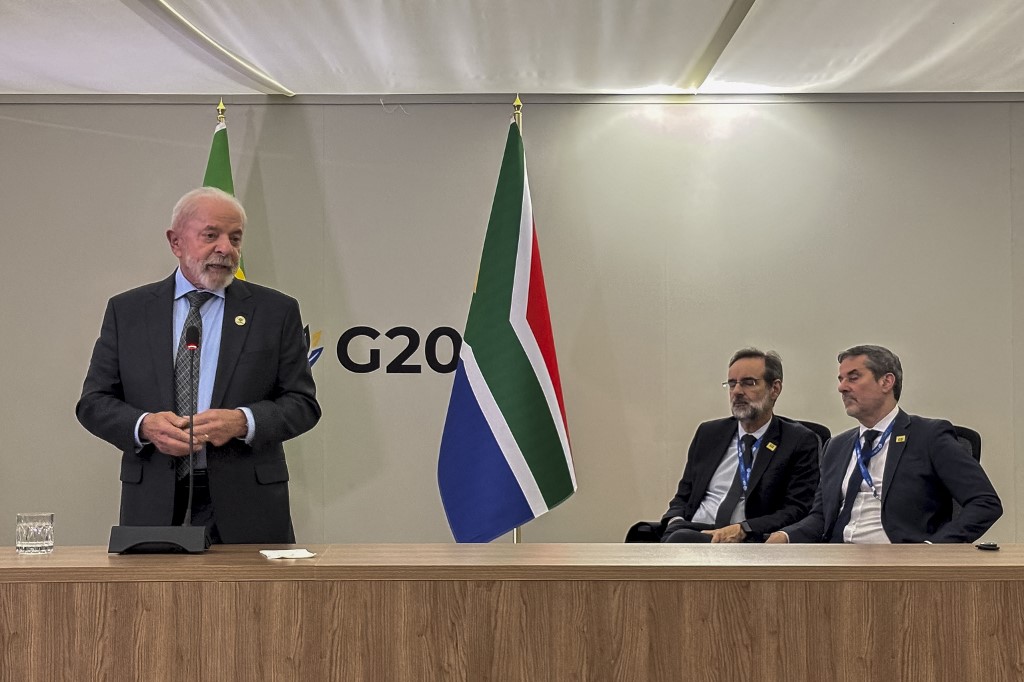
Johannesburg, South Africa (AFP) – Brazilian President Luiz Inacio Lula da Silva voiced deep concern on Sunday regarding the United States’ escalating military presence near Venezuela, emphasizing the potential for conflict. Speaking to reporters in Johannesburg following the G20 summit, Lula revealed his intention to address the issue directly with US President Donald Trump. “I am very troubled by the military assets the United States has deployed in the Caribbean Sea. This situation worries me, and I plan to discuss it with President Trump,” Lula stated. He further cautioned against the dangers of military escalation, drawing parallels to the ongoing conflict between Russia and Ukraine. “Once a shot is fired, it becomes difficult to predict the outcome,” he warned. The US has recently positioned an aircraft carrier strike group, additional naval warships, and stealth aircraft in the vicinity of Venezuela. On Friday, the US issued a warning to civilian aircraft operating in Venezuelan airspace, urging them to “exercise caution.” Since September, US forces have targeted over 20 vessels in the Caribbean Sea and eastern Pacific, resulting in more than 80 fatalities. US officials claim these operations were aimed at drug traffickers but have yet to provide substantiating evidence. The Trump administration has accused Venezuelan President Nicolas Maduro of leading a “terrorist” drug cartel and has not dismissed the possibility of deploying US troops. Lula, highlighting Brazil’s shared border with Venezuela, stressed the importance of seeking a diplomatic resolution before tensions escalate further. Notably, Trump opted not to attend the G20 summit in South Africa, citing a misalignment between the summit’s focus on global trade and climate change and US policies.
-
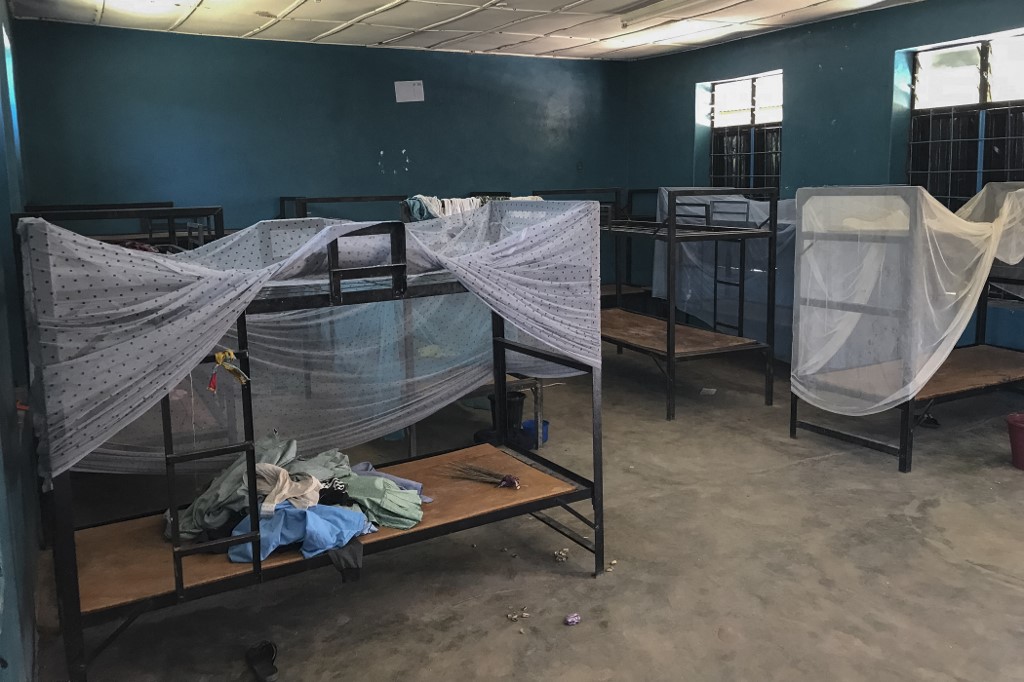
50 children kidnapped from Nigerian school have escaped—Christian group
In a glimmer of hope amidst a harrowing crisis, fifty of the over 300 children abducted from St Mary’s co-education school in Niger state, Nigeria, have managed to escape their captors, according to a statement released by the Christian Association of Nigeria (CAN) on Sunday. The children, aged between eight and 18, fled between Friday and Saturday and have since been reunited with their families. This development follows a brazen attack by gunmen on Friday, who stormed the school and kidnapped 303 students and 12 teachers in one of the largest mass abductions in the country’s history. The incident has exacerbated growing security concerns in Nigeria, Africa’s most populous nation, prompting widespread school closures. Earlier in the week, a similar attack occurred in Kebbi state, where 25 girls were abducted from a secondary school. Reverend Bulus Dauwa Yohanna, CAN chairman in Niger State, expressed cautious relief but urged continued prayers for the safe return of the remaining victims. The Nigerian government has yet to issue an official statement regarding the abduction.
-
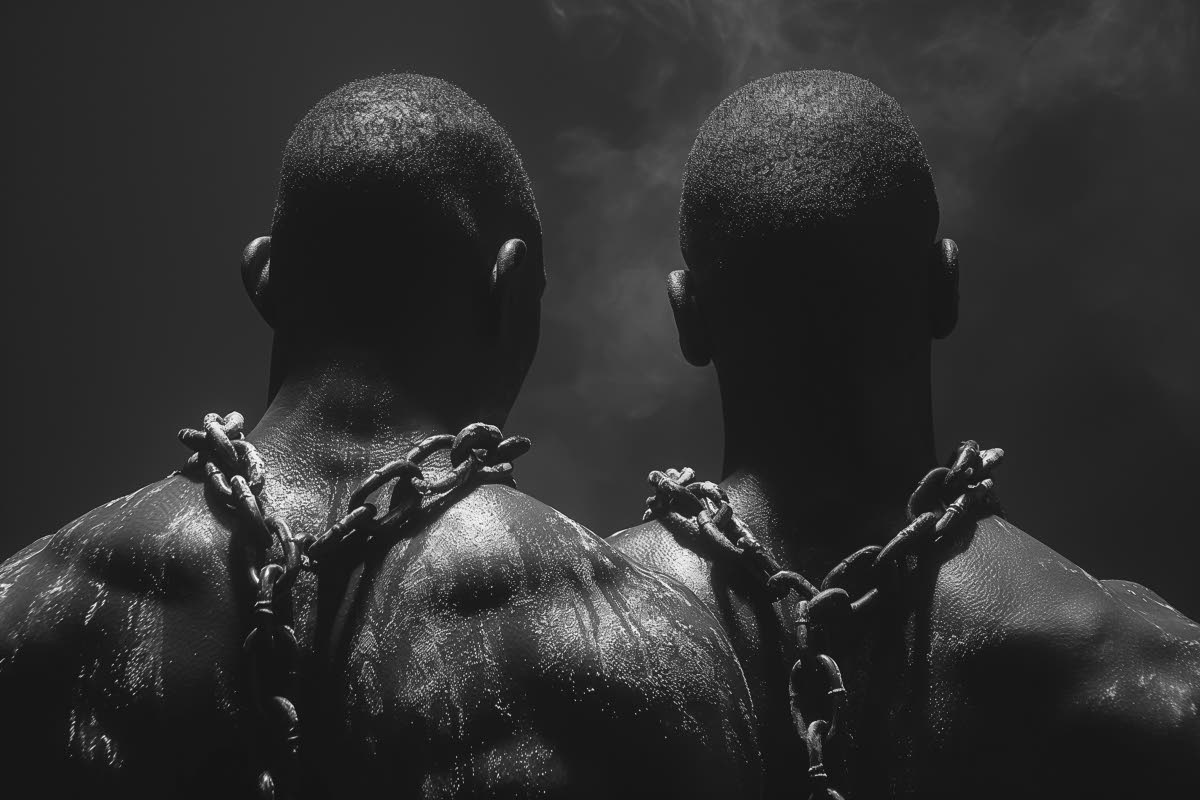
Life for enslaved Africans in Tobago
From the 17th to the 19th century, Tobago became a battleground for European powers vying for control, with enslaved Africans thrust into the heart of this turmoil. The Courlanders, Dutch, French, and British imported Africans to meet their labor demands, not only for agricultural production but also for military purposes. These enslaved individuals were instrumental in building forts, clearing land, and even fighting in wars that were not their own. Their lives were shaped by the relentless competition among European settlers, who relied on slave labor to establish and defend their settlements. Between 1656 and 1807, thousands of Africans were forcibly brought to Tobago, with the British alone transporting 51 shiploads. Despite their significant contributions, the history of these Africans was often erased with the departure of their European captors. The island’s forts, such as Fort Jacobson and Fort King George, stand as enduring reminders of their forced labor. Enslaved Africans were also tasked with clearing paths, carrying supplies, and supporting their owners in battles, often becoming the first casualties. The lack of records for African casualties underscores the dehumanization they endured. Beyond warfare, they were subjected to harsh plantation labor, producing sugar, cotton, and dyes under oppressive conditions. Despite their exploitation, some Africans were trained as gunner assistants and even formed part of the Tobago Black Corps, a militia unit. Their multifaceted roles highlight the brutal realities of colonialism and the resilience of those who endured it.
-
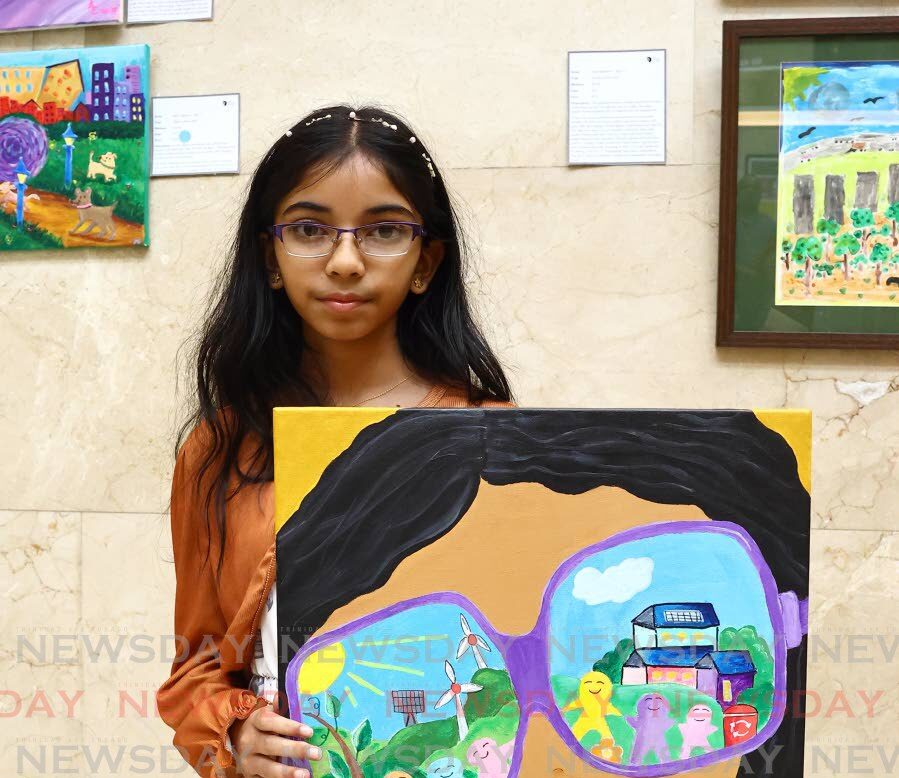
Through the eyes of Ariya, 10-year-old passion for art
At just 10 years old, Ariya Ramdass, a student at Avocat Vedic School in Fyzabad, is already making a significant impact in the art world. Her vibrant painting, titled ‘Future in her Eyes,’ is currently on display at the Rotunda Gallery in the Red House, captivating audiences with its profound message and artistic brilliance. The piece, a self-portrait, reflects Ariya’s vision of a harmonious future where children of diverse backgrounds unite, and renewable energy sources like solar panels and windmills are widely adopted. Using a blend of acrylic paints and black ink, Ariya brought her imaginative concept to life, leaving viewers, including UNDP representative Ugo Blanco and Tobago House of Assembly Health Secretary Dr. Faith Brebnor, in awe. Ariya’s passion for art began at a young age, as she recalls, ‘Since I could hold a pencil.’ Her school has been instrumental in nurturing her creativity, encouraging her to participate in various art competitions. While art remains her primary passion, Ariya also enjoys grammar, which she finds easier than other subjects. Inspired by her mother, who is also an artist, Ariya aspires to follow in her footsteps and dreams of having her artwork exhibited in galleries worldwide. The exhibition, ‘Visions of Tomorrow – Cities through the Eyes of Children,’ was held to commemorate World Children’s Day, inviting young artists aged seven to 18 to express their hopes and aspirations for the future of Trinidad and Tobago through art. The event aimed to showcase children’s perspectives on their communities, challenges, and dreams for a more inclusive society.
-
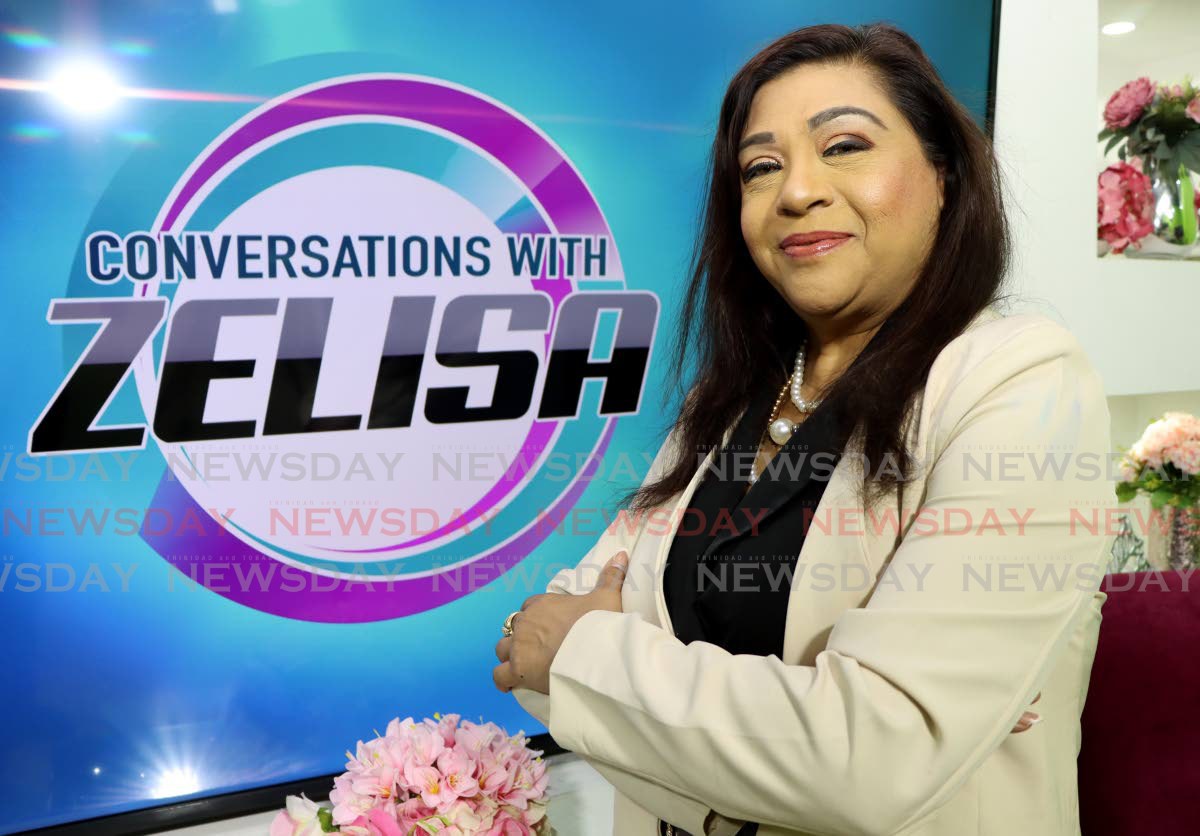
The woman behind RealTV – Zelisa’s vision, courage, will to rise
Zelisa Boodoosingh Rupani, the founder of ZM Network Ltd and the driving force behind RealTV and the acclaimed talk show ‘Conversations with Zelisa,’ has carved a remarkable path in the media industry. As the sole female media house owner in Trinidad and Tobago and the first woman of Indian descent to achieve this feat, Rupani’s journey is a testament to resilience and determination. Born in Santa Cruz and raised in a business-oriented family, she credits her parents and grandmother for instilling in her the values of hard work and perseverance. Her educational journey took her to the University of Sydney, where she pursued a degree in import-export management, followed by stints in the US and Canada before returning to Trinidad over two decades ago. A pivotal moment came when a short broadcasting course, encouraged by her sister, set her on an unexpected career trajectory. Starting with a midnight shift at Radio Shakti, Rupani quickly rose through the ranks, working with industry legends and honing her skills as a host and producer. Her career spans notable roles at Radio and TV Jaagriti, Government Information Services Ltd, and Synergy TV, among others. A scholarship to study mass communications in India further enriched her expertise. Despite personal tragedies, including the loss of her husband, Rupani emerged stronger, founding ZM Network and launching RealTV, which has grown into a multi-platform media powerhouse. Her show, ‘Conversations with Zelisa,’ is celebrated for its focus on inspiring real-life stories, respect, and empathy. Balancing her roles as a producer, presenter, businesswoman, and single mother, Rupani emphasizes discipline, faith, and time management. With plans to expand her media brand regionally and internationally, she remains committed to empowering others and imparting knowledge. Her message to aspiring entrepreneurs, especially women, is clear: persevere, set high standards, and never compromise on integrity.
-
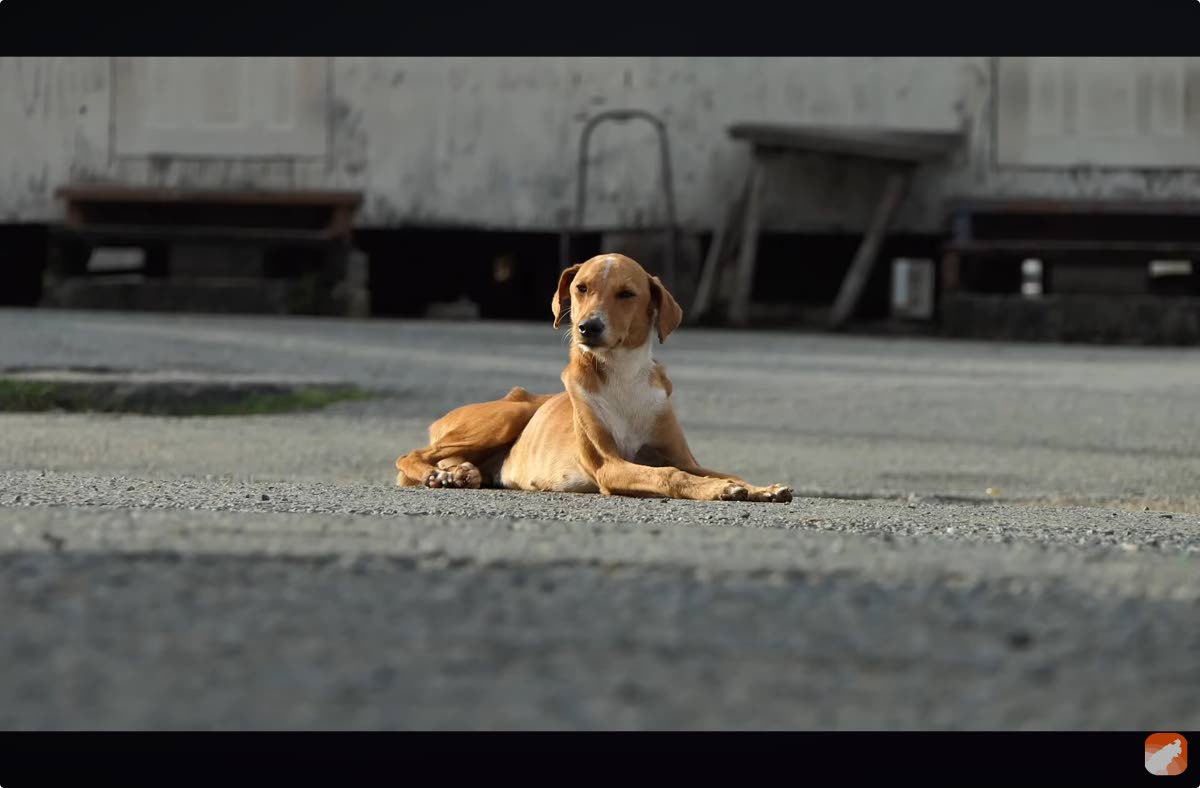
The dogs of Charlotteville
For over three decades, Charlotteville has been a haven for stray dogs, affectionately referred to as ‘pothongs’ or ‘shithongs.’ These dogs, though often collarless, are remarkably gentle and coexist peacefully with villagers and visitors alike. They are fed scraps and bones by locals and tourists, forming temporary bonds during vacations. However, behind this idyllic scene lies a harsher reality, vividly depicted in Elspeth Duncan’s short film, *Charlotteville Tails*. The film, born from a career fair where Duncan discussed the power of filmmaking, was shaped by local children and highlights the struggles of starving, injured, and neglected dogs. It also showcases the community’s efforts to care for these animals, including fundraising and medical treatment. Duncan, inspired by her adopted dog Venus, advocates for kindness to all creatures through her NGO, Venus Doggess of Love. She calls for a veterinary clinic in Charlotteville to address the challenges faced by both dogs and humans. The film, alongside *Venus and Magnet*, a poetic tribute to her dog’s friendship with a chick, has garnered awards and serves as a powerful educational tool, urging viewers to embrace compassion for animals. Both films are a testament to the resilience and adaptability of Charlotteville’s dogs, whose diverse breeds reflect Trinidad and Tobago’s multicultural heritage. Duncan’s work aims to foster awareness and empathy, encouraging communities to see dogs not as utilities but as kin deserving of care and respect.
-
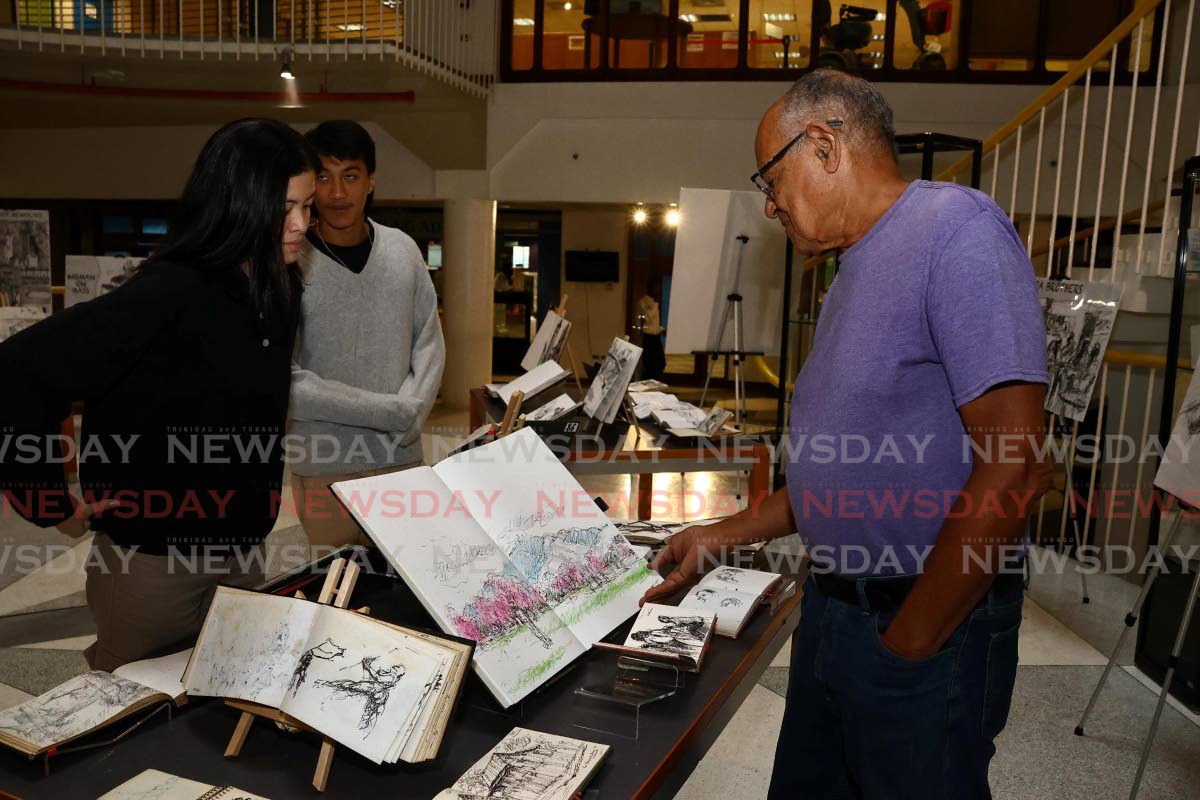
Decades of Hinkson’s sketches in first-of-a-kind exhibit at Nalis
In an unprecedented showcase, renowned Trinidadian artist Jackie Hinkson has opened his private creative journals to the public at the National Library (Nalis) in Port of Spain. The exhibition, running until November 22, features over 210 sketchpads containing approximately 9,000 drawings, offering a deeply personal glimpse into his six-decade artistic journey. This marks the first time Hinkson, 83, has publicly displayed this extensive body of work, which spans from the mid-to-late 1980s and includes raw, unpolished sketches never intended for exhibition. About 60 of these sketchpads, preserved by The University of the West Indies (UWI), are displayed in glass cases to protect their fragile ink and ballpoint works. Hinkson explained that these sketches were born from moments of spontaneity, often created in everyday settings like panyards or doctor’s offices, where he carried only a small notebook and pen. The interactive nature of the exhibition allows visitors to wear gloves and turn the pages, immersing themselves in the artist’s creative process. Hinkson emphasized the importance of preserving and sharing these works, which he sees as both art and history. He also reflected on his evolving themes, from capturing Trinidad’s disappearing vernacular architecture to exploring social change and human behavior. Despite his accolades, including the Chaconia Medal (Gold) and UNESCO recognition, Hinkson remains committed to the discipline of work and the lifelong pursuit of artistic growth. He hopes younger artists will find inspiration in his sketchpads, while leaving interpretation to their own perspectives. Even in the digital age, Hinkson defends the relevance of traditional sketchpads, asserting that the fundamental challenges of composition, line, and color remain unchanged, whether working manually or digitally.