作者: admin

  • Interior and Police coordinate actions to strengthen citizen security in Verón

    Interior and Police coordinate actions to strengthen citizen security in Verón

    VERÓN-PUNTA CANA — As the Dominican Republic’s most high-profile tourist destination, Verón-Punta Cana is moving forward with a coordinated, multi-agency push to elevate public safety and reinforce peaceful community coexistence, led by the nation’s Minister of Interior and Police Faride Raful. Raful recently chaired the regional Security, Citizenship and Gender Roundtable, a convening designed to align cross-institutional strategies that address the unique security needs of the area, which draws millions of international visitors each year.

    The roundtable brought together key stakeholders from across national and local government, including senior representatives from the National Police, the General Directorate of Migration, the National Drug Control Directorate (DNCD), Digesett, the national road safety authority, COBA, and local municipal leadership. Over the course of discussions, participating agencies finalized a detailed actionable roadmap to tackle the region’s most pressing public safety challenges. Key priority areas outlined in the plan include intensified counter-narcotics operations to disrupt drug trafficking networks, enhanced border and internal migration control protocols, targeted measures to secure school environments and protect student populations, regulation to reduce excessive noise pollution that disrupts local communities, and expanded initiatives to cut traffic accidents and improve overall road safety.

    Beyond this specific regional meeting, the Security, Citizenship and Gender Roundtable framework was designed as a sustained collaborative platform. It bridges institutional gaps between national government bodies, local authorities, and community groups, creating a structured space to surface emerging public safety concerns, track progress on existing initiatives, and roll out coordinated prevention-focused interventions that reduce crime and strengthen the visible, trusted presence of state institutions across the region. The coordinated approach reflects the government’s priority of protecting both local residents and the critical tourism sector that underpins Verón-Punta Cana’s economy.

  • 2026–2027 Korea International Cooperation Agency Scholarship announcement

    2026–2027 Korea International Cooperation Agency Scholarship announcement

    A new cohort of fully funded graduate study opportunities is opening up for eligible professionals across Grenada, thanks to a bilateral partnership between the Government of the Republic of Korea and the Government of Grenada. Administered through the Korea International Cooperation Agency (KOICA), the 2026-2027 KOICA Scholarship Programme is tailored to invest in emerging leadership that will drive long-term socioeconomic progress in Grenada and other partner nations.

    Beyond covering the full cost of graduate-level study, the initiative has a clear strategic focus: it is designed to strengthen operational capacity in Grenada’s public sector and cultivate stronger institutional leadership across key public-facing entities. For developing nations like Grenada, investing in advanced training for existing public servants creates a ripple effect of improved service delivery, more effective policy implementation, and sustainable growth that benefits entire communities.

    To align with the programme’s core mission, eligibility is restricted to currently working professionals in three specific sectors in Grenada. Qualified candidates must hold roles in the Grenadian public sector, public schools (including both classroom educators and school administrators), or national research institutions.

    The application process follows a structured three-step pathway to ensure all submissions are properly reviewed and nominated. First, interested candidates must obtain the official list of eligible academic programmes and university-specific requirements. This can be done either by sending a request to [email protected] or accessing the official document via the link https://canva.link/dfeu1wmxvwko6fp. Next, applicants must carefully review all application protocols and eligibility rules outlined on KOICA’s official website and the official programme flyer to ensure their materials meet all required standards. Finally, after preparing a complete application packet, candidates must submit all documents to Grenada’s Ministry of Education for internal review and official nomination before the deadline.

    All applications must be received by Tuesday, 21 July 2026. Candidates with questions about programme eligibility, required forms, the application timeline, or any other details can reach out to the Scholarship Desk at the Ministry of Education’s Human Resource Development Division for assistance. Inquiries can be made via phone at (473) 440-2737 or (473) 417-9762, or via email at [email protected].

    This partnership represents a longstanding commitment by South Korea to supporting human capital development in small island developing states, creating opportunities for local professionals to access world-class graduate education without financial burden, while building a stronger, more capable public sector for Grenada’s future.

  • Blazers eke out victory in national basketball finals opener

    Blazers eke out victory in national basketball finals opener

    The highly anticipated opening match of the best-of-three KFC National Basketball League Finals tipped off on Wednesday, June 24, at Beausejour Gymnasium, delivering a heart-stopping contest that left basketball fans on the edge of their seats. When the final buzzer sounded, the Bonne Terre Blazers walked away with a tense 62-59 win over the two-time defending champion Soufrière Kings, putting them one step away from lifting the coveted Ricky “Skecky” Estwick Trophy.

    The Blazers got off to a fast start, stringing together a seven-point scoring run to close the first quarter with a 16-11 advantage. But the defending champions refused to cave, mounting a steady comeback in the second quarter that saw them grab a one-point lead (28-27) by halftime. Soufrière retained their narrow edge heading into the final frame, after Linzell Alcee sank a buzzer-beating layup to push the Kings up by two points. In the closing quarter, however, the Blazers shifted into high gear on the defensive end, putting together an 18-13 scoring run that secured them the narrow opening-series victory.

    This historic upset marks the first time the Soufrière Kings have dropped a knockout playoff game since 2023—the same year the Blazers last claimed the national championship. The Kings, hailing from the island’s Sulphur City, had remained undefeated in finals matchups over the past two consecutive seasons, making Wednesday’s result all the more surprising.

    The Louison brothers were the driving force behind the Blazers’ winning performance. Troy Louison turned in a standout all-around stat line, notching 19 points (including two three-pointers), 10 rebounds, three assists and five steals. His brother Andre followed close behind with 17 points, 13 rebounds and six assists. Rounding out the Blazers’ top scorers was Lance Louis, who contributed 12 points, five assists and three steals. For the Kings, forward Jayzee Saltibus delivered an impressive rebounding performance, pulling down 20 boards and adding 13 points to the team’s total. Leading scorer Kimani Charles put up 16 points and four assists, while Clayton William added 11 points and seven rebounds. Alcee finished with 10 points, and playmaker Sydney Didier notched six points, seven assists and six steals despite struggling with shooting accuracy through the night.

    Statistically, the two teams were nearly evenly matched: both finished the game with 43 total rebounds, 17 turnovers and 23 made field goals. The difference came down to on-court efficiency, with Troy Louison’s constant aggressive attacks on the interior opening up opportunities for the Blazers that ultimately spelled the difference.

    The finals series will resume this Friday at the same Beausejour Gymnasium venue. The evening will open with a women’s exhibition game kicking off at 7:00 p.m., followed by the highly anticipated Game 2 between the Blazers and Kings at 8:30 p.m. The Kings will need a full regrouping to defend their title and force a deciding third game, while the Blazers will look to close out the series and claim the championship on Friday.

  • Israeli troops block construction in Palestinian village

    Israeli troops block construction in Palestinian village

    In a latest development in the occupied Palestinian territories, Israeli military forces have intervened to stop ongoing civilian construction work in the village of Al-Walaja, according to local municipal leadership. Al-Walaja Mayor Khader al-A’raj, in an interview with Palestine’s official news agency WAFA, confirmed that the soldiers arrived on site in military tanks, carrying loaded assault rifles, and immediately ordered construction crews to suspend all their activities.

    Following the forced stoppage, al-A’raj added that the military personnel issued formal cease-work orders to the project developers and workers, justifying the action by stating that the construction team had not secured the required building approvals from Israeli occupying authorities.

    This incident unfolds against a long-running controversial backdrop: the Al-Walaja region, which falls under Israeli occupation, has been repeatedly used as a site for the establishment of unauthorized Israeli settler outposts and full residential settlements. The establishment of these settlements by an occupying power on captured foreign territory is explicitly prohibited under international humanitarian law, which sets clear rules governing the behavior of occupying forces in territories held outside their own sovereign borders. Human rights groups and most of the international community have repeatedly condemned the continued expansion of Israeli settlements as a violation of international law and a major barrier to reaching a two-state solution to the Israeli-Palestinian conflict.

  • China condemns US escalation against Cuba

    China condemns US escalation against Cuba

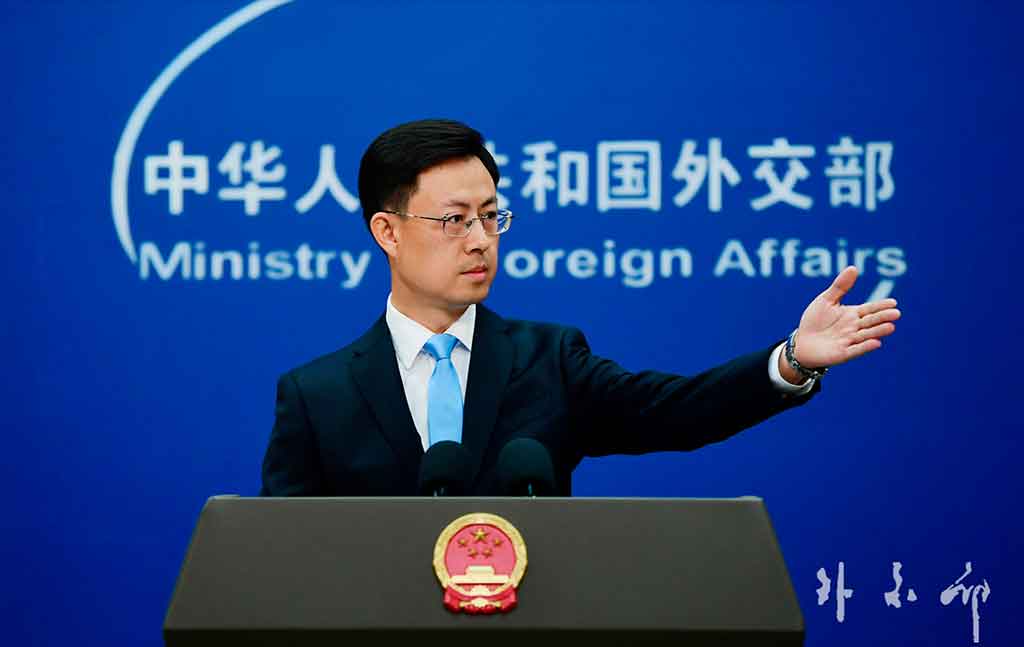
    In a formal statement delivered at a regular press briefing, Chinese Foreign Ministry spokesman Guo Jiakun has issued a clear rebuke of unlawful unilateral sanctions, reinforcing Beijing’s long-standing position that such coercive measures lack any grounding in international legal frameworks.

    Guo’s comments came in direct response to new restrictive measures unveiled by the U.S. State Department on June 23, which targeted five Cuban entities and one individual over unsubstantiated claims that they generate illicit revenue for the Cuban government.

    Against this backdrop, the spokesman urged Washington to take immediate action to terminate its decades-long economic blockade of Cuba, as well as halt all other forms of coercive pressure targeting the island nation. He emphasized that the long-running U.S. embargo has systematically undermined the fundamental rights of the Cuban people to access basic resources, sustain livelihoods, and pursue long-term development, calling on U.S. authorities to end these violations immediately.

    Beyond addressing the latest sanctions, Guo reaffirmed China’s unwavering support for Cuba’s sovereign right to chart its own developmental path. Specifically, Beijing backs Cuba’s efforts to pursue a socialist development model tailored to its unique national circumstances, and stands firmly with the island in defending its territorial integrity, national sovereignty, and domestic security. The spokesman also reiterated China’s consistent opposition to any form of external interference in Cuba’s internal affairs.

    This latest statement from Beijing aligns with China’s long-held public stance on the U.S. embargo. For decades, China has repeatedly condemned Washington’s more than 60-year economic blockade of Cuba— which has been accompanied by growing coercive measures and heightened military threats in recent years—across multiple international forums and in official government communications.

  • SVG gets resident psychiatrist after 10-year absence

    SVG gets resident psychiatrist after 10-year absence

    After nearly a decade of unmet demand for specialized psychiatric care, St. Vincent and the Grenadines (SVG) has marked a turning point for its public mental health system with the appointment of seasoned Cuban psychiatrist Dr. Eloy Asanza Castillo to the country’s Mental Health Rehabilitation Centre (MHRC). The long-awaited hire closes a critical staffing gap that health officials have struggled to resolve for 10 years, and anchors a sweeping government plan to transform mental healthcare across the island nation.

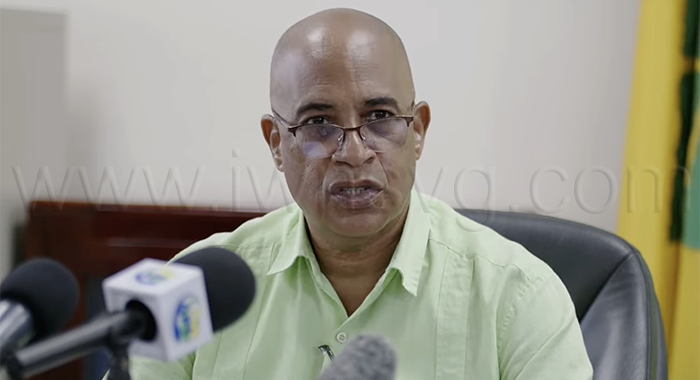
    Health Minister Daniel Cummings, who took office in December following the New Democratic Party’s victory in November’s general election, made the official appointment announcement during a press briefing held in Kingstown on Thursday, June 25, 2026. Cummings framed Castillo’s arrival as a core milestone in the new administration’s three-pronged mental health strategy: destigmatizing mental illness, decentralizing care services away from centralized institutional settings, and moving away from long-term dehumanizing institutionalization for patients.

    “Today we are privileged to welcome a very competent, deeply experienced physician to the MHRC who will guide our work in this critical public health space,” Cummings told reporters. He emphasized that what makes this hire particularly meaningful is that Castillo has relocated to SVG permanently with his entire family, not just taken a temporary posting. With decades of practice across the Caribbean and sub-Saharan Africa, Castillo brings a wealth of global and regional expertise that fits perfectly with SVG’s reform goals, the minister added. “He has chosen to settle here, work here, and become part of our community – that makes him one of us, and I could not be happier to have Dr. Castillo on our team,” Cummings said.

    For his part, Castillo described himself as a “simple guy” with 33 years of hands-on psychiatric experience spanning multiple countries. His first overseas posting brought him to neighboring St. Lucia as part of a bilateral government cooperation agreement, followed by roles in Venezuela and, most recently, a 10-year practice in South Africa. The psychiatrist noted that he had been in discussions with SVG’s Ministry of Health for roughly three years before personal circumstances aligned to allow him to accept the permanent post. “I’m very happy it finally worked out, and I’m thrilled to be part of this important effort to improve mental health care here,” he said.

    Castillo also praised the existing local MHRC team for their ongoing community-focused outreach work, noting that he was particularly impressed to see young care providers traveling directly into communities, learning patients by name, tracking their needs, and delivering consistent ongoing care including critical medication services. “I’m really happy to be here, and I will put all my effort into supporting this wonderful team of mental health professionals and serving the people of SVG,” he added.

    Alongside the celebratory announcement of Castillo’s appointment, Cummings used the press conference to push back against recent critical media coverage that he said falsely painted MHRC staff as uncaring and unqualified, without any substantive investigative work. The minister argued that these unsubstantiated reports are not just dishonest – they also erode public trust in the government’s ability to deliver essential mental health services and harm the morale of care providers.

    “These kinds of uninvestigated claims have a serious impact on public confidence. If people believe the government runs an institution staffed by incompetent providers, that undermines everything we’re working to build, and this is far too serious an issue for political games,” Cummings said. He specifically highlighted Dr. Alisa Alvis, the MHRC’s administrative head and lead psychologist, as an example of the highly trained, dedicated local staff already serving the institution. Alvis, who holds a doctorate in psychology, has been carrying dual administrative and clinical responsibilities for years amid the staffing gap, and Cummings praised her extraordinary commitment and expertise.

    The defense of local staff comes after a high-profile court proceeding in April, when Chief Magistrate Colin John rejected mental fitness reports prepared by Alvis and two local non-psychiatric physicians, ruling they did not hold the required medical qualifications to assess a defendant’s fitness to plead. Alvis, in her role as head of mental health services, and the Ministry of Health’s Permanent Secretary have also been summoned to court over the MHRC’s failure to complete a required mental health report for an accused defendant with a documented history of mental illness.

    Cummings made clear that Castillo’s appointment is just the first step in a broader overhaul of SVG’s mental health system. The government’s reform agenda includes expanding early intervention programs in schools, rolling out community-based decentralized care services across the country, and adding a dedicated acute mental health wing to SVG’s new public hospital.

    The minister also shared that a recent visit to the existing MHRC facility in Glen was one of the most difficult experiences of his early tenure, confirming longstanding reports of severely dilapidated conditions for both patients and staff. For decades, Cummings said, the facility has functioned more as a holding cell than a rehabilitation center, keeping patients in a segregated, resource-poor captive environment with little support to transition back to community life as healthy, independent people. But that status quo is changing rapidly, he emphasized.

    Alvis told reporters that the MHRC currently cares for roughly 150 inpatients at any time, including around 120 long-term patients, many of whom have no other housing or support outside the facility. She noted that through early outreach and improved care planning, the facility has already reduced inpatient numbers from a peak of around 190, and further cuts to unnecessary long-term hospitalization are planned. The reform strategy focuses on stronger discharge planning, deeper engagement with patients’ families, and expanded community-based care that allows patients to receive treatment in their own homes instead of requiring institutional admission. “When people can access care close to home, they stay connected to their communities and have far better outcomes,” Alvis explained. “That’s the core of our decentralization effort, and it’s already delivering results.”


  • Coast Guard Details Search and Recovery of Man at Pigeon Point Beach

    Coast Guard Details Search and Recovery of Man at Pigeon Point Beach

    A multi-agency search operation carried out by Antigua and Barbuda’s maritime law enforcement teams ended in tragedy Thursday morning, when divers recovered the body of a 56-year-old male swimmer from the waters off Pigeon Point Beach. According to official timelines, the incident began on the afternoon of Wednesday, June 24, when the victim entered the marked swim area for a recreational swim.

    Witnesses on the shore told first responders that they spotted the man struggling in the water close to the edge of the designated swimming zone before he vanished beneath the surface, with no further sightings after that point. Immediately after receiving the missing person report, the Antigua and Barbuda Defence Force Coast Guard mobilized its search and rescue assets, launching a coordinated operation with three partner groups: the Antigua Barbuda Search and Rescue unit, the Royal Police Force of Antigua and Barbuda, and experienced local recreational divers based in the surrounding area.

    Search teams carried out an extensive sweep of the seabed near the last reported location of the swimmer, but progress was severely hampered by extremely low underwater visibility. With conditions making it impossible to safely continue the operation on Wednesday afternoon, rescue commanders made the call to suspend the search, scheduling it to resume at first light the next day.

    When divers returned to the site shortly after 6:00 a.m. on Thursday, June 25, they quickly located and recovered the victim’s body. The remains were transferred to the Coast Guard’s main headquarters at Deep Water Harbour, where a district medical official officially pronounced the man dead at 8:22 a.m. In the aftermath of the recovery, senior leadership of the ABDF Coast Guard released a statement offering heartfelt condolences to the victim’s family and loved ones, expressing the service’s hope that the family would find the resilience and comfort needed to navigate this devastating loss.

  • Government Backs EC$40 Million Public-Private Hotel Project at Yepton’s

    Government Backs EC$40 Million Public-Private Hotel Project at Yepton’s

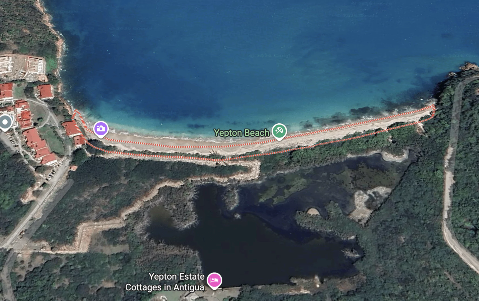
    Antigua and Barbuda’s government has given the green light to an innovative public-private partnership initiative that will develop a new beachfront hotel at Yepton, marking a strategic policy shift to expand domestic ownership of the country’s critical tourism sector. The government will commit up to EC$40 million to the project alongside local private investors and funding from the nation’s well-established Citizenship by Investment Programme, in a framework officials are framing as a new template for inclusive tourism growth.

    Maurice Merchant, Director General of Communications, unveiled the Cabinet’s approval during a post-Cabinet media briefing held Thursday. He detailed that the 4-star-caliber hotel development will occupy roughly 15 acres of prime beachfront real estate at the Yepton location, a site positioned to draw both international leisure travelers and regional visitors.

    Under the agreed investment structure, the national government, in partnership with select state-owned enterprises and statutory corporations, will contribute the maximum EC$40 million public sector allocation. Local private investors will supply additional private capital, with one domestic backer already having finalized a commitment of EC$20 million to the project. Merchant highlighted this early commitment as a powerful vote of confidence in Antigua and Barbuda’s long-term tourism growth trajectory, even as global travel markets continue to evolve post-pandemic.

    Additional project financing will be sourced from the Citizenship by Investment Programme, a longstanding government mechanism that channels external investment into high-priority national development projects across the twin-island nation. Merchant emphasized that expanding local ownership and grassroots participation in the tourism industry stands as a core enduring policy objective for the current administration.

    As the backbone of Antigua and Barbuda’s national economy, tourism contributes the largest share of annual GDP and employment to the country. However, Merchant explained that the government has long prioritized shifting the current market dynamics to ensure a greater portion of the billions in annual tourism revenue stays within the domestic economy, delivering direct, tangible benefits to all citizens of Antigua and Barbuda, rather than flowing exclusively to external stakeholders.

    Following the formal announcement, Merchant addressed questions from reporters, clarifying key details of the investment structure. He confirmed that all capital contributions from state-owned entities and statutory corporations will be held as assets by those public institutions, mirroring the structure used for previous government-supported tourism development projects across the country. He also pushed back against early misinterpretation, noting that the EC$40 million figure solely reflects the public sector’s total contribution. The entire project will be funded through a blended mix of public investment, local private capital, and Citizenship by Investment Programme funding, creating a diversified financial foundation that spreads risk across stakeholders.

    Industry analysts note that the new model could serve as a blueprint for future tourism developments across the Caribbean, where increasing domestic ownership of key tourism assets has emerged as a shared policy goal across many small island developing states looking to maximize economic benefits from their natural coastal assets.

  • Public urged to use licensed pharmacies for weight‑loss drugs

    Public urged to use licensed pharmacies for weight‑loss drugs

    Public health officials in Saint Lucia have issued an urgent safety advisory urging residents to exercise extreme caution when accessing prescription medications, particularly in-demand GLP-1 products such as Ozempic, a drug approved both for type 2 diabetes management and clinical weight regulation.

    Speaking on behalf of the Ministry of Health, Wellness and Nutrition, Chief Pharmacist Astrid Mondesir outlined growing official anxiety over rising reports of unlicensed vendors, including unregistered pharmacies, marketing and selling GLP-1 treatments and their compounded alternatives directly to consumers.

    “We understand that countless people are actively searching for evidence-based treatments to boost their physical health and overall quality of life,” Mondesir noted. “But sourcing any prescription medication from unapproved channels exposes buyers to severe, avoidable health hazards. These risks include receiving counterfeit formulations, contaminated doses, improperly stored products, expired medications, or incorrectly prepared compounded versions that do not meet clinical safety standards.”

    Health authorities are reinforcing a core public health message: all prescription medications must only be used under the direct supervision of a qualified physician or other legally authorized prescriber. Prior to starting any new prescription treatment, patients must complete a full medical evaluation to confirm that the therapy is safe, effective, and tailored to their specific health condition and needs.

    Under Saint Lucia’s existing Pharmacy Act CAP 11.21, patients are required to consult a licensed medical provider before initiating any GLP-1-based treatment, and may only obtain their prescription from state-registered pharmacies. The ministry specifically warned against purchasing GLP-1 or other prescription drugs from unlicensed street sellers, retail beauty shops, social media platforms, and any other outlet not formally authorized to distribute prescription medications.

    The Ministry’s core goal in issuing this advisory is to protect patient safety and guarantee that all local residents can access consistent, high-quality, clinically tested medications that meet national safety standards.

    Mondesir summed up the ministry’s key guidance for residents considering GLP-1 treatment: “The single most critical step to protect your health is to speak with your personal physician first, and only obtain your medication through a registered, licensed pharmacy.”

    Going forward, the Ministry of Health reaffirmed its commitment to ongoing regulatory work that guarantees all people in Saint Lucia have access to safe, effective, tightly regulated healthcare services and pharmaceutical products.

  • Tsang wil 170 zandwegen verharden bij 170-jarig bestaan van OWRO

    Tsang wil 170 zandwegen verharden bij 170-jarig bestaan van OWRO

    During budget deliberations held in Suriname’s National Assembly, Minister Stephen Tsang of the country’s Ministry of Public Works and Spatial Planning (OWRO) has announced a landmark, symbolically charged infrastructure target: by the 170th anniversary of the founding of Suriname’s public works service, the department will complete paving work for a minimum of 170 unpaved sand roads across the nation.

    Tsang emphasized that targeted upgrades to national infrastructure sit at the core of his ministry’s current policy agenda, with particular focus placed on residential communities where residents regularly face impassable sand roads, widespread flooding, and limited access to essential services during rainy seasons. “As a symbolic milestone tied to our department’s legacy, we have set the goal of paving at least 170 roads in time for our 170th anniversary,” the minister told the assembly.

    The anniversary target forms one key component of a broader long-term strategy to overhaul and expand Suriname’s national road network. Currently, the country counts roughly 5,000 kilometers of public roads, combining both paved and unpaved routes, with a large share of that network classified as being in fair to poor condition, according to ministry data. Beyond the immediate 170-road target, Tsang outlined the government’s broader ambition to systematically reduce the number of unpaved sand roads across the country. “Our end goal is to see every sand road in Suriname paved,” he stated.

    At the same time, Minister Tsang openly acknowledged the enormous scale of the challenge ahead. The ministry estimates that the total backlog of required road maintenance and rehabilitation work amounts to tens of billions of Surinamese dollars, and current available public funding is only sufficient to address a small fraction of this unmet need. Regardless of the funding constraints, the department has committed to continuing targeted investments in both major arterial highways and local residential streets in the coming years, pursuing a mixed approach that combines rehabilitation of existing paved roads with new paving projects in areas still only accessible via unpaved routes.

    OWRO officials note that road upgrades deliver far more benefits than improved transportation alone. Paved roads directly boost quality of life for local communities, improve access to schools, healthcare facilities and commercial hubs, and catalyze inclusive economic development in underserved residential areas. Additionally, the ministry projects that upgraded infrastructure will cut vehicle maintenance costs for ordinary residents, while also allowing emergency response services to reach remote, outlying neighborhoods faster and more safely.

    As one of Suriname’s oldest continuously operating government institutions, the approaching 170th anniversary of the public works service represents a natural moment to deliver tangible, visible improvements to the Surinamese public, Tsang explained. Whether the 170-road target will be met on schedule will depend in large part on the fiscal space the ministry is allocated in coming national budgets, but the minister reaffirmed that the broader ambition remains unchanged: to steadily increase the share of paved roads and systematically reduce the number of unpaved sand routes across Suriname.