作者: admin

  • Ali urges Permanent Members of UN Security Council to support Rodrigues-Birkett to become next Secretary-General

    Ali urges Permanent Members of UN Security Council to support Rodrigues-Birkett to become next Secretary-General

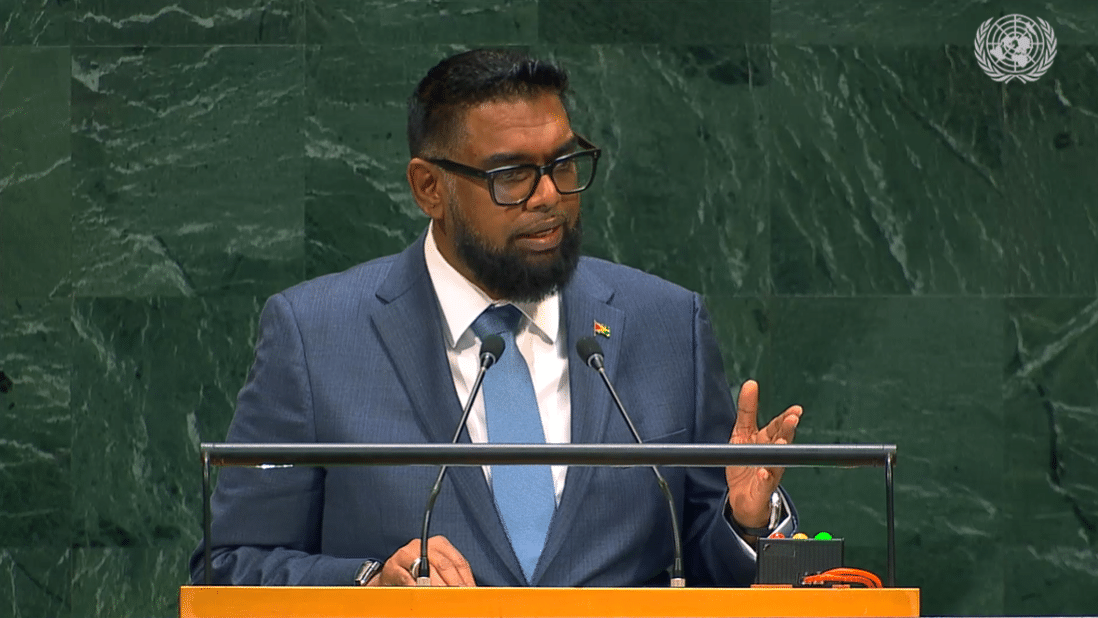
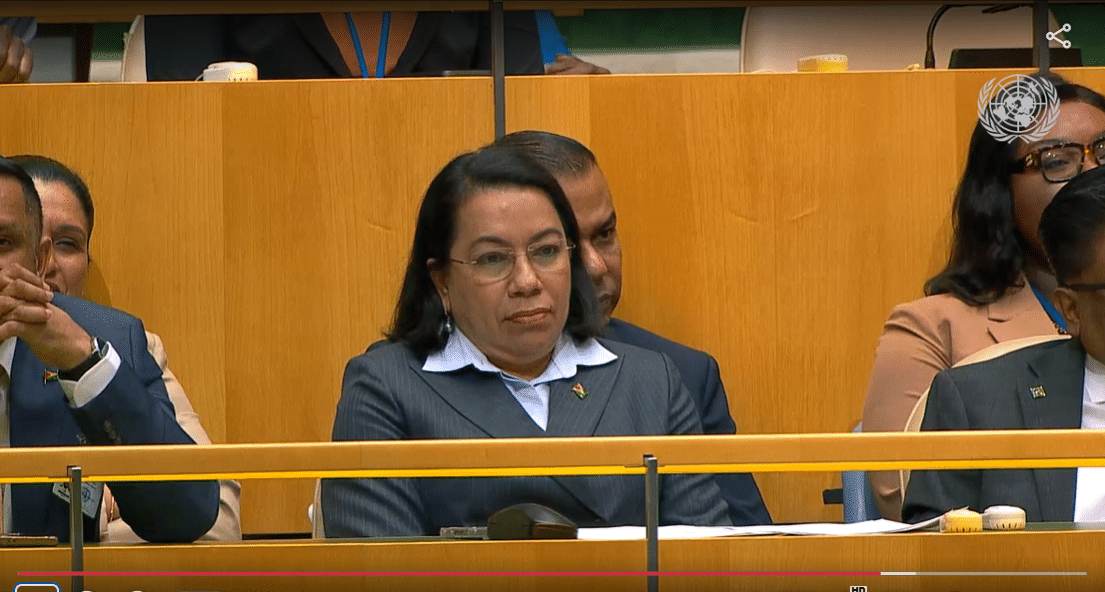
    NEW YORK – September 24, 2026 – Speaking during the 81st session of the United Nations General Assembly, Guyana’s President Irfaan Ali has issued a formal, impassioned appeal to all UN member states and particularly the Permanent Five (P5) members of the UN Security Council to throw their support behind his country’s candidate, Ambassador Carolyn Rodrigues-Birkett, for the post of UN Secretary-General.

    Rodrigues-Birkett, who currently serves as Guyana’s Permanent Representative to the UN and was jointly nominated by Guyana and the Caribbean Community (CARICOM), has previously faced a reported veto from the United States over her characterization of the ongoing crisis in Palestine as genocide. President Ali did not directly address this reported veto during his address, but made a point to explicitly call for support from all P5 members – China, France, Russia, the United Kingdom, and the United States – urging the body to evaluate the nominee on her qualifications rather than geopolitical divisions.

    “The responsibility for recommending the next Secretary General rests in the first instance with the Security Council, and we therefore respectfully place before its members the candidature of Carolyn Rodrigues-Birkett endorsed by the Caribbean Community,” President Ali told the assembled delegates. “We invite all to consider her candidacy on its merits, and to judge whether her vision, experience, expertise, and record can help restore confidence in the United Nations at this critical moment.”

    Rodrigues-Birkett brings deep UN institutional experience to the role, having led Guyana’s delegation during the country’s 2024–2025 term as a non-permanent member of the Security Council. President Ali argued that the UN is currently at a crossroads, marked by growing divides between the Global North and Global South, large and small nations, and developed and developing economies, and that Rodrigues-Birkett’s background uniquely positions her to bridge these gaps.

    “What we need now is leadership capable of restoring trust without compromising principles, of listening without surrendering conviction, of building bridges across the widening chasms between these groups,” President Ali said. “We need a Secretary-General who will defend the Charter not only when it is politically convenient, but precisely when its principles are under pressure.”

    Off-script from his prepared remarks, President Ali highlighted Rodrigues-Birkett’s personal journey as an Indigenous woman from a small village in Guyana’s Barima/Waini Region, who overcame systemic barriers related to Indigeneity, gender, and poverty to rise to senior leadership roles in Guyana, including serving as Minister of Amerindian Affairs and later Foreign Minister. “Her character is built on struggle, sacrifice, commitment. Her accomplishments are crafted in her humanity,” he added.

    On the topic of the Middle East, President Ali reaffirmed Guyana’s longstanding position, reiterating a call for a just and durable resolution to the Palestinian crisis that ends civilian suffering, upholds the Palestinian people’s inalienable right to self-determination and a sovereign, secure homeland. “We reiterate our support for a two-state solution,” he confirmed.

  • Bail, Sentencing and Repeat Offenders Heading to Parliament Next Week

    Bail, Sentencing and Repeat Offenders Heading to Parliament Next Week

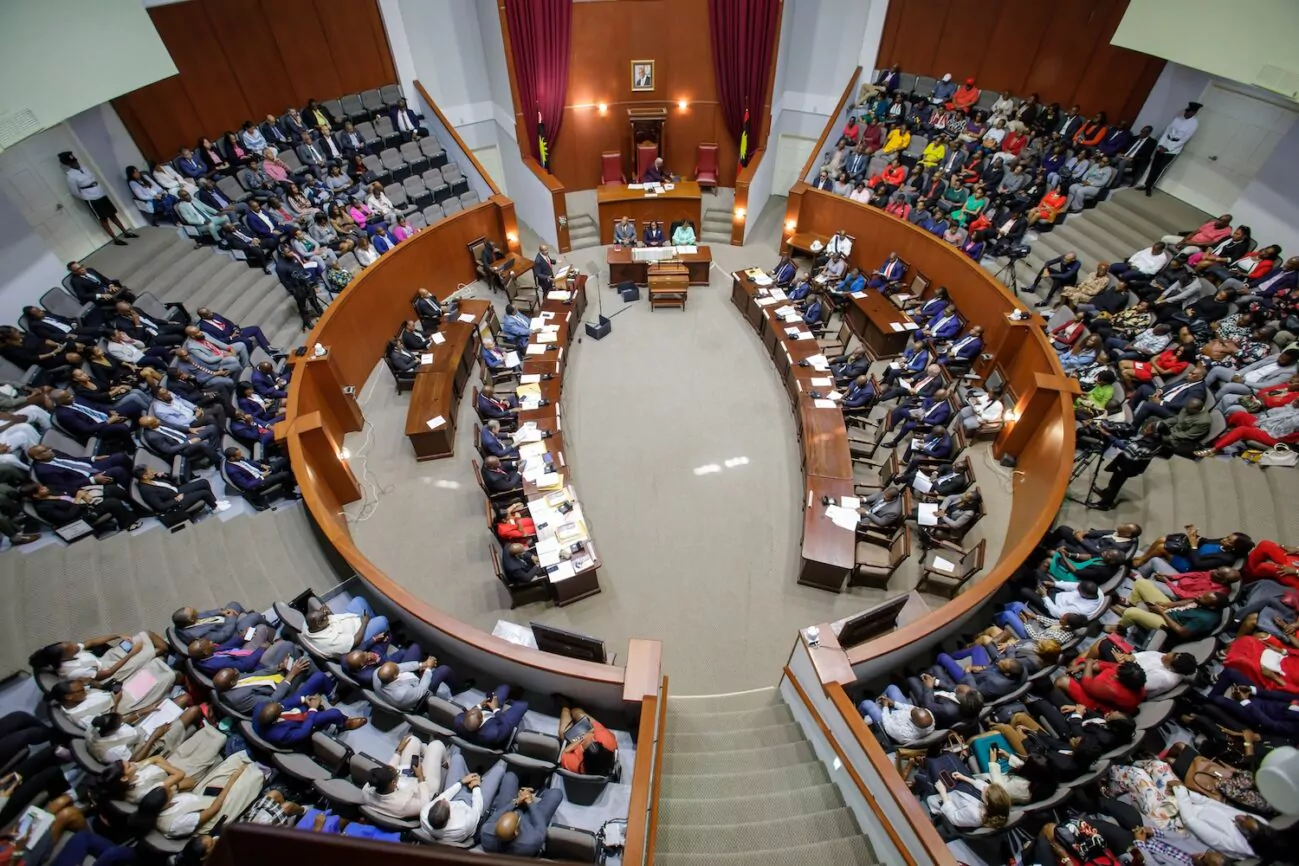
    Lawmakers in Antigua and Barbuda are gearing up to take up pressing public safety issues when the national parliament convenes for its next scheduled sitting next Monday and Tuesday. Top items on the unofficial agenda include a review of current bail protocols, sentencing guidelines, and the growing challenge of repeat offending, according to official statements from the country’s Cabinet.

    The push for a legislative debate on these topics comes directly from the nation’s senior law enforcement leadership, who brought their unaddressed concerns to a closed-door meeting with Cabinet members this past Wednesday. Law enforcement officials specifically zeroed in on two high-priority groups: individuals currently out on bail while facing charges for severe violent offenses, and defendants who have been arrested and prosecuted multiple times for violating the same criminal statutes.

    Cabinet officials emphasized that the upcoming discussion is not an isolated review of narrow procedural issues, but rather a component of a broader, ongoing national conversation about reducing violent crime and improving the fairness and effectiveness of the country’s justice system. Beyond adjustments to bail and sentencing rules, the national government is simultaneously evaluating a suite of additional policy changes aimed at boosting law enforcement capacity, hardening border security protocols, and cracking down on the illegal flow of firearms into the twin-island nation—all key drivers of local crime rates, according to government analysts.

    Notably, official public notes released by the Cabinet following Wednesday’s meeting did not disclose any draft piece of legislation or specific formal proposal that parliamentarians will be asked to vote on during the upcoming sitting. Government insiders indicate the session will likely serve as an opportunity for open debate among elected representatives, with formal policy proposals expected to be drafted and released in the weeks following the preliminary discussion.

  • Leisure : Did you know ? #62

    Leisure : Did you know ? #62

    Haiti-based digital media outlet HaitiLibre has rolled out the 62nd installment of its popular twice-weekly general knowledge series, “Did You Know?”, published on September 24, 2026. This week’s quiz segment centers on a question highlighting a prominent Haitian-American creator: Which Paris-trained, New York-based fashion designer founded the luxury Epice clothing brand?

    The official answer reveals Dayanne Danier, a designer who has built a dynamic creative and professional bridge between Haiti’s capital Port-au-Prince and the global fashion hub New York. Trained in the rigorous, time-honored techniques of haute couture, Danier has cultivated an instantly recognizable design signature that pairs sleek, modern silhouettes with the intricate, vibrant artisanal details rooted in Haitian cultural heritage.

    Beyond building her own successful fashion label, Danier has long prioritized inclusive economic growth in her country of origin. She founded the non-profit organization Fleur de Vie, which works to expand educational access and professional skills training for Haitians, with a specific focus on the local textile and garment industry. By teaching advanced sewing and craft techniques to local artisans, Danier is actively supporting the structural development and professionalization of Haiti’s burgeoning creative economy. Her seasonal collections, which are regularly featured at high-profile industry events and charity fashion shows, embody a new model of conscious fashion: sophisticated, contemporary, and deeply rooted in Caribbean cultural identity.

    This feature is part of HaitiLibre’s broader interactive quiz platform, Quiz.HaitiLibre, which hosts a growing catalog of general knowledge content covering topics ranging from local Haitian culture to global current affairs. As part of the platform’s scheduled monthly content update, 30 new quiz games were added to the platform on September 1, 2026, bringing the total number of available interactive games to 240, with new content added every calendar month going forward.

    All quiz content on the platform is exclusive, free to access, and does not require user registration. Designed to appeal to all age groups, each game offers three adjustable difficulty levels: easy, intermediate, and hard, and all content is available in both French and English. Users are invited to explore the full catalog of quizzes at https://quiz.haitilibre.com/en, share the platform with friends and family, and leave feedback via a comment form available at the end of every quiz.

  • New Saint Lucia football director sets out his vision

    New Saint Lucia football director sets out his vision

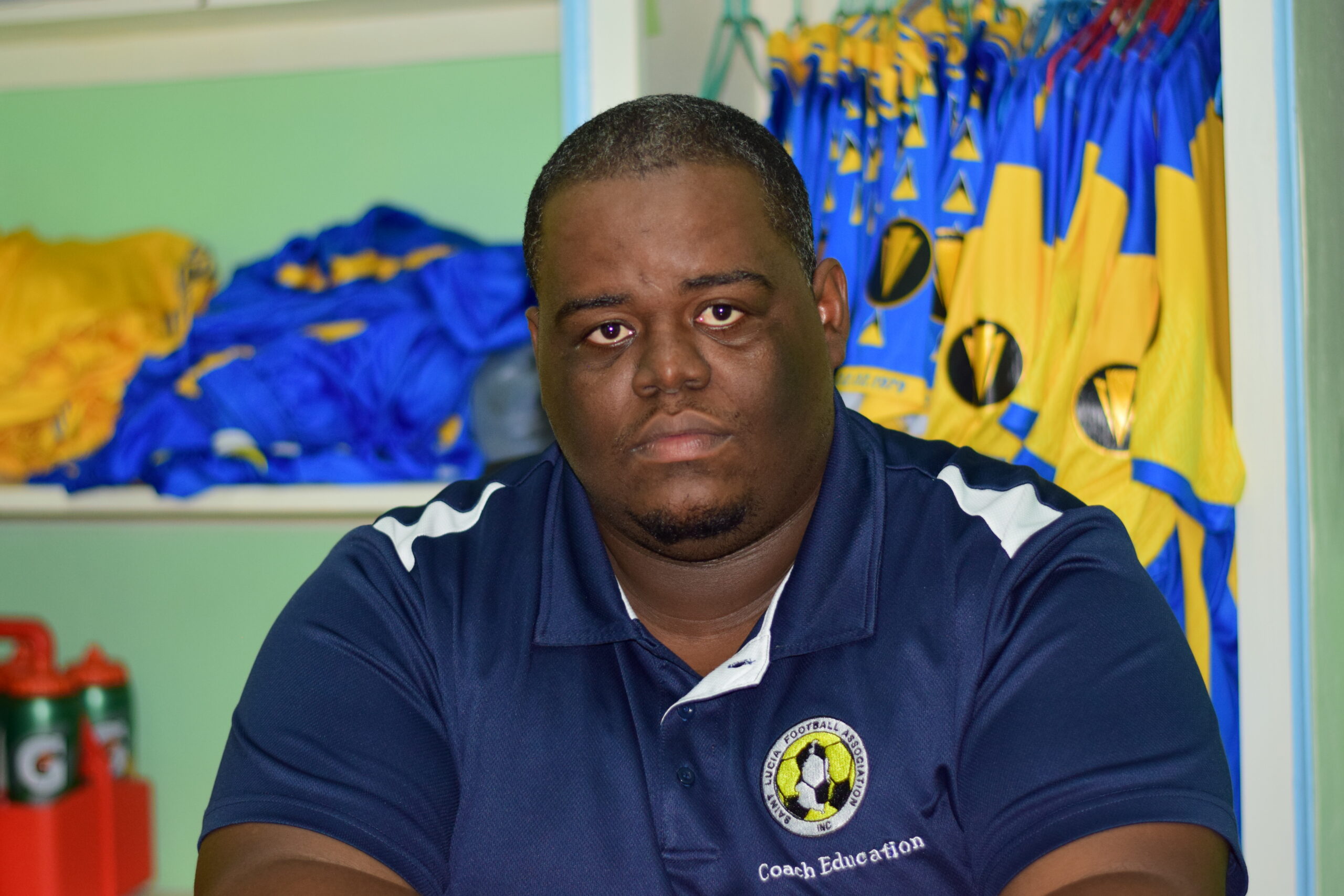
    Saint Lucia football has entered a new phase of development under newly appointed Technical Director Miran Louis, who has laid out a comprehensive, long-term vision focused on bridging the gap between domestic-based and diaspora talent, reinforcing foundational infrastructure, and nurturing homegrown youth potential to push the island nation toward its long-held goal of World Cup qualification.

    Louis, a veteran coach and football administrator with coaching experience across both Saint Lucia and England, has expressed quiet confidence in the immediate prospects of the country’s senior men’s national team, which is gearing up to kick off its CONCACAF Nations League campaign this Friday at the iconic Daren Sammy Cricket Ground. He notes that the entire domestic squad is already eager to integrate the cohort of players joining the national camp from overseas, with full team preparations set to commence on November 21. The Piton Boyz, led by head coach Rajesh Latchoo, currently draws around a dozen players from the Saint Lucia Semi-Professional Football League, with additional roster spots filled by local players competing abroad and foreign-born athletes who qualify for citizenship through familial connections.

    Parallel to the senior team’s upcoming competitive run, Saint Lucia’s under-15 boys’ side is also deep in preparations for the World Football Festival hosted in Tashkent. Louis offered a positive assessment of the young squad, highlighting that the group has entered preparations with a clear competitive mindset: the national program is focused on competing to win, not just securing a spot at the tournament.

    Right now, the Saint Lucia Football Association (SLFA) is already running four ongoing domestic competitions and supporting the development of two elite national squads, a sign of steady momentum across the local game that Louis acknowledges. But in his view, sustainable growth requires intentional structural reform that starts at the grassroots level. A core tenet of his leadership is balancing two equally critical priorities: strengthening the domestic football ecosystem on the island and expanding the SLFA’s existing global scouting network to identify high-potential talent with Saint Lucian roots around the world.

    “I am a strong believer in strengthening the local base of football on the island,” Louis explained. He added that the SLFA’s existing work to build out international scouting, which predates his appointment, is a critical step to securing the top talent needed to compete at the highest regional and global levels. “We need the best to actually compete at the highest level and to give us that World Cup qualification,” he said, referencing the SLFA’s decades-long ambition of earning a spot at the men’s FIFA World Cup.

    Louis’ own career spans roles with multiple domestic clubs including New Generation Football Club, GMC United, and Gros Islet, as well as leadership positions with Saint Lucia’s national under-17 girls’ team and under-20 men’s side. This background has cemented his focus on youth development as the backbone of any long-term success for Saint Lucian football.

    “There is a lot of football going on in Saint Lucia at the minute, and Saint Lucia’s football, I can say, is moving in the right direction,” Louis asserted. “However, I think that we need to solidify the structures, especially from the grassroots area going all the way up. The majority of the changes that we would want to see in the football on the island must start from our grassroots area.”

    Beyond player development, Louis has also turned his attention to addressing one of the most persistent challenges facing the local game: a shrinking pool of qualified match officials. To tackle this gap, he has proposed a new initiative in partnership with SLFA leadership to introduce officiating pathways directly into the country’s school system, targeting young athletes early to build a pipeline of new referees.

    Increasing the size of the referee pool is a critical step to raising the overall standard of officiating across domestic competitions, Louis explained. Currently, few aspiring officials step forward to pursue formal referee training and career pathways, leaving the existing cohort stretched thin. While he praised the work of current active referees, he emphasized the need for intentional recruitment to grow the pool. “I think one of the ways is going into the schools at the youngest level, and showing them that there is a pathway for officiating and not only playing football on the field,” he said.

  • Pawiroredjo licht initiatiefvoorstel over bezoldiging President toe

    Pawiroredjo licht initiatiefvoorstel over bezoldiging President toe

    A heated national debate has erupted in Suriname over top government and judicial officials’ salary increases ever since the November 2024 wage adjustment law came into effect, and a cross-party legislative push is now underway to address the fundamental structural and constitutional flaws at the heart of the controversy.

    Jerrel Pawiroredjo, parliamentary faction leader of the National Party of Suriname (NPS), says public discussion of the issue is healthy, and it is critical that community concerns over the new salary framework are heard. What makes the current system problematic, he argues, is not just the total amount of compensation paid to senior officials, but the opaque, constitutionally questionable process used to set those salaries.

    Under the 2024 law, the President’s salary is set indirectly, tied via a fixed multiplier to a base pay rate that is determined by state decree in line with the country’s Civil Service Law. This creates an automatic knock-on effect: any adjustment to the salary of a Director General of the General Service automatically changes the President’s own pay. Pawiroredjo explains that this automatic update triggers after every collective bargaining negotiation between public sector unions and the government, effectively allowing the President’s salary to change without a direct vote by the National Assembly.

    This automatic linkage directly contradicts Article 112 of Suriname’s Constitution, which explicitly requires the National Assembly to set the President’s salary by law, Pawiroredjo says. The constitutional flaw has been thrown into sharp relief by the government’s upcoming 15 percent general pay increase for all civil servants. Under the current framework, that across-the-board raise would automatically boost the President’s salary, and through pre-existing legislative linkages, would also increase pay for members of the National Assembly, cabinet ministers, and senior judicial officials.

    Pawiroredjo notes that public opinion on the appropriate level of senior officials’ compensation is deeply divided, making the ongoing societal debate entirely understandable. “It is of great importance that the objections raised by communities are heard,” he says.

    Earlier attempts to address public dissatisfaction date back to February 23, 2026, when Pawiroredjo and fellow lawmaker Poetini Atompai submitted separate legislative proposals to bring senior officials’ salaries more in line with public expectations. But those bills did not resolve the core constitutional issue around how salaries are set, so Pawiroredjo has partnered with Asis Gajadien, a lawmaker from the ruling coalition’s VHP party, to submit a new, targeted initiative that would set the President’s salary directly, in full compliance with the Constitution.

    An initial calculation error was identified in the draft text, but Pawiroredjo confirms the error has now been corrected. The core policy priority of the bill — decoupling the President’s salary from civil service pay scales — remains fully intact. Pawiroredjo says the proposal also addresses urgent concerns raised by other public figures, including Jennifer Vreedzaam, over the current flawed system.

    Under the proposal, once this fundamental constitutional issue is resolved, lawmakers can open debate on other outstanding questions, including potential adjustments to salary levels for the President, judiciary, and other independent state bodies.

    Pawiroredjo also pointed out that while the executive branch has temporarily paused the scheduled salary increases for the President and other senior political and judicial officials, the pause lacks a clear legal foundation. If the underlying legislation is not amended to fix the structural flaw, the higher salaries will eventually have to be paid out by law, he said.

    The NPS leader emphasized that the bill’s cross-party sponsorship — pairing an opposition lawmaker with a coalition legislator — underscores the broad consensus that fixing this fundamental flaw in the country’s salary-setting framework is a critical national priority.

  • Antigua and Barbuda Cabinet Offers Condolences After Bathlodge Shooting, Calls for Action on Gun Violence

    Antigua and Barbuda Cabinet Offers Condolences After Bathlodge Shooting, Calls for Action on Gun Violence

    The fatal shooting that claimed the life of 21-year-old Saquania Anthony in Bathlodge has spurred Antigua and Barbuda’s national Cabinet to roll out urgent, coordinated measures to curb the country’s growing gun violence crisis and stem the flow of illegal firearms across its borders. In the wake of the attack that also left two other people injured, the nation’s top governing body has formally extended deep condolences to Anthony’s family and friends, while issuing a clear call for collective action from law enforcement agencies and local communities alike.

    Maurice Merchant, Director General of Communications for the government, told reporters that Cabinet’s recent policy deliberations on the shooting included direct discussions with senior leadership from the Antigua and Barbuda Royal Police Force and the country’s Customs Department. During those talks, Merchant said, Cabinet members emphasized that the unnecessary loss of a young life to gun violence is not only a private tragedy for the victim’s loved ones, but a loss that inflicts pain across the entire nation. The governing body has joined the community in wishing a rapid, full recovery for the two people who were wounded in the Bathlodge incident.

    This latest shooting, Merchant emphasized, laid bare the urgent need for cross-sector collaboration between the national government, frontline law enforcement agencies, and ordinary residents to tackle both the ongoing circulation of illegal firearms and the broader culture of gun violence that has eroded community safety. To that end, Cabinet has issued formal directives to the national police force: it has ordered officers to ramp up intelligence-led targeted operations, maintain a consistent, visible uniformed presence in neighborhoods across the country, and deploy all lawful enforcement tools to disrupt criminal networks and seize unregistered weapons. The directive also calls for consistent enforcement of low-level offenses and minor acts of public lawlessness, which Cabinet argues fuel broader disregard for legal norms that can escalate into violent crime.

    Cabinet’s policy response also targets the root of the problem: how illegal weapons enter the country in the first place. During deliberations, senior Cabinet officials questioned the Comptroller of Customs extensively about current protocols for inspecting and clearing incoming shipping containers, the primary entry point for many contraband goods including unregistered firearms. In response, the governing body has mandated enhanced scrutiny of all incoming cargo to block firearms, ammunition, and other illegal goods from slipping past border controls.

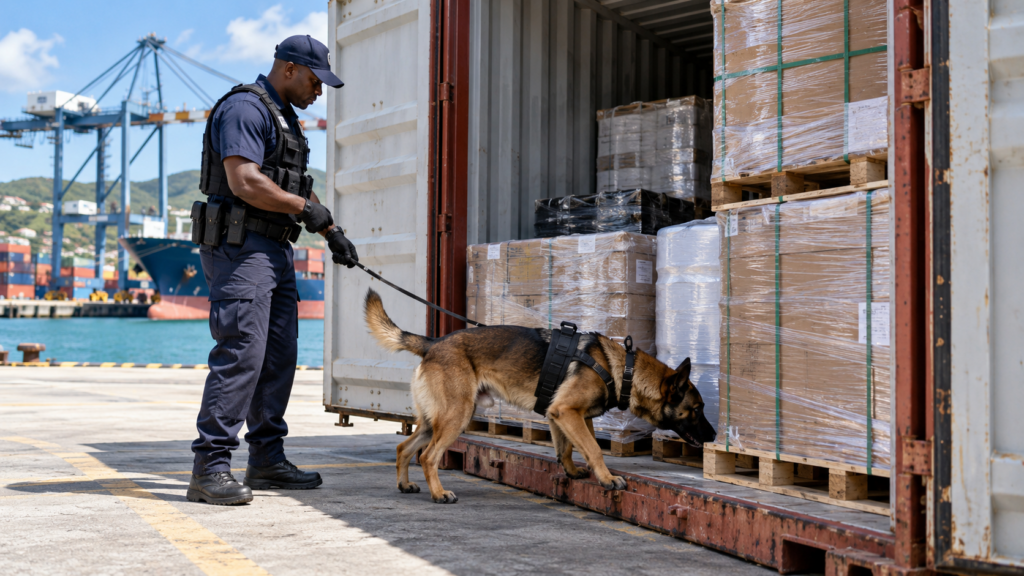
    To boost border enforcement capacity, Cabinet has given customs officials the green light to accelerate efforts to acquire new portable scanning devices for mobile inspections, and to complete activation of the permanent container scanner already installed at the nation’s main port. The body also formally approved the deployment of specially trained detection dogs at the port, tasked with sniffing out hidden firearms, ammunition, and undeclared currency.

    Merchant explained that the government frames its approach as an integrated strategy: stronger border protection to stop new illegal weapons from entering, and aggressive enforcement to remove the unregistered guns already circulating in communities. To make the strategy work, he issued a public appeal to all Antigua and Barbuda residents to stand with law enforcement, share any information they have about illegal firearms or those responsible for violent crime, and help officers remove dangerous weapons from neighborhoods.

  • Guyana seeks fresh “era” of relations with Venezuela after ICJ ruling on border controversy

    Guyana seeks fresh “era” of relations with Venezuela after ICJ ruling on border controversy

    As the 81st session of the United Nations General Assembly entered its high-level week on September 24, 2026, a decades-long territorial dispute between two South American neighbors took center stage, with new competing proposals from the two nations’ leaders.

    Addressing the assembled global delegation, Guyanese President Irfaan Ali issued a direct public call for Venezuela to comply with the upcoming ruling from the International Court of Justice (ICJ) on the disputed 160,000-square-kilometer Essequibo Region, framing acceptance of the judgment as a doorway to improved bilateral ties.

    “Now that we have both participated in the hearings, which were completed in May 2026, we urge Venezuela to abide by the forthcoming ruling, in accordance with their obligation under the UN Charter, as Guyana will do,” Ali told the assembly. “We look forward to a new era of neighborly relations in the interests of our peoples, the development of our countries, and the stability and prosperity of our region.”

    Ali’s appeal came less than 24 hours after Venezuela’s acting President Delcy Rodríguez presented her country’s counter-position from the same UNGA podium, arguing that bilateral negotiation, rather than an external judicial ruling, remains the only path to a durable, long-term resolution of the border conflict.

    “I appeal to the Cooperative Republic of Guyana to resolve the issue and to return to negotiations, as stipulated by the Geneva Agreement,” Rodríguez said. “Agreements which last the longest are those that emerge from bilateral negotiations. They last longer and function better than those imposed by external bodies.”

    The origins of the dispute stretch back more than a century to the 1899 Arbitral Award that established the current land boundary between the two nations. Venezuela has long challenged the validity of that award, laying claim to the resource-rich Essequibo Region that makes up roughly two-thirds of Guyana’s current territory. The 1966 Geneva Agreement, signed when Guyana gained independence from Britain, laid out a framework to resolve the dispute, requiring a negotiated settlement according to Venezuela’s interpretation.

    After 50 years of stalled progress through UN-mediated good offices talks, Guyana brought the case to the ICJ to formally rule on the validity of the 1899 award. Despite its repeated claims that the ICJ lacks jurisdiction over the matter, Venezuela has participated fully in all procedural stages of the case. Following the referral of the dispute to the ICJ by the UN Secretary General—an action aligned with terms of the Geneva Agreement—the court previously ruled it does hold authority to hear Guyana’s case.

    Notably, Rodríguez’s UNGA address marked a departure from past public remarks from Venezuelan leadership. When she concluded the country’s formal submissions to the ICJ earlier this year, and during previous public appearances alongside Venezuelan President Nicolás Maduro, Rodríguez regularly issued sharp criticisms of the United States and ExxonMobil, which holds major oil exploration concessions in the Essequibo Region. No such criticisms appeared in her address to the 81st UNGA session.

  • Antigua and Barbuda Cabinet Approves More Equipment for Police and Military Ahead of CHOGM

    Antigua and Barbuda Cabinet Approves More Equipment for Police and Military Ahead of CHOGM

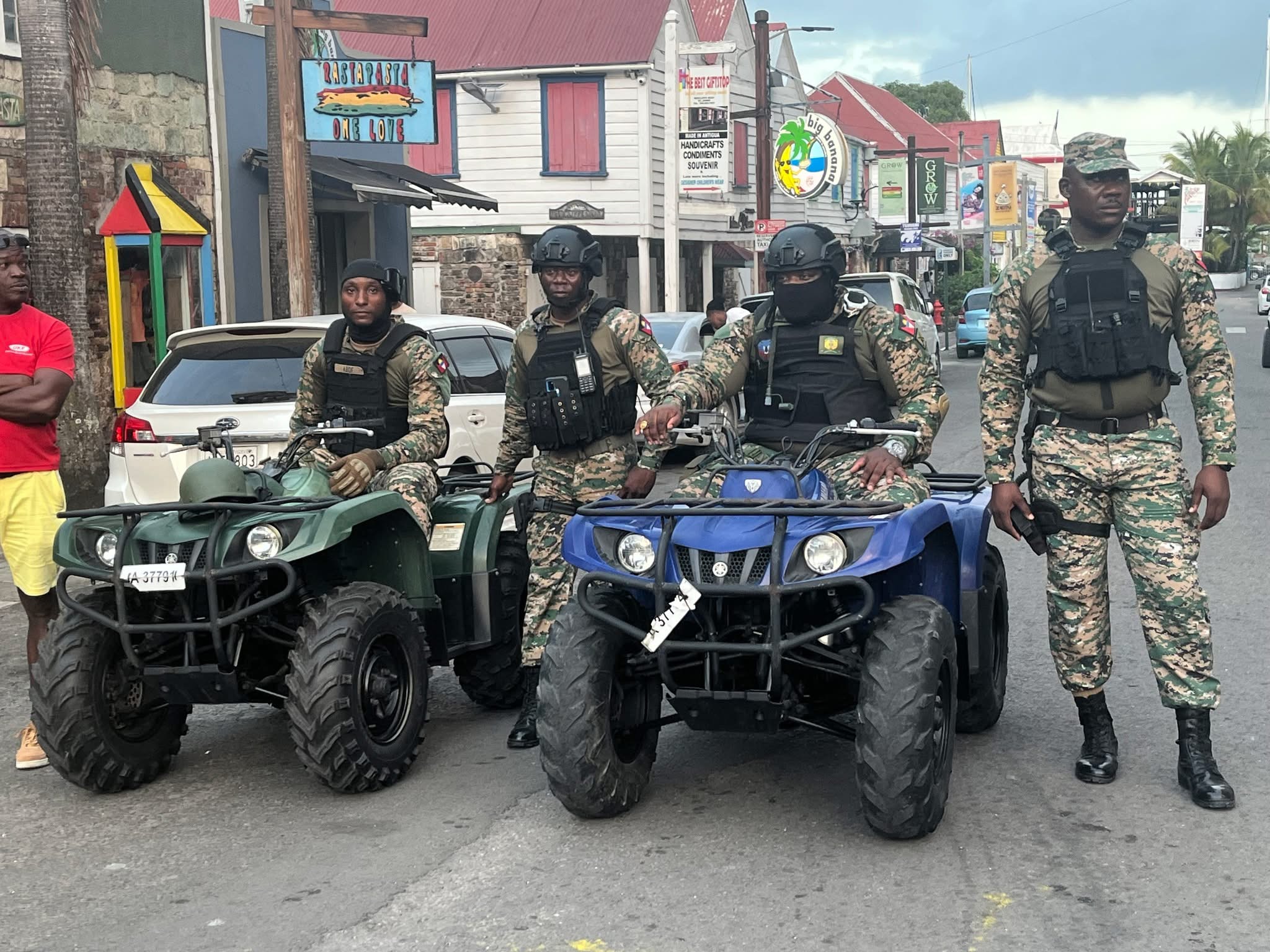
    As the Caribbean nation of Antigua and Barbuda makes final preparations to welcome global leaders for the upcoming Commonwealth Heads of Government Meeting (CHOGM), its national Cabinet has given the green light to procure additional security equipment for the country’s police force and military, according to Director General of Communications Maurice Merchant. Speaking directly to reporters after the closed-door Cabinet session, Merchant confirmed the approval but declined to release key details including the specific type of equipment, total procurement cost, and expected delivery timeline. He noted that the government intends to share a full breakdown of the plan at a future, unspecified date.

    The approval of the new security assets came during a meeting focused heavily on pressing national security threats, where senior law enforcement and customs leadership joined Cabinet members to discuss the escalating crisis of gun violence, the flow of illegal firearms across borders, and gaps in current border protection infrastructure. During the discussions, the acting prime minister reiterated the government’s unwavering commitment to equipping all national security bodies including police and customs with the tools they require to protect public safety.

    Beyond approving new equipment, Cabinet issued formal directives to law enforcement to ramp up intelligence-driven anti-criminal operations, increase visible police presence across residential communities, and step up pursuit of individuals linked to organized criminal activity. For border control operations, officials ordered closer inspection of all incoming shipping containers, accelerated efforts to roll out portable scanning devices, and moves to fully activate the permanent container scanner already installed at the nation’s main port.

    Merchant emphasized that Cabinet frames robust border management as a foundational pillar of broader efforts to stop illegal firearms and ammunition from being smuggled into Antigua and Barbuda. To further strengthen detection capabilities at ports, Cabinet also formally approved the acquisition of specialized detection dogs trained to locate hidden firearms, ammunition, and undeclared currency.

    The meeting also opened with an official moment of condolence for the family of Saquania Anthony, a recent victim of fatal gun violence in Bathlodge. Cabinet also expressed its sincere concern for two other people who were injured in the same shooting attack. Merchant highlighted that this recent violence has underscored the urgent need for decisive government action to address the ongoing gun violence crisis gripping the nation.

  • Politic : Joint Declaration on the Defense of Hemispheric Sovereignty

    Politic : Joint Declaration on the Defense of Hemispheric Sovereignty

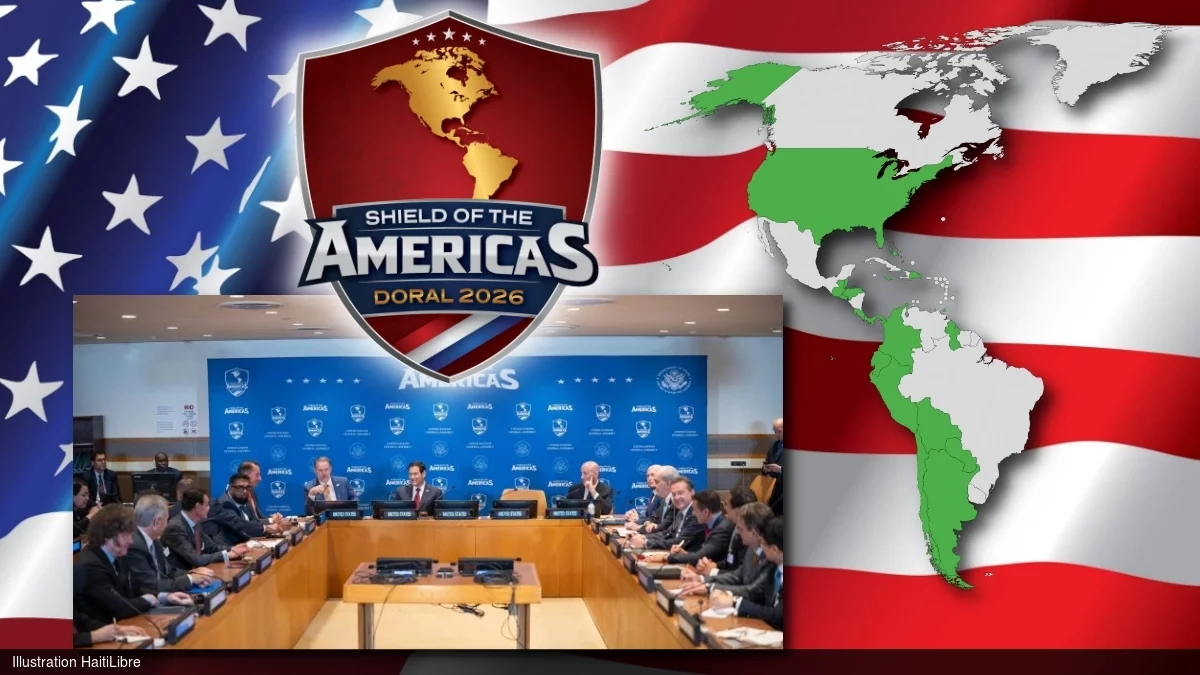
    In a landmark display of regional cooperation, 15 governments across the Western Hemisphere have unveiled a coordinated framework called the ‘Shield of the Americas’, built to defend hemispheric sovereignty through three interconnected core pillars: economic resilience, collective security, and multilateral coordination. The joint declaration, released publicly on September 24, 2026, counts the United States, Argentina, Bolivia, Chile, Colombia, Costa Rica, the Dominican Republic, Ecuador, El Salvador, Guyana, Honduras, Panama, Paraguay, Peru, and Trinidad and Tobago among its founding signatories.

    The first pillar of the initiative focuses on safeguarding regional economic sovereignty through targeted collaborative actions. Signatory nations have committed to deepening cross-border economic cooperation, exploring shared investment screening mechanisms, and securing critical mineral supply chains via diversified, reliable sourcing networks. The framework also calls for the development of non-discriminatory trusted supplier regulations for digital infrastructure, emphasizing that long-term regional security depends on inclusive economic growth, stable employment, and transparent, verifiable capital flows into member states.

    Addressing rising threats to democratic rule, the second pillar centers on countering armed narco-terrorist networks that have destabilized communities across the region. Signatories agreed to coordinate cross-border sanctions, targeted designations, and financial actions against terrorist and criminal groups, expand the capacity of civilian law enforcement, and deliver humanitarian and public messaging support to protect the popular will of affected communities. Two Haitian criminal groups, Gran Grif and Viv Ansanm, were specifically named as high-priority targets of the new initiative.

    The third pillar reinforces shared commitments to mutual respect for national sovereignty and self-determination, with a focus on coordinating policy through multilateral forums to advance collective goals. Beyond counter-narcotics work, member states also support targeted reforms to key multilateral institutions to better address 21st-century regional challenges.

    To operationalize the framework across all three pillars, participating nations have laid out a series of cooperative next steps. These include expanding real-time intelligence sharing between member states, facilitating access to advanced security technologies where appropriate, investing in professional training and development for law enforcement and governance personnel, and expanding exchanges of evidence-based best practices for countering criminal activity and advancing economic development. Member states also committed to deepening economic and investment cooperation, and strengthening coordinated policy positions on shared issues in regional and global multilateral forums.

    In the first concrete collective action under the new framework, signatories are launching a coordinated campaign to counter the immediate, widespread threat that transnational narco-terrorist organizations pose to regional peace, citizen safety, and shared prosperity. In line with each nation’s domestic and international legal obligations, member states will implement a suite of punitive measures, including asset freezes, immigration and visa restrictions for group members, associates, and supporters, and criminal liability for any individual that knowingly provides material or logistical support to designated organizations. The initial crackdown will target 24 transnational groups operating across the region, with country-specific naming conventions respected across all member jurisdictions.

    To formalize and institutionalize this collective effort, participating nations plan to submit an official request to the President of the Organization of American States (OAS) Permanent Council, calling for a consultation meeting to establish an Organ of Consultation under Articles 6 and 13 of the Inter-American Treaty on Reciprocal Assistance, commonly known as the Rio Treaty. Once the consultation body is convened, member states will participate at the ministerial level to consider adopting a formal resolution that enables and facilitates collective counter-narco-terrorism action under the treaty. Signatory nations that are not currently parties to the Rio Treaty have expressed full support for the initiative and committed to contributing to the effort within the bounds of their own domestic and international legal obligations, including participating in the Organ of Consultation to the full extent permitted by its rules of procedure.

  • Antigua and Barbuda Cabinet Approves Detection Dogs for Ports to Find Guns and Ammunition

    Antigua and Barbuda Cabinet Approves Detection Dogs for Ports to Find Guns and Ammunition

    Antigua and Barbuda’s national cabinet has formally approved a plan to introduce specialized detection dogs at the country’s ports, a key new measure in the nation’s ongoing campaign to block illegal firearms and ammunition from crossing its borders. The announcement came following a post-Cabinet briefing led by Maurice Merchant, Director General of Communications, who outlined that the canines will undergo specialized training to assist port security, police and customs teams in identifying concealed firearms, ammunition and undeclared currency being smuggled into the country. As of the briefing, Merchant declined to disclose key details including the number of dogs to be acquired, the total budget allocated for the program, or a firm timeline for deploying the new detection teams. The approval of this initiative comes after extensive consultations between cabinet members and senior leadership from both the national police force and customs department, focused on addressing the growing challenge of gun crime and illicit weapons trafficking into Antigua and Barbuda. During these discussions, cabinet members conducted a thorough questioning of the customs comptroller regarding current protocols for inspecting and clearing incoming shipping containers, which represent a major entry point for contraband. Beyond the detection dog program, the cabinet has issued new directives to strengthen border security protocols: officials have called for heightened inspection scrutiny during the container clearance process, ordered customs teams to accelerate the acquisition of portable scanning devices, and pushed for faster progress to bring the port’s main fixed container scanner into full operational service. Merchant once again did not provide a specific timeline for the delivery or deployment of these new scanning technologies. For national security officials, the addition of detection dogs creates a complementary layer of security for checking cargo and high-risk areas across port facilities, designed to intercept illegal weapons before they can enter domestic circulation and fall into the hands of criminal groups. Merchant emphasized that cabinet views robust border enforcement as an indispensable pillar of its national strategy to combat gun crime, working in tandem with active police operations to seize and recover illegal weapons that have already been smuggled into the country. The urgency of these new measures was underscored by a recent fatal shooting in the community of Bathlodge that claimed the life of 29-year-old Saquania Anthony, leaving two additional people injured. During the cabinet meeting, members extended formal condolences to Anthony’s family and reaffirmed their growing alarm over the frequency of gun-related violence across the nation. In addition to border security reforms, cabinet has also instructed national police forces to ramp up enforcement actions and expand intelligence-led targeted operations to disrupt organized criminal activity that fuels the local gun trade.