作者: admin

  • 2026 budget is biggest ever and fully financed

    2026 budget is biggest ever and fully financed

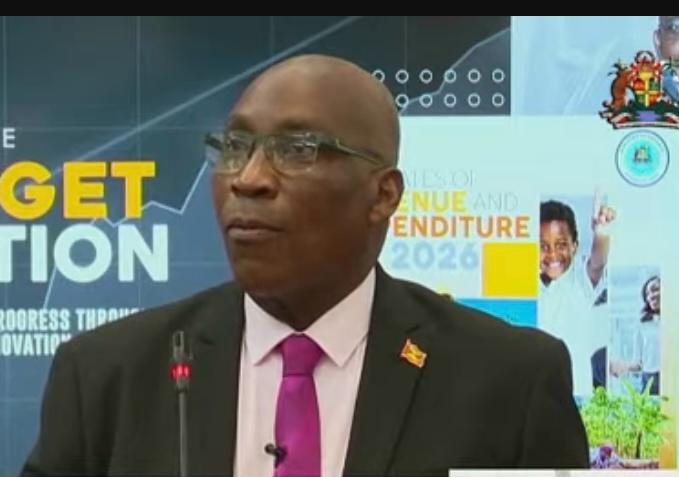
    The Government of Grenada has presented a historic EC$1.96 billion budget for fiscal year 2026, marking a significant increase of EC$47.1 million over the previous year’s allocations. Finance Minister Dennis Cornwall characterized this fourth budget of the Dickon Mitchell Administration as a transformative blueprint for national development rather than merely a financial plan.

    Presented under the theme “Towards Vision 75: Powering Progress Through People’s Participation and Innovation,” the budget addresses a projected EC$309.8 million deficit through strategic financing mechanisms. The government plans to utilize EC$257.3 million from existing deposits, supplemented by limited domestic and external financing, demonstrating what Minister Cornwall described as “prudent fiscal management and sustainability.”

    The budget framework reveals recurrent revenue projections of EC$1.3 billion, with grants totaling EC$37.6 million. Expenditure includes EC$1.1 billion for recurrent costs, EC$370.4 million for capital projects, and EC$206.7 million dedicated to strategic initiatives. Despite the deficit, the government maintains a current account surplus of EC$229.8 million.

    Notable initiatives include establishing a dedicated regulatory body for the emerging oil and gas sector, creating a EC$50 million Housing Fund, launching a Youth Empowerment Agency, and implementing new green points for organic waste management. Minister Cornwall emphasized that hydrocarbon development would prioritize environmental assessments, maritime boundary negotiations with Venezuela and Saint Vincent and the Grenadines, and attracting credible investors through transparent frameworks.

    The finance minister framed the budget within global uncertainties and regional dynamics, stating it reflects “faith in the creativity and capacity of our people” and represents “a statement of faith in our collective potential.” He emphasized that genuine progress emerges from citizen participation rather than top-down imposition, aligning with the administration’s commitment to building “a Grenada that is not only economically stronger, but socially just, environmentally resilient.”
  • Awardees share pride and gratitude at Independence Day ceremony

    Awardees share pride and gratitude at Independence Day ceremony

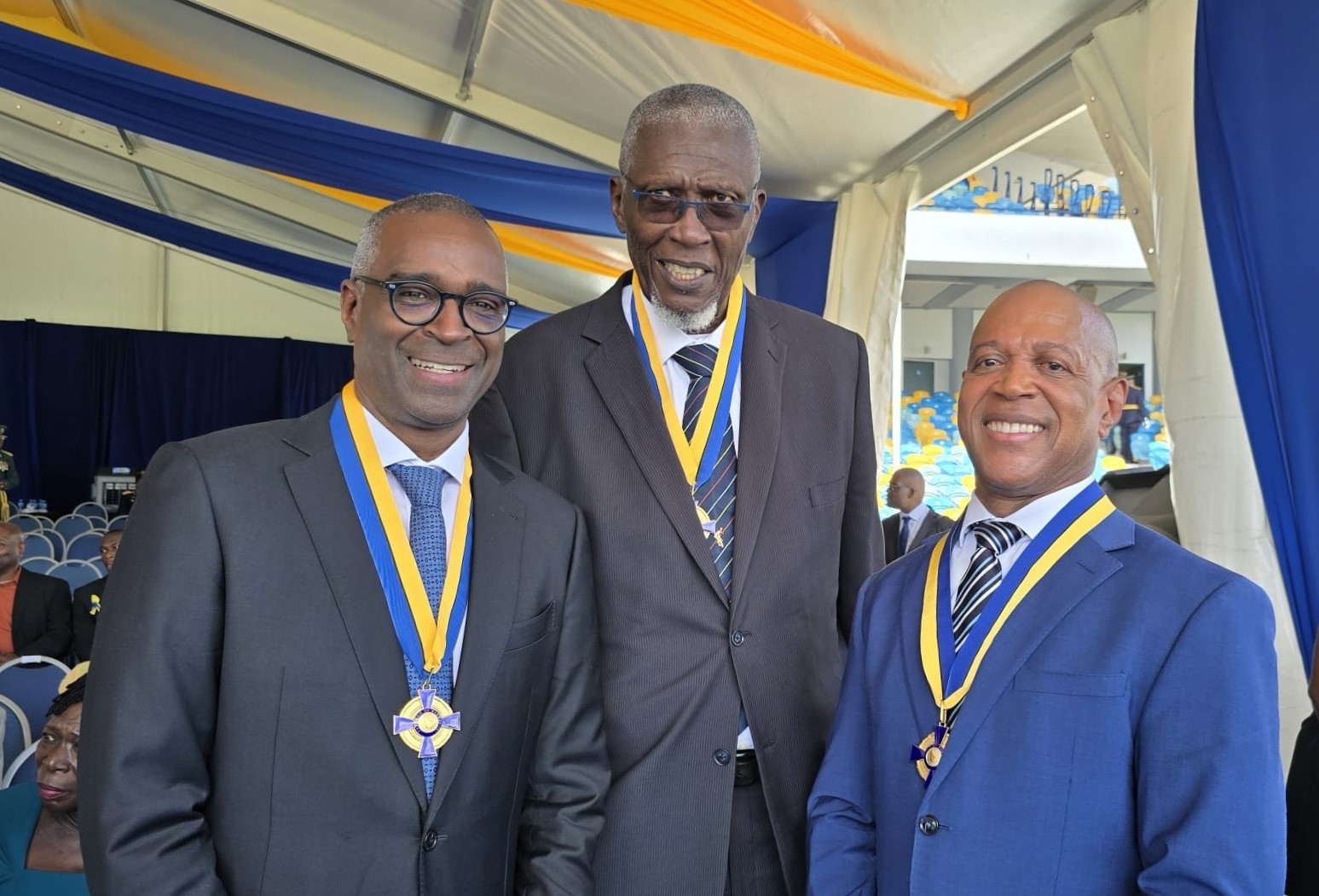
    Barbados celebrated its most distinguished citizens during Sunday’s Independence and Republic Day Ceremonial Parade and National Awards Ceremony, where over seventy exceptional individuals received national recognition for their transformative contributions to Barbadian society and beyond. The prestigious Order of Freedom of Barbados—the nation’s highest honor—was conferred upon three exemplary figures whose lifetime achievements have left an indelible mark on their respective fields.

    Cricket legend Joel Garner, Central Bank Governor Dr. Kevin Greenidge, and prominent financier-philanthropist Dr. Kurt Lambert stood among the honored recipients, each expressing profound humility and gratitude for the national recognition. Garner, reflecting on his iconic sporting career, paid heartfelt tribute to his support network: “We didn’t do it alone. They were with us in the trenches, bringing joy and happiness to people around us.” He credited his grandmother for keeping him grounded and emphasized steadfast dedication as the cornerstone of his success.

    Dr. Greenidge, honored for his leadership in economic policy, dedicated the award to collective national effort, stating, “We couldn’t have gotten where we are without everyone, including Barbadians playing their part.” He revealed ambitious plans to modernize Barbados’ financial infrastructure, including the March 2026 launch of BIMPay—a transformative digital payment system.

    Dr. Lambert, visibly moved by the recognition, recounted his journey from humble beginnings in Carrington Village to establishing a billion-dollar asset management firm in Zurich. His award acknowledged both his financial expertise and extensive philanthropic work across the African continent.

    The ceremony also featured international recognition: Professor Benedict Oramah, former Chairman of Afreximbank, received an honorary Order of Freedom for strengthening trade and investment bridges between Barbados and Africa. He described the award as a symbolic “handshake across the Atlantic” and praised Prime Minister Mia Mottley’s leadership in building a united Global Africa coalition.

    Child protection advocate Faith Marshall-Harris received the Order of the Republic for her justice reform work, emphasizing the significance of domestic recognition: “No matter what you do internationally, it’s great to be acknowledged at home.” She noted substantial improvements in Barbados’ court system and dedicated her award to the rights of young people.

    The diverse group of honorees additionally included Attorney General Dale Marshall, Senator Reginald Farley, judicial pioneer Madam Justice Dr. Corlita Babb-Schaefer, Energy Minister Senator Lisa Cummins with her team, cultural icon Wendy Alleyne, and Reverend Wayne Kirton, collectively representing the finest achievements in Barbadian public service, culture, and humanitarian work.

  • Transport CEO, Chester Williams: “$300 is a Cap,” Not a Fixed Charge

    Transport CEO, Chester Williams: “$300 is a Cap,” Not a Fixed Charge

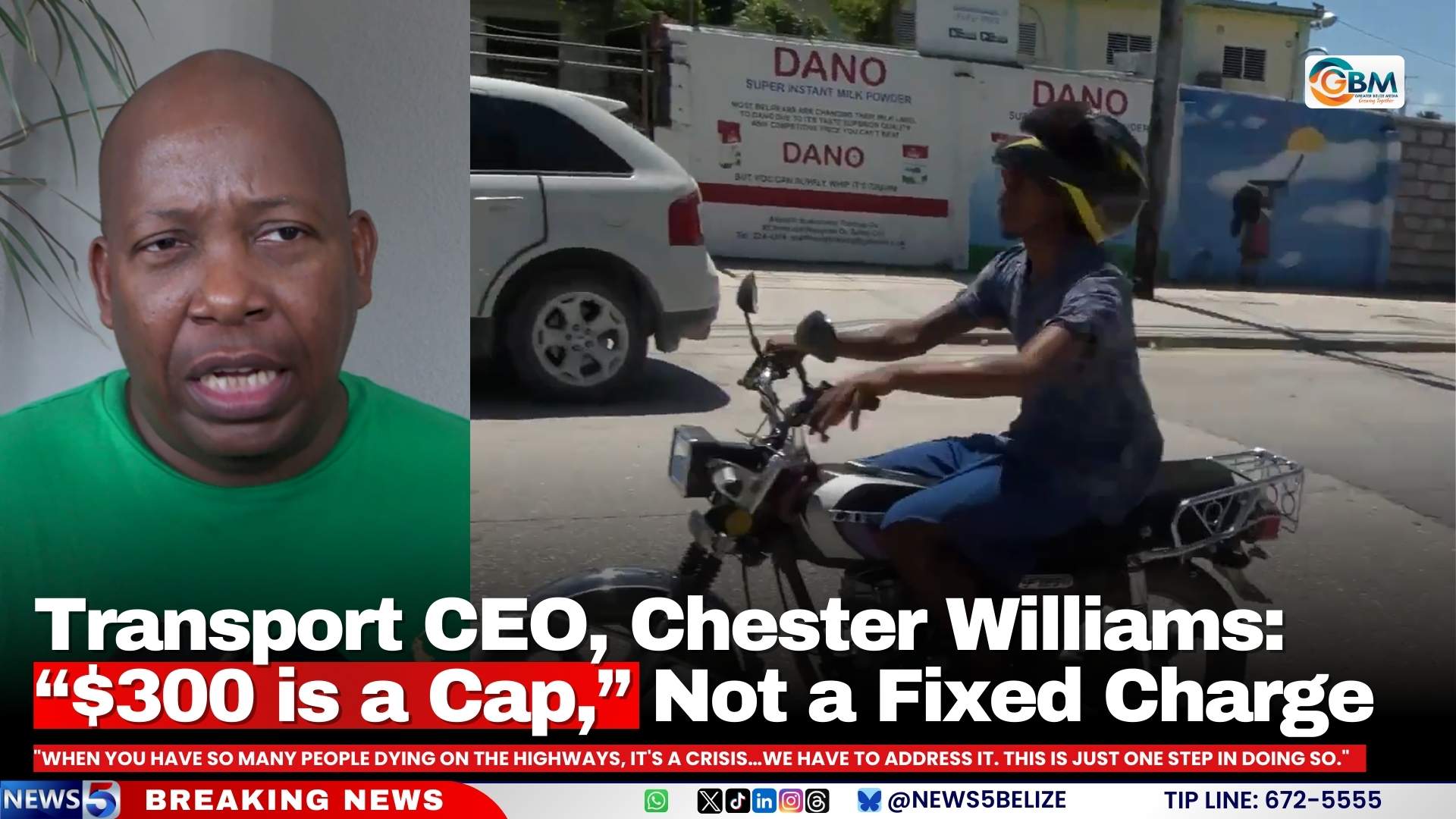
    In a decisive move to correct widespread misinformation, Transport CEO Chester Williams has clarified that the controversial $300 fee for new mandatory motorcycle training represents a maximum cap rather than a fixed charge. The clarification comes amid public concerns about the cost implications of the recently announced road safety initiative.

    Williams emphasized that approved trainers would be prohibited from charging exceeding $300, with actual costs potentially ranging from zero to the capped amount. The program’s primary objective centers on enhancing road safety by ensuring riders receive proper instruction in vehicle maneuvering and traffic regulations.

    The ministry has outlined an innovative approach to trainer certification, proposing to authorize experienced motorcyclists—including club members and riders with impeccable safety records—to conduct the training sessions. This strategy aims to leverage existing expertise within the riding community while expanding training capacity.

    Addressing corruption concerns, Williams issued a stern warning against potential misconduct, stating that trainers certifying untrained individuals would face immediate license revocation. The CEO also dismissed notions that the program would require extensive institutional courses, clarifying that trainees need only complete 30-35 hours of flexible instruction arranged directly with certified trainers.

    During recent consultations with motorcycle clubs, Williams encouraged members to pursue trainer certification, noting that approved clubs could establish their own training rates. Riders raised practical concerns regarding training motorcycle costs and business licensing requirements, which the ministry acknowledged as legitimate considerations.

    Williams framed the initiative within broader road safety context, comparing vehicle operation to handling loaded firearms and characterizing highway fatalities as a national crisis demanding immediate intervention. The training mandate represents one component of the ministry’s comprehensive strategy to address this pressing public safety issue.

  • Skerrit calls for review and restructure of the Dominica’s youth business trust

    Skerrit calls for review and restructure of the Dominica’s youth business trust

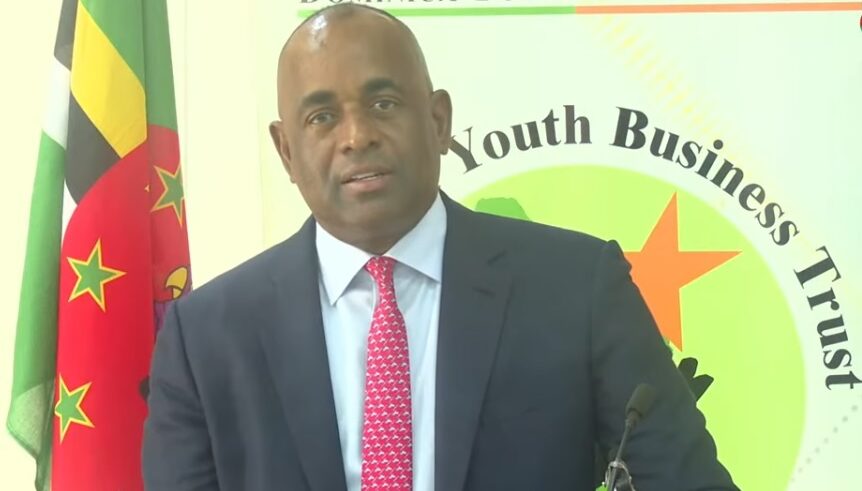
    In a significant policy address, Prime Minister Roosevelt Skerrit has declared comprehensive reforms for the Dominica Youth Business Trust (DYBT), calling for its fundamental restructuring after 21 years of operation. Speaking at the Trust’s 21st Graduation and Awards Ceremony at the State House Conference Centre, Skerrit questioned whether the current DYBT model remains “fit for purpose” in today’s economic climate.

    The Prime Minister outlined several transformative measures scheduled for implementation in 2026. Most notably, he proposed doubling the maximum loan amount for young entrepreneurs from $20,000 to at least $40,000 per applicant, arguing that current funding levels often provide only “half or a third” of the capital needed to properly launch a business venture.

    Skerrit also announced dramatic reductions in interest rates, criticizing the current 6-9% rates as “too high, especially for start-up businesses.” He committed to capping rates at no more than 3% through negotiations with financial institutions and extending this same rate ceiling to the AID Bank for its borrowers.

    The restructuring plan includes significant organizational changes: upgrading the coordinator position to Chief Executive Officer, enhancing staff qualifications and compensation, and reviewing the Board of Trustees to grant them “greater flexibility and authority.”

    In a bold financial move, the government will clear approximately $500,000 in existing debts owed by program participants, effectively providing a fresh start for both the Trust and its beneficiaries. Additionally, the Prime Minister pledged enhanced support for business plan development, ensuring that graduates receive assistance in modifying proposals to meet financial institution requirements rather than facing outright rejection.

    These sweeping changes represent the most substantial overhaul of the youth entrepreneurship program in its two-decade history, signaling the government’s renewed commitment to fostering young business talent in Dominica.

  • Parmessar: Visumbeleid Nederland moet eerlijker in gelijkwaardige relatie

    Parmessar: Visumbeleid Nederland moet eerlijker in gelijkwaardige relatie

    During the extraordinary public session of the National Assembly convened for the state visit of King Willem-Alexander and Queen Máxima, opposition leader Rabin Parmessar of the National Democratic Party (NDP) articulated a vision for fundamentally transforming Suriname’s relationship with the Netherlands. The political leader emphasized the necessity of establishing a mature, business-oriented partnership characterized by mutual reinforcement rather than dependency.

    Parmessar presented a comprehensive framework for bilateral cooperation spanning multiple sectors including trade, investments, agriculture, healthcare, tourism, and sustainable energy. He asserted that Suriname stands prepared to actively leverage these opportunities through pragmatic collaboration that delivers economic and social advancement for both nations.

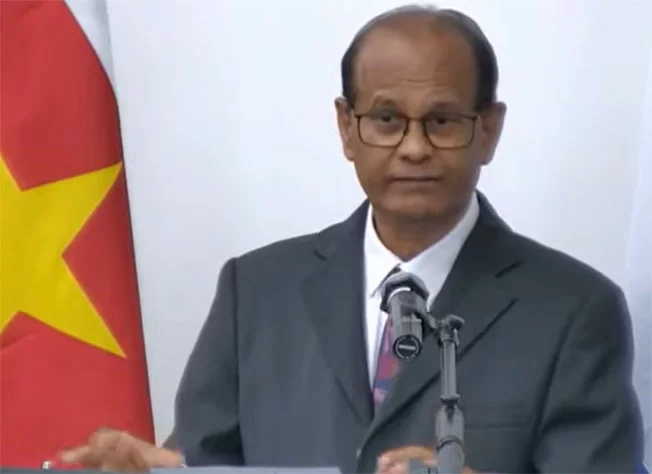
    The most pressing issue addressed was the Netherlands’ current visa policy toward Surinamese citizens. Parmessar characterized the existing application procedures as unnecessarily burdensome and frequently inhumane, calling for immediate revision. He argued that such practices contradict the fundamental principles of respect and equality that should define the bilateral relationship, presenting the royal visit as an opportune moment to address these concerns openly and concretely.

    The opposition leader reiterated his party’s consistent stance against external interference while emphasizing the protection of national interests. He maintained that Suriname must engage in international partnerships from a position of strength and self-confidence rather than dependency.

    Concluding his address, Parmessar advocated for using the state visit as catalyst for establishing tangible improvements rather than symbolic gestures—emphasizing fair procedures, business cooperation, and mutual respect as the foundation for a redefined relationship between the two nations.

  • Third Antiguan Baker Nominated for 2026 Caribbean Baking Awards

    Third Antiguan Baker Nominated for 2026 Caribbean Baking Awards

    The culinary landscape of Antigua and Barbuda is experiencing a remarkable ascent as the islands celebrate their third baking professional securing a coveted spot in the 2026 Caribbean Baking Awards shortlist. This triple recognition significantly amplifies the nation’s standing within the regional gastronomic competition circuit.

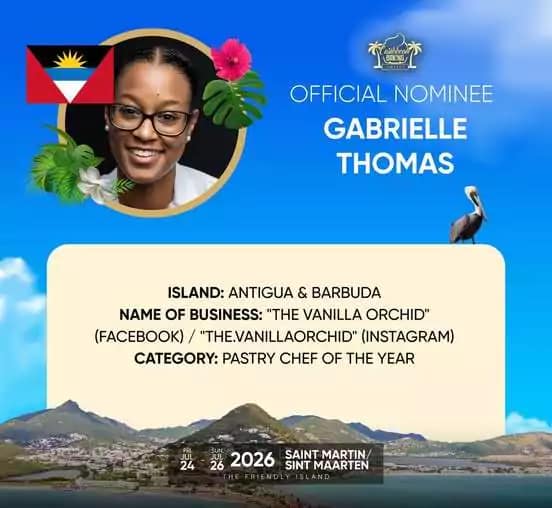
    Gabrielle Thomas has emerged as a contender for the distinguished Pastry Chef of the Year honor. Expressing profound appreciation for the accolade, Thomas remarked, ‘I am deeply grateful for this recognition,’ while extending heartfelt thanks to her family, friends, and community for their unwavering support throughout her culinary journey.

    Thomas now joins compatriots Timoy Titus and Lana Williams in this year’s prestigious nominee circle. Titus, the creative force behind Teez Delights, has achieved his third consecutive nomination for Best Cake Designer—a testament to his consistent excellence. Simultaneously, Williams, founder of The Purple Rose Batter, has garnered recognition in the Innovative Baker of the Year category, highlighting the diverse talent emerging from the twin-island nation.

    The prestigious awards ceremony is scheduled to take place in Saint Martin from July 24-26, 2026. The nomination process will conclude on February 1st, followed by the commencement of public voting on April 7th, allowing baking enthusiasts across the Caribbean to participate in celebrating regional culinary excellence.

  • STATEMENT: A new dawn in St. Vincent – Dominica Freedom Party hails NDP’s landmark win

    STATEMENT: A new dawn in St. Vincent – Dominica Freedom Party hails NDP’s landmark win

    In a landmark political transformation, the New Democratic Party (NDP) has achieved a decisive electoral victory in St. Vincent and the Grenadines, ending nearly a quarter-century in opposition. The December 2, 2025 general elections resulted in a resounding mandate for Prime Minister Dr. Godwin Friday’s leadership, signaling a profound public desire for national redirection.

    The Dominica Freedom Party (DFP) has extended formal congratulations to the victorious NDP, recognizing the election as demonstrating robust democratic engagement. The DFP particularly highlighted the exemplary conduct of the electoral process, noting its transparency, fairness, and adherence to democratic standards that regional political movements should emulate.

    This political transition represents more than a routine power transfer—it embodies the collective aspiration of Vincentians for substantive change and renewed governance approaches. The NDP’s return to government after 25 years provides a clear five-year mandate to implement its national vision.

    Of particular significance was the notable participation of youth voters, whose active engagement in the democratic process drew specific commendation from the DFP. The party expressed hope that this civic involvement would inspire younger generations throughout the Caribbean region.

    The DFP anticipates strengthened collaboration with the NDP through the Caribbean Democrat Union (CDU), focusing on reinforcing democratic institutions and advancing governance models centered on accountability and public service. The statement concluded with an appeal for national unity as St. Vincent and the Grenadines embarks on its new developmental trajectory.

  • Magnitude 3.7 Earthquake Felt Near Antigua and Barbuda

    Magnitude 3.7 Earthquake Felt Near Antigua and Barbuda

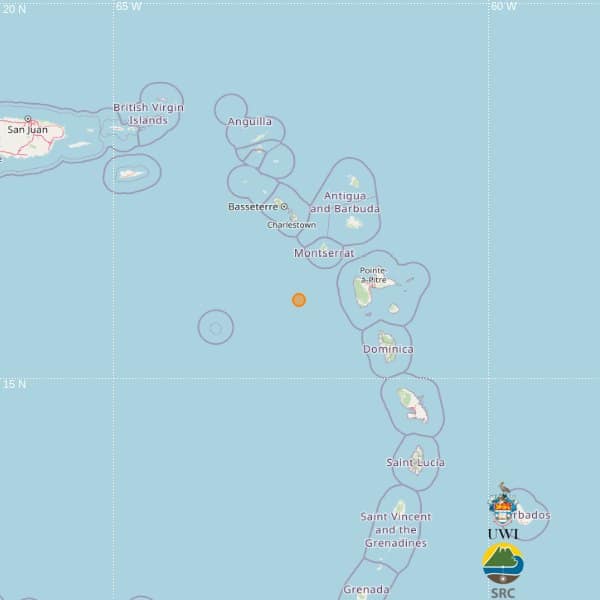
    A minor seismic event registering 3.7 magnitude occurred in the Eastern Caribbean basin on Monday afternoon, as detected by the automated monitoring systems of the University of the West Indies Seismic Research Centre (UWI-SRC). The tremor was recorded at precisely 12:32 local time (16:32 GMT), with its seismic epicenter positioned at geographical coordinates 16.05°N latitude and 62.51°W longitude. The quake originated at an intermediate depth of 53 kilometers beneath the Caribbean Sea floor. According to seismic mapping data, the epicentral region was located approximately 88 kilometers southwest of Brades, Montserrat; 110 kilometers west-southwest of Point-à-Pitre, Guadeloupe; and 138 kilometers southwest of St. John’s, Antigua and Barbuda. Initial assessments indicate no immediate reports of structural damage, injuries, or tsunami alerts following the event. The UWI-SRC emphasized that their preliminary report was automatically generated by their seismic monitoring network and remains subject to potential revision once seismologists conduct comprehensive manual analysis. The Eastern Caribbean region resides within an active seismic zone characterized by complex tectonic interactions between the Caribbean and North American plates, making such minor tremors relatively frequent geological occurrences.

  • Miss Dominica 2026 contestants revealed

    Miss Dominica 2026 contestants revealed

    Dominica has officially introduced the six contenders who will vie for the prestigious Miss Dominica crown in 2026. The announcement came during the vibrant launch ceremony of Mas Domnik 2026 over the weekend, setting the stage for the highly anticipated pageant scheduled for February 12, 2026, at Windsor Park Sports Stadium.

    The diverse group of contestants represents various communities across the island, each bringing unique advocacy platforms. The delegation includes 22-year-old Ardel Laurent from Mahaut, championing ‘Embracing confidence through sustainable style,’ and 24-year-old Dainisha Eusebe of Grandbay, advocating for ‘Animal Welfare: Humane treatment of animals.’

    Daina Graneau, 23, representing Atkinson/Kalinago Territory, focuses on ‘The hidden victims: Protecting children in violent homes,’ while 21-year-old Darna Eugene, also from Grandbay, promotes ‘From silence to strength: Empowering lives, inspiring hope.’ The contingent includes 24-year-old Sheraine Mills of Jimmit and St Joseph, addressing ‘Breaking the stigma, empowering women to confidently confront PCOS,’ and 19-year-old Sanchia Tyson from Crayfish River in Kalinago Territory, emphasizing ‘Roots and Radiance—Empowering both Kalinago and Dominican women through cultural identity.’

    Charlene White-Christian, Chairperson of the Queen Show Organizing Committee, revealed this year’s theme as ‘Bouyon Bloom’—a celebration honoring Dominica’s distinctive bouyon music genre and the artists who perpetuate this cultural tradition. ‘Bouyon is more than music,’ White-Christian declared. ‘It is the heartbeat of our island, a rhythm that tells our stories, celebrates our culture and connects Dominicans across generations.’

    The thematic framework aims to inspire contestants while paying tribute to the creativity and spirit of bouyon artists. According to organizers, the candidates have already commenced intensive training programs featuring transformative workshops in stage presence, professional walking techniques, speech communication, personal development, and cultural refinement.

    White-Christian expressed confidence in the contestants’ preparation, noting their demonstrated ‘passion, discipline and drive’ that promise to deliver a spectacular showcase on pageant night. The months leading to the February event will see these ambassadors undergo comprehensive development, blending cultural preservation with contemporary pageantry standards.

  • Nederlandse koning: Wij komen om de relatie te verdiepen als gelijkwaardige partners

    Nederlandse koning: Wij komen om de relatie te verdiepen als gelijkwaardige partners

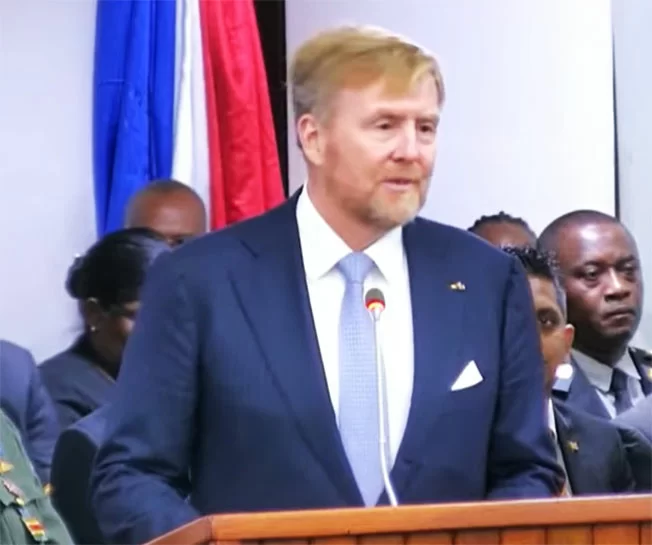
    In a landmark address to Suriname’s National Assembly on December 1st, King Willem-Alexander of the Netherlands delivered a powerful speech acknowledging the complex shared history between the two nations while advocating for strengthened cooperation as ‘equal partners.’

    The monarch, speaking from the parliamentary chamber in Paramaribo, emphasized the extraordinary nature of addressing lawmakers ‘7,500 kilometers from home’ in a shared language. He clarified the unique composition of the Kingdom of the Netherlands, noting that while geographically distant, it remains ‘partly European and partly Caribbean,’ making the nations ‘good neighbors in this region.’

    The King praised Suriname’s democratic institutions for their remarkable achievement in unifying an ethnically and culturally diverse population within a single democratic framework. ‘It inspires admiration how you manage to unite so many different population groups within one democratic system in this country,’ he stated, describing Suriname—which celebrated 50 years of independence this year—as ‘an inspiring example’ of successful integration.

    With deliberate candor, the Dutch head of state addressed the painful legacy of four centuries of colonial rule, slavery, and contract labor that characterized much of the bilateral history. ‘The stories of your ancestors are of essential significance to you, and also to us,’ he declared. ‘They must never be forgotten.’ He emphasized that listening to these intergenerationally transmitted narratives remains fundamental to deepening mutual understanding.

    Against the backdrop of global challenges to democracy, rule of law, and security, King Willem-Alexander identified opportunities for enhanced cooperation. ‘We want to work with you on resilience, also in social and economic terms,’ he proposed, outlining the visit’s objectives as listening, learning, and renewing bilateral ties.

    Concluding his address, the King expressed appreciation for Assembly members’ service to Suriname and their mission to guide the nation toward a strong future. ‘Know that the Kingdom of the Netherlands gladly continues to walk together with you and all Surinamese on the path that lies ahead,’ he affirmed, ending with the heartfelt Sranan Tongo expression: ‘Grantangi!’ (Thank you).