作者: admin

  • FLASH FIFA World Cup 2026 : «D-Day» Draw, Haiti will know its opponents

    FLASH FIFA World Cup 2026 : «D-Day» Draw, Haiti will know its opponents

    WASHINGTON, D.C. – Haitian football stands at a pivotal moment as the nation prepares to discover its group stage opponents for the expanded 48-team FIFA World Cup 2026. The official draw ceremony, scheduled for Friday, December 5, 2025, at noon Port-au-Prince time at the Kennedy Center, will determine the competitive landscape for Haiti’s first World Cup appearance in over half a century.

    The draw mechanism will utilize four seeding pots based on FIFA rankings, creating 12 distinct groups of four teams each. This format marks a significant departure from previous tournaments, guaranteeing each participant three initial matches. Haiti’s Grenadiers have been positioned in Pot 4, alongside other qualified nations and playoff winners, setting the stage for potential matchups against global football powerhouses.

    A distinguished Haitian delegation will witness the proceedings firsthand, led by Monique André, President of the Federation’s Normalization Committee. The contingent includes technical staff headed by National Team Coach Sébastien Migné, administrative officials, and communications personnel. In a symbolic nod to history, Wilner Nazaire—captain of Haiti’s legendary 1974 World Cup squad—joins as FIFA’s special guest, bridging generations of Haitian football excellence.

    Following the draw, FIFA will convene on Saturday to finalize tournament logistics, including potential adjustments to match timings and venue allocations. The governing body will subsequently release the official competition schedule.

    The event will receive global broadcast coverage, allowing Haitian supporters worldwide to participate in this milestone moment as their national team reenters world football’s grandest stage.


  • Tourism : Presentation of the «iKat» digital embarkation and disembarkation card project

    Tourism : Presentation of the «iKat» digital embarkation and disembarkation card project

    Haiti has embarked on a significant digital transformation of its border control operations with the official launch of the “iKat” digital embarkation and disembarkation system. The pilot project was unveiled on December 4th, 2025, at Port-au-Prince’s El Rancho Hotel in a ceremony presided over by Prime Minister Fils-Aimé and organized by the Directorate of Immigration and Emigration (DIE).

    The high-profile event gathered representatives from multiple government sectors including the Presidential Transitional Council (CPT), the Prime Minister’s Office, the Ministry of the Interior, and Tourism Minister John Herrick Dessources. Also in attendance were Ms. J.E. Kathia Verdier, Minister for Haitians Living Abroad, alongside technical partners, financial stakeholders, airline representatives, and travel industry executives.

    Developed through a collaborative effort with the Haitian Institute of Statistics and Informatics (IHSI), the iKat system represents a strategic modernization initiative aimed at revolutionizing migration management. This digital platform will progressively replace conventional paper-based forms with an advanced electronic registration process. Travelers will be able to complete required documentation through online pre-registration up to 72 hours before their journey.

    The innovative system is designed to achieve multiple operational objectives: enhancing traveler facilitation through streamlined processes, strengthening migration control via digitized and centralized information systems, enabling authorities to conduct comprehensive pre-arrival and post-entry monitoring, and generating accurate statistical data for policy development.

    A critical feature of iKat is its capacity to establish a consolidated national database that will significantly improve oversight of foreign visitors exceeding the standard 90-day permitted stay. The platform will equip immigration officials with advanced authentication and analytical capabilities through interconnected data systems that can be securely shared with partner institutions, marking a substantial leap forward in border security technology.

  • Recovering Addict Says He Was Introduced to Alcohol at Age Nine

    Recovering Addict Says He Was Introduced to Alcohol at Age Nine

    A startling personal account from Belize has highlighted the severe public health crisis of early-age substance exposure. Lee Henkis, now in recovery, reveals he was first introduced to alcohol, cigarettes, and marijuana at just nine years old by an adult within his household.

    Henkis describes how substance use derailed his academic potential and personal life. “It affected my life profoundly,” he stated. “I demonstrated strong aptitude in biology, but negative social influences led me toward destructive habits of drinking and smoking, resulting in severe self-neglect.” His addiction eventually eroded family trust and precipitated mental health struggles, compounded by a diabetes diagnosis three years ago.

    His path to recovery began at Remar Belize, a rehabilitation facility co-directed by Felicia Hill. Hill identifies accessibility and affordability as primary drivers of addiction. “The inexpensive alcohol varieties remain highly accessible,” Hill explained. “Individuals must recognize the severe damage these substances inflict on both physical health and mental wellbeing.”

    This testimony emerges alongside concerning data indicating numerous Belizeans initiate alcohol consumption before age ten, often continuing into adolescence. Hill advocates for heightened community responsibility, urging retailers to rigorously verify age through official identification.

    Health authorities emphasize that alcohol dependence constitutes a medical condition rather than mere behavioral failure. Dr. Lila Estephan, Non-Communicable Disease Coordinator at Belize’s Ministry of Health and Wellness, clarified: “Alcoholism is a legitimate disease. Blaming consumers misunderstands the condition’s clinical nature.”

    Henkis mourns childhood friends lost to excessive alcohol consumption, recalling their consumption of high-potency, inexpensive alcohol known locally as “badman,” often consumed nearly undiluted. Having maintained sobriety for two and a half years, his story now serves as both warning and inspiration within Belize’s public health landscape.

  • High Court quashes appointments of Clerk, Deputy Clerk of HOA

    High Court quashes appointments of Clerk, Deputy Clerk of HOA

    In a significant judicial rebuke, the High Court has invalidated the controversial 2023 appointments of Deborah Charles as Clerk of the House of Assembly and Simone Williams-Huggins as Deputy Clerk. The ruling represents another legal setback for the recently ousted Unity Labour Party (ULP) administration.

    Presiding Justice Cybelle Cenac-Dantes delivered the landmark judgment on Thursday, upholding Celena McDonald’s challenge against the Public Service Commission’s (PSC) appointment decisions. The court determined that the appointments were fundamentally unlawful, unreasonable, and procedurally flawed.

    The judicial review revealed that the PSC acted unfairly and unlawfully by bypassing McDonald for the Clerk position while improperly selecting Williams-Huggins as Deputy Clerk instead of the qualified candidate. Crucially, the court found that the Commission violated established principles of selection and promotion, specifically Regulation 19 of the PSC Regulations.

    Further compounding the procedural failures, the PSC neglected to advertise the vacant positions of Clerk and Deputy Clerk, thereby breaching Regulation 18 and undermining the fundamental principle of transparency in public service appointments.

    The legal challenge, supported by the Public Service Union with representation from attorney Shirlan “Zita” Barnwell for McDonald, exposed the deeply politicized nature of the appointments. Charles, a former ULP senator and parliamentary secretary who had contested general elections in 2015 and 2020, assumed the Clerk role after Nicole Herbert’s retirement from public service.

    The constitutional controversy emerged prominently during a July 13, 2023 parliamentary session when then-Opposition Leader Godwin Friday (now Prime Minister) raised substantive objections. Friday cited Constitutional Section 35, which explicitly designates the Clerk’s office as a non-partisan public service position, unlike the Speaker’s role which may accommodate partisan members.

    Friday articulated profound concerns regarding Charles’ recent partisan history, noting that her transformation from active political combatant to impartial parliamentary official strained credibility. The opposition leader emphasized that the appointment would inevitably diminish trust in the Clerk’s office among opposition members and potentially compromise parliamentary functionality.

    In response, then-Prime Minister Ralph Gonsalves accused Friday of verbal abuse toward Charles and defended the appointments by citing historical precedents of politically active individuals assuming constitutional offices. This defense ultimately failed to persuade the judicial authorities.

    The ruling continues a pattern of High Court decisions favoring the Public Service Union against the previous administration, highlighting systemic issues in governance during the ULP’s 25-year tenure.

  • PM still hoping for improved communication with Gonsalves

    PM still hoping for improved communication with Gonsalves

    Newly elected Prime Minister Godwin Friday has revealed a complete absence of communication with his predecessor, Ralph Gonsalves, since assuming office following the November 27 general elections. Speaking to journalists outside the Administrative Complex on Monday, PM Friday expressed hope that this silence would be broken to ensure governmental continuity despite their strained political relationship.

    The communication breakdown dates back to August 2021 when Gonsalves sustained a head injury during protests in Kingstown. The former prime minister attributed this incident to then-Opposition Leader Friday, creating a rift that has persisted through the transition of power.

    Emphasizing the institutional nature of governance, Friday articulated his philosophy of governmental continuity: “It’s not a reinvention when a new administration takes office. This is about passing the baton while maintaining the same fundamental responsibilities. We must move beyond perceived divisions between past and present administrations.”

    The Prime Minister referenced historical precedent, noting that former Prime Minister Sir James Mitchell had engaged in transitional discussions with Gonsalves following the 2001 elections, particularly regarding critical issues like European Union seafood export bans.

    This context gains significance as Gonsalves, now reduced to being the sole elected representative of his Unity Labour Party, recently announced he would assume the role of Opposition Leader. In his first post-election comments on Star Radio, Gonsalves expressed expectations for “the usual courtesies and privileges” afforded to former prime ministers.

    In response to these remarks, PM Friday indicated he would treat the Opposition Leader’s office with constitutional respect rather than political favoritism: “The Office of the Leader of the Opposition isn’t a political party creation but a constitutional position requiring adequate resources and respect to function effectively within our governance structure.”

  • Salvation Army Celebrates Christmas with 400 Children

    Salvation Army Celebrates Christmas with 400 Children

    BELIZE CITY, BELIZE – In a heartwarming display of community spirit, The Salvation Army hosted its cherished annual Christmas Party on December 4, 2025, bringing festive cheer to 400 local children. The Holy Redeemer Parish Hall underwent a magical transformation into a winter wonderland complete with gift distributions, festive performances, and nourishing meals that created lasting memories for attendees.

    Major Marc Eddy Momplaisir, District Officer for The Salvation Army, emphasized that the event’s success stems entirely from year-round contributions by compassionate Belizean citizens. ‘Our iconic red kettles serve as vessels of hope,’ Momplaisir stated. ‘Every coin donated directly fuels transformative community initiatives including this celebration that has become intergenerational for many families.’

    The event transcended mere festivities by delivering powerful messages of empowerment. Guest speaker Dr. Sharmayne Saunders, addressing the young audience, championed resilience and self-belief. ‘My fundamental message is one of hope—that regardless of current circumstances, you possess the capacity to overcome adversity and achieve greatness,’ Saunders articulated. She emphasized that incremental efforts and positive actions collectively shape brighter futures.

    With the seasonal kettle donation drive continuing throughout the holiday period, The Salvation Army reaffirms its commitment to converting public generosity into tangible hope and Christmas magic for children and families across Belize.

  • Price Spike Hits Belizean Staple in time for Christmas

    Price Spike Hits Belizean Staple in time for Christmas

    A culinary crisis is emerging across Belize as the nation’s iconic rice and beans dish faces unprecedented price inflation, threatening both household budgets and cultural traditions. Recent market data reveals a dramatic spike in bean prices, with standard sacks escalating from approximately $190 to $230 within weeks—a increase exceeding 20%. Retail consumers are bearing an even heavier burden, facing prices as high as $260 per sack when purchasing smaller quantities from local vendors.

    The economic impact extends beyond individual households to affect food vendors and small-scale eateries nationwide. Market analysts point to a troubling convergence of limited domestic production capabilities and escalating regional demand as primary drivers behind the price surge. This has pushed retail prices for prepared beans to approximately $3.00 per pound, transforming what was once considered an affordable daily staple into an increasingly costly necessity.

    For Belizean society, the implications transcend mere economics. Rice and beans represents a fundamental aspect of national identity, cultural heritage, and culinary tradition. The dish serves as both nutritional foundation and cultural touchstone for families across socioeconomic strata. As prices continue their upward trajectory, concerns mount regarding food security and the preservation of cultural dietary practices.

    Consumers and industry stakeholders alike are monitoring market developments with heightened apprehension, hoping for stabilization before the national dish becomes inaccessible to ordinary citizens. The situation underscores broader challenges within regional food supply chains and agricultural production systems that warrant urgent policy consideration.

  • Meta starts kicking Australian children off Instagram, Facebook

    Meta starts kicking Australian children off Instagram, Facebook

    In a significant compliance move, Meta has commenced the systematic removal of Australian users under 16 from its Instagram, Facebook, and Threads platforms. This action precedes Australia’s pioneering social media ban for minors, scheduled to take effect on December 10th.

    The technology conglomerate initiated notifications last month to users aged 13-15 regarding impending account deactivations starting December 4th. Industry estimates suggest approximately 150,000 Facebook users and 350,000 Instagram accounts will be impacted. Threads, operating as an Instagram-linked platform, automatically falls under these restrictions.

    Australia’s groundbreaking legislation imposes potential fines reaching A$49.5 million (US$33 million) for platforms failing to implement ‘reasonable steps’ in preventing underage access. A Meta spokesperson characterized compliance as ‘an ongoing and multi-layered process,’ while advocating for alternative verification methods through app stores with parental consent mechanisms.

    Affected teens receive options to download their content before deactivation. Those contesting their age classification may submit video selfies or government-issued identification for review. The ban extends beyond Meta’s ecosystem to include YouTube, TikTok, X, Snapchat, Reddit, Kick, and Twitch.

    Communications Minister Anika Wells defended the policy as essential protection for Generation Alpha against ‘predatory algorithms’ that create dopamine-driven engagement patterns. However, critics warn of potential unintended consequences, including isolation for vulnerable youth and migration to less-regulated platforms.

    The government’s commissioned research revealed alarming statistics: 96% of Australian children aged 10-15 use social media, with 70% exposed to harmful content including misogynistic material, violence, and content promoting eating disorders. Additionally, one in seven reported experiencing grooming behavior, while over half encountered cyberbullying.

    Platform responses vary significantly: YouTube criticized the legislation as ‘rushed,’ arguing that parental control features actually enhance safety. Emerging platforms like Lemon8 have voluntarily committed to age restrictions despite not being mandated, while Yope maintains it functions as a private messenger rather than social media.

    Global observers closely monitor this unprecedented regulatory experiment, particularly as insiders suggest concerns about potential international replication of similar bans.

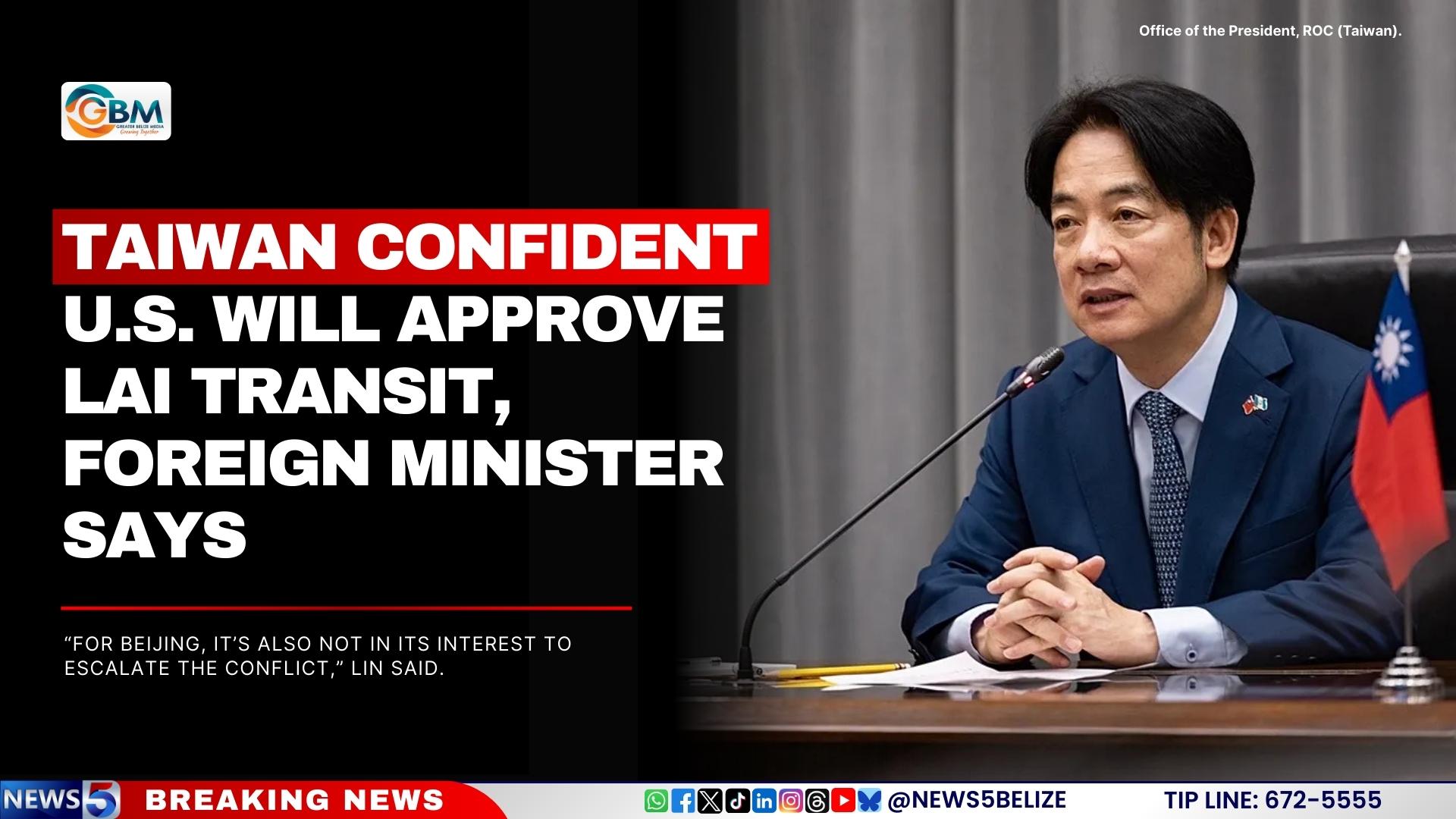
  • Taiwan Confident U.S. Will Approve Lai Transit, Foreign Minister Says

    Taiwan Confident U.S. Will Approve Lai Transit, Foreign Minister Says

    Taiwanese Foreign Minister Lin Chia-lung expressed strong confidence on Monday that the United States would authorize transit arrangements for President William Lai’s upcoming diplomatic journey to Latin America. Minister Lin indicated that ongoing communications between Taipei and Washington have progressed positively, suggesting that stopovers in U.S. territory would not present logistical or diplomatic complications.

    During an exclusive interview, Minister Lin elaborated on the anticipated travel plans, stating, “Based on our constructive dialogue with American counterparts, we maintain optimism that transit through the United States will be facilitated in the coming months, enabling our presidential delegation to proceed with visits to allied nations in Latin America.”

    Beyond bilateral U.S.-Taiwan relations, Minister Lin addressed escalating regional tensions stemming from recent remarks by Japanese Prime Minister Sanae Takaichi regarding potential military involvement in response to Chinese aggression toward Taiwan. The Foreign Minister characterized the current geopolitical climate as potentially requiring “approximately one year to stabilize” and emphasized that no party would benefit from further escalation of hostilities.

    “It would be contrary to Beijing’s strategic interests to intensify this conflict,” Lin asserted, highlighting the mutual disadvantages of heightened military posturing in the Asia-Pacific region. The comments arrive amid increased diplomatic activity and security discussions among regional powers concerning Taiwan’s status and stability.

  • Party Leader Panton Poised for Prime Minister

    Party Leader Panton Poised for Prime Minister

    Belizean politics has entered a transformative era with Tracy Panton’s groundbreaking election as the first female leader of a major political party in the nation’s history. On November 30th, at the UDP National Leadership Convention held at Bird’s Isle, Panton received unanimous endorsement from party delegates, marking a definitive turning point after five years of internal strife that had weakened the United Democratic Party’s foundation.

    In her acceptance speech as Opposition Leader, Panton struck a resonant chord of gratitude and determination, addressing thousands of supporters with a powerful message: ‘Rock bottom is not the tomb. It is, my friends, the turning point.’ Her ascent represents not merely a personal achievement but a fundamental disruption of Belize’s longstanding ‘old boys’ club’ political culture.

    The convention results demonstrated overwhelming support for Panton’s leadership slate. Attorney Sheena Pitts achieved a historic victory as the first female party chairman, decisively defeating former National Security Minister John Saldivar (326 votes to 99) and long-serving party member Roosevelt Blades. Businessman John Castillo similarly secured victory over former Labour Commissioner Ivan Williams with 300 votes to 183.

    This political milestone arrives three decades after Belize signed the Beijing Declaration and Platform for Action, which identified twelve critical areas for advancing gender equality. While progress has been made in several domains, two areas remain particularly challenging: eliminating violence against women and increasing female representation in decision-making roles.

    The current parliamentary composition underscores this gender imbalance—only three women sit among 28 elected representatives. Analysis reveals that even when women achieve electoral success, they frequently receive ministerial appointments that don’t reflect their capabilities. Historical patterns show female representatives consistently appointed as ministers of state rather than full ministers, a trend established by former PUP Prime Minister Said Musa in 1998 and continued by UDP leaders including the late Sir Manuel Esquivel and Rt. Hon. Dean Barrow.

    Panton’s leadership embodies the culmination of decades of advocacy by Belize’s Women’s Movement. As a graduate of the Women in Politics (WIP) Project’s third cohort—an initiative that trained 100 women for political participation—she represents the tangible results of systematic investment in female leadership development.

    Regionally, Panton’s achievement aligns with a growing Caribbean trend of female political leadership. From Dominica’s late Prime Minister Dame Eugenia Charles (1980-1995) to contemporary leaders like Trinidad and Tobago’s Kamla Persad-Bissessar and Barbados’s Mia Amor Mottley, women have demonstrated exceptional governance capabilities. Mottley, now serving her second term, has particularly distinguished herself through policy effectiveness and decisive leadership.

    Panton’s leadership philosophy, which she describes as ‘competent, capable and compassionate,’ offers Belize an opportunity to embrace transformative governance that values equality, incorporates diverse perspectives, and champions family-centered policies. Her historic election signals that after thirty years of gradual progress since the Beijing Declaration, Belize may finally be ready to fully embrace women’s leadership in the political sphere.