作者: admin

  • Lawes called up for ODI series, Hetmyer opts out

    Lawes called up for ODI series, Hetmyer opts out

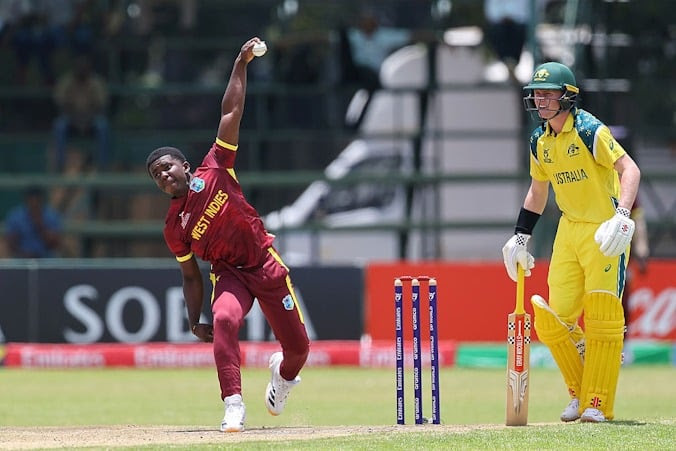
    After a standout performance at the 2024 ICC Under-19 World Cup earlier this year, emerging wrist spinner Vitel Lawes has earned his first call-up to the West Indies senior men’s One Day International squad for the upcoming five-match home series against New Zealand. The 15-man squad named by Cricket West Indies includes Lawes for the opening three fixtures of the series, which will be split across venues in Guyana and Barbados.

    Cricket West Indies announced the squad composition in an official media release, noting that the young spinner has already integrated with the senior setup, having joined the team’s pre-series preparatory camp ahead of the New Zealand clash. To support Lawes’ transition to international senior cricket, former player and current development coach Nikita Miller has been temporarily added to the team’s management group for the first three matches of the tour.

    While the addition of the highly touted young spinner brings a fresh boost to West Indies’ spin bowling options, the squad will have to navigate two notable absences for the series. All-rounder Shamar Springer has been forced to withdraw from the entire contest following the passing of his mother, and experienced all-rounder Keemo Paul has been named as his direct replacement in the full squad. Additionally, explosive top-order batter Shimron Hetmyer will not feature for the regional side, after he received a pre-approved No Objection Certificate to fulfill his playing commitments in Major League Cricket in the United States.

    For West Indies, the series against New Zealand carries significant weight as the side continues its preparations for the 2025 ICC 50-over World Cup. Currently, Daren Sammy’s side sits outside the automatic qualification positions for the tournament, after a rain-disrupted home series against Sri Lanka last month in Jamaica ended in a 1-0 series defeat for the hosts.

    Head coach Daren Sammy emphasized the high stakes of every remaining fixture ahead of the World Cup, noting: “Every series we play from here on leading up to the 50 Over World Cup, we view them as must-win scenarios. The matches against New Zealand provide the best opportunity for us to continue our improvement as an ODI unit while winning more matches for the people of the Caribbean.”

    Sammy added that Lawes’ inclusion is part of the team’s long-term strategic plan to build depth ahead of the global tournament: “The inclusion of Vitel Lawes is strategic as we continue our long-term vision of exposing players who can complement the team in conditions that best suit their skill sets.”

    The full 15-member squad for the opening three matches of the series is: Shai Hope (Captain), Ackeem Auguste, John Campbell, Keacy Carty, Roston Chase, Matthew Forde, Justin Greaves, Amir Jangoo, Alzarri Joseph, Shamar Joseph, Vitel Lawes, Gudakesh Motie, Keemo Paul, Sherfane Rutherford and Jayden Seales.
  • PM Browne Praises Global Charity’s Work During CARICOM Summit Meeting

    PM Browne Praises Global Charity’s Work During CARICOM Summit Meeting

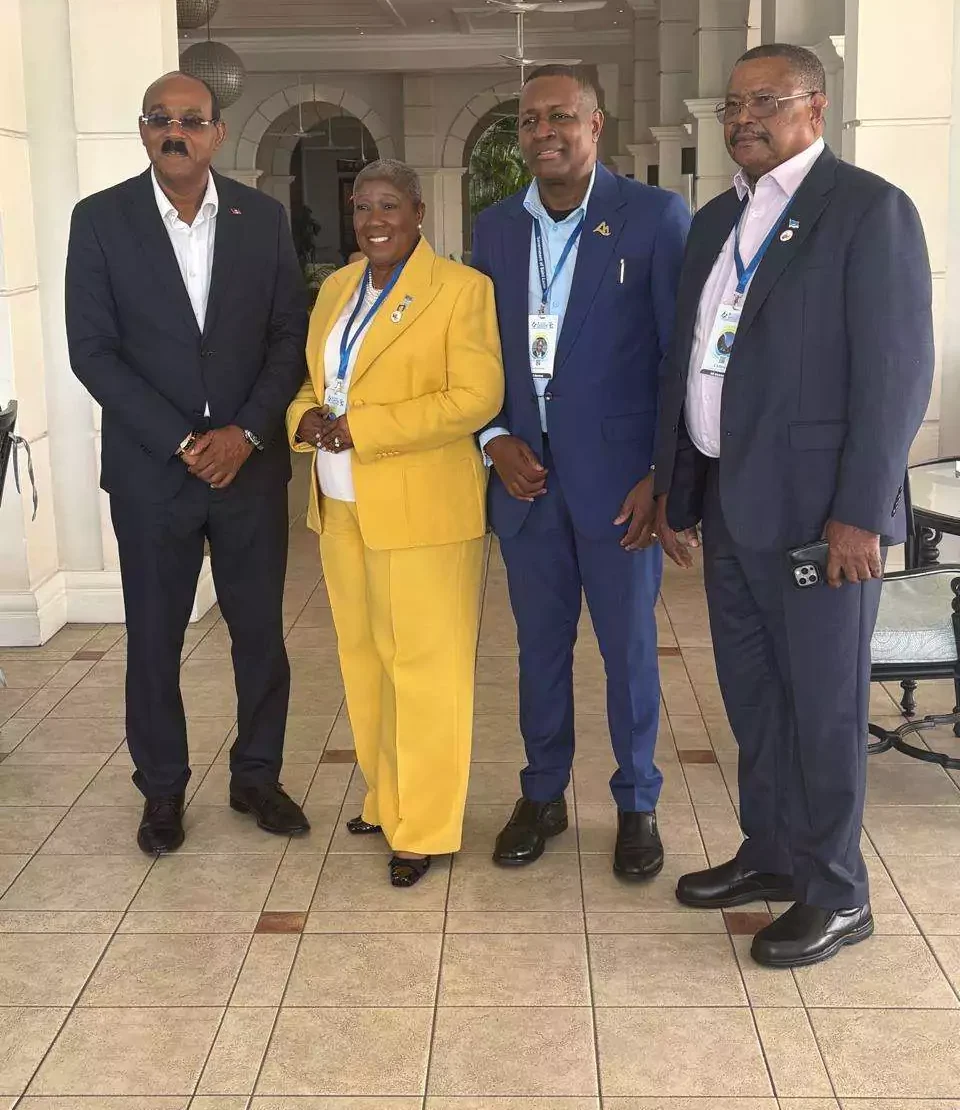
    On the margins of the annual CARICOM Heads of Government Meeting, Antigua and Barbuda Prime Minister Gaston Browne held a high-profile courtesy meeting with Dr. Eslene Richmond-Shockley, the founder, president and chief executive officer of U.S.-headquartered international humanitarian organization Caring For Others, Inc., where he offered glowing praise for the group’s impactful work across vulnerable communities.

    During the discussion, the two stakeholders focused heavily on the charity’s multi-pronged development programming, which delivers direct, life-changing support to marginalized populations through core initiatives covering food distribution, clothing donations, educational access, and affordable housing assistance. Browne specifically highlighted Dr. Richmond-Shockley’s decades-long personal commitment to humanitarian service, noting that her leadership has positioned Caring For Others, Inc. as a trusted partner for communities in need across the Caribbean and beyond.

    The prime minister extended formal congratulations to the entire organization for its measurable achievements in lifting vulnerable populations out of hardship, and shared his optimistic outlook for future collaboration, expressing clear hope that the group will continue expanding its footprint and deepening its support for underserved people across the region.

    This bilateral courtesy engagement was one of dozens of side meetings held by Browne during the landmark regional summit, which brought together heads of government from across the Caribbean bloc to negotiate and address pressing shared challenges. Key priority topics on the summit’s agenda include strengthening cross-regional integration and cooperation, shoring up fragile national food and energy security frameworks, and coordinating regional responses to shifting global geopolitical developments that impact small island developing states.

  • Maddzart’s ‘shift’ ends; Chanique dedicates crown to late mother

    Maddzart’s ‘shift’ ends; Chanique dedicates crown to late mother

    In a stunning upset at the annual Dimanche Gras competition held at Kingstown’s Independence Park on Sunday, first-time contender Chanique Rogers-Bailey claimed the coveted Calypso Monarch crown, ending Reon “Maddzart” Primus’ two-year reign and dashing his hopes of securing a historic third consecutive title.

    Performing her politically charged original piece “Lift Me Up”, Rogers-Bailey outperformed 11 fellow competitors, including four past titleholders, to secure the top spot. The outcome carried a full-circle twist: more than two decades ago, Primus gave Rogers-Bailey her first major opportunity as a young vocalist, a moment the new champion has long credited with launching her public performance career.

    Defending champion Primus, who performed his own double-edged political commentary “Shift System” (also known as “Behave Yuhself”), failed to place among the competition’s top four finishers. Veteran contender Robert “Patches” King, who has repeatedly reached the upper ranks of the competition without ever claiming the crown, took second place. His entry “Bull Wood” delivered a sharp warning to Prime Minister Godwin Friday and his ruling Unity Labour Party administration, warning that the artist would hold them accountable if they failed to deliver for the public, even despite his past support for the party.

    Former monarch Shaunelle McKenzie secured third place, overcoming an early performance setback that forced her to restart her song due to technical issues unrelated to her vocal performance. Her entry “At We Doorstep”, which touched on United States policy actions in the Caribbean, marked one of her most explicitly political works, though she largely avoided the hard-hitting social commentary common in top calypso entries this year. Another former champion, Lornette “Fya Empress” Nedd, took fourth place with “De Search”, a witty commentary on the gap between what women seek in early dating versus what they demand in long-term committed relationships.

    This year’s finals highlighted the growing dominance of female calypso artists in the competition, with three of the top four spots going to women. Only three first-time male competitors advanced to the final round: Kemmy Christopher, who returned to calypso after a 20-year absence, having begun competing in the junior division at age 8 and previously participated in soca monarch competitions while based in the United States; Utamo “Bongo Prime” Rose, a former Ragga Soca Monarch who made his calypso competition debut this year; and Kenley “Lyrical Melody” Baptiste, a first-time competitor to any national calypso event who advanced to the finals with his entry “I Am A Vincy”.

    The remaining finalists included two more former monarchs: Kenneth “Vibrating Scakes” Alleyne with “Havana”, and Grantley “Ipa” Constance with “My Party Lose”. First-time contenders Shena Collis (performing “New Chef in the Kitchen”) and Cecile “Lil Bit” King (performing “Liberation Year”) also competed for the top honor.

    Following her victory, Rogers-Bailey paid tribute to her production team, which includes her husband, musician and arranger Adrian Bailey, but dedicated her historic win to her late mother, who lost her battle with cancer one year prior. “When I entered this competition, I made one promise that if I won this title, I would dedicate it to my mom, my biggest supporter, who lost her battle with cancer last year. Today, with a full heart, I proudly keep that promise,” she wrote in a public Facebook post.

    She shared that hours before taking the stage, her sister sent a message that calmed her pre-performance nerves and reinforced her purpose. The note read, in part: “When you think of mommy today and I know you are, think about how excited she is to see you do this. Think about how proud, affirming and completely satisfied she is with this huge accomplishment. Let those thoughts EMPOWER you because if she taught us anything, it was how to be strong.” Rogers-Bailey closed her tribute with an emotional declaration: “MAMA, THIS CROWN IS FOR YOU!” She also extended gratitude to all fans and supporters who stood with her during her first run for the crown.

    In a gesture of good sportsmanship, dethroned champion Primus publicly celebrated Rogers-Bailey’s victory. Recalling their on-stage moment after the crowning, he shared that the emotional new champion told him, “Thank you for giving me my start.” Primus recounted that Rogers-Bailey had joked early in the competition that she was coming for his crown during a visit to his Prospect business, and that he had seen her interview stating she competed in honor of her mother, who had also been a friend of his.

    Primus pushed back gently on the idea that he launched her career, noting that Rogers-Bailey was already an established singer before he invited her to join his choir for a national Christmas caroling competition in 2000. He and a friend were recruiting young vocalists for their quirky team “The Quarelling Carolers”, and tapped Rogers-Bailey to lead their performance of the traditional carol “Once Upon a Christmas”. The 100+ strong choir took second place in the competition, which drew massive crowds in that era. “But while she may consider that her start… I still think her start was long before I met her,” Primus said. He closed his post with a playful challenge: “Congrats again chanique. We go fight up next year. If ah in the mood,” followed by a laughing emoji.

  • Bromfietser overlijdt na aanrijding met politieagent in Nickerie

    Bromfietser overlijdt na aanrijding met politieagent in Nickerie

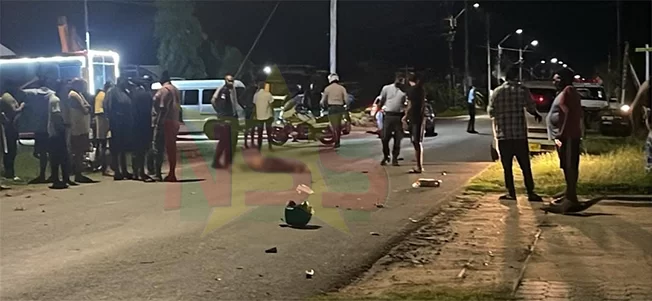
    A fatal traffic collision in Nickerie, Suriname, has left a moped operator dead following a crash with a privately-owned car driven by an off-duty police officer traveling to his shift, local law enforcement confirmed Monday. The crash unfolded Sunday evening at the busy intersection of Soekhramsingstraat and Casaveweg, according to preliminary police statements.

    Initial accounts from the involved police officer indicate the moped rider was entering Soekhramsingstraat from Casaveweg when he failed to yield the right of way to oncoming traffic. This misstep resulted in a direct head-on impact between the two vehicles, leaving the moped rider with severe, life-threatening traumatic injuries.

    First responders rushed the injured rider to Mungra Medical Centre, the primary regional healthcare facility in Nickerie, for emergency intervention. Despite aggressive medical treatment from attending clinical teams, the victim succumbed to his injuries shortly after arriving at the hospital.

    Surinamese police have confirmed that the police officer driving the passenger car holds a valid, fully updated Surinamese driver’s license, with no outstanding restrictions on his operating privileges. Law enforcement officials have launched a full formal investigation to map the full sequence of events leading up to the crash, confirm fault, and rule out any contributing factors such as speeding, impaired driving, or hazardous road conditions that have not yet been identified. No further details on the identity of either party or the progress of the investigation have been released as of Monday morning.

  • Healthy eating mural unveiled at Soufriere Primary School

    Healthy eating mural unveiled at Soufriere Primary School

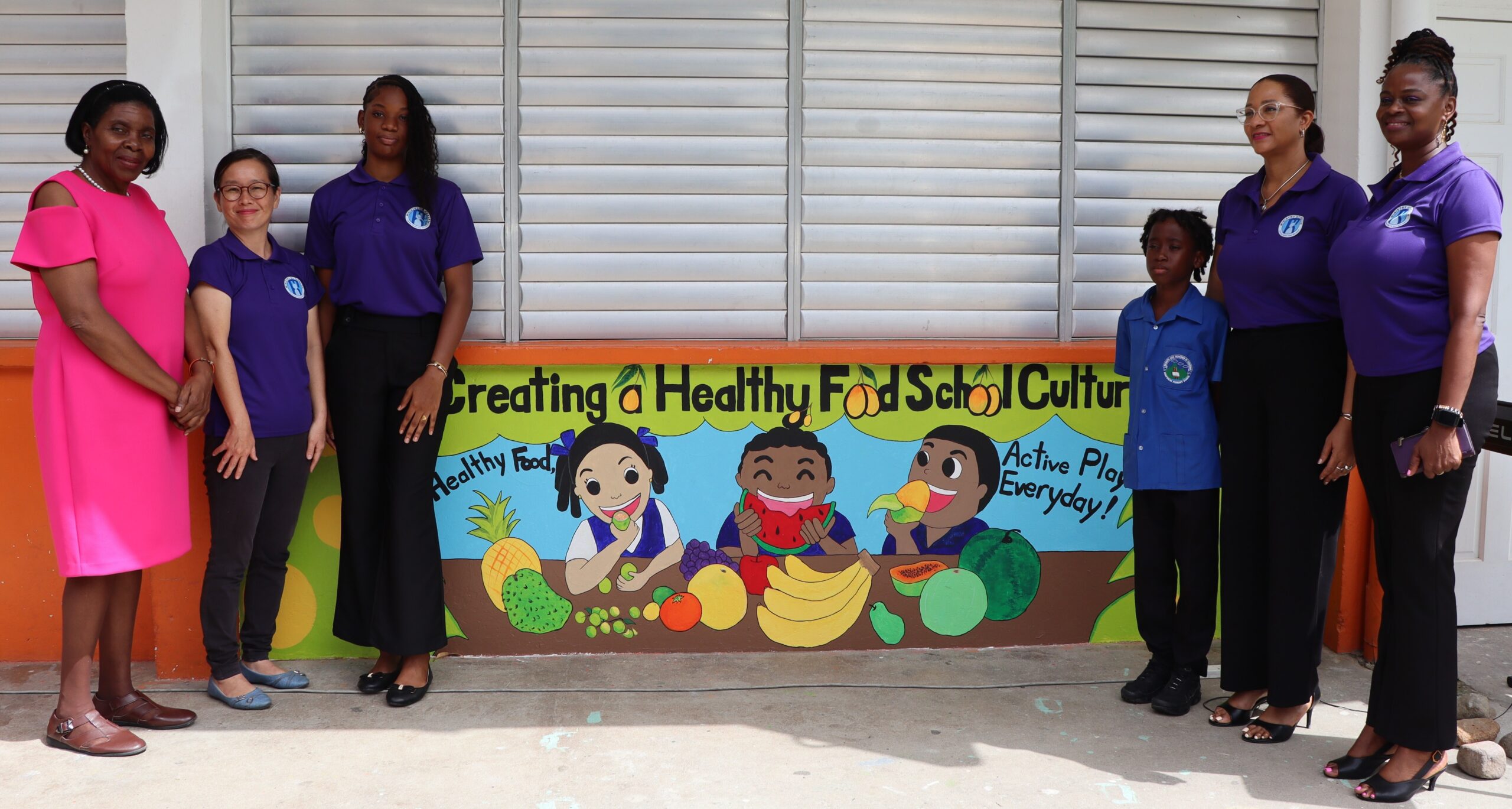
    In a collaborative effort to embed lifelong healthy habits among young learners, a custom-designed healthy eating mural has been formally unveiled at Soufriere Primary School in Saint Lucia, capping off the island nation’s annual Nutrition Awareness Month. Spearheaded by the Ministry of Health, Wellness and Nutrition, the project represents a public commitment to equipping children with the resources, knowledge, and environmental support to make informed, nutritious food choices from an early age.

    Lisa Hunt, the country’s Chief Nutritionist, explained that the permanent wall artwork is intended to act as a constant, accessible teacher for everyone who enters the school grounds. “Every time a child walks past this mural, we want it to spark a small reminder to prioritize fresh produce, hydration, regular movement, and the high-quality local foods grown right here in Saint Lucia,” Hunt shared during the unveiling. “It’s not just for students, either. We hope it encourages teachers, visiting parents, and the entire surrounding community to re-examine their own daily habits and commit to healthier lifestyles together.”

    Cecilia Clovis-Haynes, principal of Soufriere Primary, called the initiative perfectly timed and deeply aligned with the school’s existing work to nurture student well-being. She emphasized that the mural is far more than decorative artwork: it is a functional pedagogical tool that reinforces classroom lessons about nutrition and growth. “What children eat directly impacts how they grow, how well they focus in class, and their ability to chase their future goals,” Clovis-Haynes noted. “This piece ties directly into everything we’ve been teaching our students about health, so it’s an incredible reinforcement of our work here.”

    Joel Charles-Charlemagne, Education Officer for District 8, echoed this perspective, noting that consistent visual exposure is one of the most effective ways to embed long-term healthy habits. “Whether students are walking to first period, gathering for morning assembly, or eating lunch in the schoolyard, they’ll see these bright, engaging images of colorful local produce and active kids playing,” Charles-Charlemagne explained. “This mural turns our entire school environment into a living learning space that actively pushes back against unhealthy routines and choices.”

    Emma Hippolyte, Parliamentary Representative for the Soufriere/Fond St Jacques constituency, praised the project while stressing that meaningful change to children’s eating patterns requires cross-sector collaboration beyond a single art installation. Hippolyte noted that the partnership between the Ministry of Health and Ministry of Education behind the mural is a strong foundational step, but long-term progress requires engagement across all parts of a child’s life. “We can teach kids about healthy eating in school, but we also need to work with parents to rethink what goes into school lunch kits, and with school staff to ensure nutritious options are the default in school canteens,” she explained. “Change has to come from multiple angles to stick.”

    The mural was created by Yukari Charles, a visual arts teacher at Soufriere Comprehensive Secondary School, with support from former student Jackie Lawrence, bringing together creative talent from across the local education community to advance the public health goal.

  • Rotary Club of Grenada Board of Directors for 2026–2027 Rotary Year

    Rotary Club of Grenada Board of Directors for 2026–2027 Rotary Year

    The Rotary Club of Grenada, a 56-year-old volunteer service organization embedded in Caribbean community life, has marked a formal transition of leadership with the installation of its new Board of Directors for the 2026–2027 Rotary year. At a recent handover ceremony, Althea McPhail was sworn in as the club’s new president, stepping into the role after a standout year of progress led by outgoing president Julia Lawrence.

    Lawrence’s 2025–2026 tenure will be remembered as a period of significant growth, expanded community impact, and institutional strengthening for the Grenadian chapter. Guided by Rotary’s core “Service Above Self” ethos and anchored to four key pillars of excellence—membership expansion, support for The Rotary Foundation, enhanced public outreach, and impact-driven community service—the club delivered one of its most ambitious project portfolios in history. Over the 12-month term, the organization completed 21 standalone initiatives spanning public health, education, youth empowerment, and environmental stewardship, while also deepening connections among members and boosting overall participation in club activities.

    Among the most notable projects from the past year were ongoing community programs to reduce childhood obesity across Grenada, and a major revitalization project to upgrade the green space at Quarantine Recreational Park. To raise public awareness of Rotary’s local work, the club also expanded its media footprint through regular television and radio segments, boosted engagement across social media platforms, and hosted community-facing events including the popular Rhythm & Spice Brunch Experience. These efforts did not go unrecognized: at the district level, the Rotary Club of Grenada took home top honors for its childhood obesity prevention initiative, its annual Learning Challenge, its excellence in public image coordination, and overall club excellence, capping off a year of measurable achievement.

    In reflecting on the organization’s progress, Lawrence emphasized that the year’s successes were a collective effort. “These achievements were possible only through the dedication of our members, the support of our partners, and the trust of our community,” she noted, crediting both rotating club members and longstanding community and corporate partners for making the ambitious project slate possible. By the end of her term, Lawrence highlighted that the club had emerged as a stronger, more impactful and connected organization than it was 12 months prior.

    Now, McPhail takes the reins, building on the solid foundation laid by Lawrence and past leadership teams to advance new and ongoing service initiatives tailored to the evolving needs of Grenada’s local communities. For the 2026–2027 term, McPhail has aligned her priorities with the District Governor’s core focus areas: expanding childhood obesity prevention work, rolling out anti-bullying programs for young people, and advancing local environmental preservation projects. The club will also continue to sustain its longstanding legacy projects, while working to strengthen existing partnerships that allow it to expand its reach and deliver measurable, sustainable change for Grenadian communities.

    In her inaugural address at the handover ceremony, McPhail extended sincere gratitude to outgoing leaders, the departing board of directors, and specifically Lawrence for her transformative service over the past year. She also welcomed the new board members, thanked her family and friends for their ongoing support, and challenged all club members to embrace the new term with intentionality.

    Joining McPhail on the 2026–2027 board of directors are: John Williams, serving as vice president; Elida Batista-Herrera as president-elect; Julia Lawrence as immediate past president; Gabrielle Walcott-Bedeau as secretary; Larry Lawrence as treasurer; Anica Roch leading club administration; Marielle Alexander heading membership development; Royston Cumberbatch overseeing service projects; Alphonsus Daniel leading work for The Rotary Foundation; Vondi Cyrus managing public image; Christopher Gilbert coordinating youth services; Otis Wade serving as learning facilitator; and Roy O’neale as sergeant-at-arms.

    “Let us serve boldly, lead with compassion, and continue to strengthen the 56-year legacy of this club,” McPhail told attendees. “Together, we will Create Lasting Impact as People of Action.”

    As part of the global Rotary movement that unites community leaders and professionals around volunteer service, the Rotary Club of Grenada has supported local communities for more than five decades. Today, it enters its new Rotary year reaffirming its longstanding commitment to delivering meaningful service, deepening cross-sector collaboration, and upholding its tradition of creating lasting change across Grenada.

  • It’s not just about the money: Inside CARICOM’s ten-point plan for reparatory justice

    It’s not just about the money: Inside CARICOM’s ten-point plan for reparatory justice

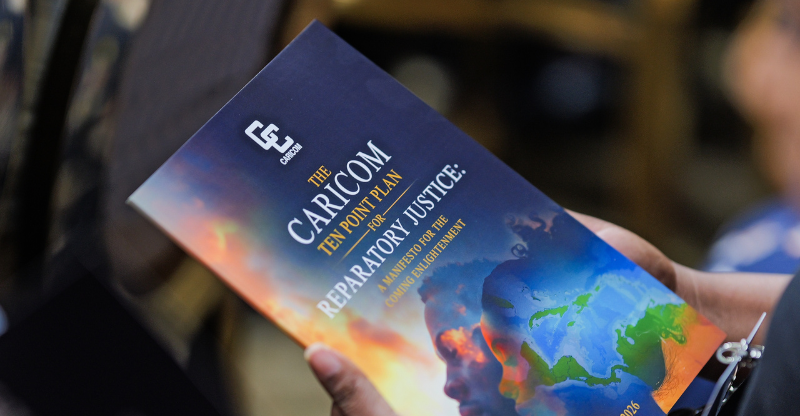
    Against the backdrop of the 51st Regular Meeting of the CARICOM Heads of Government hosted in Saint Lucia, regional leaders and reparations advocates gathered this week to advance a long-running fight for redress for the harms of transatlantic chattel slavery and centuries of colonial rule. At a dedicated pre-conference workshop focused on advancing socio-economic reparatory justice, sustainable development, and historical truth-telling, attendees centered discussion on the newly unveiled *Manifesto for the Coming Enlightenment* and CARICOM’s updated 10-point action plan for reparatory justice.

    During an opening panel discussion, former Saint Lucian Ambassador to CARICOM and the OECS Dr. June Soomer addressed one of the most persistent questions asked of reparations advocates: when, and if, the region will ever secure financial compensation for historical harms. In a response that shaped the entire conversation that followed, Dr. Soomer reframed the core purpose of the movement beyond direct financial payments. “It’s not about the money. Yes, the money is important, but it is about the return of our dignity, of our personhood, of who we are as a people,” she told the assembled delegates.

    Professor Sir Hilary Beckles, chair of the CARICOM Reparations Commission, officially presented the landmark manifesto to attendees, framing the moment as a critical turning point for the global reparations movement. After decades of building momentum and laying ideological groundwork, Beckles argued that the movement has now entered a phase where the priority must shift from raising awareness to delivering tangible reparatory outcomes. “This is our time, our duty, our responsibility to honour the legacy of all our ancestors who demanded justice,” he said, urging Caribbean nations to maintain unified pressure on former European colonial powers.

    The manifesto and accompanying 10-point plan lay out a holistic, multi-dimensional approach to reparatory justice that goes far beyond the financial compensation that dominates most public discussion of the issue. Each pillar of the plan is designed to address distinct, intergenerational harms rooted in slavery and colonial exploitation:

    1. **A Formal Apology**: The plan rejects vague statements of regret from former colonial powers, demanding explicit, formal public apologies that acknowledge full legal and moral responsibility for the crimes of enslavement and colonial subjugation.
    2. **Repatriation**: It codifies support for voluntary repatriation programs for descendants of enslaved Africans who wish to resettle in their ancestral homelands, including assistance with citizenship processing, housing, and cultural reintegration.
    3. **Indigenous Peoples Development Programme**: Recognizing that Indigenous Caribbean communities continue to suffer the lingering impacts of genocide, forced displacement, and mass land dispossession, the plan calls for targeted, community-led investment to improve Indigenous social and economic outcomes.
    4. **Cultural Institutions**: The commission advocates for increased investment in regional museums, research centers, and historical preservation projects that center Caribbean narratives of slavery and colonialism, arguing that truthful public storytelling is a foundational step in collective healing.
    5. **Public Health**: The plan draws a direct line between the structural inequities of slavery and the disproportionately high rates of chronic illnesses such as diabetes and hypertension among modern Caribbean populations, calling on former colonial powers to fund regional public health infrastructure, research, and care initiatives.
    6. **Illiteracy Eradication**: Citing the intentional underinvestment in education by colonial regimes that left many Caribbean societies with enduring high illiteracy rates, the plan calls for targeted support from former colonial powers to expand literacy programs and close longstanding educational gaps.
    7. **African Knowledge Programme**: To reverse centuries of forced erasure of African cultural identity, the plan proposes cross-continental educational exchanges, cultural partnerships, and people-to-people programs to help Caribbean descendants of enslaved Africans reconnect with their ancestral heritage.
    8. **Psychological Rehabilitation**: Acknowledging the intergenerational trauma inflicted by chattel slavery and colonial dehumanization, the plan calls for expanded community programming focused on emotional healing, collective identity-building, and public education about historical trauma.
    9. **Technology Transfer**: The plan argues that intentional colonial policies blocked the development of independent Caribbean scientific and industrial capacity, creating long-term economic dependency. To redress this, it calls for expanded access to modern technology, innovation support, and technical expertise from former colonial powers to drive inclusive regional growth.
    10. **Debt Cancellation and Financial Compensation**: The final pillar addresses the economic legacy of colonialism, calling for full cancellation of Caribbean sovereign debt held by former colonial powers, alongside targeted financial reparations to redress centuries of extracted wealth.

    As the 51st CARICOM Heads of Government meeting progresses, the new framework makes clear that the regional reparations movement is pursuing far more than a one-time financial settlement. From closing educational gaps to preserving cultural heritage, supporting Indigenous self-determination to building modern economic capacity, the plan frames reparatory justice as a holistic project that restores the dignity, self-determination, and opportunity stripped from generations of Caribbean people — a goal that money alone cannot achieve.

  • SG reappointment dispute headed to CCJ

    SG reappointment dispute headed to CCJ

    A long-running regional disagreement over the reappointment of the Caribbean Community (CARICOM) Secretary-General is now headed for binding interpretive guidance from the Caribbean Court of Justice (CCJ), after regional leaders agreed to pursue the court’s advisory opinion to resolve the deadlock triggered by Trinidad and Tobago’s formal objection.

    The consensus decision was reached during a special retreat of CARICOM Heads of Government, held on July 6 on the sidelines of the bloc’s 51st Regular Meeting of the Conference of Heads of Government in Castries, St. Lucia.

    Per an official communiqué released by the 15-nation regional integration body, the government of Trinidad and Tobago has held firm to its opposition to the procedural framework used to advance the Secretary-General’s reappointment, and formally called for the CCJ to weigh in on the matter to clarify relevant treaty provisions. In response, CARICOM leaders voted to launch official proceedings under Article 212 of the Revised Treaty of Chaguaramas, the foundational legal document governing the regional bloc, to request the court’s non-binding but authoritative advisory opinion.

    Regional leaders emphasized that treaty interpretation is a core, founding mandate of the CCJ, making the court the appropriate venue to resolve this procedural dispute. Until the CCJ issues its advisory opinion and CARICOM member states complete their review of the ruling, the current interim status of the Secretary-General’s reappointment will remain unchanged, allowing the bloc’s day-to-day operations to continue without interruption.

    CARICOM leaders framed the decision to refer the matter to the CCJ as a deliberate, amicable pathway to resolving intra-regional disagreement. The approach prioritizes adherence to the rule of law within the bloc, rather than allowing the dispute to escalate and disrupt critical regional work.

    In addition to addressing the reappointment dispute, Heads of Government reaffirmed their commitment to a broader ongoing review of CARICOM’s governance structure, a process first authorized during the previous annual conference held in St. Kitts and Nevis. This review forms a central pillar of wider efforts to strengthen regional institutions, boost administrative efficiency, and improve the delivery of benefits to Caribbean populations across member states.

    Leaders explicitly stressed that turning to the CCJ for guidance does not indicate a lack of trust in the integrity of any member state or any individual involved in the reappointment process. Instead, they argued, the move underscores CARICOM’s long-standing commitment to principles of good governance and iterative institutional improvement. The bloc’s leaders also closed by reaffirming their shared commitment to CARICOM’s core mission and goals, pledging to continue collaborative action to advance regional interests even amid the multiple economic, social, and geopolitical challenges facing small island developing states across the Caribbean.

  • 2 Grenadians to lead Lions and Leos across English and Dutch-speaking Caribbean

    2 Grenadians to lead Lions and Leos across English and Dutch-speaking Caribbean

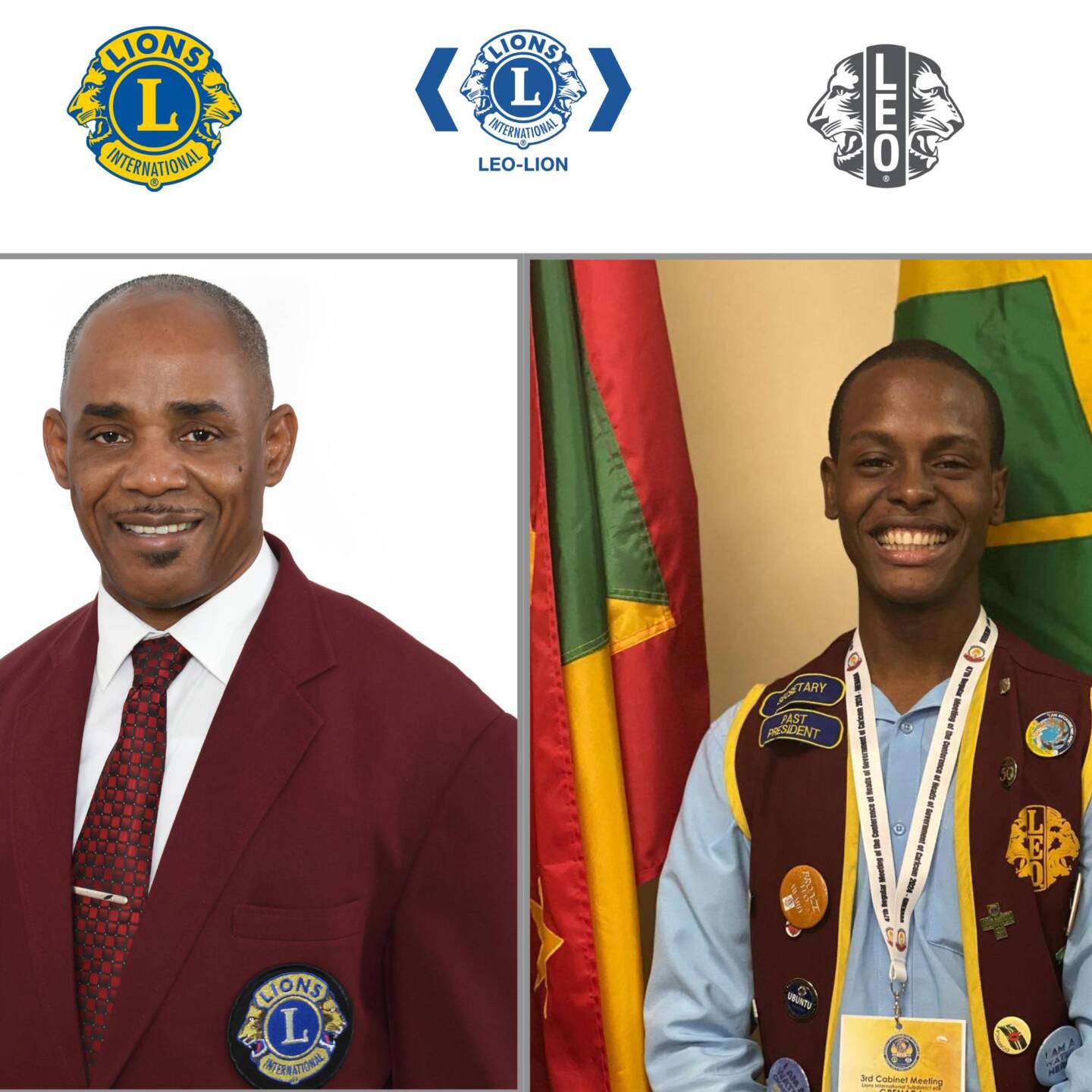
    On July 6, 2026, a landmark moment in volunteer service leadership unfolded across the Caribbean, as two native Grenadians officially stepped into the highest district-level leadership positions for Lions Clubs International District 60B — the regional body that oversees the organization’s operations in English- and Dutch-speaking Caribbean communities.

    Lion Hyacinth Jeremiah, MJF, has been elected to serve as District Governor for the 2026–2027 Lionistic year, while young leader Leo Raheem Smith will hold the post of Leo District President for the same term. This dual appointment marks the first time in the District 60B’s century-spanning history that two Grenadians will simultaneously lead both the core Lions movement and its youth-focused Leo program at the district level, an achievement widely celebrated as a defining milestone for the small Caribbean nation of Grenada.

    Both incoming leaders bring decades of combined experience, deep institutional knowledge, and unwavering dedication to community service to their new roles. Over their years of involvement with the organization, both have held a wide range of leadership positions at the club and district levels, consistently demonstrating their commitment to expanding community impact, nurturing emerging leaders, and growing the organization’s regional membership.

    A longstanding member of the Lions Club of St George’s, Lion Hyacinth Jeremiah has compiled an exceptional record of service to his local club, having served multiple terms as club president, in addition to stints as club treasurer and vice president. At the district level, he has held a string of key senior leadership roles, including Zone Chairperson, Region Chairperson, Third Vice District Governor, and Second Vice District Governor. His ascent to District Governor places him among the most distinguished leaders in the district’s history; he is only the third Grenadian ever to hold this prestigious post, and his election comes nearly 40 years after the last Grenadian, Anthony Joseph, completed his term as District Governor.

    For his part, Leo Raheem Smith, a member of the Leo Club of St George’s, has built an equally impressive track record of service and leadership within the youth-focused Leo movement. He has served two terms as his local club’s president, contributed extensively to multiple district-wide committees, and held regional leadership roles including Region Chairperson, most recently serving as Leo District Vice President. Upon taking office, he became only the second Grenadian to hold the title of Leo District President.

    Together, the two leaders will steer the work of thousands of Lions and Leos across the English- and Dutch-speaking Caribbean. Their administration has outlined five core priorities: strengthening local club operations, expanding community service initiatives, nurturing the next generation of volunteer leaders, building cross-sector advocacy and partnerships, and advancing Mission 1.5 — Lions Clubs International’s global membership growth initiative designed to expand the global impact of Lions and Leos by increasing membership numbers and opening up new service opportunities for participants.

    “As servant leaders, we recognise that leadership is not about position, but about service. We are committed to empowering our members, strengthening our clubs, and ensuring that Lions and Leos continue to make a meaningful difference in communities across the Caribbean,” the pair shared in a joint statement following their inauguration.

    As they prepare to kick off this historic year of service, both leaders have pledged to build on the long, proud legacy of the Lions and Leo movements, while inspiring a new generation of community changemakers across the Caribbean region.

    ### Background on Lions Clubs International and the Leo Club Programme
    Founded in 1917, Lions Clubs International stands as the world’s largest service club organization, boasting a global network of more than 1.4 million members across over 50,000 local clubs, operating in more than 200 countries and geographic regions. Lions members organize targeted service projects to address some of the world’s most pressing challenges, focusing on key issue areas including vision care, food insecurity, environmental protection, childhood cancer support, diabetes awareness and management, disaster preparedness and relief, and broad humanitarian outreach. The organization is unified by its iconic motto: “We Serve.”

    The Leo Club Programme is the official youth leadership and service initiative of Lions Clubs International, with the acronym “Leo” standing for Leadership, Experience, and Opportunity. Through local community service projects, leadership training programs, and peer fellowship, Leo clubs empower young people to grow into responsible, engaged leaders in their communities and across the globe. Today, the program counts more than 200,000 Leos in over 7,700 clubs across more than 150 countries and geographic regions.

  • PM Browne Joins CARICOM Leaders for Talks on Secretary General Dispute

    PM Browne Joins CARICOM Leaders for Talks on Secretary General Dispute

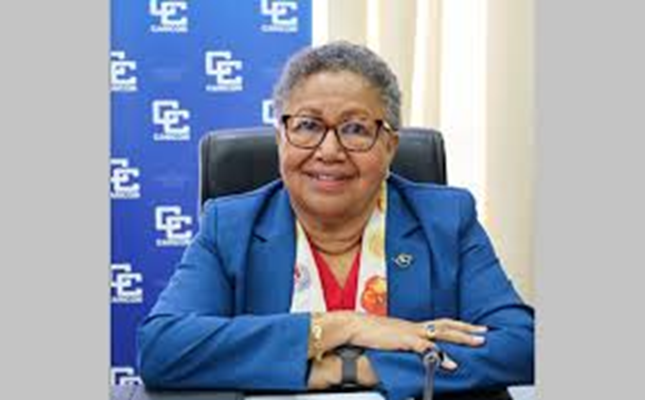
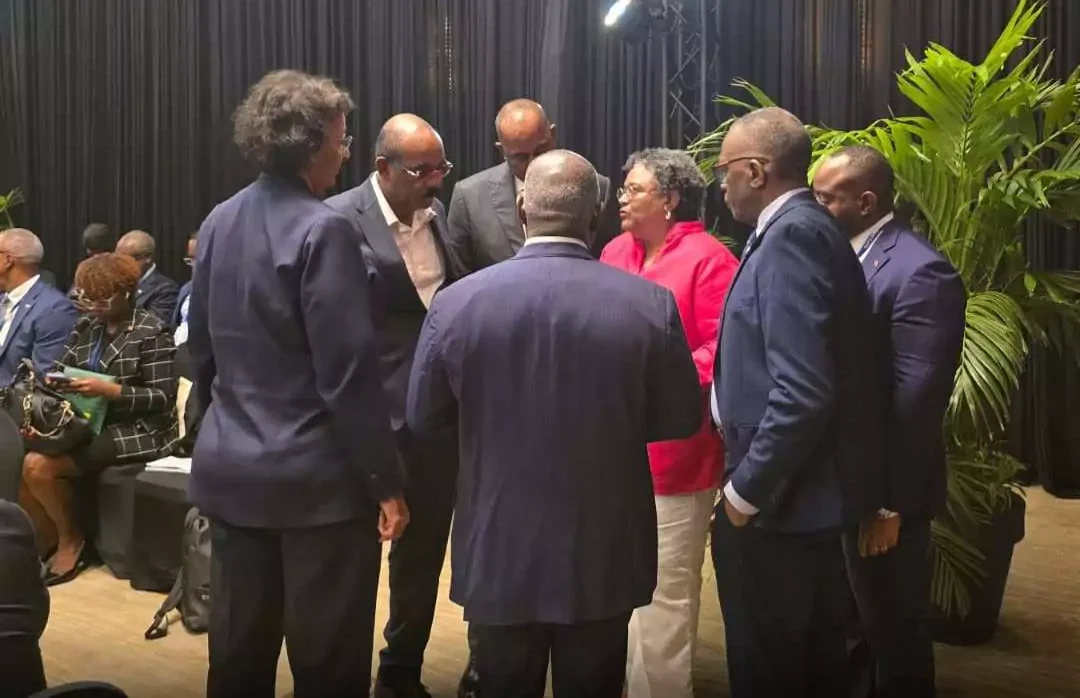
    The annual regional summit of the Caribbean Community (CARICOM) has kicked off with a contentious leadership issue at the top of its agenda, drawing heads of government from across the bloc. The core point of contention surrounds the reappointment of incumbent Secretary General Dr. Carla Barnett, with two major member states – Trinidad and Tobago and Jamaica – raising formal objections over the procedural process used to extend Dr. Barnett’s term.

    The disagreement has sparked vigorous debate among attending heads of government, forcing leaders to pivot toward a third-party clarification to resolve the impasse. After closed-door discussions, the bloc reached a consensus: it will initiate a formal request for an advisory opinion from the Caribbean Court of Justice (CCJ), the region’s highest judicial body, to clear up ambiguities in CARICOM’s governing regulations related to the appointment and extension of the Secretary General’s tenure. As the legal process moves forward, Dr. Barnett will continue to carry out her duties in office, ensuring the continuity of the community’s administrative work.

    Beyond the leadership dispute, the summit is tackling a broad slate of pressing regional concerns that impact all 15 member states. Attendees are deep in discussions over shifting global geopolitical dynamics, which have sent ripple effects through the Caribbean’s small open economies. Other key priorities include strengthening regional energy security, shoring up fragile food supply chains, and addressing a host of ongoing socioeconomic challenges that have hampered post-pandemic recovery across the bloc.

    Antigua and Barbuda Prime Minister Gaston Browne is among the leaders participating in the summit, joined by a four-person delegation representing the island nation. The delegation includes Dr. Clarence Henry, Antigua and Barbuda’s permanent ambassador to CARICOM, Kurt Williams, a senior foreign service officer, and Juray Roberts, a project development officer.

    As the summit draws to a close in the coming days, attendees are expected to finalize binding decisions on a range of core regional priorities. These outcomes will guide CARICOM’s collective work over the next year as the bloc coordinates to tackle cross-cutting economic, political, and public security challenges that no single member state can address alone.