作者: admin

  • Viral video shows woman forcing Hispanic passenger out of NYC train seat

    Viral video shows woman forcing Hispanic passenger out of NYC train seat

    A disturbing incident of racial aggression unfolded aboard a New York City subway train, captured in a viral video that has sparked widespread condemnation across social media platforms. The footage depicts an African American woman launching an unprovoked verbal and physical assault against a Hispanic passenger moments after she occupied a neighboring seat.

    The aggressor initiated hostilities by demanding the woman vacate the seat, proclaiming she ‘didn’t deserve’ to sit nearby. The situation rapidly escalated as the perpetrator began shoving the victim while shouting explicitly xenophobic rhetoric including, ‘This is the U.S., not your country.’ Despite clear expressions of disapproval from fellow commuters, the assailant remained defiant, stating she ‘didn’t care’ about their objections as she continued her tirade.

    The video evidence reveals a pattern of discriminatory behavior rooted in claims of being ‘offended’ by the passenger’s mere presence. Transportation authorities have confirmed the incident is under investigation as potential hate crime, highlighting ongoing challenges regarding passenger safety and racial tensions within public transit systems. Civil rights organizations have denounced the attack as representative of broader issues concerning immigration-related hostility and public conduct in multicultural urban environments.

  • Alcohol sales hours expanded nationwide for the holidays

    Alcohol sales hours expanded nationwide for the holidays

    Santo Domingo – In a strategic move to regulate festive celebrations, the Dominican Ministry of the Interior and Police has enacted Resolution MIP-RR-0009-2025, temporarily extending alcohol sales hours throughout the Christmas and New Year period. The special provisions will remain effective from December 10, 2025, through January 5, 2026, specifically designed to manage nightlife activities during the peak holiday season.

    Under the revised operational framework, establishments including nightclubs, bars, restaurants, private clubs, event venues, piano bars, and casinos may continue alcohol service until 3:00 AM from Sundays through Thursdays. The extension expands until 4:00 AM on Fridays and Saturdays, with complete removal of time restrictions on December 25 (Christmas Day) and January 1 (New Year’s Day).

    Minister Faride Raful provided crucial clarification that the extended hours exclusively apply to entertainment venues, while grocery stores, supermarkets, cafés, car washes, amusement parks, water parks, and dedicated liquor stores must maintain their standard closing time of 12:00 midnight as stipulated in Resolution ESP/001-2022. Enforcement will be rigorously implemented by the National Directorate for the Control of Alcohol Sales (COBA) with operational support from the National Police. Establishments found violating the regulations face severe penalties including immediate closure and potential license revocation.

    Complementing the alcohol sales adjustments, the government has deployed an extensive security apparatus comprising over 27,000 police and military personnel nationwide. Minister Raful emphasized the shared responsibility approach, urging citizens to exercise moderation and responsible behavior during celebrations. Additionally, the Ministry reminded the public that the firearms license renewal process remains available until December 31 under the current grace period.

  • INTRANT restricts cargo traffic for Christmas and New Year

    INTRANT restricts cargo traffic for Christmas and New Year

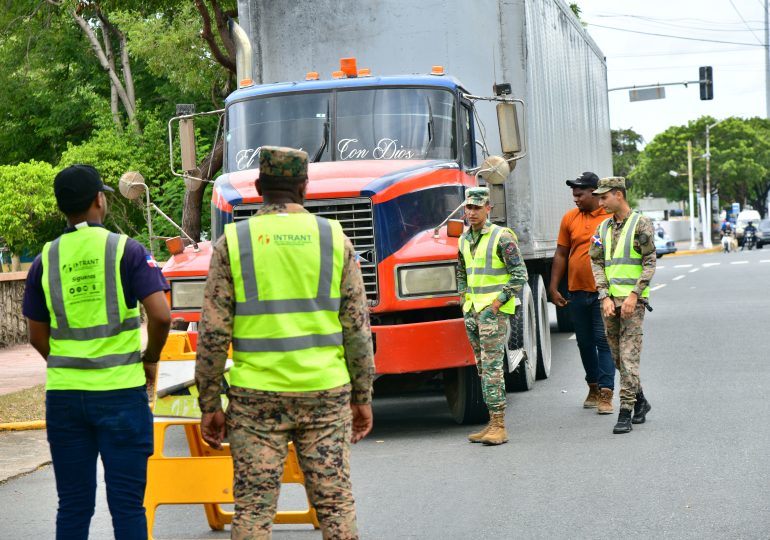
    Santo Domingo – The National Institute of Traffic and Land Transportation (INTRANT) has unveiled stringent temporary measures regulating freight vehicle operations during the upcoming Christmas and New Year festivities. These safety-oriented restrictions, formalized under Resolution 011-2025, will be enforced during two distinct periods: December 23-26 and December 30 through January 2. The regulations comprehensively suspend all existing cargo permits, including those typically valid for Restricted Access Zones (ZAR).

    Authorities will issue special conditional permits exclusively for vehicles transporting essential commodities. The approved categories include fuel distribution, water supply, food products, pharmaceutical supplies, toys, and hospital waste management. Eligibility for these permits mandates that all companies must be formally registered as Freight Transport Operators through INTRANT’s official digital platform. Notably, double-trailer configurations and any oversized or overweight loads will be categorically denied permits due to elevated safety concerns.

    The regulatory framework provides explicit exemptions for critical service vehicles including emergency medical transport (ambulances), public utility maintenance trucks, water tankers, and official roadside assistance units. Violations of these temporary restrictions will incur substantial penalties, with fines equivalent to one minimum wage within the Dominican public sector.

    INTRANT has implemented a streamlined digital process for permit applications and payments, with authorized permits featuring downloadable QR codes for verification purposes. Director Milton Morrison emphasized that these measures aim to significantly reduce roadway risks and ensure family protection during high-traffic holiday periods. The agency concurrently reinforced that cargo vehicles must continuously adhere to standard traffic regulations, including prescribed speed limits, appropriate load securing protocols, containment of loose materials, and proper lane usage.

  • Dominican medical societies reaffirm newborn Hepatitis B vaccine

    Dominican medical societies reaffirm newborn Hepatitis B vaccine

    In a decisive move that challenges recent U.S. health recommendations, the Dominican Society of Infectology (SDI) and Dominican Society of Pediatrics (SDP) have jointly affirmed their nation’s commitment to universal hepatitis B vaccination within the first 24 hours of life. This position directly contradicts the updated guidance from the U.S. Advisory Committee on Immunization Practices (ACIP), which now suggests delaying the vaccine until two months of age for infants born to hepatitis B-negative mothers.

    The medical societies issued a comprehensive statement explaining their rationale, emphasizing that the American recommendation conflicts with both the best available scientific evidence and established guidelines from leading global health authorities including the World Health Organization (WHO) and Pan American Health Organization (PAHO). They underscored that the birth-dose protocol represents the most effective medical strategy for preventing perinatal transmission of hepatitis B and subsequent serious health complications including chronic infection, cirrhosis, and hepatocellular carcinoma.

    Healthcare institutions across the Dominican Republic—including maternity wards, neonatology units, pediatric services, and primary care centers—have been instructed to maintain strict adherence to the national Expanded Program on Immunization. This protocol mandates immediate administration of both hepatitis B and BCG vaccines following delivery. The societies highlighted that universal newborn vaccination serves as a critical safety mechanism in scenarios involving undetected maternal infection, occult hepatitis B, inadequate prenatal care, or testing inaccuracies.

    Citing robust international evidence, the statement demonstrated how countries maintaining universal newborn vaccination have achieved substantial reductions in childhood hepatitis B infections and associated liver cancer rates. Both organizations reaffirmed their dedication to eliminating hepatitis B as a public health concern and called upon healthcare authorities, medical professionals, and families to collaboratively ensure every newborn receives this vital immunization within the crucial first hours of life.

  • Hoe recht op srefidenki door Srefidensi was gewaarborgd

    Hoe recht op srefidenki door Srefidensi was gewaarborgd

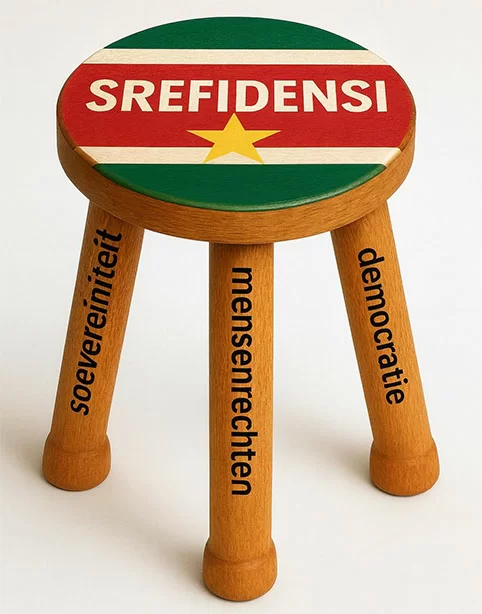
    Fifty years ago, Suriname embraced ‘Srefidensi’ – the poetic creation of writer Trefossa – as the name for its hard-won independence. This concept represented not just constitutional and international sovereignty, but the rebirth of a democratic nation founded on the rule of law. The unanimously adopted constitution guaranteed elections, independent judiciary, separation of powers, and fundamental rights, establishing what became known as the three pillars of Srefidensi: sovereignty, democratic governance, and human rights.

    This foundation was violently shattered on February 25, 1980, when a bloody military coup severely violated the constitution. Two of the three pillars were systematically dismantled: democratic governance and human rights. The young republic lost its essential foundation for peaceful coexistence, replacing it with the law of the strongest. The introduction of murder and torture as political instruments led to grave human rights violations, crimes against humanity, and civil war that would claim countless Surinamese victims.

    Statistical analysis reveals the devastating scale: when comparing death tolls from state violence under Suriname’s military dictatorships (1980-1987/1990-1991) with Brazil’s military regime (1964-1985) – adjusted for population size – Suriname’s rate was 230 times higher, achieved in a much shorter timeframe.

    The concept of ‘srefidenki’ – discovered in Trefossa’s pre-independence notebooks and described by music educator Mavis Noordwijk as representing emancipatory, autonomous thinking – flourished despite oppression. For 50 years, courageous critical thinking persisted across journalism, law, labor unions, education, science, politics, music, literature, and arts. This intellectual resistance addressed colonialism, patronage systems, dictatorship, inequality, and discrimination.

    Recent attempts by political leadership to co-opt the term ‘srefidenki’ as representing a new phase of development constitute what analysts describe as ‘vocabulary of historical denial.’ The state’s appropriation of this freedom-concept has raised anti-authoritarian suspicions, as srefidenki fundamentally represents critical citizenship rather than government-endorsed ideology.

    The dictatorship’s brutality peaked in December 1982 when military forces torched two radio stations, the largest union center, and a newspaper printing press while preventing firefighting efforts. Independent media faced publication bans, and all permitted outlets operated under strict censorship. The destruction of platforms for free thought failed to satisfy totalitarian hunger for power. Fifteen prominent advocates of Surinamese democracy were tortured and executed. By May 1983, free elections were officially abolished from government policy, with the Netherlands declared ‘Enemy Number One.’

    Today, Surinamese citizens and international supporters gather at memorials in Amsterdam and Fort Zeelandia’s National Monument Bastion Veere to honor those who made the ultimate sacrifice for democracy and human rights, including the right to srefidenki. A landmark 2023 appellate judgment definitively rejected long-standing false narratives that victims were ‘shot while fleeing’ or involved in ‘coup and invasion’ plots.

    As Suriname reflects on 50 years of independence, building a prosperous and just future requires acknowledging the creation, collapse, and restoration of Srefidensi’s three pillars. Only through this reckoning can the nation consolidate and strengthen the moral foundation necessary for genuine democratic existence.


  • Jamaica to benefit from Hurricane Melissa Recovery Funding

    Jamaica to benefit from Hurricane Melissa Recovery Funding

    WASHINGTON, DC — A monumental international recovery effort is taking shape for Jamaica following the catastrophic impact of Hurricane Melissa, with global financial institutions mobilizing a support package approaching US$6 billion. This collective response marks one of the largest disaster relief initiatives in Caribbean history.

    The International Monetary Fund has taken a leading role in the financial response, confirming US$415 million in emergency financing through its Rapid Financing Instrument (RFI). According to IMF Director of Communication Julie Kozac, the executive board is expected to approve this single-disbursement funding early next year, providing immediate liquidity without conditional requirements.

    The staggering scale of devastation became apparent through preliminary assessments from the Global Rapid Post-Disaster Damage Estimation (GRADE) initiative. Jointly conducted by the World Bank and Inter-American Development Bank, these evaluations indicate physical damage estimates reaching US$8.8 billion—representing approximately 41% of Jamaica’s entire economic output. Kozac characterized Hurricane Melissa as “the costliest hurricane in Jamaica’s recorded history.”

    Jamaica’s pre-established disaster risk financing framework has emerged as a critical factor in the immediate response phase. The system enabled rapid activation of US$662 million in emergency liquidity through multiple channels: US$37 million from national reserve funds, US$91 million from regional insurance mechanisms, US$150 million from catastrophe bonds, US$300 million from contingent credit facilities, and additional scalable funding from World Bank instruments.

    The comprehensive recovery package, currently under development through coordination between international partners and Jamaican authorities, aims to provide up to US$6.7 billion over a three-year reconstruction timeline. This sustained support will address infrastructure restoration, economic stabilization, and long-term resilience building.

    While financial mechanisms mobilize, ground operations continue across the island nation with emergency teams conducting search and rescue missions, debris clearance, and victim recovery efforts in the most severely affected regions.

  • U.S. Ambassador holds dialogue with Dominican pro-family organizations

    U.S. Ambassador holds dialogue with Dominican pro-family organizations

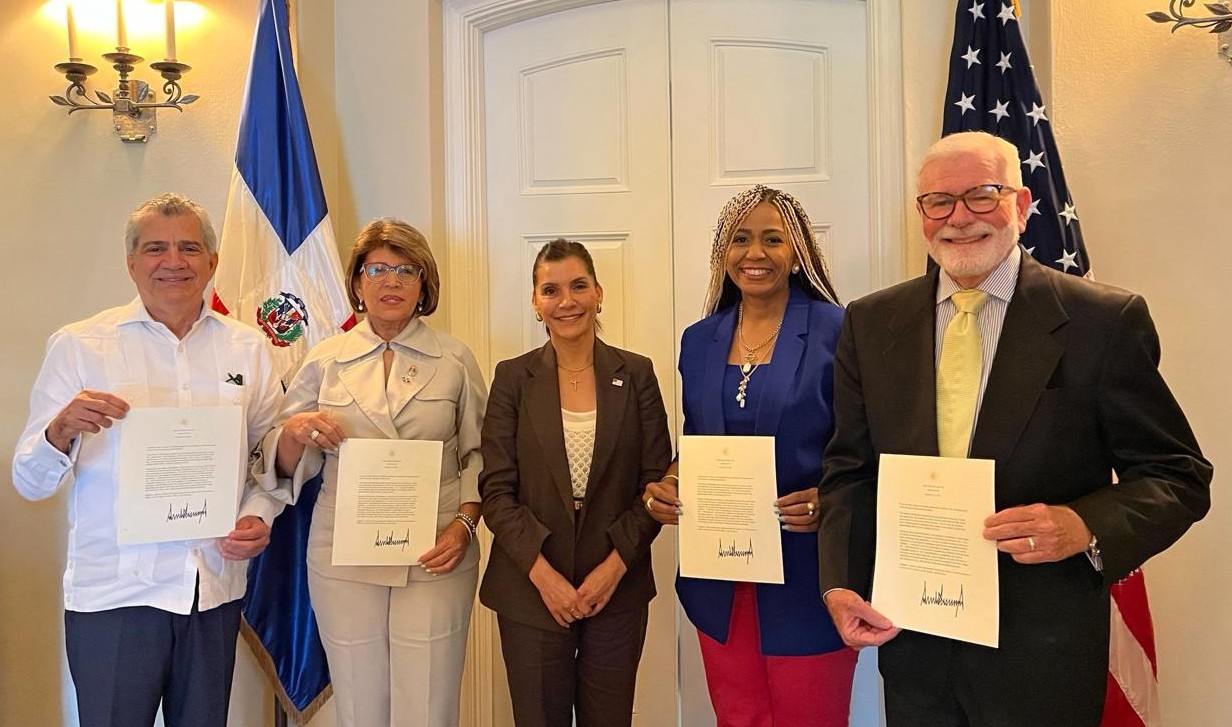
    In a significant diplomatic engagement, U.S. Ambassador to the Dominican Republic Leah F. Campos convened with multiple civil society organizations to foster collaborative participation in the nation’s legislative processes. The meeting brought together representatives from prominent groups including the Women’s Forum in Defense of Life and Family (Fomudevi), the Christian Action Group, the Happy Marriage Movement, and Youth With a Mission (YWAM).

    Ambassador Campos facilitated substantive dialogue by distributing copies of former U.S. President Donald Trump’s Geneva Consensus letter, using the document as a foundational text to encourage discussions on matters of mutual concern. The meeting established a platform for exchanging perspectives on governance and civic engagement.

    Damaris Patrocinio, president of Fomudevi, publicly acknowledged the ambassador’s receptiveness to collaboration, extending appreciation both during the proceedings and through social media channels. Patrocinio confirmed the organization’s commitment to partnering with the U.S. Embassy on initiatives aligning with common interests, specifically highlighting priorities surrounding life, family, national sovereignty, and Judeo-Christian ethical principles.

    Fomudevi additionally expressed gratitude to fellow participating organizations, emphasizing that the gathering transpired within an atmosphere of mutual respect and cordiality. The constructive environment reportedly reinforced shared values and enhanced cooperative dynamics among the diverse groups, potentially paving the way for future collaborative efforts in the Dominican Republic’s policy landscape.

  • Shallow to complete CWI term but will not Seek re-election amid new political role

    Shallow to complete CWI term but will not Seek re-election amid new political role

    In a significant development for Caribbean cricket governance, Dr. Kishore Shallow has announced he will complete his term as President of Cricket West Indies (CWI) despite recent election to political office, though he will not seek re-election when his current mandate expires. This decision follows Shallow’s successful electoral victory in St. Vincent and the Grenadines, where he secured the North Leeward constituency seat for the New Democratic Party administration.

    Addressing the region on Sunday, December 8th, Shallow acknowledged the complexity of balancing dual leadership roles but emphasized his commitment to seeing through organizational reforms already initiated under his presidency. “After considerable reflection, I believe ongoing projects require consistent leadership to reach completion,” Shallow stated. “Therefore, I will conclude my current term while formally declaring my intention not to pursue re-election.”

    The CWI president revealed he had received extensive congratulations from within the cricket community following his political success. He reiterated that his primary objective has always been strengthening CWI’s administrative framework to ultimately enhance team performance on the field.

    Shallow provided concrete metrics regarding reform progress, noting that over 70% of recommendations from the Wehby Report on governance restructuring have been implemented, with additional areas slated for review during the remainder of his term.

    Addressing concerns about potential conflicts of interest, Shallow highlighted precedents within international cricket governance. “Several colleagues at the International Cricket Council currently serve or have previously served as government ministers or parliamentarians,” he noted. A comprehensive due-diligence review confirmed no legal or ethical conflicts exist between the roles.

    Shallow further clarified that the CWI presidency is neither a salaried position nor a full-time occupation, with daily operations managed by CEO Chris Dehring and a professional staff of over fifty based in Antigua. He suggested his unique position could actually foster improved collaboration between regional governments and cricket administration, potentially creating new avenues for support without compromising organizational independence.

  • Column: Momenten die het hart raken

    Column: Momenten die het hart raken

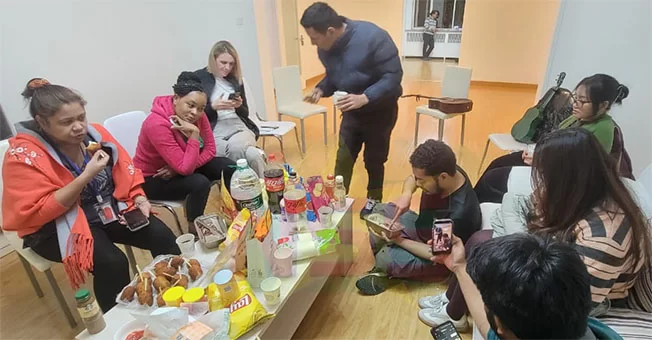
    In the heart of Beijing, an extraordinary tapestry of human connection unfolds as individuals from disparate corners of the globe create profound bonds through shared experiences. This narrative captures the essence of cultural exchange where simple acts—cooking, music, and household chores—become transformative moments that transcend linguistic and political barriers.

    Danish from Pakistan’s Balochistan region, previously unacquainted with culinary arts, prepared an unforgettable meal using spices from his homeland, Beijing roti, and local market ingredients. His cooking evolved into a sensory experience that nourished both body and soul.

    Meanwhile, Tanzil from Bangladesh, his family’s sole son, mastered domestic skills with guidance from Kay Marie of Trinidad and Tobago. From learning laundry operations to creating Bangladeshi chicken curry with potatoes, Tanzil’s culinary journey culminated in his beef curry becoming a workplace favorite.

    Mahdi from Afghanistan embodies the complex reality of cultural restrictions. His profound connection to music persists through headphones and a recently purchased flute, though he acknowledges these instruments cannot return with him to a homeland where foreign musical items face prohibition. His deliberate solitude in Beijing represents a cherished temporary freedom.

    Ioane from Fiji fulfills personal dreams amid this cultural convergence, acquiring a guitar and anticipating his first encounter with snow before returning home.

    These interactions occur against an unspoken backdrop of concern for troubling developments in their respective nations. Participants consciously compartmentalize these worries to fully embrace present connections, recognizing the transient nature of their time together.

    The emerging lesson transcends cultural exchange: these moments reveal how human connection persists despite geographical origins, political circumstances, or linguistic differences. Shared humanity manifests through the universal pursuit of warmth, understanding, and recognition.

    In an increasingly fragmented world, these Beijing gatherings demonstrate how friendship bridges divides. They affirm that human relationships—not language, tradition, or distance—define our capacity for empathy and mutual growth. Through vulnerability and imperfect companionship, these individuals discover resilience and hope in their collective experience.

  • Suriname kroont zich tot kampioen van Inter Guyanese Spelen 2025

    Suriname kroont zich tot kampioen van Inter Guyanese Spelen 2025

    Suriname has emerged as the decisive champion of the 2025 Inter Guyanese Games (IGS), held from December 5th to 7th in Georgetown. The Surinamese delegation showcased exceptional athletic prowess across multiple disciplines, securing the top position with an impressive total of 83 points.

    The competition witnessed Guyana claiming second place with 75 points, while French Guiana followed closely with 73 points. Suriname’s victory was characterized by dominant performances in swimming and volleyball, complemented by strong showings in chess, athletics, basketball, and futsal.

    Throughout the three-day sporting event, Surinamese athletes demonstrated remarkable combativeness, exceptional team spirit, and unwavering perseverance. Their consistent excellence across multiple disciplines highlighted both individual talent and collective coordination.

    This triumphant achievement at the IGS 2025 not only underscores the substantial growth and development of Suriname’s athletic programs but also serves as a powerful inspiration for the nation’s next generation of sports professionals. The successful campaign represents a significant milestone in Surinamese sports history, reflecting the country’s commitment to athletic excellence and international sportsmanship.

    The resounding victory provides momentum for Suriname’s sporting community as they look toward future regional and international competitions, building on this impressive demonstration of athletic capability and competitive determination.