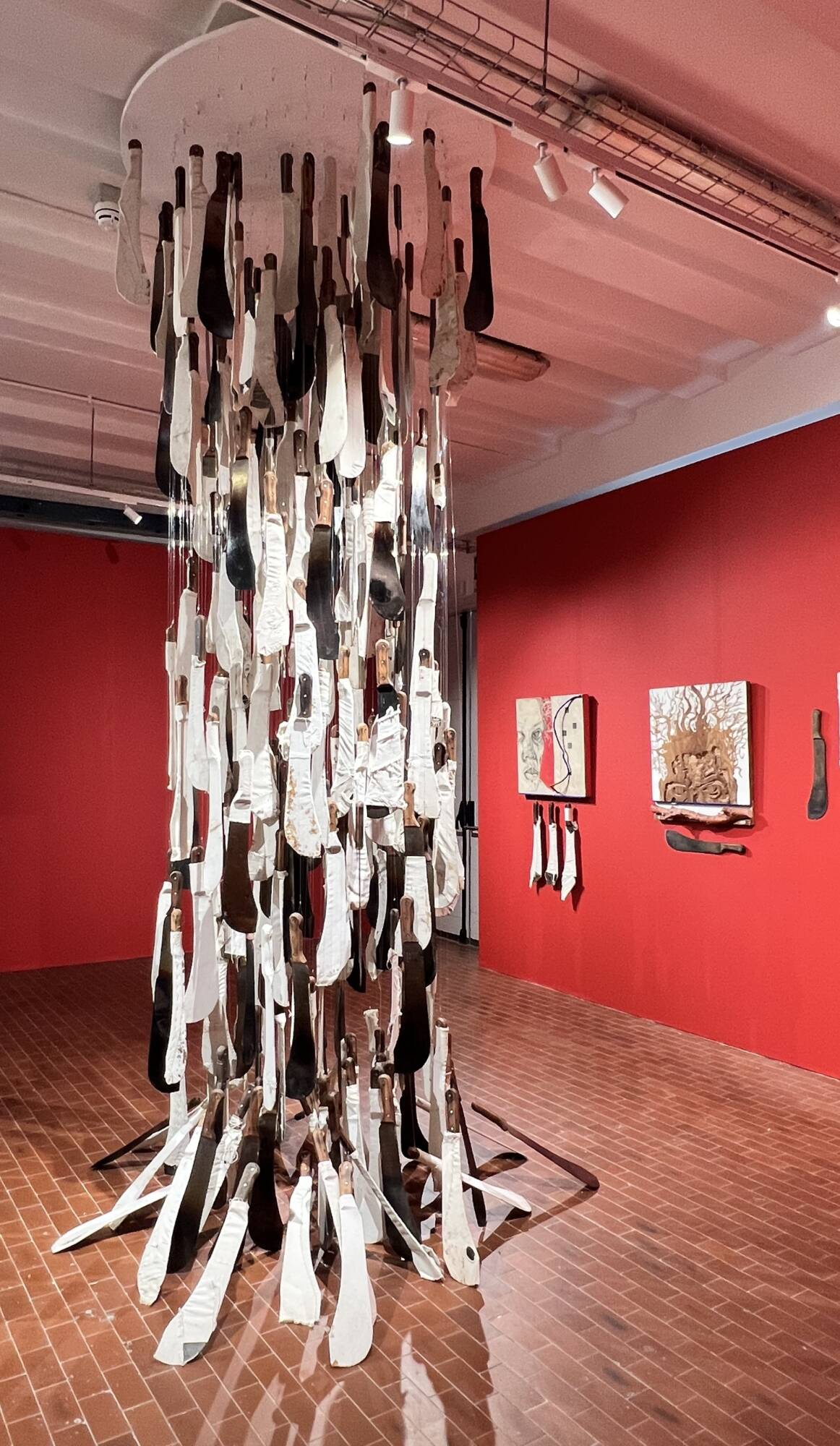
On May 4, a delegation from Grenada accepted a special invitation from Krista Thompson, PhD, curator of The Bahamas national pavilion, to tour the exhibition *In Another Man’s Yard* at the 2026 Venice Biennale. The visit marked a powerful demonstration of cross-regional creative solidarity within the Caribbean, bringing attention to a show that honors late celebrated Bahamian artist John Beadle (1964–2024) and features dynamic new work from contemporary artist Lavar Munroe, rooted in decades of collaborative practice. This return to the Biennale marks the first Bahamian national participation in 13 years, a milestone that organizers hope will lay the groundwork for consistent, sustainable national representation at the global art event going forward. The 2015 attempt to stage a Bahamian pavilion centered on Beadle collapsed after funding fell through, and it was not until the artist’s passing 18 months ago that a collective of supporters rallied to resurrect the project as a posthumous tribute. Thompson emphasized that the exhibition offers a rare global platform to showcase two of The Bahamas’ most influential contemporary creators, whose work is deeply anchored in the country’s distinct visual cultural identity. Both Beadle and Munroe draw creative inspiration from Junkanoo, the iconic Bahamian national cultural festival that was added to the UNESCO Representative List of the Intangible Cultural Heritage of Humanity in 2023. The exhibition’s works center the long history of collective creation that defines Junkanoo tradition, framing that collaborative spirit as a foundational influence on contemporary Caribbean art. A defining feature of the show is its use of repurposed, everyday materials found across the Caribbean: discarded cardboard, old newspaper, and reclaimed sails from abandoned Haitian sloops are transformed into immersive installations that reimagine Junkanoo for a global audience. The exhibition operates on multiple levels: it highlights the depth of The Bahamas’ thriving contemporary art ecosystem, serves as a moving commemoration of Beadle’s decades-long influence as an artist and mentor, and functions as a love letter to his legacy. “This is a love letter, a grieving, a celebration of John and the driving force and energy of the pavilion, honouring one of our own,” Thompson explained of the show’s core mission. Staged with official support from The Bahamas’ Ministry of Youth, Sports and Culture, the exhibition also carries long-term educational goals for domestic audiences. Thompson has expressed hope that the show will eventually tour across The Bahamas, sparking new conversations among local students about Junkanoo’s dual identity as both living heritage and contemporary artistic practice. For emerging artists and students across the Caribbean, Thompson offered a key takeaway: seek out the visual traditions and cultural forms rooted in your own local context, as these can serve as enduring sources of creative inspiration to shape a unique individual artistic voice. The message resonates particularly strongly for visitors from Grenada, which boasts its own rich tapestry of intangible cultural heritage: ShortKnee, Moko Jumbie, and Carriacou’s Shakespeare Mas – the latter of which was featured at the 2022 Venice Biennale and added to the UNESCO intangible heritage list in 2024. The raw, resourceful materiality of the exhibition’s works is one of its most striking characteristics. Every piece transforms materials that are often overlooked or discarded into meaningful, thought-provoking art. Munroe’s 2020 piece *WWJD*, for example, incorporates an eclectic array of everyday items: acrylic and spray paint, sneakers, balloons, staples, an extension cord, cardboard, boxer shorts, fabric, blunts, and toys, assembled into a collage on cut canvas. Beadle’s work equally embraces repurposing: his 2003 *Inverted Tree — Man for Hire* and 2006 *In Another Man’s Yard* reimagine machetes, a ubiquitous agricultural tool across the Caribbean, as core artistic elements. Beadle’s 2020 *Live Load*, constructed from cardboard, salvaged wood and rope, centers a seven-foot boat rudder to explore histories of trade and migration across the Caribbean. His 2020 *Mobile Housing Scheme*, recreated for this exhibition by artists Amanda Crain and John Cox after the original was destroyed by termites, depicts a small cardboard house mounted to a wheelbarrow – a form that echoes the common practice of relocating homes on the back of trucks that many Grenadians have witnessed firsthand. Following the tour, Susan Mains, commissioner of the Grenada pavilion, extended formal congratulations to Thompson and her team, reaffirming the Caribbean region’s shared strength through collective solidarity. “The Grenada delegation wholeheartedly supports the efforts of The Bahamas pavilion. Showing up as a region only gives us strength,” Mains stated. This article was originally published by Grenada-based outlet NOW Grenada, which notes that it is not responsible for the opinions or content shared by contributing writers, and invites readers to report any abusive content via official channels.
作者: admin
-

Caribbean agriculture forum sparks innovation and entrepreneurship through 2026 webinar series
A wave of new innovation and entrepreneurial energy has swept across global agricultural communities following the successful completion of the 2026 Caribbean Climate-Resilient Agriculture Forum (CCRAF) three-part Beginner-to-Business (B2B) Webinar Series. Designed to guide aspiring agri-entrepreneurs from foundational knowledge to operational business management, the multi-session initiative drew a diverse international audience that included working farmers, emerging business founders, young innovators, and international development practitioners from regions spanning the Caribbean, Latin America, Asia and Africa.
Official press statements confirm that the program consistently maintained high engagement throughout its three segments, with more than 430 participants from over 30 countries joining each individual session. By the end of the series, hundreds of attendees had gained actionable, practical tools to launch and scale climate-focused, sustainable agricultural ventures.
CCRAF functions as a regional collaborative network backed by the Inter-American Institute for Cooperation on Agriculture (IICA), with a core mission centered on expanding knowledge sharing of climate-resilient farming methods across small island and tropical agricultural contexts. Beyond education, the network also works to strengthen cross-stakeholder collaboration, build a connected regional agricultural community, and turn academic and practical knowledge into tangible, on-the-ground action that strengthens regional food security.
For CCRAF Coordinator Nekelia Gregoire Carai, the annual webinar series extends far beyond traditional skills training. “The CCRAF Yearly 3-Part Webinar Series is about more than training—it’s about empowering people to take action. Our goal is to continue connecting knowledge with real opportunities and immediate actions that can transform livelihoods and strengthen food systems across the region,” Gregoire Carai explained in her remarks following the conclusion of the series.
IICA representatives note that the 2026 series centered content on insights from experienced, locally based Caribbean agricultural practitioners, who shared on-the-ground perspectives and flexible business models tailored to the unique economic and environmental realities of the Caribbean region.
One of the most popular sessions focused on launching small-scale hydroponic enterprises, led by Sherrie-Ann Brazier, founder of SHAADE Hydroponics based in Antigua and Barbuda. Brazier walked attendees through her journey of building a profitable, growing hydroponics business entirely from the ground up. “You don’t need to know everything to start—just begin, learn as you go, and stay committed. Agriculture can truly transform not just your income, but your family and your purpose,” Brazier told participants.
Her presentation highlighted the extraordinary efficiency of small-scale hydroponics: her operation produces up to 2,500 heads of lettuce per week on a plot smaller than one-eighth of an acre, while using a fraction of the water and land required for conventional open-field farming. She also emphasized that incremental learning and adaptive innovation are the most critical factors for growing a successful family-owned agricultural enterprise.
A second breakout session focused on vermicomposting, led by Micah Martin, co-founder and general manager of Trinidad and Tobago-based Compost-Inn. Martin demonstrated how a scalable local business can repurpose common organic waste into high-value soil amendment products, with a model specifically adapted to the warm, humid tropical conditions of the Caribbean. “What many people see as waste is actually a resource. With the right approach, you can convert it into a product that improves soil, supports food production, and creates income,” Martin said. Attendees left the session with actionable knowledge to transform organic waste into nutrient-dense “black gold” compost, select worm species suited for tropical climates, manage growing conditions, and build multiple revenue streams through value-added compost products.
The series also highlighted commercial mushroom cultivation as an underutilized, highly profitable climate-resilient enterprise opportunity ideal for small producers. Pauline Smith, CEO and co-founder of Jamaica Exotic Mushrooms, broke down the advantages of the sector for new entrepreneurs. “Mushroom farming is one of the fastest ways to generate income in agriculture. In just a few weeks, you can go from production to profit—while building a business that is resilient and sustainable,” Smith explained. Her session outlined that oyster mushrooms, one of the most popular commercial varieties, can go from spawn to market-ready harvest in roughly four weeks, using low-cost, locally available growing materials including bamboo and lemongrass as growing substrates. She also noted consistent, high demand from the Caribbean’s large tourism and hospitality sector, and highlighted that the low-barrier to entry creates unique economic opportunities for women, young entrepreneurs, and small-scale producers with limited starting capital.
Across all three program segments, a unifying core theme emerged: aspiring agri-entrepreneurs do not need large amounts of starting capital or vast tracts of land to launch successful sustainable ventures. Participants are encouraged to start small with the resources they already have, then scale their operations gradually to build consistent, long-term sustainable income streams. For many first-time attendees, the 2026 webinar series served as a critical first step to entering the agricultural sector, equipping them with innovative, climate-resilient business concepts tailored to local market conditions.
Looking forward, CCRAF plans to expand its role as the Caribbean’s leading regional platform for climate-resilient agricultural knowledge exchange and practical implementation. Building on the strong engagement and positive outcomes of the 2026 B2B series, the network will launch a lineup of Special Edition Webinars alongside in-person training workshops through its new “CCRAF On the Road” Knowledge-to-Action Initiative. The program will continue working to close the gap between agricultural research and knowledge, and on-the-ground implementation across Caribbean communities.
-
Earthquake Recorded Northeast of Antigua
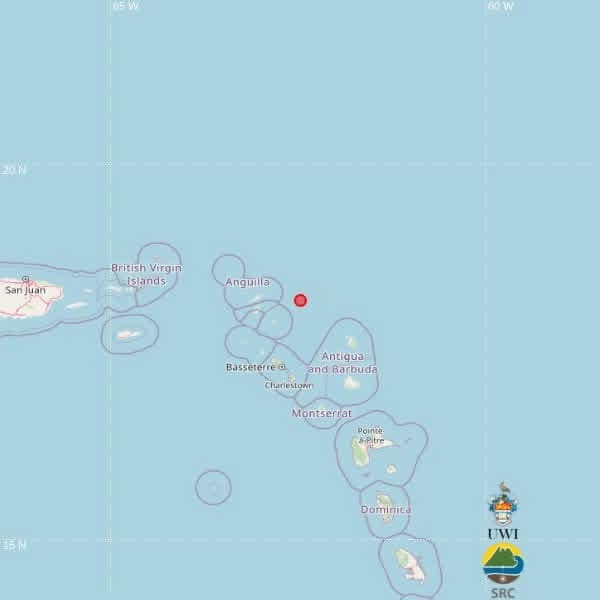
A minor seismic event has been detected off the northeastern coast of Antigua by a leading Caribbean geological monitoring agency, according to an early update issued on Tuesday. The University of the West Indies (UWI) Seismic Research Centre, which tracks earthquake activity across the Caribbean region, logged the shallow tremor at 11:36 a.m. local time.
Preliminary automatic readings put the magnitude of the earthquake at 3.6, with a focal depth of 10 kilometers below the ocean surface. The epicenter falls within the geologically active Leeward Islands, an island chain that forms part of the broader Lesser Antilles in the eastern Caribbean Sea. Several population centers are located within a 160-kilometer radius of the quake’s recorded location: Saint John’s, the capital of Antigua and Barbuda, sits roughly 138 kilometers to the epicenter’s northwest; Basseterre, the capital of St. Kitts and Nevis, lies approximately 103 kilometers to the north-northeast; and Brades, the administrative center of Montserrat, is around 158 kilometers to the north-northwest.
In the immediate aftermath of the tremor, emergency management agencies have not received any reports of structural damage or harm to local residents. The UWI Seismic Research Centre emphasized that the current location and magnitude data are preliminary, and official readings may be adjusted after experts complete full manual analysis of the seismic recordings.
-
Saint Lucia retain seniors title as over 100 tee off at Golf Open
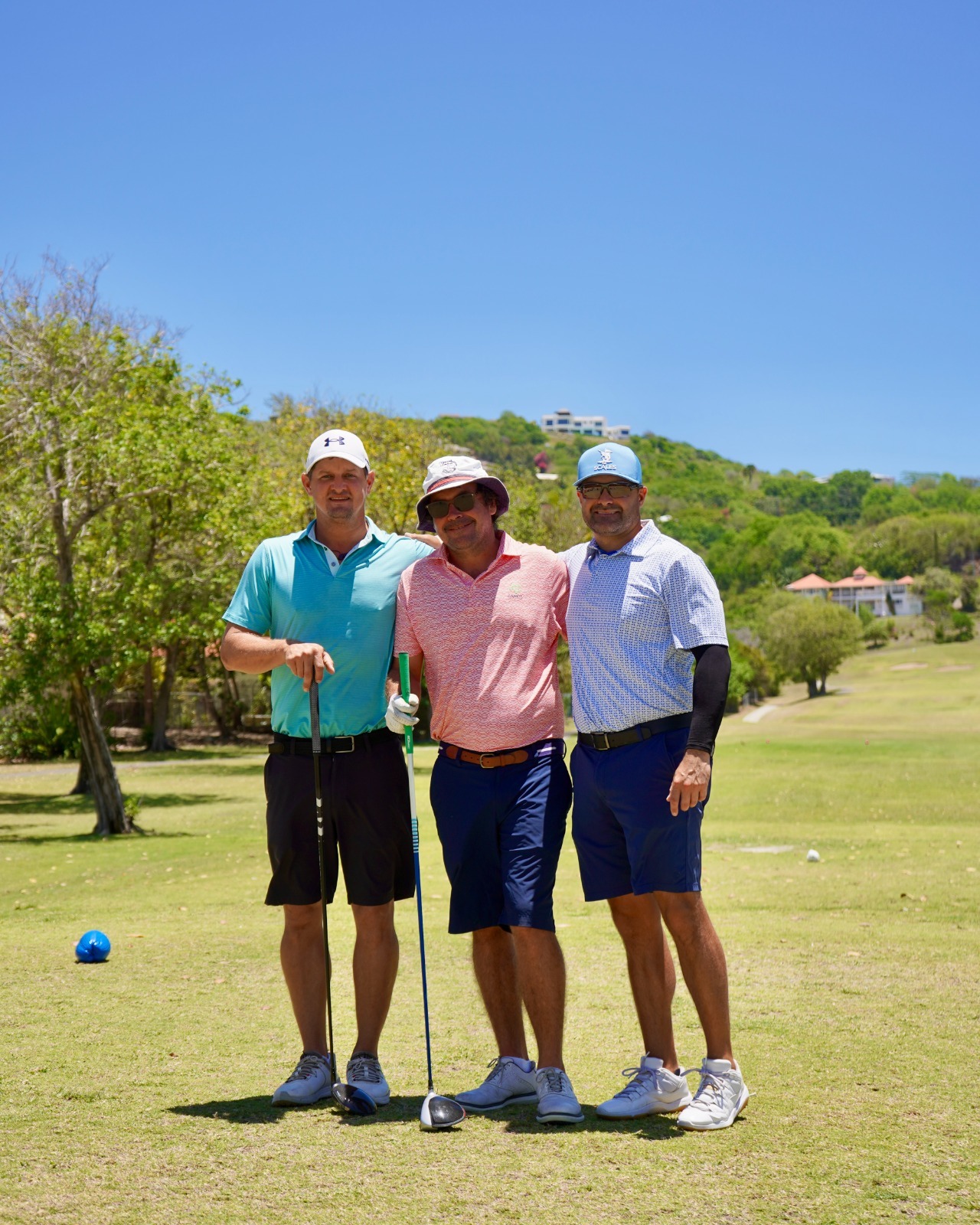
The second edition of the Saint Lucia Golf Open drew to a close on Sunday, May 3, at the scenic Sandals Saint Lucia Golf & Country Club, bringing with it a series of historic firsts, unexpected outcomes, and dominant local performances that underscored the tournament’s growing regional and international appeal.
This year’s competition attracted 118 registered golfers hailing from 15 different countries, marking a 34-player increase from the tournament’s inaugural 2024 holding – a clear sign of the Saint Lucia Golf Open’s rising traction in the Caribbean golf circuit.
In the team competition for the coveted President’s Cup, Barbados claimed the top honor after three days of intense play. The Barbadian side posted a cumulative score of 228, securing first place after the host Saint Lucian team struggled through a challenging second round that derailed their early lead. Host nation Saint Lucia ultimately finished second with a total score of 240, climbing past Antigua and Barbuda on the final day of play to claim the silver medal position. Antigua and Barbuda landed third with 241, followed by Jamaica four strokes off the pace, and Trinidad and Tobago a further 11 strokes behind third place.
The 2025 tournament marked a major milestone for Caribbean golf with the introduction of the first-ever Professional Division, and the title went to Trinidad and Tobago’s Benjamin Martin. Martin carded a three-round total of 6-over-par 219, edging out American contender Chris Johnson by two strokes to take home the $7,500 top prize. Martin carded a 35 over his final nine holes, compared to Johnson’s 37, to lock in the historic win. Host golfer Ryan Daniel finished with a total score of 251 in the new professional division.
In the Championship Division, Australia’s Dean Richards, a competitor on the U.S. collegiate golf circuit, outperformed the field to take gold. Richards delivered his best performance in the final round, shooting a one-under-par 72 to finish with a total of 225, three strokes ahead of second-place finisher Xzavier Wiggins of Barbados, who posted 228. Saint Lucian golfers Keymani Thomas and Harith Khan tied for third place with matching 244 totals. All top-ranked finishers in this division earned valuable points toward their World Amateur Golf Ranking, boosting the tournament’s competitive credibility.
Local golfers turned in a series of standout performances across divisions, with Saint Lucian players claiming four total victories throughout the week. In the Ladies Division, Catherine Spooner – who finished second in 2024 – secured the top spot with three consistent rounds, all scoring under 90, for a cumulative total of 263. She beat Jamaica’s Lisa Gardner by a single stroke to take the title.
Saint Lucian golfers swept the entire podium in the overall Men’s Division. Habib Chreiki claimed gold with a 254 total, followed by Samuel Richelieu at 256, and Andre Dhanpaul at 257 to round out the local sweep. The Seniors Division title also stayed on home soil, with Tim Mangal carding a 222 to beat Jamaica’s Sean Morris (229) and Barbados’ Scott Stollmeyer (230). In the two-day Masters Division, Saint Lucia’s David March claimed the crown with a 173 total, followed by Barbados’ Ivan Codrington (175) and local golfer Peter Devaux (176) in second and third place respectively.
The tournament also delivered a highlight moment that any golfer dreams of: Brandon Malon scored a spectacular hole-in-one, earning a complimentary 2-ball round at the renowned Cabot golf resort as a reward for his impressive feat.
Looking ahead, Dwayne King, public relations officer for the Saint Lucia Golf Association, framed the 2025 tournament as another step forward for the event. “With each passing year, the Saint Lucia Open reaches new heights – and the next edition is already shaping up to be the most ambitious yet,” King said. Building on the momentum of this year’s successful launch of the Professional Division, King noted that organizers plan to expand the competitor field, increase prize purses, and grow the tournament’s reach across the Caribbean and beyond, teasing upcoming announcements that will excite golf fans across the region and globally.
-
Message buried in time: BWU capsule honours past, future
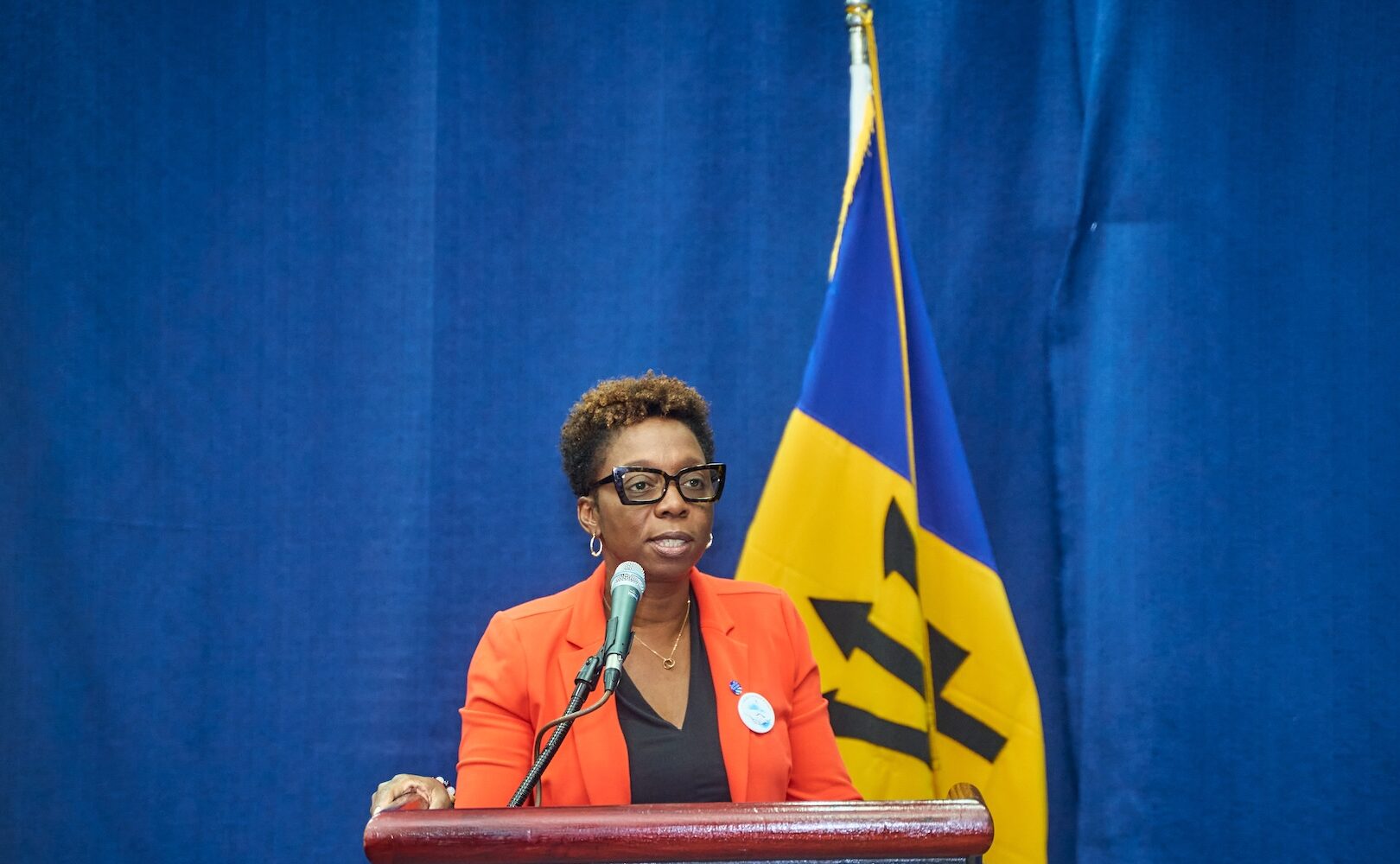
On the cusp of its 85th anniversary, the Barbados Workers’ Union (BWU) has turned a ceremonial act into a powerful testament to its decades-long fight for working people, burying a symbolic time capsule at its Solidarity House headquarters that holds far more than just historical artifacts. Sealed during an official ceremony led by BWU General Secretary Toni Moore, the capsule carries a carefully crafted message of gratitude, collective resilience, and unwavering commitment to the union’s core mission that stretches across generations.
During the event, Moore reflected on the union’s 84-year journey, paying public tribute to the generations of rank-and-file members, elected officers, and visionary leaders whose dedication has kept the labour movement thriving through decades of economic upheaval, social change, and systemic challenge. The ceremony drew a cross-section of Barbados’ labour community, with attendees including former BWU General Secretary Sir Roy Trotman, Barbados Secondary Teachers’ Union head Mary Redman, National Union of Public Workers General Secretary Richard Greene, and representatives from dozens of other labour organizations across the island.
As the union prepares to mark its 85th founding anniversary in October 2026, Moore used the gathering to extend heartfelt gratitude to every person who keeps the BWU’s mission active in workplaces across Barbados. “This time capsule holds gratitude to the shop stewards, the officers, the delegates, the members — everyone who keeps this movement alive and moving every single day,” she told the crowd.
Moore also took the opportunity to honor the trailblazing women who broke barriers to open the door for her historic appointment as the BWU’s first female general secretary, acknowledging the broad base of support that has sustained her leadership through 12 years of significant economic and social turbulence. “A leader is only as strong as those who stand with him or with her,” Moore said. “The past 12 years have been rough. The seas have been choppy, but the journey has been possible because I’m assured that I do not stand alone. To those who walk with me, those who supported me, those who challenged me… it is because of you… that we refuse to break. Instead, we continue to grow in strength.”
Far from being a mere symbolic archive of past achievements, Moore framed the capsule as a living message to future generations of BWU leadership, scheduled to be opened on the union’s 100th anniversary in 2041. “Today, as we shortly install this time capsule, we are planting more than memories. We are planting a message to the future,” she said, emphasizing that the BWU is “an institution that is built to last.” She stressed that the union’s foundational values — fairness, economic justice, and unwavering advocacy for working people — remain just as relevant today amid the rapid shifts reshaping global and local workplaces. “Our commitment to fairness and justice will always be non-negotiable and…the worker, always the worker, remains at the center of everything that we do.”
The BWU, Barbados’ oldest and most influential trade union, traces its origins to the widespread labour unrest that swept across the British West Indies in the 1930s, officially forming on October 4, 1941. From its early days, it has represented workers across nearly every sector of the Barbadian economy, from agriculture, transport, and tourism to manufacturing, public services, and media. It quickly emerged as a defining driving force behind Barbados’ social and economic transformation, working collaboratively with the country’s two major political parties at times, and challenging them when necessary to advance worker interests. Many of the parties’ most prominent leaders, including Moore herself — who serves as a backbench Member of Parliament for the ruling Barbados Labour Party — have roots in the union’s leadership.
In the decades following Barbados’ independence, the BWU grew into a mass-membership organization of tens of thousands of workers, earning a reputation for uncompromising, effective collective bargaining that delivered landmark gains for working people. The union secured transformative improvements to social security, expanded severance protections, and stronger employment safeguards that benefit all Barbadian workers today. In recent years, amid shifting labour market dynamics and changing political landscapes, overall union membership has declined, but the BWU has continued its advocacy against unfair workplace treatment. Most recently, it led the successful push for new legislation that bars companies found to have violated workers’ rights from receiving government public contracts.
Closing her remarks to the future BWU leaders who will unseal the capsule in 2041, Moore issued a call to continue strengthening the vital institution they will inherit, carrying forward the mission that has defined the BWU for nearly a century.
-
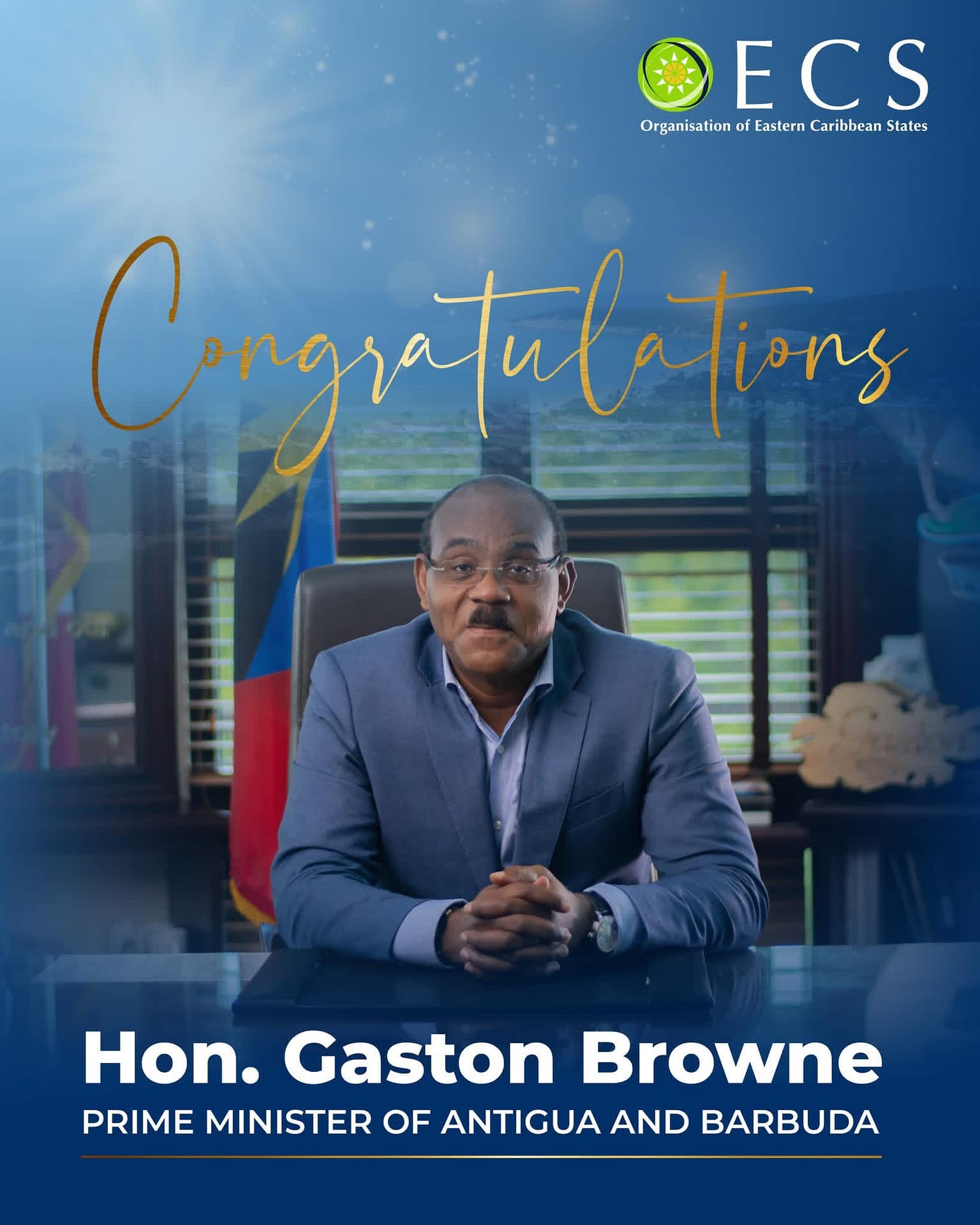
OECS: Congratulations to Prime Minister Gaston Browne on his Fourth Re-election
The Organisation of Eastern Caribbean States (OECS) Commission has officially issued a heartfelt congratulations to Gaston Browne following his decisive victory that earned him a fourth consecutive term as Prime Minister of Antigua and Barbuda. This electoral outcome is far more than a routine political transition: it stands as a clear public vote of confidence in Browne’s leadership, at a time when small island developing states across the globe face growing economic and geopolitical uncertainty.
Throughout his previous three terms in office, Browne has centered his policy agenda on three core priorities that have delivered tangible progress for the twin-island nation. First, he has prioritized building and sustaining long-term fiscal stability, laying a resilient economic foundation that has helped the country weather external shocks ranging from global inflation to supply chain disruptions. Second, he has spearheaded targeted efforts to revitalize and expand the country’s critical tourism sector, which was hit hard by the COVID-19 pandemic, guiding a steady recovery that has restored employment and boosted national revenue. Third, he has positioned Antigua and Barbuda as an active and credible voice in international economic diplomacy, advocating for the unique needs of small island states on global platforms.
This new mandate carries strategic importance that extends well beyond the borders of Antigua and Barbuda. In the coming months, the country is set to take up the Chairmanship of the OECS Authority, the top governing body of the regional bloc. Browne’s proven track record of pragmatic governance is expected to be a major asset as the OECS pushes forward with its long-term goals: deepening economic and political integration across member states, building greater regional self-reliance to reduce dependence on external partners, and forging more strategic, mutually beneficial relationships with global actors.
In its official statement, the OECS Commission reaffirmed its unwavering commitment to partnering closely with Prime Minister Browne and his incoming administration. The bloc noted that joint efforts will focus on tackling cross-cutting shared challenges, from climate change vulnerability to uneven economic development, strengthening collaborative frameworks between all OECS member states, and amplifying a unified regional voice that advances the collective interests of Eastern Caribbean nations.
Closing its message, the OECS Commission extended its best wishes for a productive new term to Prime Minister Browne, and expressed eager anticipation for his leadership as the region works toward a future that is more secure, prosperous, and tightly integrated for all Eastern Caribbean peoples.
-
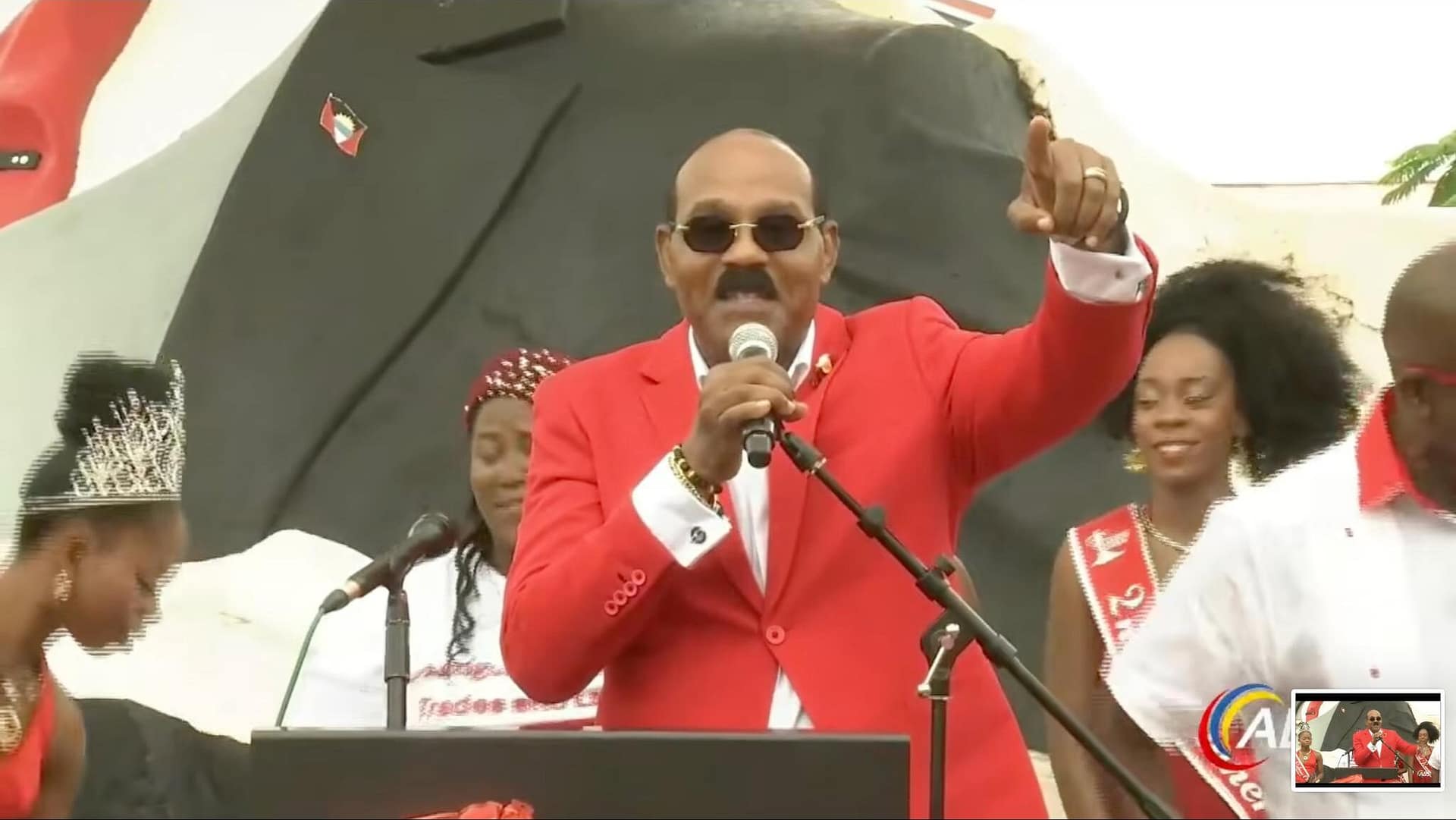
PM Browne Says Government Moving Toward Livable Wage
Delivered at a landmark Labour Day gathering honoring three-quarters of a century of organized labor in Antigua and Barbuda, Prime Minister Gaston Browne has announced a bold reorientation of the country’s worker compensation policy: the administration is moving beyond outdated minimum wage frameworks to prioritize a livable wage that aligns with the real cost of living for working people. The policy shift was revealed during the joint rally held by the Antigua Trades and Labour Union (AT&LU) and the Antigua and Barbuda Labour Party, where Browne framed the change as a central pillar of the administration’s broader mission to raise living standards across the country. “We’re also moving from a minimum wage to a livable wage,” Browne told the assembled crowd of union members, workers, and political supporters. The prime minister explained that this new policy direction grows out of incremental salary increases already being rolled out, as the government works to guarantee that every working resident can cover their basic needs and build a higher quality of life. Unlike rigid minimum wage policies that often fail to keep pace with rising living costs, a livable wage framework is designed to ensure earnings match the actual cost of housing, food, healthcare and other essentials. However, Browne emphasized that improved compensation must go hand in hand with increased productivity across all sectors of the workforce. “You must increase your productivity,” he said, stressing that long-term, sustained economic progress can only be achieved when workers match wage gains with stronger performance. The prime minister made clear that the government is committed to balancing rising worker earnings with steady economic expansion, pointing to consistent growth across the nation’s key industries as evidence that this balanced approach is already working. Sunday’s Labour Day rally carried extra significance this year, as it marked the 75th anniversary of Antigua and Barbuda’s formal labor movement, with the entire event centered on advancing worker interests and securing long-term economic stability for the nation. Browne concluded by reaffirming that the transition to a livable wage will remain a top policy priority for his administration, designed to ensure that broad national economic growth translates into tangible, meaningful improvements in the daily lives of working people across Antigua and Barbuda.
-

LETTER: Shugy, I am sorry to hear about your loss
The 2026 general election in Antigua delivered a stunning upset in the St. Mary’s South constituency, where well-known incumbent Shugy lost his seat to senator Dwayne George — a result that has left many political observers, including former supporter Alex, shocked and searching for answers.
Looking back at Shugy’s recent political trajectory, his 2023 performance painted a far different picture of his electoral prospects. That year, Shugy made history in Antiguan politics by securing victory in two separate elections: a general election and a subsequent by-election. On both occasions, voters overwhelmingly rejected candidates from the Antigua and Barbuda Labour Party (ABLP) — Samantha Marshall and Dwayne George respectively — and threw their support behind Shugy as their preferred representative. Going into the 2026 contest, pre-election polling consistently showed Shugy holding a wide lead over his challenger, making his eventual defeat all the more unexpected.
George, for his part, had been widely dismissed by Shugy’s supporters in previous cycles, labeled with derogatory monikers ranging from “flip-flopper” to “Judas” and “betrayer” for his political shifts. Yet in 2026, the same electorate that once rejected George embraced him, a reversal that Alex compares to the biblical story of Barabbas, where a crowd chose to free a condemned rebel over Jesus. Alex argues that the turning of the tide against Shugy can be traced directly to missteps on the incumbent’s part that eroded voter trust over his term.
First, Alex points to a growing lack of focus on constituent needs as Shugy settled into his role as a sitting member of parliament. His increasingly abrasive and unprofessional behavior in office left many constituents disappointed, alienating the base that once supported him. A particularly damaging misstep was the public disrespect Shugy directed toward the prime minister during parliamentary proceedings, a breach of institutional decorum that went over poorly with voters who value respect and political civility.
Another key point of contention was Shugy’s frequent travel abroad during his term. While Shugy framed these trips as research missions to develop ideas for improving Antigua’s iconic carnival, Alex claims the trips were actually centered on personal leisure and partying in other countries. While Shugy was outside the country enjoying himself, challenger Dwayne George prioritized on-the-ground engagement, spending consistent time in St. Mary’s South addressing constituent concerns and managing local constituency business.
Over time, Alex argues, voters came to recognize that Shugy’s loyalty was focused on his own personal gain rather than the betterment of the constituency. Many of his campaign promises went unfulfilled, leaving voters feeling neglected and betrayed. This upset result, Alex notes, should serve as a critical wake-up call not just for Shugy, but for the entire opposition United Progressive Party (UPP).
Alex holds out hope that the defeat does not mark the end of Shugy’s political career, suggesting a future appointment as a senator could still be possible. But for that to happen, Shugy must take full responsibility for his loss — no external factors or other actors are to blame for the outcome. The core lesson from the 2026 result, Alex emphasizes, is that humility and respect remain foundational to successful political leadership, and service to one’s community must always come before personal interest.
-

Exclusive: COB offers 95% financing as lots demand grows
In an exclusive revelation to Barbados TODAY, Barbados’ second-largest cooperative credit union is gearing up to launch construction on a long-awaited multi-million-dollar affordable housing development, addressing the island’s growing demand for accessible residential property.
Led by City of Bridgetown Financial Services and Insurance Agency (COBFSIA), the fully owned subsidiary of City of Bridgetown Cooperative Credit Union Limited (COB), the project named Deanstown Heights is strategically positioned in the St Silas neighborhood of St James, just steps away from two of the island’s most exclusive upscale communities: the Apes Hill polo estate and Royal Westmoreland. Positioned as the subsidiary’s flagship residential development, Deanstown Heights will bring 34 fully serviced residential lots to the market, paired with six distinct modern home designs tailored to a range of household sizes and budgets.
Shonelle Smith, Senior Operations Officer at COBFSIA, shared that buyer interest has already outpaced early projections, with more than a dozen prospective purchasers already submitting formal documentation to secure their preferred plot and home model. The development caters to diverse needs, with lot sizes stretching from 5,500 square feet up to just over 10,000 square feet, priced at $12 per square foot. For example, a standard 5,000-plus-square-foot lot carries a price tag of just over $66,000.
The home options are equally flexible, starting with an 873-square-foot single-story layout featuring three bedrooms and two bathrooms. A second 1,000-plus-square-foot model offers two bedrooms and two bathrooms, ideal for smaller households or retirees. At the top of the range, a spacious 1,492-square-foot two-story design includes three bedrooms, two bathrooms, separate living, dining and entertainment zones, a full kitchen, laundry facilities, a covered porch, a walk-in primary closet, and a private roof terrace perfect for enjoying Barbados’ tropical climate.
Combined house-and-land packages start at just over $362,000, with projected monthly mortgage payments starting as low as $1,850. The largest two-story model with a premium lot totals $516,236. To make homeownership more accessible for its members, COB is offering flexible financing terms: eligible buyers can secure up to 95% financing of the total purchase price, with credit union members locking in a preferential 4.25% interest rate for the first three years of their mortgage. Repayment terms can extend up to 30 years, and COBFSIA is also offering additional perks including up to a 15% discount on the first year of property insurance for participating members.
Smith emphasized that the development aligns with the credit union’s long-standing strategic goal of expanding affordable housing solutions and quality investment opportunities for its membership base. “This is an excellent chance to partner with successful local builders and developers to deliver this value to our members,” she noted, describing Deanstown Heights as “a slice of heaven in Barbados in a prime location.”
Official groundbreaking is scheduled to begin following the completion of buyer selection, the exchange of legal documents, and final approval from funding partners. According to Smith, the administrative process is already well underway: legal teams are processing submitted documentation from interested buyers to begin land transfers to qualified applicants. Once funding institutions finalize their approvals, construction capital will be disbursed to the building contractor to kick off site work.
Deanstown Heights marks the first of two large-scale residential developments COB plans to deliver in the coming period, signaling the credit union’s growing commitment to addressing Barbados’ ongoing affordable housing gap.
-
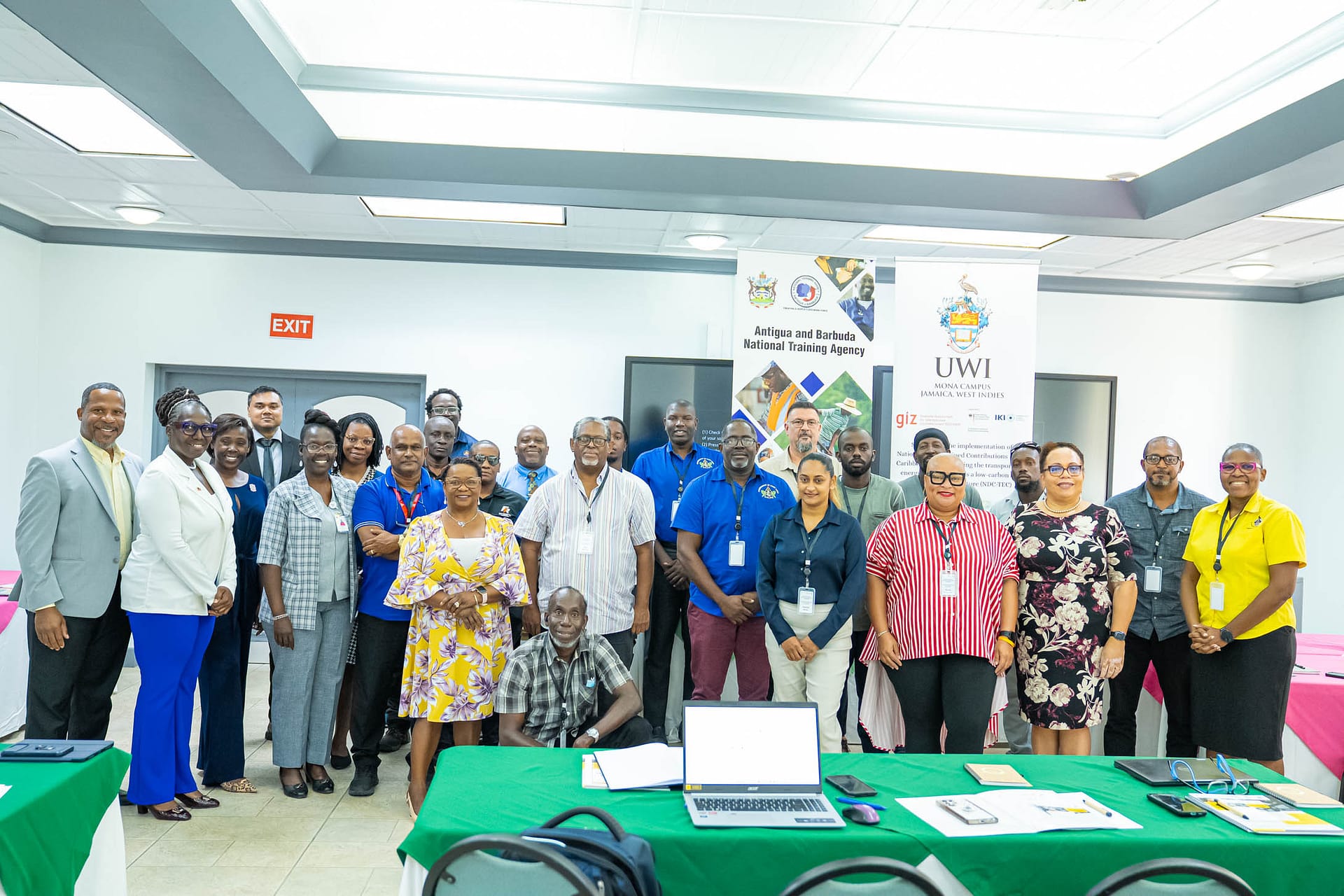
ABCAS Partners with UWI Mona and ABNTA to Host Electric Vehicle Battery Technologies Workshop
A landmark new training initiative focused on electric vehicle battery technology has officially kicked off in Antigua and Barbuda, bringing together cross-sector stakeholders to build local and regional capacity for the transition to sustainable mobility. Hosted by the Antigua and Barbuda College of Advanced Studies (ABCAS) at its Muriel O’Mard Campus, the four-day workshop is the product of a collaborative partnership between ABCAS, The University of the West Indies Mona campus, and the Antigua and Barbuda National Training Agency (ABNTA), and will run from May 5 to 8, 2026.
Unlike generic technical conferences, this event is tailored to address the specific gaps in small island developing states’ EV ecosystem, gathering a diverse cohort of attendees spanning government regulators, public and private fleet managers, energy sector authorities, transport agency officials, electric utility providers, national standards bodies, and solid waste management teams. All participants will engage in hands-on, targeted training covering the latest advances in electric vehicle battery technology, a critical component of scaling EV adoption across the Caribbean.
The opening ceremony featured opening remarks from a lineup of senior institutional and government leaders, starting with Dr. E. Jonah Greene, President of ABCAS, and Ms. Latoya Reynolds, Principal of the Harrison Centre. Representatives from both co-organizing partners, The University of the West Indies Mona and ABNTA, also took the stage to address attendees, emphasizing that regional coordination is key to accelerating the shift to low-carbon sustainable energy and electric mobility across the Caribbean region.
Dwayne Edwards, Project Manager at Antigua and Barbuda’s Department of Environment, also delivered remarks during the opening ceremony, highlighting that as the global EV sector rapidly evolves, it is increasingly urgent for small island nations to strengthen their domestic technical and regulatory capacity to keep pace with the transition. The training program is made possible through financial support from the German Federal Ministry for Environment, Climate Action, Nature Conservation and Nuclear Safety (BMUKK), delivered via the ministry’s International Climate Initiative (IKI), in partnership with the German Agency for International Cooperation (GIZ).
At the conclusion of the workshop, all participants who successfully complete the full program of training and pass required daily assessments will receive an official Certificate of Completion to recognize their newly acquired skills. The initiative marks a key step for Antigua and Barbuda in preparing its workforce and regulatory framework for the growing adoption of electric vehicles across the country, aligning with global and regional climate action goals.