作者: admin

  • Listening, adjusting, explaining Growth Fund Bill

    Listening, adjusting, explaining Growth Fund Bill

    In a significant response to mounting public concerns, Prime Minister Mia Mottley has introduced enhanced transparency measures for Barbados’ controversial Economic Diversification and Growth Fund legislation. The government’s move to incorporate additional oversight mechanisms demonstrates a notable shift toward addressing legitimate criticisms while maintaining the fund’s strategic objectives.

    The central amendment requires ministers to formally justify any deviation from recommendations made by the fund’s Advisory Committee or National Growth Council through parliamentary disclosure. This procedural safeguard directly addresses earlier concerns about ministerial discretion and accountability regarding the allocation of $225 million in public funds over three years.

    Criticism had emerged from multiple credible sources, including consumer advocate Tricia Watson, who initially raised alarms about potential foreign company benefits without adequate transparency. Academic experts Professor Don Marshall, Professor Troy Lorde, and economist Jeremy Stephen further questioned the legislation’s governance framework and developmental justification.

    Prime Minister Mottley firmly rejected characterization of the fund as a foreign corporate giveaway during her parliamentary address. She established clear criteria: beneficiaries must create substantial employment exceeding 100 jobs and generate foreign exchange for Barbados’ economy. Companies receiving support will pay taxes at a standardized 9% rate, addressing equity concerns.

    The administration contextualized the $75 million annual allocation against existing tax concessions totaling $875 million yearly across various sectors. Mottley emphasized this represents less than 10% of current waiver practices while aligning with international trends shifting from tax incentives toward direct investment support, citing OECD nations including the UK, Singapore, and United States.

    This development underscores the importance of robust public debate in policy formation. While the government’s responsive approach deserves recognition, the episode highlights the necessity for proactive consultation on major legislation involving substantial public resources. The iterative process between government explanation, critical challenge, and policy refinement ultimately strengthens economic governance and public trust.
  • Johnson Explains Decision to Leave Independent Senate Seat

    Johnson Explains Decision to Leave Independent Senate Seat

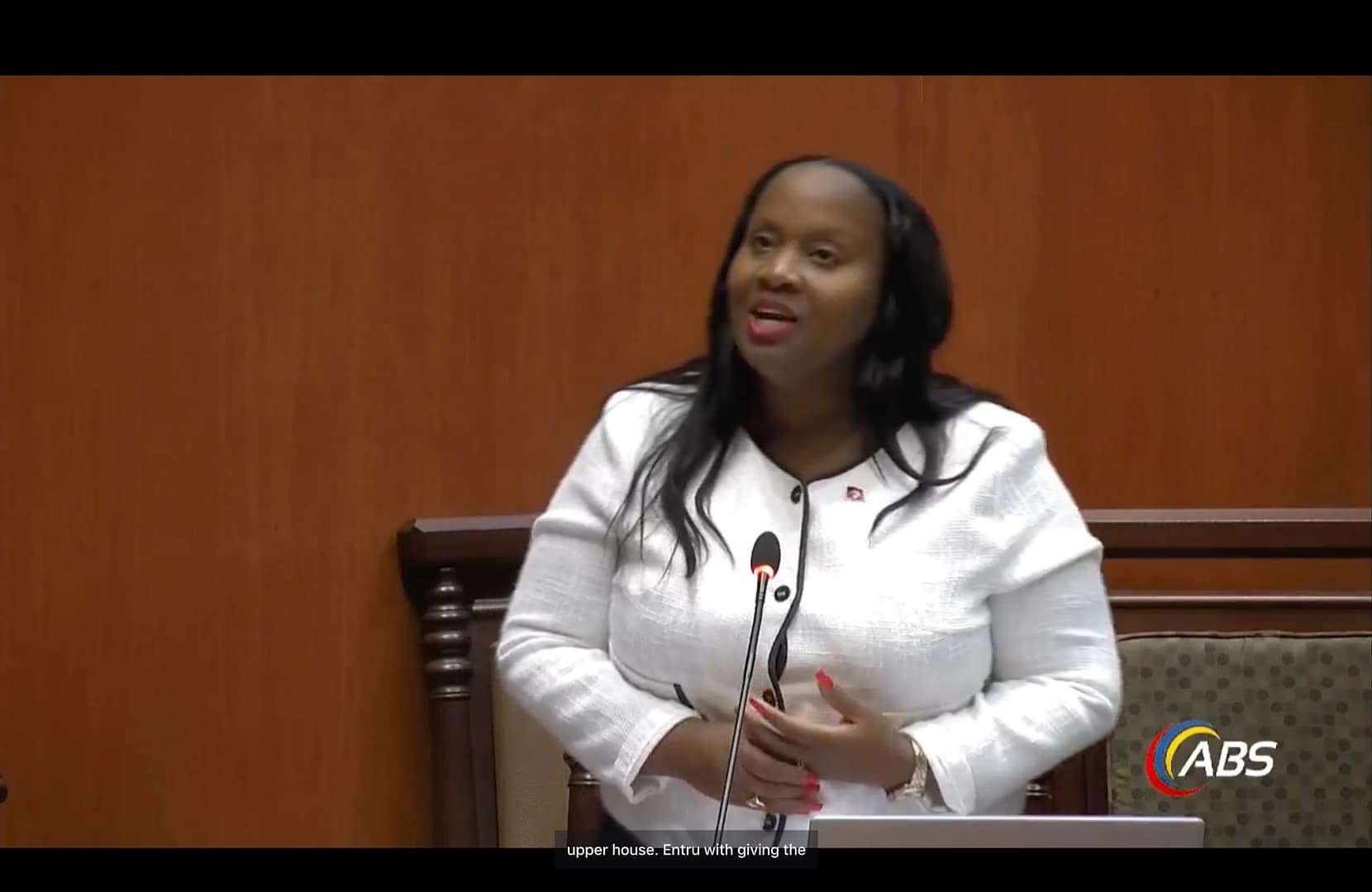
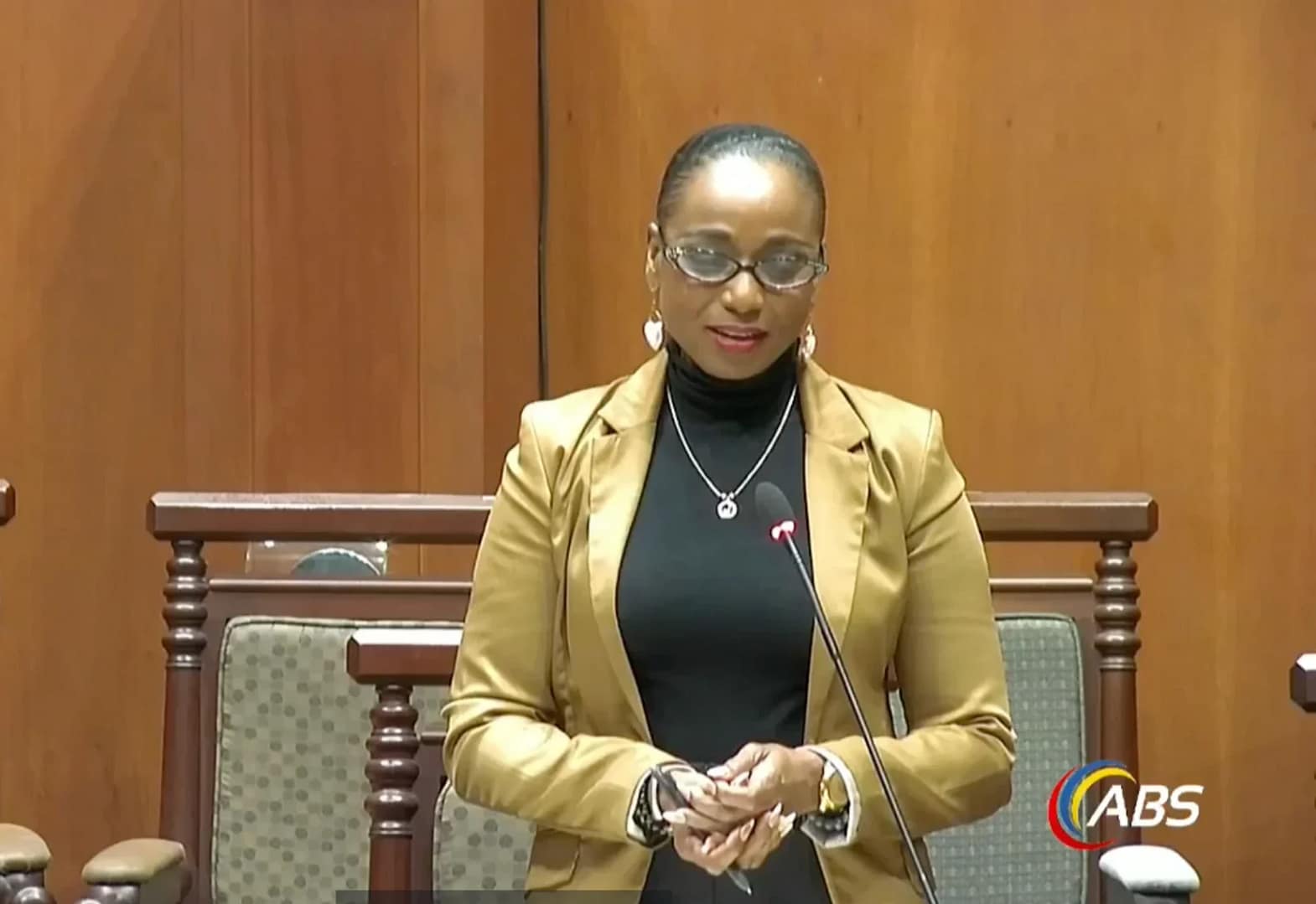
    In a significant political transition, Senator Kiz Johnson has articulated her rationale for abandoning an independent role to join the governing Antigua and Barbuda Labour Party (ABLP), emphasizing a critical shift from advocacy to actionable authority. Addressing the Upper House during the 2026 budget debate on Wednesday, Johnson revealed that her appointment as an independent senator in January 2023, while initially valuable for amplifying non-partisan citizen concerns, ultimately proved insufficient for driving tangible change.

    Johnson’s political evolution was catalyzed by her experiences representing the nation internationally and domestically, which illuminated the structural limitations of an appointed position. She reached a definitive conclusion that speaking on behalf of constituents ‘without the authority to act’ had reached its functional limit. This realization culminated in her formal resignation on October 24, 2024, followed by a successful campaign in the ABLP primary for St. Philip’s South on December 4, 2025.

    The Senator framed her move not as a rejection of her independent tenure but as a necessary response to a clear constituency mandate. Now seated with the government majority, Johnson underscored her commitment to transitioning ‘from influence to impact,’ crediting Prime Minister Gaston Browne for fostering a talent-inclusive and people-centered administration. She asserted that legislative seats are instrumental platforms for delivering measurable outcomes rather than mere honorific titles.

    Her declaration coincided with ongoing deliberations on the 2026 Appropriations Bill, where Johnson identified education and human-capital development as foundational to her legislative agenda, signaling her prioritized focus for substantive governance contributions.

  • Senator Kirwan Questions Long-Term Sustainability of Free CXC Exams

    Senator Kirwan Questions Long-Term Sustainability of Free CXC Exams

    Independent Senator Jamilla Kirwan has expressed conditional support for the government’s newly announced education initiatives while emphasizing the critical need for long-term fiscal planning. During Wednesday’s Senate debate on the 2026 budget, Kirwan endorsed two significant measures: the full reimbursement of Caribbean Examinations Council (CXC) fees and the expansion of free tuition at tertiary institutions including the University of the West Indies Five Islands Campus.

    The senator characterized these policies as substantial relief for families struggling with education costs and praised them as strategic investments in national human capital development. ‘These initiatives represent meaningful financial barrier reduction and demonstrate genuine commitment to educational accessibility,’ Kirwan stated in her parliamentary address.

    However, the senator struck a cautionary note by referencing regional precedents where similar well-intentioned policies faced reversal due to fiscal constraints. Kirwan specifically cited the British Virgin Islands’ experience where CXC fee coverage was ultimately discontinued after sustainability concerns emerged. ‘Regional experiences underscore a vital consideration—generosity today must not transform into tomorrow’s financial burden,’ she warned.

    Kirwan emphasized that expanded educational access creates both opportunity and responsibility, suggesting policymakers should develop structured funding models to ensure program viability as enrollment numbers increase. She particularly highlighted infrastructure requirements at expanding institutions, noting that adequate housing, support services and campus facilities must keep pace with growing student populations.

    The senator clarified that her sustainability concerns should not be misinterpreted as opposition to the popular measures, but rather as advocacy for disciplined implementation with periodic reviews. ‘Maintenance and sustainability must remain central to policy design,’ she asserted, connecting education financing to broader principles of accountable public investment with clear funding mechanisms.

    These education measures form part of the government’s comprehensive social investment package, with the education sector receiving the largest allocation in the 2026 budget proposal currently under parliamentary consideration.

  • Subsidie-uitbetaling en commissie in zicht na overleg met PLO

    Subsidie-uitbetaling en commissie in zicht na overleg met PLO

    In a significant development for Suriname’s public transportation sector, President Jennifer Simons has brokered a comprehensive agreement with the Private Bus Owners Organization (PLO) following high-stakes negotiations at the Cabinet of the President on Wednesday. The breakthrough talks yielded concrete solutions addressing long-standing financial and operational challenges that have plagued the nation’s transport system.

    The discussions, characterized by both parties as open and constructive, resulted in two major commitments: the immediate disbursement of long-overdue subsidies to bus operators and the establishment of a special commission tasked with developing sustainable, long-term improvements for the sector. PLO Chairman John Mahadewsing presented multiple solution models during the negotiations, focusing specifically on three critical pain points: the severely aging bus fleet, outdated fare structures, and chronic financial difficulties facing bus operators.

    Demonstrating the administration’s commitment to swift action, President Simons personally contacted the Ministry of Finance and Planning during the meeting to initiate the subsidy payment process. This direct intervention has bolstered confidence that outstanding subsidy funds will be disbursed this week or next at the latest, according to reports from Suriname’s Communication Service.

    The newly established commission will bear responsibility for crafting a detailed development plan aimed at creating a more future-proof public transportation system. This initiative seeks to balance the interests of both bus operators and passengers while addressing systemic sustainability challenges.

    Notably, Mahadewsing explicitly ruled out any threat of transport strikes or disruptive actions, assuring citizens that ‘society need not worry.’ He characterized the negotiations as exceptionally positive and forward-looking, expressing cautious optimism about the implementation of the agreed measures. The chairman emphasized that the agreement establishes a foundation for incremental improvements that will benefit both the transportation sector and the broader society.

  • Ignite Talent Show participants, winners still not paid

    Ignite Talent Show participants, winners still not paid

    A concerning situation has emerged in St. Vincent and the Grenadines regarding the Ignite Talent Show, an event organized under the Prime Ministerial Advisory Council on Youth. Despite delivering exceptional performances that captivated the nation approximately two months ago, numerous young creatives ranging from early teens to young adults remain uncompensated for their participation and prize winnings.

    The event, designed to showcase the country’s artistic potential, has instead revealed administrative failures that have left participants facing financial hardship and emotional distress. Multiple attempts by these young performers to obtain clear communication about payment timelines have been met with inconsistent responses, shifting instructions, and what appears to be a dismissive attitude from organizers.

    Most strikingly, even the competition winner—promised EC$20,000 for her achievement—has not received payment, as confirmed by her father’s public social media statements. This development raises serious questions about the management of public funds and the treatment of creative talent by governmental advisory bodies.

    The situation reflects a broader pattern of administrative neglect toward artists in St. Vincent and the Grenadines, with some participants reporting similar payment delays from cultural projects predating the current government. The emotional impact on young creatives who invested limited resources and heartfelt effort into their performances cannot be overstated, with many depending on these funds to support themselves and their families during the recent holiday season.

    Organizational responsibility appears to rest primarily with the Chairman of the SVG Prime Ministerial Advisory Council on Youth, who has become the focal point for participant frustrations. The absence of transparent communication and accountable leadership in resolving these payment delays undermines public trust in institutions meant to nurture and protect creative talent.

    The concerned citizen who brought this matter to public attention did so anonymously, citing legitimate fears of victimization in the small island society when speaking openly about authority figures. This silence-breaking act highlights the power dynamics at play and the urgent need for institutional accountability and reform in how creative contributions are valued and compensated at the governmental level.

  • German passenger arrested at Dominican Republic Airport Las Americas with 17 Packages of suspected Cocaine

    German passenger arrested at Dominican Republic Airport Las Americas with 17 Packages of suspected Cocaine

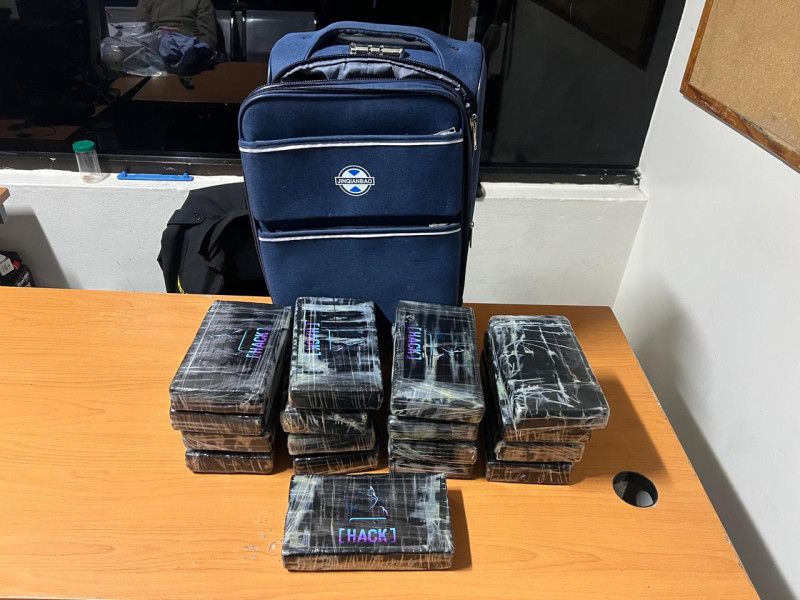
    Authorities at Las Américas International Airport (AILA) in Santo Domingo have intercepted a major narcotics smuggling attempt, resulting in the arrest of a German citizen moments before his scheduled departure to Europe. In a coordinated multi-agency operation, the National Drug Control Directorate (DNCD) uncovered 17 packages of a white powdery substance suspected to be cocaine concealed within the passenger’s luggage.

    The suspect, identified as Thomas Petter Haag, was apprehended following a routine security screening that triggered alerts. Canine units and advanced X-ray technology detected anomalies in his baggage, prompting a thorough inspection. Under the supervision of a public prosecutor, officials opened the suitcase and discovered the illicit packages, each meticulously wrapped in transparent plastic and secured with black adhesive tape.

    In addition to the suspected narcotics, law enforcement agents confiscated three mobile phones, substantial amounts of cash in both Dominican pesos and euros, and various identification documents. The operational success was achieved through the collaborative efforts of the Public Prosecutor’s Office, the Specialized Airport Security Corps (CESAC), and the General Directorate of Customs (DGA).

    DNCD spokesperson Carlos Devers confirmed that the case has been formally transferred to the Public Prosecutor’s Office, which is preparing to request pretrial detention for Haag on charges of violating Law 50-88 governing drugs and controlled substances. The suspect remains in custody as investigations continue.

    Authorities have launched an expanded investigation to determine whether Haag operates within a sophisticated international drug trafficking network. Forensic analysis of the seized substances is currently underway at the National Institute of Forensic Sciences (INACIF) to verify the chemical composition, purity, and exact weight of the confiscated materials.

  • Outstanding performances by Black Sands at regional championships

    Outstanding performances by Black Sands at regional championships

    The Black Sands Swim Squad concluded an extraordinary December campaign with historic achievements at two major regional swimming championships, showcasing exceptional talent through national record-breaking performances and podium finishes.

    At the BASA Short Course National Championships held December 2-7, emerging prodigy Kione Deshong delivered a spectacular performance that captured attention across the swimming community. The young athlete demonstrated remarkable versatility by claiming an impressive haul of 11 medals—6 gold, 3 silver, and 2 bronze. His most significant achievement came in the 100 Individual Medley, where he shattered the St. Vincent and the Grenadines national record previously held by teammate Matthew Ballah. Deshong clocked 1:06.89, nearly a full second faster than the previous benchmark of 1:07.79.

    The team’s success continued at the ASATT Invitational from December 11-14, where Black Sands faced formidable competition from 47 regional teams. The four-member squad consisting of Deshong, Kennice Greene, Eltonique Leonard, and Matthew Ballah achieved an impressive 10th place overall finish against elite competition.

    Deshong maintained his exceptional form throughout the second competition, securing 4 gold, 3 silver, and 1 bronze medal while earning the 2nd overall trophy in his age category. His performance included rewriting three national records: 50 Freestyle (26.51, breaking Shane Cadogan’s 26.70), 100 Freestyle (59.49, surpassing Nicolas Silvestre’s 1:01.04), and 50 Backstroke (31.25, improving his own previous record of 32.70).

    Kennice Greene equally impressed with her outstanding performances, collecting 3 gold, 2 silver, and 1 bronze medal while also securing the 2nd overall trophy in her age group. Greene demonstrated significant personal improvement by breaking four of her own national records: 100 Freestyle (1:00.45 from 1:00.56), 50 Backstroke (32.14 from 32.80), 100 Backstroke (1:11.42 from 1:11.82), and 200 Individual Medley (2:38.69 from 2:41.08).

    Matthew Ballah contributed to the team’s success with 1 gold and 1 bronze medal, while establishing a new national record in the 100 backstroke with a time of 1:01.16, surpassing Brandon George’s previous record of 1:02.11. Eltonique Leonard completed the team’s medal collection with 1 silver and 3 bronze medals.

    Head Coach Kyle Dougan expressed immense pride in his team’s accomplishments, stating he was “very pleased, extremely proud, and encouraged by the results achieved across both competitions.” He extended congratulations to rival Blue Marlins Swim Club for their strong 13th place finish and acknowledged the crucial support from Assistant Coach Anwar Medjahed, Chaperone Fiana McMillan, and Team Medic Dr. Rohan Deshong.

  • Cuevas del Pomier receive official recognition as cultural heritage

    Cuevas del Pomier receive official recognition as cultural heritage

    Santo Domingo – In a significant cultural preservation move, the Dominican Senate has unanimously endorsed legislation designating the Borbón Caves, commonly referred to as the Pomier Caves, as the official “Rock Art Capital of the Dominican Republic.” This parliamentary action represents the final approval stage for the bill, which seeks to elevate both domestic and international awareness of this extraordinary archaeological treasure situated in the Borbón sector of San Cristóbal province.

    The legislative proposal was championed by Senator Gustavo Lara Salazar, who emphasized the site’s unparalleled anthropological significance during parliamentary deliberations. The Pomier Caves Anthropological Reserve stands as one of the Caribbean’s most substantial archaeological complexes, safeguarding evidence of prehistoric human habitation spanning over a millennium. This preservation provides crucial understanding into the earliest cultural manifestations throughout the Antilles archipelago.

    Encompassing 55 separate caverns distributed across four square kilometers, the reserve features subterranean passages extending up to 1,000 meters beneath the surface. Scientific documentation reveals approximately 6,000 ancient pictographs portraying animal and human forms, complemented by roughly 500 intricate petroglyphs. These artistic creations are primarily attributed to the Taíno and Igneri civilizations that flourished prior to European colonization in 1492, highlighting the location’s exceptional historical and scientific value for anthropological research and Caribbean cultural heritage.

  • Environment Ministry authorizes import of exotic species for National Zoo

    Environment Ministry authorizes import of exotic species for National Zoo

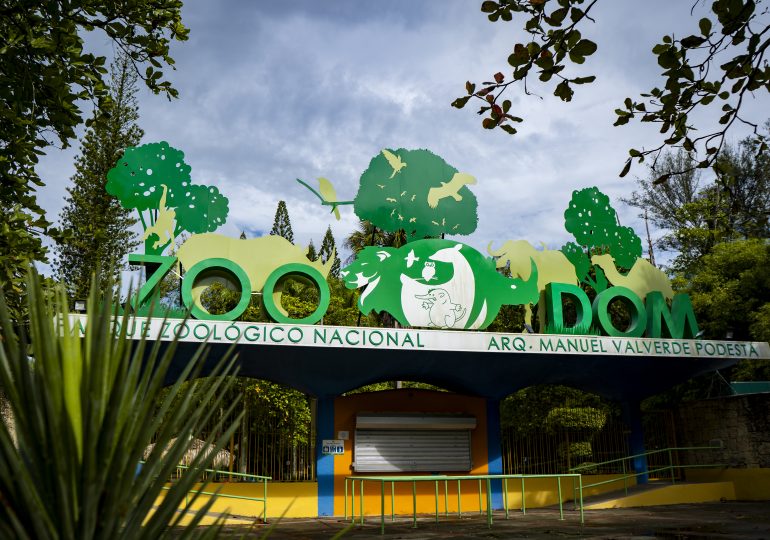
    Santo Domingo – In a carefully evaluated decision, the Dominican Republic’s Ministry of Environment and Natural Resources has sanctioned the importation of select exotic animals for the National Zoological Park (ZOODOM). This authorization, granted through the Vice Ministry of Protected Areas and Biodiversity, follows a comprehensive technical review process aimed at balancing educational objectives with ecological protection.

    The approved shipment includes six rhesus monkeys (Macaca mulatta) and two spectacled caimans (Caiman crocodilus) sourced from Puerto Rico’s Department of Natural Resources. These animals are destined to enhance ZOODOM’s conservation initiatives and public engagement programs, with officials confirming the zoo’s compliance with stringent biosecurity protocols and habitat management standards.

    Conversely, the ministry rejected ZOODOM’s parallel request to import ringneck parrots (Psittacula krameri), citing their invasive species classification. Scientific assessment determined these birds pose substantial risks to native biodiversity through resource competition and potential agricultural damage.

    The selective approval demonstrates the government’s science-based approach to wildlife management, emphasizing that all species introduction decisions undergo rigorous environmental impact analysis. This case establishes a precedent for responsible exotic animal acquisition that prioritizes ecosystem protection while supporting legitimate conservation education efforts.

  • JCE presents new Dominican ID card design

    JCE presents new Dominican ID card design

    The Central Electoral Board (JCE) of the Dominican Republic has officially unveiled the design for its next-generation national identity card, marking a significant leap in identification technology. The comprehensive modernization initiative will commence nationwide registration starting April 8, 2026, introducing cutting-edge security features that blend physical and digital protection mechanisms.

    While maintaining the traditional horizontal format familiar to citizens, the new ID card incorporates sophisticated anti-fraud technologies including grayscale laser printing, halftone security screens, and multiple optical elements. These features include a honeycomb pattern integrated into the primary photograph, a ghost image, and inverted visuals that only become visible from specific angles, creating a multi-layered security approach.

    The card’s front display showcases the Dominican coat of arms alongside the gold JCE logo, with the ID number presented in high relief to enable immediate visual detection of tampering attempts. All security specifications adhere to rigorous international standards established by the International Civil Aviation Organization (ICAO).

    A revolutionary component of the new design is the embedded contactless chip, which will facilitate electronic identity verification and accelerate access to both administrative services and digital platforms. The JCE emphasized that the implementation will proceed through a carefully structured nationwide rollout, with additional logistical details and timelines to be communicated in the coming months. This initiative represents the Dominican Republic’s commitment to creating a secure, modern, and digitally integrated identification system aligned with global best practices.