作者: admin

  • Sammy, St Ange prep swimmers for CARIFTA Aquatics

    Sammy, St Ange prep swimmers for CARIFTA Aquatics

    On Wednesday, April 1, a confident and high-spirited Team Saint Lucia set off from their home island to compete in the 2026 CARIFTA Aquatics Championships, which will be hosted across two venues in Martinique from April 3 to 8. The regional swimming and aquatics competition will run events at both the Pierre Samot Community Aquatic Centre in Le Lamentin and the open coastal waters of Anses d’Arlet.

    The roster traveling to the tournament includes 12 athletes, who made the crossing by boat following weeks of rigorous targeted preparation. The team features a mix of experienced returning medal winners hungry for more podium success and promising first-time competitors eager to make their mark on the regional stage. Ahead of their departure, all home-based swimmers wrapped up their final on-island training sessions over the weekend of March 29-30 at Rodney Heights Aquatic Centre.

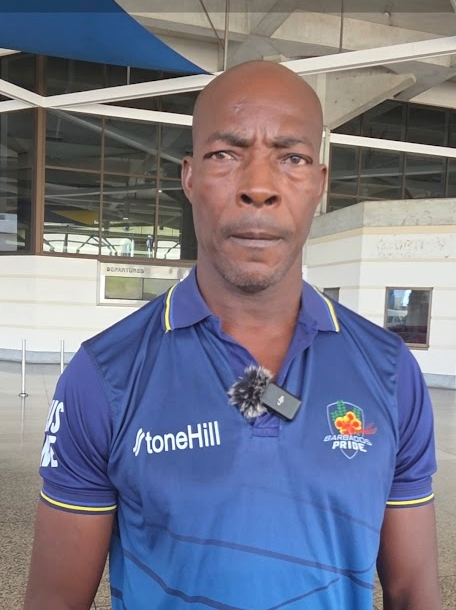
    Beyond physical conditioning, the squad also received tailored mental and motivational support in their final preparation block. Team manager Denise Parks shared with local outlet St Lucia Times that the athletes got an inspiring pep talk from Daren Sammy, head coach of the West Indies men’s national cricket team, and completed a dedicated mental skills workshop with sports psychologist Yasmine St Ange.

    Local aquatics officials have singled out several athletes to watch as the competition gets underway. Standout competitors expected to deliver strong performances include Sapphire Parks in the 11-12 age girls’ division, University of Michigan freshman Antoine Destang in the 15-17 boys’ category, Jayden Xu and Noah Dorville, U.S.-based competitor Fayth Jeffrey, and Fayth Lubrun, who will compete alongside Jeffrey in the 15-17 girls’ division. A cohort of talented first-time team members is also ready to showcase their hard-earned skills at the Pierre Samot pool this week.

    On the organizational and financial side, Saint Lucia Aquatics Federation President Paul James confirmed to St Lucia Times that the governing body made a deliberate decision not to request funding from the Saint Lucia Olympic Committee for this tournament. The federation plans to pursue external sponsorship opportunities for larger competitions scheduled later in 2026 instead.

  • St Mary’s to represent Saint Lucia at Penn Relays

    St Mary’s to represent Saint Lucia at Penn Relays

    For Saint Lucia’s track and field community, a new chapter of athletic ambition is set to unfold this April, as a group of young athletes from St Mary’s College (SMC) prepare to break new ground as the first team from the island nation to compete at the iconic Penn Relay Carnival. Running from April 21 to 25 at the University of Pennsylvania’s historic Franklin Field – a venue that has hosted the prestigious meet since 1895 – the Saint Lucian delegation will compete in the High School Boys division, taking on competitors from across the globe in the 4x100m and 4x400m international relay events.

    The five-member SMC roster brings together some of Saint Lucia’s brightest emerging track talent, anchored by athletes with proven experience at regional competitions. Leading the squad is 17-year-old Terrick Plummer, who already represented Saint Lucia at the 2025 CARIFTA Games held in Trinidad & Tobago. He is joined by 16-year-old Joshua Matthew, the current national Under-17 champion for both the 200m and 400m distances. Rounding out the team are 16-year-olds Ethan Doxerie and Tai La Force, and 15-year-old Zayne Henry, with seasoned local coach Lenyn Leonce leading the group as they prepare for their global debut.

    This historic participation would not have been possible without the full backing of Hamilton Reserve Bank, the Caribbean region’s largest global bank by headquarters, which holds more than US$6 billion in total assets. The financial institution has covered all of the team’s costs and logistical needs, including international airfare, on-the-ground accommodations, daily meals, local transportation, and official competition gear for the delegation.

    In an official statement announcing the sponsorship, the bank framed its support as far more than a one-off contribution to a sports team. “This milestone event for Saint Lucia represents more than participation,” the release read. “It signals a strategic investment in youth development, global exposure, and high-performance sports by the largest global bank in the Caribbean region.”

    Merkisha Desir, a senior relationship banker at Hamilton Reserve Bank and a native of Saint Lucia, expanded on the bank’s commitment to lifting regional Caribbean talent. “At Hamilton Reserve Bank, we unlock Caribbean potential by connecting aspiration with access,” Desir explained. “For our bank, the Caribbean is home. Our corporate commitment to regional development extends beyond offering the fastest bank wires in the world in seconds and enabling new banking customers to be approved 100% online in 20 minutes. We are building bridges between Caribbean talent and global opportunities for years to come.”

    At the Penn Relays, SMC’s athletes will face off against delegations from across the Caribbean, with large contingents expected from regional track powerhouses including Jamaica, as well as other neighboring nations such as Trinidad & Tobago, The Bahamas, St Vincent & the Grenadines, and St Kitts & Nevis. Each year, the historic meet draws more than 15,000 student-athletes from hundreds of educational institutions across the world, making it one of the most high-profile track and field competitions for young emerging talent globally.

    For the SMC team – nicknamed the Samarians – the competition is viewed as a transformative learning opportunity that will pay dividends in future regional competitions. Local athletic leaders hope the experience gained on the global stage will translate to stronger performances at next year’s Island Champs relays. This year, across five relay events at the competition, the Samarians claimed just a single bronze medal, in the Under-16 4x400m division.

    Saint Lucia’s growing reputation in international track and field has risen sharply in recent years, anchored by the success of Julien Alfred, the island’s first Olympic gold medallist. With this debut appearance at the Penn Relay Carnival, the nation’s next generation of athletes is set to carry that momentum forward, extending Saint Lucia’s footprint on the global track and field landscape.

    The journey for these young athletes began locally at Saint Lucia’s Mindoo Phillip Park, where they have trained and competed for years, before earning the opportunity to take their talents to one of the world’s most iconic track venues. This milestone marks a breakthrough moment for the future of athletics in the small Caribbean nation.

  • Twenty-four athletes to represent Federation at CARIFTA Games

    Twenty-four athletes to represent Federation at CARIFTA Games

    BASSETERRE, St. Kitts – Ahead of the 53rd edition of the Caribbean Free Trade Association (CARIFTA) Games, the St. Kitts and Nevis Athletics association has officially announced its 24-athlete delegation set to compete at the regional youth track and field championship, hosted this year at Grenada’s Kirani James Athletic Stadium from April 4 to 6, 2026.

    Nicknamed “Team Unstoppable SKN,” this year’s roster balances experience and emerging talent: it includes seasoned returning CARIFTA medalists and veteran competitors, alongside a cohort of ambitious first-time qualifiers who met all selection standards during national qualifying trials. The entire team is scheduled to depart St. Kitts and Nevis for Grenada on April 2, two days ahead of the opening round of competitions.

    In an official statement following the team announcement, SKN Athletics President Wayne Delaney shared his pride in the selected athletes, emphasizing that their spots on the national team are a direct reflection of the relentless effort they have put into their craft. “Their selection is a testament to their hard work, resilience, and passion for athletics,” Delaney said. “We encourage them to continue pushing their limits, knowing that the entire Federation of St. Kitts and Nevis stands behind them.”

    The delegation is split across four age and gender divisions: the Under-17 Girls category features Khylinn Prentice (100m, 200m), Ta-Junique Huggins (100m Hurdles, 400m Hurdles), Trishana O’Donoghue (400m Hurdles), Dejhanee Moses (High Jump, Long Jump), Janiah McNeil (High Jump), Miel Pemberton (Long Jump), Ayrian Walters (Shot Put, Javelin) and Kezia Phillip (Shot Put). The Under-17 Boys roster includes Kymarni Newton (800m), Najeeb Kelly (1500m), Shandon Burton (1500m, 3000m), Malik Freeman (Shot Put, Javelin) and Kylan Woods (Javelin). Just one athlete, De’Cheynelle Thomas (200m, 400m), will represent the nation in the Under-20 Girls division. The Under-20 Boys contingent is the largest group on the team, with Chesson Liburd (100m), Jaylen Bennett (400m), Tejuan Webbe (100m Hurdles, Long Jump), Jayden Hendrickson (400m Hurdles), Josano Henderson (Javelin), Akanye Samuel-Francis (400m Hurdles), Dejuaan Pemberton (High Jump), Zackery Nisbett (High Jump), Kialan Morton (Shot Put), Jaheem Clarke (Javelin) and Naseem Gerald (Decathlon).

    A full specialized staff will support the athletes throughout the championship: Shirmon Caines serves as Head Coach and throws coach, Adelvin Philip leads sprints and relays training, Roatter Johnson acts as jumps coach, Royston Queeley handles hurdles coaching, Niketa Isles fills the role of team manager, Alister James is the team physiotherapist, Nicola Huggins Parris serves as safeguarding officer, Corneil Williams and Dwayne Warner are congressional delegates, and Rashid Stanley handles team media operations.

    SKN Athletics also extended formal thanks to the key sponsors that have made the team’s trip and participation possible. Major backers include the St. Kitts-Nevis-Anguilla National Bank, the Government of St. Kitts and Nevis’ Ministry of Sports, the Nevis Island Administration, and SKN Athletics itself. As the team makes its final preparations for departure, national sports officials are calling on residents and supporters across St. Kitts and Nevis to rally behind Team Unstoppable SKN as they compete against the Caribbean’s top young track and field talent.

  • Strait of Hormuz traffic nearly grinds to a halt, raising global economic fears

    Strait of Hormuz traffic nearly grinds to a halt, raising global economic fears

    Almost the entire flow of maritime traffic through the Strait of Hormuz, one of the world’s most critical energy and trade chokepoints, has ground to a halt this week, triggering urgent warnings from the United Nations Conference on Trade and Development (UNCTAD) about looming global economic fallout. The development, unfolding against a backdrop of rapidly escalating tensions between the United States, Israel, and Iran, has already sent shockwaves through international commodity and energy markets.

  • Police officer suspected of attempted murder — prosecutor

    Police officer suspected of attempted murder — prosecutor

    In a high-profile court hearing held Tuesday at the Serious Offences Court in St. Vincent and the Grenadines, a sitting officer of the national police force has found himself at the center of multiple overlapping criminal investigations, sparking heated debate over procedural fairness and institutional transparency. Prosecutor Inspector Renrick Cato made the bombshell disclosure that Police Constable Phillip Arrindell, who currently faces a single charge of theft, is a named suspect in an ongoing probe into attempted murder and illegal possession of a firearm. Arrindell appeared before the court this week to answer to the theft allegation, which accuses him of stealing a Suzuki vehicle key belonging to Jahriel Griffin, a resident of Villa, between March 15 and 20, 2026, in the area spanning Kingstown to Calliaqua. The officer has formally entered a not guilty plea to the theft charge. Cato urged Chief Magistrate Colin John to reject any application for bail and remand Arrindell into custody for a seven-day period to allow investigators to wrap up their work on the more serious criminal allegations. The prosecutor argued that releasing Arrindell on bail would create an unacceptable risk that he would tamper with evidence, intimidate witnesses, or otherwise obstruct the ongoing investigations. The request for pre-trial detention was immediately challenged by Arrindell’s defense counsel, Grant Connell, who denounced the prosecution’s position as fundamentally unfair, describing the broader investigation into the attempted murder and firearm charges as a baseless “fishing expedition” that lacks credible evidence. Connell told the court that his client has already been held in police custody since Monday, and he detailed a troubling experience when he attempted to access Arrindell at the local police station. According to the defense lawyer, station staff initially denied that Arrindell was being held at the facility, only for Connell to encounter an elderly woman outside the station who confirmed the officer was indeed in custody. This discrepancy, Connell argued, has eroded trust in the institutional process, noting that the incident deviates from the fundamental legal principle that guides the jurisdiction: that a defendant is presumed innocent until proven guilty beyond a reasonable doubt. Instead, the defense claimed, law enforcement appears to be operating under a reversed standard where Arrindell is assumed guilty and forced to prove his own innocence. Connell further revealed that he had obtained a formal notice indicating that Arrindell has already been suspended from the police force on unpaid leave, a move he described as “draconian” and evidence of a personal vendetta against his client. Prosecutor Cato responded that he had no prior knowledge of any unpaid suspension for the defendant. In a sharp rebuke of the prosecution’s case, Connell told the court he planned to conduct a rigorous cross-examination of all prosecution witnesses when the case goes to trial, saying “We will do the post mortem during trial, not after.” After considering the prosecution’s argument that Arrindell poses a flight risk and a threat to the integrity of the investigation, Chief Magistrate John ultimately ruled to deny bail and scheduled the next hearing in the case for Tuesday, April 7.

  • Global Agencies Form Taskforce to Tackle Economic Fallout from Middle East War

    Global Agencies Form Taskforce to Tackle Economic Fallout from Middle East War

    As an ongoing military conflict involving Iran, the United States and Israel stretches on, ripple effects have begun to destabilize the global economy, with warning from economic analysts that these disruptions could persist for months or even years. In a proactive response to the growing crisis, three of the world’s most influential multilateral institutions — the International Energy Agency (IEA), International Monetary Fund (IMF), and World Bank Group — have joined forces to form a dedicated coordination taskforce aimed at lessening the conflict’s broad energy and economic damage.

    The joint announcement, made via a public media statement from Washington D.C. on Wednesday afternoon, lays out the urgent need for unified action amid unprecedented market turmoil. Per the statement, the Middle East conflict has already claimed untold damage to livelihoods across the region and triggered one of the most severe global energy supply shortages in modern history. Unlike economic shocks from past regional conflicts, the current fallout is deeply asymmetric, placing the heaviest burden on energy-importing nations, particularly low-income economies that lack the policy buffer to absorb sudden price spikes.

    Since the outbreak of hostilities, targeted strikes on critical regional oil infrastructure have sent crude and natural gas prices soaring. Iran has also halted commercial vessel traffic through the Strait of Hormuz, the world’s most critical chokepoint for global commodity trade, which handles roughly a fifth of the world’s daily oil consumption. The disruption extends far beyond energy markets: higher fertilizer costs have sparked fears of imminent food price inflation, while key global supply chains for critical materials including helium, phosphate, and aluminum have been thrown off course. Flight disruptions at major Gulf aviation hubs have also hit international tourism hard, erasing revenue for destinations that depend on international travel.

    The cascading shocks have already spiked widespread market volatility, weakened currency valuations across emerging markets, and shifted inflation expectations higher. These developments have raised the specter of forced monetary policy tightening across major economies, which would further drag down already slowing global growth projections. Both the IMF and World Bank have issued repeated warnings about the conflict’s impact on the global economic outlook in recent weeks, stressing that the ultimate scale of damage will be tied directly to how long the conflict remains unresolved.

    In an environment of extreme economic uncertainty, institutional leaders emphasized that coordinated action is non-negotiable. “It is paramount that our institutions join forces to monitor developments, align analysis, and coordinate support to policymakers to navigate this crisis,” the statement noted, adding that targeted support is especially critical for the countries most exposed to downstream disruptions, which often face limited policy room to maneuver and already carry unsustainable debt loads. Among the regions identified as most at risk is the Caribbean, which relies almost entirely on imported fuel and food to sustain its population and economy.

    The newly formed taskforce has outlined three core pillars for its coordinated response. First, it will conduct a granular, global assessment of impact severity through standardized cross-institutional data sharing, covering energy market dynamics, trade flows, fiscal and balance of payments pressures, inflation trajectories, commodity export restrictions, and supply chain breakdowns. Second, it will align response mechanisms, including delivering targeted policy guidance to national governments, evaluating country-specific financing needs, deploying concessional financing and other forms of financial support, and rolling out risk mitigation tools where market volatility creates unmanageable exposure. Third, the taskforce will coordinate with a broad network of stakeholders, including other multilateral bodies, regional development organizations, and bilateral donor partners, to deliver efficient, unified support to vulnerable countries in need. The group also noted it will draw on the technical expertise of other specialized international organizations to address niche challenges emerging from the conflict.

  • Nevis Geothermal Project Advances with August Drilling Target

    Nevis Geothermal Project Advances with August Drilling Target

    CHARLESTOWN, Nevis — In a major milestone for the Caribbean island’s quest for energy independence, Nevis Premier Mark Brantley has officially confirmed that the long-planned national geothermal energy project is on track to launch drilling operations by August 2026, following detailed planning sessions with the selected contractor, Iceland Drilling.

    During his regular monthly press briefing held Monday, Brantley shared that technical representatives from Iceland Drilling completed an on-site inspection of the project area last week, where they formalized their aggressive operational timeline. The firm has committed to full mobilization and the start of core drilling activities by the August target, a timeline Brantley says he is cautiously optimistic the team will meet.

    “During my discussions with the Iceland Drilling delegation, they laid out a clear, ambitious schedule to get all equipment and personnel in place ahead of the August start date,” Brantley told reporters. “Right now, their drilling rig is already en route to Iceland for necessary repairs and custom retrofitting, after which it will sail directly to Nevis to begin work. Getting this drilling phase underway will be a transformative leap forward for our geothermal development goals.”

    The updated project timeline comes as a much-needed boost for both the Nevis Island Administration and the broader Federation of Saint Kitts and Nevis, which is already facing growing economic pressure from skyrocketing global fossil fuel prices. These price spikes have been driven by escalating geopolitical tensions linked to ongoing conflict in the Middle East, with ripple effects hitting small island economies heavily dependent on imported energy.

    Brantley emphasized that ongoing global instability, centered on major oil-producing regions including the Persian Gulf and the Strait of Hormuz, has created a sustained period of market volatility. Major global energy players including Russia, Venezuela, Iran and key Gulf Cooperation Council nations are all facing overlapping political and economic disruptions that have pushed crude oil and energy costs steadily higher. Brantley warned that Nevis residents should prepare for an extended period of elevated prices for fuel, electricity, and essential goods, as rising energy costs flow through every sector of the local economy.

    The current global energy crisis has underscored the urgent strategic importance of Nevis’ geothermal project for the entire federation, Brantley noted. The initiative is core to the government’s policy agenda to boost national energy security and cut longstanding reliance on costly imported fossil fuels.

    Brantley also pointed to the direct, tangible impacts of global conflict that are already being felt across Nevis’ local economy, pushing back against the common perception that distant geopolitical events do not affect small Caribbean islands. “Fishermen have no option but to raise fish prices because their fuel costs are climbing. Bus operators have to increase fares for the same reason,” he explained. “Too often, we see conflicts playing out on international news channels like CNN or BBC and write them off as distant problems that have nothing to do with us. But that’s not the case — the impacts of these tensions are felt right here, on the streets and in the markets of Nevis, and that’s a reality we all need to recognize.”

    The project update, delivered during Brantley’s scheduled Monday press briefing, confirms that Nevis remains on track to advance one of the Caribbean’s most high-profile renewable energy infrastructure projects this year.

  • Baní Bypass to operate one-way for Easter traffic control

    Baní Bypass to operate one-way for Easter traffic control

    PERAVIA — Authorities from the Dominican Republic’s National Institute of Traffic and Land Transportation (DIGESETT) have rolled out a targeted traffic management adjustment ahead of the Easter holiday rush, announcing that the Baní Bypass will switch to a temporary southbound-only configuration starting Wednesday afternoon. This strategic shift is designed to streamline movement along the critical corridor that thousands of holidaymakers use to reach popular destinations in the country’s southern provinces.

    To accommodate the expected wave of return traffic heading back to the capital after the long weekend, the directional arrangement will be reversed on Easter Sunday. On that day, the entire bypass will operate as a single northbound lane, with all traffic permitted to travel only from the southern region toward Santo Domingo. This phased adjustment is intended to cut down on long delays and gridlock that typically plague major travel routes during peak holiday arrival and departure periods.

    The traffic plan was formally unveiled by DIGESETT spokesperson Rafael Tejeda Baldera during the official launch of the agency’s annual “Conscience for Life” road safety operation in Peravia. Beyond the infrastructure adjustment, officials have issued a public appeal to all motorists traveling over the holiday. Drivers are strongly encouraged to comply with posted traffic regulations, adhere to speed limits, and follow on-the-ground instructions from deployed traffic personnel to minimize the risk of accidents and keep the road network operating safely for all users.

  • Puerto Plata to welcome 54 cruise ships in April 2026

    Puerto Plata to welcome 54 cruise ships in April 2026

    The Dominican Republic’s Ministry of Tourism has unveiled a landmark update for the country’s northern cruise sector, confirming that the popular coastal destination of Puerto Plata will welcome 54 scheduled cruise ship calls in April 2026. This announcement underscores the steady, long-term expansion of cruise tourism across the Dominican Republic’s northern coastline.

    The scheduled arrivals will be split between two major local port facilities: the well-established Amber Cove terminal will host 19 cruise ship operations, while the growing Taíno Bay port will accommodate the remaining 35 calls, reflecting the increasing capacity and demand for cruise stops in the region.

    David Collado, the Dominican Republic’s Tourism Minister, attributed the cruise sector’s consistent strong performance to a targeted national strategy that prioritizes long-term infrastructure planning, rigorous daily operational monitoring, and ongoing upgrades to the services delivered to international visitors. Collado noted that this intentional, visitor-focused approach has significantly boosted the country’s competitive standing among top cruise destinations across the Caribbean, a region that draws millions of cruise passengers every year.

    Local tourism leadership echoed Collado’s optimism, emphasizing that the early announcement of the 2026 April schedule creates unique opportunities for advance operational planning. With clear advance knowledge of arrival volumes, stakeholders can refine passenger flow management, streamline communication and collaboration between port operators, local tour providers, and national government agencies, and eliminate last-minute logistical bottlenecks that can detract from visitor experiences.

    Industry and government projections indicate that the higher volume of cruise arrivals will deliver widespread benefits across Puerto Plata’s local economy. Beyond boosting the revenue of local tourism-dependent businesses, the increased passenger footfall is expected to drive incremental improvements in service standards, help refine visitor experience offerings, and create additional informal and formal employment opportunities for local residents.

    With consistent strategic planning and close cross-institutional coordination, Puerto Plata is continuing to solidify its reputation as one of the Caribbean’s premier cruise tourism hubs, attracting growing numbers of major cruise lines and their passengers year after year.

  • Conflict tussen VS en Iran bereikt beslissend moment

    Conflict tussen VS en Iran bereikt beslissend moment

    Tensions between the United States and Iran have entered a defining, high-stakes phase that threatens broader regional instability and ripple effects across the global economy, top U.S. defense officials have warned.

    On Tuesday, U.S. Defense Secretary Pete Hegseth emphasized that the coming days will shape the entire trajectory of the escalating standoff. The latest escalation came on March 31, when an Iranian attack targeted the fully loaded Kuwaiti-flagged crude oil tanker Al-Salmi anchored off the coast of Dubai, sparking a fire on board the vessel. The strike, confirmed by photos released by Kuwait Petroleum Corporation, followed weeks of intensifying military and rhetorical exchanges between the two sides.

    In direct response to U.S. military pressure, Iran’s Islamic Revolutionary Guard Corps issued a stark new threat: Tehran published a list of 18 U.S. companies that will be considered legitimate targets starting Wednesday. The roster includes major American technology and defense giants spanning Microsoft, Google, Apple, Intel, IBM, Tesla and Boeing. The White House quickly issued a counterstatement, confirming that U.S. armed forces are fully positioned to mitigate any potential attacks and respond decisively to Iranian aggression.

    Diplomatic efforts to de-escalate the conflict continue to hang in the balance amid a fragile standoff between threats and quiet outreach. Iranian Foreign Minister Abbas Araqchi rejected U.S. communications delivered through special envoy Steve Witkoff, dismissing the messages as nothing more than third-party threats rather than genuine negotiating proposals. Despite a month of heavy fighting that has killed thousands of people and put global energy supplies under unprecedented strain, diplomatic sources confirm that backchannel discussions between the two sides remain ongoing.

    U.S. President Donald Trump has issued an ultimatum to Tehran: if Iran refuses to sign a peace agreement and reopen the Strait of Hormuz, the critical chokepoint through which a fifth of global oil exports pass, he will order the complete destruction of Iranian energy infrastructure. Trump has also publicly criticized U.S. allies, most notably the United Kingdom, for failing to provide sufficient support to American military operations in the region.

    The ongoing conflict has exposed deep divisions within the NATO alliance. France and Italy have adopted cautious stances, refusing to back several recent U.S. and Israeli military actions against Iran. Pope Leo has also publicly called on Trump to prioritize a diplomatic offramp to reduce the ongoing cycle of violence.

    The Iranian attack on the Al-Salmi tanker has already sent shockwaves through global energy markets, driving a sharp temporary spike in crude oil prices. Brent crude futures notched a historic 64% surge across the month of March, peaking above $118 per barrel. For Trump, soaring fuel prices carry significant domestic political risk ahead of upcoming U.S. midterm elections, with higher energy costs already putting pressure on American household budgets.

    On the military front, U.S. Joint Chiefs of Staff Chairman General Dan Caine reported that targeted strikes on Iranian weapons research and production facilities have steadily eroded Tehran’s military capabilities. U.S. officials claim more than 150 Iranian naval vessels have been destroyed in the campaign, and Defense Secretary Hegseth added that widespread desertions are now being reported within Iranian military ranks.

    Despite these setbacks for Tehran, the conflict continues to expand across the Middle East. Israel launched a new round of airstrikes targeting 20 Iranian weapons sites and a military research facility. In Yemen, Iran-aligned Houthi rebels have stepped up attacks against Israeli targets. Most recently, Turkey announced it intercepted and shot down an Iranian ballistic missile that entered its airspace, marking a new escalation that draws an additional regional power into the crisis.

    International calls for de-escalation are growing from global actors. Pakistan and China have jointly called for an immediate ceasefire and urgent peace negotiations. The foreign ministers of both nations met in Beijing on Tuesday to discuss the urgent need to lower tensions and avoid a full-scale regional war.

    Yet Iran has shown no sign of backing down amid mounting international pressure. Its continued hardline stance has pushed the conflict toward further escalation, putting both Middle Eastern stability and the health of the entire global economy at severe ongoing risk.