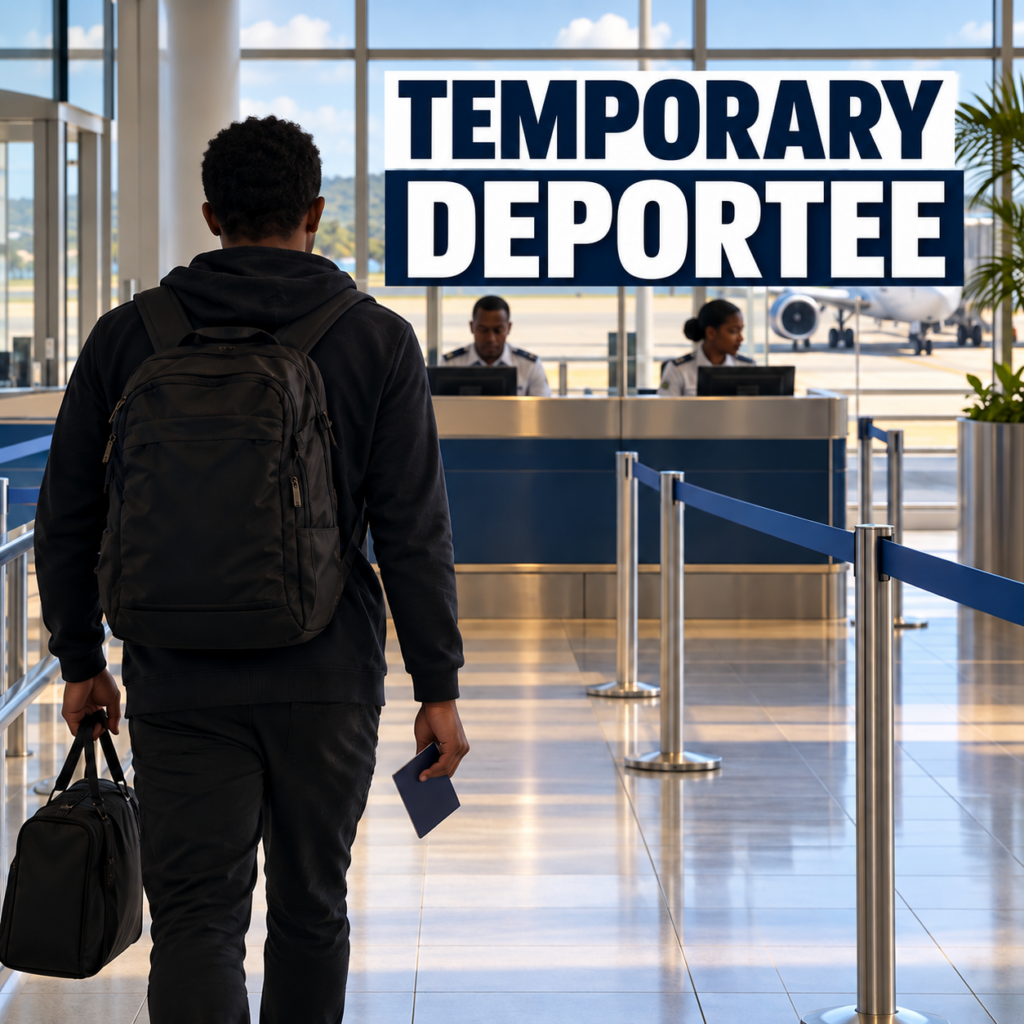
A new policy proposal from the government of Antigua and Barbuda has outlined tight, specific conditions under which third-country nationals transferred from U.S. custody would be allowed into the Caribbean nation, strictly limiting their stay to a temporary, transitional status rather than offering permanent relocation. The full text of the draft procedures was publicly shared Saturday during an interview on the *Browne and Browne Show* broadcast on local radio outlet Pointe FM, clarifying the small island nation’s core position on the emerging bilateral agreement with Washington.\n\nPrime Minister Gaston Browne emphasized that the central priority of the proposed framework is to put binding safeguards in place that prevent Antigua and Barbuda from being left with long-term responsibility for migrants who are unable to depart the country after their initial transfer. Under the terms of the draft, all transfers would be processed through V.C. Bird International Airport, the country’s main international gateway. At the airport, personnel from the U.S. Department of Homeland Security would hand over custody of transferred individuals to Antigua and Barbuda’s national immigration authorities. Critically, every person scheduled for transfer must receive formal written approval from the Antigua and Barbuda government before they are permitted to board a flight bound for the country.\n\nThe draft confirms that all admissions of transferred migrants will be carried out in full compliance with Antigua and Barbuda’s existing domestic legislation. Ahead of any first transfer, the government will formally codify the specific duration and additional conditions of the temporary admission status. Importantly, the act of being transferred to Antigua and Barbuda does not automatically grant an individual permanent residence, citizenship, formal refugee status, or authorization to seek employment within the country. The draft does not, however, prohibit transferred people from applying for asylum or other long-term legal status after their arrival; all such requests will be reviewed in accordance with both Antigua and Barbuda’s national laws and the country’s binding international treaty obligations.\n\nA key requirement laid out in the proposal mandates that the United States provide both logistical and financial support for all voluntary returns of migrants to their home countries, as well as for any legal onward travel to a third destination. In cases where a migrant is required to leave Antigua and Barbuda but cannot safely or legally return to their country of origin or nationality, the draft requires the U.S. to lead efforts to identify an alternative lawful destination that is acceptable to the Antigua and Barbuda government. Washington would also be required to continue covering all agreed-upon financial and logistical support until a permanent resolution is secured for the individual.\n\nBrowne confirmed that Antigua and Barbuda has already submitted its revised draft terms to U.S. officials for review. As of the latest update, the temporary admission arrangement remains a non-binding proposal, and no timeline or details for an initial transfer have been publicly announced by either government.
作者: admin
-

No Passport, No Transfer: Antigua Sets Conditions for U.S. Deportees
The prime minister of Antigua and Barbuda, Gaston Browne, has outlined strict new draft requirements that the small Caribbean nation is demanding before accepting any transfers of third-country nationals from the United States. Browne laid out the proposed operating procedures during an interview Saturday on the *Browne and Browne Show* broadcast on local outlet Pointe FM, making clear that the terms remain under active negotiation with U.S. authorities in Washington and have not yet been finalized by both parties.
At the core of the proposed framework is a non-negotiable rule: every individual transferred must hold a valid, unexpired passport issued by their country of origin. Beyond that basic document requirement, Antigua and Barbuda’s government must also confirm that the person in question has a guaranteed, legal right to enter either their home country or another pre-approved onward destination before any transfer can be approved.
Under the draft rules, U.S. officials would be required to submit a copy of each individual’s passport alongside formal documentation proving that the intended onward destination will grant the person entry. This submission must also disclose any existing legal, diplomatic, or practical barriers that could block the person from completing their onward travel after their temporary stay in Antigua and Barbuda.
Browne emphasized that these safeguards were designed explicitly to avoid a scenario where Antigua and Barbuda becomes a permanent holding spot for people unable to leave the country after transfer. “We’re not accepting anyone without a travel document, because if they don’t have a travel document, then clearly we’ll be stuck with them,” he explained in the interview.
A valid passport alone is not enough to secure approval for transfer, under the draft proposal. Each individual transfer requires explicit written approval from Antigua and Barbuda’s government before the movement can take place. The framework also places a hard cap on transfer volumes: no more than seven people may be transferred to the nation in any three-month period, and the government retains the right to accept fewer than that limit if it chooses.
To date, Browne confirmed that Antigua and Barbuda has revised an initial draft proposal put forward by the United States and submitted its amended terms back to Washington for review. As of the announcement, the passport requirement and onward travel conditions have not been formalized into a mutually agreed bilateral agreement.
-
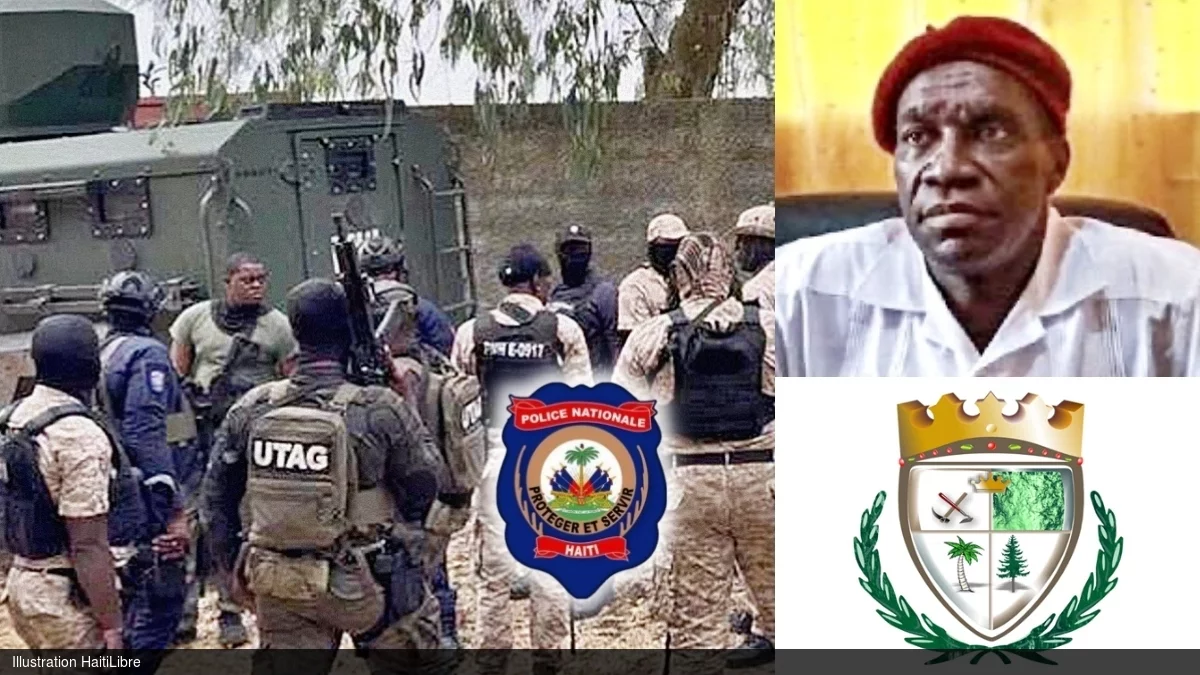
Security : Congratulations to the forces involved and requests from the city of Kenscoff
On September 27, 2026, local officials in Haiti’s mountain municipality of Kenscoff have publicly celebrated progress in recent anti-criminal security operations, while issuing a coordinated set of urgent requests to national government institutions to lock in hard-won security gains and support the return of displaced residents.
In an official statement, the Kenscoff City Hall extended profound gratitude and formal recognition to the Haitian National Police (PNH) for their relentless efforts to oust armed groups and retake control of multiple local territories. The municipal body highlighted the extraordinary courage and unwavering commitment of frontline police officers, who carry out their life-threatening missions under exceptionally harsh conditions, enduring significant personal sacrifices to restore safety for local communities. Kenscoff officials also praised the work of law-abiding local volunteers who have joined the collective security effort, and commended the resilience and patience of Kenscoff residents who have weathered the ongoing security crisis.
Despite the milestone of retaking contested areas, municipal leaders emphasized that territorial recapture is only the initial phase of securing the municipality. Long-term stability, sustained safety, and the gradual restoration of normal living conditions for residents depend on coordinated, sustained action from every branch of the Haitian national government, officials said.
To address this gap, the mayor of Kenscoff has outlined targeted requests for six different national bodies. To the Superior Council of the National Police (CSPN), the municipality asks for the development of a formal cross-institutional consolidation plan for recaptured areas, increased operational resources for deployed security forces, improved coordination between the PNH, the Armed Forces of Haiti (FAd’H) and other relevant agencies to eliminate post-recapture security vacuums, and the creation of a regular monitoring mechanism to track evolving security conditions in liberated zones.
For the General Directorate of the PNH, the mayor requests sustained permanent police deployment in retaken areas (based on operational needs), increased patrols and surveillance in high-risk zones, secured access to main roads leading into recaptured sectors, continued offensive operations to solidify gains, and regular information sharing with local authorities to keep the public updated on security developments, consistent with operational confidentiality requirements.
For the Armed Forces of Haiti, the mayor asks for operational support to consolidate and secure recaptured areas in line with national legal frameworks and government directives, increased troop presence in high-priority sectors, close coordination with the PNH to prevent armed groups from reoccupying liberated territories, and participation in cross-institutional territorial security planning mechanisms.
The Ministry of Public Works has been called on to prioritize urgent repairs for strategic Kenscoff roads, many of which are currently in such poor condition that they impede the movement of security forces. Requests to the ministry include an urgent technical assessment of priority routes, immediate rehabilitation, clearing and infrastructure upgrades, identification of road obstacles that block or slow the passage of armored security vehicles, and collaboration with the mayor’s office and security leadership to finalize a list of priority routes for intervention.
For the Ministry of the Interior, Kenscoff officials request institutional support for municipal consolidation efforts, facilitation of coordination between the local government and national state bodies, support to meet urgent essential service needs in newly secured areas, and backing for the process that will allow displaced residents to gradually return to their homes once security conditions are deemed safe.
Finally, the mayor’s office is calling on the Prime Minister’s Office and the full Haitian government to establish a dedicated special inter-institutional task force for Kenscoff, mobilize critical financial, logistical and material resources to support post-recapture efforts, coordinate interventions across all relevant national agencies, and accelerate work to restore public services and critical infrastructure in secured zones.
In an appeal to local residents, the Kenscoff City Hall urged the public to maintain caution, follow all instructions issued by security forces during ongoing operations, avoid entering areas still active combat zones, and refrain from resuming economic and daily activities in sensitive areas until formal authorization is granted by relevant authorities. Municipal leaders reiterated that while strengthening community security is a collective responsibility, formal security operations remain the exclusive mandate of legally authorized state forces.
Kenscoff officials framed the current wave of successful operations as a critical turning point for the municipality. They encouraged security forces to maintain their momentum, and called on all national institutions to work together to turn recaptured territories into permanently safe, accessible and progressively rehabilitated communities for returning residents. Leaders stressed that the fight for Kenscoff’s security does not end with territorial recapture – the next, equally critical phase is consolidation, permanent security, and rebuilding the conditions for residents to come home.
-

Elections : Statistics on the electoral process (daily data)
As Haiti prepares for its upcoming general elections, new daily data published by the nation’s Provisional Electoral Council (CEP) on September 27, 2026, offers a comprehensive snapshot of candidate registration trends, highlighting persistent demographic disparities and incomplete compliance with national gender representation rules.
Breaking down the distribution of candidates across all elected positions, legislative seats draw the largest pool of contenders by a wide margin. A total of 580 candidates have registered to run for Member of Parliament, while 195 are seeking Senate seats. For local government offices, 274 candidates are vying for CASEC positions, 260 have put their names forward for mayor, and 160 are running for ASEC seats. At the top of the ticket, the presidential race remains a compact contest, with only 10 candidates formally registered to date, all of whom are men representing different Haitian political parties.
An analysis of the demographic breakdown of all candidates reveals a stark overrepresentation of middle-aged men across all races. Nearly 85% of all contenders fall between the ages of 31 and 60: the 31–45 age bracket accounts for 42.5% of all candidates, followed closely by the 46–60 group at 42.1%. Young candidates aged 18 to 30 make up just 5.3% of the total, while candidates 60 and older represent 10.1%. In terms of gender, men hold an overwhelming 79% of all registered candidacies, leaving women with just a 21% share overall.
Geographically, candidate numbers and female participation vary dramatically across Haiti’s departments. The Southeast department has the highest total number of candidates at 282, followed by the South with 243 and the West with 169. Female candidate shares also shift sharply by region: the Southeast leads with 27.7% women candidates, while the share drops to 15.6% in Artibonite, 15.1% in the Northeast, and hits a low of just 13.9% in Grand’Anse.
These figures also show that Haiti has not met its constitutional mandate requiring a minimum 30% female candidate quota, outlined in Article 17.1 of the national constitution. The shortfall is most acute in national-level races: there are no women candidates in the 10-person presidential field, women make up just 6.7% of all Chamber of Deputies candidates, and only 13.8% of Senate candidates. By contrast, local and territorial offices exceed the 30% requirement: 33.5% of mayoral candidates, 33.6% of CASEC candidates, and 41.3% of ASEC candidates are women.
Tracking the timeline of registration activity, daily volumes held steady between September 21 and 25, with an average of 80 to 100 new applications submitted each day. A slight dip to 59 registrations was recorded on September 26, followed by zero new applications on September 27, a sign that the candidate registration window is set to close imminently.
One high-profile candidacy remains unresolved as of the latest data update: former leader Michel Martelly, who registered online on September 22 under the DEBLOKE party banner, has not yet received final approval from the CEP. The CEP confirmed that Martelly’s application is currently undergoing in-depth legal review, noting that online registration alone does not equal final validation. All candidate applications are being assessed for compliance with physical and legal documentation requirements, the council added.
The electoral body is on schedule to release its preliminary list of approved candidates on September 29, 2026, with the final official list of qualifying candidates set for publication on October 14. It is at that time that a final decision on Martelly’s candidacy and all other pending applications will be announced.
-
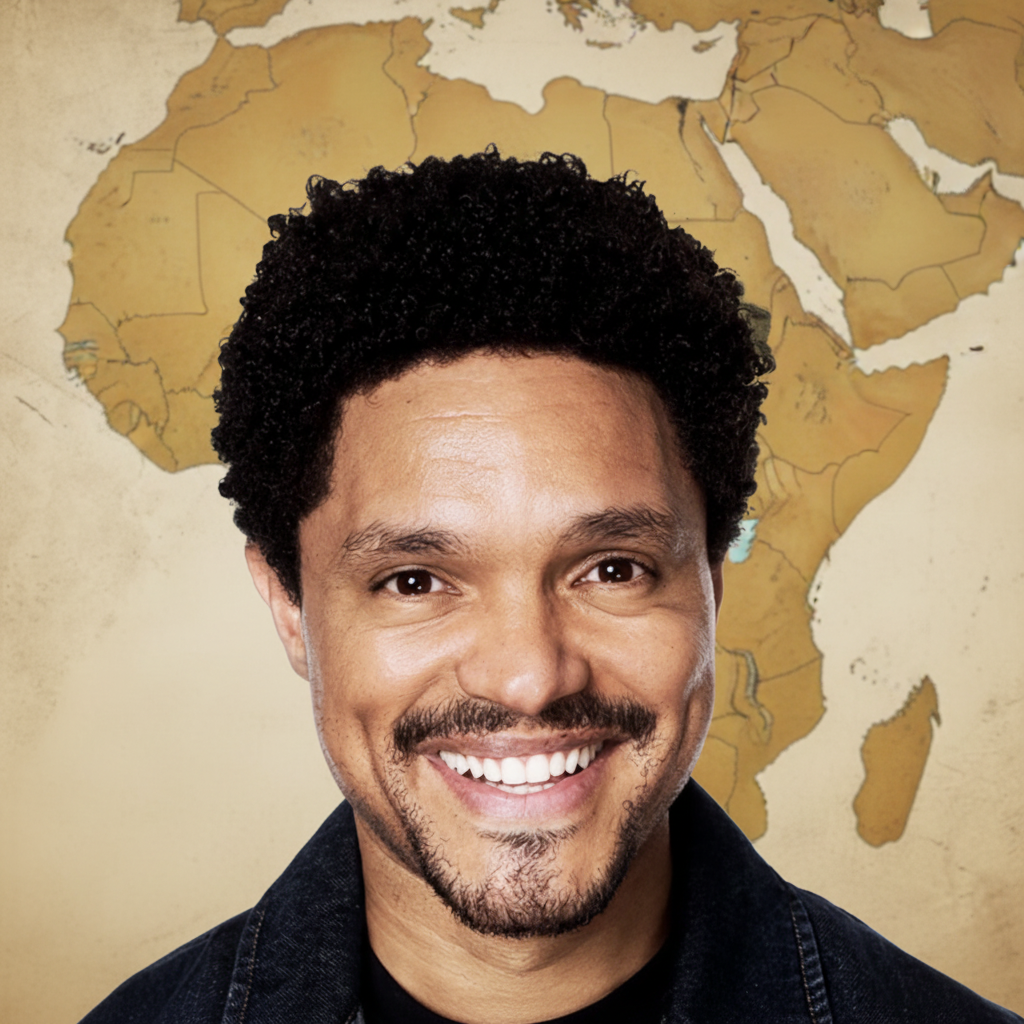
COMMENTARY: Dear Trevor – Africa is calling – On influence, conscience and the courage to speak (Part II)
Every public figure eventually confronts an unnegotiable truth: influence does not come free. For every amplification of voice, every reach of fame that crosses borders, there is an unspoken invoice attached: responsibility. For most people across the globe, the dream is simply to be heard. A tiny, lucky cohort achieve far more than that: their words resonate across continents, their quips spark global conversations, their perspectives shape front-page headlines, and their personal narratives rewire how millions of people see the world. Trevor Noah, you are part of that rare group.
Long before Hollywood opened its doors to your talent and your decade leading *The Daily Show* turned you into a household name across North America and beyond, the many fans who have followed your work have always valued something deeper than your celebrity. We have always admired your rare gift: turning sharp humor into incisive insight, simplifying complex, messy global issues without reducing them to meaningless triviality. You make audiences laugh, but you also push them to think. You have proven again and again that wit and wisdom do not have to be mutually exclusive. That is why this open letter is being written to you today.
This is not a letter to a comedian, nor is it a letter to a prominent South African expat. It is a letter to one of the most influential African voices on the global stage, a person whose words carry unmatched credibility with millions across the world. There comes a defining moment for every influential person when they must answer a question that no one else can answer for them: What is your voice for? Is it only to entertain, educate, or provoke? Or will you step forward when history calls to bear witness to injustice? Today, you have reached that crossroads.
South Africa, the nation that inspired the world by dismantling the apartheid regime, is once again grappling with a devastating, contradictory crisis: organized xenophobic violence targeting fellow African migrants. Across the country, migrant communities live in constant fear of intimidation, their businesses are looted and attacked, and entire neighborhoods are gripped by terror. The root causes of this unrest are well-documented: crippling mass unemployment, deep structural inequality, stretched public services, weak border management, and widespread public frustration that has boiled over.
These problems are not imaginary, and no honest observer would dismiss the very real struggles facing ordinary South Africans. It is entirely legitimate — in fact, it is the responsibility of any sovereign government — to enforce national immigration laws; a country that cannot regulate who enters and stays within its borders cannot claim meaningful sovereignty, and South Africa is no different from any other nation in that right. But there is another equally non-negotiable truth that must be stated clearly: no immigration policy on Earth justifies mob violence. No constitutional democracy allows ordinary citizens to take power into their own hands, to decide who belongs in the country, who must be expelled, and whose property can be stolen. When the rule of law cedes to mob rule, every person in the country becomes vulnerable. That is why this moment demands more than just political commentary. It demands unflinching moral clarity.
For years, you have helped the world understand the United States. You explained the complexities of American race relations to audiences who had never experienced systemic racism firsthand. You broke down the chaos of the Donald Trump presidency for global audiences alternately amused and horrified by his term in office. You have spoken thoughtfully and gracefully on police violence, democratic backsliding, elections, identity, prejudice, and power, and millions have listened because you have built up a reputation as a trusted, credible voice.
Credibility is one of the most precious forms of public capital a person can build. It cannot be bought, unlike fame. It cannot be manufactured out of thin air, like celebrity. It is earned slowly, one thoughtful, honest conversation at a time. By any metric, you have earned that credibility. And that credibility now brings an unavoidable, if uncomfortable, obligation: Africa needs your voice on this crisis. Your opinion will not fix the problem overnight, but silence from trusted, respected voices leaves space for extreme, unthinking voices to dominate the public conversation.
History has repeatedly shown that public discourse abhors a vacuum. When reasonable people hold back, unreasonable voices rush in to fill the space. When thoughtful people stay silent, louder, more extreme factions gain influence by default. Silence is not neutral. Silence shifts power to the most extreme actors in any debate.
After Nelson Mandela, the two most globally recognizable South Africans are both based in the United States: Elon Musk and Trevor Noah. The contrast between the two could not be more stark. One is the world’s richest entrepreneur, the other one of the most gifted storytellers of our generation. One shapes the future of global technology, the other shapes how we talk about the most pressing issues of our time. One moves global markets, the other changes how millions of people think. One accumulated unprecedented personal wealth, the other accumulated unprecedented public trust. Money shifts individual behavior, but stories can change entire civilizations.
Musk has never hidden where he stands on issues from immigration to free speech to global politics. Whether you agree with his positions or oppose them, no one can question what he believes. He has chosen his causes openly, and history and those affected by his work will judge him accordingly — but no one can accuse him of ambiguity.
Your influence is very different, Trevor. It is built less on raw power and more on the affection that millions of people around the world have for you. People do not just listen to what you say — they like you. That is an even more powerful tool. Affection breaks down people’s defenses, humor opens closed minds, and trust makes it possible to have conversations about topics that would otherwise be too divisive. That is why your silence on this crisis carries so much weight. It is not that silence is always wrong, but when you have the ability to elevate a difficult conversation, abandoning that conversation has consequences.
Let me be clear: I am not asking you to defend illegal immigration. I am not asking you to condemn all South Africans. I am not even asking you to choose between your home country and your continent. I am asking for something simpler, and far more demanding: defend the basic principles of a civilized society.
I am asking you to defend the principle that governments are tasked with enforcing laws, and citizens are bound to obey them. Defend the idea that no matter how understandable public frustration is, it never justifies collective violence against vulnerable, defenseless people. Defend the belief that no African should fear another African simply because they crossed an invisible line drawn on a map.
This is not a political issue. It is an issue of conscience. Every generation inherits unfinished work from the ones that came before it. Nelson Mandela’s generation dismantled apartheid. Your generation must defend something just as fundamental: the idea that African solidarity is more than just empty speeches delivered once a year on Africa Day. You and other influential African voices must prove that Pan-Africanism is measured not by slogans, but by how we treat each other when times are hard, that our shared humanity must survive even the worst economic anxiety.
There are moments when comedians have to stop telling jokes. There are moments when storytellers have to become witnesses to history. There are moments when public figures realize that history is no longer asking whether they are entertaining — it is asking whether they will show up.
Africa has celebrated your success. It has cheered your talent. It has defended your right to speak truth to power. Now, Africa is asking something of you in return. Help us speak truth to ourselves. The hardest conversations we ever have are not with our enemies — they are with our own people.
At the end of the day, the question is not whether you agree with every government policy or every public protest. It is whether you believe that organized violence against fellow African migrants has reached a point serious enough to demand a response from one of Africa’s clearest, most trusted voices. I hope you will step forward. Not because the world needs to know where Trevor Noah stands — but because Africa deserves to hear from you.
This article is written by Anthony Kila, Jean Monnet Professor of Strategy and Development at the Commonwealth Institute of Advanced and Professional Studies (CIAPS), Pro-Chancellor and Chairman of the Governing Council of Michael and Cecilia Ibru University (MCIU), and author of *Crucial Cs Around D: The Disciplines of Decision-Making and Leadership*. The views expressed are solely those of the author and do not necessarily reflect the position of Dominica News Online.
-
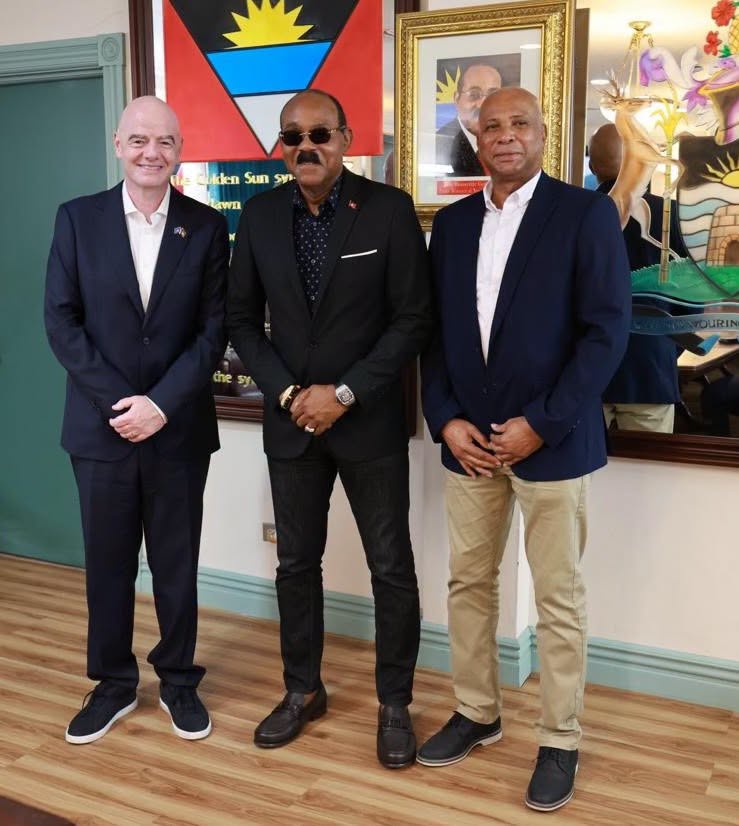
FIFA President Infantino and PM Browne Agree on Expanded Programme to Develop Football in Antigua and Barbuda
A landmark set of development agreements has been struck between FIFA and the government of Antigua and Barbuda, following a full day of high-level talks on Saturday that brought together top leadership from both sides. The meeting was attended by Antigua and Barbuda Prime Minister Gaston Browne, FIFA President Gianni Infantino, senior members of FIFA’s executive leadership team, as well as Antigua and Barbuda Football Association (ABFA) President Ickford Roberts and members of the ABFA executive board.
At the core of the new commitments is FIFA’s agreement to support the construction of a 5,000-seat national football stadium, with the Antigua and Barbuda government taking responsibility for securing and providing the land required for the new facility. Both Browne and Infantino emphasized in post-discussion remarks that standalone infrastructure projects are not enough to grow the sport long-term; sustained investment in human and technical capacity for players, coaches and sports administrators is equally critical to lasting progress.
Prime Minister Browne stressed that access to elite-level coaching and specialized technical knowledge stands as the most critical factor in lifting the overall standard of football across the twin-island nation. “The most important thing is having technical support to get the type of coaches who can help us to lift our game and help our players to hone their skills,” Browne told Infantino during the talks. Infantino echoed this perspective, noting that Antigua and Barbuda already holds untapped football potential across its young population, and confirmed FIFA is ready to deliver support on both the infrastructure and technical fronts.
Infantino also clarified the timeline for the two prongs of the development plan: while stadium construction will unfold over months of planning and building, upgrades to technical capacity can launch almost immediately. “To improve the technical expertise, this can be done instantly,” Infantino told attendees, pointing to FIFA’s existing global programs focused on grassroots talent identification, national football academies, and the organization’s widespread Football for Schools initiative that introduces organized football to young students worldwide.
Browne welcomed the accelerated timeline for technical development, noting that the government’s vision for the sport is a structured pipeline that nurtures talent from grassroots community football all the way through to national, regional and international competitive play. Beyond the pitch, the prime minister framed football development as a public good that supports broader social goals. “We believe this is one of the ways in which we can encourage more of our children to play sport and become more productive and wholesome citizens,” he said.
During the meeting, Browne also extended an official invitation to FIFA, signaling Antigua and Barbuda’s interest in bidding to host a future FIFA congress or other major global FIFA gathering. The prime minister highlighted the country’s growing track record and reputation for successfully hosting large international conferences, noting that the nation has the infrastructure and experience needed to welcome FIFA stakeholders. “We have the capacity to host you,” Browne said, adding that Antigua and Barbuda would be proud to formalize a bid for a future FIFA event.
Saturday’s talks mark a deepening of a longstanding partnership between FIFA and ABFA. Previously, FIFA supported the development of the ABFA Technical Centre and national association headquarters through its FIFA Forward development program, the organization’s flagship initiative designed to advance football growth through collaboration between FIFA, national member associations and local public authorities.
The latest agreements are set to expand that collaboration dramatically, through the new national stadium project and expanded technical assistance programs. Following the productive talks, Browne thanked Infantino and his delegation for the concrete, outcome-driven discussions and pledged the Antigua and Barbuda government’s continued close cooperation with both ABFA and FIFA moving forward. The government’s end goal, he explained, is to build a supportive ecosystem where talented local footballers have access to all the facilities, coaching, competitive opportunities and development pathways they need to reach their full potential. All parties have agreed to maintain regular close communication as the stadium project and other development initiatives move from planning to implementation.
-

WEATHER (6:00 AM, 27 September): Partly cloudy to cloudy with a few showers
A complex combination of atmospheric conditions is set to bring unsettled weather to the southern portion of the Lesser Antilles archipelago through the start of this week, with officials warning of potential flood hazards for vulnerable communities. Mid-to-upper levels of the atmosphere are carrying above-average moisture and convective instability, which are interacting with a slow-moving tropical wave passing through the region. This combination is expected to sustain widespread disrupted weather through Monday, bringing scattered periods of rain and bursts of thunderstorms to most affected areas.
For the island nation of Dominica, forecast models predict mixed partial cloud cover and overcast conditions through the daytime, with only scattered, light showers expected during daylight hours. However, meteorologists are projecting a sharp uptick in precipitation activity starting after midnight local time, continuing through Monday morning. During this window, rain is expected to reach moderate intensity, with periods of heavy downpours and isolated thunderstorm activity across the island.
In preparation for potential hazardous conditions, local weather authorities have announced that a formal flood watch could be issued as early as this evening. Residents and visitors in low-lying areas, steep hillside zones, and other locations with a history of water-related disasters including flash flooding, landslides, and rockfalls are urged to monitor official weather updates closely, maintain a high state of alert through the overnight period, and take proactive precautions to protect life and property.
Beyond the rain and flood risk, the region is also facing uncomfortable heat conditions through the forecast period. Light prevailing winds, combined with daytime solar heating, will create conditions that produce sweltering daytime temperatures and unusually warm overnight lows that offer little relief. Health officials are reminding the public to prioritize staying properly hydrated, find cool shelter when possible, and avoid extended outdoor exposure during the midday and early afternoon hours when ultraviolet radiation and temperatures peak.
Marine conditions across the region are expected to remain relatively calm over the next 24 hours, with overall sea states ranging from slight to moderate. Wave heights will vary by coastline: along the exposed eastern shores of the islands, swells can build to up to 7 feet, while protected western coastlines will see calmer conditions with maximum wave heights around 3 feet.
-

‘Toxic’ relationship ends in tragedy
A quiet rural community in southern Trinidad is reeling from a devastating double fatality, after the bodies of 23-year-old Giselle Ougrah and her 27-year-old boyfriend Stefan Khandan were discovered in their rented Penal apartment on Friday night. For both grieving families, the tragedy was not entirely unforeseen: all relatives have confirmed they repeatedly warned the pair about their increasingly unstable, harmful relationship, and made multiple attempts to convince them to separate permanently.
The couple had lived in their small apartment on Sundarsingh Trace, Batchiya Village, for approximately four months, after they were asked to leave Khandan’s family home due to frequent violent conflicts between the pair. Initial investigative findings from local law enforcement suggest Ougrah was killed by stabbing, with a 10-inch knife recovered as evidence from the crime scene, and Khandan is believed to have died by suicide shortly after. The couple were last confirmed to be alive on Wednesday, two days before their bodies were found.
Concern grew after Ougrah failed to return home as expected, prompting her older sister and brother-in-law to travel to the apartment to conduct a welfare check just after 8 p.m. on Friday. After getting no response to knocks and calls, one of the pair scaled an exterior wall to look into the unit, spotting Khandan hanging and Ougrah motionless on a bed. They immediately contacted the Penal Police Station, and responding officers forced entry to confirm the deaths.
Autopsies are scheduled to be carried out at the Forensic Science Centre in Federation Park in the coming days, and official causes of death will be released once examinations are complete. Law enforcement has confirmed that the full circumstances surrounding both deaths remain active under investigation.
Family accounts have revealed the couple began their relationship roughly one year ago, shortly after Khandan was released from prison where he had served a sentence for robbery and home invasion. Both families spoke publicly to the *Sunday Express* about their repeated efforts to intervene.
Speaking from her home in Torrib Trace, New Grant, Ougrah’s grieving mother Feroza Ali held a photo of her late daughter and described her as a devout, educated, ambitious young woman who had earned strong marks on her Caribbean Secondary Education Certificate and Caribbean Advanced Proficiency Examination, and had recently enrolled in an entrepreneurship training programme. Ali said she and multiple other family members repeatedly warned Ougrah about Khandan’s history and character, but Ougrah chose to continue the relationship despite their concerns. “Several times they broke up in the past and she knows she always welcomed by me, but then she goes back (to him),” Ali explained.
Ali recalled that just days before the deaths, Ougrah had moved back home with her belongings after a breakup, but left on Wednesday evening after telling her mother she was going to a mall for dinner, and left with Khandan. Ali did not realize her daughter had not returned home until Friday, when her other daughters raised concerns about Ougrah’s silence. Initially, the elder sister contacted Penal Police to request a welfare check, but was unable to provide the exact apartment address, which is required for police to conduct a check. It was only after the pair drove to the neighbourhood themselves that they found the apartment and made the grim discovery.
In the wake of losing her daughter, Ali issued a heartfelt warning to other young people about rushing into romantic relationships. “Take time and get to know the individual,” she said. “Do not get into something and then learn about the person. A relationship is not something to rush.”
Khandan’s family is also grappling with grief, and confirmed they too saw the relationship as dangerous. Tony Khandan, Stefan’s father, said he last saw his son on Monday, when Stefan came to help with home repairs. Tony noticed his son seemed unwell and asked what was wrong, and Stefan told him “I am having real problems with that girl.” Tony asked his son to move back into the family home, but got no response, and Stefan left around 4:30 p.m. that day.
Tony recalled that the couple fought constantly during the year they were together, and that he often had to step in to break up violent arguments when they were staying at his home in Boucard Trace, Penal. He eventually asked the couple to move out, leading them to rent the Batchiya Village apartment. “My son had his ignorant ways, but I did not expect it to reach so far,” Tony said, adding that Ougrah’s mother was the one who broke the news of the pair’s deaths to him. “I love my son. I love all of my children. I do my best for them.”
Stacy Ann Khandan, Stefan’s sister, echoed the family’s description of the relationship as “toxic”, saying she had tried to provide counselling and guidance to the pair to help them end the relationship. She recalled that on Monday, just two days before the deaths, she and her brother cooked a meal together for the family, and he gave her a long goodbye hug before he left. “Everyone has faults, but I had a bond with my brother,” she said. “We are in mourning and we lost.”
Local residents of Sundarsingh Trace said the couple kept to themselves, but were always polite when passing through the neighbourhood. Indrani Bhagoutie, a local resident, said she noticed the couple had not been around for a few days, but spotted Khandan carrying a pizza near her home on Wednesday. “She said she heard nothing from them in the next few days and was shocked to learn of the deaths of the young couple.
-
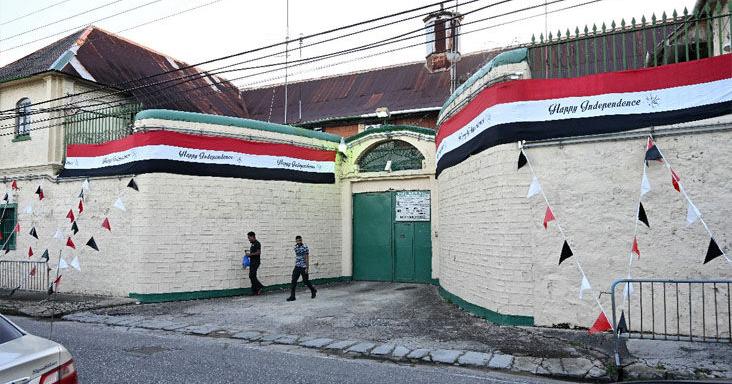
PoS Prison set to close its gates for good
After standing as a central institution of Trinidad and Tobago’s correctional system for more than two and a half centuries, the aging Port of Spain Prison located on Frederick Street is poised to close its doors permanently, wrapping up a historic chapter of the country’s penal history. The national government has launched a full decommissioning process for the facility, with inmate transfers already in progress and on track to wrap up by the end of November 2024.
Homeland Security Minister Roger Alexander confirmed the timeline and details of the shutdown in an exclusive interview with the *Sunday Express* on Saturday, noting that the multi-phase transfer operation first kicked off on September 21. The decommissioning project is structured in three distinct phases, and the first step — relocating high-risk inmates from the historic Port of Spain Prison to the country’s Remand Prison — has already been successfully completed.
The remaining two phases will focus on reconfiguring inmate housing across the country’s correctional facilities to accommodate the full shutdown. Up next, the Remand Prison will absorb inmates currently held at the Extended Remand Facility (ERF), clearing space for death-row inmates from Port of Spain Prison. In the final phase, 150 convicted offenders will be moved from the closing facility to three existing institutions: the Maximum Security Prison, Carrera Convict Prison, and Golden Grove Prison.
To accommodate the additional inmate population at the receiving facilities, upgrades and adjustments are already underway. At the Remand Prison, which currently has a maximum capacity of 750 inmates, crews are installing new beds and refurbishing cell locks to meet updated safety and security protocols, alongside other critical infrastructure improvements. Alexander confirmed that project leaders have advised the decommissioning will stay on schedule so long as all critical upgrades are addressed as planned.
According to Alexander, the push to close the outdated facility came directly from Prime Minister Kamla Persad-Bissessar, who directed the government to move forward with the shutdown in a timely manner. “All is well and going smoothly. We look forward to a new beginning for that place. As I said before…the Prime Minister…could not see the continuation of that place. She instructed us to make sure that this happens, and we were trying to do it in a timely manner,” Alexander stated.
The Prime Minister and her cabinet will lead decisions on the future redevelopment of the prime Frederick Street site once decommissioning is complete. The closure of the old Port of Spain Prison is a core component of the government’s broader correctional system revitalization plan, which also includes constructing a new state-of-the-art correctional facility outside of Port of Spain, an initiative Alexander said he fully supports.
When asked about widespread public concern that transferring inmates to existing facilities would exacerbate longstanding issues of prison overcrowding, Alexander noted that targeted mitigation measures are already being implemented to improve conditions across the system. Beyond infrastructure adjustments, he emphasized that the broader goal of the reform is to restore the correctional system’s role as a deterrent to crime, a function he said the outdated, mismanaged Port of Spain Prison had lost.
Acknowledging public conversations about overcrowding, Alexander argued that the most effective long-term solution is discouraging people from committing crimes that lead to incarceration in the first place. “The prison must be a deterrent and the fact is, it is no longer that. The prisons are now like a home, a residential area, where you can do what you want, when you want, how you want, and we are stopping that,” he said.
Discussions about closing the Port of Spain Prison have circulated among policymakers for decades, but Alexander emphasized that the current administration is the first to turn that decades-long talk into tangible action. He framed the facility as an outdated blight on the capital’s central urban core, saying, “This prison is an eyesore. To me, it has become a public nuisance and it is time for it to go. It is time for something new to be developed into the city.”
Beyond the decommissioning plan, Alexander addressed two other pressing correctional sector issues during the interview: a recent high-profile incident involving a prison officer and renewed calls from the Prison Officers’ Association to issue firearms to all serving officers. He commended the actions of a prison officer who fatally shot a home invader while defending his family in a recent attack.
On the question of issuing firearms to correctional officers, Alexander said he supports the idea of granting Firearm User’s Licences to all eligible public safety officers — including firefighters, coast guard members, and prison staff — but added that not all uniformed officers meet the strict integrity requirements for holding a licence. He noted that a small number of officers have abused their positions and access to help criminal actors carry out illegal activity.
Alexander called on the Prison Officers’ Association to encourage all of its members to uphold high standards of ethical conduct in their roles. “If other persons are paying them outside of the service, well, that’s on them. All I ask is for brave men and women to serve with integrity, dignity, and an understanding that they are there to protect and serve persons, not to protect and serve themselves alone,” he said.
-
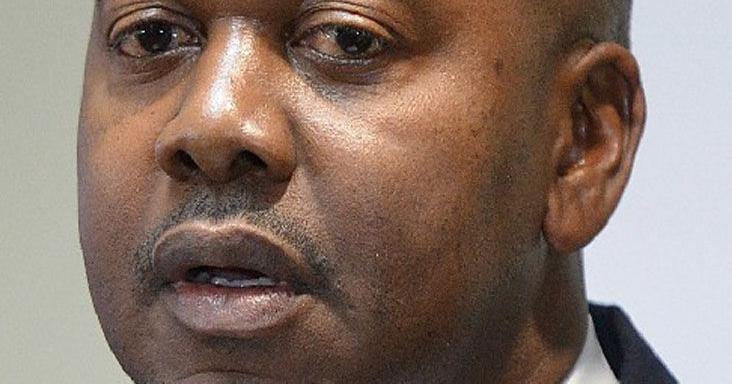
Probe into plot to kill Govt minister
During a heated Senate debate on the controversial Special Operations Bill 2026 late Wednesday, former Trinidad and Tobago government minister Foster Cummings has dropped a bombshell revelation: 18 heavily armed police officers executed a search warrant at one of his privately owned properties, as part of an investigation into an alleged conspiracy to assassinate a sitting government minister.
Cummings, who previously served as Minister of Youth Development and National Service under the People’s National Movement administration, told the upper legislative chamber that law enforcement had also compiled a classified file of his personal activities labeled as official intelligence on police letterhead — a document that was later improperly leaked to national media outlets. The former minister stopped short of elaborating further on the document, noting the matter is already under judicial review.
Recounting the day of the raid, Cummings said he was seated inside the Parliament building when he first received an alert on his mobile phone that armed officers had arrived at his property. Moments later, a sitting government legislator across the parliamentary floor confirmed the news to him directly. “I joked that they probably just wanted to stop by for a drink, but my colleague told me they were there for a far more serious reason,” Cummings told the Senate President.
He went on to detail the origins of the police action: A high-ranking government official, who did not qualify for enhanced personal security under existing protocols, pushed claims of a murder conspiracy to prompt the police operation. Acting on the unconfirmed intelligence, officers secured a warrant from a court to search his property as part of the probe into the alleged plot. Without naming the minister making the claim, Cummings questioned why the official remained free to carry out official duties amid the allegations, contrasting the situation with the heavy police presence at his property. The country was previously under a national state of emergency when the original assassination claims first emerged publicly.
The bombshell revelation lines up with an exclusive report published by the *Sunday Express* in July 2026, which detailed allegations that an unnamed ex-government minister offered a self-described gang member $250,000 to assassinate Public Utilities Minister Barry Padarath. According to a sworn statement the detained man gave to Carenage Police Station officers on December 4, 2025 — excerpts of which were obtained by the outlet — the man was seeking high-paying work when he was taken to a club owned by the former minister in McBean in November 2025.
In the statement, the man claimed the ex-minister told him he had “a bigger job” available: $250,000 to “get rid of” Padarath, whom the former minister described as a talkative “slim Indian fella with a hard face” who “hadda go.” The accuser alleged the former minister offered to supply all necessary weapons, vehicles, and target location details, even providing an upfront $3,000 “sweetener” to secure the deal and pushed for the assassination to be carried out as soon as possible. When asked what “get rid of” meant, the man told investigators it was clearly a reference to killing Padarath, noting the former minister had made a throat-slitting gesture to confirm the order.
The man, who was already in custody on an unrelated charge when he gave the statement, told police he had never accepted a murder-for-hire job before, though he admitted to prior acts of assault and intimidation for other associates. He added he came forward with the allegations because he feared for his life if he spoke while at liberty, claiming he did not trust some members of the police force due to alleged corruption and links to the plotters.
Following the July report, Padarath confirmed his security detail had been expanded to include protection from the Trinidad and Tobago Police Service Special Branch. He publicly expressed concern that the former minister implicated in the plot remained at liberty, but emphasized he retained confidence in the national police service and would not alter his daily activities out of fear.
Cummings used his own experience tied to the high-profile murder plot investigation to frame broader objections to the Special Operations Bill, which seeks to expand law enforcement powers across the country. He warned that if a former legislator with access to parliamentary platforms could be subjected to such a sweeping, intelligence-driven search, ordinary citizens with no ability to speak out publicly would be even more vulnerable to overreach. “I have the privilege of standing in this chamber today to tell the country what happened to me. What happens to the average citizen who has no platform to push back when the state acts against them unjustly?” Cummings asked. Despite his objections and revelations, the Special Operations Bill has already secured passage in both the upper and lower houses of parliament.