作者: admin

  • Festive lights, security tight for Christmas in Damascus

    Festive lights, security tight for Christmas in Damascus

    DAMASCUS, Syria — The historic lanes of Damascus’s Old City are adorned with festive Christmas illuminations, yet the seasonal cheer is markedly tempered by a heavy security presence. Government patrols move through the shadows, a stark reminder of the pervasive anxiety haunting Syria’s Christian minority as they attempt to observe their holidays.

    The memory of a devastating June assault on the Saint Elias church, which resulted in 25 fatalities and numerous injuries following a shooting and suicide bombing, remains acutely fresh for the community. This incident has instilled a climate of caution, with residents opting for earlier curfews and subdued festivities.

    Tala Shamoun, a 26-year-old university student, expressed the collective apprehension to AFP while visiting a Christmas market. She noted a rise in criminal activities like robberies and kidnappings in Damascus but identified the church attack as the most profound tragedy.

    While Syrian authorities attributed the June violence to the Islamic State jihadist network, a lesser-known Sunni Muslim extremist faction also claimed responsibility. This occurs against a complex backdrop where Islamist factions that displaced ruler Bashar al-Assad have publicly recommitted to a doctrine of interfaith coexistence and inclusive governance. Nonetheless, the year has also witnessed severe sectarian violence, including massacres in the Alawite region and significant clashes in Druze-dominated southern areas.

    In response, a multi-layered security strategy has been enacted. Interior Ministry forces are conducting stops and searches on pedestrians and motorcyclists throughout the Old City. An anonymous security officer, stationed at a key entrance with a communication device and deployment map, outlined the state’s protective mandate, emphasizing the duty to safeguard all citizens—Christian and Muslim alike—and to secure places of worship during celebrations.

    The narrative of protection is central to Assad’s longstanding political posture, which has positioned him as a guardian for religious minorities who have frequently been targeted throughout the nation’s prolonged conflict. The demographic impact has been severe; Syria’s Christian population is estimated to have plummeted from approximately one million at the war’s onset in 2011 to roughly 300,000 today, due to widespread emigration.

    Despite the underlying tensions, efforts to foster normalcy are visible. Shopfronts and trees in the Old City are decorated with red baubles and festive trimmings, and street vendors offer warm chestnuts. Complementing official security measures, unarmed civilian committees comprising local Christians, coordinated with state forces, have been mobilized to guard churches. Fuad Farhat, a 55-year-old coordinator from Bab Touma district, reported that these additional measures are helping to alleviate public fear, making residents feel secure enough to participate in the holiday atmosphere.

    This glimmer of hope was echoed by Loris Aasaf, a 20-year-old student, who voiced a desire for joy and a renewed future for Syria, aspiring for a return to the era when all sects celebrated together, paving the way for national reconstruction.

  • Zelensky reveals US-Ukraine plan to end Russian war, key questions remain

    Zelensky reveals US-Ukraine plan to end Russian war, key questions remain

    KYIV, Ukraine — A newly revealed US-brokered draft proposal to resolve the ongoing Russian invasion of Ukraine indicates that Kyiv has secured several critical concessions in negotiations, though fundamental disagreements over territory and Moscow’s potential acceptance continue to pose significant obstacles.

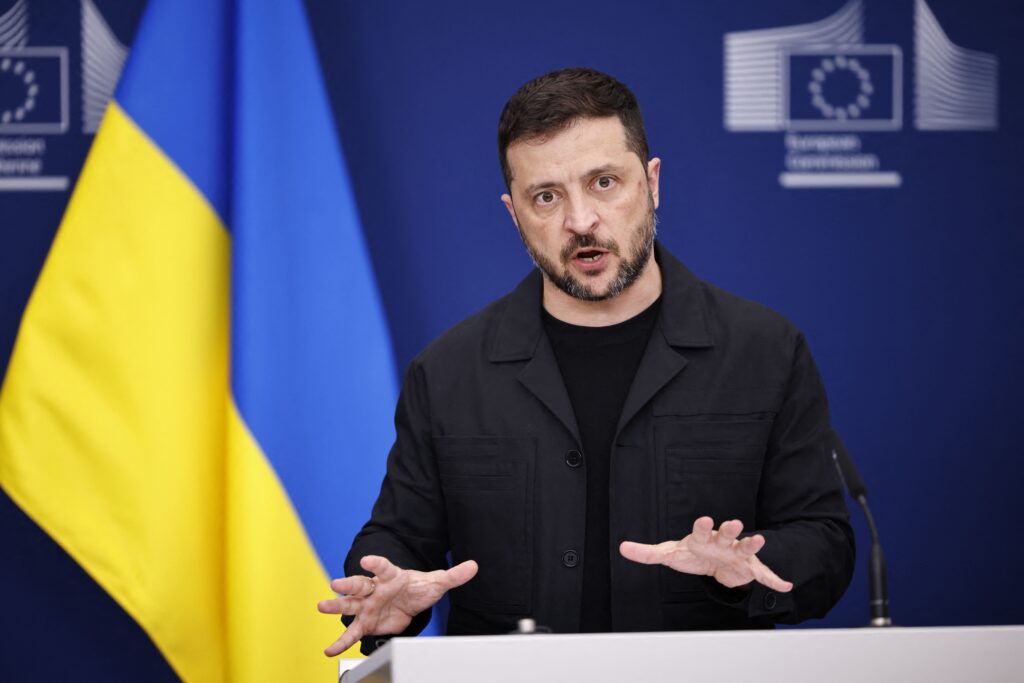
    President Volodymyr Zelensky disclosed details of the 20-point framework during an extensive briefing with journalists, presenting an annotated version of the document that has been jointly developed by American and Ukrainian negotiators. While acknowledging that certain elements of the plan remain unsatisfactory to Kyiv, Zelensky emphasized that Ukrainian diplomats successfully eliminated several initially problematic demands.

    The revised draft no longer contains immediate requirements for Ukraine’s complete military withdrawal from the Donetsk region or automatic recognition of Russian-occupied territories as sovereign Russian land. Perhaps most significantly, the proposal removes previous stipulations that would have compelled Ukraine to legally renounce its aspirations for NATO membership—a longstanding red line for Moscow.

    However, the blueprint appears to facilitate potential future troop redeployments and establishes mechanisms for creating demilitarized zones along current front lines. Specifically, the agreement would recognize the existing deployment positions in Donetsk, Luhansk, Zaporizhzhia, and Kherson regions as the de facto line of contact, with working groups subsequently convening to determine necessary force movements and parameters for special economic zones.

    This structure suggests a compromise approach that postpones decisions on militarily and politically sensitive issues—including territorial withdrawals that Ukraine had previously resisted—while creating procedural pathways for continued dialogue. Zelensky characterized the negotiations as attempting to balance Russian demands for Ukrainian withdrawal with American efforts to devise mutually acceptable arrangements through demilitarized or special economic zones.

    The Kremlin has received the draft proposal for review, though analysts remain skeptical that Moscow would abandon its maximalist territorial objectives in eastern Ukraine. The emerging framework represents the most detailed diplomatic effort to date to outline a potential resolution to the conflict, yet its viability ultimately depends on Russia’s willingness to engage with terms that fall short of its original demands.

  • First step to ending domestic violence

    First step to ending domestic violence

    Trinidad and Tobago is confronting a severe psychological crisis manifesting through escalating murder-suicide incidents among intimate partners across all societal segments. This disturbing pattern reflects not merely criminal behavior but a profound societal despair—a spreading darkness where individuals perceive violence or self-destruction as their only escape from emotional agony.

    According to psychological experts, this crisis stems from a critical deficit in emotional resilience and healthy coping mechanisms. When individuals face rejection, abandonment, or overwhelming stress, their brains enter survival mode, releasing chemicals like cortisol, dopamine, and oxytocin that distort reality perception. Without proper emotional awareness, this can lead to:

    • Cognitive distortions and irrational decision-making
    • Intense attachments to unhealthy relationships
    • Emotional dependency masquerading as love
    • Misinterpreted fear as betrayal
    • Overwhelming hopelessness

    Current societal approaches emphasizing punishment and shame have proven inadequate. Advocates argue that prevention through education and emotional literacy is paramount. The solution requires understanding biological and emotional triggers—particularly how unprocessed trauma causes individuals to interpret ordinary events through lenses of fear, shame, or insecurity.

    For those exhibiting narcissistic traits, control becomes synonymous with safety, dominance with stability, and validation with oxygen. Losing relationship control can feel like psychological death, triggering extreme reactions.

    A comprehensive solution framework must include:

    1. Emotional literacy programs in schools teaching brain function and emotional regulation
    2. Trauma-informed interventions for both victims and perpetrators
    3. Accessible, stigma-free support systems for early intervention
    4. National conversations breaking silence around mental health
    5. Prevention-focused campaigns emphasizing education before crisis

    Without teaching citizens to understand their internal worlds—why they feel certain emotions and how to manage them healthily—the cycle of violence will continue across generations. The path forward begins with awareness, education, and collective action to build emotional resilience nationwide.

  • When sovereignty becomes a doormat

    When sovereignty becomes a doormat

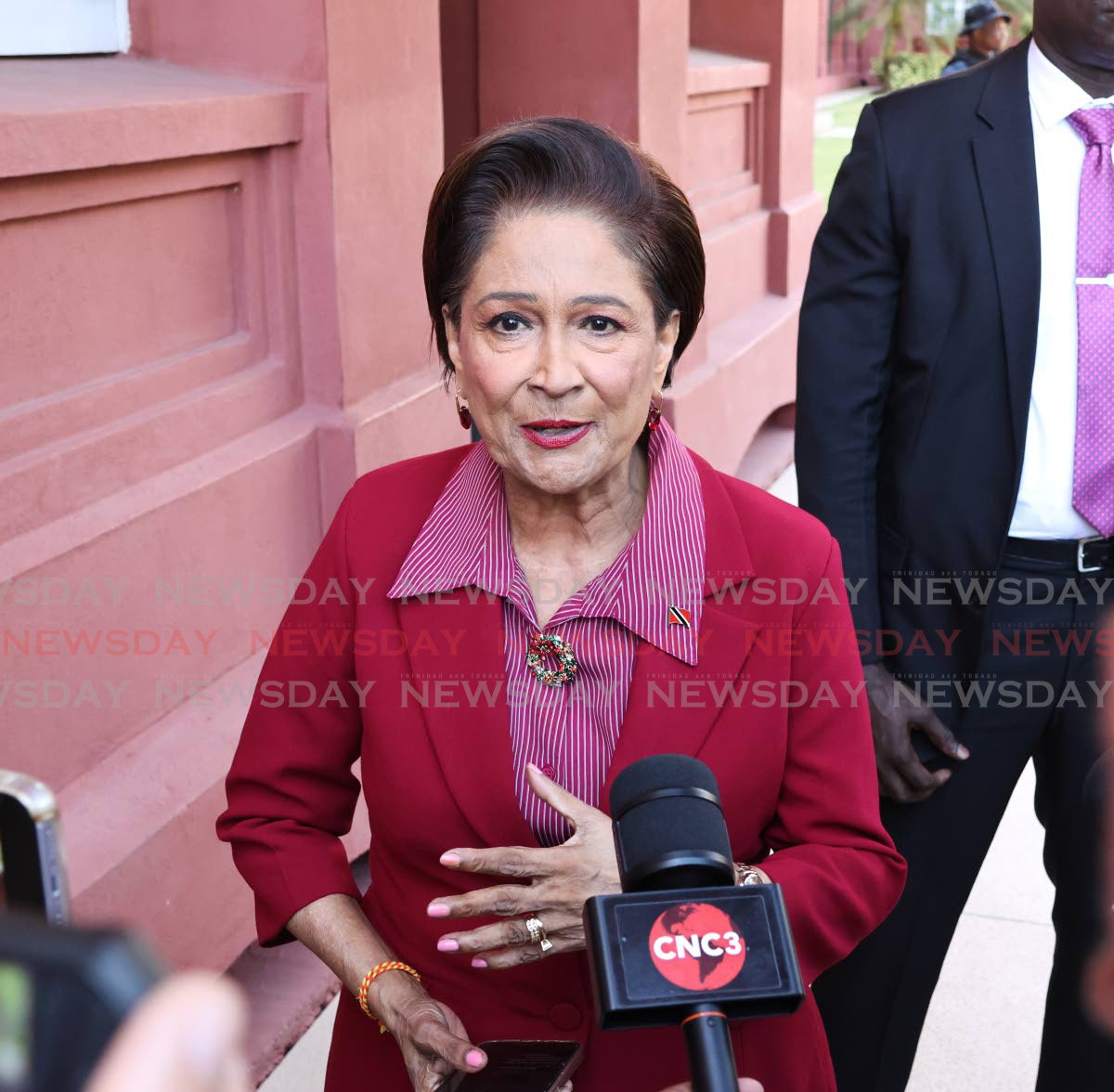
    Prime Minister Kamla Persad-Bissessar of Trinidad and Tobago has ignited a firestorm of controversy by asserting that the United States possesses an unquestionable right to pursue its national interests—even when such actions adversely affect other sovereign nations—and that impacted countries must simply “accept the consequences.” While presented as a tough stance, legal experts contend this position is not only legally flawed but dangerously reckless for a small nation state.

    The core of the dispute centers on fundamental principles of international law. Sovereignty, contrary to the Prime Minister’s characterization, has never equated to unlimited freedom. Since the establishment of the post-1945 global legal order, sovereignty has existed within a framework designed to restrain powerful nations and protect vulnerable ones. The longstanding principle, repeatedly affirmed by the International Court of Justice, is that the freedom of any state ends where another’s begins.

    Actions such as economic coercion, extraterritorial punishment, and policy intimidation are not legitimate expressions of sovereignty but rather violations of it. The editorial argues that if powerful nations could freely impose their preferences on others based solely on might, international law would be rendered meaningless, replaced by pure hierarchy.

    The specific context involves U.S. criticism of Citizenship-by-Investment (CBI) programs. The contention is not whether the U.S. can regulate its own borders—a right acknowledged as undisputed—but whether it can penalize other countries for domestic policies that breach no international treaty or convention. This is framed not as legitimate border control but as interference disguised as security.

    In contrast to the Prime Minister’s stance, the Caribbean Community (CARICOM) delivered a response described as orthodox, restrained, and legally sound. CARICOM recognized U.S. sovereignty while formally requesting consultation, clarity, and respect for the rule of law. This approach is presented as the prescribed method for small states to navigate a rules-based international system.

    The editorial expresses particular alarm that this doctrine originates from a Prime Minister who holds the title of Senior Counsel, a position that should demand a higher standard of legal reasoning. The author condemns the underlying logic as “profoundly defective,” where sovereignty is mischaracterized as an unlimited license, coercion is rebranded as mere consequence, and international law is treated as optional etiquette.

    The author concludes with a stark warning: if the Prime Minister’s doctrine were correct, Trinidad and Tobago would itself have no protection against sanctions, blacklists, or financial pressure whenever it became inconvenient to more powerful nations. The piece ends with a powerful admonition: “Sovereignty is not a doormat. And TT should stop pretending that being trampled is a sign of strength.”

  • Petrotrin must be upgraded

    Petrotrin must be upgraded

    In a compelling analysis of Trinidad and Tobago’s energy sector, industry expert Gordon Laughlin argues that the modernization of the Pointe-a-Pierre refinery represents not merely an option but a critical strategic necessity for the nation’s economic future.

    The refinery, which ceased operations in 2018, previously positioned Trinidad as a regional energy powerhouse, supplying the entire Caribbean with a comprehensive range of refined petroleum products including LPG, unleaded gasoline, jet fuel, kerosene, diesel, fuel oil, bitumen, sulphur, and base lubricants. This capability ensured both national self-sufficiency and established Trinidad as a significant exporter within the region.

    Laughlin identifies three pivotal opportunities that a modernized facility could capture. First, the nation possesses the scientific and industrial capacity to develop high-value derivatives from its own Pitch Lake resources. Lake Asphalt already produces refined pitch and sealants for export, representing a niche, high-margin market that remains significantly underutilized despite its considerable potential.

    Second, any refinery reactivation must incorporate future-proof capabilities to process Guyana’s light sweet crude, currently among the hemisphere’s most sought-after commodities. Failure to develop this capacity would allow other nations to capitalize on refining and profiting from Guyana’s resources.

    Third, the facility requires capabilities to refine Venezuelan heavy crude. Despite its challenging composition, Venezuela’s proximity offers substantial freight savings, faster shipment turnaround times, and opportunities for blending or refining this crude for regional distribution. This would reposition Trinidad advantageously within the Caribbean energy logistics chain.

    Laughlin advocates for positioning the refinery as the Caribbean’s premier toll refining facility, blending hub, and finished products supplier rather than allowing other nations to seize these emerging opportunities. The commentary concludes that Trinidad has never lacked the talent, resources, or strategic location for such endeavors, but has instead faced a deficit of political will to realize this vision.

  • The Grinch steals Trinidad and Tobago’s heart this Christmas

    The Grinch steals Trinidad and Tobago’s heart this Christmas

    In an unexpected cultural shift, Trinidad and Tobago has embraced an unconventional Christmas icon—the Grinch—with a surprising twist beneath the green costume. Across supermarkets, malls, and holiday events, this once-villainous character now draws larger crowds than traditional festive figures, thanks to an unlikely performer: 33-year-old San Fernando resident Ayanna.

    By day, Ayanna balances roles as a wife, mother of two, and corporate manager. But when she dons the iconic green suit, she undergoes a complete transformation into Dr. Seuss’s mischievous creation. ‘As soon as I put the Grinch costume on, I become Mr. Grinch,’ revealed Ayanna, who maintains mystery by withholding her last name as part of her character’s allure.

    Her journey into character performance began during her industrial chemistry studies at UWI, where mascot work provided extra income. However, her Grinch portrayal stems from personal inspiration—she’s a self-proclaimed superfan of Jim Carrey’s iconic performance. ‘I wanted to embody his attitude and comedic genius,’ she explained.

    The art of Grinch portrayal requires meticulous preparation beyond mere costuming. Ayanna practices vocal modulation, develops mannerisms, and maintains physical conditioning for the demanding role. ‘I do practice runs imitating the voice, mannerisms, and unique style,’ she noted, adding that hydration and stretching are crucial for the physically intensive performances.

    Maxwell Pusey of Fancy Events, Ayanna’s employer, confirmed the Grinch’s surging popularity. ‘We’ve seen a significant increase in demand compared to previous years,’ he stated, noting the character’s introduction to their Christmas lineup four years ago was strategically intentional. Social media amplification through shareable content has further propelled the trend.

    The Grinch’s evolved perception—from villain to entertaining mischief-maker—has driven this popularity surge. Pusey emphasized that the character now represents ‘a unique mix of humour, surprise, and playful mischief’ that resonates across generations. Notably, clients increasingly book the Grinch alongside Santa Claus, creating a dynamic contrast that enhances event engagement.

    Ayanna’s performances require nuanced crowd reading, particularly with children. ‘Not every child responds well to him,’ she acknowledged, describing how she adapts based on reactions. Her most meaningful moment involved an autistic child who clung to her character throughout an event—a touching demonstration of the role’s impact beyond entertainment.

    The physical challenges include maintaining character integrity despite heat and restricted vision within the costume. Yet the greatest reward, Ayanna shared, is ‘being able to not be this serious individual that my day-to-day life requires’ and fulfilling her personal mission of creating ‘as much fun as possible.’

    As Trinidad and Tobago embraces this nontraditional holiday figure, the Grinch has found permanent cultural footing—not replacing Santa, but complementing him with playful mischief and unforgettable memories.

  • Cedar Grove Private School celebrates with A Christmas to Remember

    Cedar Grove Private School celebrates with A Christmas to Remember

    Cedar Grove Private School’s annual Christmas concert, aptly titled “A Christmas to Remember,” transformed into a spectacular showcase of youthful talent and seasonal cheer on December 9th at the Southern Academy for the Performing Arts (SAPA). The event brought together the entire school community for an evening that combined artistic expression with heartfelt celebration.

    The performance lineup featured students across all grade levels, from tentative preschoolers experiencing their first stage moments to self-assured fifth graders preparing to transition to secondary education. The program skillfully blended traditional and contemporary elements through music, dance, and theatrical presentations, demonstrating the institution’s longstanding dedication to integrating visual and performing arts into its educational framework.

    Among the most memorable segments were the youngest performers whose genuine enthusiasm captivated attendees. When occasional lyrics were forgotten, these children compensated with radiant smiles and spontaneous dance movements that generated waves of affectionate laughter and applause throughout the auditorium. Their colorful costumes—featuring Santa hats, angel wings, and elf outfits—added visual magic to the production.

    The event’s proceedings were gracefully guided by Head Boy Kiran Mahabir and Head Girl Kaithlyn Heeralal, while special greetings were delivered by Natasha Moonilal and Kristin Sobers. They represented their respective husbands, Government Ministers Dr. Roodal Moonilal and Sean Sobers, who were engaged in parliamentary debates concerning fireworks legislation designed to protect children, elderly citizens, and pets.

    School Supervisor Dr. Roydon Rampersad highlighted the institution’s exceptional academic achievements, noting Cedar Grove’s ninth-place national ranking among approximately 550 schools in Trinidad and Tobago based on Secondary Entrance Assessment (SEA) examination results. He emphasized the Christmas message of reflection, love, joy, and hope while congratulating students on their outstanding performances.

    The artistic presentations ranged from the Senior Dance Club’s graceful interpretation of “Ave Maria” to the Junior Dance Club’s energetic “Carol of the Bells.” Younger students delivered charming renditions of “Jingle Bells” and “Merry Christmas Everyone,” while the fourth-grade class presented a musical comedy segment. The keyboard club performed a festive medley, and the steelpan ensemble offered a moving interpretation of “O Holy Night.”

    Principal Dillan Daniel concluded the evening by thanking families and friends for participating in this celebration of joy, unity, and faith, reminding attendees of the seasonal call to support one another throughout the coming year.

  • Road to nowhere

    Road to nowhere

    A devastating chain of events that began with a fatal highway accident in Tobago has culminated in a shocking courtroom collapse, leaving a family without closure and raising serious questions about Trinidad and Tobago’s justice system.

    In May 2023, Christian Adams, 38, a firefighter, and his wife Teresa Alleyne-Adams, 38, a civil servant, were tragically killed when their white Suzuki was crushed by an overturned dump truck on the Claude Noel Highway. The couple, known affectionately as Chris and Terry to their community, were en route to collect their children when the collision occurred, leaving three children orphaned.

    The tragedy deepened days later when a relative who had traveled to Tobago for the funeral drowned during his visit, compounding the family’s unimaginable grief.

    After two years of legal proceedings, the case reached its stunning conclusion on December 17 when prosecutors abruptly informed Justice Nalini Singh that no further evidence would be presented. The driver charged in connection with the incident was released, leaving the family without answers or accountability.

    The case had initially garnered significant attention, with Tobago House of Assembly Chief Secretary Farley Augustine attending the funeral and former Chief Secretary Ancil Dennis appearing at a memorial service. THA officials had publicly pledged to ‘take care of the children’ left behind by the couple, who were described as deeply devoted to their family and faith.

    Despite three days of trial proceedings during which witnesses testified and were cross-examined, the prosecution invoked both the prosecutorial code and a directive from the Office of the Director of Public Prosecutions to justify their decision to terminate the case, citing no reasonable prospect of conviction.

    The collapse of the trial raises urgent questions about why authorities required two years to determine insufficient evidence existed, whether a coroner’s inquest might provide alternative avenues for truth, and what accountability measures exist for families failed by the justice system.

  • Business groups: Regional stability a priority

    Business groups: Regional stability a priority

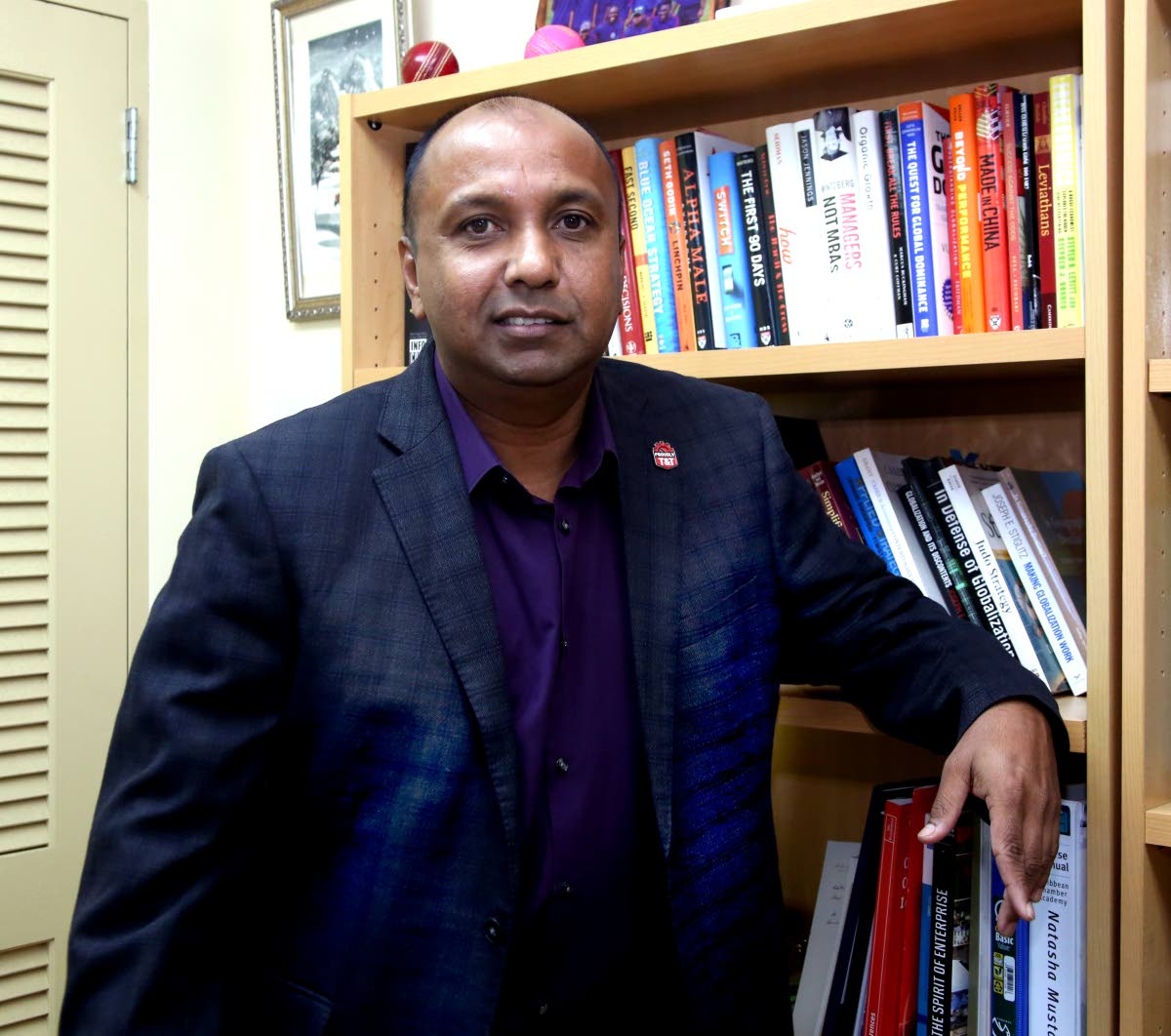
    Trinidad and Tobago’s leading business organizations are emphasizing the critical importance of maintaining regional stability while pursuing international market expansion. This position emerges following recent diplomatic tensions between Prime Minister Kamla Persad-Bissessar and Antigua and Barbuda’s Prime Minister Gaston Browne regarding CARICOM’s effectiveness.

    Business leaders have unanimously expressed support for CARICOM as Trinidad’s second-largest non-energy export market, behind only the United States. The consensus follows revelations that Trinidad earned approximately US$1.1 billion in foreign exchange from CARICOM trade in 2024 alone, comprising US$784.7 million in domestic exports and US$501.3 million in re-exports to member states.

    Dr. Ramesh Ramdeen, CEO of the Trinidad and Tobago Manufacturers’ Association (TTMA), stated that regional producers would face significant disadvantages if CARICOM integration weakened. “We need to collectively work together to ensure all organs of CARICOM are optimal,” Ramdeen emphasized, highlighting the benefits of the Common External Tariff that enables competitive trading against extra-regional imports.

    While supporting global expansion ambitions, Ramdeen clarified that international growth should not come “at the expense of our CARICOM brothers and sisters.” The TTMA is actively pursuing both outward trade missions beyond the region and inward buyer missions to Trinidad to achieve export doubling targets within five years.

    Dianne Joseph, President of the TT Coalition of Service Industries, warned that geopolitical friction within CARICOM creates uncertainty that disrupts trade and investment. “Businesses may perceive trading with Venezuela or Caribbean partners as a heightened risk,” Joseph noted, particularly emphasizing the vulnerability of smaller enterprises compared to larger corporations with greater resilience.

    The Trinidad and Tobago Chamber of Industry and Commerce echoed these concerns, emphasizing the deep commercial ties throughout the region that include established customers, supply chains, and physical investments. The organization called for “continuity and predictability” in regional trade relations, emphasizing that businesses require stable market access and reliable logistics linkages for long-term planning.

    All three organizations expressed commitment to a rules-based regional framework while acknowledging the need for CARICOM evolution that balances cooperation with national sovereignty considerations. They recommended resolving tensions through private mediation rather than public confrontation to maintain economic resilience and regional integration benefits.

  • St Benedict’s land another 2nd-place finish at KFC Goodwill Series

    St Benedict’s land another 2nd-place finish at KFC Goodwill Series

    For the second consecutive year, Guyana’s Chase Academic Foundation emerged victorious against Trinidad’s St Benedict’s College in a heart-stopping penalty shootout finale at the KFC Goodwill International Under-18 School Football Tournament. The championship match, held on December 21 at Georgetown’s Ministry of Education Grounds, concluded with a 5-4 penalty victory for the defending champions after both regulation and extra time failed to break a goalless deadlock.

    The dramatic shootout marked a repeat of the 2024 final where Chase Academy similarly prevailed 8-7 on penalties after another scoreless draw. This sixth edition of the international youth tournament saw the “La Romaine Lions” from St Benedict’s College securing their fourth consecutive runner-up finish in the competition, having previously fallen to Jamaica’s Clarendon College in 2023 and DC Caesar Fox Secondary School in 2022.

    In the semifinals played on December 19, Chase Academy demonstrated dominant form with a commanding 5-0 victory over Suriname’s Nikiere Technical School. Meanwhile, St Benedict’s advanced to the final with a 2-0 win against Jamaica’s Kingston College, powered by a spectacular first-half brace from defender Ruben Phillip. The left-footed full-back opened scoring with a 23-yard free kick that penetrated the defensive wall, followed by a stunning long-range strike from an elaborate left-side buildup.

    Kingston College redeemed themselves in the third-place playoff, delivering a comprehensive 4-1 victory over Nikiere Technical School. Individual honors saw Chase Academy’s Bryon Wharton claiming the Golden Boot award, while teammate Flavio LaRose secured Best Goalkeeper honors for the second straight year. Tournament MVP Malcom Hendricks received a career-changing prize: a three-month training opportunity with Brazilian professional club Athletico Paranaense.