作者: admin

  • Grange encourages Jamaicans to participate in Labour Day activities

    Grange encourages Jamaicans to participate in Labour Day activities

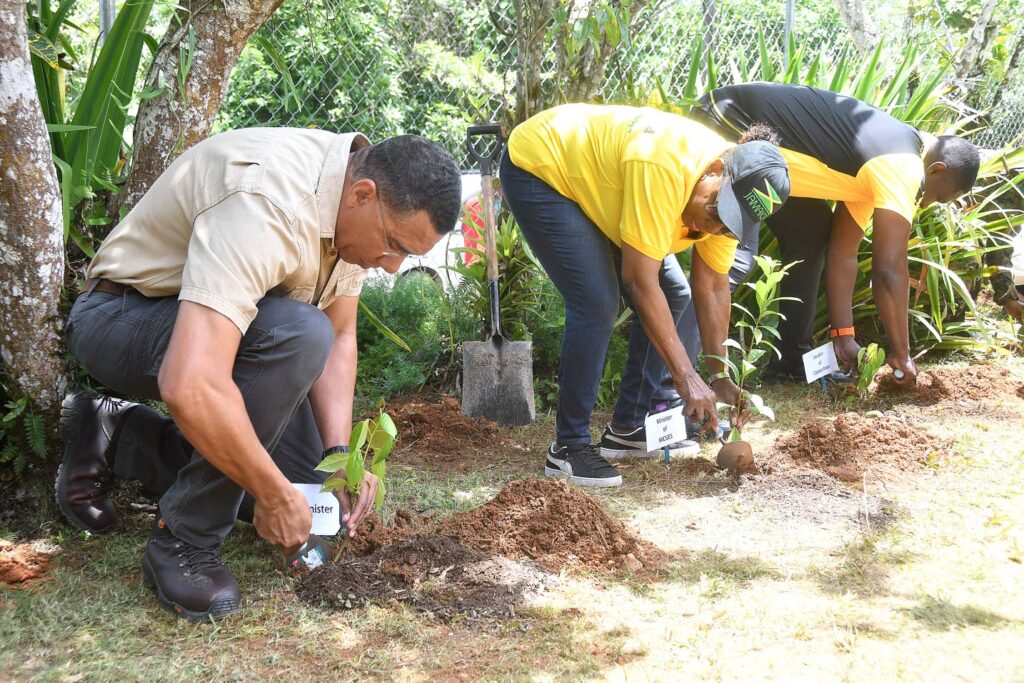
    KINGSTON, Jamaica — As the island nation gears up for its annual national Labour Day observance, Jamaica’s Minister of Culture, Gender, Entertainment and Sport Olivia Grange has issued a public call for widespread participation from Jamaicans across every corner of the country. The 2026 event will center on the unifying official theme: “One People, One Purpose, In All Things Jamaica Wins”.

    A minor adjustment has been made to the 2026 observance date. While Labour Day is traditionally marked on May 23 each year, the holiday will be celebrated on Monday, May 25 in 2026, as the standard date falls on a weekend this cycle.

    In an exclusive conversation with JIS News, Minister Grange emphasized that the chosen theme is far more than a slogan — it encapsulates the core national identity that has long defined Jamaican people. “It has a nice little rhyme, nice little rhythm to it, and it is the beating heart of who we are as Jamaicans,” Grange shared. “It captures our unbreakable resilience. It captures our unshakable unity and our fierce dedication.”

    She added that when the nation aligns behind a shared goal, no barrier is insurmountable: “When we stand together as one people with one purpose, there is no storm, no challenge, no obstacle too great for us to conquer.”

    Organizers have selected two flagship national projects to anchor this year’s Labour Day volunteer efforts. The first centers on the restoration and upgrade of Kingston’s iconic Sabina Park cricket complex, a landmark that is currently undergoing preparations to welcome back regional and international cricket matches, including upcoming fixtures of the Caribbean Premier League (CPL) T20 tournament.

    Grange explained the significance of selecting Sabina Park for national focus, noting the venue holds deep cultural and historical heritage for Jamaica. The government has maintained long-term investments in the site’s modernization, including a cooperation partnership with India that will deliver a new high-tech scoreboard and upgraded stadium lighting. These ongoing upgrades are all aimed at bringing the facility fully in line with international competition standards. On Labour Day, volunteers will mobilize to clean, repaint, and complete minor repairs across the park to support its upcoming reopening for major sports events.

    The second national project is based in Lewis Town, a community in the parish of St Elizabeth. Local teams and volunteers will focus on repairing and replacing the damaged roof of the Lewis Town Early Childhood Institution, which was severely harmed when Hurricane Melissa swept through the area.

    Per the event’s official schedule, Jamaican Prime Minister Dr Andrew Holness is scheduled to visit both flagship project sites on Labour Day to meet with volunteers and observe progress. Meanwhile, sitting members of parliament and local municipal corporations will lead community-level volunteer projects in every region across the island.

    A core priority for the 2026 Labour Day observance is the restoration and rehabilitation of shared community assets, Grange confirmed. These assets include early childhood education centers, neighborhood community centers, and local sports facilities that serve residents across the country.

    “ I want everyone to go out on Labour Day to show that together, as a united people, we will help those who are unfortunate. We will help our neighbours. We will help to restore community centres, early-childhood education institutions, and sports facilities. That is the focus this year,” Grange told JIS News.

  • ‘Grammy Certificate Ceremony’ returns to Jamaica with new name and format

    ‘Grammy Certificate Ceremony’ returns to Jamaica with new name and format

    One of Jamaica’s most anticipated music industry celebrations is getting a major facelift ahead of its September return, as organizer Kennedy Mensah expands the event to recognize more standout talent from across the global music scene. When Mensah touches down in Jamaica this September for his third iteration of the annual awards gathering, the event will bear a new name, occupy a larger purpose-built venue, and feature an expanded format that incorporates international certification programs.

    Formerly branded the Grammy Certificate Ceremony, the event has been rebranded as the Music In Excellence Ceremony to reflect its broader scope of honoring musical achievement across markets. Scheduled to take place on September 15 at the spacious Courtleigh Auditorium in central New Kingston, the ceremony leaves behind its long-time previous Kingston home at the nearby Audi Showroom, a change driven by steady growth in the event’s size and ambitions.

    What sets this year’s event apart from previous stagings held in Kingston, South Florida and London is a new collaborative partnership between Mensah’s Back 2 Da Future Music Limited and the British Phonographic Industry (BPI). For the first time, the ceremony will present BPI-certified platinum, gold and silver discs alongside traditional Grammy certificates, honoring the work of Jamaican and international artistes, producers and session musicians who have achieved major commercial success on British music markets. Returning as a partner for the second consecutive year is The Royalty Network Inc, a leading New York-based music publishing firm that supports independent and established creators worldwide.

    In an exclusive interview with Jamaica Observer Online, London-born organizer Mensah, who has Ghanaian heritage, outlined the changes coming to this year’s ceremony. A total of 25 creators will walk away with either a Grammy Certificate or a BCI-certified disc this year, a significant milestone for the fast-growing event. “The ceremony has grown and we needed a dedicated space that would allow us to have a live band. Unfortunately, growing pains means that we have had to find a purpose-built venue to accommodate our expanding programming,” Mensah explained of the venue shift.

    The last iteration of the ceremony, held under its original name in South Florida this past January, honored a roster of iconic Caribbean talent including esteemed musician Robert Browne, celebrated singer and multi-instrumentalist Gramps Morgan, Grammy-winning reggae group Morgan Heritage, and influential dancehall singer Wayne Wonder. Mensah founded Back 2 Da Future Music Limited in 2005, and launched the inaugural Grammy Certificate Ceremony in South Florida in July 2024, which paid tribute to legendary guitarist Rad Bryan, best known for his work with iconic reggae bands The Revolutionaries and The Maytals.

  • Beenie Man rejects assault claims, threatens legal action

    Beenie Man rejects assault claims, threatens legal action

    KINGSTON, Jamaica — One of Jamaica’s most high-profile recording artists, Beenie Man — legally known as Moses Davis — has issued a forceful public rejection of recent unsubstantiated claims that he physically assaulted a fellow entertainer, slamming the accusations as completely untrue, harmful, and legally actionable defamation.

    In an official statement released to the press this Tuesday, Davis confirmed he has already retained a team of legal representatives and is currently assembling a formal body of evidence to disprove the damaging allegations circulating online and in public discourse.

    The statement laid out clear demands for the accusers and any outlets that have spread the claims: “We hereby demand the immediate removal of all posts, videos, stories, and other publications asserting or repeating these claims, together with a full public retraction and apology.”

    Davis’s legal team warned that failure to meet these demands in a timely manner will open the door to full legal recourse. According to the statement, if compliance is not forthcoming promptly, Davis will pursue “proceedings for defamation, damages, injunctive relief, and any other relief available at law” to clear his name and hold responsible parties accountable for the harm caused by the false claims.

  • Guardiola swerves Man City exit talk as title hopes end

    Guardiola swerves Man City exit talk as title hopes end

    BOURNEMOUTH, United Kingdom – In a result that closed the book on one of the most tense Premier League title races in recent memory, Manchester City’s 1-1 away draw against Bournemouth at the Vitality Stadium has dashed the defending champions’ hopes of retaining their crown, and left the future of legendary manager Pep Guardiola hanging in the balance.

    The stalemate, which left City four points adrift of league leaders Arsenal with just one fixture remaining in the 2023-24 season, officially confirms Arsenal as the new Premier League champions – ending a 20-year drought for the North London club.

    Speculation has swept English football in recent days that Guardiola, one of the most decorated managers in the history of the sport, will step down from his role following City’s final league match of the campaign against Aston Villa this coming Sunday. The club has so far declined to issue any public comment addressing the swirling rumors.

    Speaking to reporters after the Bournemouth draw, the 55-year-old Catalan manager said he will first hold discussions with Manchester City’s senior leadership before making any announcement about his plans. “Allow me to talk with my chairman,” Guardiola told the BBC. “I have one more year left on my contract. Every season when we reach the final stages, we sit down to discuss what comes next. I don’t discuss these matters with anyone outside the club first – the conversation starts with my chairman and my bosses.”

    He went on to explain his reasoning for delaying a public statement, noting that premature confirmation of an exit would undermine his ability to lead the squad. “From my experience, when a manager already expects he is leaving, the players stop following you. You have to be able to lead with full authority. Right now, the right step is to have that conversation with the club’s leadership privately first.”

    Pressed for immediate clarity during his post-match press conference, Guardiola instead shifted focus to congratulating Arsenal and their manager Mikel Arteta – who cut his coaching teeth as an assistant to Guardiola during his early years at Manchester City.

    Guardiola also acknowledged that fatigue played a major role in his side’s failure to secure the three points they needed to keep their title hopes alive going into the final matchweek. The draw came just three days after City beat Chelsea to win the FA Cup final, securing a domestic cup double for the campaign.

    “I would have loved to have kept pushing to the very last moment, but today the tiredness was obvious across the team,” he added.

    If Guardiola does depart, his exit will bring an end to the most successful managerial stint in Manchester City’s history, and one of the most dominant runs any club has seen in English football. Since his appointment in 2016, Guardiola has led City to 20 major trophies, including six Premier League titles and the club’s first and only Champions League title to date.

    Per widespread insider reports, former Guardiola assistant Enzo Maresca is the leading candidate to take over the managerial role should Guardiola step down. Maresca has been out of work since leaving his position as Chelsea manager earlier this year.

  • Decade in prison for 56-y-o Vincentian who caused death of friend in ‘rum disagreement’

    Decade in prison for 56-y-o Vincentian who caused death of friend in ‘rum disagreement’

    KINGSTOWN, St Vincent – A 56-year-old local fisherman has been handed a 10-year custodial sentence by a High Court judge in St Vincent and the Grenadines (SVG) following his conviction for the unlawful killing of his friend, 42-year-old security guard Cameron Alexander. The fatal assault, carried out with a rum bottle, took place amid a casual gathering in late August 2023.

    Justice Rickie Burnett, presiding over the case, handed down the penalty to Joel Ashton, a local resident also known by the nickname ‘Goat’. The court ordered that the time Ashton has already spent in pretrial remand be subtracted from his total sentence, a standard provision in the SVG judicial system.

    Court documents outline that the fatal incident unfolded between August 26 and September 1, 2023, in Lowmans Bay, a quiet coastal community on the leeward coast of St Vincent. Prosecutors confirmed Ashton caused Alexander’s death through an unlawful violent act.

    What began as a friendly social outing between the long-time acquaintances and other companions turned violent after a minor dispute. Alexander and another man had combined their money to buy a pint of rum, and tensions flared when Alexander allegedly took a small bottle of rum from Ashton’s pocket. In a sudden burst of anger, Ashton struck Alexander on the left side of the head with a full glass rum bottle, shattering the container on impact.

    A witness who was present at the gathering testified that Alexander did not retaliate immediately after the blow. Instead, the victim simply asked Ashton, “Just so?” before holding his head at an angle and revealing blood flowing from his ear. Alexander was seen walking to the nearby shoreline to rinse the wound before returning to the local shop where the group had gathered, where he noticed additional blood on his neck.

    Over the next 48 hours, Alexander’s condition worsened rapidly. On August 28, one of his two children found him unresponsive at his home, foaming at the mouth with active bleeding. He was rushed to the main Milton Cato Memorial Hospital and placed in the Intensive Care Unit for emergency treatment, but he succumbed to his injuries two days later on August 30, 2023.

    A post-mortem examination conducted by lead pathologist Dr Ronald Child confirmed the official cause of death as blunt force trauma to the head, directly resulting from the bottle attack.

    Ashton did not surrender to law enforcement until nearly four weeks after the incident, turning himself in to police on September 24, 2023. He was held in remand throughout the duration of his trial.

    During the sentencing hearing, Giovanni Stapleton, one of Alexander’s two children, delivered a victim impact statement telling the court his father had been his entire world, and that he continues to grieve the loss of his father every day.

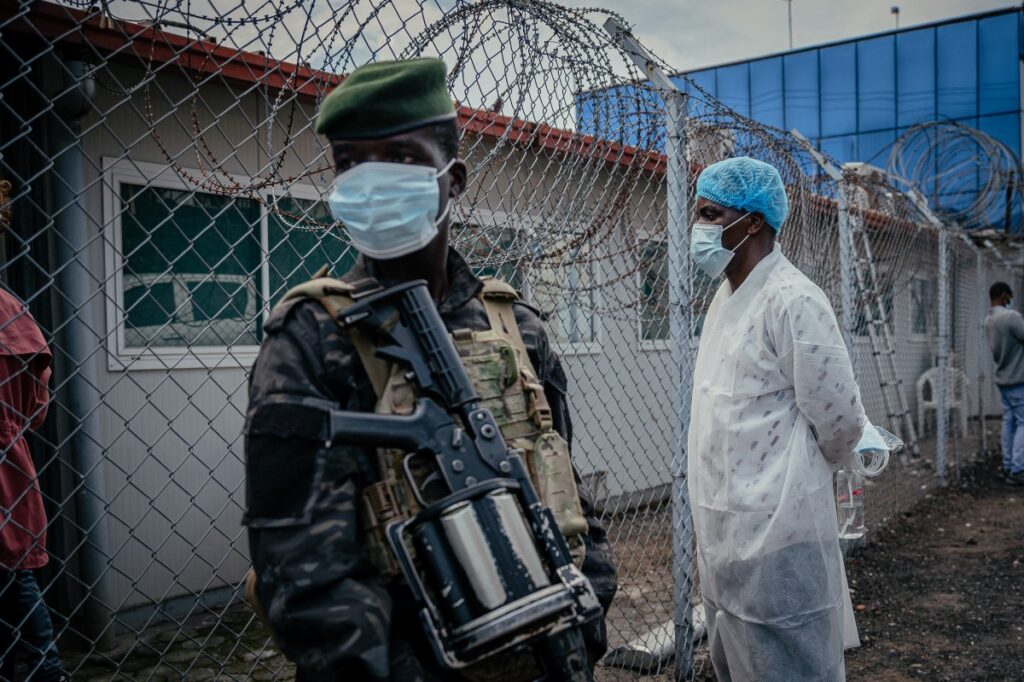
  • US to let DR Congo team in for World Cup despite Ebola restrictions

    US to let DR Congo team in for World Cup despite Ebola restrictions

    In a targeted policy adjustment announced this week, a senior United States government official confirmed Tuesday that Washington will carve out a special entry exemption for the Democratic Republic of Congo men’s national soccer team, allowing the squad to bypass a longstanding Ebola-related travel restriction ahead of their World Cup appearance.

    Speaking on condition of anonymity, the senior State Department official told reporters that US authorities fully expect the Congolese side to fulfill their fixture commitments at the global tournament without entry barriers. The original travel ban, implemented in response to a deadly Ebola outbreak that spread across central Africa, bars entry to most non-US citizens who have traveled within the DRC, Uganda, or South Sudan in the 21 days prior to their attempted entry to the US.

    Notably, the DRC is the only nation among the three Ebola-affected countries to qualify for men’s soccer’s most prestigious international competition. The official noted that the team has been conducting pre-tournament training camps across Europe in recent weeks, meaning most squad members would likely not have met the 21-day exposure threshold that triggers the ban in the first place.

    Even for players or staff who have traveled to the DRC within the three-week window, the official confirmed that a full entry prohibition will not be enforced. Instead, the contingent will follow the same strict public health protocols already mandated for returning US citizens and permanent residents, including mandatory testing and targeted isolation when necessary. This aligned approach ensures public health protections remain in place while clearing the way for the team to compete.

    The official made clear that the exemption is limited exclusively to the official national team delegation, and will not extend to ordinary Congolese fans hoping to travel to the US to support their side during the tournament.

  • Jamaicans register wins at NJCAA Champs

    Jamaicans register wins at NJCAA Champs

    The National Junior College Athletics Association (NJCAA) Outdoor Track and Field Championships wrapped up an action-packed three-day competition last weekend at New Mexico Junior College in Hobbs, New Mexico, and emerging as the standout performers of the tournament were a cohort of talented Jamaican athletes, who claimed top honors across a wide range of events.

    One of the most impressive displays of Jamaican dominance came in the men’s 400m hurdles, where athletes from the island nation claimed all three podium spots. Shadane Smith of Hinds Community College led the historic sweep, crossing the finish line in a new personal best time of 50.19 seconds. He outpaced Central Arizona’s defending champion Richard Hall, who finished second with a time of 50.42 seconds, while Barrain Smith of Odessa College secured third place in 51.23 seconds.

    In the men’s 110m hurdles, Shaquane Gordon, a former gold medalist at both the ISSA Champs and Carifta Games, lived up to his pre-tournament reputation. He clocked a wind-aided 13.04 seconds, with a tailwind of 4.1m/s exceeding the allowable threshold for record purposes, to take home the gold medal. Shevon Depass of Western Texas added another Jamaican top-three finish in the event, claiming bronze in 13.56 seconds.

    Hinds Community College’s Jayval Wright turned in a stellar all-around performance in the short sprints. He won the men’s 200m with a wind-aided time of 19.91 seconds, boosted by a 4.8m/s tailwind, and followed that up with a silver medal in the 100m, finishing in 9.96 seconds. Two other Jamaican athletes placed in the top 10 of the 100m: Hector Benjamin of Indian Hills took sixth in 10.09 seconds, and Raheem Pinnock of Hinds crossed the line seventh in 10.16 seconds.

    On the host campus, New Mexico Junior College’s Aaron McKenzie claimed the men’s high jump title, clearing 2.12m to beat out Barton County’s Chavez Penn, who recorded a best jump of 2.07m to finish second. Raheim Scott, also of New Mexico Junior College, added a bronze medal for Jamaican athletes in the men’s 400m, finishing in 46.47 seconds.

    In women’s competition, Alexia Walker of Barton County College claimed gold in the heptathlon, amassing a total of 5,200 points across the seven events. Asharria Ulett, also of Barton County, won the women’s 100m hurdles in a wind-aided 12.89 seconds with a 6.8m/s tailwind, beating compatriot Daynea Colstock of Western Texas, who took silver in 13.10 seconds. Colstock later added a fourth-place finish in the women’s 400m hurdles with a time of 1:00.80.

    Deijanae Bruce of Odessa College won the women’s triple jump with a wind-aided mark of 13.13m, while Celine Riddle of Barton County took third in the same event with 12.92m. Riddle, the 2023 long jump champion, finished second in this year’s long jump competition with a new personal best of 6.29m, just behind compatriot Ishna James of Odessa, who won gold with a jump of 6.32m.

    Multiple other Jamaican athletes secured top-six finishes across the tournament. Cindy Rose of Indian Hills took silver in the women’s 800m in 2:13.93, just ahead of Terrica Clarke of Butler CC who finished fourth in 2:15.43. Kahdijah Bailey of Iowa Western claimed silver in the women’s high jump with a clearance of 1.64m, the same height as Bruce, who finished third, while Rasheda Samuels of Iowa Western took fourth and Jahmeka Brown of Barton County placed sixth. Twin sisters Shamoyea and Shamoye Morris of Barton County took second and fourth respectively in the women’s discus throw, with marks of 49.82m and 45.46m, while Carla Kay Brown of Coffeyville finished fifth and Natassia Burrell of Cloud County placed sixth. Burrell also claimed a bronze medal in the women’s javelin throw with a mark of 45.78m. In the women’s 100m, Caneilia Hope of Hinds CC finished fourth in a wind-aided 11.27 seconds, with Mickayla Gardner of Central Arizona fifth and Alliah Baker of Western Texas sixth. Rounding out the Jamaican results, Osmond Holt of Iowa Central finished fourth in the men’s decathlon with 6,263 points.

  • US, Cuba held talks on aid offer —  US official

    US, Cuba held talks on aid offer — US official

    Diplomatic discussions between the United States and Cuba have resumed this week, centered on a controversial $100 million US aid offer aimed at easing the severe economic crisis gripping the Caribbean island nation, a senior US State Department official confirmed Tuesday on condition of anonymity.

    The latest round of negotiations saw US Ambassador to Havana Mike Hammer meet face-to-face with senior Cuban foreign ministry officials on Monday, marking continued progress in advancing Washington’s proposal. The anonymous official emphasized that US diplomatic teams have maintained close, consistent coordination with their Cuban counterparts throughout the process, stating that “we had a meeting yesterday [Monday] and continue to pursue that proposal aggressively.”

    Under the terms of the current US plan, the $100 million in assistance will not be transferred directly to the Cuban communist government. Instead, all aid will be channeled through independent Christian charitable organizations, a structure designed to ensure resources reach ordinary Cuban citizens directly. “We care a tremendous amount about the Cuban people, and want to be able to provide that assistance directly to them,” the official added.

    The proposal itself was first put forward publicly by US Secretary of State Marco Rubio, a longstanding outspoken opponent of Havana’s communist administration. Rubio has attached key conditions to the aid, requiring the Cuban government to implement concrete political and economic opening measures before any assistance is disbursed.

    Cuba’s position on the offer has shifted in recent weeks. Initially, Cuban officials accused Rubio of fabricating the aid proposal, but last week Cuban Foreign Minister Bruno Rodriguez announced that Havana is now willing to review the US offer in good faith.

    The current economic turmoil in Cuba stems largely from a dramatic shift in regional energy dynamics. For years, Venezuela provided the island with heavily subsidized, near-free oil in exchange for Cuban medical personnel and other professional services. However, after US-led actions resulted in the ousting of Venezuela’s leftist leader Nicolas Maduro, this critical oil supply was abruptly cut off, leaving Cuba mired in persistent energy shortages and widespread daily blackouts that have deepened its ongoing economic collapse.

  • The Case for Dominican Diaspora Bonds: Venture Capital in Waiting

    The Case for Dominican Diaspora Bonds: Venture Capital in Waiting

    The Dominican Republic is no stranger to large inflows of external capital. Every year, billions of dollars enter the country through remittances, fueled by family ties, national identity, and enduring confidence in the Dominican future. Beyond remittances, diaspora investors consistently pour additional capital into domestic real estate, driving the construction of new commercial towers, large-scale land acquisitions, and steady expansion of the country’s hospitality sector.

    On paper, these capital flows paint a picture of strong market confidence. In practice, they expose a core structural gap: the Dominican economy receives capital at scale, but it lacks a coordinated system to turn that capital into sustained innovation, new venture growth, and exportable intellectual property that can drive long-term value. This is not a problem of insufficient funding—it is a problem of flawed capital architecture.

    Well-designed Dominican diaspora bonds have the potential to be far more than just another financial instrument. If structured correctly, they can act as a mechanism to reorganize how capital moves and compounds across the Dominican economy, addressing longstanding misalignments between diaspora investment activity and national development goals.

    ### Rethinking Common Assumptions About Diaspora Capital

    The widespread narrative that diaspora capital is underutilized misses the mark entirely. Diaspora investment is already highly active in the Dominican Republic—but it is overwhelmingly concentrated in three types of assets that check specific boxes for investors: they are legible, defensible, and familiar. Real estate dominates the market for one simple reason: it meets all three criteria. Investors can see the asset, secure clear legal ownership, and easily understand its value proposition.

    What real estate quietly builds, beyond direct returns for investors, is far more valuable: broad-based trust in the domestic market. That trust is the only prerequisite needed to move capital into more complex, higher-growth asset classes. The longstanding mistake in Dominican economic policy has been treating real estate investment as an end goal, when it should have been framed as an on-ramp to deeper, more impactful investment.

    ### The Missing Structured Transition

    Right now, there is no formal, structured pathway for Dominican diaspora investors to move beyond real estate and allocate capital to startups, national infrastructure projects, emerging technology, or exportable intellectual property. This gap is not caused by a lack of interest from investors—it is the result of a lack of intentional design.

    The current shift from asset-backed real estate investment to venture exposure is unstructured, opaque, and widely perceived as carrying disproportionate risk. As a result, this transition does not happen at meaningful scale, leaving billions in potential growth capital stuck in low-compounding real estate assets.

    ### Reimagining What Diaspora Bonds Can Achieve

    Diaspora bonds are not a new concept: countries including India and Israel have used them for decades to finance large infrastructure projects and ease macroeconomic pressures. But these existing implementations share a critical limitation: they treat diaspora capital as passive liquidity to fund government priorities, rather than framing it as an entry point into a broader, more dynamic national economic system.

    If the Dominican Republic replicates this outdated model, its diaspora bonds will follow the same pattern: they will absorb diaspora capital, distribute funds across broad projects, deliver modest returns for investors, and ultimately change very little about the country’s economic structure. But policymakers and market leaders can learn from these historical gaps to build a far more impactful model for the Dominican context.

    ### The Untapped Strategic Opportunity

    The Dominican Republic does not need another isolated financial instrument—it needs a complete capital progression system. Investors do not jump directly from low-risk, certain assets like real estate to high-uncertainty venture projects. They grow into higher risk through structured, graduated exposure. That makes the core role of diaspora bonds not pooling capital, but sequencing risk, to move investment gradually up the value chain from real estate, to infrastructure, to public capital markets, to research and development, and finally to export-focused innovation.

    ### Building A Coherent Capital Progression Framework

    This new capital architecture is not conceptually complicated, but it requires consistent intentionality and discipline. It starts where trust already exists: at the level of asset-backed investment that diaspora investors already understand and embrace.

    From that starting point, capital can be progressively reallocated—not abruptly, but deliberately—into layers that introduce increasing complexity and higher potential returns. At the base layer, capital remains anchored in tangible real assets: diversified real estate portfolios, infrastructure-linked investment vehicles, and income-generating holdings. This is the entry point where diaspora investors feel comfortable committing capital.

    The second layer introduces revenue-linked exposure: capital deployed to existing businesses that are already generating consistent cash flow, rather than backing unproven early-stage ideas. This layer includes small and medium-sized enterprises, digitally enabled service businesses, and early-stage companies with proven monetization models. This is where the critical discipline of operational performance is introduced: returns are no longer tied only to asset appreciation, but to ongoing business results.

    Only after this middle layer is well-established does capital move into the most underdeveloped, yet most critical, segment of the market: innovation. This is not abstract, idea-stage startup investing—it targets tangible, scalable assets including exportable digital products, scalable digital platforms, and intellectual property that can generate recurring revenue beyond the Dominican domestic market. This is where meaningful venture capital begins: not at the pitch stage, not when an idea is first conceived, but at the point where risk can be clearly understood, measured, and priced appropriately for investors.

    ### Why This Reform Is Critical Right Now

    Across Latin America, the volume of early-stage venture capital has contracted sharply in recent years, and investor tolerance for unproven uncertainty has fallen sharply. Regional investment firms including Cuantico VC and Successment have documented a clear market shift: capital is increasingly concentrated in a small number of already validated, revenue-generating companies.

    In mature startup ecosystems, this contraction is absorbed by deep institutional infrastructure. In the Dominican Republic, it has created a critical funding vacuum. That vacuum is currently filled by fragmented, uncoordinated capital: independent angel investors operating without shared frameworks, short-term grant programs with no long-term continuity, and founders forced to navigate the market without a coherent capital pathway to grow.

    The result of this fragmentation is predictable: widespread investment activity with no sustained accumulation of national value, early-stage innovation that never reaches meaningful scale, and large volumes of capital that never compound to drive broad economic growth.

    ### Design, Control, and The Emerging Conversation

    This is not an abstract theoretical problem—it is a design problem. And in emerging markets, the design of economic systems is rarely neutral. It is shaped by competing priorities: public institutions working to attract new capital, private actors seeking to deploy capital for returns, and local operators working to build sustainable businesses within existing rules.

    The core question facing the Dominican Republic is not whether diaspora bonds will be launched, but who will define how they function, and what parts of the economy they connect diaspora capital to. In recent policy and investor forums, including the annual Dominicans on the Hill gathering in Washington, D.C., this conversation has begun to surface more explicitly. Leaders including Francesca Ranieri of the American Chamber of Commerce in the Dominican Republic (AMCHAMDR) have already highlighted the potential of diaspora-linked financial instruments to align external capital with national development priorities. A general direction is emerging, but the specific mechanism of the new framework remains undefined.

    ### The Underestimated Execution Layer

    Designing a new capital vehicle is relatively straightforward. Ensuring that the capital deployed through that vehicle actually delivers intended economic outcomes is far harder. This is where most well-funded, well-intentioned initiatives fail: they operate under a flawed assumption that once capital is deployed, it will naturally organize itself into productive growth. In reality, capital amplifies the structure of the system it enters. If that system lacks revenue discipline, clear acquisition pathways, and formal operational structure, capital will not accelerate growth—it will only accelerate existing inefficiencies.

    Applied research and frameworks developed by Successment consistently point to this gap: the absence of what the firm calls “innovation architecture”—the formal set of systems that converts raw startup activity into predictable, recurring national income. Without this execution layer, even the most well-structured capital instruments will underperform. With it, even constrained volumes of capital can compound to drive meaningful long-term growth.

    ### The Market’s Quiet Self-Organization

    These critical dynamics—aligned capital, consistent execution, and institutional coordination—do not converge naturally. They require intentional spaces that force stakeholders into direct, solution-focused collaboration. Increasingly, these collaborative spaces are not traditional policy forums or generic investor roadshows. They are evolving hybrid platforms that bring diaspora capital together with local operators, force investors to evaluate actual execution rather than polished startup narratives, and test capital allocation strategies against real market constraints.

    Events like the upcoming 2026 Digital Nomad Summit in Santo Domingo are already evolving in this direction: they operate less as general interest conferences and more as active dealrooms, where stakeholders negotiate the next phase of the Dominican economic model in real time.

    ### Coordinated Structure Delivers Far More Than Fragmented Action

    If diaspora bonds are introduced as isolated, stand-alone instruments, they will only deliver incremental, marginal impact. If they are embedded within a broader, coordinated capital framework that connects real estate investment, revenue-generating small businesses, and scalable innovation assets, they become something far more powerful: a structured pipeline that lets capital enter the market with confidence, mature through exposure to operational performance, and finally scale into high-impact innovation that drives long-term national growth.

    President Luis Abinader has already publicly referenced plans for dollar-backed diaspora bonds, putting the concept on the national policy agenda. At its core, the Dominican Republic does not lack capital—it lacks a clear system that tells capital where to go next to create compounding value. Real estate already solved the first challenge: creating a trusted entry point for diaspora capital. Well-designed diaspora bonds can solve the second critical challenge: creating a clear progression pathway for that capital. From there, the work is not theoretical—it is structural. That is how sustainable economic compounding works, and the stakeholders who embrace this model will not just react to the Dominican Republic’s next growth phase—they will build it.

  • Dominican Central Bank receives U.S. Treasury delegation to advance financial inclusion

    Dominican Central Bank receives U.S. Treasury delegation to advance financial inclusion

    SANTO DOMINGO — A high-stakes diplomatic and financial gathering this week brought together Héctor Valdez Albizu, Governor of the Central Bank of the Dominican Republic, and a visiting delegation from the U.S. Treasury Department’s Office of Technical Assistance to map out potential new collaborative projects designed to strengthen the Caribbean nation’s financial ecosystem. The talks centered on three core shared priorities: expanding broad-based financial inclusion across underserved communities, boosting access to affordable productive credit for local businesses, and shoring up the Dominican Republic’s overall financial stability against domestic and global economic shocks.

    During the closed-door discussions, Governor Valdez Albizu emphasized the critical value of targeted international technical support to develop innovative, accessible financing tools tailored to micro, small, and medium-sized enterprises (MSMEs) — the backbone of the Dominican economy, accounting for a large share of total employment and national output. Specific initiatives under consideration included expanding factoring services, supporting the growth of the financial leasing market, and rolling out new lending products secured by movable collateral, all of which Valdez Albizu noted would remove longstanding barriers to credit access for smaller business owners that lack the traditional fixed assets required for standard bank loans. By unlocking this capital, the central bank projects that MSMEs will be able to expand operations, hire more workers, and contribute more robustly to sustained national economic growth.

    Beyond small business financing, the two sides also held detailed talks about potential U.S. technical assistance to modernize the Dominican Republic’s financial regulatory architecture. Key updates under discussion include strengthening bank resolution frameworks to handle failing financial institutions without triggering broader market disruption, building out dedicated contingency reserve funds to buffer against unexpected crises, improving regulatory oversight of fast-growing virtual asset markets, and upgrading systemic risk monitoring capabilities to spot emerging threats to financial stability earlier.

    Following the meeting, U.S. delegation members confirmed that the Office of Technical Assistance will conduct a full feasibility assessment to design a tailored technical assistance program that aligns directly with the Central Bank of the Dominican Republic’s core institutional goals and its near-term practical regulatory reform priorities. No final timeline for the program’s launch has been announced, but both sides expressed optimism that the collaboration will deliver tangible benefits to the Dominican financial sector and national economy in the coming years.