作者: admin

  • Sweden charges teen for promoting violent acts online in sadistic online network

    Sweden charges teen for promoting violent acts online in sadistic online network

    In a long-awaited transparency move decades in the making, the U.S. Pentagon has opened the vault on more than 160 previously classified documents detailing public and official sightings of Unidentified Anomalous Phenomena (UAP, the Defense Department’s official term for what are commonly known as UFOs), spanning more than 75 years of reported encounters. The publication of the files, announced Friday by Defense Secretary Pete Hegseth, fulfills a transparency directive issued by President Donald Trump earlier this year.

    Hegseth emphasized in an official statement that decades of secrecy around these records had sparked widespread, well-founded public curiosity, and that the administration was committed to giving the American public direct access to the unredacted original files. The records, hosted on the Defense Department’s public website, include entries stretching all the way back to the late 1940s – the era when modern UFO lore first entered mainstream American culture. Among the earliest documents is a 1947 compilation of multiple “flying disc” sightings, followed a year later by a top-secret Air Force intelligence memo detailing reports of “unidentified aircraft” and “flying saucers.” More contemporary entries include a 2023 incident in which three separate teams of federal law enforcement special agents independently submitted reports of glowing orange orbs in the sky that launched smaller red objects.

    The declassification push traces back to February 2024, when President Trump ordered all federal agencies to begin the process of sorting through and releasing all government-held records related to UFOs and potential extraterrestrial activity, citing overwhelming public demand for greater government openness around the topic. Alongside issuing the order, the Republican president drew controversy by accusing his Democratic predecessor, former President Barack Obama, of improperly disclosing classified information during a viral podcast interview. In that conversation with host Brian Tyler Cohen, Obama addressed persistent speculation surrounding Area 51 – the highly classified Nevada military base that has been the center of UFO conspiracy theories for decades – noting, “They’re real, but I haven’t seen them, and they’re not being kept in… Area 51.” When pressed by reporters, Trump argued Obama had broken classification protocols with his comments, while adding that he personally remained undecided on the question of extraterrestrial life: “I don’t know if they are real or not.”

    To date, no formal evidence of intelligent extraterrestrial life has been presented by the U.S. government. Public and official interest in UAP has surged in recent years, however, driven by a steady stream of declassified military footage of unexplained aerial encounters and growing national security concerns that some unidentified objects could be advanced surveillance or weapons technology developed by U.S. geopolitical adversaries. In a major update published just months ago in March 2024, the Pentagon confirmed that it has yet to find any conclusive evidence linking reported UAP sightings to extraterrestrial technology. The vast majority of unexplained encounters, officials found, can be traced back to ordinary human activity, including weather balloons, commercial and military aircraft, reconnaissance drones, orbital satellites, and atmospheric anomalies.

  • Rubio says had ‘very good meeting’ with Pope Leo

    Rubio says had ‘very good meeting’ with Pope Leo

    VATICAN CITY, ROME — Amid already heightened tensions sparked by former U.S. President Donald Trump’s public rebuke of Pope Leo XIV’s anti-war stance, U.S. Secretary of State Marco Rubio announced Friday that his closed-door discussions with the pontiff yielded a constructive, productive exchange. Speaking to assembled reporters on the grounds of the Vatican immediately after the hour-long meeting, Rubio characterized the encounter as a “very good meeting” that laid clear ground for mutual understanding between the U.S. government and the Holy See.

  • Super David: super late, super great

    Super David: super late, super great

    For Thoroughbred racing prospects, early debuts and flashy two-year-old form are often the first marker of future stardom. But three-year-old gelding Super David is proving that great talent can arrive late, and when it does, it can leave the entire industry rethinking expectations.

    Making his first career start only on April 26, 2026, Super David turned in a performance that was far from disgrace, crossing the line in third place over four furlongs (800 meters). He finished just one and a half lengths behind the race winners Wall To Wall and Nebraska, a solid result for a horse making his first trip to the track. But just six days later, in his second start on May 2, Super David delivered a performance no one saw coming, securing his first career win in a native-bred three-year-old event over six and a half furlongs (1300 meters) with a level of dominance that has connections already dreaming of bigger trophies down the line.

    Bred by Patton Proud out of the Storm Craft mare Storm Girl, Super David is both owned and trained by David Powell, with jockey Robert Halledeen in the irons for his breakout win. From the moment the starting gates flew open, Halledeen sent Super David straight to the lead, and what followed was nothing short of a solo exhibition. The quick-striding gelding extended his lead with every step, putting multiple lengths between himself and the chasing pack at every split, before crossing the finish line with ease well clear of the rest of the field. His final clocking stopped at 1 minute 20.2 seconds, with opening splits of 23.4 seconds for the first quarter, 48.1 seconds for the half, and 1:13.4 for the six furlong mark—an exceptionally fast time for a first-time winner, and an unprecedentedly sharp effort for a horse making just his second career start.

    Even his trainer Powell, who has watched the gelding develop from birth, said he was caught off guard by the scale of the win. “I expected Super David to run a good race with a good chance of winning, but the way he ran, the way he dominated was revealing,” Powell told reporters after the race.

    Many fans and analysts have questioned why a talent like Super David only made his racing debut at age three, when most top prospects start competing as two-year-olds. The answer, Powell explained, comes down to both his training philosophy and an early setback that pushed back the gelding’s debut. “As a trainer, I don’t like to race my horses at two, I prefer to wait until they actually reach the full age of three,” Powell said. “Super David was foaled on April 16, plus he had an injury, and it was then I decided to geld him.”

    Following his dominant win, speculation immediately turned to The Kingston, the final major prep race for the 2000 Guineas scheduled for May 9. But Powell quickly ruled out a start in that race, saying a quick turnaround would be too much for the young colt just days after his May 2 win. Instead, Powell laid out a more measured path to the Guineas, confirming Super David will likely get one prep outing ahead of the 2000 Guineas set to run in June.

  • First kiss

    First kiss

    On Saturday, May 2, 2026, equestrian racing gained a new milestone moment when first-time winning trainer Wayne Binns notched the breakthrough victory he had worked years to achieve, guiding the 4-year-old bay colt Goodness Graceous to a decisive win in a 5-furlong (1,000-meter) straight maiden condition race. Binns, who graduated from the professional trainers’ school in 2023, could barely mask his elation immediately after the race crossed the wire.

    “Oh my gosh, I don’t know what to say, I am just so happy right now,” Binns said in a post-victory interview, his voice thick with emotion. The celebration moved quickly to the winner’s enclosure, where fellow trainers and close friends swarmed the first-time winner to mark the occasion, dousing him in celebratory liquid. While the unexpected soak shorted out his phone—triggering a humorous “do not charge your phone” warning when he finally checked the device after the celebration—Binns said the moment was worth every minor inconvenience.

    “That was a touching moment for me, and I thank all my colleagues and friends, who shared this victory with me,” he said. “No harm done, as saddling my first winner is something to cherish.”

    The road to the winner’s circle was far from smooth for both Binns and Goodness Graceous. The underdog entry faced 10 seasoned rivals, and the race got off to a rocky start when the colt broke slowly from the eighth starting barrier. Jockey Jaheim Anderson adjusted his strategy on the fly, biding his time behind early pace-setters Money Mission (ridden by Raddesh Roman) and Brilliant Mind (ridden by Dane Dawkins) before making a decisive move once the field entered the main straight. Anderson angled Goodness Graceous tight along the inside rail, opening a clear path for the colt to find his stride.

    From that point, the race belonged to Goodness Graceous. The colt accelerated past the entire field, pulling away to a 2 ½-length victory with a final time of 1:02.1, with intermediate splits of 23.4 seconds for the first quarter and 48.3 seconds for the first half. Modern Monarch, with Jemar Jackson in the irons, finished second, while Delightful One, ridden by Tevin Foster, took third place. Saturday’s win marked just the third competitive start of Goodness Graceous’ racing career.

    For Binns, the victory was the payoff for two years of grit and patience through a devastating setback. He began prepping Goodness Graceous, a son of Perfect Curlin out of Rachel’s Grace bred and owned by Michael Bernard, as a 2-year-old in 2024, with plans to launch his racing career at age three. But a late 2024 injury sidelined the colt for a full year of recovery, forcing Binns to pause all training and wait out the healing process. Goodness Graceous only returned to structured training in late December 2025, made his first career start in early March 2026, and claimed his first win just two starts later.

    Binns made a point to credit the owner and breeder who stood by him and the colt through the injury and recovery process. “This victory would not have been possible without the assistance of Mr Michael Bernard,” Binns said. “Mr Bernard has given a lot of encouragement, for which I am grateful.”

  • NOVACORE LABS IN ACQUISITION TALKS

    NOVACORE LABS IN ACQUISITION TALKS

    A planned acquisition of Jamaican technology company NovaCore Labs by U.S. robotics specialist AIBotics has entered an extended negotiation phase, with the deal closing pushed from the end of 2025 to the second quarter of 2026 as parties work through final terms, according to NovaCore founder and CEO Gregory Moore.

    Negotiations for the transaction have been ongoing since last year, and Hurricane Melissa, which struck Jamaica, forced a temporary pause in discussions as both stakeholders evaluated post-storm stability in the local business and market landscape. While the two sides have signed a non-binding letter of intent (LOI) outlining core acquisition criteria, Moore emphasized that the agreement remains preliminary, and no final deal has been reached. A LOI, which marks serious intent to negotiate, does not constitute a finalized acquisition and is still subject to standard closing conditions.

    Founded by Moore, who transitioned the business from early gaming and virtual reality ventures to enterprise emerging tech before rebranding as NovaCore Labs, the company is a division of PlayJamaica Limited and an official Google partner. NovaCore has built its reputation delivering cloud infrastructure, immersive technology, AI-powered tools, geospatial mapping, and digital transformation solutions across Jamaica’s public sector, education, security, and tourism industries. Notable projects include Jamaica’s first Google Street View car, AI-powered simulation tools, and managed Google Cloud and Maps services.

    Like many small regional technology firms, NovaCore has hit structural barriers to scaling: building global credibility and accessing sufficient growth capital locally have proven persistent challenges. Moore explained that the proposed acquisition is not an exit from Jamaica, but a strategic move to secure the resources needed to expand across the Caribbean. “It’s not that we’re abandoning our country. It’s just that, unfortunately, sometimes when you try to expand your business model, local options are not necessarily the best options,” he told reporters, noting that securing large-scale growth funding is often simpler through partnerships with larger international firms than via local capital markets.

    Under the proposed framework, NovaCore will not be absorbed and dissolved into AIBotics. Moore will remain CEO of the Jamaican subsidiary, which will be integrated into AIBotics’ global corporate ecosystem to lead the firm’s regional expansion strategy across the Caribbean Community (Caricom). For AIBotics, an over-the-counter traded U.S. firm (ticker: AIBT) that specializes in AI-enabled robotics and intelligent automation solutions through global strategic partnerships, the acquisition creates a critical regional operating hub. The deal grants AIBotics access to NovaCore’s established local relationships, existing digital infrastructure capabilities, and a foothold to scale service robotics across Caricom markets.

    Pilot deployments of AIBotics’ robotic solutions are already underway in Jamaica, in partnership with NovaCore. Current tests include autonomous cleaning robots at two major hotel chains and a robotic pilot with a leading national supermarket operator, with the companies already demonstrating the technology to prospective local partners and forging new commercial collaborations.

    The push into service robotics aligns with a fast-growing global market shift, as labor shortages, demand for consistent service, and rising operational costs push businesses in hospitality, retail, and healthcare to adopt automation for routine tasks. Data from the International Federation of Robotics shows that global professional service robot sales rose 9% in 2024, with the professional cleaning robot segment jumping 34% to over 25,000 units sold. Hospitality robots remained one of the top categories, with global sales exceeding 42,000 units for the year. AIBotics’ core strategy focuses on deploying robotics across high-demand sectors including hospitality, retail, healthcare, commercial real estate, and public infrastructure, rather than just developing the technology in-house.

    Moore stressed that robotics is only one component of the broader post-acquisition strategy. NovaCore will continue to advance its work in virtual reality, simulation, cloud infrastructure, and other emerging technology areas, with the acquisition providing capital to accelerate its existing innovation roadmap. “We are pretty much on the innovation, emerging technology aspect, the front runner for that area,” he said.

    As negotiations continue, Moore noted that NovaCore is conducting a thorough review of all terms to protect the company and its local team, confirming that the deal could still fall through if terms do not align with the firm’s goals. The proposed transaction has already drawn high-level attention: Jamaican Prime Minister Andrew Holness has tested NovaCore’s AI-powered driving simulator and experienced its virtual reality crime-scene simulation at a local technology showcase, highlighting the company’s growing profile as a leader in Caribbean emerging tech.

  • Jah Lil: A new voice driven by purpose

    Jah Lil: A new voice driven by purpose

    Against a backdrop of a global music industry increasingly defined by fleeting viral trends and disposable chart-topping moments, emerging Jamaican reggae artist Jah Lil is building a distinct, purpose-driven career rooted in authentic talent and intentional social messaging.

    The rising performer, who describes himself as a natural-born people person and innate leader, says these core traits are not manufactured performative traits for the public eye—they are deeply instinctive parts of who he is, and they have served as the steady engine powering every step of his artistic journey, he told the Jamaica Observer in a recent interview.

    A self-identified humanitarian and peace advocate who also holds firm that personal and family protection is non-negotiable, Jah Lil explains that this careful balance between gentle compassion and quiet, unshakable strength is reflected in the dual nature of his music.

    Music has been woven into the fabric of Jah Lil’s life from early childhood. He cut his teeth performing in church settings and during his time at Jamaica College, where the art form quickly became a central part of his identity. After graduating high school, he explored a series of different professions, but none could hold his attention the way music did. Even before he built a name or secured any industry traction, he knew that music was the only path that aligned with his passion and his sense of purpose. “I love people and creation on a whole and so everything I do is to satisfy this purpose that I have to be a voice for the voiceless. Everything is geared at making the human experience a better one. My music is to bring balance, and as I journey along, the message will always be consistent,” he shared.

    Raised in an underserved, low-income community in Jamaica, Jah Lil credits his challenging formative years with deepening his social awareness and nurturing his capacity for empathy. His childhood experiences did more than shape his worldview—they gave his art a clear mission. “The fact that I was very poor growing up shaped me into the artiste I am — a voice for the people,” he said.

    Drawing inspiration from iconic reggae legends including Bob Marley, Buju Banton, Garnet Silk, and Dennis Brown, Jah Lil views his craft as more than entertainment: it is a vehicle for tangible social change. At a moment when he argues conscious, meaningful messaging is often pushed to the margins of mainstream reggae, his goal extends beyond giving audiences a good time—he wants to uplift marginalized communities and advocate for progress.

    Jah Lil acknowledges that breaking into the local Jamaican industry as a conscious artist comes with unique challenges. He compares his place in the current local landscape to a sunflower growing in a field of roses: while he is committed to restoring balance to the genre, the local industry infrastructure does not currently prioritize the kind of work he creates. Despite that barrier, he has built strong, engaged international fan bases in countries across the globe, including Sweden, Kenya, Belgium, and the United States. He remains optimistic that the tide is turning: as audience demand for more thoughtful, conscious music grows, the industry will shift to create more space for artists like him, making it easier for purpose-driven work to break through.

    Currently signed to an international label and managed out of Portugal, Jah Lil still recognizes the critical importance of growing his profile and connecting with audiences at home in Jamaica. He is gearing up to perform at Di Lot this Thursday, where he plans to bring raw, unfiltered energy to the stage. Far from just delivering a standard set of songs, he aims to create an immersive, memorable experience for attendees. “It’s my show, but I want it to be an experience that people will have in their memories. There’s going to be surprise artistes, a sound system segment… It will be awesome to the point where people will ask, ‘How comes we haven’t heard about him before?’” he said.

  • Maddenstraight to the point

    Maddenstraight to the point

    On a tense Sunday of competitive motorsport action on April 26, young driver Zidan Madden clinched his second consecutive victory in the Point 2 Point Time Attack dexterity series, taking the top spot at the second round hosted at Overton Plaza in Montego Bay, St. James.

    Speaking exclusively to the Jamaica Observer’s weekly Auto publication after crossing the final line, Madden expressed his satisfaction with the hard-earned win, noting he entered the round determined to extend his winning streak. “Feels good. I came out of the last event of Point 2 Point with the win as well, so I came here for the win, did my best, did what I could, and it brought us the second win,” Madden said.

    His father Leslie Madden, who has supported his son’s racing career, shared that he was overcome with pride watching Zidan’s performance. “I’m speechless, actually. To see him drive and doing very well, displaying some excellent car control, is beyond words,” he told reporters.

    The path to victory was far from easy for Madden. He entered the round facing a deep field of seasoned dexterity racing veterans, including well-known competitors Maurice Whittingham and fan favorite Cleve Ottey. Through the preliminary qualifying sessions, Madden only ranked third in his class, trailing behind Ottey and Marc Graham – who set the fastest lap time of the entire evening. But once Madden advanced to the final top-10 championship round, he held steady nerves behind the wheel of his Toyota Starlet, outperforming all rivals to claim the top position when the final times were posted.

    Two of the event’s top contenders, Whittingham and Ottey, were forced to withdraw from the critical final round after encountering unexpected mechanical issues, opening up spots on the final podium. When the dust settled, Graham held onto second place, while Jayson Reid rounded out the overall podium in third.

    The day’s action also delivered intense competition across the front-wheel drive divisions. Stephen Mahoney took the non-LSD front-wheel drive class win in his Honda Fit, while Kai Chuck-Dion claimed victory in the front-wheel drive LSD class driving his Honda Civic.

    Madden credited his back-to-back success to pre-event adjustments and relentless team preparation. “We changed up a little stuff because we realised that there were some faults. It’s definitely the tuning and the hard work put in that plays a big part in my success,” he added.

    Event organizer Stephen Mahoney announced that the series is expanding its scope for the 2026 season, with plans to crown an official Jamaican national dexterity champion at the final round later this year. To qualify for the year-end championship, Mahoney explained that the series has partnered with Kingston-based Team Streetz, requiring competitors to compete in at least two Team Streetz events and two Point 2 Point events to earn a spot in the national title decider.

  • TAJ staff walk off job amid lingering stench

    TAJ staff walk off job amid lingering stench

    A sudden overwhelming stench forced an abrupt temporary shutdown of the Tax Administration Jamaica (TAJ) King Street headquarters in downtown Kingston on Thursday, after staff walked off the job amid conflicting accounts of what caused the smell and how long hazardous conditions have plagued the building. TAJ communications leadership quickly framed the incident as an isolated problem triggered by a deceased animal, but frontline workers are pushing back against that narrative, saying the odor event is just the latest symptom of years of unaddressed, unsafe working conditions in the aging structure.

    TAJ Director of Communications Merris Haughton confirmed to Jamaica Observer that initial reports pointed to a dead animal carcass as the source of the foul smell. Once employees began raising collective complaints about the irritating scent Thursday morning, agency leadership made the call to close the entire building to protect both staff and visiting members of the public until the source could be located and removed.

    The building was cleared and reopened shortly before noon, with Haughton confirming the carcass had been taken away and the odor issue resolved, per the agency’s official account. But in interviews with the Observer before the facility reopened, disgruntled workers made clear this incident is far from an isolated one, listing a litany of long-unresolved problems that have turned their daily work environment into an unhealthy, unpleasant space.

    One anonymous worker told reporters the aging building is effectively unfit for occupancy, and this stench incident is just the most recent in a long string of hazards. They noted staff have already dealt with repeated raw sewage backflow that pushes untreated waste up through ground-floor toilets, a dangerous issue that has gone without a permanent fix. The foul smell, the worker added, is far from the only problem staff have navigated for years.

    Frontline cashiers, who work the ground floor where the odor was most concentrated on Thursday, are regularly forced to swat away large flies while handling customer transactions, the worker said. Additional issues include unaddressed plumbing leaks that send contaminated water dripping from upper-floor bathrooms onto people using facilities on lower levels, leaving staff uncertain what type of polluted water they are being exposed to.

    A news team visiting the facility observed that the stench was strongest just outside the building entrance and across the ground-floor cashier area, with the odor becoming far less noticeable on upper floors. But an anonymous source close to the situation told the Observer that the odor is not contained to lower levels, noting it likely spreads through the building’s HVAC ductwork and plumbing systems. Workers also remain reluctant to speak publicly about the issues, the source added, fearing professional retaliation for being labeled an informer in local workplace culture.

    Photographs and on-the-ground reporting Thursday morning showed dozens of employees gathered across the street from the closed tax office, seeking clean, fresh air after walking off the job to escape the overwhelming stench.

    One employee explained to the Observer that while Thursday’s odor was unusually severe, persistent bad smells and other building issues have been a constant problem for staff. “It is not just the scent, if we are going to be honest…There is just a high odour today but there some other issues in the building, that’s probably where this is coming from,” the employee said.

    Workers told the outlet that TAJ management has attempted small, piecemeal fixes to address the constant issues, but every partial repair just leads to a new problem emerging. Staff say the only permanent solution is relocating the entire office to a new facility, as the current downtown building is no longer fit for professional occupancy. “We need a new home because this one is not conducive to us,” one worker said.

    A second employee confirmed that TAJ leadership is fully aware of the widespread problems that affect most of the office’s staff, and does listen to worker concerns, but no fix has ever resolved the core issues to staff’s satisfaction.

    In response to worker claims about repeated sewage backflow through ground-floor toilets, Haughton said the agency would launch an investigation into those specific complaints. She also noted that widespread sewage backflow is a longstanding known issue across the entire downtown Kingston area, not just the TAJ building.

  • $3m for 30 teachers in 14 schools

    $3m for 30 teachers in 14 schools

    In a celebratory Teachers’ Day gathering held Wednesday at the Montego Bay Convention Centre, Edmund Bartlett — Jamaica’s Minister of Tourism and Member of Parliament for East Central St James — unveiled a new JMD $3 million grant programme designed to uplift 30 educators across the 14 public schools falling within his constituency, kicking off a year of activities marking three decades of his sustained investment in local education.

    Under the terms of the new initiative, each selected educator will receive an equal grant of JMD $100,000 to pursue specialized tertiary training in any academic subject of their choice at any accredited higher education institution across Jamaica. Bartlett emphasized that the grants form a core component of his longstanding effort to acknowledge the underrecognized contributions of teaching professionals and remove barriers to their professional growth.

    “For the past 30 years, we have continuously awarded scholarships and provided institutional support to every one of the 14 schools in this constituency,” Bartlett shared with attendees, noting that the programme has already helped hundreds of educators advance their skills and career trajectories. When pressed for details about two other annual flagship education programmes in the constituency — the Primary Exit Profile (PEP) awards held each July and the Tertiary Scholarship Programme typically awarded in August — Bartlett declined to share specifics, saying that announcements would be made closer to each event’s schedule. He did confirm that support for these programmes would continue, and expressed pride in the decades of impact the constituency’s education initiatives have already delivered.

    Bartlett used the occasion to highlight the extraordinary adaptability and commitment Jamaican educators demonstrated throughout the COVID-19 pandemic, praising them as “the technology that transforms children into nations.” He went on to challenge educators to bring that same resilience and innovation to the national recovery effort following Hurricane Melissa, noting that the work of rebuilding and repositioning the country for long-term growth will depend heavily on a skilled, adaptable education workforce.

    “We saw what you accomplished during COVID: when there was no electricity for internet connectivity, you walked kilometers to students’ homes to deliver lessons. You risked your own safety to keep learning going,” Bartlett said. “You also quickly upskilled to master cutting-edge tools — artificial intelligence, virtual and augmented reality, and new digital knowledge-sharing platforms — that were completely new to many of you. That same ingenuity and flexibility is exactly what we need right now as we recover from Melissa. We aren’t just building back what was lost; we’re building forward, building better, and building a more resilient nation — and all of Jamaica’s young people have to be part of that process of reimagining our future.”

    Beyond recovery work, Bartlett stressed that educators hold the critical responsibility of reshaping public perceptions of Jamaican culture that currently threaten the country’s core tourism industry. He argued that shifting narratives of violence, crassness and disrespect that deter some international visitors can only be changed through intentional education that rewrites behavioral norms and builds a culture of mutual respect.

    “The future of Jamaica’s stability, the future of law and order in this country, rests once again with our education system and our teachers,” he added.

    Adding his support to the call, newly appointed Tourism Enhancement Fund (TEF) Chairman Ryan Parkes echoed Bartlett’s vision, urging educators to help build a new, people-centered niche within Jamaica’s education system that aligns with the nation’s evolving tourism strategy. Parkes noted that Jamaica must move beyond its longstanding “sun, sand and sea” tourism brand to build a new global competitive advantage rooted in the quality of its human capital.

    “Our tourism minister is currently leading the charge to reimagine our entire tourism product, an effort that has been branded Tourism 3.0,” Parkes explained. “This is an incredibly timely shift. There has never been a better moment than right now for educators to step into this role and help drive the transformation of our tourism economy.”

  • My biggest mistake!

    My biggest mistake!

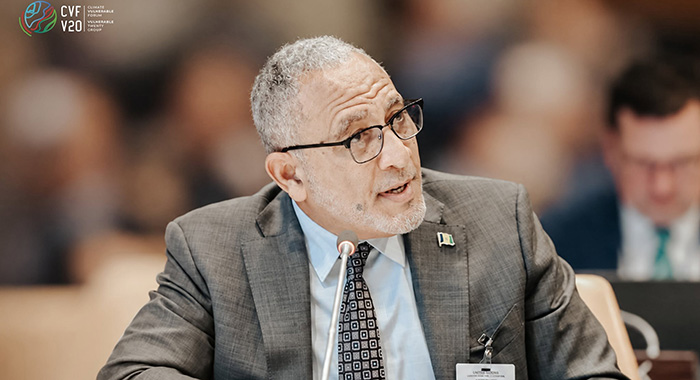
    West Indies cricket, a sport woven deep into the cultural fabric of the Caribbean, has found itself at the center of a dramatic political reversal from one of the region’s most prominent cricket advocates. Ralph Gonsalves, the former Prime Minister of St. Vincent and the Grenadines and a past chair of the Caricom cricket subcommittee, has publicly acknowledged he made a wrong call in supporting the current Cricket West Indies (CWI) President Dr. Kishore Shallow, and now says the regional game was far better managed during Dave Cameron’s tenure as the top CWI official.

    Cameron, a Jamaican administrator who led CWI for six years between 2013 and 2019, has long been a divisive figure in Caribbean cricket circles, drawing fierce criticism from many quarters including Gonsalves himself during his time in office. But in a revealing interview with the Jamaica Observer, Gonsalves said his perspective has shifted dramatically amid what he sees as ongoing stagnation and mismanagement under Shallow’s leadership.

    Shallow’s journey to the CWI presidency began in 2019, when he ran as vice-president alongside presidential candidate Ricky Skerritt. The pair defeated the incumbent Cameron, with Gonsalves throwing his full public support behind their campaign at the time. Back then, Gonsalves praised Shallow and Skerritt as forward-thinking, modern Caribbean leaders with progressive plans to revitalize the regional sport, calling them serious leaders rooted in Caribbean culture. Shallow stepped into the presidency in March 2023 after Skerritt’s departure, and recently announced he will not run for re-election when his term ends in 2028, bringing his total tenure on the CWI executive to almost a decade when he leaves office.

    Over the past two years, however, Gonsalves has emerged as one of Shallow’s most vocal critics, repeatedly calling for his resignation over the sharp decline of the West Indies men’s national team – a call that grew louder following the side’s heavy Test defeat to Australia in Jamaica last summer. Gonsalves has also argued that Shallow should have stepped down from the CWI presidency immediately after he won a seat in St. Vincent and the Grenadines’ general election and was appointed the country’s Tourism Minister, citing a conflict of commitment.

    Speaking to the outlet, Gonsalves did not mince words about his change of heart. “I was wrong about Shallow. I thought that he had the depth to carry this thing to see what this issue was about and he turned out in disrespect to possess a shallow perspective,” he said. “You say to me ‘but Ralph, you supported him’ and I said to you, yes and a man is entitled to at least one mistake in his life.”

    Gonsalves leveled harsh criticism at the direction of CWI under Shallow’s leadership, arguing the governing body has become overly deferential to global cricket power dynamics dominated by what he called “Indian cricket imperialism,” tied to the massive Indian television audience that gives the Board of Control for Cricket in India outsized influence over the International Cricket Council (ICC). He claimed CWI now derives its legitimacy from the ICC rather than the Caribbean people it is meant to serve, and that regional member associations are locked in a patron-client relationship with CWI leadership rather than focusing on growing the sport at the grassroots level.

    He dismissed all institutional reforms pushed through under Shallow’s tenure as superficial, saying changes such as adjusting the presidential term length from two to three years and minor tweaks to voting rules are minor, esoteric changes that have no meaningful impact on the actual health of Caribbean cricket.

    Looking back at Cameron’s leadership, Gonsalves said there is no question that West Indies cricket performed far better during the Jamaican’s time in charge. Though Gonsalves was a prominent critic of Cameron during his presidency, he now believes Cameron has reflected on missteps from his tenure, and his creative leadership would be a marked improvement over the current administration. While Gonsalves stopped short of explicitly calling for Cameron to run for the presidency again in the next CWI election, he made clear he sees the former leader as a far better fit for the role than Shallow and his current executive team.

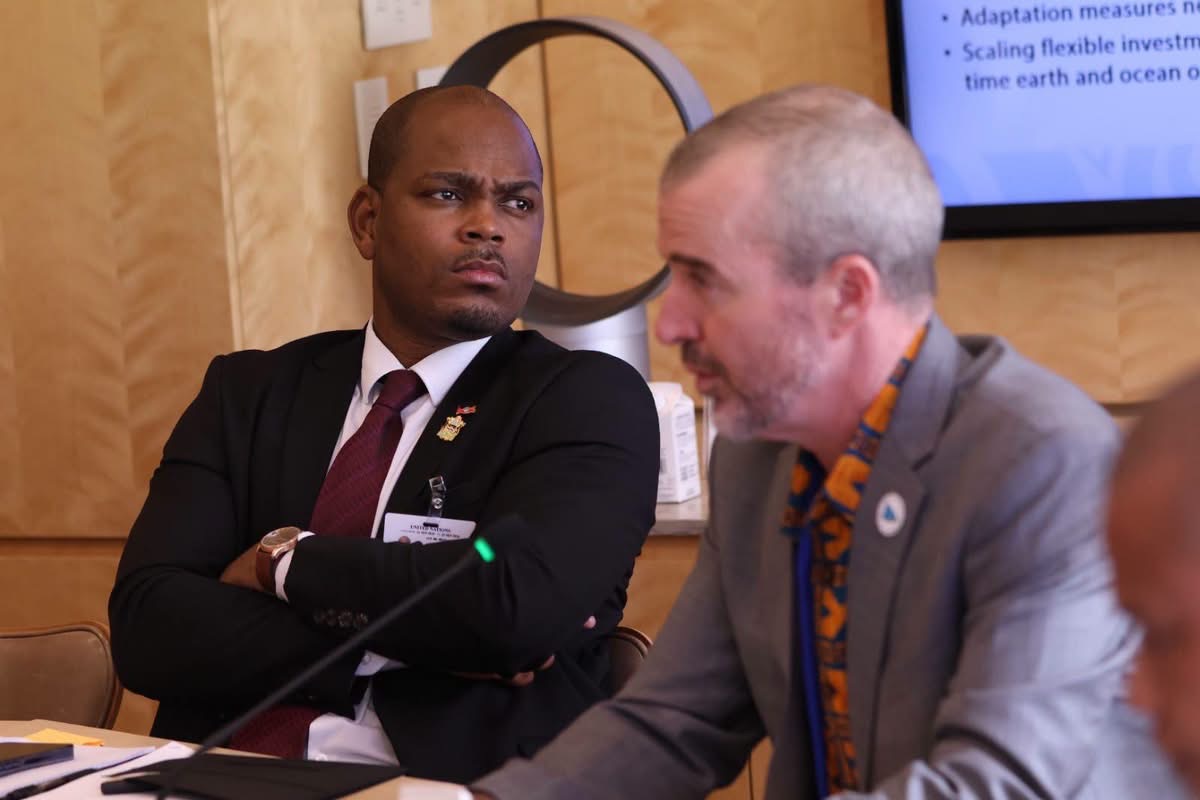
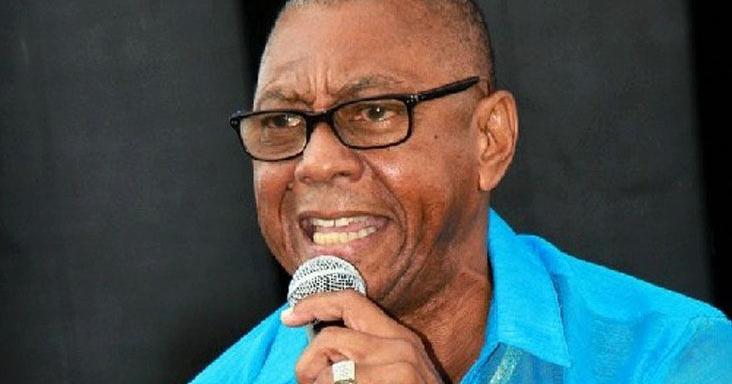
    Gonsalves added that even at his most confrontational with Caribbean governments, Cameron never disrespected cricket professionals the way the current CWI leadership has, and noted that Cameron remains deeply committed to the success of West Indies cricket. Photos accompanying the interview capture Shallow, Cameron, Gonsalves, and the July 2025 Test match against Australia that underscored the national team’s ongoing struggles, where young batsman Mikyle Louis was bowled by Australian fast bowler Josh Hazlewood during the day-night third Test at Kingston’s Sabina Park.