
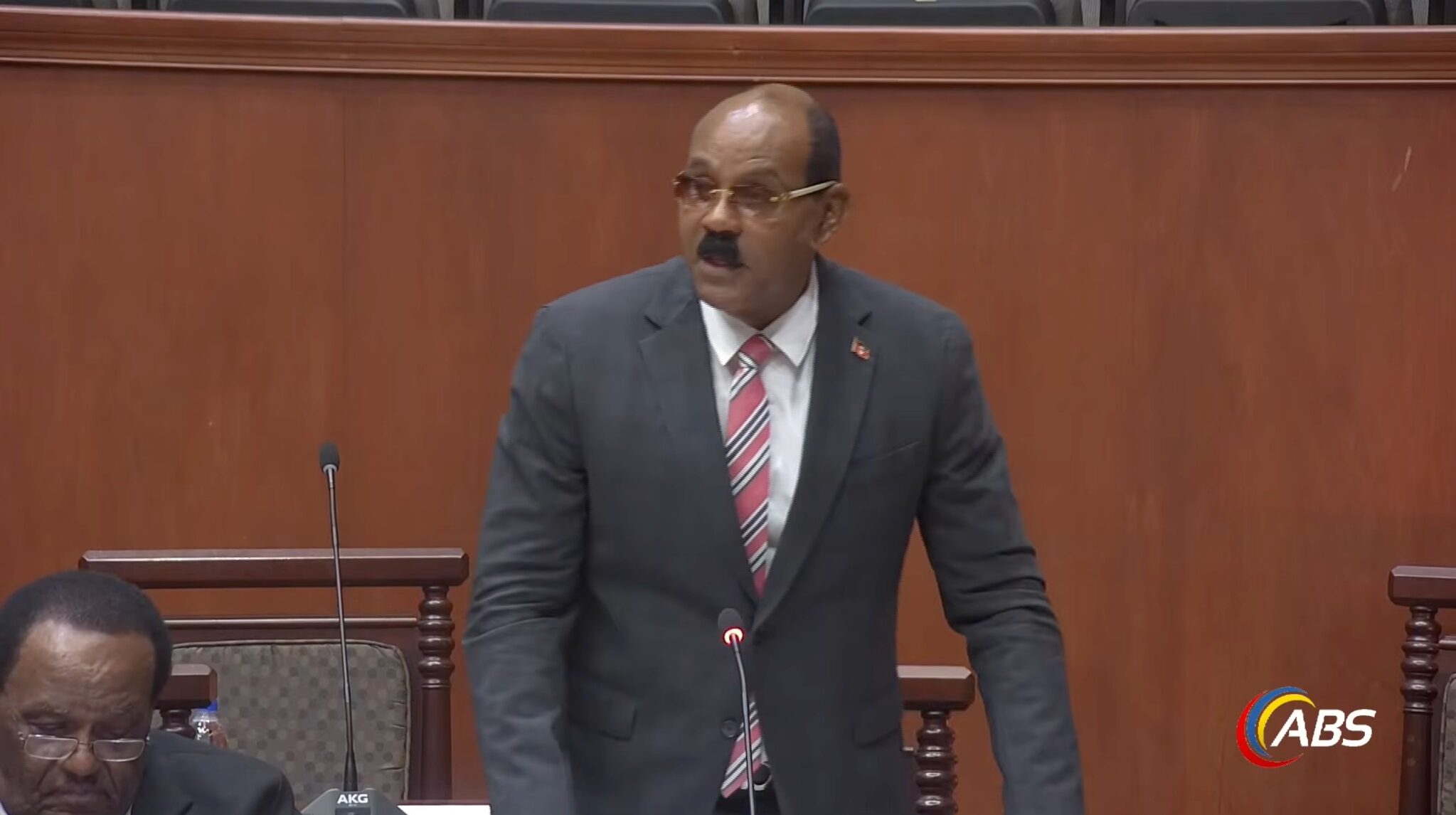
A heated parliamentary debate has erupted in Antigua and Barbuda over the distribution of state-funded social assistance, after Opposition Leader Jamale Pringle raised formal allegations that vulnerable residents aligned with the opposition are being systematically locked out of critical support programs. During a sitting of Parliament on Monday, Pringle pressed Prime Minister Gaston Browne over long-running concerns that access to life-saving resources, including food vouchers and construction materials, is being restricted based on political affiliation, rather than need. Pringle specifically questioned why candidates from Browne’s ruling Antigua and Barbuda Labour Party seeking political office have reportedly received priority access to assistance that elected opposition lawmakers cannot secure for their own constituents. The opposition leader also called into question the transparency of the current allocation mechanism, asking whether there are sufficient safeguards in place to ensure funds and materials reach the country’s most marginalized communities. Turning specifically to the widely used food voucher program, Pringle demanded Browne commit to launching a full independent investigation into alleged irregularities in how benefits are distributed. In a firm rebuttal delivered directly from the parliamentary floor, Browne rejected all claims of partisan bias outright, stressing that all social assistance programs administered through the Ministry of Social Transformation are government-run public initiatives, not party-specific projects reserved for ruling party supporters. The prime minister emphasized that no geographic constituency—regardless of which party holds the elected seat—has been excluded from accessing support, and that all vulnerable Antiguans and Barbudans are eligible to receive aid, no matter their political beliefs. Browne further pushed back on the demand for an investigation, noting that Pringle has failed to produce concrete, specific evidence of malfeasance or unequal distribution that would warrant a formal probe. He advised that if the opposition leader holds specific concerns about the program’s operations, he should direct detailed questions to the cabinet minister tasked with overseeing the initiative, rather than raising unsubstantiated claims in general parliamentary debate. Reaffirming the government’s commitment to equitable support, Browne closed by restating that social assistance schemes are active in every constituency across both Antigua and Barbuda, including all seats held by opposition lawmakers.
作者: admin
-

That property you call yours may not actually belong to you
For most people, claiming ownership of property is an everyday, casual act. We readily refer to homes, land, and commercial developments as “mine” without a second thought. But in the eyes of the law, the reality of ownership can look very different from the language we use to describe it.
Consider a common scenario: an entrepreneur identifies a plot of land, negotiates the full purchase, funds the entire transaction, and develops the property into an income-generating asset. For 15 years, he collects rental revenue from it. His entire family refers to the property as his, and if asked to list his most valuable assets, he would place this property at the top of the list. There is just one critical detail that changes everything: his name does not appear on the property’s legal title. The company he founded is listed as the formal owner.
This leaves a deceptively simple but high-stakes question: does the entrepreneur actually own the property?
For legal and corporate experts, the line between personal and corporate ownership is a well-established fundamental of company law. But for many family business owners and everyday asset holders, this distinction often blurs over years or decades of informal reference. By definition, a registered company is a separate legal entity, distinct from the shareholders who own its stock. It can hold assets in its own name, sign independent contracts, and take on liabilities separate from the individuals behind it. This principle of separate corporate personality forms the backbone of modern corporate law around the world.
To put this in concrete terms: if XYZ Holdings Ltd purchases a commercial office building, that building legally belongs to XYZ Holdings Ltd, not the individual shareholders – even if one person holds 100% of the company’s stock. What that shareholder actually owns is their stake in the company, not the underlying asset itself. This may read as a trivial legal technicality until a triggering event – most often death – forces the distinction to the surface.
A common succession dispute illustrates this risk perfectly. Years after the founder purchases the property, he passes away. Throughout his life, he repeatedly called the commercial building “my building”, and even told one of his children that the property would pass to them when he died. The entire family enters the estate planning process expecting a straightforward transfer of the property to the named heir. But the first question the law will ask is who holds formal title.
If the company remains the registered owner, the property does not automatically become part of the founder’s personal estate just because he was the controlling force behind the business. Instead, succession planners must turn to examining the founder’s shares in the company, the firm’s articles of incorporation, any existing agreements with other shareholders, and the rules governing share transfer upon death. This process almost always looks very different from the simple, direct asset transfer the family expected, creating conflict and delay that could have been avoided with advance planning. The incident demonstrates how casual language around personal wealth during a person’s lifetime can create costly confusion when that wealth passes to the next generation.
Beyond the question of who owns the property sits a second critical question that has grown in importance amid global anti-money laundering reforms: who actually owns the company that owns the property? This is the domain of beneficial ownership, a concept that has moved to the center of global financial transparency efforts in recent years.
The Financial Action Task Force (FATF), the global standard-setting body for anti-money laundering (AML) regulation, has updated its Recommendation 24 to require countries to collect accurate, up-to-date information on the natural people who ultimately own and control legal entities like companies. While the overwhelming majority of companies are used for fully legitimate purposes, FATF’s reforms are designed to close loopholes that allow bad actors to use corporate structures to hide their identity behind illicit assets and transactions.
This increased scrutiny does not mean holding property through a corporate structure is inherently suspicious. On the contrary, corporate ownership of assets is a standard, widely accepted practice for legitimate commercial, investment, and estate planning purposes around the world. The core compliance requirement is not that individuals hold assets personally, but that the natural people ultimately benefiting from and controlling the corporate structure can be clearly identified.
This shift towards greater beneficial ownership transparency is already well underway across the Caribbean. For example, Trinidad and Tobago now requires both domestic profit companies and external companies operating in the jurisdiction to disclose full beneficial ownership information to the national Registrar of Companies. The regulatory framework goes beyond tracking direct shareholding to identify the natural people who ultimately hold or control the company’s assets. The global direction of travel is clear: listing a company as the formal owner of a property is no longer the end of the ownership conversation.
What this all makes clear is that the simple word “ownership” actually hides a cascade of distinct, critical legal questions: Who holds formal title to the land? Who owns the company that holds title? Who exercises controlling influence over that company? Who receives the economic benefits from the asset? And what happens to those interests when the original founder passes away? In some cases, all these questions will point to the same person. In many others, they will not.
Take another common example: a family property held by a company with four shareholders – a father, his wife, and their two adult children. The father founded the company, managed the property for decades, and always referred to it as his own. But that long history of informal description does not erase the legal ownership stakes of the other three shareholders. Nor does the father’s death automatically transfer full ownership of the underlying property to his chosen heir, even if the entire family had an informal understanding that this would happen. The legal structure of the corporate holding always takes precedence.
These risks highlight a critical gap in common estate planning practice: too often, corporate structuring and succession planning are treated as separate, unrelated exercises. In reality, the decision a person makes today to hold property through a company will shape how that asset can be transferred 20 or 30 years later, when the original owner is gone. If valuable family assets are held through corporate structures, an effective estate plan must center an understanding of that structure – it cannot simply list the underlying property as if it were personally owned.
Key questions that all asset holders should address in advance include: Who legally holds the shares in the company? Are the company’s corporate records and constitutional documents up to date? Do all family members’ expectations around succession align with the legal structure of the holding? What rules govern share transfer when a shareholder dies? Who will take over control of the company after the original founder passes away? Does the next generation understand the structure of the assets they are inheriting?
These questions are not just for ultra-wealthy families with complex cross-border holdings. Even a simple structure of one company holding one single property can turn into a costly, confusing dispute if no one involved can remember why the structure was created in the first place, or what the original intentions for succession were.
Looking at the bigger picture, this issue reflects a broader shift in global financial norms. For generations, property ownership has centered on formal title: whoever’s name is on the deed owns the asset. Today, formal title remains critically important, but the global push for financial transparency means regulators, financial institutions, and legal systems increasingly require a look beyond the name on the document, to understand the actual people and relationships behind the legal structure.
FATF’s beneficial ownership standards are just one visible part of this wider global movement toward greater transparency around the natural people behind corporate assets. For family asset holders across the Caribbean, this regulatory shift makes proactive, thoughtful structuring more important than ever before. Using a company to hold property is still a perfectly appropriate, useful strategy for many families. But a structure that works when it is first created will not necessarily work decades later when it is time to transfer ownership.
A strong structure needs to hold up through every future event: when a bank conducts due diligence, when the property goes up for sale, when ownership of the company changes hands, and most critically, when the person who originally created the structure is no longer there to explain its purpose and intentions.
In closing, the next time someone claims “this is my property”, it is worth asking one simple follow-up question: is it really? This is not to suggest that holding property through a company is inherently problematic. Instead, it is a reminder that the difference between personally owning an asset and owning a stake in the entity that holds that asset carries massive consequences for succession planning, financial compliance, and the long-term preservation of family wealth.
The structure that holds your wealth matters. But understanding that structure matters even more. When the time comes to transfer wealth to the next generation, the law will not simply recognize what the family always called “yours”. It will only recognize what you actually legally owned.
-
Antigua and Barbuda Expands Financial Reporting Rules to Cover Digital Currencies
The dual-island Caribbean nation of Antigua and Barbuda has announced a landmark expansion of its national financial reporting regulations, formally extending mandatory disclosure requirements to digital assets including all major cryptocurrencies and decentralized digital tokens. This policy update marks a key shift in the country’s approach to digital finance, addressing growing gaps in regulatory oversight that have emerged as virtual asset usage has surged across the Caribbean region in recent years.
Prior to this revision, existing financial reporting rules only applied to traditional fiat currencies, tangible assets, and centralized investment products, leaving digital currency holdings and transactions unreported to national financial oversight bodies. Local regulatory authorities note that the change comes in response to rising global pressure to curb money laundering, terrorist financing, and tax evasion—risks that have been repeatedly linked to unregulated digital asset activity by the Financial Action Task Force (FATF) and other international financial governance bodies.
Under the new framework, all licensed financial institutions operating within Antigua and Barbuda, including crypto exchanges, custodial wallet providers, and retail banks offering digital asset services, are required to collect detailed customer transaction data, report large-value digital asset transfers to the national financial intelligence unit, and maintain compliant records that align with international anti-money laundering (AML) standards. Individual investors holding digital assets above a specified threshold will also be required to disclose their holdings as part of annual tax and financial filings, bringing the country’s digital asset regulation in line with global best practices.
Industry analysts point out that the reform is also intended to boost legitimate investment in Antigua and Barbuda’s growing digital finance sector. By establishing clear, transparent reporting rules, the government hopes to build greater trust among international institutional investors, while positioning the country as a compliant, well-regulated hub for fintech and digital asset innovation in the Caribbean. The new rules are set to take effect in six months, giving financial service providers time to update their internal compliance systems and training protocols to meet the new requirements.
-
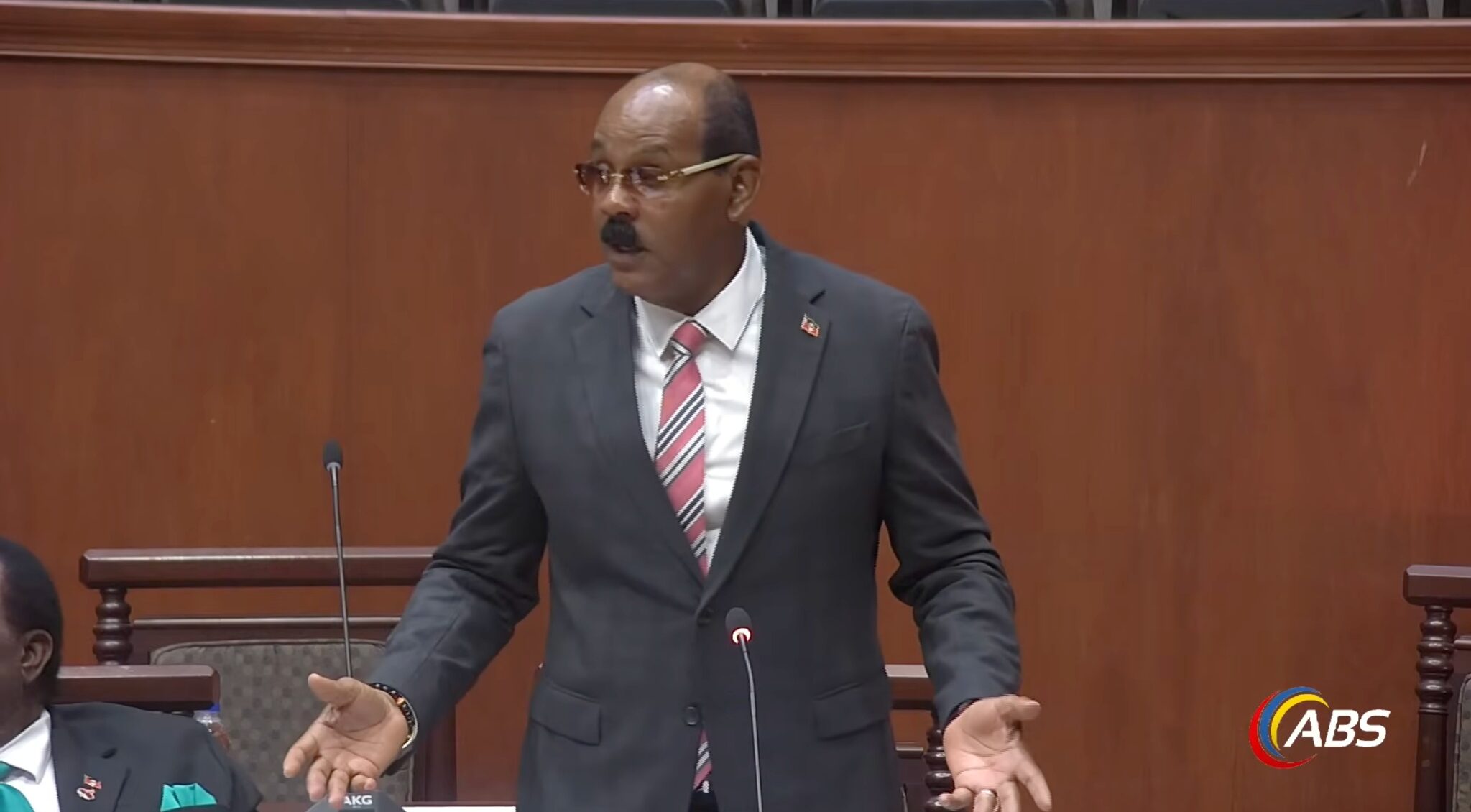
PM Browne Rejects Pringle’s Interpretation of ‘Get Rid of Guns’ Comments
A sharp political dispute has erupted in Antigua and Barbuda’s Parliament this week, after Prime Minister Gaston Browne pushed back hard against Opposition Leader Jamale Pringle’s reading of recently controversial comments regarding unauthorized firearms, accusing the opposition chief of deliberately twisting his words for political gain.
Addressing the legislative chamber on Monday, Browne flatly rejected the narrative Pringle had constructed around his public remarks. The prime minister clarified that his original comments were never intended to suggest that individuals who had used illegal guns in crimes should dispose of the weapons to destroy evidence and evade legal consequences, as Pringle had claimed. Instead, Browne explained, his core message was a public appeal: he was urging any civilian currently holding illegal firearms to voluntarily surrender these weapons to local law enforcement officers.
“That is what you call corrupting what I said,” Browne told the Parliament, emphasizing that Pringle’s re-characterization of his words is a deliberate act of political manipulation designed to win cheap political points ahead of any potential public discourse on crime policy.
The controversy did not end with Browne’s initial rebuttal. Pringle subsequently raised broader concerns, questioning whether inflammatory rhetoric from the country’s top leader could inadvertently exacerbate Antigua and Barbuda’s already challenging violent crime landscape linked to illegal firearms. But Browne quickly dismissed that worry as unfounded. The prime minister insisted that his personal perspectives on any group or professional line of work cannot be blamed for pushing people to commit acts of violence or criminal activity, reiterating that the actual intent of his original comments was unambiguous from the start. He labeled Pringle’s entire reading of his remarks as nothing more than “political mischief.”
-
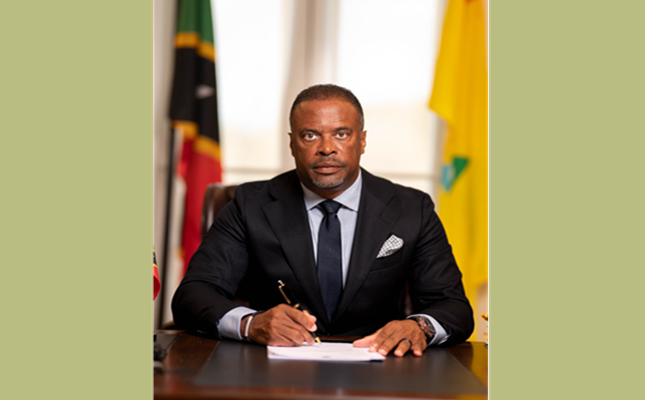
AI Will Not Wait for the Caribbean: The Time for Regional Action Is Now- Op-Ed By Hon. Mark Brantley
# Caribbean Urged to Accelerate Collective AI Action Before It’s Too Late
In an op-ed published September 28, 2026, Hon. Mark Brantley, Premier of Nevis and Opposition Leader for St. Kitts and Nevis, makes the case that the Caribbean cannot afford to delay coordinated regional action on artificial intelligence, as the transformative technology is already reshaping global work, governance, and society and will not wait for small island nations to catch up.
Brantley opens with a local example that illustrates just how quickly AI is outpacing traditional planning: just a few years ago, the Nevis Island Administration set out to introduce coding education across all Nevisian schools, but today that ambition is already obsolete, because leading AI tools can now outperform most human coders. This small anecdote reflects a much larger global shift: there are defining moments in history when emerging technologies rewrite the rules of how societies organize, economies operate, and people live, work, and connect. AI is exactly this kind of paradigm-shifting technology, and it is already here to stay.
The central question facing Caribbean societies today is no longer if AI will transform daily life, but whether regional leaders will proactively shape that transformation, or simply let it happen to them. Around the world, the urgency of this conversation has grown: global leaders, tech companies, researchers, and multilateral bodies are already grappling with once-science-fictional questions, from how to manage mass job displacement as AI outperforms highly trained humans, to how to protect critical infrastructure, democratic processes, and vulnerable populations from AI-fueled fraud, cybercrime, and disinformation, all while keeping human control at the center of technological development. Even global rivals like the U.S. and China are increasingly aligning on the need to address AI safety and human oversight, and King Charles III has recently convened top AI industry leaders to discuss the technology’s risks and opportunities. For the Caribbean, this means AI has become a critical global governance issue, and the region deserves a seat at the table.
Brantley notes that the Caribbean Community (CARICOM) has already taken important first steps, and deserves credit for early action. In July 2026, CARICOM’s Council for Trade and Economic Development formally endorsed the UNESCO Caribbean Artificial Intelligence Policy Roadmap, a framework developed through regional consultations that focuses on four core priority areas: culture and creativity, governance and transformation, education and upskilling, and resilience and sustainability. CARICOM has also advanced AI preparedness through a range of other initiatives, including the 2025-2030 Strategic Framework for Regional Digital Resilience, the CARICOM Secretariat’s AI Action Plan, the 2026-2030 CARICOM-UNDP Regional AI Programme, the Caribbean AI Task Force, and the AI for SIDS 2.0 initiative. The regional body has also flagged growing risks from AI-enabled disinformation and called for expanded digital literacy, improved AI readiness, cross-regional information sharing, and stronger institutional collaboration. All of these existing efforts are critical and commendable, Brantley argues, but the breakneck speed of AI’s global development means the Caribbean must now accelerate these regional efforts dramatically: preparations that seemed adequate for yesterday are already insufficient for today, and will be dangerously inadequate for tomorrow.
The next phase of regional AI engagement must center on urgent implementation, Brantley insists. He calls on CARICOM to immediately elevate AI to the highest level of regional political priority, and convene a special meeting of CARICOM Heads of Government focused explicitly on AI and the future of the Caribbean economy. This meeting should bring together a broad coalition of stakeholders, including national governments, academic institutions, educators, trade unions, private sector leaders, financial institutions, independent tech experts, and representatives of major global tech companies. The core goal of this summit would be to develop a unified Caribbean framework for thriving in the AI age.
This regional framework would establish shared principles and protocols for a range of critical AI-related issues: responsible AI use, personal data protection and ownership, cybersecurity, intellectual property rules, government procurement guidelines for AI systems, ethical AI use in education and healthcare, protections against algorithmic discrimination, safeguards against deepfakes and disinformation, and clear requirements for algorithmic transparency and human oversight. Brantley emphasizes that for small Caribbean states, particularly those in the Organization of Eastern Caribbean States (OECS), developing standalone national AI regulatory frameworks is inefficient and prohibitively expensive. Regional cooperation allows small nations to pool limited expertise, negotiate from a position of collective strength, and set standards tailored to the unique needs of Caribbean societies.
While unified regional regulation is a critical foundation, Brantley argues that regulation alone is not enough to prepare Caribbean populations for the changes AI will bring. It is impossible to ignore growing public anxiety about AI-driven job displacement: AI is already capable of carrying out sophisticated work across a wide range of sectors that employ large shares of Caribbean workforces, including accounting, law, banking, programming, marketing, customer service, and medicine. Given that most Caribbean economies rely heavily on tourism, financial services, public administration, and other service sectors, AI-driven job loss is not a distant problem faced by other regions—it is an urgent shared challenge for the entire Caribbean.
At the same time, Brantley notes that the ongoing AI revolution will also create entirely new jobs, businesses, and industries that do not exist today. The regional responsibility is not just to mitigate harm, but to ensure Caribbean people are positioned to seize these new opportunities. This means integrating AI literacy into primary and secondary school curricula, providing retraining for existing workers, equipping educators with AI skills, modernizing university and technical training programs, and supporting local Caribbean entrepreneurs to build AI-native businesses, rather than just relying on AI products developed in other countries.
To achieve this, Brantley calls for a region-wide public education program on AI, so that everyday people across the Caribbean—from teachers in Nevis and hotel workers in Antigua, to farmers in Jamaica, bankers in Barbados, small business owners in Saint Lucia, and university students in Guyana—understand how AI will affect their lives and livelihoods. The public needs to understand both the risks and the opportunities of AI, and digital literacy must be elevated to the same level of priority as traditional reading and writing literacy across the region.
Brantley also warns that the Caribbean cannot afford to be passive rule-takers in global AI governance. Major global powers have already begun setting AI rules: the European Union has enacted its landmark AI Act, the U.S. is debating national regulatory frameworks, and China is building out its own AI governance structure. If the Caribbean does not engage proactively in these global discussions, the rules for AI will be written by and for large economies, and the region will be forced to accept standards that do not account for its unique needs. Brantley reminds readers that the Caribbean has experienced this dynamic before, in sectors ranging from financial services to taxation to trade, and must learn the lesson of past passivity.
Ultimately, the Caribbean’s ambition should extend beyond just protecting itself from AI’s risks. AI can be a powerful tool to solve longstanding regional challenges, from improving disaster response and expanding access to specialized healthcare on small islands, to transforming agricultural production, personalizing education for Caribbean children, improving water management and expanding renewable energy infrastructure, upgrading public transportation, increasing government transparency and efficiency, and helping local entrepreneurs scale their businesses and access new global markets.
Brantley concludes that the worst possible responses to AI are fear and complacency—both of which the Caribbean must reject. AI will not wait for the region to get comfortable with the technology; the revolution is already here. While existing work by CARICOM, UNESCO, the Caribbean Telecommunications Union, UNDP, and other regional partners provides a strong starting point, the region must now accelerate this work with extreme urgency and clear purpose.
He closes with a call to action: convene regional leadership, engage with global AI leaders and researchers, establish unified Caribbean standards, prepare schools, retrain workers, educate the public, protect regional institutions, and invest in local innovators so that Caribbean people are not just consumers of AI developed elsewhere, but creators, entrepreneurs, and owners of AI technology that serves the region’s needs. At this critical juncture for Caribbean civilization, Brantley argues, the responsibility of regional leaders is not to stop the future, but to ensure the Caribbean and its people are ready to shape and benefit from the AI future that is already coming.
-
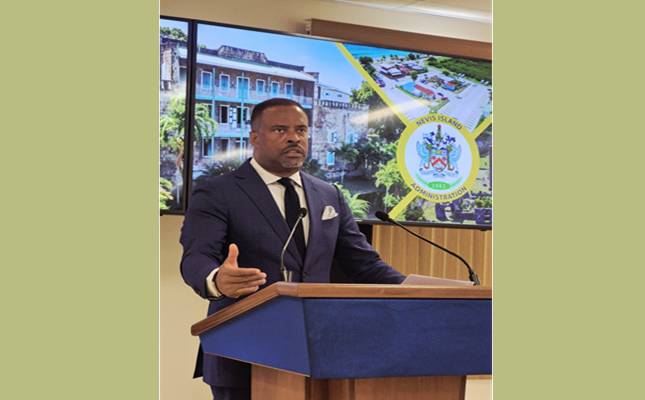
Nevis Premier Urges Urgent Caribbean Response to the Rise of Artificial Intelligence
As the global race to adapt to artificial intelligence accelerates, the top leader of the Caribbean island of Nevis is sounding the alarm, demanding that regional governments move from idle discussion to immediate, coordinated action to ensure small island nations do not get left behind by the AI revolution.
In an op-ed published September 27, 2026, Nevis Premier Honourable Mark Brantley laid out a clear case for urgent regional preparedness, noting that AI is already fundamentally reshaping core structures of modern society, from national economic operations to daily patterns of work, learning and social interaction.
“Artificial Intelligence has arrived, and it is here to stay,” Brantley wrote. “The question confronting our Caribbean civilisation is therefore no longer whether AI will transform our lives. The more important question is whether we will shape that transformation- or simply allow it to happen to us.” Brantley emphasized that the breakneck speed of AI’s evolution means outdated preparation strategies that worked even a few years ago are already inadequate today, and will be dangerously insufficient for coming shifts. Delayed action, he warned, would leave Caribbean nations vulnerable to unmanaged disruption.
Across the globe, governments and public institutions are already grappling with AI’s far-reaching impacts across sectors, Brantley noted. From widespread shifts in employment and industrial organization to emerging risks including AI-fueled fraud, cybercrime, and mass disinformation, leaders are working to strike a balance between leveraging innovation and maintaining meaningful human oversight of the technology. For small Caribbean nations, these challenges are not distant problems to address later — they are immediate shared concerns, Brantley argued.
The premier called for the Caribbean Community (CARICOM) to adopt a unified, coordinated approach to AI governance, elevating the technology to a top priority for regional political engagement. He noted that collective action would allow small Caribbean states, including members of the Organization of Eastern Caribbean States (OECS), to develop effective, evidence-based AI standards far more efficiently and affordably than individual nations working alone. While common regional regulatory frameworks are a critical first step, Brantley stressed that regulation alone is not enough to protect Caribbean workforces and communities.
Widespread concerns over AI-driven job displacement are well-founded, he said, and the region must confront this threat head-on. AI is already capable of carrying out sophisticated work across a wide range of high-employment sectors for Caribbean economies, from accounting, law, banking and software development to marketing, customer service, and even clinical medicine. With many Caribbean national economies relying heavily on tourism, financial services, public administration and other service sectors where AI disruption will be most acute, Brantley said this challenge cannot be dismissed as someone else’s problem. “It is a shared regional problem,” he emphasized.
To position the Caribbean to benefit from the AI transition rather than suffer its worst disruptions, Brantley called for targeted investment in workforce preparedness. This includes updating national education curricula to build AI-relevant skills, expanding large-scale worker retraining programs for current employees at risk of displacement, and targeted support for local entrepreneurs looking to build new AI-enabled industries. Only through proactive, coordinated regional action can Caribbean nations ensure they capture the opportunities of the AI age while mitigating its risks, Brantley concluded.
This report is based on a press release issued by the Nevis Island Administration and published by SKNVibes.com, which does not edit for errors or endorse the views expressed in contributed press materials.
-

Nevis Gender Affairs Expands SLAY Programme to Empower 14 Young Women
CHARLESTOWN, Nevis – September 28, 2026 – The Nevis Island Administration (NIA) is scaling up its investment in youth female empowerment through the Department of Gender Affairs, expanding the popular Sisters Leading Ambitious Youth (SLAY) Girls Mentorship Programme to welcome 14 new participants for its second cohort. Under the unifying 2026 theme “Stepping Into Greatness,” the initiative connects emerging young leaders with experienced female mentors to equip them with the tools to build meaningful, successful futures.
First launched in 2025 at Charlestown Secondary School with an inaugural group of eight participants, the programme has grown significantly in its second iteration to include students from both of Nevis’ secondary schools. The new cohort draws 11 participants from Gingerland Secondary School and three from Charlestown Secondary School, each matched one-on-one with a trained local mentor committed to their long-term growth.
The formal launch of the second cohort took place recently at the Malcolm Guishard Recreational Park, where participants and their mentors were introduced to stakeholders, families, and programme partners. Each young woman was officially inducted into the programme by Deputy Governor General for Nevis Her Honour Hyleeta Liburd O.B.E., M.H., who marked the occasion by pinning commemorative pins on each new mentee.
Honourable Senator Jahnel Nisbett, Nevis’ Minister of Gender Affairs, emphasized that the programme’s core mission is to create intergenerational learning opportunities, allowing young women to draw wisdom from the lived experiences of women who have already navigated key life and career milestones. “This is exactly what the mentors, the program coordinators, the board of directors, this is what everyone has collaborated to do to ensure that you all have the best opportunity to be successful in life in whatever area you choose to pursue,” Nisbett said during the ceremony.
The minister also paid tribute to the volunteer mentors, highlighting the personal and professional sacrifices they make to show up consistently for their mentees. “They’re sacrificing their work, their personal time, their families to commit to showing up for our young ladies each and every single time. So I want to give our mentors a round of applause,” she added.
Delivering the ceremony’s feature address, mentor Kaluwa Maitre-Avril shared heartfelt guidance with the new participants, urging them to embrace their unique identities and recognize their inherent self-worth. “I want my young ladies here to know that there may always be somebody that looks prettier, thinner, taller, may have more Instagram followers on social media, but please understand their greatness certainly does not subtract from yours. We can all be great together. You do not have to become somebody else to be the most extraordinary version of yourself. So, I want you to know your worth before the world agrees with you,” Maitre-Avril said.
She also encouraged participants to reframe their relationship with fear, pushing them to pursue brave actions even when uncertainty arises. “Overcome fear. One of the things that I need you to learn very early is that it’s okay to be afraid, but I don’t want you to fear rejection. Don’t fear looking silly because you took the first step to do something brave. Say, “I am fearless.” Being fearless doesn’t mean that you will never be afraid. On the contrary, you will be afraid but just don’t stay in it and don’t be paralyzed by it.”
Designed to support girls aged 11 to 19 from all social and economic backgrounds, the SLAY programme takes a holistic approach to improving young women’s lives through mentorship, skills training, peer support, and advocacy for gender equity and human rights. Programme activities are carefully crafted to foster deep, meaningful mentor-mentee bonds, boost self-esteem and public speaking skills, strengthen character, and help participants define and work toward their personal and professional goals. Over the course of the programme, participants will take part in a diverse range of activities including one-on-one check-ins, vision board workshops, creative paint-and-sip sessions, community church services, cooking and baking classes, floral arranging workshops, and collaborative team-building exercises.
The Department of Gender Affairs reaffirmed its commitment to expanding access to the SLAY programme, framing it as a key investment in Nevis’ next generation of female leaders. Through ongoing initiatives like SLAY, the department works to create accessible, supportive spaces where young girls can learn, grow, and develop the confidence and life skills needed to turn their personal aspirations into reality.
-
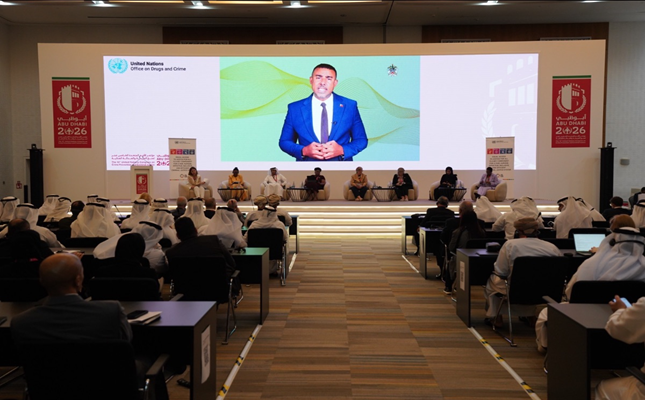
Saint Kitts and Nevis Justice Reforms in the global spotlight at UN Crime Congress
Against the backdrop of growing global demand for fair, accessible criminal justice systems, the small Caribbean Federation of Saint Kitts and Nevis has emerged as an unexpected leader in justice reform, taking center stage at the 15th United Nations Congress on Crime Prevention and Criminal Justice in Abu Dhabi on Sunday, September 27, 2026.
Invited by the United Nations Office on Drugs and Crime (UNODC) to share its groundbreaking progress with senior justice officials from across the globe, Saint Kitts and Nevis Attorney General and Minister of Justice and Legal Affairs Garth Wilkin addressed a high-profile thematic gathering focused on expanding access to justice for more effective and equitable systems. Wilkin joined a distinguished panel that included UNODC Executive Director Monica Juma, as well as cabinet ministers and senior government representatives from the United Arab Emirates, South Africa, Canada, the United Kingdom, Kenya, and Romania.
UNODC’s invitation to Saint Kitts and Nevis reflected the international community’s recognition of the Federation’s consistent commitment to building a people-centered, evidence-based, inclusive, and accountable justice sector. The invitation also highlighted ongoing collaborative work between the Caribbean nation and the UN agency to advance equitable justice access for all citizens.
The data shared by the Saint Kitts and Nevis delegation underscored the tangible impact of the country’s reforms. Compared to 2024, homicide rates dropped by 75% in 2025, hitting their lowest point in more than 20 years. This dramatic reduction has come from a fundamental shift in how the Federation approaches justice, Wilkin explained during his virtual address to the congress.
“Rather than only how we bring people into the justice system more efficiently, we increasingly ask, what is the appropriate justice pathway for this person, this harm and this community?” Wilkin said.
This person-centered approach has spurred two major policy innovations: a Diversionary Caution framework and a expanded Restorative Justice framework. Working in partnership with UNODC, more than 100 police officers, prosecutors, judges, and social service professionals have already received training to implement the Diversionary Caution system, which redirects eligible individuals away from traditional incarceration toward alternative resolutions that address the root causes of harm. The new Restorative Justice framework creates interconnected pathways for conflict resolution across police departments, prosecution offices, court systems, and local community groups. Looking ahead, the Federation also plans to launch the Community Justice Cup, a youth football initiative designed to teach conflict resolution and restorative values to young people across the islands.
Wilkin emphasized that the Federation’s small size has been a strategic advantage in implementing and refining these reforms, positioning small island states as more than just recipients of global policy guidance. “Small States can therefore be not merely beneficiaries of justice reform, but important contributors to its development,” he noted.
Looking forward, the next major priority for Saint Kitts and Nevis will be comprehensive correctional reform. Wilkin called for expanded international partnerships to support Small Island Developing States (SIDS) in building modern correctional systems centered on rehabilitation rather than just punishment. He argued that without intentional investment in outcomes during and after incarceration, even the most fair trials and effective prosecution leave the justice system incomplete. “If we invest in fair trials and effective prosecution but not in what happens during and after incarceration, the justice continuum remains unfinished,” he said.
-
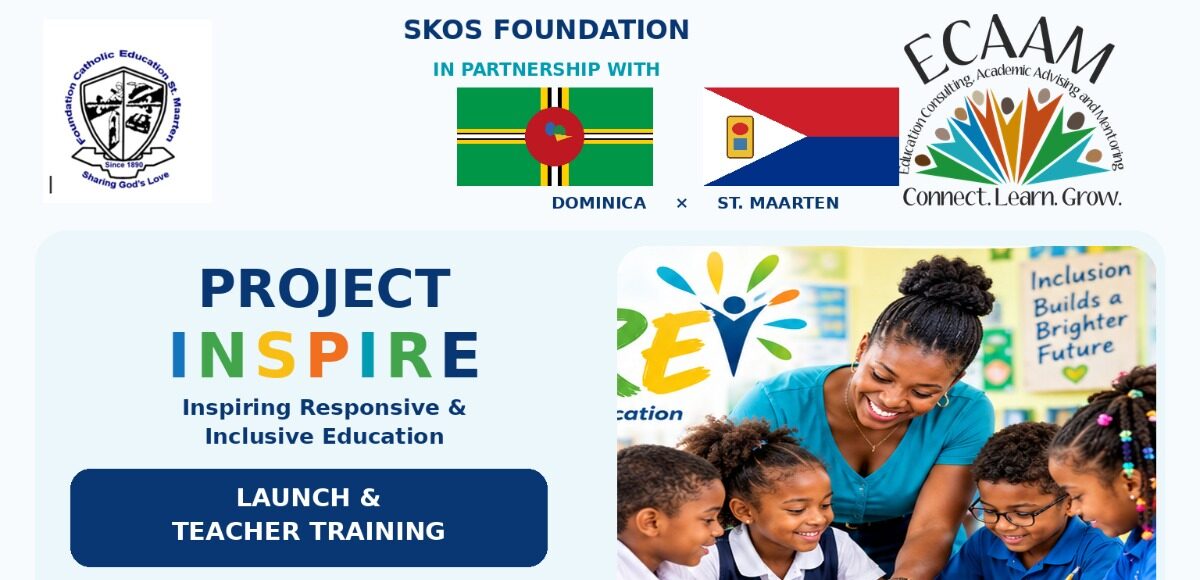
Project INSPIRE to strengthen inclusive education in St. Maarten
A groundbreaking regional effort to transform K-12 education into a more accessible and welcoming space for all learners is set to kick off this week on the island of St. Maarten, bringing targeted support to students with special educational needs (SEN) and critical professional development to local educators. Organized by the educational services organization Education, Consulting, Academic Advising and Mentoring (ECAAM) in collaboration with St. Maarten’s SKOS Catholic Education Foundation, Project INSPIRE operates as a two-year pilot program crafted to address longstanding gaps in inclusive education practice across the region.
The core mission of the initiative centers on upholding a simple but transformative principle: every student, regardless of their learning profile, deserves equal access to classroom participation, opportunities for academic growth, and a strong sense of belonging within their school community. To turn this principle into action, Project INSPIRE focuses on four key pillars of improvement: enhanced instructional techniques, more equitable student assessment frameworks, targeted learner support systems, and cross-regional knowledge sharing to scale successful practices.
A week of official activities, including the formal launch and foundational teacher training, will run from September 28 to October 2, 2026, with the main launch ceremony scheduled for September 30 at the SKOS Training Center in Philipsburg. The public event will run from 10:00 AM to 11:30 AM local time, and organizers have made arrangements to include remote stakeholders from across the Caribbean and beyond: the launch will be livestreamed to a global audience via three media outlets, Richie Ferrol Media Services, EmoNews, and Dominica News Online.
Throughout the training program, participating educators will engage in a hands-on curriculum designed to build practical, actionable skills for inclusive teaching. The coursework covers a range of critical topics, from adapted instructional methods and personalized lesson planning to trauma-informed inclusive classroom management and targeted intervention strategies for students with a wide spectrum of learning needs. Educators will also complete immersive learning experiences including peer school visits, in-classroom observation opportunities, and collaborative professional development workshops led by regional SEN experts.
Organizers emphasize that the ultimate goal of the training is to equip teachers with the tools to identify individual student needs early and adapt their instructional approaches to meet those needs, creating classroom environments where every learner can participate actively and thrive academically. Framed as a collective regional commitment to educational equity, Project INSPIRE aims to build long-term teacher capacity and establish a model for inclusive education that can be replicated across other island nations and regional education systems.
-

Grand Bay health team promotes wellness through fun and fitness activities
As part of the 2026 iteration of Caribbean Wellness Month, local health educators in Grand Bay have moved traditional health education out of static classroom settings and into an active, community-focused space, hosting a special Fun and Fitness Day on September 24 for students from two local primary schools: Grand Bay Primary and Bellevue Chopin Primary.
Organized by the island’s Grand Bay health team in partnership with the Ministry of Health, Wellness and Social Services, the interactive event was designed to turn abstract health lessons into tangible, enjoyable experience, giving young learners a hands-on way to explore the core principles of healthy living. Unlike traditional lectures that rely on textbooks and presentations, this initiative centered on engagement, framing wellness as something fun rather than a chore.
The Fun and Fitness Day capped off a full week of foundational wellness education for participating students. Over the preceding seven days, students joined guided presentations and group discussions that introduced key concepts around physical health, nutrition, and long-term wellness. The event then turned those classroom lessons into action, with competitive races, group games, and a range of age-appropriate physical activities that got students moving, collaborating, and having fun while reinforcing what they had learned.
Beyond getting children active, the event aimed to debunk the common misconception that maintaining good health requires boring or restrictive routines. By building all activities around play and friendly competition, organizers demonstrated that regular physical activity can be a joyful part of daily life, rather than a burden.
The event also saw active participation from both school teachers and members of the Grand Bay Health Team themselves. By joining in the activities alongside students, adult participants reinforced a core takeaway: prioritizing physical activity and adopting healthy lifestyles delivers benefits for people of all ages and all ability levels, not just children and young people.
the 2026 Caribbean Wellness Month initiative centers on a three-part mission: to engage, empower, and elevate young people by encouraging them to make intentional healthy choices from an early age. This event aligns perfectly with that overarching goal: through collaborative play, team-based challenges, and shared activity, students were invited to interact with wellness concepts in a low-pressure, enjoyable environment. The ultimate long-term aim of the work is to empower children to build sustainable healthy habits that carry into adolescence and adulthood, by normalizing active living early in life.
“This approach is designed to elevate the profile of everyday wellness,” a spokesperson for the Ministry of Health, Wellness and Social Services explained, noting that by framing physical activity as a fun, accessible pastime, organizers hope to inspire children to make regular movement a standard part of their daily routines long after the conclusion of Caribbean Wellness Month. All event photos are provided courtesy of the Ministry of Health, Wellness and Social Services.