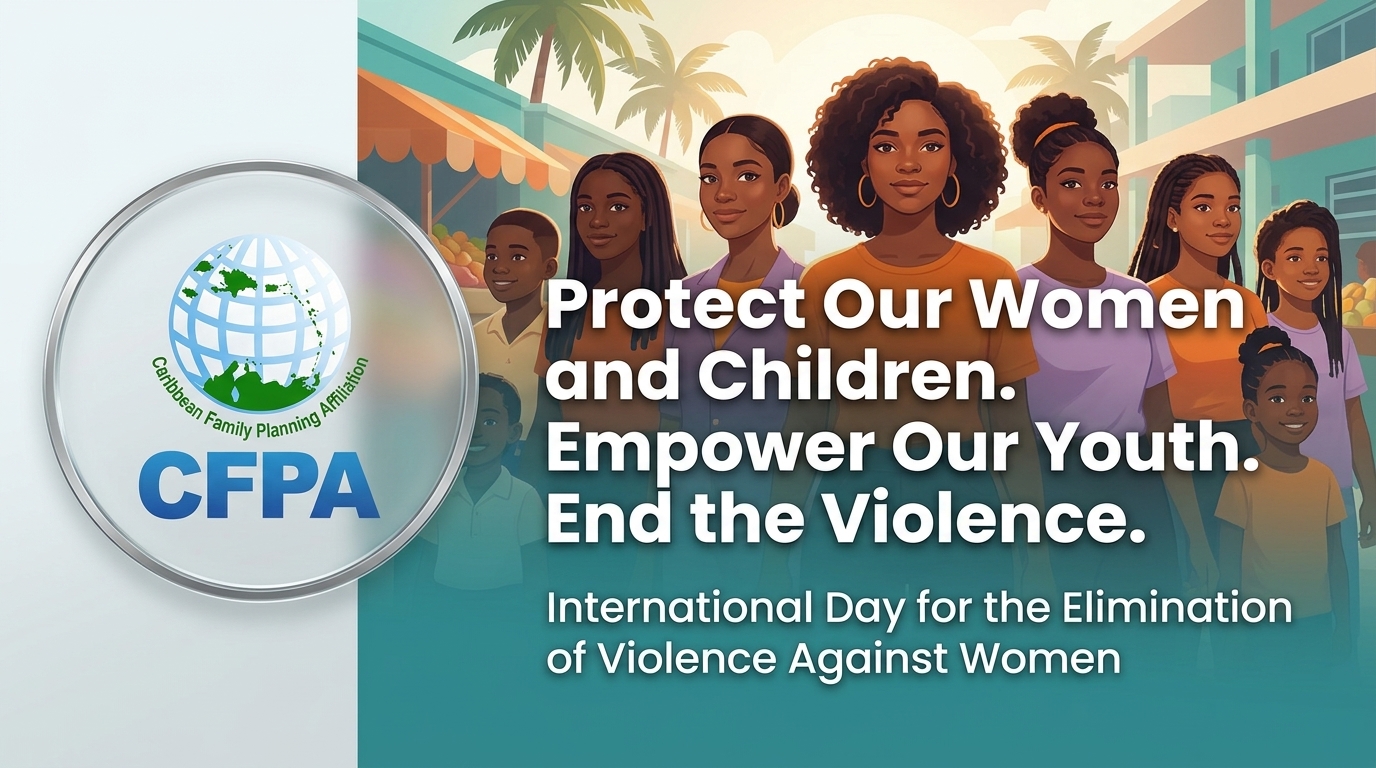
Against the backdrop of the 2026 International Day for the Elimination of Violence Against Women, the Caribbean Family Planning Affiliation (CFPA) has issued a landmark region-wide appeal, urging national administrations, local communities, and household units across the Caribbean to move beyond verbal condemnation of gender-based violence (GBV) and roll out tangible, targeted measures to shield women, children, and young people from all forms of harm.
The regional reproductive health and rights advocacy organization emphasized in its official public statement that violence targeting women and girls is not an unavoidable, inherent social ill, but a systemic crisis perpetuated by deeply entrenched unequal power structures, regressive gender stereotypes, widespread cultural silence around abuse, and institutional gaps that routinely leave survivors with no viable path to redress. Data and on-the-ground program insights compiled by CFPA show that adolescents and young adults across the Caribbean face overlapping, layered threats: these range from sexual assault and economic exploitation to intimate partner abuse, online digital harassment, and coercive control in personal and institutional settings. Most young survivors are silenced by pervasive fear of retaliation, social stigma, and normalized victim-blaming narratives, which systematically strip them of personal safety, educational opportunities, physical and mental health, basic human dignity, and the autonomy to chart their own life trajectories.
“Survivors do not merely need empty words of sympathy,” the CFPA statement underscored. “They have an inherent right to be taken at their word, safeguarded from further harm, provided with holistic support, and granted unobstructed access to justice without facing discrimination, unfair judgment, or additional trauma from bureaucratic processes.”
To permanently break intergenerational cycles of abuse, the CFPA is pushing for four critical pillars of support to be reclassified as universal fundamental human rights, rather than discretionary privileges: comprehensive, age-appropriate sexuality education (CSE), youth-centered sexual and reproductive health services, accessible psychosocial trauma care, and confidential, low-barrier safe reporting pathways for survivors of violence.
“Sustained elimination of gender-based violence demands that we center the voices of young people, honor their inherent agency, and build trusted spaces where they can speak up about harm without fear of repercussion, and access support without being shamed,” explained Rev. Patricia Sheerattan-Bisnauth, Chief Executive Officer of CFPA. “There is no true youth empowerment if we withhold the critical information, specialized services, and protective frameworks young people need to make fully informed, self-determined decisions about their own bodies and lives.”
For this year’s International Day observance, CFPA has formalized a partnership with two leading youth-led grassroots groups to drive hyper-local advocacy and direct survivor support: the Wadadli Initiative for Self-Care & Healing (WISH), which will lead on-the-ground campaign activities in Antigua and Barbuda, and the Youth Advocacy Movement (YAM) under the Grenada Planned Parenthood Association, which will coordinate local outreach across Grenada.
Chaneil C. Imhoff, founder of WISH, emphasized that community-level preparedness and trauma-informed response systems are non-negotiable to ensure young survivors feel safe coming forward. “A young person should never have to scramble to figure out who to turn to the moment they experience harm – trusted, accessible support systems need to be established and widely publicized long before a crisis occurs,” Imhoff noted. “When a young person shares that they have been hurt, our response can make or break their healing journey. We can choose to listen without judgment, protect their privacy fully, and connect them to wrap-around support without forcing them to rehash their traumatic experience to dozens of different officials.”
In Grenada, YAM’s targeted advocacy agenda centers on advancing youth empowerment through scaled-up CSE implementation and expanded access to adolescent-friendly healthcare services. The youth group is also lobbying national lawmakers to pass targeted legislative reform that removes outdated legal barriers, so that all young people aged 16 and older can independently access sexual and reproductive health information and clinical services without mandatory parental consent or third-party authorization.
CFPA’s closing appeal calls on all regional stakeholders – national governments, school administrations, family units, and community leaders – to actively confront and dismantle harmful gender norms, engage men and boys as intentional allies in GBV prevention, expand and formalize survivor support networks, and guarantee meaningful, structured youth participation in all policy decisions that directly impact their lives. “Every young person has the right to safety, dignity, accurate information, and full personal choice. Every survivor deserves access to full justice and compassionate healing,” the CFPA affirmed. “Ending gender-based violence is not a niche issue – it is a collective responsibility that every member of Caribbean society must uphold.”