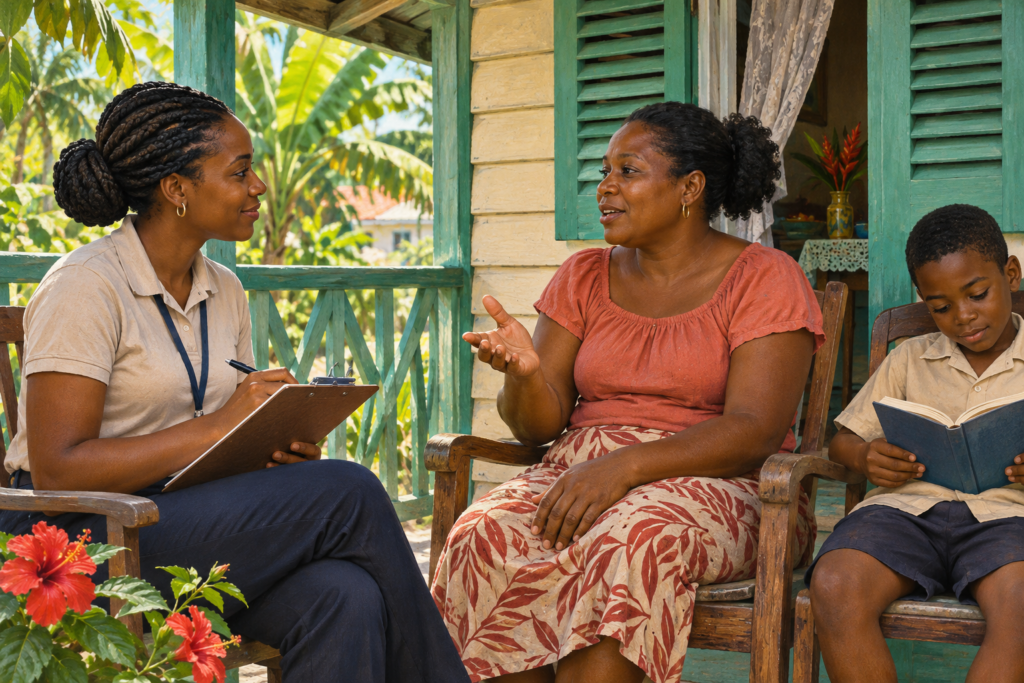
During the opening session of UNICEF’s Multi-country MICS Design Workshop held in Panama City, Panama, CARICOM’s Director of Regional Statistics Halim Brizan formally announced the regional body’s full readiness to back a unified, cross-nation Multiple Indicator Cluster Survey (MICS) initiative set to launch in 2027. Recognized globally as the most robust, standardized data source on the wellbeing of women and children, the MICS programme generates statistically verified, internationally comparable datasets that have long served as a foundational tool for national governments to refine policy frameworks and track progress against the United Nations Sustainable Development Goals. The proposed regional MICS initiative is fully aligned with the CARICOM Regional Strategy for the Development of Statistics (RSDS), and is positioned to advance delivery on landmark regional commitments including the Antigua and Barbuda Agenda for Small Island Developing States, a framework tailored to address the unique structural vulnerabilities of small island economies across the Caribbean. Brizan outlined that the 2027 coordinated survey will directly tackle longstanding systemic barriers facing Caribbean national statistical offices, including underfunded operational budgets, limited specialized technical capacity, and fragmented survey methodologies that prevent cross-nation comparative analysis. By pooling regional resources, harmonizing data collection tools, and standardizing analytical frameworks, the programme will drastically cut redundant operational costs for individual member states while expanding the scope of actionable data across critical development domains: public health, early childhood development, K-12 education outcomes, maternal and child nutrition, child protection safeguards, gender equity tracking, disability inclusion metrics, water and sanitation access, and social protection coverage. A core pillar of the proposed framework leverages existing regional expertise via targeted South-South knowledge sharing: member states that have recently completed independent MICS cycles, including Belize, Jamaica, and Saint Lucia, will share their accumulated technical know-how, operational lessons, and implementation best practices with peer nations that are newer to the survey process, eliminating the need for costly external technical support and building long-term, locally rooted institutional capacity across the entire CARICOM Statistical System. The CARICOM Secretariat will deliver dedicated support through its existing Regional Statistics Programme, overseeing cross-national coordination, driving alignment of statistical standards, delivering targeted skills-building workshops, and streamlining the production and public dissemination of uniform, comparable regional datasets. Brizan also emphasized two non-negotiable prerequisites for the initiative’s long-term success: first, that national governments across the region formally acknowledge the survey’s strategic development value by allocating sustained institutional backing and dedicated budgetary resources, and second, that raw survey data is rapidly translated into tangible policy action via accessible national analytical reports, cross-country comparative indicator profiles, and shared centralized databases that are accessible to policymakers, civil society, and development partners.
Officials are calling for a Caribbean-wide survey to better understand what families need