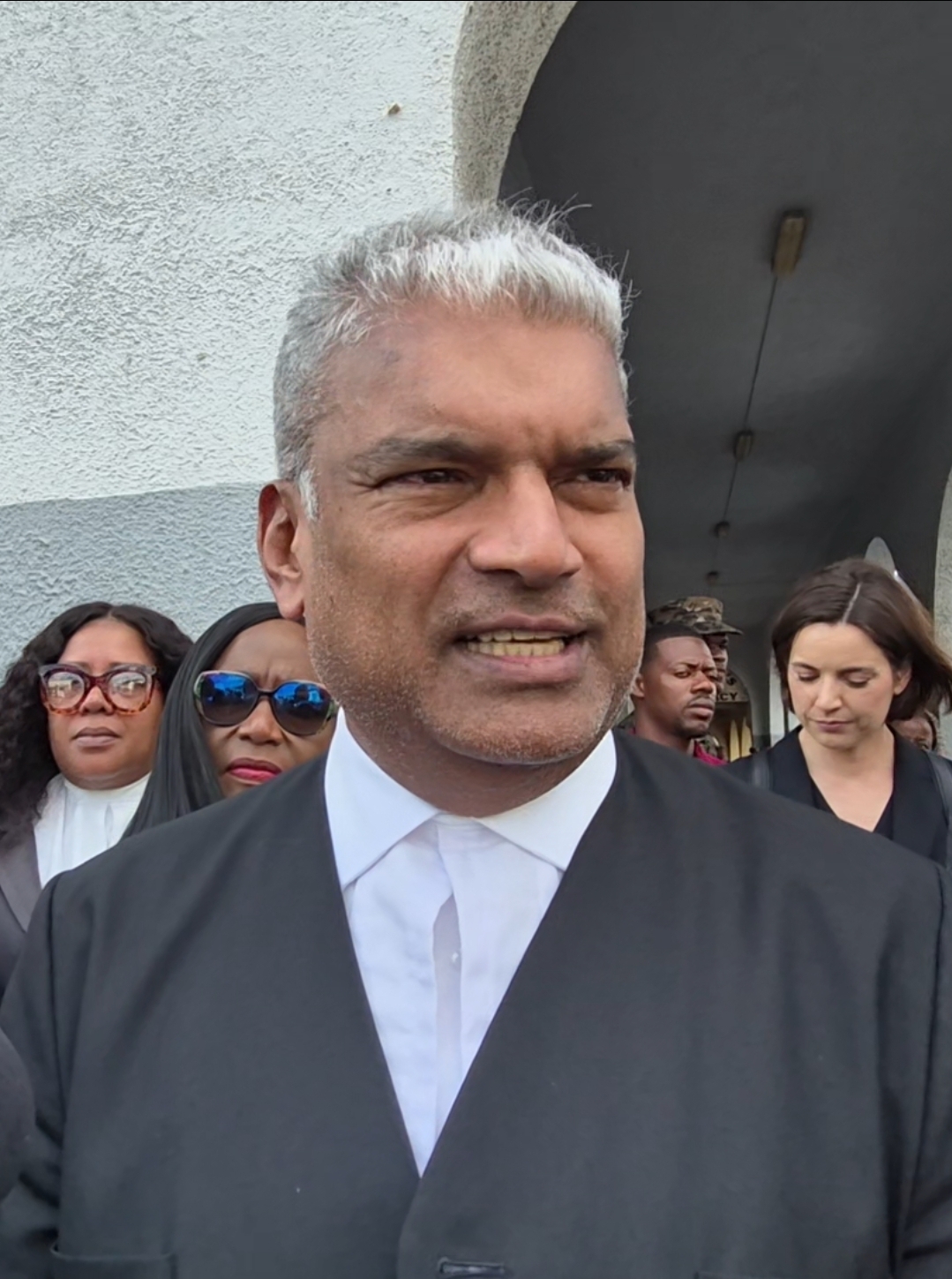
In a landmark set of consolidated election petitions currently before the High Court of St. Vincent and the Grenadines, lead defence counsel Anand Ramlogan has laid out a robust constitutional argument against a ruling that would deem sitting Prime Minister Godwin Friday and Foreign Affairs Minister Dwight Fitzgerald Bramble ineligible to hold parliamentary office. The petitions were filed by two unsuccessful 2025 general election candidates from the opposition Unity Labour Party (ULP): Carlos Williams, who lost his Northern Grenadines seat bid to Friday, and Luke Browne, who was defeated by Bramble in the East Kingstown constituency. Both petitioners are seeking court orders to invalidate the two election results, claiming the two senior government figures hold Canadian citizenship, which they argue violates Section 26(1)(a) of the SVG Constitution. That clause bars any individual from parliamentary service if they have formally acknowledged allegiance to a foreign state.
During closing arguments delivered before Justice Gertel Thom on November 12, ahead of an expected early 2026 ruling, Ramlogan pushed back forcefully against the petitioners’ framing. He emphasized that Section 25 of the SVG Constitution explicitly grants Commonwealth citizens full eligibility to stand for election and serve in Parliament, and that Canadian citizenship, as a Commonwealth nation status, cannot be classified as allegiance to a hostile or external foreign power. A core pillar of his submission was the warning that if the court sided with the petitioners and declared Friday ineligible for office, such a ruling would automatically trigger the application of Section 42 of the Constitution. That provision imposes financial penalties, and classifies as a criminal offence, any member of the House of Assembly who knowingly sits or votes in parliamentary proceedings while aware they are unqualified to hold their seat. Ramlogan stressed that all criminal offences must adhere to foundational legal principles of clarity and precision, such that an ordinary layperson can fully understand the legal ramifications of their actions, and that any lingering ambiguity in statutory or constitutional text must be resolved in favour of the individual citizen.
The veteran legal advocate further argued that the court must interpret all constitutional provisions in a cohesive, interconnected framework rather than reviewing clauses in isolated, disconnected silos, noting that election law demands maximum simplicity to eliminate public confusion over eligibility rules. He highlighted a critical distinction between SVG’s governing charter and the constitutions of regional peers such as Jamaica and Grenada, which restrict parliamentary candidacy exclusively to their own domestic citizens. By contrast, SVG’s founding document intentionally enshrines a far broader eligibility pool that includes all Commonwealth citizens. Ramlogan warned that a ruling that stripped dual-Commonwealth citizens of their eligibility would create an absurd legal paradox, where the explicit constitutional rule that qualifies all Commonwealth citizens to serve in Parliament would be effectively rendered meaningless by the very disqualification clauses designed to target non-Commonwealth aliens.
Citing existing statutory definitions, Ramlogan pointed out that SVG law formally defines an “alien” as a person who is neither a Commonwealth citizen nor a British protected person, with “foreign national” explicitly reserved for citizens of non-Commonwealth states. This clear statutory demarcation, he argued, places all Commonwealth citizens within a protected category of eligible candidates, even those who hold dual citizenship with another Commonwealth nation. He noted that under the current constitutional text, even a citizen of a Commonwealth country formally classified as hostile to SVG would still be permitted to contest general elections, while a citizen of a fully friendly non-Commonwealth nation would be barred from running. Ramlogan further noted that the SVG Constitution never explicitly defines the term “foreign power” or “foreign state”, and that Section 26’s disqualification provisions must be interpreted narrowly to avoid completely negating the core eligibility rules laid out in Section 25.
He dismissed the petitioners’ arguments as elaborate “intellectual gymnastics” that sought to unlawfully erode the constitutional right of dual-Commonwealth citizens to stand for public office, noting that even narrowing the eligibility pool to only citizens of the Organisation of Eastern Caribbean States (OECS) would directly contradict the Constitution’s explicit broad mandate to include all Commonwealth citizens. Ramlogan added that the petitioners presented no evidence to demonstrate that Canada’s national interests are misaligned with those of St. Vincent and the Grenadines, and that any decision to draw new, narrower distinctions between categories of eligible candidates falls exclusively under the purview of the national Parliament, not the judiciary. Drawing on analysis from prominent Caribbean constitutional scholar Professor Hamid Ghany, whose work was extensively referenced during SVG’s 2009 constitutional referendum debates, Ramlogan concluded that no individual forfeits their constitutional right to stand for public office simply by acquiring additional dual citizenship, and that any legal change that would revoke such a fundamental right must be written in terms so unambiguous they are “clear as daylight” to every ordinary citizen.